Canopy vs awning
One stands on its own legs and one hangs off your house. That decides where it can go, what it costs to install, and whether you need a permit.
By Ryder M. · Published · Last updated
We compare published manufacturer specifications, warranty terms and owner-reported failure modes. We have not physically tested these structures. How we judge shade structures
Slat & Shade earns a commission on qualifying purchases made through links on this page. It costs you nothing extra and never changes what we recommend. Full disclosure
Part of Canopies & Patio Covers

The short answer
An awning attaches to a wall, leaves the floor clear and retracts — the only active wind strategy in this category. A canopy is freestanding, goes anywhere, and needs no structural attachment to your house. The awning is better for a wall-adjacent patio; the canopy is the only option if you have no suitable wall.
Our picks at a glance
| # | Structure | Best for | Wind rating | Price |
|---|---|---|---|---|
| 01 | 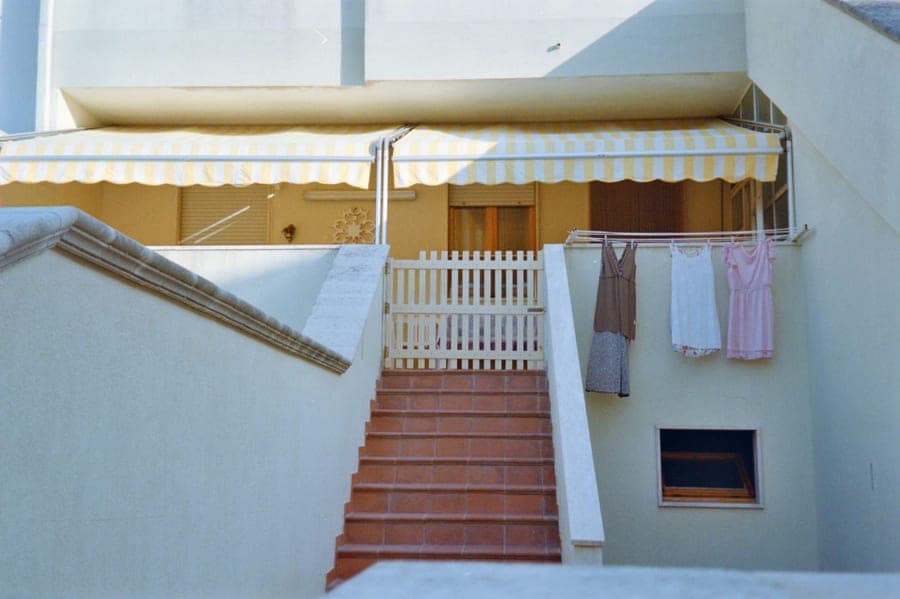 Diensweek P100 Manual Retractable AwningRetracts, which is the only wind strategy a fabric awning has. The published rating is a Beaufort number, not a mile-per-hour figure. | Buy this if the awning wins | Beaufort 5 (roughly 19-24 mph) — retract above it | Check price on Amazon |
| 02 | Diensweek Motorized Acrylic Retractable AwningSolution-dyed acrylic instead of coated polyester — the upgrade that decides whether the fabric still has its color in year six. | Best awning fabric | Beaufort 5 (roughly 19-24 mph) — retract above it | Check price on Amazon |
| 03 | 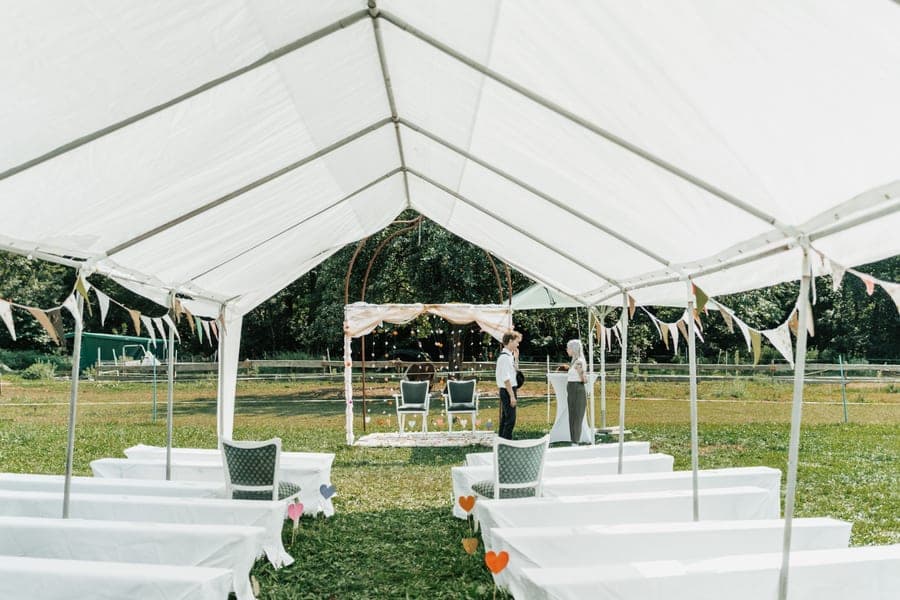 Eurmax Pro 10 x 10 Aluminum Pop-Up CanopyAn aluminum-framed commercial pop-up with a fire-certified 500-denier top — a shade structure you put away, not one you leave standing. | Buy this if the canopy wins | Not published by manufacturer | Check price on Amazon |
| 04 | 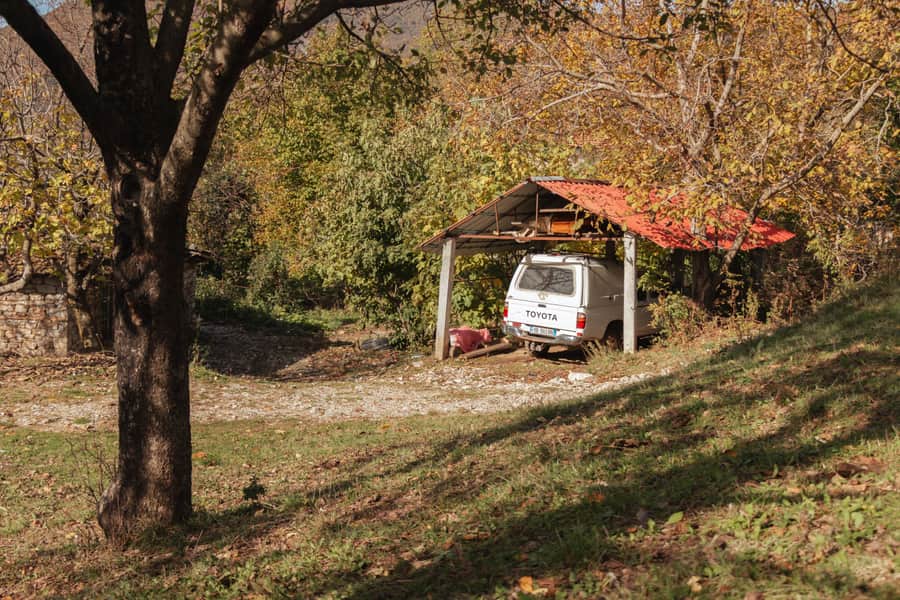 Quictent Heavy Duty 10 x 20 Carport CanopyThe only canopy on this site that publishes both a per-square-foot snow load and a tested wind speed — 9 lb/ft² and 55 mph. | The freestanding option that stays up | 55 (tested) | Check price on Amazon |
The durability table
Every published figure we could source for these structures, in one place, with the manufacturer page each number came from. Where a cell reads "Not published by manufacturer", that figure does not exist in the manufacturer's own material — we do not estimate it and we do not copy one from another site.
| Model | Wind rating (mph) | Snow load | Frame | Roof | Anchoring required | Warranty | Spec source |
|---|---|---|---|---|---|---|---|
| Diensweek P100 Manual Retractable AwningTop pick | Beaufort 5 (roughly 19-24 mph) — retract above it | Not published by manufacturer | T5-grade aluminum with PVC-coated stainless steel arm cables and galvanized steel roller tube | 280 g/m² polyester with PU coating, water resistant, 50 UV+ | Not published by manufacturer | 1 year | Diensweek official siteChecked 2026-09-26 |
| Diensweek Motorized Acrylic Retractable Awning | Beaufort 5 (roughly 19-24 mph) — retract above it | Not published by manufacturer | Corrosion-resistant aluminum | 100% acrylic, fade-resistant, 80 UV+ | Not published by manufacturer | 1 year | Diensweek official siteChecked 2026-09-26 |
| Eurmax Pro 10 x 10 Aluminum Pop-Up Canopy | Not published by manufacturer | Not published by manufacturer | Aluminum | 500D polyester with PU coating, seam-sealed, CPAI-84 fire retardant certified | Not published by manufacturer | Not published by manufacturer | Eurmax Pro 10x10 product pageChecked 2026-09-26 |
| Quictent Heavy Duty 10 x 20 Carport Canopy | 55 (tested) | 9 lb/ft² | 1.46 in. (38 mm) heavy-duty galvanized steel tubing with 12 cross steel cables | 16 mil / 180 g PE tarp, 100% UV block, triple-stitched seams | Ground nails and bungee cords supplied | 1 year on poles and tarp; lifetime on joints, ground nails and bungee cords | Quictent 10x20 carport product pageChecked 2026-09-26 |
Every pick in full
Buy this if the awning wins
Diensweek P100 Manual Retractable Awning
Retracts, which is the only wind strategy a fabric awning has. The published rating is a Beaufort number, not a mile-per-hour figure.
- Wind rating
- Beaufort 5 (roughly 19-24 mph) — retract above it
- Snow load
- Not published by manufacturer
- Frame
- T5-grade aluminum with PVC-coated stainless steel arm cables and galvanized steel roller tube
- Roof
- 280 g/m² polyester with PU coating, water resistant, 50 UV+
- Anchoring
- Not published by manufacturer
- Warranty
- 1 year
- Sizes
- 8 x 7 ft to 15 x 10 ft
The awning case, and the two things it gets you that no freestanding canopy can.
No posts on the floor. The wall carries one edge, so the space underneath is completely clear — and on a narrow terrace that is frequently the difference between a usable patio and an obstacle course.
And it retracts, which is the only active wind strategy in this whole category. Diensweek publishes Beaufort 5 — roughly 19-24 mph — above which you retract, and retracted the awning has essentially no wind exposure at all. A freestanding canopy is in the wind whether you like it or not.
The frame is better specified than most: T5-grade aluminum with PVC-coated stainless steel arm cables and a cold-rolled welded galvanized steel roller tube. Fabric is 280 g/m² PU-coated polyester, water resistant, 50 UV+; sizes 8 x 7 ft to 15 x 10 ft, the widest range here and the only one going genuinely small.
What it costs you: a wall, and a permit conversation. Fixing a structure to the building is a structural alteration in many jurisdictions, and the load goes into your house.
Skip it if: You have no suitable wall, or you would rather not fix anything to the building.
#ad Price shown as of September 26, 2026. How this site is funded
Specifications from Diensweek official site, checked 2026-09-26.
Best awning fabric
Diensweek Motorized Acrylic Retractable Awning
Solution-dyed acrylic instead of coated polyester — the upgrade that decides whether the fabric still has its color in year six.
- Wind rating
- Beaufort 5 (roughly 19-24 mph) — retract above it
- Snow load
- Not published by manufacturer
- Frame
- Corrosion-resistant aluminum
- Roof
- 100% acrylic, fade-resistant, 80 UV+
- Anchoring
- Not published by manufacturer
- Warranty
- 1 year
- Sizes
- Up to 15 x 10 ft
The fabric upgrade, and on a wall-mounted product it matters more than anywhere else because the awning is permanently in view.
100% acrylic, fade-resistant, 80 UV+ rather than the manual line's coated polyester. Solution-dyed acrylic has the pigment in the fiber; coated polyester has it on the surface — so coated fabric fades and then the coating cracks and it stops being water resistant, both driven by UV and both arriving together.
Diensweek puts acrylic on its motorized line and polyester on its manual one, which tells you exactly where the manufacturer thinks the upgrade sits.
Corrosion-resistant aluminum frame, up to 15 x 10 ft, same Beaufort 5 guidance, one-year warranty.
And the motor has a specific argument on a comparison page: retracting is the entire wind strategy for an awning, so if motorization means you actually retract, it is buying safety rather than convenience.
Skip it if: You would rather not have a motor and a power supply on an exterior wall.
#ad Price shown as of September 26, 2026. How this site is funded
Specifications from Diensweek official site, checked 2026-09-26.
Buy this if the canopy wins
Eurmax Pro 10 x 10 Aluminum Pop-Up Canopy
An aluminum-framed commercial pop-up with a fire-certified 500-denier top — a shade structure you put away, not one you leave standing.
- Wind rating
- Not published by manufacturer
- Snow load
- Not published by manufacturer
- Frame
- Aluminum
- Roof
- 500D polyester with PU coating, seam-sealed, CPAI-84 fire retardant certified
- Anchoring
- Not published by manufacturer
- Warranty
- Not published by manufacturer
- Sizes
- 10 x 10 ft, 11.1 ft peak height
The freestanding side, and the honest version of it: a commercial pop-up rather than a fixed-frame fabric structure.
500D polyester with a PU coating, seam-sealed, CPAI-84 fire retardant certified, on an aluminum frame, 10 x 10 ft with an 11.1 ft peak height. That is an event specification — the denier, the seam sealing and the fire certification are not things consumer canopies publish.
What it gets you over an awning: it goes anywhere, it needs no wall, nothing is fixed to your house, and there is no permit question. For a lawn, a driveway or a spot away from the building, an awning is simply not an option and this is.
No wind rating published, and that is correct rather than missing — a pop-up's wind strategy is to be folded down and put in a bag.
What it costs you: it is a thing you deploy. An awning is there and retracts; this has to be put up. A canopy you have to erect is a canopy that stays in the garage, and that is worth predicting honestly.
Skip it if: You want shade that is simply always there. Anything requiring deployment tends not to get deployed.
#ad Price shown as of September 26, 2026. How this site is funded
Specifications from Eurmax Pro 10x10 product page, checked 2026-09-26.
The freestanding option that stays up
Quictent Heavy Duty 10 x 20 Carport Canopy
The only canopy on this site that publishes both a per-square-foot snow load and a tested wind speed — 9 lb/ft² and 55 mph.
- Wind rating
- 55 (tested)
- Snow load
- 9 lb/ft²
- Frame
- 1.46 in. (38 mm) heavy-duty galvanized steel tubing with 12 cross steel cables
- Roof
- 16 mil / 180 g PE tarp, 100% UV block, triple-stitched seams
- Anchoring
- Ground nails and bungee cords supplied
- Warranty
- 1 year on poles and tarp; lifetime on joints, ground nails and bungee cords
- Sizes
- 10 x 20 x 8.7 ft (H)
The other kind of canopy, and the one to consider if the reason you were looking at awnings is that you want cover that is permanently there.
A tested 55 mph wind speed and a 9 lb/ft² snow load — the only canopy we track publishing both, and considerably more than any awning publishes. Frame is 38 mm galvanized steel tubing with twelve cross steel cables, under a 16 mil / 180 g waterproof PE tarp with triple-stitched seams.
It is genuinely waterproof where an awning is water resistant, and it drains rather than shedding off a front edge — so wind-driven rain does not come in underneath the way it does under an awning.
Warranty: one year on poles and tarp, lifetime on joints, ground nails and bungee cords, which is an accurate description of where a tube-frame shelter fails.
What it is not: attractive, or a patio product. 10 x 20 x 8.7 ft of equipment shelter that looks like equipment shelter. Nobody puts a dining table under one by choice.
Skip it if: The space is a patio or seating area. This is a shelter and it reads as one.
#ad Price shown as of September 26, 2026. How this site is funded
Specifications from Quictent 10x20 carport product page, checked 2026-09-26.
The decision table
| Retractable awning | Freestanding canopy | |
|---|---|---|
| Where it can go | Against a suitable wall only | Anywhere, including away from the building |
| Posts on the floor | None. The wall carries one edge | Four legs in the space |
| Wind strategy | Retract. Beaufort 5, roughly 19-24 mph, then remove it from the wind | Fold it down (pop-up), or resist it (carport, 55 mph tested) |
| Published snow load | None. Retract for winter | 9 lb/ft² on the documented carport; none on pop-ups |
| Rain | Water resistant, sheds off the front edge. Wind-driven rain comes in underneath | Waterproof tarp on a carport; seam-sealed top on a good pop-up |
| Permits | Often — attaching to the building is a structural alteration in many places | Less likely; portable structures are frequently treated differently |
| Load path | Into your house wall | Into the ground |
| Always there? | Yes, retracted or extended | A carport yes; a pop-up only when you put it up |
| Best fabric available | Solution-dyed acrylic, 80 UV+ | 500D seam-sealed polyester; 16 mil waterproof PE on a carport |
| Best for | A patio against the house, wanting shade on demand | Anywhere without a wall, and anything that must stay up |
Buy an awning if...
- The space is against the house. This is the whole case. An awning uses a mounting point you already have and leaves the floor completely clear.
- You want the sun back sometimes. Retracting takes seconds and is the only way to have full sun and full shade over the same space on the same afternoon. No fixed canopy offers that.
- Your site gets occasional strong wind. Counter-intuitively, the product with the lowest published figure has the best escape — retracted, an awning is not exposed at all.
- The patio is narrow. Four canopy legs on a 3 m terrace is a real loss of usable space; an awning takes none of it.
- You want it to look like part of the house rather than like equipment in the garden.
Buy a canopy if...
- You have no suitable wall. An awning transfers its load into the building and needs solid material to fix into. No wall, no awning — and that decides it outright.
- You would rather not fix anything to the house. Renting, an HOA restriction, or simply not wanting a structural attachment and the permit conversation that often comes with it.
- The shade needs to be somewhere the building is not — over a lawn, a driveway, a workspace, a pool edge.
- You need it to stay up through weather. The documented carport publishes a tested 55 mph and 9 lb/ft² of snow; no awning publishes either, because an awning's answer to weather is to retract.
- What you are covering is equipment rather than people. That is a carport, and no awning does it.
The permit difference, which usually decides it
This is the practical distinction that matters most and it gets almost no attention in product listings.
Fixing a structure to the building is frequently a different permitting category from putting something on the ground. A freestanding accessory structure is often exempt below a footprint threshold; bolting a load-bearing bracket into a wall is a structural alteration to the building, and many jurisdictions treat it accordingly regardless of size.
And the reason is physical, not bureaucratic. An extended awning in wind transfers real load into your wall through a bracket — which is why the wall fixing is the component to over-specify and why a badly installed awning is a problem for the house rather than just for the awning.
Thresholds, setbacks and the measuring point all vary by jurisdiction, so this is a call to your building department rather than something we can answer. It is short, the answer is specific to your address, and it occasionally changes which of these two products you should buy. Pergola permits and HOA covers the general shape of the question.
Where each one fails
Awnings fail at the fabric and at being left out. Coated polyester fades and then its coating cracks, at which point it stops being water resistant — both UV-driven, both arriving together on a sun-facing wall. Mechanically, the arm cables are the wear item on something operated repeatedly, which is why Diensweek specifying PVC-coated stainless cables is worth noticing. And the avoidable failure is an awning left extended above Beaufort 5, which is roughly 19-24 mph — a fresh breeze, not a storm.
Canopies fail at the joints and at the top. On a tube frame the joints rack in wind, which is why cross-cable bracing exists and why Quictent warrants joints for life and poles for one year. Fabric tops fail by abrading where they move against a frame member, and by pooling: a slack top collects water, the weight deepens the sag, and more water collects.
Pop-ups fail almost exclusively from being left standing, which is not a manufacturing failure. The fabric and frames on commercial pop-ups are genuinely good; the product is designed to fold down.
And both fail if they are not anchored or ballasted properly. Ground nails suit soft ground; on concrete you need expansion fixings and they are usually not supplied. Canopy wind ratings and weights covers what ballast can and cannot do.
Questions people ask
What is the difference between a canopy and an awning?
Is an awning or a canopy better for a patio?
Do I need a permit for an awning?
Which handles wind better?
Are awnings waterproof?
Can I have an awning if I am renting?
Which lasts longer?
Where these figures came from
- Diensweek — acrylic 80 UV+ and 280 g/m² PU-coated polyester lines, T5 aluminum frame, PVC-coated stainless arm cables, galvanized roller tube, Beaufort 5 guidance, sizes, 1-year warranty
- Eurmax Pro 10x10 — 500D PU-coated polyester, seam-sealed, CPAI-84 fire retardant certified, aluminum frame, 11.1 ft peak height
- Quictent 10x20 carport — 55 mph tested, 9 lb/ft² snow load, 38 mm galvanized steel with 12 cross cables, 16 mil waterproof PE tarp, warranty split
Found an error? Tell us and we will correct it within seven days and note the change on the page with a dated line — see our editorial policy.