The best patio canopies
"Canopy" covers products with almost nothing in common. The first job here is matching the right type to whether your shade needs to be there permanently.
By Ryder M. · Published · Last updated
We compare published manufacturer specifications, warranty terms and owner-reported failure modes. We have not physically tested these structures. How we judge shade structures
Slat & Shade earns a commission on qualifying purchases made through links on this page. It costs you nothing extra and never changes what we recommend. Full disclosure
Part of Canopies & Patio Covers
The short answer
The Diensweek P100 retractable awning is the pick for a patio against the house: 280 g/m² PU-coated polyester on a T5 aluminum frame, with the only wind strategy a fabric structure has — you retract it. For shade over a freestanding area, a commercial pop-up is better made than it looks and is not something to leave standing.
Our picks at a glance
| # | Structure | Best for | Wind rating | Price |
|---|---|---|---|---|
| 01 | 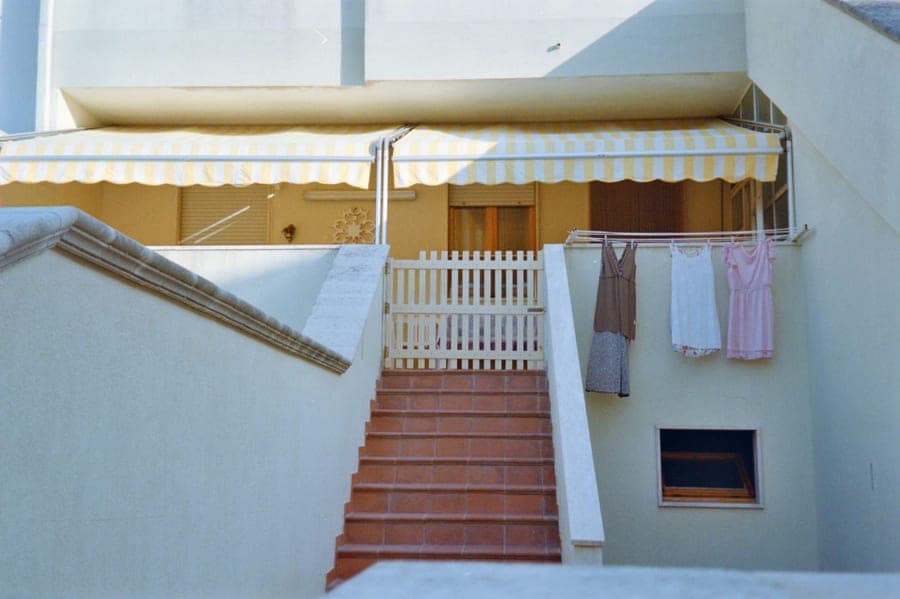 Diensweek P100 Manual Retractable AwningRetracts, which is the only wind strategy a fabric awning has. The published rating is a Beaufort number, not a mile-per-hour figure. | Top pick | Beaufort 5 (roughly 19-24 mph) — retract above it | Check price on Amazon |
| 02 |  Diensweek Motorized Acrylic Retractable AwningSolution-dyed acrylic instead of coated polyester — the upgrade that decides whether the fabric still has its color in year six. | Best fabric | Beaufort 5 (roughly 19-24 mph) — retract above it | Check price on Amazon |
| 03 | 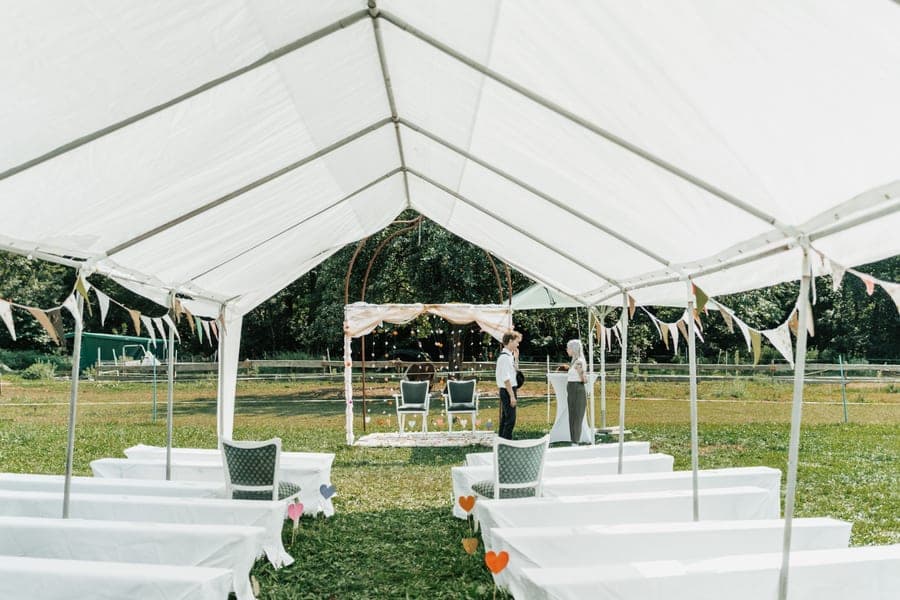 Eurmax Pro 10 x 10 Aluminum Pop-Up CanopyAn aluminum-framed commercial pop-up with a fire-certified 500-denier top — a shade structure you put away, not one you leave standing. | Best freestanding option | Not published by manufacturer | Check price on Amazon |
| 04 | 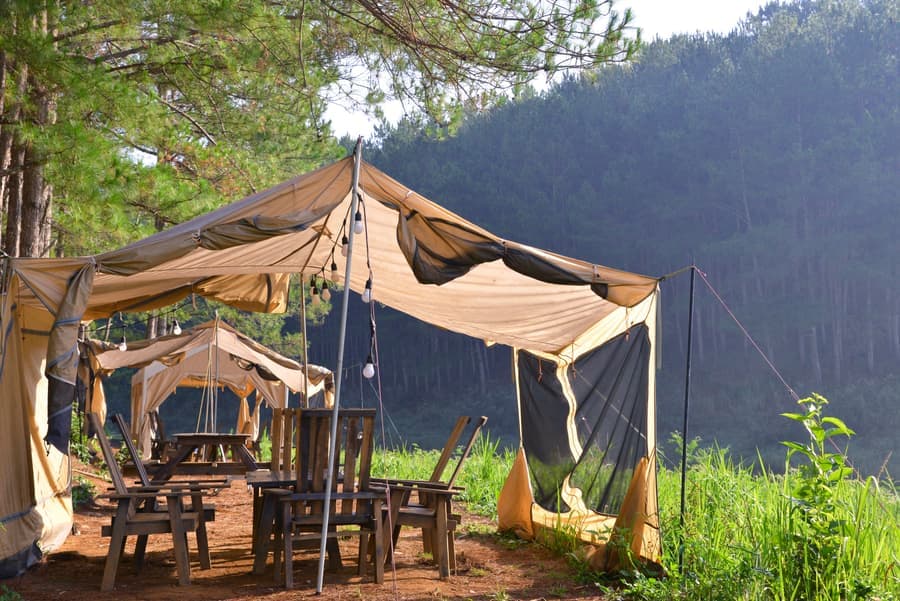 ABCCANOPY S1 Nova Base Heavy Duty Pop-Up CanopyThe only pop-up here whose manufacturer prints a wind figure at all — and it prints it in km/h, which is the sort of thing this site exists to translate. | The only pop-up with a published figure | 85 km/h (roughly 53 mph) on the aluminum frame | Check price on Amazon |
| 05 | 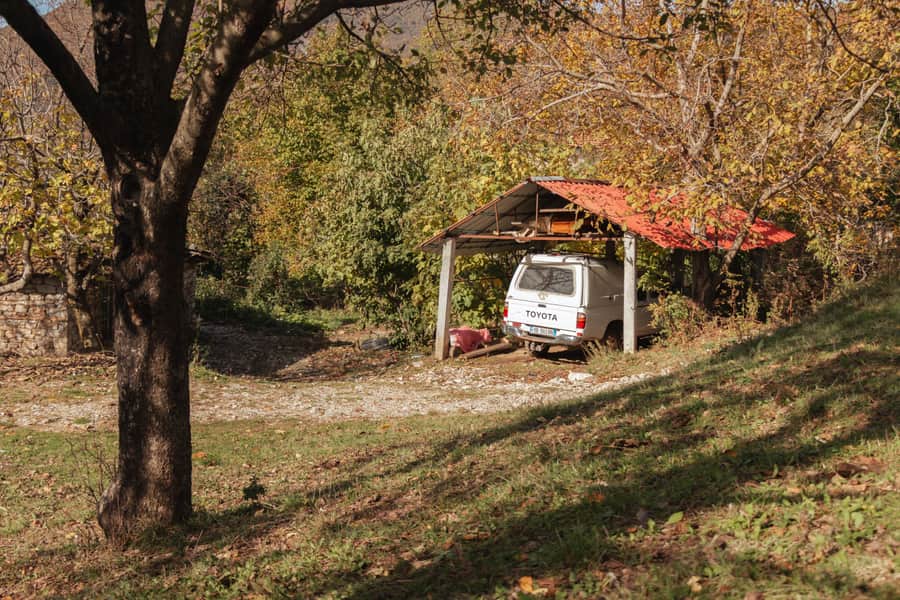 Quictent Heavy Duty 10 x 20 Carport CanopyThe only canopy on this site that publishes both a per-square-foot snow load and a tested wind speed — 9 lb/ft² and 55 mph. | If you need it to stay up | 55 (tested) | Check price on Amazon |
The durability table
Every published figure we could source for these structures, in one place, with the manufacturer page each number came from. Where a cell reads "Not published by manufacturer", that figure does not exist in the manufacturer's own material — we do not estimate it and we do not copy one from another site.
| Model | Wind rating (mph) | Snow load | Frame | Roof | Anchoring required | Warranty | Spec source |
|---|---|---|---|---|---|---|---|
| Diensweek P100 Manual Retractable AwningTop pick | Beaufort 5 (roughly 19-24 mph) — retract above it | Not published by manufacturer | T5-grade aluminum with PVC-coated stainless steel arm cables and galvanized steel roller tube | 280 g/m² polyester with PU coating, water resistant, 50 UV+ | Not published by manufacturer | 1 year | Diensweek official siteChecked 2026-09-26 |
| Diensweek Motorized Acrylic Retractable Awning | Beaufort 5 (roughly 19-24 mph) — retract above it | Not published by manufacturer | Corrosion-resistant aluminum | 100% acrylic, fade-resistant, 80 UV+ | Not published by manufacturer | 1 year | Diensweek official siteChecked 2026-09-26 |
| Eurmax Pro 10 x 10 Aluminum Pop-Up Canopy | Not published by manufacturer | Not published by manufacturer | Aluminum | 500D polyester with PU coating, seam-sealed, CPAI-84 fire retardant certified | Not published by manufacturer | Not published by manufacturer | Eurmax Pro 10x10 product pageChecked 2026-09-26 |
| ABCCANOPY S1 Nova Base Heavy Duty Pop-Up Canopy | 85 km/h (roughly 53 mph) on the aluminum frame | Not published by manufacturer | Aluminum heavy-duty frame | Not published by manufacturer | Not published by manufacturer | Not published by manufacturer | ABCCANOPY S1 Nova Base product pageChecked 2026-09-26 |
| Quictent Heavy Duty 10 x 20 Carport Canopy | 55 (tested) | 9 lb/ft² | 1.46 in. (38 mm) heavy-duty galvanized steel tubing with 12 cross steel cables | 16 mil / 180 g PE tarp, 100% UV block, triple-stitched seams | Ground nails and bungee cords supplied | 1 year on poles and tarp; lifetime on joints, ground nails and bungee cords | Quictent 10x20 carport product pageChecked 2026-09-26 |
Every pick in full
Top pick
Diensweek P100 Manual Retractable Awning
Retracts, which is the only wind strategy a fabric awning has. The published rating is a Beaufort number, not a mile-per-hour figure.
- Wind rating
- Beaufort 5 (roughly 19-24 mph) — retract above it
- Snow load
- Not published by manufacturer
- Frame
- T5-grade aluminum with PVC-coated stainless steel arm cables and galvanized steel roller tube
- Roof
- 280 g/m² polyester with PU coating, water resistant, 50 UV+
- Anchoring
- Not published by manufacturer
- Warranty
- 1 year
- Sizes
- 8 x 7 ft to 15 x 10 ft
For a patio against the house, this is the product that makes structural sense — because it is the only shade structure in this entire category with an active wind strategy.
You retract it. Diensweek publishes wind guidance as Beaufort 5 — roughly 19-24 mph — above which you retract, and that is a much lower figure than a pergola or a carport publishes. But a retracted awning is not exposed at all, which is something no fixed structure can claim. The figure describes the extended condition, and you control which condition you are in.
The frame is better specified than most in this category: T5-grade aluminum with PVC-coated stainless steel arm cables and a cold-rolled welded galvanized steel roller tube. The arm cables and the roller tube are the two components that actually take the load on a retractable awning, and both are specified.
Fabric is 280 g/m² polyester with a PU coating, water resistant, 50 UV+. Coated polyester is the norm at this tier and it fades — the acrylic upgrade is covered below and in best retractable awnings.
Sizes 8 x 7 ft to 15 x 10 ft, one-year warranty, CE / GS / RoHS certified. And no posts on the floor at all, which on a narrow terrace is frequently the deciding advantage.
Skip it if: The area you want shaded is not against a suitable wall — an awning needs a wall and gives you nothing over a freestanding space.
#ad Price shown as of September 26, 2026. How this site is funded
Specifications from Diensweek official site, checked 2026-09-26.
Best fabric
Diensweek Motorized Acrylic Retractable Awning
Solution-dyed acrylic instead of coated polyester — the upgrade that decides whether the fabric still has its color in year six.
- Wind rating
- Beaufort 5 (roughly 19-24 mph) — retract above it
- Snow load
- Not published by manufacturer
- Frame
- Corrosion-resistant aluminum
- Roof
- 100% acrylic, fade-resistant, 80 UV+
- Anchoring
- Not published by manufacturer
- Warranty
- 1 year
- Sizes
- Up to 15 x 10 ft
The same idea with the fabric upgrade that actually matters over a decade, and on a patio — where the awning is in view constantly — it matters more than anywhere else.
100% acrylic, fade-resistant, 80 UV+ rather than the manual line's 280 g/m² PU-coated polyester. The difference is where the color lives: solution-dyed acrylic has pigment in the fiber, and coated polyester has it applied to the surface. Coated fabric fades and then the coating cracks and it stops being water resistant; acrylic holds its color far longer.
On a south-facing wall that single specification decides whether you still like the awning in year six, which is why Diensweek uses acrylic on its motorized line and polyester on its manual one.
Corrosion-resistant aluminum frame, same Beaufort 5 wind guidance — retract above roughly 24 mph — up to 15 x 10 ft, one-year warranty.
The motor is the caveat. It adds a power supply and a failure mode, and the reason it is here is the fabric rather than the motorization. If a manual crank with acrylic fabric is available to you, that is arguably the better combination.
Skip it if: You would rather not own a motor. The fabric is the reason to choose this, and motorization is what it comes attached to.
#ad Price shown as of September 26, 2026. How this site is funded
Specifications from Diensweek official site, checked 2026-09-26.
Best freestanding option
Eurmax Pro 10 x 10 Aluminum Pop-Up Canopy
An aluminum-framed commercial pop-up with a fire-certified 500-denier top — a shade structure you put away, not one you leave standing.
- Wind rating
- Not published by manufacturer
- Snow load
- Not published by manufacturer
- Frame
- Aluminum
- Roof
- 500D polyester with PU coating, seam-sealed, CPAI-84 fire retardant certified
- Anchoring
- Not published by manufacturer
- Warranty
- Not published by manufacturer
- Sizes
- 10 x 10 ft, 11.1 ft peak height
If the space is not against a wall, this is the honest answer — and it is a considerably better-made product than the pop-up category's reputation suggests.
500D polyester with a PU coating, seam-sealed, CPAI-84 fire retardant certified, on an aluminum frame, 10 x 10 ft with an 11.1 ft peak height. That is a commercial event specification: the denier figure, the seam sealing and the fire certification are all things consumer canopies do not publish.
No wind rating is published, and that is the correct disclosure rather than an omission. A pop-up's wind strategy is to be folded down and put in a bag, and the most common way these get destroyed is being treated as a structure. Nobody can rate a folding frame for wind in a way that means anything.
What it gets you over an awning: it goes anywhere, it needs no wall and no anchoring, it needs no permit, and it is nowhere near a patio the rest of the year.
What it costs you: you have to put it up and take it down each time. A pop-up you have to deploy is a pop-up that stays in the garage — that is a real outcome and worth predicting honestly before you buy.
Skip it if: You want shade that is simply always there. Anything you have to deploy tends not to get deployed.
#ad Price shown as of September 26, 2026. How this site is funded
Specifications from Eurmax Pro 10x10 product page, checked 2026-09-26.
The only pop-up with a published figure
ABCCANOPY S1 Nova Base Heavy Duty Pop-Up Canopy
The only pop-up here whose manufacturer prints a wind figure at all — and it prints it in km/h, which is the sort of thing this site exists to translate.
- Wind rating
- 85 km/h (roughly 53 mph) on the aluminum frame
- Snow load
- Not published by manufacturer
- Frame
- Aluminum heavy-duty frame
- Roof
- Not published by manufacturer
- Anchoring
- Not published by manufacturer
- Warranty
- Not published by manufacturer
- Sizes
- 8 x 8 ft and 10 x 10 ft
Included because it publishes something almost nothing in its class does, and because the figure is a useful lesson in reading specifications.
85 km/h on the aluminum frame — roughly 53 mph. That reads as an impressive number until you convert it, at which point it sits below the Quictent carport's tested 55 mph and above every hardtop gazebo we track. A figure in km/h reads bigger than the same speed in mph, and this is the clearest example of that on the whole site.
Aluminum heavy-duty frame, in 8 x 8 ft and 10 x 10 ft. The frame is the specified part; the fabric specification is not published for this model, which is the reverse of the Eurmax and worth knowing.
How to read the figure honestly: it describes a frame, probably in a controlled condition, on a product designed to fold down. It is better than no disclosure. It is not a license to leave a pop-up standing through a storm, and no manufacturer of a folding frame is claiming that.
Worth considering if you want a pop-up and the published figure gives you more confidence than silence does — which is a reasonable preference.
Skip it if: You want the fabric specified — the Eurmax publishes denier, seam sealing and fire certification where this publishes a frame figure.
#ad Price shown as of September 26, 2026. How this site is funded
Specifications from ABCCANOPY S1 Nova Base product page, checked 2026-09-26.
If you need it to stay up
Quictent Heavy Duty 10 x 20 Carport Canopy
The only canopy on this site that publishes both a per-square-foot snow load and a tested wind speed — 9 lb/ft² and 55 mph.
- Wind rating
- 55 (tested)
- Snow load
- 9 lb/ft²
- Frame
- 1.46 in. (38 mm) heavy-duty galvanized steel tubing with 12 cross steel cables
- Roof
- 16 mil / 180 g PE tarp, 100% UV block, triple-stitched seams
- Anchoring
- Ground nails and bungee cords supplied
- Warranty
- 1 year on poles and tarp; lifetime on joints, ground nails and bungee cords
- Sizes
- 10 x 20 x 8.7 ft (H)
Not a patio product, and on this page deliberately — because it is the only canopy on the site that publishes figures for standing through weather, and if what you actually need is permanent cover, nothing else here qualifies.
9 lb/ft² snow load and a tested 55 mph wind speed — a per-square-foot snow figure and a wind figure, which is more disclosure than any hardtop gazebo we track manages. Frame is 1.46 in. (38 mm) heavy-duty galvanized steel tubing with twelve cross steel cables, under a 16 mil / 180 g PE tarp, 100% UV block, triple-stitched seams.
The warranty splits sensibly: one year on poles and tarp, lifetime on joints, ground nails and bungee cords — the connectors being what a steel-frame shelter actually fails at.
What it is not is a place to sit. It is 10 x 20 x 8.7 ft of equipment shelter, it looks like equipment shelter, and over a patio it would be wrong. But if the requirement is cover that stays up and publishes numbers, this is the only canopy that does both.
See best carport canopies for the full write-up.
Skip it if: You want somewhere to eat or sit. This is a shelter and it reads as one.
#ad Price shown as of September 26, 2026. How this site is funded
Specifications from Quictent 10x20 carport product page, checked 2026-09-26.
Four products, one word
The most useful thing this page can do is stop you comparing the wrong things. "Patio canopy" covers four products whose specifications are not comparable to each other.
- Retractable awnings attach to the house and fold away. The only shade structure with an active wind strategy — you retract. Published guidance is a Beaufort number rather than mph: Diensweek states Beaufort 5, roughly 19-24 mph, above which you retract.
- Pop-up canopies are events equipment. The commercial ones are genuinely well made — 500D PU-coated tops, seam sealed, fire certified, aluminum frames — and almost none publishes a wind rating, because the strategy is to fold them down.
- Carport and shelter canopies are steel-framed and semi-permanent, and they are the best-documented products in this hub: Quictent publishes 9 lb/ft² snow and a tested 55 mph wind on 38 mm galvanized tube.
- Fixed patio covers — solid-roof structures that live somewhere between a canopy and a pergola. If what you want is permanent, roofed and anchored, read canopy vs pergola before spending anything.
The question that sorts them: does the shade need to be there permanently? Permanently, over a seating area — you are probably looking at the wrong hub, and pergolas or gazebos is where to start. Sometimes, against a wall — an awning. Occasionally, anywhere — a pop-up. Permanently, over equipment — a carport.
The fabric specifications that matter
Fabric is where canopies are specified most honestly, because the numbers are easy to publish and easy to verify. Three appear often enough to compare.
- Fiber, and this is the one worth spending on. Coated polyester is cheaper and fades, and once the coating cracks it stops being water resistant. Solution-dyed acrylic has the pigment in the fiber rather than on it, which is why Diensweek uses acrylic on its motorized line and 280 g/m² PU-coated polyester on its manual one. On a south-facing wall this decides whether you like the awning in year six.
- Weight, in g/m² or mils. Diensweek's manual awnings are 280 g/m²; Quictent's carport cover is a 16 mil / 180 g PE tarp. Heavier is more tear-resistant and — on a retractable awning — more load on the arms.
- Denier and certification, on pop-ups. The Eurmax Pro publishes 500D with sealed seams and CPAI-84 fire retardant certification. That is a commercial specification rather than a consumer one, and a canopy publishing a denier figure at all is a good sign.
- UV rating. Diensweek publishes 50 UV+ on its polyester and 80 UV+ on its acrylic; Quictent publishes 100% UV block on its PE tarp. UV resistance determines how fast fabric degrades, not just how much sun it stops.
- And what to treat carefully: "waterproof" versus "water resistant". A coated polyester awning is water resistant until the coating cracks. That is a meaningfully different claim from a waterproof tarp, and canopy fabric materials covers the difference.
Wind is the failure mode here
Every product in this hub fails in wind before it fails in any other way, and the published figures reflect it: a carport tested to 55 mph, an awning rated to roughly 24 mph extended, a pop-up frame at 85 km/h (about 53 mph), and a great many products with no figure at all.
What separates them is not strength but whether the structure has a way out. An awning retracts. A pop-up folds down and goes in a bag. A carport does neither — which is why its frame is 38 mm galvanized tube with twelve cross cables, and why it is the only product here publishing a snow load.
The practical rule: if a canopy has no way to get out of the wind and no published wind figure, do not leave it up unattended. That single sentence covers most of the bad outcomes in this category.
Ballast is the other thing people get wrong. Weights resist sliding and do very little against the uplift that actually takes structures apart, and the effective weights are far higher than most people use. Canopy wind ratings and weights covers the numbers and what anchoring actually requires.
What we would actually do
A patio against the house, wanting shade you can remove: the Diensweek P100 manual awning, or the acrylic-fabric motorized version if the wall faces south and you intend to keep it a decade. No posts on the floor, full sun when you want it, and a wind strategy that works because it removes the structure from the wind entirely.
A freestanding space, occasional use: the Eurmax Pro pop-up. Commercial fabric spec, aluminum frame, and nothing anchored — and be honest with yourself about whether you will put it up.
A freestanding space, constant use: not a canopy. This is the case where the honest answer is a pergola or a hardtop gazebo, both of which publish wind ratings and neither of which has a consumable roof.
Equipment, a vehicle or a boat: the Quictent carport, which publishes better durability figures than most gazebos and is the only canopy here built to stand.
And in all cases: check the fiber before you check the price. Acrylic over coated polyester is the upgrade that shows, and it is the one specification most listings would rather not state.
What we cut, and why
Every model below was a genuine candidate and did not make the list. The reason is stated in each case, because a shortlist with no visible rejections is not evidence of a selection process.
- Every pop-up and canopy with no published fabric or frame specification
- This is most of the category by volume. Where a canopy publishes no denier, no fabric weight, no frame material and no wind guidance, there is nothing to compare — and "heavy duty" appears on a 500D commercial top and a lightweight consumer one equally.
- Fabric gazebos and soft-top structures sold as patio canopies
- A fabric canopy on a fixed frame is a consumable roof on a permanent footprint, which is the worst combination in this category: you get the replacement cycle without the portability. Covered in [hardtop vs soft top gazebos](/gazebos/hardtop-vs-soft-top-gazebos).
- Awnings with no published fabric fiber
- On a retractable awning the fiber is the specification that decides whether you still like it in year six — solution-dyed acrylic holds color far longer than coated polyester. An awning listing that will not say which it is has omitted the one thing worth knowing.
- Sail-style and freestanding fabric canopies with fixed frames
- Sold into these searches and awkwardly positioned: a fixed frame means anchoring and a permit question, and a fabric roof means a replacement cycle. If you want fabric, a [shade sail](/shade-sails) is cheaper and comes down properly; if you want permanent, a [pergola](/pergolas) publishes a wind rating.
Questions people ask
What is the best patio canopy?
What is the best patio shade option?
How much wind can a patio canopy take?
Can I leave a patio canopy up all year?
Are pop-up canopies any good?
What fabric should a patio canopy have?
Is a canopy or a pergola better for a patio?
Do canopy weights work?
Where these figures came from
- Diensweek — 280 g/m² PU-coated polyester and 100% acrylic fabric lines, T5 aluminum frame, PVC-coated stainless arm cables, galvanized roller tube, Beaufort 5 guidance, sizes, 1-year warranty, CE/GS/RoHS
- Eurmax Pro 10x10 — 500D PU-coated polyester, seam-sealed, CPAI-84 fire retardant certified, aluminum frame, 11.1 ft peak height
- ABCCANOPY S1 Nova Base — 85 km/h figure on the aluminum frame, 8x8 and 10x10 ft sizes
- Quictent 10x20 carport — 9 lb/ft² snow load, 55 mph tested wind, 38 mm galvanized steel frame with 12 cross cables, 16 mil / 180 g PE tarp, warranty split
Found an error? Tell us and we will correct it within seven days and note the change on the page with a dated line — see our editorial policy.