Pergola vs patio cover
Most people asking this question want rain cover and have been shown a pergola. The distinction matters, and so does the third option that does both.
By Ryder M. · Published · Last updated
We compare published manufacturer specifications, warranty terms and owner-reported failure modes. We have not physically tested these structures. How we judge shade structures
Slat & Shade earns a commission on qualifying purchases made through links on this page. It costs you nothing extra and never changes what we recommend. Full disclosure
Part of Pergolas
The short answer
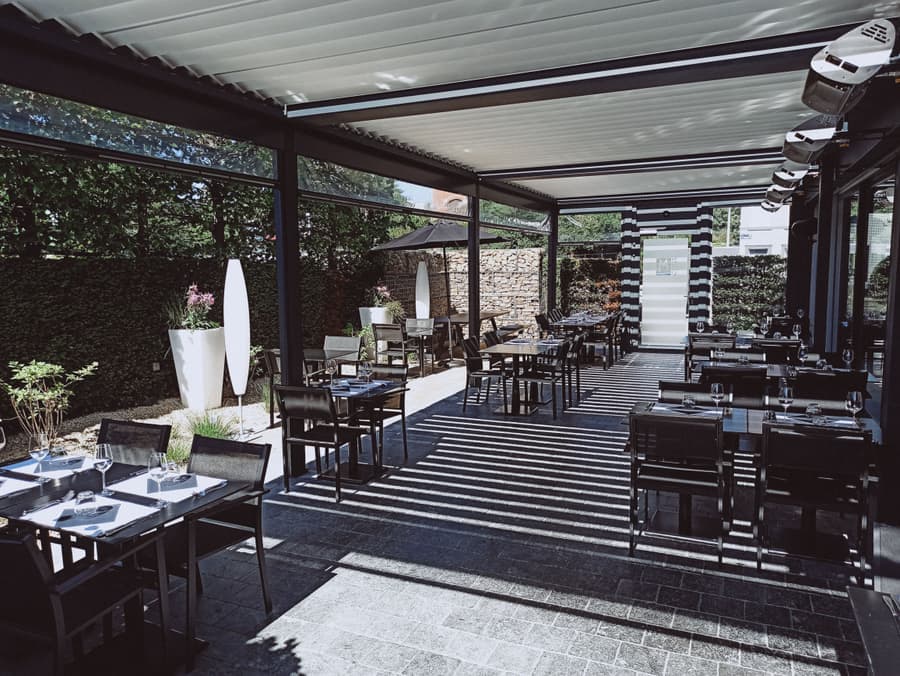
A pergola is a freestanding open-roof frame; a patio cover is a solid roof, usually attached to the house. If you want guaranteed rain cover, you want a cover. If you want adjustable shade with rain cover when you need it, a louvered pergola does both — and attaching anything to the house is what usually triggers a permit.
Our picks at a glance
| # | Structure | Best for | Wind rating | Price |
|---|---|---|---|---|
| 01 | Outsunny Hardtop Polycarbonate PergolaA solid-roof aluminum pergola that publishes a roof load figure instead of a wind rating — useful for rain, unproven for wind. | Buy this if you want the patio cover | Not published by manufacturer | Check price on Amazon |
| 02 | 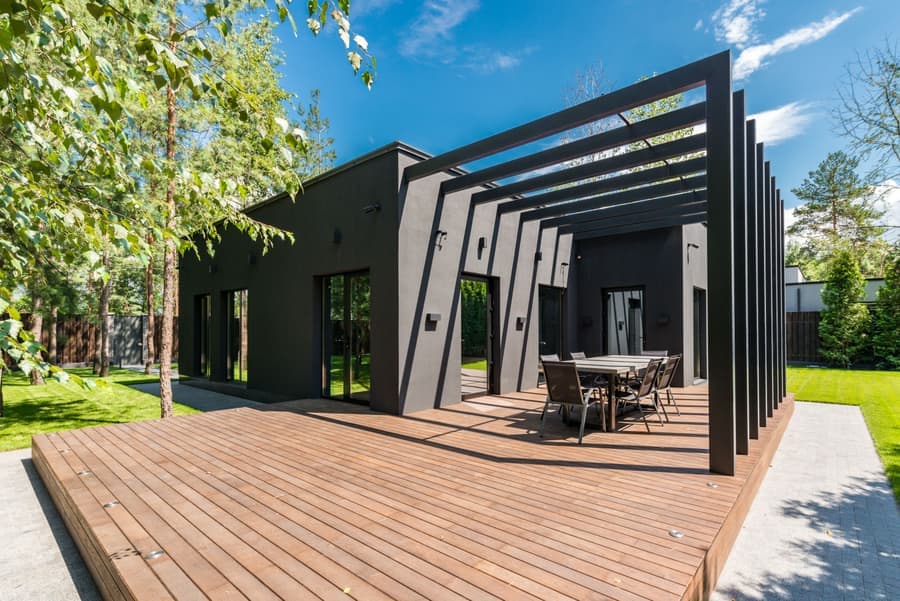 PURPLE LEAF Caesar Louvered PergolaThe same frame system as the Athena in more sizes and configurations, with a slightly lower published wind figure and the same one-year warranty. | The wall-mounted option, and genuinely both | 70 (under normal installation) | Check price on Amazon |
| 03 |  Domi Outdoor Living Aluminum Louvered PergolaThe only louvered pergola here that publishes a snow load in pounds per square foot and backs the roof and frame for five years rather than one. | Best freestanding version of both | 72 | Check price on Amazon |
| 04 | 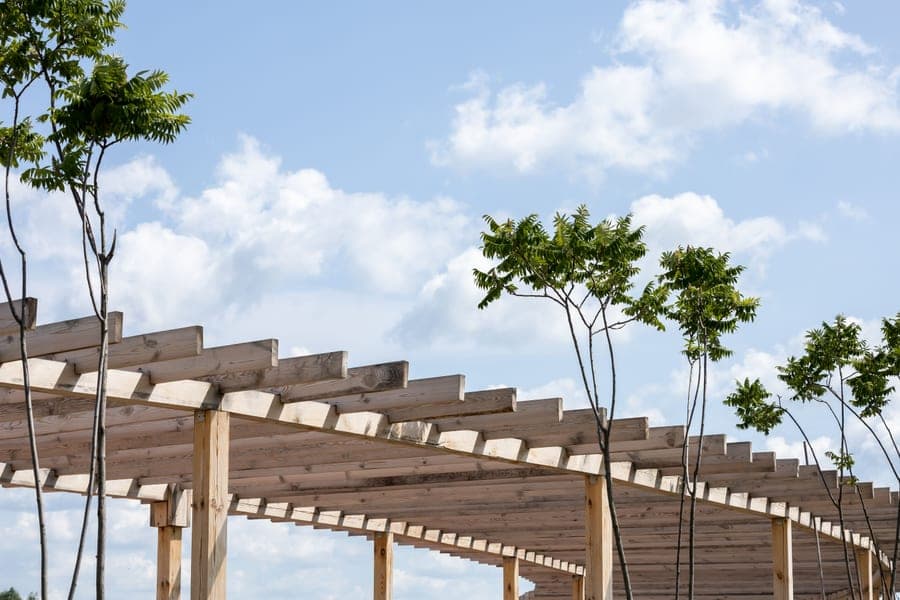 Backyard Discovery Beaumont Cedar PergolaThe highest published wind rating of any pergola on this site, and the only wood kit whose manufacturer makes anchoring a stated condition of the rating. | Buy this if you want the pergola | 100 (when properly anchored) | Check price on Amazon |
The durability table
Every published figure we could source for these structures, in one place, with the manufacturer page each number came from. Where a cell reads "Not published by manufacturer", that figure does not exist in the manufacturer's own material — we do not estimate it and we do not copy one from another site.
| Model | Wind rating (mph) | Snow load | Frame | Roof | Anchoring required | Warranty | Spec source |
|---|---|---|---|---|---|---|---|
| Outsunny Hardtop Polycarbonate PergolaTop pick | Not published by manufacturer | Roof weight capacity 10 lb/ft² (50 kg/m²) | Aluminum | Solid polycarbonate with drainage holes | Not published by manufacturer | 1 year | Outsunny hardtop pergola product pageChecked 2026-09-26 |
| PURPLE LEAF Caesar Louvered Pergola | 70 (under normal installation) | Not published by manufacturer | Powder-coated aluminum | Adjustable aluminum louvers | Not published by manufacturer | 1 year | PURPLE LEAF louvered pergola collectionChecked 2026-09-26 |
| Domi Outdoor Living Aluminum Louvered Pergola | 72 | 15 lb/ft² | Aluminum | Aluminum louvers, adjustable | M6 expansion bolts into a wooden deck or concrete floor, immediately after assembly | 5 years on hardtop roof and frame; 1 year on curtains and netting | Domi Outdoor Living product pageChecked 2026-09-26 |
| Backyard Discovery Beaumont Cedar Pergola | 100 (when properly anchored) | Not published by manufacturer | 100% cedar, 5.5 in. x 5.5 in. posts | Multi-level cedar trellis roof with crossing rafters — open, not solid | Mandatory. Concealed concrete anchors, per the instruction manual | 5 years | Backyard Discovery Beaumont product pageChecked 2026-09-26 |
Every pick in full
Buy this if you want the patio cover
Outsunny Hardtop Polycarbonate Pergola
A solid-roof aluminum pergola that publishes a roof load figure instead of a wind rating — useful for rain, unproven for wind.
- Wind rating
- Not published by manufacturer
- Snow load
- Roof weight capacity 10 lb/ft² (50 kg/m²)
- Frame
- Aluminum
- Roof
- Solid polycarbonate with drainage holes
- Anchoring
- Not published by manufacturer
- Warranty
- 1 year
- Sizes
- 12 x 10 ft, 14.5 x 10 ft, 16.5 x 10 ft
A solid roof in pergola form, which is what most people actually mean when they ask this question: solid polycarbonate panels with drainage holes on an aluminum frame with height-adjustable posts.
It gives you the patio-cover proposition without attaching anything to the house — no wall fixing, no structural alteration, and usually a simpler permit conversation. The height-adjustable posts are what make it work under an existing eave or against a sloping surface.
It publishes a roof weight capacity of 10 lb/ft² (50 kg/m²), which is more than most louvered pergolas say about vertical loading and a modest figure in absolute terms. Check it against the ground snow load your building department holds for your address.
No wind rating is published, and a permanent solid roof is a permanent sail — you cannot open it before a storm. That is the structural cost of a fixed cover and it is worth weighing against the convenience. 12 x 10 to 16.5 x 10 ft, one-year warranty.
Skip it if: You are in an exposed spot or get real snow — no wind figure, and 10 lb/ft² is not a snow-country number.
#ad Price shown as of September 26, 2026. How this site is funded
Specifications from Outsunny hardtop pergola product page, checked 2026-09-26.
The wall-mounted option, and genuinely both
PURPLE LEAF Caesar Louvered Pergola
The same frame system as the Athena in more sizes and configurations, with a slightly lower published wind figure and the same one-year warranty.
- Wind rating
- 70 (under normal installation)
- Snow load
- Not published by manufacturer
- Frame
- Powder-coated aluminum
- Roof
- Adjustable aluminum louvers
- Anchoring
- Not published by manufacturer
- Warranty
- 1 year
- Sizes
- 9 x 12 ft to 14 x 24 ft, plus wall-mounted and slanted-roof variants
The closest thing to having it both ways, and the configuration most people asking this question end up wanting: PURPLE LEAF's Caesar line includes wall-mounted lean-to and slanted-roof variants with an adjustable louvered roof.
Attached to the house like a patio cover, with a roof you can change like a pergola. Closed louvers with integrated beam drainage give you real rain cover; open louvers give you spring sun and the best available wind configuration. That combination does not exist on a fixed cover.
70 mph published wind resistance under normal installation, powder-coated aluminum frame, sizes 9 x 12 through 14 x 24 ft. One-year warranty, no published snow figure.
The permit consideration is real and it is the main thing to check first. Fixing a structure to the building is a structural alteration in many jurisdictions, and it is a different permitting category from a freestanding accessory structure. A badly fixed lean-to also transfers wind load into your house, which makes this the configuration where professional advice is most worth paying for. Pergola permits and HOA covers the shape of the question.
Skip it if: You cannot fix into the house, or you would rather avoid the permit conversation entirely — go freestanding.
#ad Price shown as of September 26, 2026. How this site is funded
Specifications from PURPLE LEAF louvered pergola collection, checked 2026-09-26.
Best freestanding version of both
Domi Outdoor Living Aluminum Louvered Pergola
The only louvered pergola here that publishes a snow load in pounds per square foot and backs the roof and frame for five years rather than one.
- Wind rating
- 72
- Snow load
- 15 lb/ft²
- Frame
- Aluminum
- Roof
- Aluminum louvers, adjustable
- Anchoring
- M6 expansion bolts into a wooden deck or concrete floor, immediately after assembly
- Warranty
- 5 years on hardtop roof and frame; 1 year on curtains and netting
- Sizes
- 10 x 10 ft, 10 x 12 ft, 10 x 13 ft, 12 x 16 ft, 12 x 20 ft
If the reason you were looking at patio covers is rain cover, and the reason you were looking at pergolas is not wanting to drill into the house, this is the answer: a freestanding louvered pergola with the best-published weather figures in the category.
72 mph wind and 15 lb/ft² snow, both published — and that snow figure is the only one anyone publishes for a louvered pergola. A closed louvered roof is a solid plane and accumulates like one, so for a structure doing patio-cover duty in a snowy region, having the number matters.
Five years on the hardtop roof and frame, one year on curtains and netting — five times the structural term of the category norm. Anchoring instruction is specific: M6 expansion bolts into a wooden deck or concrete floor, immediately after assembly.
Closed, it is a patio cover with drainage in the beams. Open, it is a pergola. Freestanding, it avoids the wall fixing entirely. 10 x 10 through 12 x 20 ft.
Skip it if: You want the roof simply to be there with nothing to operate — a solid cover does that and this does not.
#ad Price shown as of September 26, 2026. How this site is funded
Specifications from Domi Outdoor Living product page, checked 2026-09-26.
Buy this if you want the pergola
Backyard Discovery Beaumont Cedar Pergola
The highest published wind rating of any pergola on this site, and the only wood kit whose manufacturer makes anchoring a stated condition of the rating.
- Wind rating
- 100 (when properly anchored)
- Snow load
- Not published by manufacturer
- Frame
- 100% cedar, 5.5 in. x 5.5 in. posts
- Roof
- Multi-level cedar trellis roof with crossing rafters — open, not solid
- Anchoring
- Mandatory. Concealed concrete anchors, per the instruction manual
- Warranty
- 5 years
- Sizes
- 10 x 10 ft, 12 x 10 ft, 14 x 10 ft, 14 x 12 ft, 16 x 12 ft, 20 x 12 ft
The pergola side in its purest form, and worth being clear about what it is: a multi-level cedar trellis roof with crossing rafters, which is open, not solid. Dappled shade, and water goes straight through.
The reason to choose it over any kind of cover is wind and appearance. 100 mph Pro-Tect tested — the highest published figure in backyard shade — on 100% cedar with 5.5 in. x 5.5 in. posts, with anchoring made mandatory by the manufacturer. No solid-roof structure at this price publishes anything close, because a continuous roof plane collects load and an open one does not.
And it reads as architecture in a way an aluminum cover does not. A cedar pergola with heavy posts and corbels is a structure; a polycarbonate cover is a roof.
If you want rain cover, this is the wrong product — and the mismatch between what people expect from "pergola" and what a slatted roof delivers is the most common disappointment in this category. Do pergolas provide shade has the honest numbers. Five-year warranty, 10 x 10 through 20 x 12 ft, re-seal every two to three years.
Skip it if: You want to stay dry. An open trellis roof will not do it and cannot be made to without changing what it is.
#ad Price shown as of September 26, 2026. How this site is funded
Specifications from Backyard Discovery Beaumont product page, checked 2026-09-26.
What each term actually means
Retailers use these loosely, and the loose usage is why people end up with the wrong one.
A pergola is a post-and-beam frame with an open roof — slats, lattice or adjustable louvers. Traditionally freestanding, though attached versions exist. Its defining feature is that the roof is not continuous.
A patio cover is a solid roof over a patio, usually attached to the house along one edge and supported on posts at the other. Sometimes called an attached roof, a solarium roof or a covered patio. Its defining feature is that it is continuous and it sheds.
The confusing middle is where most of the market now sits: solid-roof structures sold as "pergolas" (polycarbonate or steel panels on a pergola-shaped frame), and louvered pergolas that become solid on demand. Neither term describes those well, which is why we would rather you decide on the two underlying questions — does the roof shed water, and is it attached to the house — than on the label.
| Open pergola | Louvered pergola | Solid patio cover | |
|---|---|---|---|
| Rain cover | None | Full when closed | Full, always |
| Adjustable | No | Yes — sun in April, shade in August | No |
| Published wind rating | 70-100 mph. The best available | 70-72 mph, and you can open it before a storm | Rarely published. A permanent sail |
| Snow | Falls through. No accumulation | Accumulates closed; open it for winter. Domi publishes 15 lb/ft² | Accumulates. Outsunny publishes a 10 lb/ft² roof capacity |
| Light underneath | Dappled and bright | Whatever you choose | Dark under steel; bright under polycarbonate |
| Attached to house? | Usually freestanding | Both available | Usually attached |
| Permit exposure | Lower — freestanding accessory structure | Lower freestanding, higher wall-mounted | Higher — attaching to the building is a structural alteration in many places |
| Maintenance | Sealing, if cedar | Sealing if cedar, plus a mechanism | None beyond washing; polycarbonate creeps |
| Best for | Exposed sites, appearance, dappled shade | Anyone who wants to control the shade | Guaranteed rain cover with nothing to operate |
Buy a patio cover if...
- You want rain cover with no operating step. A louvered roof keeps you dry when you remembered to close it. A solid roof keeps you dry on the afternoon it started raining while you were out.
- The space is against the house and you want the floor clear. An attached cover needs posts on one edge only, which on a narrow terrace is the difference between usable and cluttered.
- You want the roof to be the thing you never think about. No mechanism, no louvers to operate, nothing to maintain but washing — and on a long horizon a fixed panel has one fewer failure mode than a louvered one.
- You need to work under an existing eave. Height-adjustable posts and a slanted roof are cover-side features that let a structure tuck under a gutter line.
Buy a pergola if...
- Your site is exposed. Published figures are 70-100 mph against effectively nothing for a solid cover, and the gap is structural rather than a matter of build quality.
- You want sun in spring. A permanent solid roof over a patio you use in April is a common and expensive mistake. Either an open roof or a louvered one solves it.
- You would rather not drill into the house. Freestanding keeps the wall out of it entirely — no structural alteration, usually a simpler permit conversation, and no wind load transferred into the building.
- Appearance is doing real work. A cedar pergola with 5.5-6 in. posts reads as architecture. A polycarbonate cover reads as a roof, which is fine if that is what you want.
- You get heavy snow and would rather not clear a roof. An open roof does not accumulate. That is a genuine advantage and it is rarely mentioned.
Buy a louvered pergola if you cannot decide
Which is most people asking this question, and it is not a fence-sitting answer — it is the product that exists because this trade-off was worth engineering around.
Closed, with integrated drainage in the beams, a louvered roof is a patio cover. Water runs through the slats into channels in the frame and down the posts rather than off the edge onto whoever is sitting there. That is a genuine roof, not a partial one.
Open, it is a pergola — dappled light, spring sun, no accumulation in snow, and the best wind configuration available because you can remove the roof plane before a storm. Every louvered manufacturer recommends doing exactly that.
What it costs you is a mechanism and money. Moving parts in weather are a failure mode a fixed panel does not have, and louvered pergolas sit at the top of the category on price. Against that, Domi publishes both a 72 mph wind figure and a 15 lb/ft² snow load and covers roof and frame for five years — which is better disclosure than any solid cover we can find.
Louvered vs fixed roof pergolas works through that decision in detail, and best louvered pergolas is the shortlist.
The permit question, which usually decides it
This is the practical difference that matters most and it gets the least attention in product listings.
Attaching a structure to the house is frequently a different permitting category from building a freestanding one. A freestanding accessory structure is often exempt below a footprint threshold; bolting a roof to the building is a structural alteration to the building, and many jurisdictions treat it accordingly regardless of size. That is the single biggest practical argument for a freestanding pergola over an attached cover.
Thresholds, setbacks and the measuring point all vary by jurisdiction, and setbacks are often measured to the roof edge rather than the post — which brings the overhang into play. HOA rules add their own limits on height, footprint, color and placement, separate from the municipal ones.
Ask your building department before you order, not after. It is a short call, the answer is specific to your address, and it occasionally changes which category of product you should buy. We are not going to print thresholds here, because the authoritative figure is the one your jurisdiction adopts. Pergola permits and HOA covers what the question usually turns on.
And on the structural side: a badly fixed attached cover transfers wind and snow load into your house wall. That is the one configuration in backyard shade where we would actively recommend getting someone licensed involved, and nothing on this site is engineering advice.
Questions people ask
What is the difference between a pergola and a patio cover?
Is a pergola or a covered patio cheaper?
Can a pergola be a patio cover?
Do I need a permit for an attached patio cover?
Which handles wind better?
Will a patio cover make my patio dark?
Can a patio cover take snow?
What if the patio is against the house but I do not want to drill into it?
Where these figures came from
- Outsunny hardtop pergola — solid polycarbonate with drainage, 10 lb/ft² roof weight capacity, height-adjustable posts, sizes, 1-year warranty
- PURPLE LEAF louvered pergola collection — wall-mounted lean-to and slanted-roof variants, 70 mph Caesar figure, integrated drainage
- Domi Outdoor Living louvered pergola — 72 mph, 15 lb/ft², 5 years on roof and frame, M6 anchoring instruction
- Backyard Discovery Beaumont — 100 mph Pro-Tect tested, open cedar trellis roof, 5.5 in. posts, mandatory anchoring
Found an error? Tell us and we will correct it within seven days and note the change on the page with a dated line — see our editorial policy.