Canopy wind ratings and weights
Ballast resists sliding and does very little against uplift — which is the force that actually takes canopies apart. That is the most misunderstood thing in this category.
By Ryder M. · Published · Last updated
We compare published manufacturer specifications, warranty terms and owner-reported failure modes. We have not physically tested these structures. How we judge shade structures
Slat & Shade earns a commission on qualifying purchases made through links on this page. It costs you nothing extra and never changes what we recommend. Full disclosure
Part of Canopies & Patio Covers

The short answer
Published canopy wind figures range from Beaufort 5 (roughly 19-24 mph, with an instruction to retract) to a tested 55 mph on a steel-framed carport, with most pop-ups publishing nothing. Weights resist sliding and barely touch uplift, so treat ballast as a supplement to anchoring on a hard surface, never a replacement.
Our picks at a glance
| # | Structure | Best for | Wind rating | Price |
|---|---|---|---|---|
| 01 | 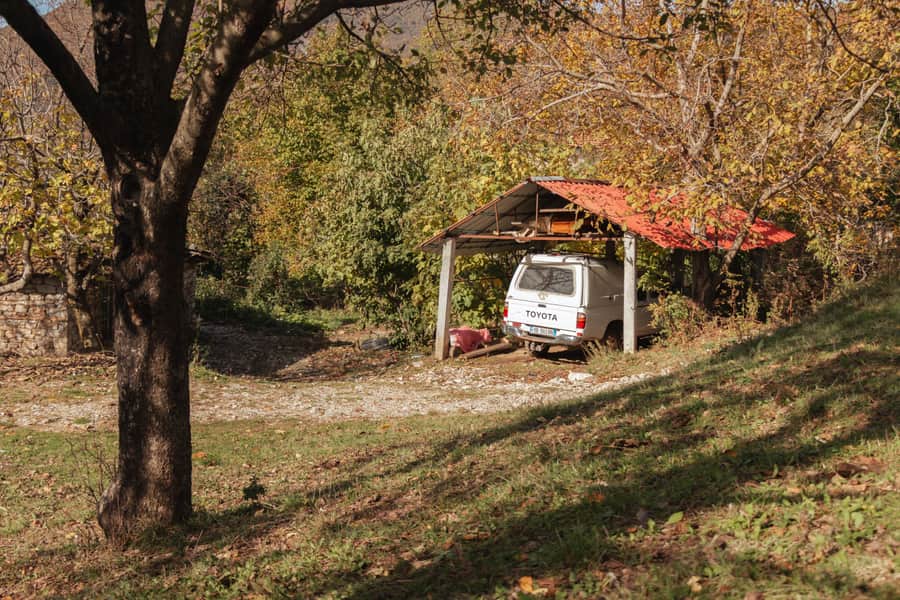 Quictent Heavy Duty 10 x 20 Carport CanopyThe only canopy on this site that publishes both a per-square-foot snow load and a tested wind speed — 9 lb/ft² and 55 mph. | Highest published figure | 55 (tested) | Check price on Amazon |
| 02 |  ABCCANOPY S1 Nova Base Heavy Duty Pop-Up CanopyThe only pop-up here whose manufacturer prints a wind figure at all — and it prints it in km/h, which is the sort of thing this site exists to translate. | The unit-conversion lesson | 85 km/h (roughly 53 mph) on the aluminum frame | Check price on Amazon |
| 03 | 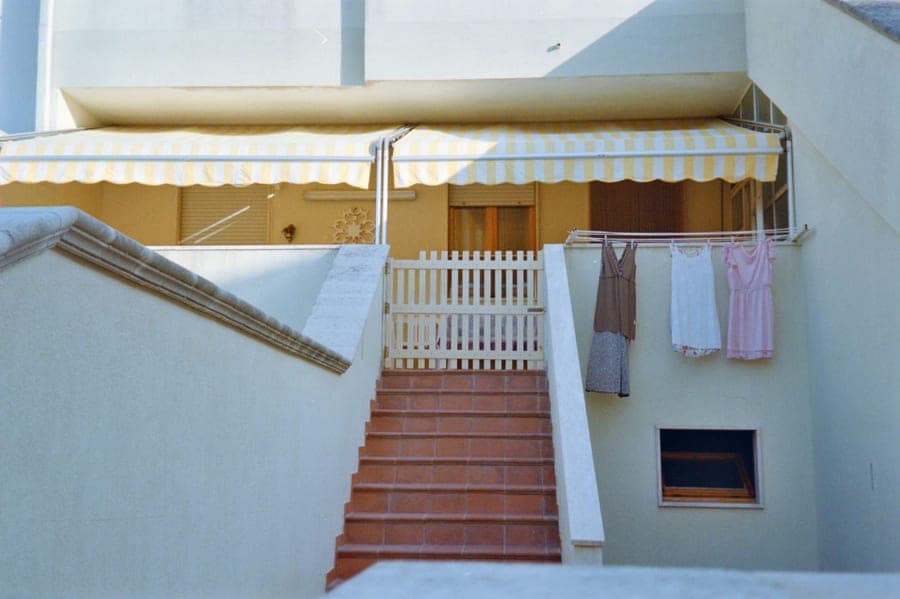 Diensweek P100 Manual Retractable AwningRetracts, which is the only wind strategy a fabric awning has. The published rating is a Beaufort number, not a mile-per-hour figure. | Lowest figure, best escape | Beaufort 5 (roughly 19-24 mph) — retract above it | Check price on Amazon |
| 04 | 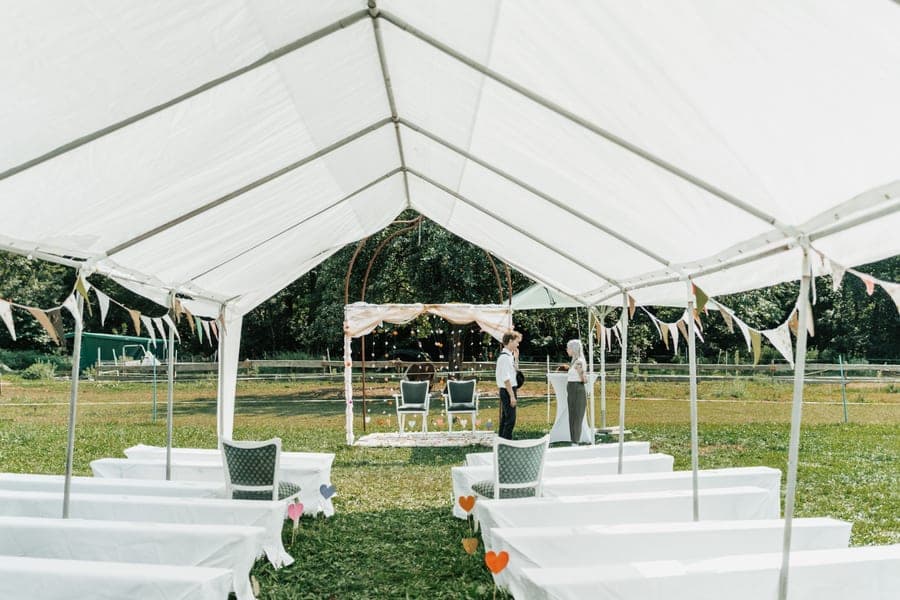 Eurmax Pro 10 x 10 Aluminum Pop-Up CanopyAn aluminum-framed commercial pop-up with a fire-certified 500-denier top — a shade structure you put away, not one you leave standing. | No figure, and that is correct | Not published by manufacturer | Check price on Amazon |
The durability table
Every published figure we could source for these structures, in one place, with the manufacturer page each number came from. Where a cell reads "Not published by manufacturer", that figure does not exist in the manufacturer's own material — we do not estimate it and we do not copy one from another site.
| Model | Wind rating (mph) | Snow load | Frame | Roof | Anchoring required | Warranty | Spec source |
|---|---|---|---|---|---|---|---|
| Quictent Heavy Duty 10 x 20 Carport CanopyTop pick | 55 (tested) | 9 lb/ft² | 1.46 in. (38 mm) heavy-duty galvanized steel tubing with 12 cross steel cables | 16 mil / 180 g PE tarp, 100% UV block, triple-stitched seams | Ground nails and bungee cords supplied | 1 year on poles and tarp; lifetime on joints, ground nails and bungee cords | Quictent 10x20 carport product pageChecked 2026-09-26 |
| ABCCANOPY S1 Nova Base Heavy Duty Pop-Up Canopy | 85 km/h (roughly 53 mph) on the aluminum frame | Not published by manufacturer | Aluminum heavy-duty frame | Not published by manufacturer | Not published by manufacturer | Not published by manufacturer | ABCCANOPY S1 Nova Base product pageChecked 2026-09-26 |
| Diensweek P100 Manual Retractable Awning | Beaufort 5 (roughly 19-24 mph) — retract above it | Not published by manufacturer | T5-grade aluminum with PVC-coated stainless steel arm cables and galvanized steel roller tube | 280 g/m² polyester with PU coating, water resistant, 50 UV+ | Not published by manufacturer | 1 year | Diensweek official siteChecked 2026-09-26 |
| Eurmax Pro 10 x 10 Aluminum Pop-Up Canopy | Not published by manufacturer | Not published by manufacturer | Aluminum | 500D polyester with PU coating, seam-sealed, CPAI-84 fire retardant certified | Not published by manufacturer | Not published by manufacturer | Eurmax Pro 10x10 product pageChecked 2026-09-26 |
Every pick in full
Highest published figure
Quictent Heavy Duty 10 x 20 Carport Canopy
The only canopy on this site that publishes both a per-square-foot snow load and a tested wind speed — 9 lb/ft² and 55 mph.
- Wind rating
- 55 (tested)
- Snow load
- 9 lb/ft²
- Frame
- 1.46 in. (38 mm) heavy-duty galvanized steel tubing with 12 cross steel cables
- Roof
- 16 mil / 180 g PE tarp, 100% UV block, triple-stitched seams
- Anchoring
- Ground nails and bungee cords supplied
- Warranty
- 1 year on poles and tarp; lifetime on joints, ground nails and bungee cords
- Sizes
- 10 x 20 x 8.7 ft (H)
A tested 55 mph wind speed, which is the highest published canopy figure we can source — and higher than any hardtop gazebo we track, which is worth noting on a product costing far less.
The frame explains it: 1.46 in. (38 mm) heavy-duty galvanized steel tubing with twelve cross steel cables. The cables are the mechanism. An unbraced tube frame racks in wind — it is pushed into a parallelogram before any individual member fails — and diagonal cables triangulate it into something stiff. Quictent states they boost frame stability substantially, and the principle is textbook.
It also publishes a 9 lb/ft² snow load, which matters because wind and snow arrive together and a loaded roof in wind is the worst case either produces.
Anchoring: ground nails and bungee cords supplied. Those are soft-ground hardware. On a concrete driveway you need expansion fixings, and they are not included — which is the same gap as every gazebo and pergola on this site.
Warranty: one year on poles and tarp, lifetime on joints, ground nails and bungee cords. On a tube-frame shelter the joints are what rack, so warranting them for life is a real statement.
Skip it if: Your region's ground snow load exceeds 9 lb/ft², or you need a footprint other than 10 x 20 ft.
#ad Price shown as of September 26, 2026. How this site is funded
Specifications from Quictent 10x20 carport product page, checked 2026-09-26.
The unit-conversion lesson
ABCCANOPY S1 Nova Base Heavy Duty Pop-Up Canopy
The only pop-up here whose manufacturer prints a wind figure at all — and it prints it in km/h, which is the sort of thing this site exists to translate.
- Wind rating
- 85 km/h (roughly 53 mph) on the aluminum frame
- Snow load
- Not published by manufacturer
- Frame
- Aluminum heavy-duty frame
- Roof
- Not published by manufacturer
- Anchoring
- Not published by manufacturer
- Warranty
- Not published by manufacturer
- Sizes
- 8 x 8 ft and 10 x 10 ft
Included on a wind page because it publishes a figure almost nothing in its class does, and because the unit it uses is instructive.
85 km/h on the aluminum frame. That is roughly 53 mph. It reads as a much larger number in km/h, and it sits just below the Quictent carport's tested 55 mph — which is not how most people would rank the two from the headline figures.
This is the clearest example on the site of why the unit matters as much as the number. When comparing any wind figure, convert everything to one unit first: km/h reads about 1.6× larger than the same speed in mph, and Beaufort numbers are a different scale entirely.
Aluminum heavy-duty frame, 8 x 8 and 10 x 10 ft. The frame is specified; the fabric is not published for this model.
And read what the figure describes: a frame, on a product designed to fold down. It is real disclosure and it is not permission to leave a pop-up standing through a storm.
Skip it if: You need a fabric specification — none is published for this model.
#ad Price shown as of September 26, 2026. How this site is funded
Specifications from ABCCANOPY S1 Nova Base product page, checked 2026-09-26.
Lowest figure, best escape
Diensweek P100 Manual Retractable Awning
Retracts, which is the only wind strategy a fabric awning has. The published rating is a Beaufort number, not a mile-per-hour figure.
- Wind rating
- Beaufort 5 (roughly 19-24 mph) — retract above it
- Snow load
- Not published by manufacturer
- Frame
- T5-grade aluminum with PVC-coated stainless steel arm cables and galvanized steel roller tube
- Roof
- 280 g/m² polyester with PU coating, water resistant, 50 UV+
- Anchoring
- Not published by manufacturer
- Warranty
- 1 year
- Sizes
- 8 x 7 ft to 15 x 10 ft
It publishes the lowest number on this page and it may be the safest product here, which is the central paradox of the category.
Beaufort 5 — roughly 19-24 mph — above which you retract. That is guidance for the extended condition, not a survival rating. Retracted, the awning has essentially no wind exposure at all: the fabric is rolled onto the tube and the arms are folded against the wall.
No fixed structure has any equivalent. A pergola, a gazebo or a carport is in the wind whether you like it or not; an awning can leave.
Which means its risk is behavioural, not structural. An awning left extended above the threshold is the most avoidable failure in backyard shade, and it happens because retracting felt like a chore. That is the honest argument for a motorized version with a wind sensor.
Frame is T5-grade aluminum with PVC-coated stainless steel arm cables and a cold-rolled welded galvanized steel roller tube — the two load-carrying components both specified, which is unusual.
Skip it if: You will not reliably retract it. The whole safety case depends on that.
#ad Price shown as of September 26, 2026. How this site is funded
Specifications from Diensweek official site, checked 2026-09-26.
No figure, and that is correct
Eurmax Pro 10 x 10 Aluminum Pop-Up Canopy
An aluminum-framed commercial pop-up with a fire-certified 500-denier top — a shade structure you put away, not one you leave standing.
- Wind rating
- Not published by manufacturer
- Snow load
- Not published by manufacturer
- Frame
- Aluminum
- Roof
- 500D polyester with PU coating, seam-sealed, CPAI-84 fire retardant certified
- Anchoring
- Not published by manufacturer
- Warranty
- Not published by manufacturer
- Sizes
- 10 x 10 ft, 11.1 ft peak height
Here to make a point about absence, because on this page a missing wind rating is sometimes the honest disclosure rather than a gap.
Eurmax publishes no wind rating for the Pro 10 x 10, and a pop-up's wind strategy is to be folded down and put in a bag. A wind figure would describe a condition the product is not supposed to be in, so publishing one would be misleading rather than helpful.
What it does publish is the fabric: 500D polyester with a PU coating, seam-sealed, CPAI-84 fire retardant certified, on an aluminum frame, with an 11.1 ft peak height. The high peak sheds water decisively rather than letting it pool in the middle of the top — and a pooling top is how these tear.
The most common way a pop-up is destroyed is being left standing. The frames and fabrics on commercial pop-ups are genuinely good; the failure is treating events equipment as a structure.
So read the absence as intent: this is a product you take down, and taking it down is the rating.
Skip it if: You want a canopy that stays up. This one is designed not to.
#ad Price shown as of September 26, 2026. How this site is funded
Specifications from Eurmax Pro 10x10 product page, checked 2026-09-26.
Every published canopy figure, converted
In one place and in one unit, because the three different scales in use make direct comparison almost impossible otherwise.
| Product | As published | In mph | Strategy | Snow load |
|---|---|---|---|---|
| Quictent 10 x 20 carport | 55 mph, tested | 55 | Resist — 38 mm tube, 12 cross cables | 9 lb/ft² |
| ABCCANOPY S1 Nova Base | 85 km/h on the aluminum frame | Roughly 53 | Fold down | Not published by manufacturer |
| Diensweek awnings (both lines) | Beaufort 5 | Roughly 19-24 | Retract — then zero exposure | Not published by manufacturer |
| Eurmax Pro pop-up | Not published by manufacturer | Not published by manufacturer | Fold down — a rating would describe the wrong condition | Not published by manufacturer |
For cross-category context: pergolas publish 70-100 mph, aluminum hardtop gazebos 40-50 mph, the cedar-framed Norwood gazebo 100 mph, and no shade sail manufacturer publishes anything at all. The full set is in wind ratings explained.
Three units, three meanings
This category uses more different scales than any other on the site, and conflating them is how people mis-rank products.
Miles per hour, tested. Quictent's 55 mph. This is a resistance figure: the structure stood and took the load in a test condition. It is the kind of figure a pergola or a gazebo publishes and the only one directly comparable across categories.
Kilometers per hour. ABCCANOPY's 85 km/h. Same kind of figure, different scale — and km/h reads roughly 1.6× larger than the same speed in mph, which flatters it. 85 km/h is about 53 mph, below the carport's tested 55.
The Beaufort scale. Diensweek's Beaufort 5. This is not a resistance figure at all — it is an operating threshold. Beaufort 5 is roughly 19-24 mph, described as a fresh breeze: small trees swaying, whitecaps on water, an umbrella becoming awkward. The manufacturer is not saying the awning fails at 25 mph; it is saying retract above this.
So converting is necessary and not sufficient. Once everything is in mph you still have to ask what the number describes: a survival ceiling, or the point at which you are supposed to act.
Why ballast does so little
This is the section that should change how you set up a canopy, because the standard advice — put weights on the legs — addresses the wrong force.
Wind does two things to a canopy: it pushes it sideways, and it lifts it. Sliding is the obvious one and the one ballast is good at: weight increases friction between the leg and the ground, and a heavy canopy slides less than a light one.
Uplift is the one that destroys canopies, and ballast barely touches it. A canopy top is an aerofoil: air moving across it generates lift, the same way a wing does, and the structure is pulled upward rather than pushed over. Against a pure upward force, the only thing weight does is be heavy — you need the ballast to exceed the lift, at every leg, simultaneously.
The numbers people use are a fraction of what that requires. A sandbag or two per leg feels substantial and is not remotely equivalent to being anchored. And ballast that is resting near a leg rather than attached to the frame does nothing at all once the leg lifts.
Anchoring resists uplift directly, which is why it is not interchangeable with weight. A ground nail or an expansion bolt ties the frame to the ground; a sandbag asks the ground to hold the frame down by gravity alone.
So the honest hierarchy is: anchor into the ground or a slab where you can; use ballast as a supplement where you cannot; and where neither is possible, take the canopy down. Ballast alone on a hard surface is the setup that ends up in a neighbor's garden.
Doing ballast properly, when it is all you have
Sometimes a slab you cannot drill is the only option. If so, these are the things that make ballast as effective as it can be.
- 01Attach the weight to the frame, not to the ground beside it. A sandbag resting on a foot plate does nothing once the foot lifts. Strap or hook ballast to the leg so the frame has to lift the weight.
- 02Weight every leg, equally. Uplift is not evenly distributed and a canopy with three legs weighted pivots on the fourth.
- 03Use more than feels necessary. The amount that looks convincing is well short of the amount that matters, and this is the single most common shortfall.
- 04Keep it low. Weight at the foot resists uplift and adds no leverage; weight partway up a leg adds a moment that works against you in a gust.
- 05Reduce the sail area. Take sidewalls off, drop one side of a pop-up in a strong breeze, or retract an awning. Removing area does more than adding weight, and it is free.
- 06And accept the limit. If the forecast is genuinely windy, ballast is not the answer — take it down. No amount of weight makes a folding frame into a structure.
What anchoring actually requires, by surface
The same surface-by-surface problem as every other structure on this site, and canopies get less attention for it.
Soft ground is the case the supplied hardware suits: Quictent includes ground nails and bungee cords, and those are the intended fixings. They are also the weakest anchoring in common use against uplift, and they hold least in saturated soil — which is the condition that accompanies storms.
Concrete or a paved slab needs expansion fixings through the foot plates, and they are essentially never supplied. Set them back from the slab edge, because an anchor too close to an edge cracks the concrete out rather than holding. This is the same requirement as anchoring a gazebo, and how to anchor a gazebo covers it in detail.
Pavers have to be lifted. A paver is held by friction and edge restraint; bolt a foot plate to one and the paver lifts out with the leg attached.
A deck needs a joist or added blocking, never the boards — the boards are fastened to resist being walked on, not to resist a leg lifting off.
And on all of them, use stainless or hot-dip galvanized fixings at the foot. A leg base sits in standing water after every rain and dries last, which makes it the most predictable corrosion point on any of these structures.
Questions people ask
How much wind can a canopy take?
Do canopy weights work?
Are canopy weights enough instead of anchoring?
What does Beaufort 5 mean on an awning?
Is 85 km/h a good canopy wind rating?
How do I anchor a canopy to concrete?
Should I take sidewalls off a canopy in wind?
Can a canopy be left up in a storm?
Where these figures came from
- Quictent 10x20 carport — 55 mph tested, 9 lb/ft² snow load, 38 mm galvanized tube with 12 cross cables, ground nails and bungee cords supplied, warranty split
- ABCCANOPY S1 Nova Base — 85 km/h figure on the aluminum frame, 8x8 and 10x10 ft
- Diensweek — Beaufort 5 wind guidance, T5 aluminum frame, PVC-coated stainless arm cables, cold-rolled welded galvanized roller tube
- Eurmax Pro 10x10 — 500D PU-coated polyester, seam-sealed, CPAI-84 certified, 11.1 ft peak height, no wind rating published
Found an error? Tell us and we will correct it within seven days and note the change on the page with a dated line — see our editorial policy.