The best retractable awnings
The frame decides whether it works; the fabric decides whether you still like it in year six. And retracting is the only wind strategy a fabric structure has.
By Ryder M. · Published · Last updated
We compare published manufacturer specifications, warranty terms and owner-reported failure modes. We have not physically tested these structures. How we judge shade structures
Slat & Shade earns a commission on qualifying purchases made through links on this page. It costs you nothing extra and never changes what we recommend. Full disclosure
Part of Canopies & Patio Covers
The short answer
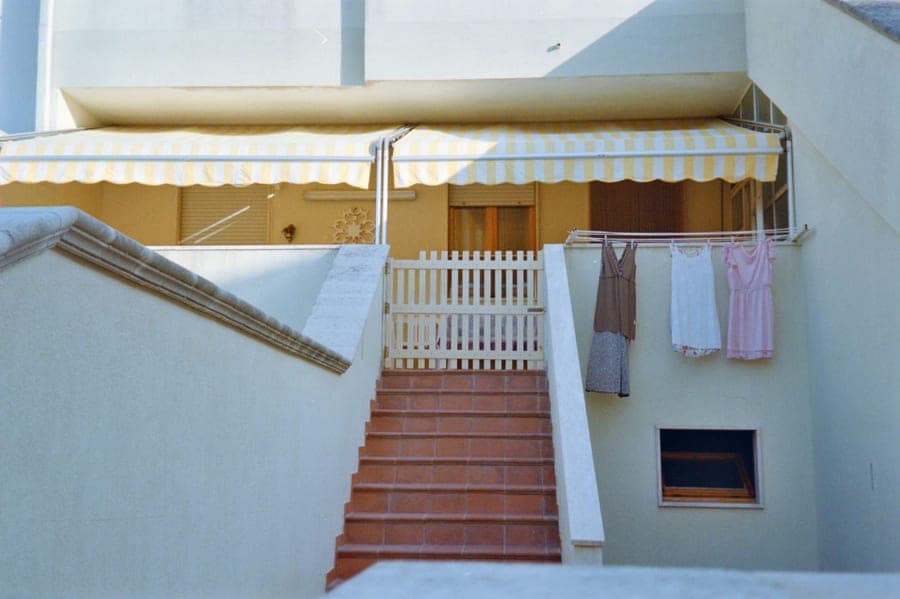
The Diensweek motorized acrylic awning is the pick, on fabric: solution-dyed acrylic holds its color far longer than the coated polyester on cheaper lines, because the pigment is in the fiber rather than on it. Both lines publish Beaufort 5 — roughly 19-24 mph — as the threshold above which you retract.
Our picks at a glance
| # | Structure | Best for | Wind rating | Price |
|---|---|---|---|---|
| 01 |  Diensweek Motorized Acrylic Retractable AwningSolution-dyed acrylic instead of coated polyester — the upgrade that decides whether the fabric still has its color in year six. | Top pick | Beaufort 5 (roughly 19-24 mph) — retract above it | Check price on Amazon |
| 02 | Diensweek P100 Manual Retractable AwningRetracts, which is the only wind strategy a fabric awning has. The published rating is a Beaufort number, not a mile-per-hour figure. | Best-specified frame | Beaufort 5 (roughly 19-24 mph) — retract above it | Check price on Amazon |
| 03 | 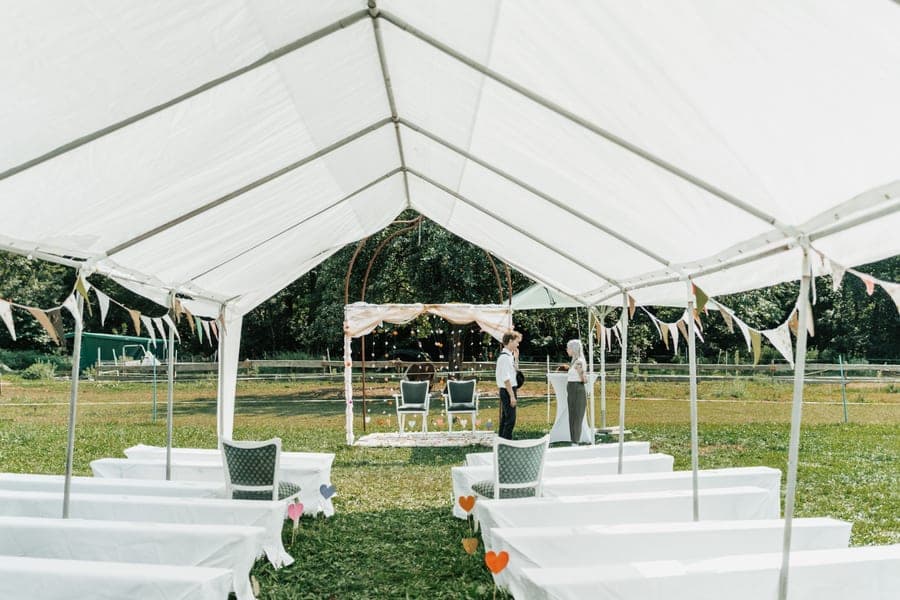 Eurmax Pro 10 x 10 Aluminum Pop-Up CanopyAn aluminum-framed commercial pop-up with a fire-certified 500-denier top — a shade structure you put away, not one you leave standing. | If you have no suitable wall | Not published by manufacturer | Check price on Amazon |
The durability table
Every published figure we could source for these structures, in one place, with the manufacturer page each number came from. Where a cell reads "Not published by manufacturer", that figure does not exist in the manufacturer's own material — we do not estimate it and we do not copy one from another site.
| Model | Wind rating (mph) | Snow load | Frame | Roof | Anchoring required | Warranty | Spec source |
|---|---|---|---|---|---|---|---|
| Diensweek Motorized Acrylic Retractable AwningTop pick | Beaufort 5 (roughly 19-24 mph) — retract above it | Not published by manufacturer | Corrosion-resistant aluminum | 100% acrylic, fade-resistant, 80 UV+ | Not published by manufacturer | 1 year | Diensweek official siteChecked 2026-09-26 |
| Diensweek P100 Manual Retractable Awning | Beaufort 5 (roughly 19-24 mph) — retract above it | Not published by manufacturer | T5-grade aluminum with PVC-coated stainless steel arm cables and galvanized steel roller tube | 280 g/m² polyester with PU coating, water resistant, 50 UV+ | Not published by manufacturer | 1 year | Diensweek official siteChecked 2026-09-26 |
| Eurmax Pro 10 x 10 Aluminum Pop-Up Canopy | Not published by manufacturer | Not published by manufacturer | Aluminum | 500D polyester with PU coating, seam-sealed, CPAI-84 fire retardant certified | Not published by manufacturer | Not published by manufacturer | Eurmax Pro 10x10 product pageChecked 2026-09-26 |
Every pick in full
Top pick
Diensweek Motorized Acrylic Retractable Awning
Solution-dyed acrylic instead of coated polyester — the upgrade that decides whether the fabric still has its color in year six.
- Wind rating
- Beaufort 5 (roughly 19-24 mph) — retract above it
- Snow load
- Not published by manufacturer
- Frame
- Corrosion-resistant aluminum
- Roof
- 100% acrylic, fade-resistant, 80 UV+
- Anchoring
- Not published by manufacturer
- Warranty
- 1 year
- Sizes
- Up to 15 x 10 ft
It wins on the one specification that determines whether you are happy with an awning in a decade, and it is a specification most listings will not state.
100% acrylic, fade-resistant, 80 UV+. The fabric is solution-dyed acrylic rather than coated polyester, and the difference is where the color lives: acrylic has pigment in the fiber, and coated polyester has it applied to the surface.
That matters twice. Coated polyester fades, visibly, on a sun-facing wall. And when the coating degrades it also stops being water resistant — so on a coated awning the appearance and the weather performance run on the same clock, and both are driven by UV. Acrylic does not have that coupling in the same way.
Diensweek uses acrylic on its motorized line and 280 g/m² PU-coated polyester on its manual one, which is the clearest possible signal about where the upgrade sits: the manufacturer has put the better fabric on the more expensive product.
Corrosion-resistant aluminum frame, up to 15 x 10 ft, Beaufort 5 wind guidance — retract above roughly 24 mph — one-year warranty, CE / GS / RoHS certified.
The motor is the caveat and the hidden benefit. It adds a power supply and a failure mode. It also makes retracting effortless, which means it actually happens — and since retracting is the entire wind strategy, that is worth more than it sounds.
Skip it if: You would rather not have a motor and a power supply on an exterior wall. Look for acrylic fabric on a manual line if you can find it.
#ad Price shown as of September 26, 2026. How this site is funded
Specifications from Diensweek official site, checked 2026-09-26.
Best-specified frame
Diensweek P100 Manual Retractable Awning
Retracts, which is the only wind strategy a fabric awning has. The published rating is a Beaufort number, not a mile-per-hour figure.
- Wind rating
- Beaufort 5 (roughly 19-24 mph) — retract above it
- Snow load
- Not published by manufacturer
- Frame
- T5-grade aluminum with PVC-coated stainless steel arm cables and galvanized steel roller tube
- Roof
- 280 g/m² polyester with PU coating, water resistant, 50 UV+
- Anchoring
- Not published by manufacturer
- Warranty
- 1 year
- Sizes
- 8 x 7 ft to 15 x 10 ft
The manual line, and the one that publishes the most about the components that actually carry the load.
T5-grade aluminum with PVC-coated stainless steel arm cables and a cold-rolled welded galvanized steel roller tube, plus an internal double spring arm tension system. The arm cables and the roller tube are the two components under real load on a retractable awning, and both are specified here — which is unusual, because most listings say "aluminum frame" and stop.
PVC-coated stainless arm cables are the detail worth noticing. The cables take the tension that holds the awning extended; stainless resists the corrosion that would otherwise start where the coating is worn by repeated operation.
Fabric is 280 g/m² polyester with a PU coating, water resistant, 50 UV+. That is the step down from the acrylic line, and on a south or west-facing wall it is the specification that will date first.
Sizes 8 x 7 ft to 15 x 10 ft — the widest range here, including genuinely small sizes for a balcony or a doorway. Crank operated, one-year warranty, Beaufort 5 guidance.
A manual crank is not a hardship on something you operate a few times a week, and it removes the power supply and the motor as failure modes entirely.
Skip it if: The wall faces south or west and you intend to keep it a decade — the acrylic fabric is the upgrade that matters there.
#ad Price shown as of September 26, 2026. How this site is funded
Specifications from Diensweek official site, checked 2026-09-26.
If you have no suitable wall
Eurmax Pro 10 x 10 Aluminum Pop-Up Canopy
An aluminum-framed commercial pop-up with a fire-certified 500-denier top — a shade structure you put away, not one you leave standing.
- Wind rating
- Not published by manufacturer
- Snow load
- Not published by manufacturer
- Frame
- Aluminum
- Roof
- 500D polyester with PU coating, seam-sealed, CPAI-84 fire retardant certified
- Anchoring
- Not published by manufacturer
- Warranty
- Not published by manufacturer
- Sizes
- 10 x 10 ft, 11.1 ft peak height
Not an awning, and on this page because a retractable awning needs a wall, and a meaningful share of people looking for one do not have a suitable place to fix it.
An awning transfers its load — its own weight, plus wind on the extended fabric — into the building. That means it needs solid material to fix into and it means the fixing is a structural attachment to your house, which in many jurisdictions is a permit question. No wall, no awning.
The freestanding alternative: 500D polyester with a PU coating, seam-sealed, CPAI-84 fire retardant certified, on an aluminum frame, 10 x 10 ft with an 11.1 ft peak height. Commercial fabric specification, nothing anchored, nothing attached to the house.
What you give up is the awning's whole proposition — it does not retract in seconds, it does not leave the floor clear, and it is a thing you put up rather than a thing that is there.
No wind rating published, which is correct for a folding frame.
Skip it if: You do have a suitable wall. An awning is a better product for a wall-adjacent patio in almost every way.
#ad Price shown as of September 26, 2026. How this site is funded
Specifications from Eurmax Pro 10x10 product page, checked 2026-09-26.
Fabric is the decision
If you take one thing from this page: choose the fiber before you choose anything else.
Solution-dyed acrylic has the pigment added to the liquid polymer before the fiber is extruded, so the color is throughout the material. It fades slowly and evenly, and there is no coating to fail.
Coated polyester is a woven polyester with a PU coating applied to the surface, carrying the color and the water resistance. It is cheaper, it is perfectly serviceable, and it has two linked failure modes: the color fades, and when the coating degrades the fabric stops being water resistant. Both are UV-driven, so on a sun-facing wall they arrive together.
Diensweek's own product split is the clearest evidence available: acrylic on the motorized line at 80 UV+, 280 g/m² PU-coated polyester on the manual line at 50 UV+. Same manufacturer, better fabric on the more expensive product, and a different UV rating on each.
Which orientation your wall faces decides how much this matters. A north-facing awning sees far less UV and coated polyester will do fine for years. A south or west-facing awning is in the sun every afternoon, and that is where acrylic earns its cost. Canopy fabric materials goes through each fiber in detail.
Manual or motorized
The usual advice is that motorization is a luxury, and on a retractable awning there is a genuine counter-argument worth taking seriously.
The case against motorization is standard and sound: it adds a motor, a power supply and a wiring run on an exterior wall, all of which are components that can fail and none of which a crank has. A crank on something you operate a few times a week is not a hardship.
The case for it is specific to awnings, and it is about behavior rather than convenience. Retracting is the entire wind strategy for a fabric awning — Diensweek publishes Beaufort 5, roughly 19-24 mph, as the threshold. An awning left extended in a gale is the most avoidable failure in this category, and it happens because retracting felt like a chore.
If motorization means you actually retract, it is buying you safety rather than comfort. That is a real argument, and it is the honest reason to spend on it.
And note that the fabric and the mechanism are bundled here. Diensweek's acrylic fabric comes on the motorized line; the manual line is coated polyester. So in practice you may be choosing fabric and paying for a motor, or choosing manual and accepting polyester. If you can find acrylic on a manual line, that is arguably the best combination available.
The frame components that matter
- Arms and arm cables. The arms hold the awning extended and the cables inside them carry the tension. Diensweek publishes PVC-coated stainless steel arm cables — stainless because the cable is in weather, coated because it runs over pulleys and wears. This is the component that fails on a well-used awning and almost nobody specifies it.
- Roller tube. What the fabric winds onto. Diensweek publishes a cold-rolled welded galvanized steel roller tube — steel rather than aluminum because it resists deflection over a wide span, and galvanized because it is in weather. A roller tube that sags leaves the fabric winding unevenly.
- Frame alloy. T5-grade aluminum on the Diensweek manual line. An alloy and temper designation is a specification; "aluminum" is a material.
- Spring tension system. The internal double spring keeps the fabric taut as the arms extend. A slack awning flaps, and flapping is what tears fabric and wears cables — the same mechanism that kills shade sails.
- The wall bracket and its fixings. Not usually specified, and structurally the most important part: the whole load goes through it into your building. This is the component to over-specify and the reason an awning is a structural attachment rather than a hanging.
Wind: the threshold and the behavior
Beaufort 5 — roughly 19-24 mph — is the published threshold on both Diensweek lines, and it is worth understanding what that kind of figure is.
It is guidance for the extended condition, not a survival rating. Above it you are meant to retract, and retracted the awning has essentially no wind exposure at all — the fabric is rolled onto the tube and the arms are folded against the wall. That is an advantage no fixed structure has: a pergola or a gazebo is in the wind whether you like it or not.
So an awning has the lowest ceiling and the best escape in backyard shade, and its risk is entirely about whether you use the escape. That is a behavior problem rather than a specification problem, which is a genuinely unusual situation.
Beaufort 5 is a lower threshold than people expect. Roughly 19-24 mph is a fresh breeze — branches moving, small trees swaying, an umbrella becoming awkward. It is not a storm. If your site sees that regularly in the afternoons, an awning will be retracted a lot of the time, and that is worth knowing before you buy.
And wind-driven rain is a related limitation. An awning sheds water off its front edge rather than draining, and in a squall the rain arrives horizontally and comes in underneath. It keeps a table dry in vertical rain and does much less in weather. Canopy wind ratings and weights covers the category-wide picture.
What we would actually do
South or west-facing wall, keeping it long-term: the acrylic fabric, which on Diensweek's range means the motorized line. Solution-dyed acrylic is the specification that decides how the awning looks and performs in year six, and a sun-facing wall is where it earns the money. The motor is a side effect, and it makes retracting effortless, which matters more than it sounds.
North-facing wall, or a smaller budget: the manual line. 280 g/m² PU-coated polyester on a T5 aluminum frame with stainless arm cables and a galvanized roller tube — better frame disclosure than most, and coated polyester on a wall that sees little direct sun will be fine for years. Sizes from 8 x 7 ft, which is the small end nobody else covers.
No suitable wall: not an awning. A commercial pop-up for occasional use, or — if the shade needs to be permanent — a pergola or hardtop gazebo, both of which publish wind ratings and neither of which attaches to your house.
And whatever you buy: check the permit position before ordering. Fixing a structure to the building is a structural alteration in many jurisdictions, and an awning is exactly that. Pergola permits and HOA covers the general shape of the question.
What we cut, and why
Every model below was a genuine candidate and did not make the list. The reason is stated in each case, because a shortlist with no visible rejections is not evidence of a selection process.
- Awnings that do not state the fabric fiber
- On a retractable awning the fiber is the single most important specification — solution-dyed acrylic against coated polyester decides whether you like the awning in year six, and whether it is still water resistant. A listing that says "high quality fabric" has omitted the one thing worth knowing.
- Awnings with no published wind guidance
- Retracting is the entire wind strategy for a fabric awning, so the threshold above which you should retract is the most actionable number a manufacturer can give you. Diensweek publishes Beaufort 5. An awning with no guidance leaves you guessing at exactly the moment it matters.
- Awnings with no published arm or roller-tube specification
- The arms and the roller tube carry the load and do the moving. A listing specifying only "aluminum frame" has not told you about the components that actually fail — and the arm cables in particular are a wear item on something operated repeatedly.
- Freestanding and portable "awnings"
- Sold into these searches and a different product: they do not attach to the building, which means they do not leave the floor clear and they do not retract against a wall. If you have no wall, a commercial pop-up is the more honest version of that compromise.
Questions people ask
What is the best retractable awning?
Is acrylic or polyester better for an awning?
How much wind can a retractable awning take?
Should I get a manual or motorized awning?
Are retractable awnings waterproof?
Do I need a permit for a retractable awning?
What fails first on a retractable awning?
Can I leave a retractable awning out all summer?
Where these figures came from
- Diensweek — 100% acrylic 80 UV+ motorized line and 280 g/m² PU-coated polyester 50 UV+ manual line, T5 aluminum frame, PVC-coated stainless arm cables, cold-rolled welded galvanized roller tube, internal double spring, Beaufort 5 guidance, sizes 8x7 to 15x10 ft, 1-year warranty, CE/GS/RoHS
- Eurmax Pro 10x10 — 500D PU-coated polyester, seam-sealed, CPAI-84 fire retardant certified, aluminum frame, 11.1 ft peak height
Found an error? Tell us and we will correct it within seven days and note the change on the page with a dated line — see our editorial policy.