Shade sail vs retractable awning
An awning is the only shade on this site that removes itself from a storm. A sail is the only one that shades a space nowhere near the house. That is the whole decision.
By Ryder M. · Published · Last updated
We compare published manufacturer specifications, warranty terms and owner-reported failure modes. We have not physically tested these structures. How we judge shade structures
Slat & Shade earns a commission on qualifying purchases made through links on this page. It costs you nothing extra and never changes what we recommend. Full disclosure
Part of Shade Sails
The short answer
Buy a retractable awning if the area is against the house and you want shade that folds away in wind; buy a shade sail if the area is away from the wall, or if you want the largest shade for the least money. Awnings publish wind ratings; sails do not.
Our picks at a glance
| # | Structure | Best for | Fabric | Price |
|---|---|---|---|---|
| 01 | 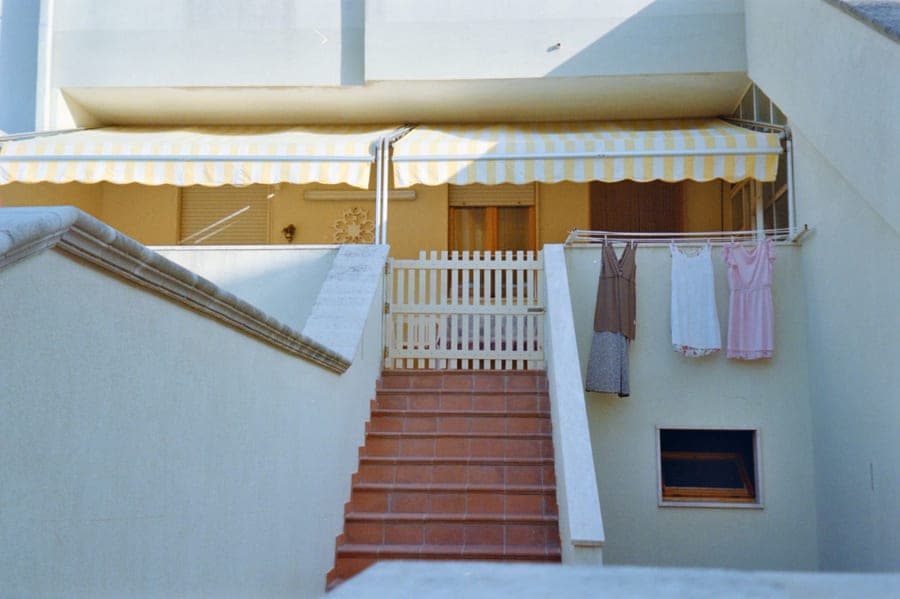 Diensweek P100 Manual Retractable AwningRetracts, which is the only wind strategy a fabric awning has. The published rating is a Beaufort number, not a mile-per-hour figure. | Best if it folds away | 280 g/m² polyester with PU coating, water resistant, 50 UV+ | Check price on Amazon |
| 02 | 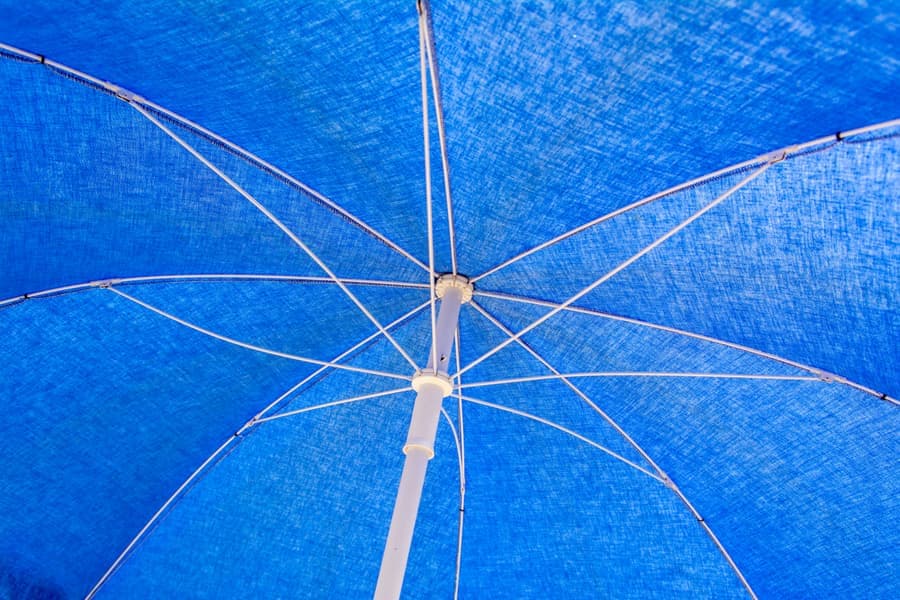 Windscreen4less Waterproof Shade SailA genuinely waterproof polyester sail rather than a breathable mesh — which means it sheds rain and catches wind in equal measure. | Best sail for the same job | Terylene polyester, waterproof, UV 95 | Check price on Amazon |
| 03 | 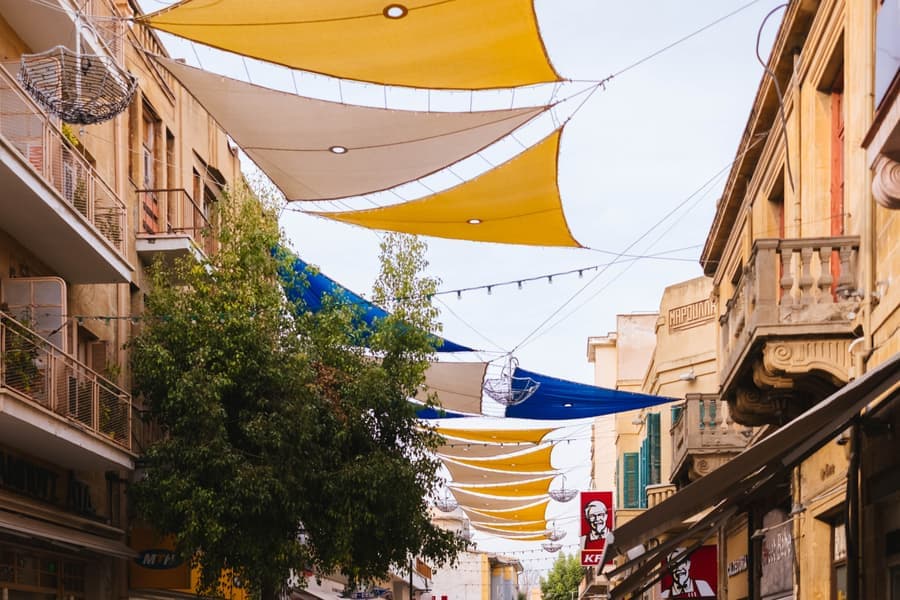 Diensweek Motorized Acrylic Retractable AwningSolution-dyed acrylic instead of coated polyester — the upgrade that decides whether the fabric still has its color in year six. | Best fabric for a permanent install | 100% acrylic, fade-resistant, 80 UV+ | Check price on Amazon |
The durability table
Every published figure we could source for these structures, in one place, with the manufacturer page each number came from. Where a cell reads "Not published by manufacturer", that figure does not exist in the manufacturer's own material — we do not estimate it and we do not copy one from another site.
| Model | Wind rating (mph) | Snow load | Frame | Roof | Anchoring required | Warranty | Spec source |
|---|---|---|---|---|---|---|---|
| Diensweek P100 Manual Retractable AwningTop pick | Beaufort 5 (roughly 19-24 mph) — retract above it | Not published by manufacturer | T5-grade aluminum with PVC-coated stainless steel arm cables and galvanized steel roller tube | 280 g/m² polyester with PU coating, water resistant, 50 UV+ | Not published by manufacturer | 1 year | Diensweek official siteChecked 2026-09-26 |
| Windscreen4less Waterproof Shade Sail | Not published by manufacturer | Not published by manufacturer | Webbing-reinforced perimeter | Terylene polyester, waterproof, UV 95 | Not published by manufacturer | 3 years | Windscreen4less waterproof shade sails pageChecked 2026-09-26 |
| Diensweek Motorized Acrylic Retractable Awning | Beaufort 5 (roughly 19-24 mph) — retract above it | Not published by manufacturer | Corrosion-resistant aluminum | 100% acrylic, fade-resistant, 80 UV+ | Not published by manufacturer | 1 year | Diensweek official siteChecked 2026-09-26 |
Every pick in full
Best if it folds away
Diensweek P100 Manual Retractable Awning
Retracts, which is the only wind strategy a fabric awning has. The published rating is a Beaufort number, not a mile-per-hour figure.
- Wind rating
- Beaufort 5 (roughly 19-24 mph) — retract above it
- Snow load
- Not published by manufacturer
- Frame
- T5-grade aluminum with PVC-coated stainless steel arm cables and galvanized steel roller tube
- Roof
- 280 g/m² polyester with PU coating, water resistant, 50 UV+
- Anchoring
- Not published by manufacturer
- Warranty
- 1 year
- Sizes
- 8 x 7 ft to 15 x 10 ft
The argument for an awning over a sail is one thing: when the weather turns, it is not out there. Nothing tensioned between posts can do that.
A manual crank awning in sizes from 8 x 7 ft up to 15 x 10 ft, with a published wind figure — which immediately distinguishes it from every shade sail on this site, where not one manufacturer publishes a wind rating at all. The awning maker can publish one because it supplies the arms, the bar and the mounting brackets: the whole structure is theirs.
Manual rather than motorised is the durability choice, not the budget one. A crank has no electronics to fail, no motor to seize and nothing that stops working when the power is out. On a component mounted twelve feet up a wall, fewer parts is worth more than convenience.
The limit is that it only shades what is next to the house. An awning projects from a wall; its reach is its projection, and ten feet is a lot of projection. If the area you want shaded is in the middle of the garden, an awning cannot get there at any price.
Skip it if: The area is away from the house. An awning needs a wall with sound structure behind it, and its coverage stops where its arms end.
#ad Price shown as of September 26, 2026. How this site is funded
Specifications from Diensweek official site, checked 2026-09-26.
Best sail for the same job
Windscreen4less Waterproof Shade Sail
A genuinely waterproof polyester sail rather than a breathable mesh — which means it sheds rain and catches wind in equal measure.
- Wind rating
- Not published by manufacturer
- Snow load
- Not published by manufacturer
- Frame
- Webbing-reinforced perimeter
- Roof
- Terylene polyester, waterproof, UV 95
- Anchoring
- Not published by manufacturer
- Warranty
- 3 years
- Sizes
- Not published by manufacturer
If the comparison is really about keeping a terrace usable, the sail that competes with an awning is the waterproof one rather than a breathable mesh.
Terylene polyester, genuinely waterproof, UV 95, webbing-reinforced perimeter. An awning fabric sheds rain, so comparing it to a breathable mesh sail is comparing different jobs. This is the sail that does the awning's job — rain off a table, not just sun off your head.
And it carries the awning's weakness too, which is instructive. A waterproof sheet catches wind in exactly the proportion it sheds rain. The awning solves that by retracting; the sail cannot, so it has to be taken down. That is the structural difference in a sentence.
Three years of warranty, and the usual sail caveat: no size range and no wind rating are published, so confirm the dimension before ordering. HDPE vs waterproof shade fabric covers what you give up in airflow.
Skip it if: The site is exposed and you will not take it down. A waterproof sail that stays up in wind is the worst combination in this comparison.
#ad Price shown as of September 26, 2026. How this site is funded
Specifications from Windscreen4less waterproof shade sails page, checked 2026-09-26.
Best fabric for a permanent install
Diensweek Motorized Acrylic Retractable Awning
Solution-dyed acrylic instead of coated polyester — the upgrade that decides whether the fabric still has its color in year six.
- Wind rating
- Beaufort 5 (roughly 19-24 mph) — retract above it
- Snow load
- Not published by manufacturer
- Frame
- Corrosion-resistant aluminum
- Roof
- 100% acrylic, fade-resistant, 80 UV+
- Anchoring
- Not published by manufacturer
- Warranty
- 1 year
- Sizes
- Up to 15 x 10 ft
Where an awning genuinely beats a sail on longevity rather than on folding away: the fabric itself is a different class of material.
Solution-dyed acrylic rather than polyester or HDPE, up to 15 x 10 ft, motorised. Acrylic awning fabric is the longest-lived shade cloth in this comparison — the colour is in the fibre rather than on it, so it holds through UV exposure that fades a dyed polyester. On a south-facing wall that is a material difference.
Motorised adds convenience and a failure point. A motor means the awning gets retracted when it should be, because nobody skips the job on a windy evening — which in practice protects the fabric more than any specification does. It also means there is a motor to fail, and it is mounted in the roller.
It is still a wall-mounted component carrying a cantilever load. The brackets go into masonry or into structure behind the cladding, and getting that wrong is the one failure mode an awning has that a sail does not. Mount it properly and the fabric will outlast any sail here.
Skip it if: Your wall will not take it. A cantilevered awning at full projection puts serious leverage into its brackets, and render or cladding alone is not enough.
#ad Price shown as of September 26, 2026. How this site is funded
Specifications from Diensweek official site, checked 2026-09-26.
The two things that decide it
Strip out everything else and this comparison comes down to geography and to what happens in a storm.
Geography: an awning only shades what is next to a wall. It projects from the house and reaches as far as its arms, which at the top of this range is ten feet. A sail shades wherever you can establish anchor points, including the middle of a lawn, over a pool, or across a corner of the garden nowhere near the building.
Storms: an awning retracts and a sail does not. This is the awning's real advantage and it is a big one. Fold it in and the weather has nothing to push on. A shade sail can be unclipped, but that is a job you have to remember and do — and the one left up is the one that fails.
Everything else follows from those two. The awning costs more, covers less, lasts longer and needs a sound wall. The sail costs less, covers more, needs posts and needs you to take it down. Neither is better; they fit different gardens.
Side by side
Published figures where they exist, and the honest answer where they do not.
| Retractable awning | Shade sail | |
|---|---|---|
| Mounting | Wall-mounted; needs sound masonry or structure behind | Tensioned between posts, walls or both |
| Where it can shade | Only adjacent to the wall, out to its projection | Anywhere you can establish anchor points |
| Published size range | 8 x 7 ft to 15 x 10 ft | 8 x 10 ft to 16 x 20 ft on the ColourTree rectangle |
| Wind rating published | Yes — Diensweek publishes a figure | Not published by manufacturer, anywhere in the category |
| Behaviour in a storm | Retracts; nothing exposed | Must be unclipped and taken down |
| Fabric longevity | Solution-dyed acrylic on the motorised model | HDPE mesh, 3–7 year published warranties |
| Rain | Sheds it, by design | Mesh passes it; only a waterproof sail sheds it |
| Moving parts | Arms, roller, crank or motor | None beyond the turnbuckles |
The wind-rating row is the one worth dwelling on. An awning publishes a figure because its maker supplies the arms, the roller and the brackets — the entire load path. A sail maker supplies cloth, and the posts are yours, so there is nothing for them to rate. That is a difference in what is being sold, not in quality.
Which to buy, by situation
In practice the site makes this decision rather than the specification sheet.
- A terrace or patio doors against the house: awning. This is what it is for. Shade when you want it, gone when you do not, and no posts in your floor area.
- A seating area out in the garden: sail. An awning cannot reach it. Nothing else to discuss.
- A pool: sail. Away from the wall, large span, no legs near water — and use 316 stainless fittings because chlorine eats 304. Best shade sails for pools covers it properly.
- An exposed, windy site: awning, and retract it. The ability to remove the fabric from the weather on demand is worth more on an exposed site than any fabric specification.
- Shading the largest possible area for the least money: sail. It is the cheapest square foot of shade in this category by a wide margin, provided you have or can make anchor points.
- Rendered, clad or otherwise doubtful wall: sail, or get the wall checked first. A cantilevered awning at full projection puts real leverage into its brackets, and that is the one awning failure mode with no equivalent on a sail.
What we would actually do
Against the house, the manual awning. A crank has no motor to seize and nothing that stops working in a power cut, and on a component mounted high on a wall, fewer parts beats more convenience. Retract it whenever you are not sitting under it and the fabric will last for years.
Away from the house, the sail, every time — because the awning simply cannot get there, and because a sail covers more for less.
If you want rain off a table, pick deliberately. The waterproof sail does it and has to come down in wind; the awning does it and folds away by itself. Those are the two real options, and a breathable mesh sail is not one of them.
And if you want both — reach into the garden and something that folds away — the honest answer is a pergola with a retractable canopy, which is a different product again. Best pergolas with a retractable canopy covers that class.
Questions people ask
Is a shade sail or a retractable awning better?
Which is better in wind, a shade sail or an awning?
Is a retractable awning more expensive than a shade sail?
Can a retractable awning shade an area away from the house?
Do retractable awnings keep rain off?
Which lasts longer, an awning or a shade sail?
Can you fit a retractable awning to any wall?
Is a manual or motorised awning better?
Where these figures came from
- Diensweek P100 manual retractable awning — published wind figure, sizes 8 x 7 ft to 15 x 10 ft, manual crank operation
- Windscreen4less waterproof shade sails — Terylene polyester, waterproof, UV 95, webbing-reinforced perimeter, 3-year warranty; no wind rating published
- ColourTree rectangle sun shade sail — 190 GSM virgin HDPE, 95% UV block, 14 sizes from 8 x 10 ft to 16 x 20 ft, 3-year warranty
Found an error? Tell us and we will correct it within seven days and note the change on the page with a dated line — see our editorial policy.