Canopy vs pergola
A canopy is shade you can take away. A pergola is a structure with a published wind rating and no roof to replace. The choice is about permanence, not quality.
By Ryder M. · Published · Last updated
We compare published manufacturer specifications, warranty terms and owner-reported failure modes. We have not physically tested these structures. How we judge shade structures
Slat & Shade earns a commission on qualifying purchases made through links on this page. It costs you nothing extra and never changes what we recommend. Full disclosure
Part of Canopies & Patio Covers
The short answer
Buy a canopy if you need shade that is removable, cannot anchor into your surface, or are renting. Buy a pergola if the structure is permanent — pergolas publish 70-100 mph wind ratings and have no consumable roof, where most canopies publish no wind figure and every canopy has fabric to replace.
Our picks at a glance
| # | Structure | Best for | Wind rating | Price |
|---|---|---|---|---|
| 01 | 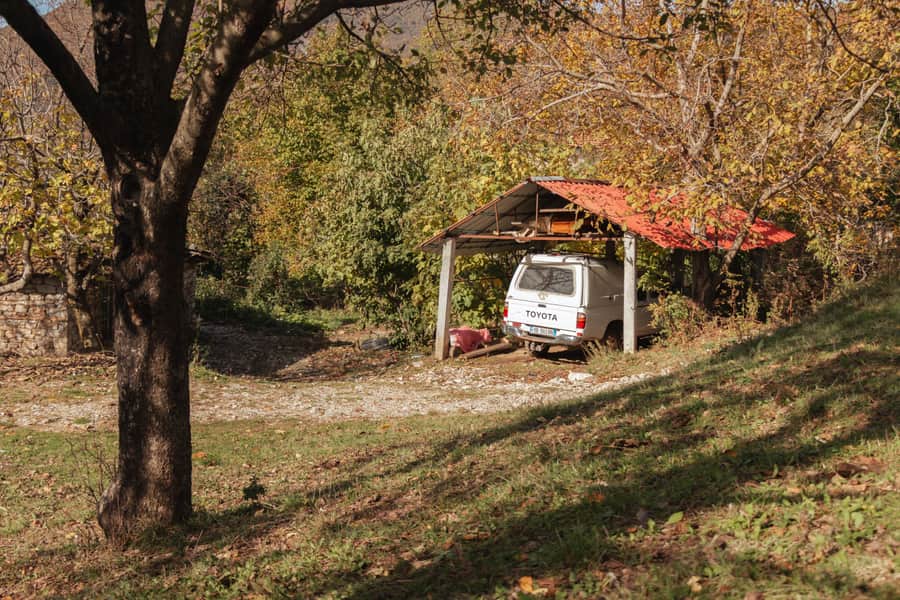 Quictent Heavy Duty 10 x 20 Carport CanopyThe only canopy on this site that publishes both a per-square-foot snow load and a tested wind speed — 9 lb/ft² and 55 mph. | Buy this if the canopy wins | 55 (tested) | Check price on Amazon |
| 02 | 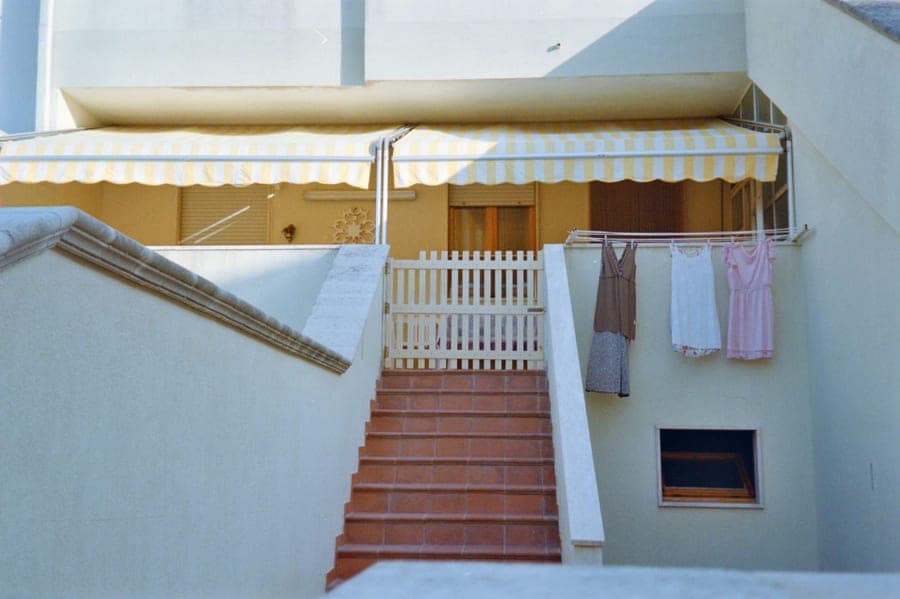 Diensweek P100 Manual Retractable AwningRetracts, which is the only wind strategy a fabric awning has. The published rating is a Beaufort number, not a mile-per-hour figure. | The canopy that beats a pergola at one thing | Beaufort 5 (roughly 19-24 mph) — retract above it | Check price on Amazon |
| 03 | 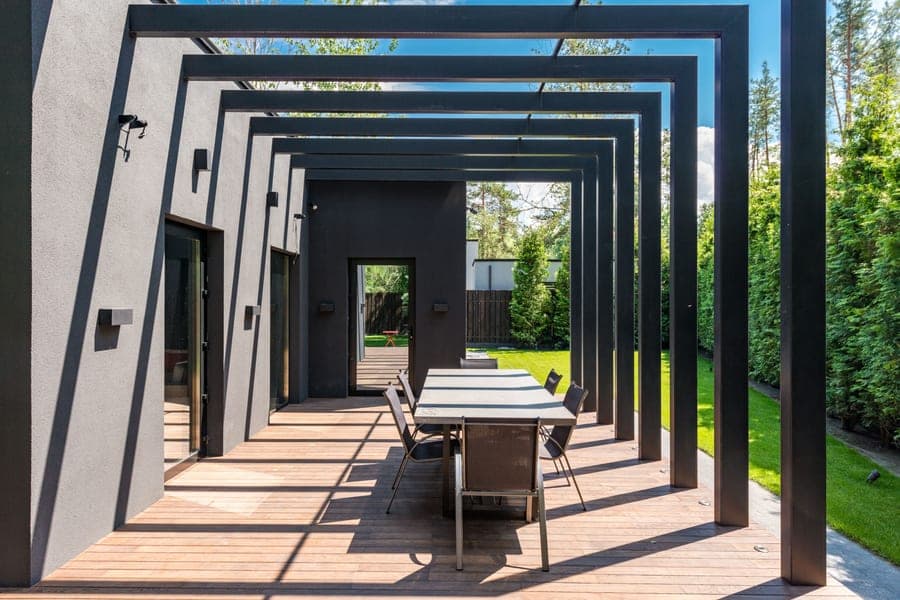 PURPLE LEAF Athena Louvered PergolaThe highest wind figure any louvered pergola in this class publishes, and the only one that ties the number to a specific anchoring condition. | Buy this if the pergola wins | 72 (fully secured with expansion screws on a hardened floor) | Check price on Amazon |
| 04 |  Backyard Discovery Beaumont Cedar PergolaThe highest published wind rating of any pergola on this site, and the only wood kit whose manufacturer makes anchoring a stated condition of the rating. | The pergola with the strongest figures | 100 (when properly anchored) | Check price on Amazon |
The durability table
Every published figure we could source for these structures, in one place, with the manufacturer page each number came from. Where a cell reads "Not published by manufacturer", that figure does not exist in the manufacturer's own material — we do not estimate it and we do not copy one from another site.
| Model | Wind rating (mph) | Snow load | Frame | Roof | Anchoring required | Warranty | Spec source |
|---|---|---|---|---|---|---|---|
| Quictent Heavy Duty 10 x 20 Carport CanopyTop pick | 55 (tested) | 9 lb/ft² | 1.46 in. (38 mm) heavy-duty galvanized steel tubing with 12 cross steel cables | 16 mil / 180 g PE tarp, 100% UV block, triple-stitched seams | Ground nails and bungee cords supplied | 1 year on poles and tarp; lifetime on joints, ground nails and bungee cords | Quictent 10x20 carport product pageChecked 2026-09-26 |
| Diensweek P100 Manual Retractable Awning | Beaufort 5 (roughly 19-24 mph) — retract above it | Not published by manufacturer | T5-grade aluminum with PVC-coated stainless steel arm cables and galvanized steel roller tube | 280 g/m² polyester with PU coating, water resistant, 50 UV+ | Not published by manufacturer | 1 year | Diensweek official siteChecked 2026-09-26 |
| PURPLE LEAF Athena Louvered Pergola | 72 (fully secured with expansion screws on a hardened floor) | Not published by manufacturer | Powder-coated aluminum, 1.5 mm wall, 4.33 in. x 4.33 in. crossbeams | Adjustable aluminum louvers with integrated drainage | Expansion screws into a hardened floor — the published wind figure assumes it | 1 year | PURPLE LEAF louvered pergola collectionChecked 2026-09-26 |
| Backyard Discovery Beaumont Cedar Pergola | 100 (when properly anchored) | Not published by manufacturer | 100% cedar, 5.5 in. x 5.5 in. posts | Multi-level cedar trellis roof with crossing rafters — open, not solid | Mandatory. Concealed concrete anchors, per the instruction manual | 5 years | Backyard Discovery Beaumont product pageChecked 2026-09-26 |
Every pick in full
Buy this if the canopy wins
Quictent Heavy Duty 10 x 20 Carport Canopy
The only canopy on this site that publishes both a per-square-foot snow load and a tested wind speed — 9 lb/ft² and 55 mph.
- Wind rating
- 55 (tested)
- Snow load
- 9 lb/ft²
- Frame
- 1.46 in. (38 mm) heavy-duty galvanized steel tubing with 12 cross steel cables
- Roof
- 16 mil / 180 g PE tarp, 100% UV block, triple-stitched seams
- Anchoring
- Ground nails and bungee cords supplied
- Warranty
- 1 year on poles and tarp; lifetime on joints, ground nails and bungee cords
- Sizes
- 10 x 20 x 8.7 ft (H)
The best-documented canopy we track, and the one that makes the strongest case against a pergola for a specific job.
A tested 55 mph wind speed and a 9 lb/ft² snow load — and that is genuinely competitive: it beats every hardtop gazebo figure we can source, though it sits below the 70-100 mph pergolas publish. Frame is 38 mm galvanized steel tubing with twelve cross steel cables; cover is a 16 mil / 180 g waterproof PE tarp with triple-stitched seams and 100% UV block.
Where it genuinely beats a pergola: covering equipment, and cost. No pergola shelters a car, a boat or a workshop's worth of tools, and no pergola costs anything like this. And nothing is bolted into your slab — ground nails and bungee cords are supplied, so the whole thing is reversible.
Warranty: one year on poles and tarp, lifetime on joints, ground nails and bungee cords — an accurate map of where a tube-frame shelter fails.
What it costs you: the tarp is a consumable, it is 10 x 20 x 8.7 ft of equipment shelter, and it looks like one. Nobody puts a dining table under it by choice.
Skip it if: The space is a patio or seating area, or your region's ground snow load exceeds 9 lb/ft².
#ad Price shown as of September 26, 2026. How this site is funded
Specifications from Quictent 10x20 carport product page, checked 2026-09-26.
The canopy that beats a pergola at one thing
Diensweek P100 Manual Retractable Awning
Retracts, which is the only wind strategy a fabric awning has. The published rating is a Beaufort number, not a mile-per-hour figure.
- Wind rating
- Beaufort 5 (roughly 19-24 mph) — retract above it
- Snow load
- Not published by manufacturer
- Frame
- T5-grade aluminum with PVC-coated stainless steel arm cables and galvanized steel roller tube
- Roof
- 280 g/m² polyester with PU coating, water resistant, 50 UV+
- Anchoring
- Not published by manufacturer
- Warranty
- 1 year
- Sizes
- 8 x 7 ft to 15 x 10 ft
Included because it does something no pergola can, and it is worth being clear about what that is.
It retracts. A pergola's roof is whatever you bought — open slats, closed louvers, or a solid panel — and even a louvered pergola only adjusts its roof, not its existence. An awning removes itself from the equation entirely, in seconds.
That means full sun on demand. For a north-facing patio, or a cold-spring climate, or a space you want warm in April and shaded in August, an awning is genuinely the better product — and a permanent pergola roof over that space would be a mistake.
It also leaves the floor completely clear, which on a narrow terrace beats four pergola posts.
Specification: 280 g/m² PU-coated polyester, 50 UV+, on a T5 aluminum frame with PVC-coated stainless arm cables and a galvanized roller tube. Wind guidance is Beaufort 5 — roughly 19-24 mph — above which you retract, which is a far lower figure than any pergola publishes and describes a condition you can exit.
Sizes 8 x 7 to 15 x 10 ft, one-year warranty. The fabric is a consumable and the wall fixing is a permit question.
Skip it if: You want shade that requires no operating step, or there is no suitable wall.
#ad Price shown as of September 26, 2026. How this site is funded
Specifications from Diensweek official site, checked 2026-09-26.
Buy this if the pergola wins
PURPLE LEAF Athena Louvered Pergola
The highest wind figure any louvered pergola in this class publishes, and the only one that ties the number to a specific anchoring condition.
- Wind rating
- 72 (fully secured with expansion screws on a hardened floor)
- Snow load
- Not published by manufacturer
- Frame
- Powder-coated aluminum, 1.5 mm wall, 4.33 in. x 4.33 in. crossbeams
- Roof
- Adjustable aluminum louvers with integrated drainage
- Anchoring
- Expansion screws into a hardened floor — the published wind figure assumes it
- Warranty
- 1 year
- Sizes
- 10 x 12 ft to 14 x 24 ft
The pergola side at its most competitive, because a louvered roof narrows the gap on the canopy's main advantage — adjustability.
72 mph published wind rating, fully secured with expansion screws on a hardened floor, against no wind figure at all from most canopies. Frame is the best-documented in the category: powder-coated aluminum, 1.5 mm wall, 4.33 in. x 4.33 in. crossbeams.
Closed louvers with integrated beam drainage give real rain cover; open louvers give spring sun and the best wind configuration available — every louvered manufacturer recommends opening them before a storm. That is most of what an awning offers, on a structure that publishes a wind rating.
And crucially: no consumable roof. Aluminum louvers do not need replacing on a cycle. Every canopy on this page has fabric that does.
What it costs you: money, permanence, anchoring, a multi-hour two-person assembly, and often a permit conversation. Sizes 10 x 12 to 14 x 24 ft, one-year warranty, no published snow figure.
Skip it if: You are renting, cannot anchor, or have not settled where the seating area goes.
#ad Price shown as of September 26, 2026. How this site is funded
Specifications from PURPLE LEAF louvered pergola collection, checked 2026-09-26.
The pergola with the strongest figures
Backyard Discovery Beaumont Cedar Pergola
The highest published wind rating of any pergola on this site, and the only wood kit whose manufacturer makes anchoring a stated condition of the rating.
- Wind rating
- 100 (when properly anchored)
- Snow load
- Not published by manufacturer
- Frame
- 100% cedar, 5.5 in. x 5.5 in. posts
- Roof
- Multi-level cedar trellis roof with crossing rafters — open, not solid
- Anchoring
- Mandatory. Concealed concrete anchors, per the instruction manual
- Warranty
- 5 years
- Sizes
- 10 x 10 ft, 12 x 10 ft, 14 x 10 ft, 14 x 12 ft, 16 x 12 ft, 20 x 12 ft
If the comparison comes down to which product survives weather standing up, this is the strongest case on either side.
100 mph Pro-Tect tested — the highest published wind figure anywhere in backyard shade — on 100% cedar with 5.5 in. x 5.5 in. posts, dual structural cross beams and corbels, with anchoring made mandatory by the manufacturer and concealed concrete anchors supplied. Five-year warranty.
The open cedar trellis roof is why it rates so highly, and it is also the thing that makes it less canopy-like than it sounds: no rain cover at all, dappled rather than full shade, and snow falls straight through rather than accumulating.
So against a canopy it wins on permanence and figures and loses on rain cover — which is an odd result, and an honest one. A waterproof carport tarp sheds rain that this pergola does not.
Re-seal every two to three years. Cedar's maintenance is a real ongoing commitment that a canopy does not have — though a canopy has a tarp to replace instead.
Skip it if: You want rain cover, or you will not maintain cedar.
#ad Price shown as of September 26, 2026. How this site is funded
Specifications from Backyard Discovery Beaumont product page, checked 2026-09-26.
The decision table
| Canopy | Pergola | |
|---|---|---|
| Published wind rating | 55 mph tested on a carport; Beaufort 5 on an awning; none on most pop-ups | 70-100 mph, with anchoring conditions stated |
| Published snow load | 9 lb/ft² on the documented carport; none elsewhere | 15 lb/ft² (Domi); open roofs do not accumulate at all |
| Roof | Fabric. A consumable | Aluminum, cedar or polycarbonate. Not a consumable |
| Rain cover | Waterproof on a carport tarp; water resistant on an awning | None on fixed slats; full on closed louvers with beam drainage |
| Adjustable | An awning retracts; a pop-up folds away | Louvered: yes. Fixed: no |
| Anchoring | Ground nails, or a wall bracket on an awning | Mandatory. Concrete, deck framing or footings |
| Permits | Less likely; awnings often yes because they attach to the house | Often, above a footprint threshold or if attached |
| Reversibility | High. Nothing permanent on most | None |
| Ten-year cost | Lower up front, plus fabric replacement | Higher up front, effectively nothing after |
| Best for | Renting, equipment cover, unsettled layouts, sun on demand | Permanent shade over a space you own and use |
Buy a canopy if...
- You cannot anchor into your surface. Renting, an HOA restriction, a slab you will not drill. A pergola's published wind rating does not apply to an unanchored structure, so the honest options are a canopy or nothing. How to anchor a pergola explains why no-drill methods do not deliver the rating.
- What needs covering is not a patio. A carport shelters a vehicle, a boat or equipment, and publishes a tested 55 mph and 9 lb/ft² while doing it. No pergola does that job.
- You want the sun back sometimes. A retractable awning is the only product in backyard shade that gives you full sun and full shade over the same space on the same afternoon.
- You have not settled the layout. People move their seating area more than they expect, and a pergola drilled into the wrong part of the patio is a mistake with anchors in it.
- You need shade occasionally. A commercial pop-up for a handful of weekends is the right tool; a permanent structure for that is not.
Buy a pergola if...
- The structure is staying put for years. Anchoring, assembly and permits only make sense once — and once done, a pergola asks almost nothing of you.
- Your site is exposed. 70-100 mph published against 55 mph on the best-documented canopy and nothing on most. And a louvered pergola with the louvers opened before a storm is better again.
- You do not want a replacement cycle. This is the underrated argument. Every canopy has a fabric roof that is a consumable; no pergola does. Over ten years that is a real cost and a real annoyance.
- You want the space to read as architecture. A cedar pergola with 5.5-6 in. posts is a building element. A carport looks like equipment shelter, because that is what it is.
- You get heavy snow and want the structure to stand. An open pergola roof does not accumulate at all; a canopy tarp collects and pools.
The consumable roof is the real difference
If there is one structural point to take from this page, it is this — and it is the one most comparisons skip.
Every canopy has a fabric roof, and fabric is a consumable. Quictent warrants its tarp for one year and its joints for life, which is an accurate statement of which part is expected to be replaced. Awning fabric fades and then its coating cracks. A pop-up top is a wear item.
No pergola has a consumable roof. Aluminum louvers, a cedar trellis and a polycarbonate panel all last as long as the structure — the failures are the frame's coating chalking, cedar checking if it is not sealed, or polycarbonate creeping under repeated snow. None of those is a scheduled replacement.
So the ten-year arithmetic is different from the sticker arithmetic. A canopy is cheap and then you buy fabric, possibly more than once. A pergola is expensive once. The gap narrows more than the prices suggest — though it rarely closes, because pergolas start considerably higher.
Which means cost is a poor way to decide this. Permanence is. If the structure is staying and the space is yours, a pergola wins on figures, on ownership cost and on not having to think about it. If it is not — renting, unsettled, equipment cover, occasional use — a pergola is money spent on permanence you do not want.
Where each one fails
Canopies fail at the joints, the fabric and the anchoring. On a tube frame the joints rack in wind — an unbraced rectangle has no resistance to being pushed into a parallelogram, which is why Quictent's twelve cross cables exist and why it warrants joints for life. Fabric abrades where it moves against a frame member and tears from that point. And a slack top pools water, which deepens the sag and collects more.
Awnings fail at the fabric and at being left extended. Coated polyester fades and then the coating cracks, at which point it stops being water resistant. The avoidable failure is leaving it out above Beaufort 5, roughly 19-24 mph — a fresh breeze rather than a storm.
Pergolas fail at the base fasteners and the finish. Plated steel bolts at the post base corrode while the frame above is perfect; aluminum powder coat chalks irreversibly on the sunward face; cedar checks at the through-bolts if the sealing is skipped. Louvered pergolas add a mechanism.
And an unanchored pergola fails worst of all, because the published rating never applied. That is the one respect in which a canopy is safer: a folded pop-up is a bag in the garage, where an unanchored pergola is a heavy frame on the move.
Shortlists: best patio canopies and best carport canopies on one side; best aluminum pergolas and best pergolas for high winds on the other.
Questions people ask
Is a canopy or a pergola better?
Is a canopy cheaper than a pergola?
Which handles wind better?
Can a canopy replace a pergola?
Which is better for rain?
Do I need a permit for a canopy?
Which lasts longer?
What if I want shade now and a pergola later?
Where these figures came from
- Quictent 10x20 carport — 55 mph tested, 9 lb/ft² snow load, 38 mm galvanized frame with 12 cross cables, 16 mil waterproof PE tarp, 1 year on poles and tarp with lifetime joints
- Diensweek — 280 g/m² PU-coated polyester, T5 aluminum frame, stainless arm cables, galvanized roller tube, Beaufort 5 guidance, sizes, 1-year warranty
- PURPLE LEAF louvered pergola collection — 72 mph with stated anchoring condition, 1.5 mm wall, 4.33 in. crossbeams, integrated drainage
- Backyard Discovery Beaumont — 100 mph Pro-Tect tested, 5.5 in. cedar posts, mandatory anchoring, 5-year warranty
- Domi Outdoor Living louvered pergola — 15 lb/ft² snow figure, cited for the pergola column
Found an error? Tell us and we will correct it within seven days and note the change on the page with a dated line — see our editorial policy.