The best deck canopies
A patio can take a post anywhere. A deck cannot. Everything on this page is chosen for one reason — it shades a deck without asking the deck to carry a load it was never framed for.
By Ryder M. · Published · Last updated
We compare published manufacturer specifications, warranty terms and owner-reported failure modes. We have not physically tested these structures. How we judge shade structures
Slat & Shade earns a commission on qualifying purchases made through links on this page. It costs you nothing extra and never changes what we recommend. Full disclosure
Part of Canopies & Patio Covers
The short answer
The Diensweek P100 manual awning is the best deck canopy: it hangs off the house wall rather than the deck, retracts below Beaufort 5, and puts no posts and no uplift into the joists at all. The budget pick is a ColourTree rectangle sail at 190 GSM, tensioned from the house and two posts set beside the deck.
Our picks at a glance
| # | Structure | Best for | Fabric | Price |
|---|---|---|---|---|
| 01 | 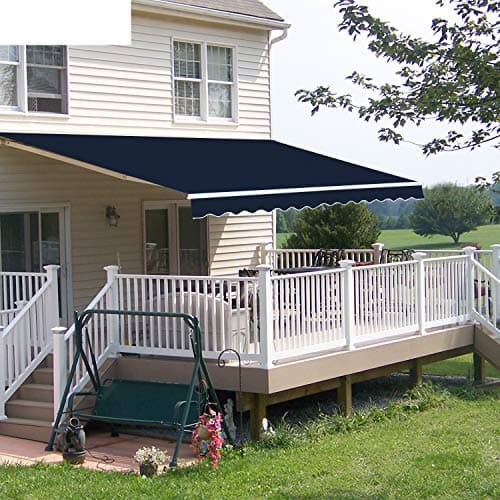 Diensweek P100 Manual Retractable AwningRetracts, which is the only wind strategy a fabric awning has. The published rating is a Beaufort number, not a mile-per-hour figure. | The best deck canopy — because it does not touch the deck | 280 g/m² polyester with PU coating, water resistant, 50 UV+ | $859.99 · View on Amazon |
| 02 | 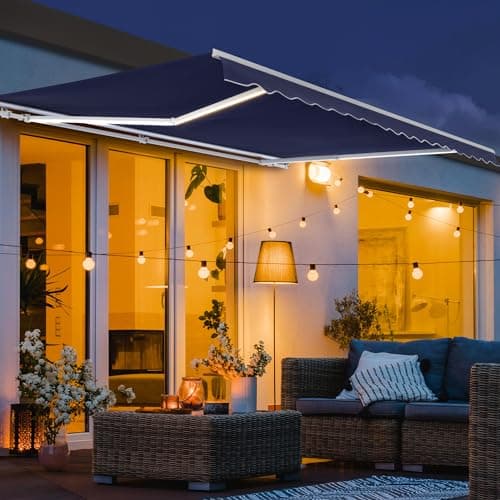 Diensweek Motorized Acrylic Retractable AwningSolution-dyed acrylic instead of coated polyester — the upgrade that decides whether the fabric still has its color in year six. | The fabric upgrade, for a deck in sun all day | 100% acrylic, fade-resistant, 80 UV+ | $1,799.99 · View on Amazon |
| 03 | 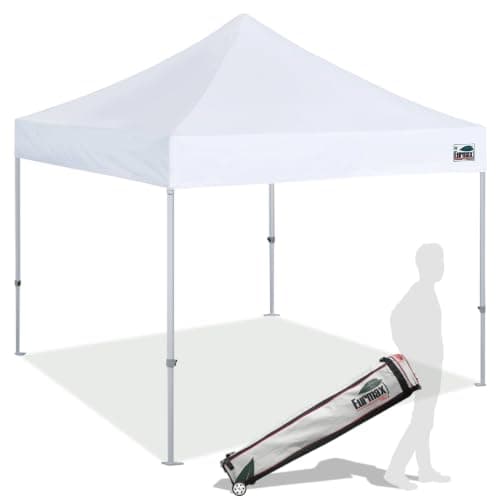 Eurmax Pro 10 x 10 Aluminum Pop-Up CanopyAn aluminum-framed commercial pop-up with a fire-certified 500-denier top — a shade structure you put away, not one you leave standing. | The option for a detached deck with nothing to fix to | 500D polyester with PU coating, seam-sealed, CPAI-84 fire retardant certified | $499.91 · View on Amazon |
| 04 | 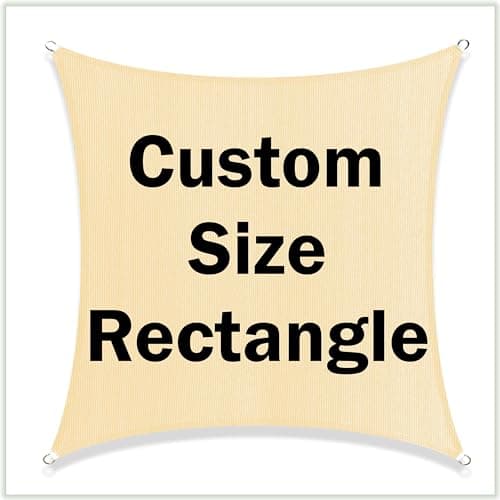 ColourTree Rectangle Sun Shade Sail, 190 GSMThe clearest published fabric spec in the category — 190 GSM virgin HDPE, 95% UV block, three-year warranty — with the hardware sold separately. | Budget pick — the cheapest deck canopy that works properly | 190 GSM HDPE mesh, 95% UV block, breathable | $79.99 · View on Amazon |
| 05 | 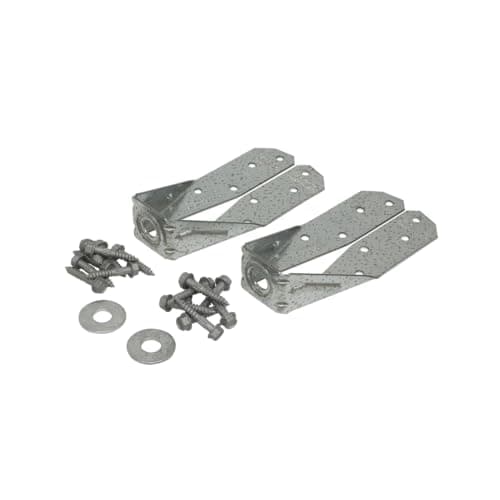 Simpson Strong-Tie DTT2Z Deck Tension TieA code-rated uplift connector for the one load every deck-mounted structure creates and almost no deck is built for. | The connector any post-mounted canopy on a deck actually needs | Not published by manufacturer | $29.68 · View on Amazon |
The durability table
Every published figure we could source for these structures, in one place, with the manufacturer page each number came from. Where a cell reads "Not published by manufacturer", that figure does not exist in the manufacturer's own material — we do not estimate it and we do not copy one from another site.
| Model | Wind rating (mph) | Snow load | Frame | Roof | Anchoring required | Warranty | Spec source |
|---|---|---|---|---|---|---|---|
| Diensweek P100 Manual Retractable AwningTop pick | Beaufort 5 (roughly 19-24 mph) — retract above it | Not published by manufacturer | T5-grade aluminum with PVC-coated stainless steel arm cables and galvanized steel roller tube | 280 g/m² polyester with PU coating, water resistant, 50 UV+ | Not published by manufacturer | 1 year | Diensweek official siteChecked 2026-09-26 |
| Diensweek Motorized Acrylic Retractable Awning | Beaufort 5 (roughly 19-24 mph) — retract above it | Not published by manufacturer | Corrosion-resistant aluminum | 100% acrylic, fade-resistant, 80 UV+ | Not published by manufacturer | 1 year | Diensweek official siteChecked 2026-09-26 |
| Eurmax Pro 10 x 10 Aluminum Pop-Up Canopy | Not published by manufacturer | Not published by manufacturer | Aluminum | 500D polyester with PU coating, seam-sealed, CPAI-84 fire retardant certified | Not published by manufacturer | Not published by manufacturer | Eurmax Pro 10x10 product pageChecked 2026-09-26 |
| ColourTree Rectangle Sun Shade Sail, 190 GSM | Not published by manufacturer | Not published by manufacturer | No frame — 100% virgin (non-recycled) HDPE fabric, reinforced stitched seams | 190 GSM HDPE mesh, 95% UV block, breathable | Stainless steel D-ring at each corner; cable rope and hardware kits sold separately | 3 years under normal weather and usage | ColourTree rectangle shade sail product pageChecked 2026-09-26 |
| Simpson Strong-Tie DTT2Z Deck Tension Tie | Not published by manufacturer | Not published by manufacturer | 14-gauge steel with a ZMAX galvanized coating | Not published by manufacturer | Tension tie for deck construction, supplied with 1/4 in. x 1-1/2 in. Strong-Drive SDS heavy-duty connector screws; also load rated as a holdown for light-duty shearwalls and braced-wall panels | Not published by manufacturer | Simpson Strong-Tie DTT Deck Tension Tie pageChecked 2026-10-27 |
Every pick in full
The best deck canopy — because it does not touch the deck
Diensweek P100 Manual Retractable Awning
Retracts, which is the only wind strategy a fabric awning has. The published rating is a Beaufort number, not a mile-per-hour figure.
- Wind rating
- Beaufort 5 (roughly 19-24 mph) — retract above it
- Snow load
- Not published by manufacturer
- Frame
- T5-grade aluminum with PVC-coated stainless steel arm cables and galvanized steel roller tube
- Roof
- 280 g/m² polyester with PU coating, water resistant, 50 UV+
- Anchoring
- Not published by manufacturer
- Warranty
- 1 year
- Sizes
- 8 x 7 ft to 15 x 10 ft
This wins on load path rather than on fabric, and on a deck the load path is the whole question.
It mounts to the house wall, so the deck carries nothing. No posts in the decking, no holes through the surface, no uplift into joists that were framed for people and furniture rather than for wind trying to lift a roof. On a raised deck that is not a convenience — it is the difference between a safe installation and a structural alteration.
And it retracts, which is a deck-specific advantage. A deck is usually the most exposed flat surface on a property, sitting clear of the ground with nothing around it to slow the wind. A canopy that can be gone in thirty seconds is the right kind of canopy there.
Beaufort 5 published, roughly 19 to 24 mph, with the instruction to retract above it. A low number, honestly stated with an action attached.
T5-grade aluminum with PVC-coated stainless steel arm cables and a galvanized steel roller tube, under 280 g/m² PU-coated polyester at 50 UV+, water resistant. 8 x 7 ft to 15 x 10 ft, one year.
The one real condition: the wall has to be able to carry it. An awning puts a cantilevered load into masonry or framing, and siding, fascia and brick veneer are not fixing points. How to attach a pergola to a house sets out what a wall fixing has to reach — the same rules apply exactly.
Skip it if: The deck is detached from the house, or the wall above it is siding over nothing solid. Then the sail below is the answer.
#ad Price shown as of November 11, 2026. How this site is funded
Specifications from Diensweek official site, checked 2026-09-26.
The fabric upgrade, for a deck in sun all day
Diensweek Motorized Acrylic Retractable Awning
Solution-dyed acrylic instead of coated polyester — the upgrade that decides whether the fabric still has its color in year six.
- Wind rating
- Beaufort 5 (roughly 19-24 mph) — retract above it
- Snow load
- Not published by manufacturer
- Frame
- Corrosion-resistant aluminum
- Roof
- 100% acrylic, fade-resistant, 80 UV+
- Anchoring
- Not published by manufacturer
- Warranty
- 1 year
- Sizes
- Up to 15 x 10 ft
Same load path as the awning above and a genuinely different textile, which on a south-facing deck is where the money should go.
100% acrylic, fade-resistant, 80 UV+ — solution-dyed rather than coated. This is the upgrade that decides whether the fabric still has its colour in year six. A PU-coated polyester has pigment on the surface of the cloth; a solution-dyed acrylic has it in the fibre, so fading and the chalky surface that follows it happen far more slowly.
Corrosion-resistant aluminum frame, up to 15 x 10 ft. A deck canopy spends its life over a surface that holds water, and aluminum is the right frame material above it.
Motorised, at the touch of a button — and that is both the appeal and the cost. A motor removes the one reason people leave an awning out in wind, which is that cranking it in is a chore. It also adds a component that can fail and a power supply to run. Motorized vs manual awnings works through the trade honestly.
Beaufort 5 published, same as the manual — retract above it. One year. Note that the motor does not raise the wind figure at all; it only makes obeying it easier.
Skip it if: You want the fewest possible things that can break, or there is no power at the mounting height. The manual version is the same awning with a crank.
#ad Price shown as of November 11, 2026. How this site is funded
Specifications from Diensweek official site, checked 2026-09-26.
The option for a detached deck with nothing to fix to
Eurmax Pro 10 x 10 Aluminum Pop-Up Canopy
An aluminum-framed commercial pop-up with a fire-certified 500-denier top — a shade structure you put away, not one you leave standing.
- Wind rating
- Not published by manufacturer
- Snow load
- Not published by manufacturer
- Frame
- Aluminum
- Roof
- 500D polyester with PU coating, seam-sealed, CPAI-84 fire retardant certified
- Anchoring
- Not published by manufacturer
- Warranty
- Not published by manufacturer
- Sizes
- 10 x 10 ft, 11.1 ft peak height
On a freestanding deck away from the house, with no wall and nowhere to set a post, this is often the only honest answer.
An aluminum frame rather than steel. On a canopy that gets folded and unfolded, aluminum does not rust at the hinge points where folding has worn the coating off — which is exactly where steel pop-ups fail.
A 500D polyester top with PU coating, seam-sealed, CPAI-84 fire retardant certified. Seam-sealed matters on a deck because what drips through lands on timber and keeps it wet. The fire certification is the only published certification on this page.
10 x 10 ft at an 11.1 ft peak, which clears heads and lets heat out.
And the deck-specific warning, which is the reason this is third: it must be ballasted, and you cannot stake a deck. Ground pegs are not available to you here, so the entire wind strategy is weight on each leg — and ballast on a deck has to sit where the framing can carry it rather than wherever is convenient. Best canopy weights covers the options and canopy wind ratings and weights covers why it is not optional.
No published wind rating and no warranty term.
Skip it if: The canopy would be left up unattended. On a deck, with no stakes available, an unballasted pop-up is the single most likely thing on this site to end up somewhere else.
#ad Price shown as of November 11, 2026. How this site is funded
Specifications from Eurmax Pro 10x10 product page, checked 2026-09-26.
Budget pick — the cheapest deck canopy that works properly
ColourTree Rectangle Sun Shade Sail, 190 GSM
The clearest published fabric spec in the category — 190 GSM virgin HDPE, 95% UV block, three-year warranty — with the hardware sold separately.
- Wind rating
- Not published by manufacturer
- Snow load
- Not published by manufacturer
- Frame
- No frame — 100% virgin (non-recycled) HDPE fabric, reinforced stitched seams
- Roof
- 190 GSM HDPE mesh, 95% UV block, breathable
- Anchoring
- Stainless steel D-ring at each corner; cable rope and hardware kits sold separately
- Warranty
- 3 years under normal weather and usage
- Sizes
- 14 sizes, 8 x 10 ft to 16 x 20 ft
A fraction of the price of the awnings, and over a deck with a wall on one side it is a genuinely good installation rather than a cheap one.
190 GSM 100% virgin HDPE at 95% UV block, breathable, reinforced stitched seams, stainless steel D-rings. Breathable is the property that matters most over a deck: a solid panel over a raised deck turns into a wing in the wind that decks are most exposed to, and a knitted mesh lets the gust through.
Fourteen sizes from 8 x 10 ft to 16 x 20 ft — more size choice than anything else here, which over an irregular deck is worth more than a spec.
The deck-specific method, and it is the important part: tension it from the house wall and from posts set in the ground beside the deck, not from the deck itself. A sail funnels its whole load into three or four points, and a post bolted to decking transfers that straight into joists and a ledger that were never designed for uplift. Posts set in their own footings alongside the deck bypass the structure completely. Shade sail posts and footings covers it properly.
Three years, hardware sold separately, and it blocks no rain at all.
Skip it if: There is nowhere beside the deck to set a post and no wall to use. Tensioning a sail off the deck frame itself is the one approach on this page we would not do.
#ad Price shown as of November 11, 2026. How this site is funded
Specifications from ColourTree rectangle shade sail product page, checked 2026-09-26.
The connector any post-mounted canopy on a deck actually needs
Simpson Strong-Tie DTT2Z Deck Tension Tie
A code-rated uplift connector for the one load every deck-mounted structure creates and almost no deck is built for.
- Wind rating
- Not published by manufacturer
- Snow load
- Not published by manufacturer
- Frame
- 14-gauge steel with a ZMAX galvanized coating
- Roof
- Not published by manufacturer
- Anchoring
- Tension tie for deck construction, supplied with 1/4 in. x 1-1/2 in. Strong-Drive SDS heavy-duty connector screws; also load rated as a holdown for light-duty shearwalls and braced-wall panels
- Warranty
- Not published by manufacturer
- Sizes
- 1-5/8 in. base width, 6-15/16 in. high
Not a canopy, and the most important thing on this page if you are determined to stand a structure on the deck surface.
A code-rated tension tie for the one load every deck-mounted structure creates and almost no deck is framed for: uplift. A deck is designed for weight pressing down. A canopy, a sail post or a gazebo leg tries to pull up — and the fastener holding your post base is usually a lag screw into a single joist, which is not an uplift connection.
14-gauge steel with a ZMAX galvanized coating, supplied with 1/4 in. x 1-1/2 in. Strong-Drive SDS heavy-duty connector screws. ZMAX is the coating that survives contact with preservative-treated decking, which ordinary galvanised hardware does not.
Also load rated as a holdown for light-duty shearwalls and braced-wall panels, which is a useful indication of the class of connection this is — it is structural hardware, not a bracket.
1-5/8 in. base width, 6-15/16 in. high. Simpson publishes load values for it; read them against what your structure actually presents, and if the deck is composite the fixing question changes again — how to secure a gazebo to a composite deck covers that case.
The honest framing: this is what makes a deck-mounted canopy defensible, and it is not a substitute for knowing what your joists are. For anything load-bearing on a raised deck, ask your building department.
Skip it if: Your canopy is wall-mounted or tensioned from ground-set posts. Then nothing is pulling on the deck and you do not need it.
#ad Price shown as of November 11, 2026. How this site is funded
Specifications from Simpson Strong-Tie DTT Deck Tension Tie page, checked 2026-10-27.
Why a deck is harder to shade than a patio
Three things change when the surface is timber on joists rather than concrete on ground, and all three push you toward a different product.
There is nothing underneath. A patio post stands on earth that resists everything in every direction. A deck post stands on a board, and whatever it does gets passed into joists, then a ledger, then the house — or into posts and footings that were sized for the deck alone.
Uplift is the load, not weight. Decks are designed for downward load. Every shade structure creates the opposite: wind under a roof or a sail tries to lift it, and the fastener resisting that is often a lag screw into one joist. That is what a tension tie exists for.
You cannot stake anything. The whole pegged-and-guyed strategy that holds a canopy on a lawn is simply unavailable, which is why ballast and wall mounting dominate this page.
And a deck is usually the most exposed flat surface on the property — raised, clear of fences and planting, with wind reaching it from underneath as well as across. Best shade structures for windy areas covers siting.
The options side by side
Published manufacturer figures only. The column that matters most on a deck is the third one — where the load actually ends up.
| Option | Fabric | Published wind | Where the load goes | Warranty |
|---|---|---|---|---|
| Diensweek P100 manual awning | 280 g/m² PU-coated polyester, 50 UV+ | Beaufort 5 (~19-24 mph), retract above | House wall — deck carries nothing | 1 year |
| Diensweek motorized acrylic awning | 100% acrylic, fade-resistant, 80 UV+ | Beaufort 5, retract above | House wall — deck carries nothing | 1 year |
| Eurmax Pro pop-up | 500D PU polyester, seam-sealed, CPAI-84 | Not published by manufacturer | Ballast on the deck surface | Not published by manufacturer |
| ColourTree rectangle sail | 190 GSM virgin HDPE, 95% UV block | Not published by manufacturer | Wall plus ground-set posts beside the deck | 3 years |
| Simpson DTT2Z tension tie | 14-gauge steel, ZMAX galvanized | Not applicable | Resists uplift into the deck framing | Not published by manufacturer |
Two of these five put nothing at all into the deck, and those are the two that rank first and second. That is not a coincidence — on a deck, the best canopy is usually the one that pretends the deck is not there.
If you must stand a structure on the deck
Sometimes there is no wall and no ground beside the deck. It can be done, and the sequence matters more than the product.
- 01Find out what is under the board first. Joist size, joist spacing, span direction and whether there is a beam where you want the post. A post landing mid-span on a single joist has nothing to work with.
- 02Put the post over a beam or a joist, never over decking alone. Decking is a walking surface; it carries no structural load between joists.
- 03Use a rated uplift connector, not a bracket. The DTT2Z above is a code-rated tension tie supplied with its own Strong-Drive screws, and its coating is rated for preservative-treated timber. A generic angle bracket and deck screws is not the same connection.
- 04Check the whole load path down to the ground. The tie is only as good as the joist, the joist only as good as the beam, and the beam only as good as its footing. Uplift travels all the way.
- 05Ask the building department if the deck is raised. This is the one place on this site where we will say plainly that a published figure is not enough — a raised deck is a structure, and nothing on Slat & Shade is engineering advice.
And if any of that is uncertain, go back to the first two picks. A wall-mounted awning carries nothing into the deck, which is why it heads this page.
What we cut, and why
Every model below was a genuine candidate and did not make the list. The reason is stated in each case, because a shortlist with no visible rejections is not evidence of a selection process.
- Hardtop gazebos on decks
- Possible and a bigger job than this page covers: a four-figure structure, a real uplift load into the framing, and frequently an engineering question rather than a product one. [Best gazebos for decks](/gazebos/best-gazebos-for-decks) ranks them, and [how to secure a gazebo to a composite deck](/durability/how-to-secure-a-gazebo-to-a-composite-deck) covers the fixing.
- Freestanding pergolas on decks
- The better permanent answer for a deck and a different product — posts through the decking to their own footings, so the deck carries nothing. [Best pergolas for decks](/pergolas/best-pergolas-for-decks) and [attached vs detached pergola](/pergolas/attached-vs-detached-pergola) cover it.
- Clamp-on and railing-mounted canopies
- Everywhere in this category and unverifiable: no published wind figure, no load rating, and a load path that ends in a deck railing — which is built to resist a person leaning on it, not a canopy pulling up on it. A railing is not an anchor.
- Carport-style tube-and-tarp shelters
- Staked into ground, which a deck does not have, and sized for a driveway. [Best carport canopies](/canopies/best-carport-canopies) covers them where they belong.
Questions people ask
What is the best canopy for a deck?
Can you put a canopy on a deck without drilling into it?
How do you anchor a canopy on a deck?
Will a shade sail damage a deck?
Where these figures came from
- Diensweek official site (P100 manual and motorized acrylic awnings)
- Eurmax Pro 10 x 10 pop-up canopy product page
- ColourTree rectangle sun shade sail product page
- Simpson Strong-Tie DTT deck tension tie page
Found an error? Tell us and we will correct it within seven days and note the change on the page with a dated line — see our editorial policy.