How to secure a gazebo to a composite deck
The one anchoring surface where the obvious approach is specifically wrong. A composite board will take a lag bolt happily and hold nothing at all, because it was never designed to carry a load in any direction except straight down.
By Ryder M. · Published · Last updated
We compare published manufacturer specifications, warranty terms and owner-reported failure modes. We have not physically tested these structures. How we judge shade structures
Slat & Shade earns a commission on qualifying purchases made through links on this page. It costs you nothing extra and never changes what we recommend. Full disclosure
Part of Wind, Snow & Anchoring
The short answer
Never fasten a gazebo base plate to composite decking itself. Composite boards are a wear surface, not structure. Every fastener must pass through the board and into a joist or into solid blocking added between joists, and the deck framing has to be sound enough to carry the structure plus its wind uplift.
Our picks at a glance
| # | Structure | Best for | Wind rating | Price |
|---|---|---|---|---|
| 01 | 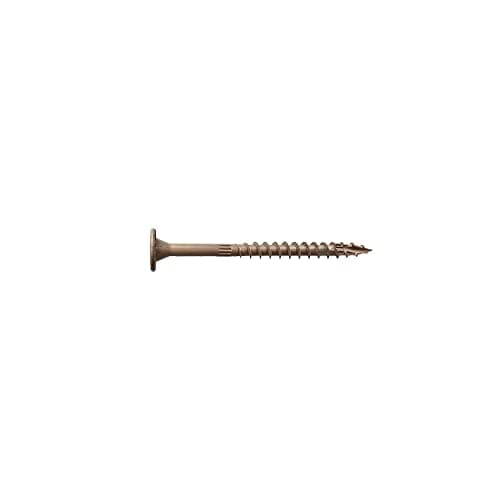 Simpson Strong-Tie Strong-Drive SDWS Timber ScrewThe structural screw that replaces a lag bolt without the pilot hole — and the only fastener here whose coating is rated by the manufacturer as equivalent to hot-dip galvanizing. | The fastener that goes through the board and into the joist | Not published by manufacturer | $19.11 · View on Amazon |
| 02 | 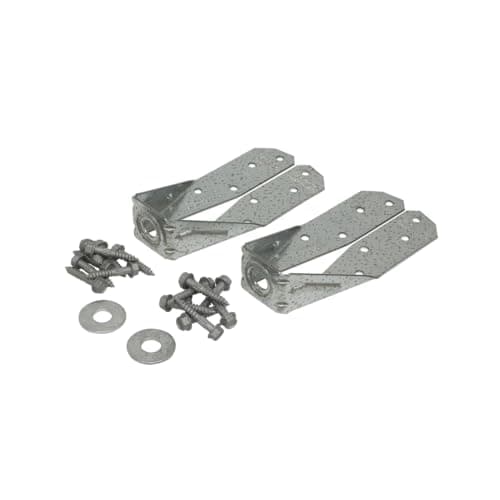 Simpson Strong-Tie DTT2Z Deck Tension TieA code-rated uplift connector for the one load every deck-mounted structure creates and almost no deck is built for. | For the uplift load the deck itself was never designed for | Not published by manufacturer | $29.68 · View on Amazon |
| 03 | 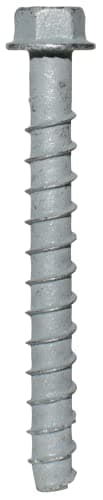 Simpson Strong-Tie Titen HD Mechanically Galvanized Screw AnchorThe only concrete fixing here that publishes a galvanizing standard and a code listing — and it still comes back out, which matters when a post base has to move. | If part of the structure lands on the slab or a pier instead | Not published by manufacturer | $110.56 · View on Amazon |
| 04 | 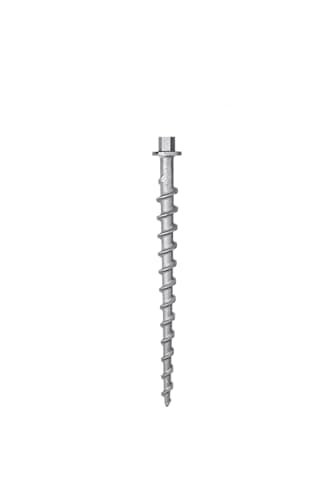 American Earth Anchors PE36 PenetratorThe 36 in. Penetrator, and the one the manufacturer says can be used as a footing rather than only as a tie-down. | When the honest answer is to leave the deck alone | Not published by manufacturer | $143.10 · View on Amazon |
The durability table
Every published figure we could source for these structures, in one place, with the manufacturer page each number came from. Where a cell reads "Not published by manufacturer", that figure does not exist in the manufacturer's own material — we do not estimate it and we do not copy one from another site.
| Model | Wind rating (mph) | Snow load | Frame | Roof | Anchoring required | Warranty | Spec source |
|---|---|---|---|---|---|---|---|
| Simpson Strong-Tie Strong-Drive SDWS Timber ScrewTop pick | Not published by manufacturer | Not published by manufacturer | Carbon steel with a double-barrier coating the manufacturer rates as equivalent to hot-dip galvanization, for exterior and preservative-treated wood | Not published by manufacturer | Structural wood-to-wood fastening, including ledgers; SawTooth point eliminates predrilling in most applications; washer head with under-head nibs drives flush; 6-lobe star drive | Not published by manufacturer | Simpson Strong-Tie Strong-Drive SDWS Timber screw (exterior grade) pageChecked 2026-10-27 |
| Simpson Strong-Tie DTT2Z Deck Tension Tie | Not published by manufacturer | Not published by manufacturer | 14-gauge steel with a ZMAX galvanized coating | Not published by manufacturer | Tension tie for deck construction, supplied with 1/4 in. x 1-1/2 in. Strong-Drive SDS heavy-duty connector screws; also load rated as a holdown for light-duty shearwalls and braced-wall panels | Not published by manufacturer | Simpson Strong-Tie DTT Deck Tension Tie pageChecked 2026-10-27 |
| Simpson Strong-Tie Titen HD Mechanically Galvanized Screw Anchor | Not published by manufacturer | Not published by manufacturer | Carbon steel, proprietary heat treatment, ASTM B695 Class 65 mechanically galvanized coating | Not published by manufacturer | Cracked and uncracked concrete and uncracked masonry; code listed; hex washer head needs no separate washer; easily removable | Not published by manufacturer | Simpson Strong-Tie Titen HD MG announcementChecked 2026-10-14 |
| American Earth Anchors PE36 Penetrator | Not published by manufacturer | Not published by manufacturer | 356 aluminum alloy, heat treated to T6 specifications, made in the USA | Not published by manufacturer | Large Penetrators (36 in. and 46 in.) can be used as footings; guy head, hex and flat head options | Not published by manufacturer | American Earth Anchors Penetrators range pageChecked 2026-10-14 |
Every pick in full
The fastener that goes through the board and into the joist
Simpson Strong-Tie Strong-Drive SDWS Timber Screw
The structural screw that replaces a lag bolt without the pilot hole — and the only fastener here whose coating is rated by the manufacturer as equivalent to hot-dip galvanizing.
- Wind rating
- Not published by manufacturer
- Snow load
- Not published by manufacturer
- Frame
- Carbon steel with a double-barrier coating the manufacturer rates as equivalent to hot-dip galvanization, for exterior and preservative-treated wood
- Roof
- Not published by manufacturer
- Anchoring
- Structural wood-to-wood fastening, including ledgers; SawTooth point eliminates predrilling in most applications; washer head with under-head nibs drives flush; 6-lobe star drive
- Warranty
- Not published by manufacturer
- Sizes
- 0.220 in. diameter; the exterior-grade range runs from 3 in. to 14 in. long
This is the workhorse of the whole job: the thing that replaces the lag bolt most people reach for, and does it better.
Structural wood-to-wood fastening, including ledgers — Simpson's own stated application. That is the same load case as a gazebo base plate bearing on decking and fixing into the joist beneath: a connection carrying both shear and withdrawal in an exposed, wet location.
A double-barrier coating the manufacturer rates as equivalent to hot-dip galvanization, for exterior and preservative-treated wood. This matters more on a deck than anywhere else on a shade structure. The joist under your decking is almost certainly pressure-treated, and modern treatment chemistry eats ordinary plated steel. A fastener that corrodes in a joist you cannot see is the worst failure mode on this page.
The SawTooth point eliminates predrilling in most applications. You will still pre-drill the composite board itself — see the steps below, that part is not optional — but you are not also drilling a pilot into the joist, which keeps the hole tight and the withdrawal value high.
A washer head with under-head nibs that drives flush. Bearing area is what stops the head pulling through a base plate, and the nibs stop it chewing the plate as it seats.
0.220 in. diameter, with the exterior-grade range running from 3 in. to 14 in. Length is the decision to get right: you need to pass through the base plate, through the full thickness of the composite board, and still get meaningful penetration into the joist.
It is a wood screw, and nothing else. It does nothing in concrete, nothing in a paver, and nothing in a composite board on its own.
Skip it if: Your deck frame is steel rather than timber, or the structure sits on a concrete slab. Neither is this fastener's job.
#ad Price shown as of November 11, 2026. How this site is funded
Specifications from Simpson Strong-Tie Strong-Drive SDWS Timber screw (exterior grade) page, checked 2026-10-27.
For the uplift load the deck itself was never designed for
Simpson Strong-Tie DTT2Z Deck Tension Tie
A code-rated uplift connector for the one load every deck-mounted structure creates and almost no deck is built for.
- Wind rating
- Not published by manufacturer
- Snow load
- Not published by manufacturer
- Frame
- 14-gauge steel with a ZMAX galvanized coating
- Roof
- Not published by manufacturer
- Anchoring
- Tension tie for deck construction, supplied with 1/4 in. x 1-1/2 in. Strong-Drive SDS heavy-duty connector screws; also load rated as a holdown for light-duty shearwalls and braced-wall panels
- Warranty
- Not published by manufacturer
- Sizes
- 1-5/8 in. base width, 6-15/16 in. high
The pick that addresses the part of this job most people skip: a gazebo on a deck does not only push down, it pulls up.
A tension tie for deck construction, supplied with 1/4 in. x 1-1/2 in. Strong-Drive SDS heavy-duty connector screws. It ties framing members together against a load trying to separate them — which is exactly what a wind event under a gazebo roof does to a deck.
14-gauge steel with a ZMAX galvanized coating. Heavier gauge and a thicker coating than a generic bracket, in a position where it will stay damp under the decking for the whole of its life.
Also load rated as a holdown for light-duty shearwalls and braced-wall panels. That dual listing is useful context: this is a connector with published engineering behind it rather than a bent strap.
1-5/8 in. base width, 6-15/16 in. high — small enough to fit in a joist bay without forcing you to rebuild framing.
It does not turn a weak deck into a strong one. A tension tie connects what is already there. If the deck itself is undersized, inadequately footed or poorly attached to the house, this changes nothing — and that is a structural question for your local building department, not a hardware purchase.
Fitting it means working under the deck. If the deck is low to the ground with no access, this pick is impractical and you should say so to yourself before the gazebo is already assembled.
Skip it if: Your deck is low-level with no underside access, or your gazebo's base plates land somewhere you cannot reach from below.
#ad Price shown as of November 11, 2026. How this site is funded
Specifications from Simpson Strong-Tie DTT Deck Tension Tie page, checked 2026-10-27.
If part of the structure lands on the slab or a pier instead
Simpson Strong-Tie Titen HD Mechanically Galvanized Screw Anchor
The only concrete fixing here that publishes a galvanizing standard and a code listing — and it still comes back out, which matters when a post base has to move.
- Wind rating
- Not published by manufacturer
- Snow load
- Not published by manufacturer
- Frame
- Carbon steel, proprietary heat treatment, ASTM B695 Class 65 mechanically galvanized coating
- Roof
- Not published by manufacturer
- Anchoring
- Cracked and uncracked concrete and uncracked masonry; code listed; hex washer head needs no separate washer; easily removable
- Warranty
- Not published by manufacturer
- Sizes
- Standard fractional sizes
Included because the best answer on many decks is to not use the deck for at least some of the posts.
Cracked and uncracked concrete and uncracked masonry, code listed. Where a deck adjoins a patio, or where a post can reach a pier below, a concrete fixing is both stronger and simpler than anything you can do through decking.
Carbon steel with an ASTM B695 Class 65 mechanically galvanized coating. A stated galvanizing standard rather than the word "galvanized", which is the difference between a specification and a marketing term.
The hex washer head needs no separate washer, and the anchor is easily removable. Removability matters more than it sounds on a shade structure: base plates get repositioned during assembly far more often than anyone expects.
It cannot be used through decking into a joist. Different material, different fixing. The two picks above are the deck-framing answer; this one is for the concrete that happens to be nearby.
And it is not a fix for an undersized deck. If the deck cannot carry the structure, dropping to concrete piers under new posts is a build, not a bolt.
Skip it if: Every post lands on decking with no concrete within reach. Then this is the wrong fixing entirely.
#ad Price shown as of November 11, 2026. How this site is funded
Specifications from Simpson Strong-Tie Titen HD MG announcement, checked 2026-10-14.
When the honest answer is to leave the deck alone
American Earth Anchors PE36 Penetrator
The 36 in. Penetrator, and the one the manufacturer says can be used as a footing rather than only as a tie-down.
- Wind rating
- Not published by manufacturer
- Snow load
- Not published by manufacturer
- Frame
- 356 aluminum alloy, heat treated to T6 specifications, made in the USA
- Roof
- Not published by manufacturer
- Anchoring
- Large Penetrators (36 in. and 46 in.) can be used as footings; guy head, hex and flat head options
- Warranty
- Not published by manufacturer
- Sizes
- 36 in. long
The option worth considering before you drill anything: site the structure beside the deck instead of on it.
356 aluminum alloy heat treated to T6, made in the USA. It does not rust, which is the whole argument for an aluminum anchor sitting permanently in wet soil.
The manufacturer states that the large Penetrators — 36 in. and 46 in. — can be used as footings rather than only as tie-downs. That is an unusual claim in this category and it is what makes this a genuine alternative to a deck mount rather than a compromise.
Guy head, hex and flat head options, so it can take a post base or a cable depending on how the structure wants to be held.
It needs soil, and it needs the right soil. Rock, heavy clay and thin topsoil over hardpan all defeat a driven anchor. How to anchor a gazebo covers reading the ground before you commit.
Moving the structure off the deck changes the design, not just the anchoring. Different sightlines, different drainage, probably different size. Decide that before the kit arrives rather than after.
Skip it if: The whole point was to cover the deck. Then this is not a solution, it is a different project.
#ad Price shown as of November 11, 2026. How this site is funded
Specifications from American Earth Anchors Penetrators range page, checked 2026-10-14.
The fact everything here follows from
Composite decking is not a structural material, and its makers say so. The boards are a wear and weather surface laid over a timber or steel frame. They are designed to carry a distributed downward load between joists — people, furniture, snow — and nothing else. They are not designed to resist a fastener being pulled out of them, which is precisely the load a gazebo base plate applies in wind.
One pergola manufacturer's own installation guidance for composite decks puts it as bluntly as it can be put: never anchor directly into composite boards alone, because they will flex or crack over time, and anchors must reach the solid wood or steel framing beneath. The same document specifies at least two fixings per base plate and tells you to install cross blocking between joists wherever a plate does not land on one.
So the real job on a composite deck is not "how do I bolt this down". It is "where is the framing, and how do I get a fastener into it without wrecking the board on the way through". Everything below is that, in order.
Before you buy: can the deck take it at all?
This is the question to settle first, because the answer sometimes ends the project — and it is much cheaper to learn that now than after a 400 lb kit is in your driveway.
- A gazebo adds dead load the deck was not designed with. A hardtop gazebo is a permanent structure with a steel or aluminum roof, and it sits on four or six small bearing points rather than spreading its weight. Point loads are harder on a deck than the same total weight spread across the floor.
- It adds snow load in exactly the wrong place. The roof collects snow and funnels all of it into those same bearing points. In a snow region that is the governing load case, not the gazebo's own weight — snow load explained covers how quickly those numbers climb.
- And it adds uplift, which decks are rarely detailed for. A roof is a wing. Wind under it tries to lift the structure, and that load passes into the deck framing as tension — the one direction a deck built for people standing on it is least prepared for.
- Check how the deck itself is held down. Ledger attachment to the house, post-to-beam connections, and whether the posts are actually anchored into their footings rather than just resting on them. A deck that can lift is a deck that will take your gazebo with it.
- Check the frame's age and condition from underneath. Composite decking happily outlives the timber frame below it, and a frame with soft joist ends near the ledger is a frame that cannot take a new structure whatever you fasten it with.
- Ask your local building department. Adding a roofed structure to an existing deck is frequently a permitted alteration, and in many jurisdictions it pushes the deck into a different load case. Gazebo permits and HOA rules covers what the question usually turns on. If anything above gave you pause, this is the point to involve someone who can calculate rather than guess.
If the deck does not pass this check, the structure does not go on the deck. Build it beside the deck on footings or driven anchors, or pick a lighter structure. There is no fastener that compensates for framing that cannot carry the load.
And if it passes, weight becomes a selection criterion rather than a bonus. The heaviest structures in this category concentrate several hundred pounds onto four or six bearing points before any snow lands on them — the best heavy-duty pergolas and gazebos sets out what each one publishes about its own mass and loads, which is the number to check your deck against.
Finding the framing under a composite deck
Harder than on a timber deck, because composite boards are usually fixed with hidden clips, so there are no screw heads telling you where the joists are. Three ways to find them, in order of reliability.
- Look from underneath, if you can. The only method that gives you certainty. Measure from a fixed reference — the ledger board, or the outside edge of the rim joist — and transfer those measurements to the deck surface. Most residential decks run joists at 12 or 16 in. on center, but measure rather than assume, because composite decking is frequently installed at tighter spacing than timber decking.
- Tap along a board and listen. A board over a joist sounds dead; a board spanning between joists sounds hollow. Crude, free, and good enough to confirm a measurement you already have.
- Use a deep-scan stud finder, and treat it as a hint. Composite is denser and more variable than timber, and many finders struggle through it. Useful for confirming a guess, not for making one.
- Mark the joist centerlines on the deck surface before you position anything, with chalk or low-tack tape. You want to choose where the structure goes with the framing already drawn on, instead of discovering the mismatch after the base plates are placed.
- Then put the gazebo's footprint on those marks. On most kits the base plates cannot move, so this is a question of sliding the whole structure a few inches until as many plates as possible land over framing. It is worth the fifteen minutes.
Adding blocking where a plate misses a joist
Some plates will always miss. Blocking is how you give them something to bite into, and it is ordinary work rather than a compromise.
- 01Work out which plates have no joist beneath them, using the marks from the step above. Those are the positions that need blocking.
- 02Cut blocking from pressure-treated lumber the same depth as the joists, to fit tightly between them. Steel blocking is an option on a steel-framed deck. Snug matters: a block that can rock is a block that is not carrying anything.
- 03Fit the blocking directly under the base-plate position, not approximately near it. The fastener has to land in the block, and a block 2 in. off does you no good.
- 04Fasten the blocking into the joists on both sides, with structural screws or framing connectors rated for the job. This is the connection that transfers your gazebo's load into the deck frame, so it deserves more than toe-nailing.
- 05Where you cannot get between the joists, block under them instead. Fixing a block across the underside of two joists and running the base-plate fastener through decking, joist and block is an accepted approach where access from above is impossible.
- 06Add a tension tie at the base-plate positions that will see the most uplift — typically the corners, and the side the prevailing wind comes from. This is the step almost everyone skips and the one that matters in a storm.
- 07Check your fastener length against the finished stack before you buy: base plate thickness, plus the full board thickness, plus the penetration you want in the joist or block. Measure the actual board; composite thicknesses vary by brand and profile.
Drilling through composite without wrecking the board
Composite behaves differently from timber under a drill, and under a fastener. Two rules cover almost all of it.
- Pre-drill through the composite board only — and oversize that hole. The manufacturer guidance is to use a spade bit slightly larger than the fastener, through the board and no further. The fastener then passes freely through the board and does its work in the joist below. This is what prevents cracking, mushrooming and deck distortion.
- Do not pre-drill the joist. The point of the oversized hole is that the board is not gripping the fastener at all. A structural screw with a SawTooth point starts into the joist without a pilot, and an untouched pilot-free hole in timber gives you the full withdrawal value.
- Let the composite swarf clear. Composite melts rather than chips if you push a hot bit. Back the bit out, clear the hole, go again. A glazed hole is harder to get a fastener through cleanly.
- Use a washer under the base plate where the hole is oversized, so the clamping load spreads across the board instead of concentrating at the edge of the hole.
- Never countersink into composite. A countersunk head bearing on composite is a hole that will widen. The board is a spacer in this connection, not a bearing surface.
- Seal nothing, and expect nothing to need sealing. Composite does not rot at a drilled hole the way timber does. The joist below, however, is timber — which is the whole argument for a fastener with a hot-dip-equivalent coating rather than a plated one.
Fastener choice, and why it matters more here
Three reasons a deck is the harshest fastener environment on any shade structure, and all three argue for the same answer.
- The joist is almost certainly pressure-treated, and modern preservative chemistry is aggressive toward plated steel. A fastener rated only for interior or dry use will corrode inside the joist, invisibly, and the first sign will be a base plate that has gone loose.
- The connection stays wet. Water sits in the gap between decking and joist, and it does not dry the way an exposed fixing does. This is a permanently damp, permanently dark location.
- The connection is hidden. You will not inspect it, because you cannot see it. Everything about a hidden connection argues for buying the coating up front rather than planning to check it.
- So: a structural screw with a coating the manufacturer rates as equivalent to hot-dip galvanized, or genuine stainless in a coastal location. Not a hardware-store lag bolt. Not a deck screw — deck screws fasten boards and have no business in a structural connection.
- And two fixings per base plate as a minimum, per the manufacturer guidance for deck-mounted structures. One fixing is a pivot, not a fixing.
- Keep the hardware list with the manual. Years later, the ability to re-tighten or replace a specific fastener is the difference between a repairable structure and a disposable one — the same argument made in materials and warranties.
After it is up
Two maintenance items that are specific to a deck mount, and one honest caveat.
Re-check the base-plate fixings at the end of the first season and annually after that. Timber framing moves with moisture and temperature far more than concrete does, and a fastener in a seasonal joist will back off in a way the same fastener in a slab never would. Anchoring is the condition attached to almost every published wind rating in this category — wind ratings explained sets out why a loose base plate voids the number on the box.
Keep the deck surface under the structure clear. A gazebo roof keeps rain off the boards, which sounds like a benefit and is partly a problem: debris collects where it is not washed away, and it holds damp against the board-to-joist interface. Sweep under it.
And the caveat: in a heavy snow region, a deck mount is the configuration we would be most careful about. The deck is carrying the structure, the roof load and the snow, through a handful of point loads into framing designed for none of them. If that describes you, best gazebos for snow load is worth reading before you choose a model, and a winter support post is worth budgeting for.
Questions people ask
Can you bolt a gazebo directly to composite decking?
How do you find the joists under a composite deck?
What fasteners should I use to fix a gazebo to a deck?
Do I need to pre-drill through composite decking?
What if the gazebo base plates don't line up with the joists?
Will a gazebo on a deck void the decking warranty?
Is a composite deck strong enough for a hardtop gazebo?
Do I need a tension tie for a gazebo on a deck?
Can I use concrete anchors on a composite deck?
Should I just put the gazebo next to the deck instead?
Where these figures came from
- Hanso Home installation guidance for a pergola on a Trex composite deck — composite decking is explicitly not load-bearing; fasteners must reach solid wood or steel framing; at least two bolts per baseplate; cross blocking between joists in pressure-treated lumber or steel where plates do not align; pre-drill through the board only with a spade bit slightly larger than the bolt to prevent cracking, mushrooming or deck distortion; never anchor into composite boards alone
- Hanso Home guidance on mounting to a wooden or composite deck without concrete footers — blocking fixed to the underside of joists as the alternative where access between joists is not possible
- Trex decking installation guide — board fixing methods, hidden fastener systems and joist spacing requirements for composite decking
- Simpson Strong-Tie Strong-Drive SDWS Timber Screw (exterior grade) — structural wood-to-wood fastening including ledgers; double-barrier coating rated as equivalent to hot-dip galvanization for exterior and preservative-treated wood; SawTooth point eliminates predrilling in most applications; washer head with under-head nibs; 6-lobe star drive; 0.220 in. diameter in lengths from 3 in. to 14 in.
- Simpson Strong-Tie DTT Deck Tension Tie — DTT2Z in 14-gauge steel with ZMAX galvanized coating, supplied with 1/4 in. x 1-1/2 in. Strong-Drive SDS heavy-duty connector screws, 1-5/8 in. base width and 6-15/16 in. high, also load rated as a holdown for light-duty shearwalls and braced-wall panels
- Simpson Strong-Tie Titen HD mechanically galvanized screw anchor — carbon steel with ASTM B695 Class 65 mechanically galvanized coating, code listed for cracked and uncracked concrete and uncracked masonry, hex washer head, removable
- American Earth Anchors Penetrators — 356 aluminum alloy heat treated to T6, made in the USA; the 36 in. and 46 in. sizes are published as usable as footings rather than only as tie-downs; guy head, hex and flat head options
Found an error? Tell us and we will correct it within seven days and note the change on the page with a dated line — see our editorial policy.