Best canopy weights
Weights are the most-bought canopy accessory and the least-specified. These are the ones that publish an actual figure — and the reason even the best of them is a supplement rather than a solution.
By Ryder M. · Published · Last updated
We compare published manufacturer specifications, warranty terms and owner-reported failure modes. We have not physically tested these structures. How we judge shade structures
Slat & Shade earns a commission on qualifying purchases made through links on this page. It costs you nothing extra and never changes what we recommend. Full disclosure
Part of Canopies & Patio Covers

The short answer
Buy ballast by published pounds per leg and by how it attaches to the frame. Pre-filled concrete weights give you the stated weight with nothing to fill; stackable plates lock around a slim leg; fillable bags are the cheapest per pound but only if you actually fill them.
Our picks at a glance
| # | Structure | Best for | Wind rating | Price |
|---|---|---|---|---|
| 01 | 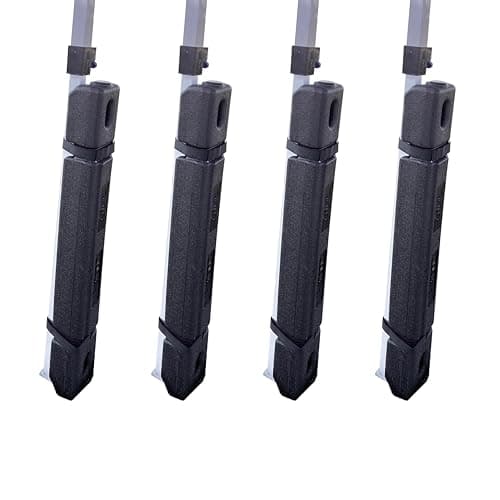 US Weight Ingot Canopy Weights, 4-PackSixty pounds of ferro concrete in an HDPE shell. Nothing to fill, nothing to leak, and the only ballast here that straps to a 2.5 in. leg. | The one that is already the stated weight | Not published by manufacturer | $79.54 · View on Amazon |
| 02 | 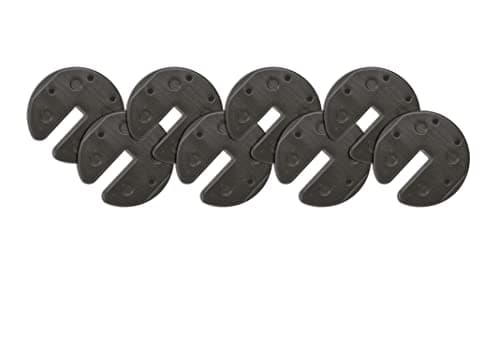 US Weight Tailgater Canopy Weight PlatesStackable plates that lock around the leg instead of hanging off it, sold pre-filled so the stated weight is the weight you get. | The one that locks around a slim leg | Not published by manufacturer | $55.95 · View on Amazon |
| 03 | 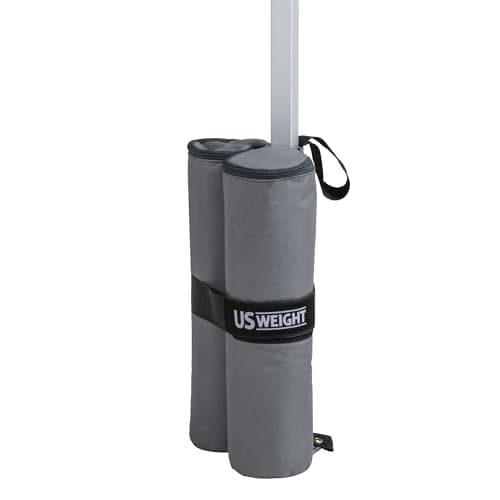 US Weight Premium Fillable Canopy Weight Bags, 4-PackThe fill-on-site answer, and the only bag here that publishes a sealed inner bladder rather than trusting the outer fabric to hold sand. | The cheap-per-pound option, if you fill it | Not published by manufacturer | $29.24 · View on Amazon |
The durability table
Every published figure we could source for these structures, in one place, with the manufacturer page each number came from. Where a cell reads "Not published by manufacturer", that figure does not exist in the manufacturer's own material — we do not estimate it and we do not copy one from another site.
| Model | Wind rating (mph) | Snow load | Frame | Roof | Anchoring required | Warranty | Spec source |
|---|---|---|---|---|---|---|---|
| US Weight Ingot Canopy Weights, 4-PackTop pick | Not published by manufacturer | Not published by manufacturer | High-density polyethylene (HDPE) outer shell filled with ferro concrete, manufactured in the United States | Not published by manufacturer | High-tack Velcro securing straps; adjustable straps fit square and round canopy legs up to 2.5 in. in diameter | Not published by manufacturer | US Weight Ingot canopy weights product pageChecked 2026-10-14 |
| US Weight Tailgater Canopy Weight Plates | Not published by manufacturer | Not published by manufacturer | Recycled plastic, weather resistant, manufactured in the United States | Not published by manufacturer | Patented interlocking slots fit square or round tent legs up to 1.25 in. wide | Not published by manufacturer | US Weight Tailgater canopy weight plates product pageChecked 2026-10-14 |
| US Weight Premium Fillable Canopy Weight Bags, 4-Pack | Not published by manufacturer | Not published by manufacturer | 600D Oxford fabric outer shell with a double-sealed polyethylene safety bladder inside, crafted in Olney, Illinois | Not published by manufacturer | Not published by manufacturer | Not published by manufacturer | US Weight Premium Fillable Canopy Weight Bags product pageChecked 2026-10-14 |
Every pick in full
The one that is already the stated weight
US Weight Ingot Canopy Weights, 4-Pack
Sixty pounds of ferro concrete in an HDPE shell. Nothing to fill, nothing to leak, and the only ballast here that straps to a 2.5 in. leg.
- Wind rating
- Not published by manufacturer
- Snow load
- Not published by manufacturer
- Frame
- High-density polyethylene (HDPE) outer shell filled with ferro concrete, manufactured in the United States
- Roof
- Not published by manufacturer
- Anchoring
- High-tack Velcro securing straps; adjustable straps fit square and round canopy legs up to 2.5 in. in diameter
- Warranty
- Not published by manufacturer
- Sizes
- Four 15 lb weights, 60 lb total
Pre-filled ballast with a published figure per unit, which removes the single biggest variable in this category: whether the weights are actually full.
Four 15 lb weights, 60 lb total. Published per unit and as a set, so there is no arithmetic and no optimism. Fifteen pounds a leg is a known quantity in a way that "holds up to 30 lb" never is.
HDPE outer shell filled with ferro concrete. Concrete does not leak, does not get eaten by rodents in the shed, and does not lose a third of its weight because the bag was filled in a hurry. The polyethylene shell is the part that takes the knocks, and it is the right material to be exposed.
Adjustable straps fit square and round canopy legs up to 2.5 in. in diameter. That is the widest leg compatibility of the three here, and it is the spec to check first — a weight that does not fit your frame is a doorstop.
High-tack Velcro securing straps, so the weight attaches to the leg rather than resting beside it. This matters more than the poundage. Ballast sitting on a foot plate does nothing once the foot lifts; ballast strapped to the leg has to be lifted with it.
Manufactured in the United States, which is stated on the product page rather than implied. For a product bought once and kept for years, a named origin is a reasonable thing to want.
The honest con: 60 lb across four legs is not a lot of ballast, and it is heavy to carry for what it is. Concrete weighs the same in the trunk as it does on the leg.
Skip it if: You need the ballast to travel light or ship cheap. Pre-filled concrete is heavy by definition, which is the point and also the drawback.
#ad Price shown as of November 11, 2026. How this site is funded
Specifications from US Weight Ingot canopy weights product page, checked 2026-10-14.
The one that locks around a slim leg
US Weight Tailgater Canopy Weight Plates
Stackable plates that lock around the leg instead of hanging off it, sold pre-filled so the stated weight is the weight you get.
- Wind rating
- Not published by manufacturer
- Snow load
- Not published by manufacturer
- Frame
- Recycled plastic, weather resistant, manufactured in the United States
- Roof
- Not published by manufacturer
- Anchoring
- Patented interlocking slots fit square or round tent legs up to 1.25 in. wide
- Warranty
- Not published by manufacturer
- Sizes
- Pre-filled sets of 20, 30, 40 or 60 lb total, or a fillable option; the 40 lb set includes a carry strap
Stackable plates for the common 1 in. to 1.25 in. pop-up leg, where a bulky strap-on weight has nothing useful to grip.
Patented interlocking slots fit square or round tent legs up to 1.25 in. wide. The plate captures the leg rather than hanging off it, which keeps the weight low and keeps the load centered on the foot instead of on one side of it.
Pre-filled sets of 20, 30, 40 or 60 lb total, or a fillable option. Being able to buy the exact total you want, pre-filled, is unusual here — and the 40 lb set includes a carry strap, which tells you something honest about how it feels to move.
Recycled plastic, weather resistant, manufactured in the United States. A sensible material for something that will live outside and get dropped on concrete.
Stackable, so you can scale up a leg at a time. Start at the set you need and add plates rather than replacing the system, which is the right shape for a buy-once purchase.
Keep it at the foot. Weight partway up a leg adds a moment that works against you in a gust; weight at the bottom just resists.
The honest con: the 1.25 in. leg limit rules out heavier commercial frames, and stacked plates are more parts to lose than a single block.
Skip it if: Your canopy has 1.5 in. or thicker legs, which covers most heavy-duty commercial frames. The slot will not fit and no amount of force will persuade it.
#ad Price shown as of November 11, 2026. How this site is funded
Specifications from US Weight Tailgater canopy weight plates product page, checked 2026-10-14.
The cheap-per-pound option, if you fill it
US Weight Premium Fillable Canopy Weight Bags, 4-Pack
The fill-on-site answer, and the only bag here that publishes a sealed inner bladder rather than trusting the outer fabric to hold sand.
- Wind rating
- Not published by manufacturer
- Snow load
- Not published by manufacturer
- Frame
- 600D Oxford fabric outer shell with a double-sealed polyethylene safety bladder inside, crafted in Olney, Illinois
- Roof
- Not published by manufacturer
- Anchoring
- Not published by manufacturer
- Warranty
- Not published by manufacturer
- Sizes
- Four bags, each holding up to 30 lb of sand or gravel
Fillable bags are the default in this category because they ship empty, and they are the right buy for anyone who will genuinely fill them.
Each bag holds up to 30 lb of sand or gravel. That is a published capacity rather than a weight — the distinction matters, because the bag arrives at zero and the number is only true if you do the work.
600D Oxford fabric outer shell with a double-sealed polyethylene safety bladder inside. The bladder is why this one is here. A single-layer fabric bag of sand leaks slowly and permanently, through the seams and through the fabric itself, and a bag that has leaked is ballast that no longer weighs what you think.
Crafted in Olney, Illinois, and stated as such. Again, a named origin on a product that otherwise competes purely on price.
Four bags, so the set covers a four-leg frame. At a full 30 lb each that is 120 lb across the canopy, which is meaningfully more than the pre-filled options here.
Fill them with dry sand and keep them dry. Wet sand gains weight, which sounds good and then freezes solid in winter storage and tears the bag from the inside.
The honest con: the stated figure is a capacity, not a weight. Half-filled bags are the most common mistake in the category, and the one that quietly turns 120 lb of plan into 50 lb of reality.
Skip it if: You will not fill them properly, or you have nowhere to store sand. An empty bag is a perfect record of good intentions.
#ad Price shown as of November 11, 2026. How this site is funded
Specifications from US Weight Premium Fillable Canopy Weight Bags product page, checked 2026-10-14.
The criteria, in the order they decide the buy
First, pounds per leg — published, not implied. A listing that says "heavy duty" and gives a bag capacity is telling you the maximum it could weigh, not what it does weigh. Pre-filled products quote a real figure; fillable products quote a ceiling you have to reach yourself.
Second, how it fixes to the frame. This decides whether the weight does anything at all. Ballast strapped or locked to the leg has to be lifted with the canopy; ballast resting beside the foot is irrelevant the moment the foot comes up.
Third, leg compatibility. Published leg diameters here run from 1.25 in. to 2.5 in., and the difference between a slim consumer pop-up and a commercial frame is exactly in that range. Measure before you order.
Fourth, what it does in storage. A concrete block is identical after ten winters. A sand bag with a sealed bladder survives. A single-layer fabric bag leaks, and a water weight freezes and splits.
Fifth, whether you will actually use it. The best ballast is the one that gets strapped on every time, which usually means the one you can carry from the car in one trip. Sixty pounds you deploy beats a hundred and twenty you leave at home.
What weight can and cannot do
Ballast is very good at stopping a canopy sliding and poor at stopping it lifting. A canopy top behaves like a wing: moving air generates lift, and the frame is pulled upward rather than pushed sideways. Against a pure upward force, weight only helps by being heavier than the lift — at every leg, at the same time.
That is the honest limit of this entire product category, and it is why the picks above are framed as a supplement. Canopy wind ratings and weights works through the physics in full, including why published canopy wind figures are so rare.
Where you can drill, anchoring beats ballast, and it is not close. A ground anchor ties the frame to the earth and resists uplift directly; a weight asks gravity to do the same job indirectly. On grass, stake it. On a surface you cannot drill, weight it — and accept the ceiling that comes with that.
And reducing sail area beats both, for free. Taking sidewalls off a pop-up removes more load than any weight you can hang on it, and dropping one side in a strong breeze does more again.
The three types compared
Published figures from the manufacturers, side by side.
| Ingot concrete weights | Tailgater plates | Premium fillable bags | |
|---|---|---|---|
| Published weight | 4 x 15 lb, 60 lb total | Sets of 20, 30, 40 or 60 lb total | Up to 30 lb per bag, fillable |
| Arrives weighted | Yes | Yes, pre-filled sets | No |
| Material | HDPE shell, ferro concrete fill | Recycled plastic | 600D Oxford, sealed PE bladder |
| Fits legs up to | 2.5 in., square or round | 1.25 in., square or round | Not published |
| Attachment | Velcro securing straps | Interlocking slots | Not published |
| Made in | United States | United States | Olney, Illinois |
| Survives a decade of storage | Concrete does not change | Plastic, nothing to leak | Only if kept dry |
The leg-diameter row is the one that returns products. 2.5 in. and 1.25 in. are different markets, and the frame you own decides which column you are allowed to read.
The "arrives weighted" row is the one that decides real-world performance. Everything fillable depends on a job you have to do, and half-done is the normal outcome.
How much weight per leg is enough
There is no published figure from a canopy manufacturer that we can cite, and we are not going to invent one. What the specifications do tell you is what each product provides per leg: 15 lb from a pre-filled concrete weight, 5 to 10 lb from each plate in a stacked set, up to 30 lb from a fully filled bag.
Work from that, and from the only principle that holds: more is better, and equal on every leg is better still. A canopy weighted on three legs pivots about the fourth, and the pivot leg is where the frame bends.
Then recognize the ceiling. There is a wind speed at which no amount of ballast on a folding frame is the right answer, and the correct action there is to take the canopy down rather than to add a fourth bag.
If your canopy publishes a wind figure, that figure is the plan. Best pop-up canopies covers the one model in this category we could find publishing a tested number at all.
Using ballast properly
- Attach it to the leg, not to the ground beside it. This is the whole difference between ballast and ornament.
- Weight every leg, equally. Uplift arrives unevenly; your response should not.
- Keep the weight low, at the foot. Weight partway up the leg adds leverage against you.
- Fill fillable weights completely, with dry fill. The published figure is a capacity, and capacity is not weight.
- Take sidewalls off before you add weight. Removing sail area is free and does more than anything you can buy.
- On grass, stake as well. Ballast and anchoring are not alternatives; where you can do both, do both — best gazebo anchor kits covers what to drive into soil.
- Take it down when the forecast says to. Every ruined pop-up was left up, and no weight on this page changes that.
What we would actually buy
For a canopy that lives at home and gets used often: pre-filled concrete weights. Nothing to fill, nothing to leak, identical in ten years, and the 2.5 in. leg compatibility covers almost any frame. The weight in the trunk is the price of never wondering whether it is full.
For a slim-legged consumer pop-up: stackable plates. The interlocking slot is the right mechanism for a 1 in. to 1.25 in. leg, and being able to add a plate at a time means the system grows with the use.
For maximum pounds per dollar, if you are honest with yourself: fillable bags with a sealed bladder. Four fully filled bags is the most ballast here. The bladder is the detail separating a bag that still weighs 30 lb next season from one that has been quietly leaking into the shed floor.
And on grass, buy stakes too. Anchoring resists uplift directly, which is the force ballast is worst against. Canopy vs pergola is the honest conversation to have if you find yourself buying a lot of weight for something that is never moved.
What we cut, and why
Every model below was a genuine candidate and did not make the list. The reason is stated in each case, because a shortlist with no visible rejections is not evidence of a selection process.
- Water-filled canopy weights
- Convenient to fill and to empty, and water is roughly 8.3 lb per gallon against roughly 13 lb for the same volume of dry sand. They also freeze, split and leak. Worth it only where you must fill on site and carry nothing.
- Weights that rest on the foot plate
- Ballast that is not attached to the leg stops working the moment the foot lifts, which is precisely the moment you needed it. If it does not strap or lock to the frame, it is decoration.
- Buckets of concrete poured at home
- Cheap, heavy and genuinely effective at resisting sliding. Also awkward, abrasive on the frame and impossible to carry — and still no better than any other ballast against uplift.
Questions people ask
How much weight do you need on each canopy leg?
Do canopy weights actually work?
Are sandbags or concrete weights better?
Will canopy weights fit my frame?
Can I use water instead of sand in fillable weights?
Should weights go at the foot or higher up the leg?
Do I still need weights if I stake the canopy down?
Is there a wind speed where weights stop being the answer?
How much weight does a market require on each leg?
Where these figures came from
- US Weight Ingot canopy weights — four 15 lb weights, 60 lb total, HDPE outer shell filled with ferro concrete, high-tack Velcro securing straps fitting square and round legs up to 2.5 in., manufactured in the United States
- US Weight Tailgater canopy weight plates — pre-filled sets of 20, 30, 40 or 60 lb total or a fillable option, recycled plastic manufactured in the United States, patented interlocking slots fitting square or round legs up to 1.25 in., carry strap with the 40 lb set
- US Weight Premium Fillable Canopy Weight Bags — four bags each holding up to 30 lb of sand or gravel, 600D Oxford fabric outer shell with a double-sealed polyethylene safety bladder, crafted in Olney, Illinois
Found an error? Tell us and we will correct it within seven days and note the change on the page with a dated line — see our editorial policy.