The best shade structures for windy areas
Most backyard shade carries no wind figure at all. These four do — and each one states the anchoring condition the figure depends on, which is the half of a rating that actually protects you.
By Ryder M. · Published · Last updated
We compare published manufacturer specifications, warranty terms and owner-reported failure modes. We have not physically tested these structures. How we judge shade structures
Slat & Shade earns a commission on qualifying purchases made through links on this page. It costs you nothing extra and never changes what we recommend. Full disclosure
Part of Wind, Snow & Anchoring
The short answer
The Backyard Discovery Norwood cedar gazebo is the best shade structure for a windy area, with a 100 mph Pro-Tect tested rating, roughly 56 lb/ft² of snow capacity and mandatory anchoring per its manual. For an open roof the Beaumont pergola also publishes 100 mph; for a canopy, the Quictent carport's 55 mph is the only tested figure in its class.
Our picks at a glance
| # | Structure | Best for | Wind rating | Price |
|---|---|---|---|---|
| 01 | 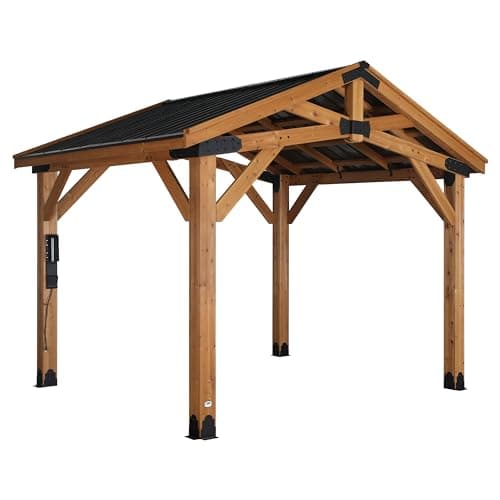 Backyard Discovery Norwood Cedar GazeboThe only gazebo we can find that publishes a 100 mph wind rating and a convertible snow figure — and it converts to roughly 56 lb/ft², several times any other hardtop here. | Best for wind overall | 100 (Pro-Tect tested; product must be anchored per the manual) | $1,999.00 · View on Amazon |
| 02 | 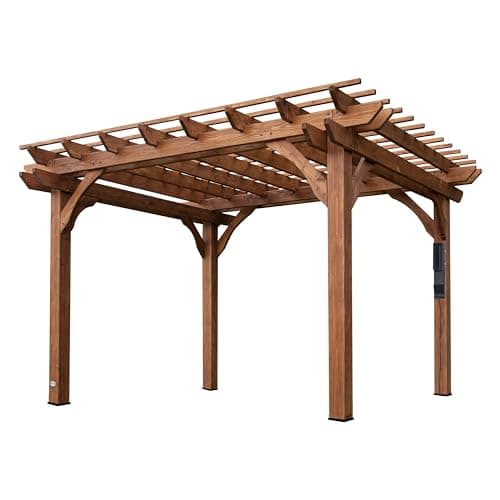 Backyard Discovery Beaumont Cedar PergolaThe highest published wind rating of any pergola on this site, and the only wood kit whose manufacturer makes anchoring a stated condition of the rating. | Best open-roof structure for wind | 100 (when properly anchored) | $1,199.00 · View on Amazon |
| 03 | 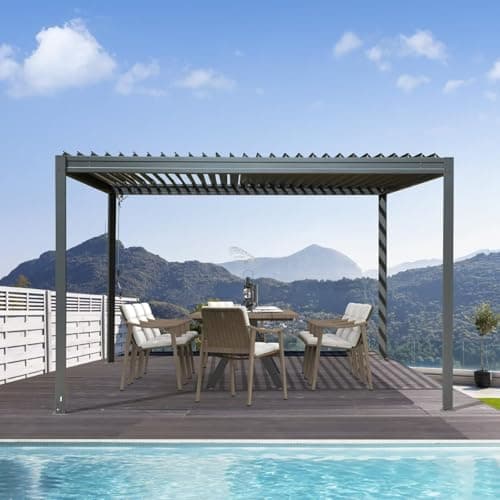 Domi Outdoor Living Aluminum Louvered PergolaThe only louvered pergola here that publishes a snow load in pounds per square foot and backs the roof and frame for five years rather than one. | Best closed, adjustable roof | 72 | $1,399.99 · View on Amazon |
| 04 | 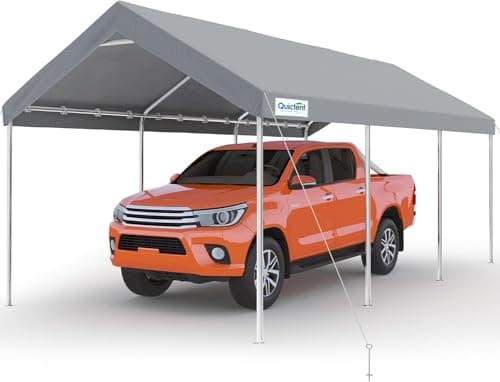 Quictent Heavy Duty 10 x 20 Carport CanopyThe only canopy on this site that publishes both a per-square-foot snow load and a tested wind speed — 9 lb/ft² and 55 mph. | Best rated canopy | 55 (tested) | $209.99 · View on Amazon |
The durability table
Every published figure we could source for these structures, in one place, with the manufacturer page each number came from. Where a cell reads "Not published by manufacturer", that figure does not exist in the manufacturer's own material — we do not estimate it and we do not copy one from another site.
| Model | Wind rating (mph) | Snow load | Frame | Roof | Anchoring required | Warranty | Spec source |
|---|---|---|---|---|---|---|---|
| Backyard Discovery Norwood Cedar GazeboTop pick | 100 (Pro-Tect tested; product must be anchored per the manual) | 6,700 lb across the roof, or up to 30 in. of snow (12 x 10 ft model — roughly 56 lb/ft²) | 100% cedar, 6 in. x 6 in. posts, galvanized steel hardware | 29-gauge galvanized steel peak roof, thermal insulated | Mandatory. Product must be anchored as specified in the instruction manual | 5 years | Backyard Discovery Norwood 12x10 product pageChecked 2026-09-26 |
| Backyard Discovery Beaumont Cedar Pergola | 100 (when properly anchored) | Not published by manufacturer | 100% cedar, 5.5 in. x 5.5 in. posts | Multi-level cedar trellis roof with crossing rafters — open, not solid | Mandatory. Concealed concrete anchors, per the instruction manual | 5 years | Backyard Discovery Beaumont product pageChecked 2026-09-26 |
| Domi Outdoor Living Aluminum Louvered Pergola | 72 | 15 lb/ft² | Aluminum | Adjustable louvers with integrated drainage | M6 expansion bolts into a wooden deck or concrete floor, immediately after assembly | 5 years on hardtop roof and frame; 1 year on curtains and netting | Domi Outdoor Living product pageChecked 2026-09-26 |
| Quictent Heavy Duty 10 x 20 Carport Canopy | 55 (tested) | 9 lb/ft² | 1.46 in. (38 mm) heavy-duty galvanized steel tubing with 12 cross steel cables | 16 mil / 180 g PE tarp, 100% UV block, triple-stitched seams | Ground nails and bungee cords supplied | 1 year on poles and tarp; lifetime on joints, ground nails and bungee cords | Quictent 10x20 carport product pageChecked 2026-09-26 |
Every pick in full
Best for wind overall
Backyard Discovery Norwood Cedar Gazebo
The only gazebo we can find that publishes a 100 mph wind rating and a convertible snow figure — and it converts to roughly 56 lb/ft², several times any other hardtop here.
- Wind rating
- 100 (Pro-Tect tested; product must be anchored per the manual)
- Snow load
- 6,700 lb across the roof, or up to 30 in. of snow (12 x 10 ft model — roughly 56 lb/ft²)
- Frame
- 100% cedar, 6 in. x 6 in. posts, galvanized steel hardware
- Roof
- 29-gauge galvanized steel peak roof, thermal insulated
- Anchoring
- Mandatory. Product must be anchored as specified in the instruction manual
- Warranty
- 5 years
- Sizes
- 10 x 10, 12 x 10, 14 x 10, 14 x 12, 16 x 12, 20 x 12 and 24 x 12 ft
The highest published wind rating of any roofed structure we track, and the only one that also publishes a snow figure you can convert — which matters because wind country is usually weather country generally.
100 mph, Pro-Tect tested, with the product required to be anchored per the instruction manual. Both halves are there: a named test program and a stated condition. A rating without a condition is marketing; a rating with one is an instruction.
6,700 lb across the roof, or up to 30 in. of snow on the 12 x 10 ft model — roughly 56 lb/ft². Several times any other hardtop here. If the site is exposed to wind it is usually exposed to drifting snow too, and this is the only structure on the page that answers both questions.
100% cedar with 6 in. x 6 in. posts and galvanized steel hardware, under a 29-gauge galvanized steel peak roof. Six-inch posts and a steel peak roof is a lot of mass low down and a shape that sheds rather than catches. The gauge is published, which almost nobody does.
Anchoring is mandatory, as specified in the manual. Not advisable — mandatory. On an exposed site this is the sentence that makes the 100 mph figure real, and skipping it voids both the rating and any sensible expectation of the structure staying put.
Sizes 10 x 10 through 24 x 12 ft, five years of warranty. Note that the published snow figure is for the 12 x 10; a larger roof spreads the same construction over more area.
Skip it if: You want something you can move or remove. This is an anchored cedar structure on concrete anchors, and it is meant to be permanent.
#ad Price shown as of November 11, 2026. How this site is funded
Specifications from Backyard Discovery Norwood 12x10 product page, checked 2026-09-26.
Best open-roof structure for wind
Backyard Discovery Beaumont Cedar Pergola
The highest published wind rating of any pergola on this site, and the only wood kit whose manufacturer makes anchoring a stated condition of the rating.
- Wind rating
- 100 (when properly anchored)
- Snow load
- Not published by manufacturer
- Frame
- 100% cedar, 5.5 in. x 5.5 in. posts
- Roof
- Multi-level cedar trellis roof with crossing rafters — open, not solid
- Anchoring
- Mandatory. Concealed concrete anchors, per the instruction manual
- Warranty
- 5 years
- Sizes
- 10 x 10 ft, 12 x 10 ft, 14 x 10 ft, 14 x 12 ft, 16 x 12 ft, 20 x 12 ft
The same 100 mph figure on an open roof, which is the counter-intuitive truth about wind: the structure with no roof panel out-rates every closed roof here.
100 mph when properly anchored, on 100% cedar with 5.5 in. x 5.5 in. posts. An open crossing-rafter roof lets air pass through instead of pressurising a panel, so there is far less to lift. Closed-roof louvered pergolas from premium brands publish 70 to 72 mph against this.
A multi-level cedar trellis roof of crossing rafters — open, not solid. The reason for the rating and the reason you need to be honest about what you are buying: dappled light, no rain cover, and shade that moves across the day.
Anchoring is mandatory via concealed concrete anchors, per the manual. Same discipline as the Norwood. On an exposed site, treat the anchor specification as part of the product.
Sizes 10 x 10 up to 20 x 12 ft, five years of warranty. If the plan is a seating area rather than a dry room, this is the structure that survives the site.
And if you need shade from it, add fabric rather than a panel. How to add shade to a pergola covers the densities that work — and note that anything you add above the rafters changes the wind behavior the rating was tested with.
Skip it if: You need rain cover. A closed roof is what you want and it will cost you 28 mph of rating.
#ad Price shown as of November 11, 2026. How this site is funded
Specifications from Backyard Discovery Beaumont product page, checked 2026-09-26.
Best closed, adjustable roof
Domi Outdoor Living Aluminum Louvered Pergola
The only louvered pergola here that publishes a snow load in pounds per square foot and backs the roof and frame for five years rather than one.
- Wind rating
- 72
- Snow load
- 15 lb/ft²
- Frame
- Aluminum
- Roof
- Adjustable louvers with integrated drainage
- Anchoring
- M6 expansion bolts into a wooden deck or concrete floor, immediately after assembly
- Warranty
- 5 years on hardtop roof and frame; 1 year on curtains and netting
- Sizes
- 10 x 10 ft, 10 x 12 ft, 10 x 13 ft, 12 x 16 ft, 12 x 20 ft
On the page because a lot of people in windy areas still want a roof that closes, and this is the closed-roof structure with the best published combination.
72 mph wind and 15 lb/ft² snow load. The highest published wind figure of any louvered pergola we track, paired with the only per-square-foot roof load in the class — so you can check it against your region rather than taking the brand's word.
Adjustable aluminum louvers. Which is the real wind feature here, and it is worth understanding: open louvers reduce the pressure surface substantially. On an exposed site the habit to build is louvers open in wind, closed in rain, never closed in a storm.
M6 expansion bolts into a wooden deck or concrete floor, immediately after assembly. Stated plainly and stated as immediate. A closed-roof structure unanchored on an exposed site is the worst combination in this whole category.
Five years on the hardtop roof and frame against a category norm of one. A louvered roof is a mechanism, and a mechanism on a windy site takes more cycles of load than one in a sheltered garden. Five years of cover on it is the most reassuring number on this listing.
Skip it if: The site is genuinely severe. 72 mph is 28 mph below the cedar structures here, and a closed roof is the wrong shape for extreme exposure.
#ad Price shown as of November 11, 2026. How this site is funded
Specifications from Domi Outdoor Living product page, checked 2026-09-26.
Best rated canopy
Quictent Heavy Duty 10 x 20 Carport Canopy
The only canopy on this site that publishes both a per-square-foot snow load and a tested wind speed — 9 lb/ft² and 55 mph.
- Wind rating
- 55 (tested)
- Snow load
- 9 lb/ft²
- Frame
- 1.46 in. (38 mm) heavy-duty galvanized steel tubing with 12 cross steel cables
- Roof
- 16 mil / 180 g PE tarp, 100% UV block, triple-stitched seams
- Anchoring
- Ground nails and bungee cords supplied
- Warranty
- 1 year on poles and tarp; lifetime on joints, ground nails and bungee cords
- Sizes
- 10 x 20 x 8.7 ft (H)
Included because the canopy category almost never publishes a wind figure, and this is the exception — by a distance.
55 mph tested, with a 9 lb/ft² snow load. The only canopy on this site publishing both, and both in units you can check. For covering a vehicle, a boat or a woodpile on an exposed plot, nothing else in the class is characterised at all.
1.46 in. (38 mm) heavy-duty galvanized steel tubing with 12 cross steel cables. The cross-cabling is the wind feature. A tube frame without tension members racks sideways under load; twelve cables turn it into a braced box.
A 16 mil / 180 g PE tarp at 100% UV block with triple-stitched seams, 10 x 20 x 8.7 ft. The tarp is the consumable and the frame is the structure — which is the right way round for a windy site, because fabric is cheap to replace and a bent frame is not.
Ground nails and bungee cords supplied; one year on poles and tarp, lifetime on joints, ground nails and bungee cords. Ground nails only, so on a hard surface you are sourcing your own fixings. The lifetime term on the joints is pointed at exactly the part that wind attacks.
Skip it if: You want it to look like garden architecture. This is a galvanized steel shelter and it looks like one.
#ad Price shown as of November 11, 2026. How this site is funded
Specifications from Quictent 10x20 carport product page, checked 2026-09-26.
Open roofs beat closed roofs, and it is not about quality
The two 100 mph structures on this page both have roofs air can pass through. Every closed roof here rates 72 mph or less. That is physics rather than build quality: a solid panel is a pressure surface, and a crossing-rafter roof is mostly gaps.
Which means the first decision on a windy site is roof type, not brand. If you can live with dappled shade and no rain cover, an open cedar roof buys you 28 mph of published headroom over the best closed-roof alternative. If you need the roof, you accept the lower figure and anchor it properly.
An adjustable louvered roof is the useful middle. Louvers open is close to an open roof; louvers closed is a panel. On an exposed site that is a genuine advantage over a fixed hardtop, provided you actually open them when the forecast turns.
And the rating is always conditional. Every figure on this page comes with an anchoring condition attached — "when properly anchored", "per the instruction manual", "expansion bolts immediately after assembly". Wind ratings explained covers why a number without a condition tells you nothing.
The four compared on published figures
Manufacturer figures only. Every structure on the site that publishes a wind number is here; nothing has been left out for being inconvenient.
| Structure | Wind | Snow | Roof | Anchoring condition |
|---|---|---|---|---|
| Backyard Discovery Norwood gazebo | 100 mph (Pro-Tect tested) | 6,700 lb / 30 in., about 56 lb/ft² | 29-gauge galvanized steel peak | Mandatory, per manual |
| Backyard Discovery Beaumont pergola | 100 mph when properly anchored | Not published by manufacturer | Open cedar crossing rafters | Mandatory concealed concrete anchors |
| Domi louvered pergola | 72 mph | 15 lb/ft² | Adjustable aluminum louvers | M6 expansion bolts, immediately |
| Quictent 10 x 20 carport | 55 mph (tested) | 9 lb/ft² | 16 mil PE tarp on braced steel | Ground nails supplied |
Four published wind figures across 38 products. That is the honest state of this market, and it is the whole reason this page is short. A structure without a figure is not necessarily weak — but on an exposed site you are choosing between a tested claim and a hope.
The anchoring column is the one to read last and remember first. Every figure here is a description of an anchored structure. None of them describes a kit standing on a slab under its own weight.
Siting, which is worth more than any rating
- Put something solid on the prevailing-wind side. A fence, a hedge, a garage wall or the house itself does more for a structure than any upgrade you can buy. A 72 mph structure in a sheltered corner outlives a 100 mph one on an open ridge.
- Do not site it at the top of a slope or in a gap between buildings. Both accelerate wind. A gap between a house and a garage can run noticeably faster than the open garden either side of it.
- Anchor into the best surface available, and find out what that is before you buy. A thin decorative slab will not hold an expansion anchor under load. Gazebo foundation options covers what each foundation can take.
- Check every anchor bolt once a year, in autumn. Wind loading works fixings loose over seasons, and the annual check is the entire maintenance plan for the thing that holds your structure down.
- Take soft components off before winter. Netting, curtains and fabric roofs are the sails on an otherwise rated structure. How to winterize a gazebo covers the autumn list.
- And open the louvers, or retract the canopy, when weather is coming. The adjustment exists for exactly this and it costs nothing to use.
What we would actually do on an exposed plot
Decide whether you need a dry roof, because it sets your ceiling. Need rain cover and your realistic maximum is a 72 mph louvered pergola or a steel-roofed gazebo anchored properly. Accept dappled shade and you can have a 100 mph open cedar structure instead.
Buy the anchoring as part of the product, not as an afterthought. Several of the figures here are explicitly conditional, and in at least one case the hard-surface bolts are not even in the box. Order them together.
Prefer a published per-square-foot snow figure over a whole-roof total. Exposed sites drift snow unevenly, and a total tells you nothing about what one loaded corner is carrying. Only two structures on this page give you a per-square-foot number.
And size down rather than up. Every extra square foot of roof is more pressure surface and more load on the same four anchors. On a windy site the smallest structure that does the job is the one still standing in five years.
What we cut, and why
Every model below was a genuine candidate and did not make the list. The reason is stated in each case, because a shortlist with no visible rejections is not evidence of a selection process.
- PURPLE LEAF Hardtop Gazebo
- Publishes 40 mph, the lowest figure on this site, with no anchoring method stated — the wrong combination for an exposed site.
- Every shade sail
- No shade sail from any manufacturer publishes a wind rating, because the posts and footings are yours. That is not a defect, but it means none can be ranked here — [shade sail wind ratings](/shade-sails/shade-sail-wind-ratings) explains what to read instead.
- Pop-up canopies and screen shelters
- A folding frame has no fixed geometry to test. The one exception publishes 85 km/h on its frame — see [best pop-up canopies](/canopies/best-pop-up-canopies) — and it is still a pack-away product.
Questions people ask
What shade structure is best for a windy area?
Does a heavier structure survive wind better?
Why do open-roof pergolas have higher wind ratings than hardtops?
How much wind can a backyard shade structure take?
Do shade sails work in windy areas?
Is a louvered pergola good in wind?
Does anchoring really change the wind rating?
Should I buy a smaller structure if my site is windy?
What if wind is not my main problem?
Where these figures came from
- Backyard Discovery Norwood cedar gazebo — 100 mph Pro-Tect tested with the product required to be anchored per the manual, 6,700 lb across the roof or up to 30 in. of snow on the 12 x 10 model, 100% cedar with 6 in. posts, 29-gauge galvanized steel peak roof, 5-year warranty
- Backyard Discovery Beaumont cedar pergola — 100 mph when properly anchored, 100% cedar with 5.5 in. posts, mandatory concealed concrete anchors, multi-level cedar trellis roof of crossing rafters, 5-year warranty
- Domi Outdoor Living aluminum louvered pergola — 72 mph, 15 lb/ft² snow load, M6 expansion bolts into a wooden deck or concrete floor immediately after assembly, 5 years on hardtop roof and frame
- Quictent heavy duty 10 x 20 carport canopy — 55 mph tested, 9 lb/ft² snow load, 1.46 in. galvanized steel tubing with 12 cross steel cables, 16 mil / 180 g PE tarp at 100% UV block, ground nails and bungee cords supplied, lifetime on joints
- PURPLE LEAF hardtop gazebo collection — 40 mph published wind rating, no anchoring method stated
Found an error? Tell us and we will correct it within seven days and note the change on the page with a dated line — see our editorial policy.