Gazebo alternatives
A gazebo gives you a roof, a footprint and somewhere to put the table. What it does not give you is a published wind figure worth much — and that is the thing most of these alternatives fix.
By Ryder M. · Published · Last updated
We compare published manufacturer specifications, warranty terms and owner-reported failure modes. We have not physically tested these structures. How we judge shade structures
Slat & Shade earns a commission on qualifying purchases made through links on this page. It costs you nothing extra and never changes what we recommend. Full disclosure
Part of Hardtop Gazebos
The short answer
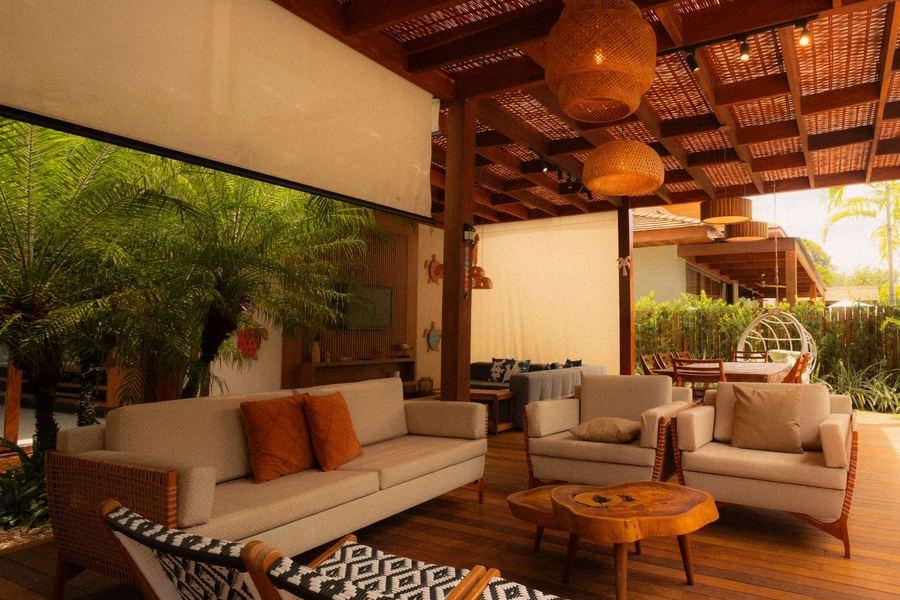
The Domi louvered pergola is the best gazebo alternative: an adjustable roof, 72 mph published and a 15 lb/ft² snow load, against the 40 mph a premium hardtop gazebo publishes. The budget pick is a ColourTree rectangle shade sail. For a portable alternative that keeps the walls, the CLAM Quick-Set Escape goes up in under a minute.
Our picks at a glance
| # | Structure | Best for | Wind rating | Price |
|---|---|---|---|---|
| 01 | 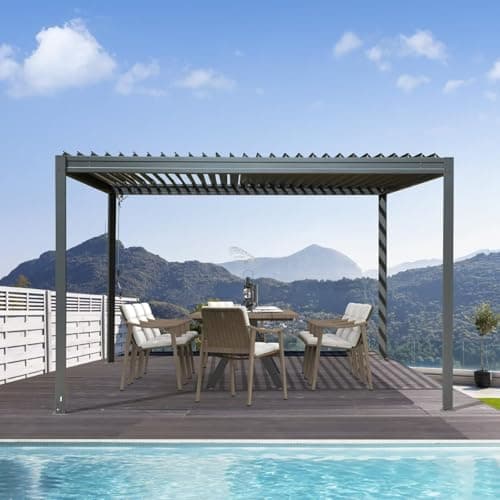 Domi Outdoor Living Aluminum Louvered PergolaThe only louvered pergola here that publishes a snow load in pounds per square foot and backs the roof and frame for five years rather than one. | The best alternative — the same permanence, far better figures | 72 | $1,399.99 · View on Amazon |
| 02 | 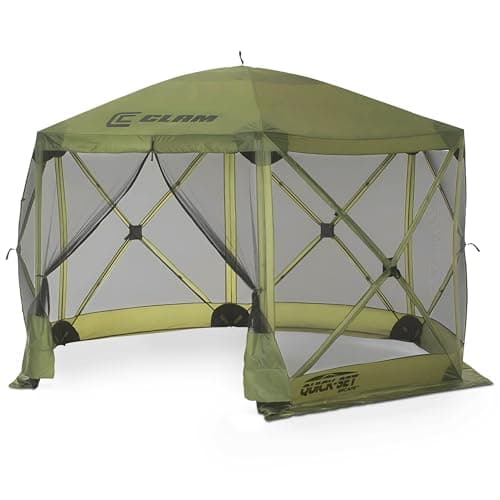 CLAM Quick-Set Escape Screen Shelter94 square feet of fully screened floor that goes up in under a minute and packs to 37 lb — the most usable screen house per pound we found published specs for. | The portable alternative that keeps the part people actually use | Not published by manufacturer | $329.89 · View on Amazon |
| 03 | 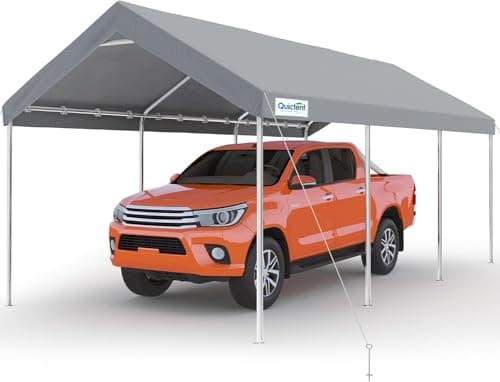 Quictent Heavy Duty 10 x 20 Carport CanopyThe only canopy on this site that publishes both a per-square-foot snow load and a tested wind speed — 9 lb/ft² and 55 mph. | The cheap covered footprint — and the only one here that publishes both figures | 55 (tested) | $209.99 · View on Amazon |
| 04 | 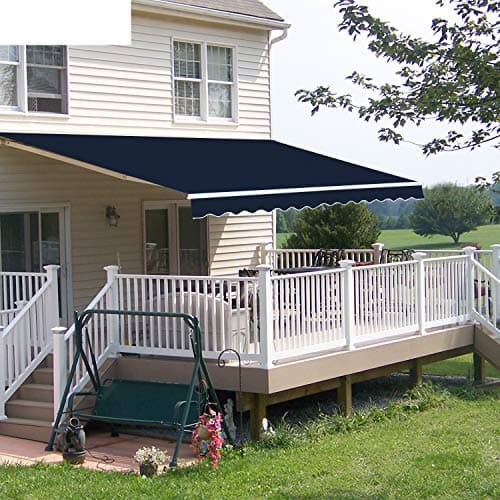 Diensweek P100 Manual Retractable AwningRetracts, which is the only wind strategy a fabric awning has. The published rating is a Beaufort number, not a mile-per-hour figure. | The alternative that takes up no ground at all | Beaufort 5 (roughly 19-24 mph) — retract above it | $859.99 · View on Amazon |
| 05 | 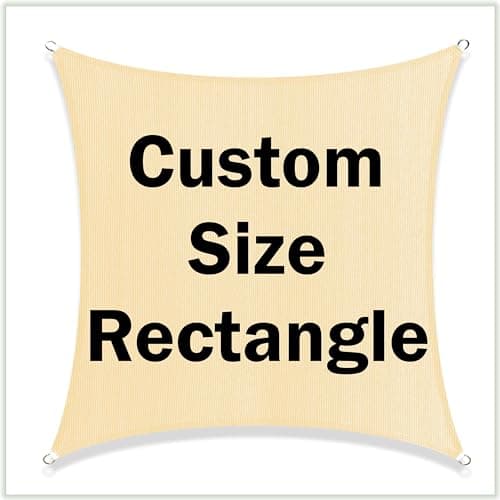 ColourTree Rectangle Sun Shade Sail, 190 GSMThe clearest published fabric spec in the category — 190 GSM virgin HDPE, 95% UV block, three-year warranty — with the hardware sold separately. | Budget pick — the cheapest way to cover the same ground | Not published by manufacturer | $79.99 · View on Amazon |
The durability table
Every published figure we could source for these structures, in one place, with the manufacturer page each number came from. Where a cell reads "Not published by manufacturer", that figure does not exist in the manufacturer's own material — we do not estimate it and we do not copy one from another site.
| Model | Wind rating (mph) | Snow load | Frame | Roof | Anchoring required | Warranty | Spec source |
|---|---|---|---|---|---|---|---|
| Domi Outdoor Living Aluminum Louvered PergolaTop pick | 72 | 15 lb/ft² | Aluminum | Adjustable louvers with integrated drainage | M6 expansion bolts into a wooden deck or concrete floor, immediately after assembly | 5 years on hardtop roof and frame; 1 year on curtains and netting | Domi Outdoor Living product pageChecked 2026-09-26 |
| CLAM Quick-Set Escape Screen Shelter | Not published by manufacturer | Not published by manufacturer | Six-hub pop-up frame on flex-tested 11 mm fiberglass poles, no assembly | Water-resistant seam-taped roof panel over tear-resistant no-see-um mesh walls | 7 stakes and 5 tie-down ropes included | 1 year against manufacturing defects | CLAM Quick-Set Escape product pageChecked 2026-09-29 |
| Quictent Heavy Duty 10 x 20 Carport Canopy | 55 (tested) | 9 lb/ft² | 1.46 in. (38 mm) heavy-duty galvanized steel tubing with 12 cross steel cables | 16 mil / 180 g PE tarp, 100% UV block, triple-stitched seams | Ground nails and bungee cords supplied | 1 year on poles and tarp; lifetime on joints, ground nails and bungee cords | Quictent 10x20 carport product pageChecked 2026-09-26 |
| Diensweek P100 Manual Retractable Awning | Beaufort 5 (roughly 19-24 mph) — retract above it | Not published by manufacturer | T5-grade aluminum with PVC-coated stainless steel arm cables and galvanized steel roller tube | 280 g/m² polyester with PU coating, water resistant, 50 UV+ | Not published by manufacturer | 1 year | Diensweek official siteChecked 2026-09-26 |
| ColourTree Rectangle Sun Shade Sail, 190 GSM | Not published by manufacturer | Not published by manufacturer | No frame — 100% virgin (non-recycled) HDPE fabric, reinforced stitched seams | 190 GSM HDPE mesh, 95% UV block, breathable | Stainless steel D-ring at each corner; cable rope and hardware kits sold separately | 3 years under normal weather and usage | ColourTree rectangle shade sail product pageChecked 2026-09-26 |
Every pick in full
The best alternative — the same permanence, far better figures
Domi Outdoor Living Aluminum Louvered Pergola
The only louvered pergola here that publishes a snow load in pounds per square foot and backs the roof and frame for five years rather than one.
- Wind rating
- 72
- Snow load
- 15 lb/ft²
- Frame
- Aluminum
- Roof
- Adjustable louvers with integrated drainage
- Anchoring
- M6 expansion bolts into a wooden deck or concrete floor, immediately after assembly
- Warranty
- 5 years on hardtop roof and frame; 1 year on curtains and netting
- Sizes
- 10 x 10 ft, 10 x 12 ft, 10 x 13 ft, 12 x 16 ft, 12 x 20 ft
The upgrade answer, and the one most people searching this are actually looking for: a permanent roofed structure that publishes nearly twice the wind rating of a premium hardtop gazebo.
72 mph published, with a 15 lb/ft² snow load. Set that against the 40 mph a premium aluminum hardtop gazebo publishes, from a brand that rates its own louvered pergolas at 70 to 72. Same company, same metal, different roof — and the gap is the entire argument for this pick. A solid gazebo roof is a wing; a louvered roof can be opened to let a gust through. Gazebo wind ratings has the full chart.
And the snow figure is the one nobody else publishes usefully. 15 lb/ft² is a per-square-foot load, which can be compared to a local ground snow load. Most hardtop gazebos publish a whole-roof total with no stated area — 2,500 lb, 3,000 lb — which cannot be compared to anything at all. Snow load explained covers why the unit decides whether a figure means anything.
An adjustable louvered roof with integrated drainage. Closed, it does what a gazebo roof does: shade and rain cover. Open, it gives you back the sky on a cool morning, which no fixed gazebo roof will ever do. The water is taken away inside the frame rather than off the edge.
Five years on the hardtop roof and frame; one year on curtains and netting. Against a premium hardtop gazebo that publishes no warranty term at all, that is a meaningful difference — and the split honestly names which parts are consumables.
The honest cons. It is a four-figure structure, so this is not the cheap end of the page. It must be bolted into a slab or a deck with M6 expansion bolts immediately after assembly, in the maker's own words, and the 72 mph is void without that. Sizes stop at 12 x 20 ft, where some gazebo ranges reach 14 x 28 ft. And Domi's own listing describes the louvers as galvanized steel on an aluminum frame rather than aluminum throughout — stiffer over a long span, a different corrosion story at a scratch.
Skip it if: You want an enclosed space with netting or curtains, or a footprint above 12 x 20 ft. A louvered pergola is a roof on posts, not a room.
#ad Price shown as of November 11, 2026. How this site is funded
Specifications from Domi Outdoor Living product page, checked 2026-09-26.
The portable alternative that keeps the part people actually use
CLAM Quick-Set Escape Screen Shelter
94 square feet of fully screened floor that goes up in under a minute and packs to 37 lb — the most usable screen house per pound we found published specs for.
- Wind rating
- Not published by manufacturer
- Snow load
- Not published by manufacturer
- Frame
- Six-hub pop-up frame on flex-tested 11 mm fiberglass poles, no assembly
- Roof
- Water-resistant seam-taped roof panel over tear-resistant no-see-um mesh walls
- Anchoring
- 7 stakes and 5 tie-down ropes included
- Warranty
- 1 year against manufacturing defects
- Sizes
- 11.5 x 11.5 ft set up, 94 sq ft, 90 in. peak and 72 in. wall height, 37 lb
The answer to "cheap gazebo alternatives" and "camping gazebo alternatives" at once — and it keeps the feature most gazebo owners say they use most, which is the walls rather than the roof.
11.5 x 11.5 ft set up, 94 sq ft, a 90 in. peak and 72 in. wall height. Six feet at the walls is the number that matters: it is the difference between a shelter you move around in and one you stoop at the edges of. Most portable structures are tall only in the middle.
Tear-resistant no-see-um mesh walls under a water-resistant seam-taped roof panel. This is the real substitution. A hardtop gazebo is bought for a roof and used for the netting — a garden in August has a sun problem until eight o'clock and an insect problem after it. Fully screened 94 sq ft does the second job better than most gazebos do, for a fraction of the money.
A six-hub pop-up frame on flex-tested 11 mm fiberglass poles, no assembly. Up in under a minute, down again the same, and 37 lb packed. Fiberglass flexes and returns where thin steel tube kinks permanently.
Seven stakes and five tie-down ropes included, one year against manufacturing defects. Twelve anchoring components in the box — generous for the category, and necessary, because nothing in this class publishes a wind rating.
The cons: it is not permanent and it is not a rain structure. A seam-taped panel over mesh walls handles a shower, not a wet weekend with furniture underneath, and it comes down when weather is forecast. Best screen houses ranks it against its real competition.
Skip it if: You want something that stays up all season and keeps a table dry. This is a shelter you pitch and strike.
#ad Price shown as of November 11, 2026. How this site is funded
Specifications from CLAM Quick-Set Escape product page, checked 2026-09-29.
The cheap covered footprint — and the only one here that publishes both figures
Quictent Heavy Duty 10 x 20 Carport Canopy
The only canopy on this site that publishes both a per-square-foot snow load and a tested wind speed — 9 lb/ft² and 55 mph.
- Wind rating
- 55 (tested)
- Snow load
- 9 lb/ft²
- Frame
- 1.46 in. (38 mm) heavy-duty galvanized steel tubing with 12 cross steel cables
- Roof
- 16 mil / 180 g PE tarp, 100% UV block, triple-stitched seams
- Anchoring
- Ground nails and bungee cords supplied
- Warranty
- 1 year on poles and tarp; lifetime on joints, ground nails and bungee cords
- Sizes
- 10 x 20 x 8.7 ft (H)
On this page for one unusual fact: it is the only alternative under four figures whose manufacturer publishes a tested wind speed and a per-square-foot snow load.
55 mph tested and 9 lb/ft². Read both honestly — 9 lb/ft² is a modest load and wet snow is heavy. The value is that the numbers exist at all, so you can site the structure against something real. Most hardtop gazebos in this registry publish no wind rating whatsoever.
1.46 in. (38 mm) heavy-duty galvanized steel tubing with 12 cross steel cables. The cross cables are the actual engineering and the reason a wind figure exists: they triangulate a tube frame that would otherwise rack and fold, which is exactly how cheap frames fail.
A 16 mil / 180 g PE tarp at 100% UV block with triple-stitched seams, 10 x 20 x 8.7 ft high, with ground nails and bungee cords supplied. More covered square footage than almost any gazebo at any price on this site.
One year on poles and tarp; lifetime on joints, ground nails and bungee cords. An odd-looking warranty that is genuinely informative: the maker is confident about its metalwork and realistic about the component you will re-buy.
The cons decide who this suits: the proportions are a driveway, not a seating area. 10 x 20 ft at 8.7 ft high looks like what it is, it has to be staked into ground so it is no use on a deck or a terrace, and a tarp in sustained wind-driven rain stretches, ponds and eventually tears at a grommet. Best carport canopies covers it on its own terms.
Skip it if: The structure is going where people sit and look at it. This is covered square footage, not garden architecture.
#ad Price shown as of November 11, 2026. How this site is funded
Specifications from Quictent 10x20 carport product page, checked 2026-09-26.
The alternative that takes up no ground at all
Diensweek P100 Manual Retractable Awning
Retracts, which is the only wind strategy a fabric awning has. The published rating is a Beaufort number, not a mile-per-hour figure.
- Wind rating
- Beaufort 5 (roughly 19-24 mph) — retract above it
- Snow load
- Not published by manufacturer
- Frame
- T5-grade aluminum with PVC-coated stainless steel arm cables and galvanized steel roller tube
- Roof
- 280 g/m² polyester with PU coating, water resistant, 50 UV+
- Anchoring
- Not published by manufacturer
- Warranty
- 1 year
- Sizes
- 8 x 7 ft to 15 x 10 ft
If the objection to a gazebo is that it occupies a quarter of a small garden permanently, this removes the footprint entirely — the load goes into the house.
No posts, no base, no slab. A gazebo needs a level footprint and keeps it forever. An awning hangs off a wall you already own, and the ground underneath stays usable for everything else.
And it retracts, which no gazebo does. The space is covered when you want it and open when you do not, which on a north-facing terrace that needs winter sun is a real advantage rather than a compromise.
Beaufort 5 published, roughly 19 to 24 mph, with the instruction to retract above it. The lowest wind guidance on this page by a wide margin, stated honestly with an action attached — and a reminder that this is the most weather-limited option here.
T5-grade aluminum with PVC-coated stainless steel arm cables and a galvanized steel roller tube, under 280 g/m² PU-coated polyester at 50 UV+, water resistant, in sizes from 8 x 7 ft to 15 x 10 ft.
The cons: one year, no walls, and it needs a wall that can genuinely carry a cantilevered load. Siding, fascia and brick veneer are not fixing points — how to attach a pergola to a house sets out what the fixing has to reach and the rules are identical. If the spot is away from the building, this option is unavailable.
Skip it if: The space is not against a suitable wall, or what you wanted was a destination in the garden rather than an extension of the house.
#ad Price shown as of November 11, 2026. How this site is funded
Specifications from Diensweek official site, checked 2026-09-26.
Budget pick — the cheapest way to cover the same ground
ColourTree Rectangle Sun Shade Sail, 190 GSM
The clearest published fabric spec in the category — 190 GSM virgin HDPE, 95% UV block, three-year warranty — with the hardware sold separately.
- Wind rating
- Not published by manufacturer
- Snow load
- Not published by manufacturer
- Frame
- No frame — 100% virgin (non-recycled) HDPE fabric, reinforced stitched seams
- Roof
- 190 GSM HDPE mesh, 95% UV block, breathable
- Anchoring
- Stainless steel D-ring at each corner; cable rope and hardware kits sold separately
- Warranty
- 3 years under normal weather and usage
- Sizes
- 14 sizes, 8 x 10 ft to 16 x 20 ft
A tiny fraction of the price of a hardtop gazebo, and over a space with usable anchor points it covers more ground than one.
190 GSM 100% virgin (non-recycled) HDPE at 95% UV block, breathable, with reinforced stitched seams and a stainless steel D-ring at each corner. Virgin rather than recycled polymer is the quiet distinction and the one that decides how the fourth summer goes.
Fourteen sizes from 8 x 10 ft to 16 x 20 ft. A 16 x 20 ft sail is 320 sq ft of cover — considerably more than a 10 x 12 ft gazebo, for a small fraction of the money.
Breathable is why it survives on four fixings instead of four posts. Air passes through the knit rather than pushing against it, which is the same mechanism that lets a louvered roof out-perform a solid one in wind.
Three years under normal weather and usage. And the three honest trade-offs. It blocks no rain at all — mesh passes water straight through, and the 95% figure is a UV number rather than a rain one. It gives you no walls, no insect screening and nothing to hang a light from. And it needs three or four anchor points that genuinely take load: a fence post is not one, and supplying posts and footings can cost more than the sail. Shade sail posts and footings covers what each anchor needs.
Skip it if: You want rain cover or an enclosed space. A sail is a fabric plane overhead and nothing else.
#ad Price shown as of November 11, 2026. How this site is funded
Specifications from ColourTree rectangle shade sail product page, checked 2026-09-26.
What a gazebo is good at, and the two things it is not
Being straight about the original matters, and a hardtop gazebo has two genuine advantages that only one option on this page matches.
It is enclosed, or it can be. Netting, curtains and wall kits turn a roof into a room, and that is what decides whether the space gets used after dusk in a mosquito summer. Of the five picks here, only the portable screen shelter offers it at all.
And its roof is solid from day one. Shade and rain cover with nothing to add, nothing to tension and nothing to perish. A pergola needs a fabric layer to shade anything, and a mesh sail will never keep a table dry.
The first thing it is not: well rated for wind. This is the finding that shapes the whole page. A premium aluminum hardtop in this registry publishes 40 mph — the lowest figure on this site — and four of the six gazebos we track publish no wind rating at all. Two publish a snow load as a whole-roof total with no stated area, which cannot be compared to anything. Are hardtop gazebos worth it works through what the money actually buys.
The second: it is permanent, and it is big. A gazebo takes a level footprint and keeps it. In a small garden that is a quarter of the usable space committed to one function forever, which is why the two options here with no ground footprint earn their place.
Matching the alternative to the actual objection
The right substitute depends entirely on which part of the gazebo was the problem. Five common versions, and what each points at.
- "I want better weather performance" — the louvered pergola. 72 mph and a comparable snow figure against 40 mph and an uncomparable one. This is the only upgrade on the page and it is the reason it ranks first.
- "It costs too much" — the shade sail, if you have anchor points, or the carport canopy if you need a covered footprint rather than architecture. Both are an order of magnitude below a hardtop.
- "It takes up the whole garden" — the retractable awning. It is the only option here with no ground footprint at all, and the only one that disappears when you want the space back.
- "I only need it sometimes" — the portable screen shelter. Up in under a minute, 94 sq ft, and it lives in the garage the rest of the year.
- "The roof blew off / leaked" — this is usually not an alternatives question. A model-specific replacement canopy, or a structure with a published wind rating and the anchoring actually done, fixes it for far less. Gazebo roof leaks and how to anchor a gazebo cover both.
One objection that none of these fixes: wanting the look. A gazebo is a destination at the end of a garden in a way a tensioned sail or a wall-mounted awning is not. If that is what you are buying, buy a gazebo — just buy one that publishes its figures.
The five alternatives, side by side
Published manufacturer figures only, from the sources at the foot of this page. A hardtop gazebo row is included for reference using the figures a premium aluminum model actually publishes, so the comparison is explicit rather than implied. Where a maker publishes nothing, the cell says so.
| Option | Published wind | Snow | Ground footprint | Walls / netting |
|---|---|---|---|---|
| A hardtop gazebo (for reference) | 40 mph | 2,500 lb, no stated roof area | Permanent, level base required | Available on most models |
| Domi louvered pergola | 72 mph, M6 expansion bolts specified | 15 lb/ft² | Permanent, bolted to slab or deck | Curtains and netting offered |
| CLAM Quick-Set Escape | Not published by manufacturer | Not published by manufacturer | Portable — 37 lb packed | Full no-see-um mesh walls |
| Quictent 10 x 20 carport | 55 mph tested | 9 lb/ft² | Staked into ground, 10 x 20 ft | No |
| Diensweek P100 awning | Beaufort 5 (~19-24 mph), retract above | Not published by manufacturer | None — mounts to a house wall | No |
| ColourTree rectangle sail | Not published by manufacturer | Not published by manufacturer | None — 3-4 anchor points | No |
Read the first two rows together. The alternative at the top of this page publishes nearly double the gazebo's wind rating and the only snow figure on the table in a unit you can compare — and it is the same class of permanent four-figure structure. That is the clearest reason on this site to look past a hardtop before buying one.
What each alternative asks of the property
Price is the obvious filter and it is rarely the binding one. What actually decides this choice is what the site can physically provide, and all five are different.
The louvered pergola needs a slab or a deck it can be bolted into, with M6 expansion bolts specified by the manufacturer and installed immediately after assembly. The published 72 mph assumes them. Best pergola anchor kits prices the fixings by surface.
The carport canopy needs open ground to stake into — so it is unavailable on a deck, a balcony or a terrace over a membrane. Ground nails and bungees are supplied, which is more than most of its class manages.
The awning needs a wall that can carry a cantilevered load, which is the one requirement on this page where getting it wrong damages the house rather than the product. Find the structure behind the cladding before you drill, or do not fit it.
The shade sail needs three or four anchor points that genuinely take load. This is the requirement people most often underestimate: a boundary fence post is not an anchor, and if two corners need their own posts in their own footings you are doing groundwork comparable to a small structure's. Shade sail cost breaks it out.
And the screen shelter needs almost nothing — soft ground for seven stakes, and somewhere to store it. That is the quiet reason it suits more gardens than its specification suggests.
Whatever you choose, anchor it. Not one structure on this page publishes a figure that applies unanchored, and two of the five state their fixing method in the manufacturer's own words. It is the cheapest thing you can do for any of them and the one most often skipped.
What we cut, and why
Every model below was a genuine candidate and did not make the list. The reason is stated in each case, because a shortlist with no visible rejections is not evidence of a selection process.
- A different gazebo
- Often the right answer rather than an alternative. The category is wide, and the structures that publish real figures are a short list within it — one cedar-framed hardtop publishes 100 mph with anchoring stated as mandatory and roughly 56 lb/ft² of snow, which beats everything on this page. [Best hardtop gazebos](/gazebos/best-hardtop-gazebos) and [best gazebos for high winds](/gazebos/best-gazebos-for-high-winds) rank them.
- Pop-up canopies
- The obvious cheap substitute and the weakest one: a flat single-skin top on a folding frame, no vent for pressure to escape through, and almost never any ballast in the box. [Pop-up canopy alternatives](/canopies/pop-up-canopy-alternatives) covers what to buy instead of one.
- Pavilions
- Not an alternative so much as the same structure in different proportions — a longer, shallower roof on the same post-and-beam idea, and frequently from the same makers. [Gazebo vs pavilion](/gazebos/gazebo-vs-pavilion) covers where the line sits, and [best gazebos and pavilions](/gazebos/best-gazebos-and-pavilions) ranks the ranges that reach both.
- Solid-roof patio covers and lean-tos
- Usually a building rather than a product: a permit question, a wall-flashing question and a contractor quote rather than a published specification anyone can compare. [Gazebo vs patio cover](/gazebos/gazebo-vs-patio-cover) covers the decision.
- Replacing just the roof
- If the frame is sound and the canopy has perished, this is far cheaper than any alternative on the page — and it is sized by the gazebo's own model number rather than its nominal size, which is where most people go wrong. [Gazebo replacement canopy sizing](/gazebos/gazebo-replacement-canopy-sizing) covers finding one that fits.
Questions people ask
What can I use instead of a gazebo?
What is a cheaper alternative to a gazebo?
Is a pergola better than a gazebo?
What is the most wind-resistant alternative to a gazebo?
Where these figures came from
- Domi Outdoor Living louvered pergola product page
- CLAM Quick-Set Escape screen tent product page
- Quictent 10 x 20 carport product page
- Diensweek official site (P100 manual retractable awning)
- ColourTree rectangle sun shade sail product page
- PURPLE LEAF hardtop gazebo collection (the reference row)
Found an error? Tell us and we will correct it within seven days and note the change on the page with a dated line — see our editorial policy.