The best pergola anchor kits
Two of the three pergolas on this site that publish a wind rating make anchoring a stated condition of it. The anchor is not an accessory to the structure — on paper it is part of the structure.
By Ryder M. · Published · Last updated
We compare published manufacturer specifications, warranty terms and owner-reported failure modes. We have not physically tested these structures. How we judge shade structures
Slat & Shade earns a commission on qualifying purchases made through links on this page. It costs you nothing extra and never changes what we recommend. Full disclosure
Part of Wind, Snow & Anchoring
The short answer
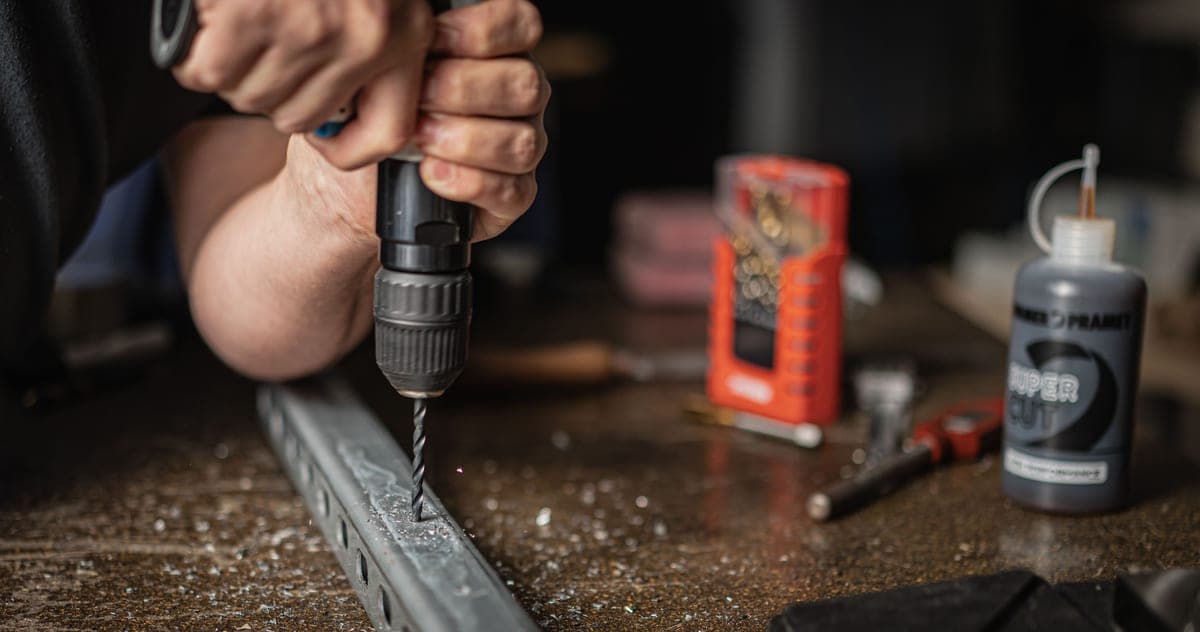
For a concrete slab, the Simpson Titen HD mechanically galvanized screw anchor is the pick: code listed, ASTM B695 Class 65 coating, and removable. On a timber deck you need two things instead — SDWS timber screws into the framing and a DTT2Z tension tie for uplift. On soft ground, the PE36 Penetrator is the only option here rated to work as a footing.
Our picks at a glance
| # | Structure | Best for | Material | Price |
|---|---|---|---|---|
| 01 | 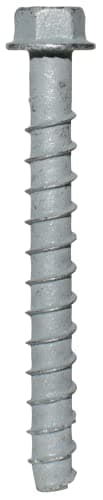 Simpson Strong-Tie Titen HD Mechanically Galvanized Screw AnchorThe only concrete fixing here that publishes a galvanizing standard and a code listing — and it still comes back out, which matters when a post base has to move. | The pick for a concrete slab or paver base | Carbon steel, proprietary heat treatment, ASTM B695 Class 65 mechanically galvanized coating | $110.56 · View on Amazon |
| 02 | 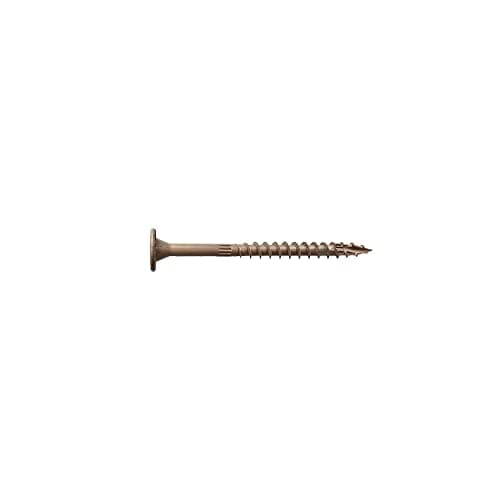 Simpson Strong-Tie Strong-Drive SDWS Timber ScrewThe structural screw that replaces a lag bolt without the pilot hole — and the only fastener here whose coating is rated by the manufacturer as equivalent to hot-dip galvanizing. | Budget pick — and the right fastener for a timber deck or ledger | Carbon steel with a double-barrier coating the manufacturer rates as equivalent to hot-dip galvanization, for exterior and preservative-treated wood | $19.11 · View on Amazon |
| 03 | 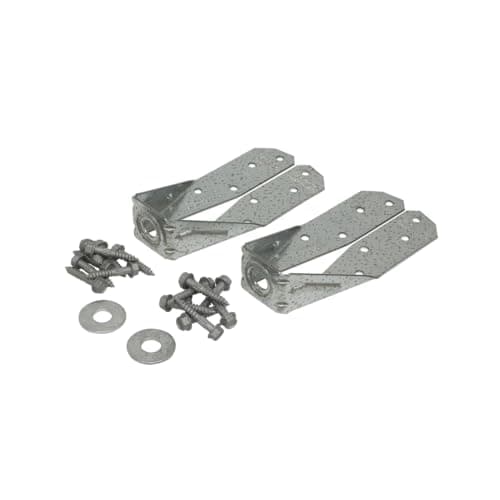 Simpson Strong-Tie DTT2Z Deck Tension TieA code-rated uplift connector for the one load every deck-mounted structure creates and almost no deck is built for. | The connector nobody buys and every deck pergola needs | 14-gauge steel with a ZMAX galvanized coating | $29.68 · View on Amazon |
| 04 | 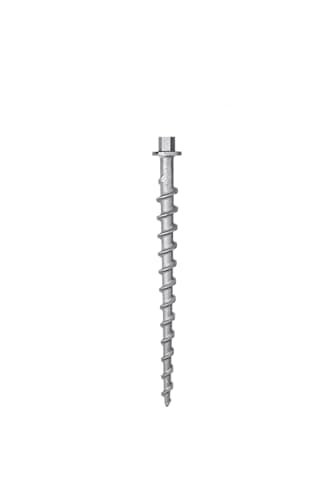 American Earth Anchors PE36 PenetratorThe 36 in. Penetrator, and the one the manufacturer says can be used as a footing rather than only as a tie-down. | For soft ground, and the only one rated as a footing | 356 aluminum alloy, heat treated to T6 specifications, made in the USA | $143.10 · View on Amazon |
The durability table
Every published figure we could source for these structures, in one place, with the manufacturer page each number came from. Where a cell reads "Not published by manufacturer", that figure does not exist in the manufacturer's own material — we do not estimate it and we do not copy one from another site.
| Model | Wind rating (mph) | Snow load | Frame | Roof | Anchoring required | Warranty | Spec source |
|---|---|---|---|---|---|---|---|
| Simpson Strong-Tie Titen HD Mechanically Galvanized Screw AnchorTop pick | Not published by manufacturer | Not published by manufacturer | Carbon steel, proprietary heat treatment, ASTM B695 Class 65 mechanically galvanized coating | Not published by manufacturer | Cracked and uncracked concrete and uncracked masonry; code listed; hex washer head needs no separate washer; easily removable | Not published by manufacturer | Simpson Strong-Tie Titen HD MG announcementChecked 2026-10-14 |
| Simpson Strong-Tie Strong-Drive SDWS Timber Screw | Not published by manufacturer | Not published by manufacturer | Carbon steel with a double-barrier coating the manufacturer rates as equivalent to hot-dip galvanization, for exterior and preservative-treated wood | Not published by manufacturer | Structural wood-to-wood fastening, including ledgers; SawTooth point eliminates predrilling in most applications; washer head with under-head nibs drives flush; 6-lobe star drive | Not published by manufacturer | Simpson Strong-Tie Strong-Drive SDWS Timber screw (exterior grade) pageChecked 2026-10-27 |
| Simpson Strong-Tie DTT2Z Deck Tension Tie | Not published by manufacturer | Not published by manufacturer | 14-gauge steel with a ZMAX galvanized coating | Not published by manufacturer | Tension tie for deck construction, supplied with 1/4 in. x 1-1/2 in. Strong-Drive SDS heavy-duty connector screws; also load rated as a holdown for light-duty shearwalls and braced-wall panels | Not published by manufacturer | Simpson Strong-Tie DTT Deck Tension Tie pageChecked 2026-10-27 |
| American Earth Anchors PE36 Penetrator | Not published by manufacturer | Not published by manufacturer | 356 aluminum alloy, heat treated to T6 specifications, made in the USA | Not published by manufacturer | Large Penetrators (36 in. and 46 in.) can be used as footings; guy head, hex and flat head options | Not published by manufacturer | American Earth Anchors Penetrators range pageChecked 2026-10-14 |
Every pick in full
The pick for a concrete slab or paver base
Simpson Strong-Tie Titen HD Mechanically Galvanized Screw Anchor
The only concrete fixing here that publishes a galvanizing standard and a code listing — and it still comes back out, which matters when a post base has to move.
- Wind rating
- Not published by manufacturer
- Snow load
- Not published by manufacturer
- Frame
- Carbon steel, proprietary heat treatment, ASTM B695 Class 65 mechanically galvanized coating
- Roof
- Not published by manufacturer
- Anchoring
- Cracked and uncracked concrete and uncracked masonry; code listed; hex washer head needs no separate washer; easily removable
- Warranty
- Not published by manufacturer
- Sizes
- Standard fractional sizes
The only concrete fixing in this comparison that publishes both a galvanizing standard and a code listing, and the one most pergola manuals are effectively describing when they say "expansion screws into a hardened floor".
ASTM B695 Class 65 mechanically galvanized coating on heat-treated carbon steel. A named standard with a class number is a measurable coating thickness, which matters because a pergola post base sits on a surface that is wet for days at a time. Most fasteners sold for this job publish "galvanized" and nothing else.
Code listed for cracked and uncracked concrete and uncracked masonry. The cracked-concrete listing is the one to notice: a slab that has been outdoors for ten years has cracks in it, and an anchor only tested in sound concrete is being used outside its listing.
A hex washer head that needs no separate washer, and it is easily removable. Removability is a genuine buy-it-for-life argument — a post base that has to move, a slab that has to be repaired, or a pergola that comes with you to the next house. A wedge anchor is in there forever.
The honest cons: it needs a hammer drill and the right bit diameter, embedment depth has to be respected, and you must not fix into a paver. A paver is not structural — the anchor has to reach the slab or the compacted base underneath, which is why how to anchor a pergola treats pavers as their own case.
Skip it if: The surface is timber, soft ground, or a thin topping over sand. A concrete screw anchor needs real concrete to bite into.
#ad Price shown as of November 11, 2026. How this site is funded
Specifications from Simpson Strong-Tie Titen HD MG announcement, checked 2026-10-14.
Budget pick — and the right fastener for a timber deck or ledger
Simpson Strong-Tie Strong-Drive SDWS Timber Screw
The structural screw that replaces a lag bolt without the pilot hole — and the only fastener here whose coating is rated by the manufacturer as equivalent to hot-dip galvanizing.
- Wind rating
- Not published by manufacturer
- Snow load
- Not published by manufacturer
- Frame
- Carbon steel with a double-barrier coating the manufacturer rates as equivalent to hot-dip galvanization, for exterior and preservative-treated wood
- Roof
- Not published by manufacturer
- Anchoring
- Structural wood-to-wood fastening, including ledgers; SawTooth point eliminates predrilling in most applications; washer head with under-head nibs drives flush; 6-lobe star drive
- Warranty
- Not published by manufacturer
- Sizes
- 0.220 in. diameter; the exterior-grade range runs from 3 in. to 14 in. long
The cheapest product on this page, and on a deck or a timber frame it is the correct fastener rather than a cheap substitute for one.
A double-barrier coating the manufacturer rates as equivalent to hot-dip galvanization, for exterior and preservative-treated wood. That second clause is the critical one: modern pressure-treated lumber is corrosive to ordinary fasteners, and a plain or electro-galvanized screw in treated timber corrodes from the inside of the hole where you will never see it.
Structural wood-to-wood fastening, including ledgers, with a SawTooth point that eliminates predrilling in most applications and a washer head with under-head nibs that drives flush. 0.220 in. diameter, in lengths from 3 in. to 14 in. in the exterior-grade range.
It replaces a lag bolt without the pilot hole, which is the practical reason to use it. A lag screw in treated timber needs a correctly sized pilot or it splits the member — and a split joist is worse than no fastener.
The important limitation, stated plainly: this is a wood-to-wood screw, not an uplift connector. It is excellent in shear and withdrawal within its published values and it is not a substitute for a rated tension tie on a structure that wind tries to lift. Use both — the tie below is the other half.
Skip it if: You are fixing into concrete or masonry. A timber screw has nothing to grip there.
#ad Price shown as of November 11, 2026. How this site is funded
Specifications from Simpson Strong-Tie Strong-Drive SDWS Timber screw (exterior grade) page, checked 2026-10-27.
The connector nobody buys and every deck pergola needs
Simpson Strong-Tie DTT2Z Deck Tension Tie
A code-rated uplift connector for the one load every deck-mounted structure creates and almost no deck is built for.
- Wind rating
- Not published by manufacturer
- Snow load
- Not published by manufacturer
- Frame
- 14-gauge steel with a ZMAX galvanized coating
- Roof
- Not published by manufacturer
- Anchoring
- Tension tie for deck construction, supplied with 1/4 in. x 1-1/2 in. Strong-Drive SDS heavy-duty connector screws; also load rated as a holdown for light-duty shearwalls and braced-wall panels
- Warranty
- Not published by manufacturer
- Sizes
- 1-5/8 in. base width, 6-15/16 in. high
Here because of the single most common mistake in deck-mounted pergolas: the load everyone plans for is downward, and the load that actually does the damage is upward.
A code-rated tension tie for exactly that load. A deck is framed for people and furniture pressing down. A pergola roof, open or not, gives wind something to push and lift — and the fastener resisting that is usually a lag screw into a single joist, which is not an uplift connection at all.
14-gauge steel with a ZMAX galvanized coating, supplied with 1/4 in. x 1-1/2 in. Strong-Drive SDS heavy-duty connector screws. ZMAX is the coating rated for contact with preservative-treated decking, and the screws come with it rather than being left to your judgement.
Also load rated as a holdown for light-duty shearwalls and braced-wall panels, which tells you the class of connection this is: structural hardware with published values, not a shelf bracket.
1-5/8 in. base width, 6-15/16 in. high. It has to land over a joist or a beam, never over decking alone, and the load path has to be sound all the way to the footing — uplift travels the whole way down.
And the honest framing: this is what makes a deck-mounted pergola defensible, not what makes it safe on its own. You still need to know your joist size and span, and on a raised deck that is a question for your building department. Nothing here is engineering advice. How to secure a gazebo to a composite deck covers the composite case.
Skip it if: The pergola's posts go through the deck to their own footings, which is the better solution where it is possible. Then the deck carries nothing and there is no uplift to resist.
#ad Price shown as of November 11, 2026. How this site is funded
Specifications from Simpson Strong-Tie DTT Deck Tension Tie page, checked 2026-10-27.
For soft ground, and the only one rated as a footing
American Earth Anchors PE36 Penetrator
The 36 in. Penetrator, and the one the manufacturer says can be used as a footing rather than only as a tie-down.
- Wind rating
- Not published by manufacturer
- Snow load
- Not published by manufacturer
- Frame
- 356 aluminum alloy, heat treated to T6 specifications, made in the USA
- Roof
- Not published by manufacturer
- Anchoring
- Large Penetrators (36 in. and 46 in.) can be used as footings; guy head, hex and flat head options
- Warranty
- Not published by manufacturer
- Sizes
- 36 in. long
The answer where there is no concrete and no framing — a lawn, a gravel bed, a plot you are not going to excavate.
The manufacturer states that the large Penetrators, 36 in. and 46 in., can be used as footings rather than only as tie-downs. That is an unusual claim in this market and it is the reason this is on a pergola page: a pergola transfers real vertical and lateral load at four points, and most ground anchors are rated only to resist a rope pulling up.
356 aluminum alloy heat treated to T6 specifications, made in the USA. Aluminum in the ground is the right material choice — it does not rust, and a steel anchor that has corroded through at the soil line looks perfectly fine from above.
And American Earth Anchors is the only maker in this comparison publishing pull-out capacity by soil type at all. Holding power in sand, clay and loam are different numbers, and a single figure with no soil stated is marketing. Read their charts against your actual ground.
Guy head, hex and flat head options, so the termination can match a post base rather than only a cable.
The cons: 36 in. of aluminum has to be driven, which is work, and it will not turn in rock. On hard, compact or rocky ground a driven cabled arrowhead is the right tool instead — best gazebo anchor kits covers that case, and pergola footings and post bases covers poured footings.
Skip it if: The ground is rocky or compacted hard. A screw-type anchor needs soil it can turn in.
#ad Price shown as of November 11, 2026. How this site is funded
Specifications from American Earth Anchors Penetrators range page, checked 2026-10-14.
Why a pergola anchor is not a gazebo anchor
The hardware aisle looks the same and the loads are not. This is worth two minutes before you buy, because the two structures fail differently.
A pergola stands on four posts. A gazebo usually stands on a base frame. Four posts means four concentrated load points, and each one takes the whole corner — there is no perimeter member spreading it. That is why post section and fixing size matter more on a pergola.
A pergola's roof is open, which changes what the wind does. Air passes between the rafters, so the dominant load is lateral — wind trying to push the frame over and rack it into a parallelogram — rather than the uplift that tries to peel a solid gazebo roof off. The fixing has to resist shear and overturning at each post.
But on a deck, uplift comes back. A deck-mounted pergola's posts are fixed to framing that can be pulled up, and that is a connector question rather than a screw question. Hence the tension tie on this page.
And the published ratings assume all of it. Backyard Discovery's 100 mph is conditional on concealed concrete anchors per the manual. PURPLE LEAF's 72 mph assumes expansion screws into a hardened floor. Domi specifies M6 expansion bolts into a deck or concrete floor immediately after assembly. Three manufacturers, three anchoring conditions, and in every case the number is void without them — wind ratings explained covers what that means in practice.
Matching the anchor to the surface
There are really only four surfaces, and each one has a right answer. Getting this wrong is the most common failure in the category.
| Surface | What to use | Published spec | The constraint |
|---|---|---|---|
| Concrete slab | Titen HD MG screw anchor | ASTM B695 Class 65, code listed cracked and uncracked concrete | Needs a hammer drill and correct embedment |
| Pavers over compacted base | Titen HD MG, reaching the base — not the paver | Same listing; masonry listing is for uncracked masonry | A paver is not structural; the anchor must reach below |
| Timber deck | SDWS timber screws plus a DTT2Z tension tie | Coating rated equivalent to hot-dip; 14-ga ZMAX tie | Must land over a joist or beam, never decking alone |
| Soft ground / lawn | PE36 Penetrator | T6 aluminum; maker publishes pull-out by soil type | Will not turn in rocky or hard-compacted ground |
| Rocky or hard-compacted ground | Driven cabled arrowhead anchor | 3 in. steel head on galvanized aircraft cable | A tie-down, not a footing — see the gazebo page |
One rule covers all five rows: the anchor has to reach something structural. A paver, the top 4 in. of a lawn, and a deck board are all surfaces rather than structure, and a fixing that stops in one of them is doing nothing the first time it is loaded.
Getting the installation right
The hardware is the easy half. These five steps are where pergola anchoring actually succeeds or fails.
- 01Read the manual's anchoring section before you buy anything. Several manufacturers specify a bolt size — Domi says M6 expansion bolts — and the published wind rating is written against that specification, not against your judgement.
- 02Anchor immediately after assembly, not later. Domi says this in those words, and the reason is mundane: an unanchored frame racks out of square under its own weight and the first breeze, and then the holes no longer line up.
- 03Check what is under the surface before drilling. Slab thickness, post-tension cables in a newer slab, buried services, and on a deck the joist direction and span. This is the step that cannot be undone.
- 04Use the full embedment depth and the specified bit. An anchor at half depth has a fraction of its published capacity, and an oversized hole has almost none.
- 05Re-check the fixings after the first windy season. Gust loading is cyclic — a rapid series of pushes and releases rather than a steady force — and that works fasteners loose in a way steady wind does not. A torque check every spring is the cheapest maintenance on the whole structure.
And if the surface cannot be drilled at all, do not improvise a fixing. Ballast calculated against the structure's sail area is a legitimate method with its own rules: how to anchor a pergola without drilling sets them out.
What we cut, and why
Every model below was a genuine candidate and did not make the list. The reason is stated in each case, because a shortlist with no visible rejections is not evidence of a selection process.
- Wedge anchors and sleeve anchors
- They work, and they are permanent: once set, a wedge anchor cannot be removed without breaking out the concrete around it. On a structure you may want to reposition, repair the slab under, or take with you, a removable code-listed screw anchor is the better buy-it-for-life choice.
- Concrete screws with no published coating standard
- The commodity end of this aisle. "Galvanized" with no standard and no class number is not a measurable coating, and the fixing on a pergola post base spends its life at the one point on the structure where water sits longest.
- Spike-type post anchors driven into soil
- Sold for fence posts and widely used under pergola legs. They publish no pull-out capacity, no soil type and no uplift rating, and they rely on a short embedment in the top layer of soil — which is the layer that softens when it rains.
- Planters and ballast instead of anchors
- Genuinely the right answer on an undrillable surface, and a different method rather than a kit: it needs mass calculated against sail area, not hardware. [How to anchor a pergola without drilling](/durability/how-to-anchor-a-pergola-without-drilling) covers it properly.
Questions people ask
Do pergolas need to be anchored?
What anchors do you use for a pergola on concrete?
How do you anchor a pergola to a deck?
Can you anchor a pergola into grass?
Where these figures came from
- Simpson Strong-Tie Titen HD mechanically galvanized screw anchor announcement
- Simpson Strong-Tie Strong-Drive SDWS Timber screw (exterior grade) page
- Simpson Strong-Tie DTT deck tension tie page
- American Earth Anchors Penetrators range page
- American Earth Anchors load capacity page
Found an error? Tell us and we will correct it within seven days and note the change on the page with a dated line — see our editorial policy.