What a shade sail costs
The sail is the cheap half. What decides the total is hardware, whether you need posts, and how many sails you go through — and none of that is on the product page.
By Ryder M. · Published · Last updated
We compare published manufacturer specifications, warranty terms and owner-reported failure modes. We have not physically tested these structures. How we judge shade structures
Slat & Shade earns a commission on qualifying purchases made through links on this page. It costs you nothing extra and never changes what we recommend. Full disclosure
Part of Shade Sails
The short answer
We publish no prices because they change weekly and a stale figure is worse than none. What drives the differences is fabric weight, edge construction and warranty length. The costs nobody lists are hardware (never included beyond corner rings), posts if you have nothing to attach to, and fabric replacement.
Our picks at a glance
| # | Structure | Best for | Fabric | Price |
|---|---|---|---|---|
| 01 | 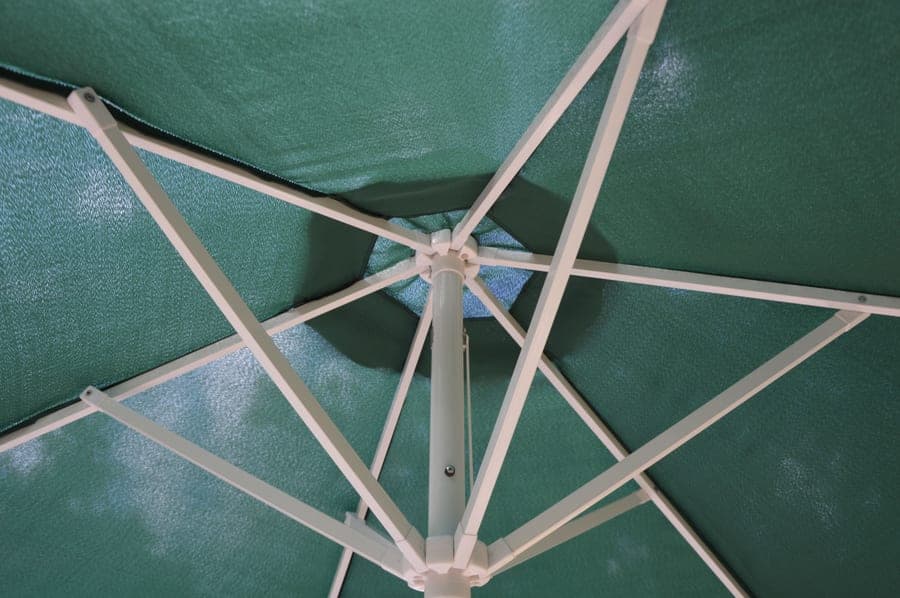 Windscreen4less Webbing Shade Sail, 180 GSMThe budget option that still publishes its numbers: 180 GSM, UV 90, three years — enough for a small span, not enough for a windy one. | Where the category starts | 180 GSM polyethylene, UV 90 | Check price on Amazon |
| 02 | 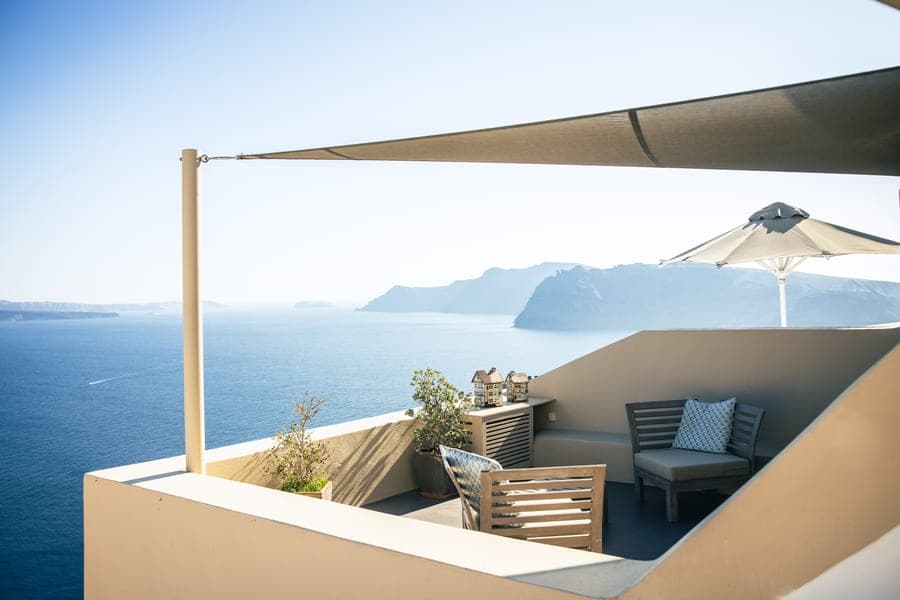 ColourTree Rectangle Sun Shade Sail, 190 GSMThe clearest published fabric spec in the category — 190 GSM virgin HDPE, 95% UV block, three-year warranty — with the hardware sold separately. | Best value for most patios | 190 GSM HDPE mesh, 95% UV block, breathable | Check price on Amazon |
| 03 | 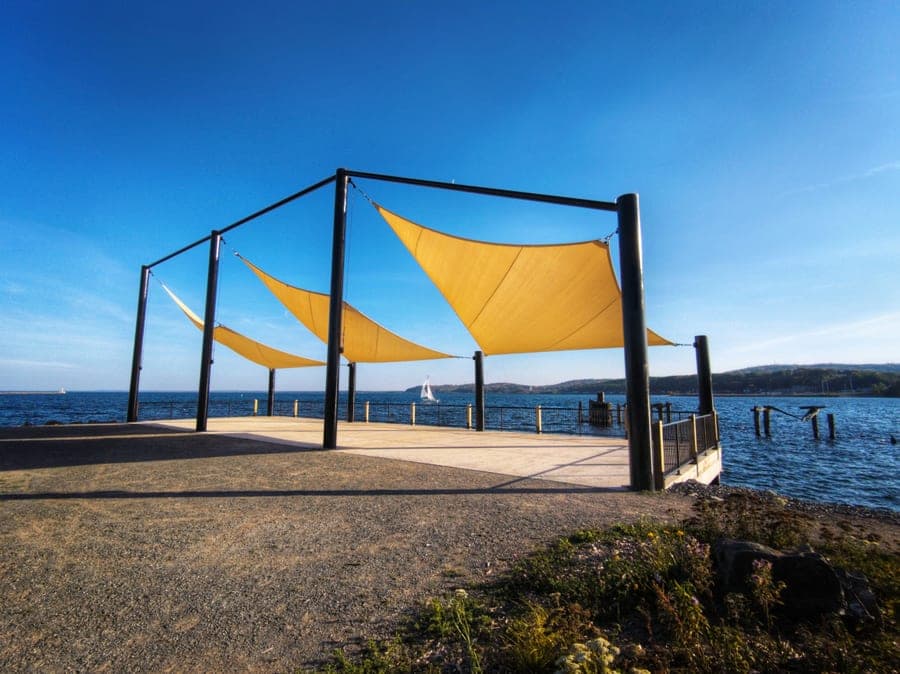 Windscreen4less Cable Shade Sail, 260 GSMThe heaviest fabric and the longest warranty of any sail here — seven years — and the only one with a galvanized cable sewn through the perimeter. | Best cost per year | 260 GSM high-density polyethylene, UV 95 | Check price on Amazon |
| 04 | 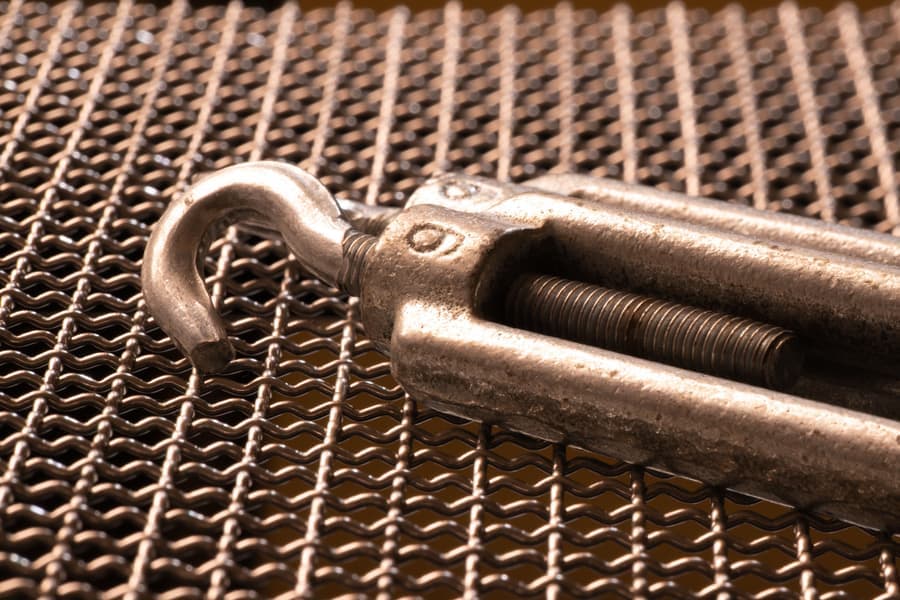 SUNNY GUARD Shade Sail Hardware Kit, 316 Stainless316 marine-grade stainless rather than 304 — the difference that decides whether your fixings survive a coastal or pool-side install. | The cost nobody lists | Not published by manufacturer | Check price on Amazon |
The durability table
Every published figure we could source for these structures, in one place, with the manufacturer page each number came from. Where a cell reads "Not published by manufacturer", that figure does not exist in the manufacturer's own material — we do not estimate it and we do not copy one from another site.
| Model | Wind rating (mph) | Snow load | Frame | Roof | Anchoring required | Warranty | Spec source |
|---|---|---|---|---|---|---|---|
| Windscreen4less Webbing Shade Sail, 180 GSMTop pick | Not published by manufacturer | Not published by manufacturer | Webbing-reinforced perimeter, no cable | 180 GSM polyethylene, UV 90 | Steel D-rings | 3 years | Windscreen4less shade sails pageChecked 2026-09-26 |
| ColourTree Rectangle Sun Shade Sail, 190 GSM | Not published by manufacturer | Not published by manufacturer | No frame — 100% virgin (non-recycled) HDPE fabric, reinforced stitched seams | 190 GSM HDPE mesh, 95% UV block, breathable | Stainless steel D-ring at each corner; cable rope and hardware kits sold separately | 3 years under normal weather and usage | ColourTree rectangle shade sail product pageChecked 2026-09-26 |
| Windscreen4less Cable Shade Sail, 260 GSM | Not published by manufacturer | Not published by manufacturer | Steel-wired perimeter with galvanized cable and A-ring reinforcement | 260 GSM high-density polyethylene, UV 95 | Strengthened A-rings at the corners, steel wire reinforced edges | 7 years under normal weather conditions | Windscreen4less shade sails pageChecked 2026-09-26 |
| SUNNY GUARD Shade Sail Hardware Kit, 316 Stainless | Not published by manufacturer | Not published by manufacturer | 316 marine-grade stainless steel | Not published by manufacturer | Turnbuckles, pad eyes, snap hooks, screws and expansion anchors; sized for triangle sails under 161 sq ft | Not published by manufacturer | SUNNY GUARD hardware kit product pageChecked 2026-09-26 |
Every pick in full
Where the category starts
Windscreen4less Webbing Shade Sail, 180 GSM
The budget option that still publishes its numbers: 180 GSM, UV 90, three years — enough for a small span, not enough for a windy one.
- Wind rating
- Not published by manufacturer
- Snow load
- Not published by manufacturer
- Frame
- Webbing-reinforced perimeter, no cable
- Roof
- 180 GSM polyethylene, UV 90
- Anchoring
- Steel D-rings
- Warranty
- 3 years
- Sizes
- Not published by manufacturer
The bottom of the published range, and a useful reference for what gets dropped to reach a lower price.
180 GSM polyethylene, UV 90, webbing-reinforced perimeter with steel D-rings, three-year warranty. Every figure published and comparable — which is more than a good part of the budget end of this market offers.
What the lower price gives up, from the same manufacturer's own range: UV 90 rather than 95, a webbing edge rather than a galvanized cable, and three years of coverage rather than seven. That is the cost difference expressed as specification, and it is unusually clean because it is one company comparing itself.
Where it is genuinely the right purchase: a short, sheltered span, or a sail you expect to replace rather than keep. Lighter fabric is also easier to handle and tension, which has a real value if you are working alone.
Where the saving is false: a long or exposed span. Lighter fabric stretches sooner, a stretched sail flogs, and a flogging sail destroys its own corner rings — so you replace it sooner and the cheaper sail costs more per year.
Skip it if: The span is long or the site is exposed. Then the cheaper fabric is the more expensive choice per year.
#ad Price shown as of September 26, 2026. How this site is funded
Specifications from Windscreen4less shade sails page, checked 2026-09-26.
Best value for most patios
ColourTree Rectangle Sun Shade Sail, 190 GSM
The clearest published fabric spec in the category — 190 GSM virgin HDPE, 95% UV block, three-year warranty — with the hardware sold separately.
- Wind rating
- Not published by manufacturer
- Snow load
- Not published by manufacturer
- Frame
- No frame — 100% virgin (non-recycled) HDPE fabric, reinforced stitched seams
- Roof
- 190 GSM HDPE mesh, 95% UV block, breathable
- Anchoring
- Stainless steel D-ring at each corner; cable rope and hardware kits sold separately
- Warranty
- 3 years under normal weather and usage
- Sizes
- 14 sizes, 8 x 10 ft to 16 x 20 ft
Where we would spend, and the reason is that the specification curve flattens right about here.
190 GSM 100% virgin non-recycled HDPE with 95% UV block, reinforced stitched seams, stainless steel D-rings, three-year warranty, fourteen sizes from 8 x 10 ft to 16 x 20 ft.
You get the full 95% UV block at 190 GSM — the same figure as the 260 GSM fabric. So on shade performance, spending beyond this band buys nothing, and everything above it is durability. That makes this the efficient point on the curve for anyone whose main requirement is shade.
The virgin-versus-recycled specification is also value, in the sense that it is information you are not usually given. Recycled HDPE has been through a heat cycle and carries a less predictable UV additive package — so two sails at the same weight and price are not necessarily the same product.
And fourteen sizes is a real cost saving, because you are far more likely to find one that fits your spans without over-spanning or needing a second sail.
Skip it if: You want the longest life — the 260 GSM cable line is warranted for more than twice as long.
#ad Price shown as of September 26, 2026. How this site is funded
Specifications from ColourTree rectangle shade sail product page, checked 2026-09-26.
Best cost per year
Windscreen4less Cable Shade Sail, 260 GSM
The heaviest fabric and the longest warranty of any sail here — seven years — and the only one with a galvanized cable sewn through the perimeter.
- Wind rating
- Not published by manufacturer
- Snow load
- Not published by manufacturer
- Frame
- Steel-wired perimeter with galvanized cable and A-ring reinforcement
- Roof
- 260 GSM high-density polyethylene, UV 95
- Anchoring
- Strengthened A-rings at the corners, steel wire reinforced edges
- Warranty
- 7 years under normal weather conditions
- Sizes
- Not published by manufacturer
The most expensive sail here and quite possibly the cheapest to own, which is the calculation nobody on a product page makes for you.
260 GSM HDPE, UV 95, galvanized cable and A-ring reinforcement through the perimeter, seven-year warranty.
Do the arithmetic on the warranties. Three years against seven, from the same manufacturer, for a price difference that is nowhere near 2.3x. On a cost-per-year-of-coverage basis the heavy sail wins comfortably — and that is before counting the labor of replacing a sail twice instead of once, and the fact that good hardware carries over between sails while fabric does not.
The cable edge is also a cost argument. It stops the perimeter distorting under load, which reduces the sag you have to keep taking up and the flogging that destroys corner rings. Less re-tensioning, later failure.
Its honest costs: heavy to handle, a genuine two-person installation, and heavier hardware needed for the same area.
Skip it if: You want the cheapest way to get shade this summer, or you are installing alone.
#ad Price shown as of September 26, 2026. How this site is funded
Specifications from Windscreen4less shade sails page, checked 2026-09-26.
The cost nobody lists
SUNNY GUARD Shade Sail Hardware Kit, 316 Stainless
316 marine-grade stainless rather than 304 — the difference that decides whether your fixings survive a coastal or pool-side install.
- Wind rating
- Not published by manufacturer
- Snow load
- Not published by manufacturer
- Frame
- 316 marine-grade stainless steel
- Roof
- Not published by manufacturer
- Anchoring
- Turnbuckles, pad eyes, snap hooks, screws and expansion anchors; sized for triangle sails under 161 sq ft
- Warranty
- Not published by manufacturer
- Sizes
- M6 turnbuckles, 6 in. to 8 in. adjustable range
Included on a cost page because this is the line item people leave out when they budget, and it is not small relative to the sail.
Every sail we track supplies corner rings and nothing else — ColourTree states plainly that cable rope and hardware kits are sold separately. So the real purchase is the sail plus a turnbuckle and a fixing at every corner, plus cable if you are spanning to existing structures.
316 marine-grade stainless rather than 304, with turnbuckles, pad eyes, snap hooks, screws and expansion anchors; M6 turnbuckles adjustable from 6 to 8 inches; sized for triangles under 161 sq ft.
And here is the cost argument for buying it properly: good hardware outlives several sails. Fabric is the consumable; stainless fixings are not. Buying cheap hardware means either replacing it alongside the fabric or — far worse — having no turnbuckles, which means the sail goes slack, flogs and fails early.
Skipping the turnbuckles to save money is the single most expensive decision available in this category, because it shortens the life of the thing you did spend money on.
Skip it if: Your sail exceeds about 161 sq ft — size the hardware up, and budget accordingly.
#ad Price shown as of September 26, 2026. How this site is funded
Specifications from SUNNY GUARD hardware kit product page, checked 2026-09-26.
Why there are no prices here
A deliberate choice, and the same one we make across the site.
Retail prices on these products move constantly, and a price printed on a page is wrong within a week. Once it is wrong it is worse than useless, because it is a figure someone might act on. Every buy button on this site goes to the live price instead.
The same applies to the rest of it: no discounts, no "was $X now $Y", no lowest-price claims and no predictions about sales. If we cannot verify a number at the moment you read it, we do not print it. The reasoning is set out in full on the affiliate disclosure page.
What we can tell you is what separates the tiers in specification terms, and what the costs are that never appear on a listing at all. Those are the rest of this page, and for shade sails they matter more than in any other category — because the sail is genuinely the cheap part.
What drives the price differences
Three specifications, and they are unusually easy to compare here because one manufacturer publishes across the whole range.
- Fabric weight. 180, 190, 200 and 260 GSM are the published bands. Heavier fabric is more material and more stretch resistance, and it is the main driver.
- Edge construction. A webbing edge is stitched tape; a cable edge has a galvanized cable through the perimeter hem terminated into A-rings. The cable is a manufacturing step and a material cost, and it is why the heaviest sails cost what they do.
- Warranty length. Three years at 180-200 GSM, seven at 260 GSM with a cable edge. A warranty is a priced commitment — the manufacturer has costed the expected claims — so this is both a cost driver and the clearest signal of what the extra money buys.
- Virgin versus recycled fabric, where it is stated. ColourTree specifies 100% virgin non-recycled HDPE. Virgin stock costs more and carries a more predictable UV additive package.
- And what does not drive it much: shade percentage. UV block runs 90% to 95% across the entire range. You are not paying for shade beyond about 190 GSM; you are paying for lifespan.
The costs that are not on the listing
This is the section that turns a budget into a surprise, and for shade sails it is a bigger factor than in any other category on this site.
- 01Hardware — always, and never included beyond corner rings. A turnbuckle and a fixing at every corner, minimum, plus cable if you are spanning to existing structures. ColourTree states that cable rope and hardware kits are sold separately, and discovering that mid-installation is the most common surprise here. Budget it as part of the sail, not as an accessory.
- 02Posts, if you have nothing suitable to attach to. This is the line item that can exceed the sail several times over. A post for a shade sail is set for tension, not compression: a deeper footing than a fence post, in concrete below your region's frost depth, angled slightly away from the sail. If you need two or three of those, you are doing groundwork comparable to anchoring a pergola.
- 03Upgrading the attachment point you thought you had. A fascia board, a fence panel or a shallow post cannot take a tensioned sail — so "I'll fix it to the fence" frequently becomes "I need a post". Check this during planning, per how to install a shade sail.
- 04Replacement fabric. Published warranties run three to seven years, and fabric is the product. Assume you are buying the sail more than once over a decade and the hardware once.
- 05Your time, twice a year. Putting it up in spring and taking it down before winter, plus the re-tension. Not money, and it is the reason some people end up preferring a structure.
- 06And what is genuinely cheap: the shade itself. Per square foot covered, nothing in backyard shade comes close to a sail — a 16 x 20 covers 320 sq ft. That advantage survives all of the above.
Where spending more is and is not worth it
Our reading, and we have no reason to steer you — every product link on this site pays the same rate.
Worth paying for: turnbuckles, in a decent grade. This is the highest-value money in the whole category. Without them the sail goes slack, flogs and fails early, which shortens the life of the thing you did spend money on. 316 stainless if you are coastal or poolside.
Worth paying for: fabric weight, if the span is long or the site exposed. 260 GSM against 180 is three years of warranty against seven from the same manufacturer, for nowhere near double the price.
Worth paying for: a cable edge on a long span. It stops the perimeter distorting, which reduces both the re-tensioning and the failure mode.
Worth paying for: doing the posts properly, if you need them. A sail on an inadequate post is a sail that takes the post with it, and the damage is to your structure rather than the fabric.
Not worth paying for: shade percentage above about 95%, which is already reached at 190 GSM. You cannot buy meaningfully more shade, only more lifespan.
Not worth paying for: a bigger sail than the area you use. Sail area is the wind load, carried by the same number of corners — so bigger is both more expensive and structurally harder.
And the comparison worth running before you buy anything: if you want permanent shade on a site you own, price a pergola too. It costs far more up front, publishes a 70-100 mph wind rating, has no consumable roof at all, and does not come down every October. Shade sail vs pergola works it through.
Questions people ask
How much does a shade sail cost?
Why don't you show prices?
Is a shade sail cheap?
What costs are not on the shade sail listing?
Is a heavier shade sail worth the extra money?
Should I buy cheap hardware to save money?
How much does it cost to install a shade sail?
Is a shade sail cheaper than a pergola?
Where these figures came from
- Windscreen4less shade sails — 180 GSM / UV 90 / 3 years and 260 GSM cable / UV 95 / 7 years, the same-manufacturer tier comparison
- ColourTree rectangle shade sail — 190 GSM virgin non-recycled HDPE, 95% UV block, 14 sizes, 3-year warranty, cable rope and hardware sold separately
- SUNNY GUARD shade sail hardware kit — 316 marine-grade stainless, turnbuckles adjustable 6-8 in., kit contents and sizing
- ColourTree triangle shade sail — 200 GSM HDPE, 95% UV block, 3-year warranty
Found an error? Tell us and we will correct it within seven days and note the change on the page with a dated line — see our editorial policy.