Gazebo vs canopy
A step down the price tier and a step down in permanence. The question is not which is better built — it is whether you want the structure to be there in February.
By Ryder M. · Published · Last updated
We compare published manufacturer specifications, warranty terms and owner-reported failure modes. We have not physically tested these structures. How we judge shade structures
Slat & Shade earns a commission on qualifying purchases made through links on this page. It costs you nothing extra and never changes what we recommend. Full disclosure
Part of Hardtop Gazebos
The short answer
Buy a hardtop gazebo if the structure is permanent and you want reliable rain cover with a frame covered for decades. Buy a canopy if you need shade you can move, retract or take down, if you cannot anchor into your surface, or if what needs covering is a driveway rather than a patio.
Our picks at a glance
| # | Structure | Best for | Wind rating | Price |
|---|---|---|---|---|
| 01 | 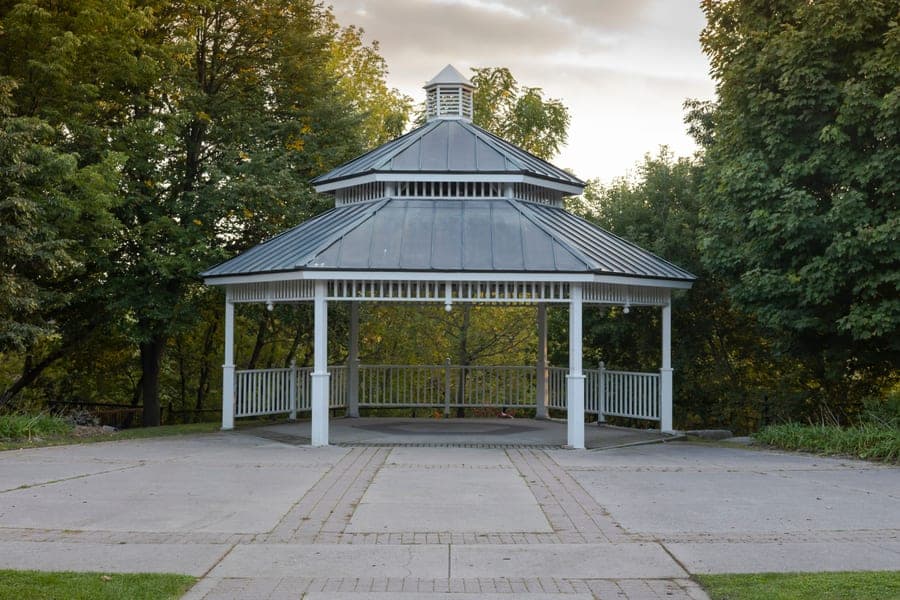 Sojag Messina Hardtop GazeboThe strongest warranty structure in the category — limited lifetime on the frame and 15 years on the finish — paired with wind and snow ratings the manufacturer describes but does not print. | Buy this if you want the gazebo | Not published by manufacturer | Check price on Amazon |
| 02 | 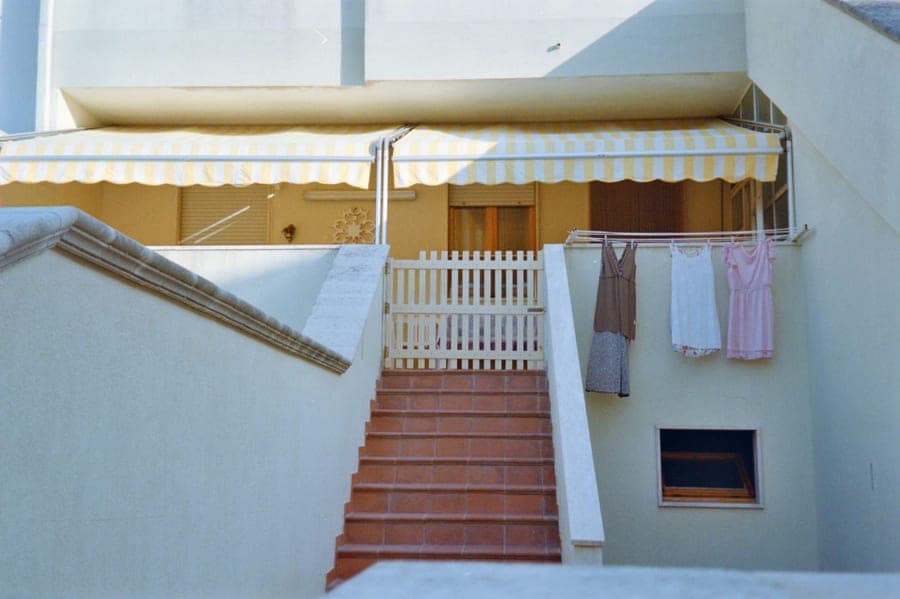 Diensweek P100 Manual Retractable AwningRetracts, which is the only wind strategy a fabric awning has. The published rating is a Beaufort number, not a mile-per-hour figure. | Buy this if you want retractable shade | Beaufort 5 (roughly 19-24 mph) — retract above it | Check price on Amazon |
| 03 | 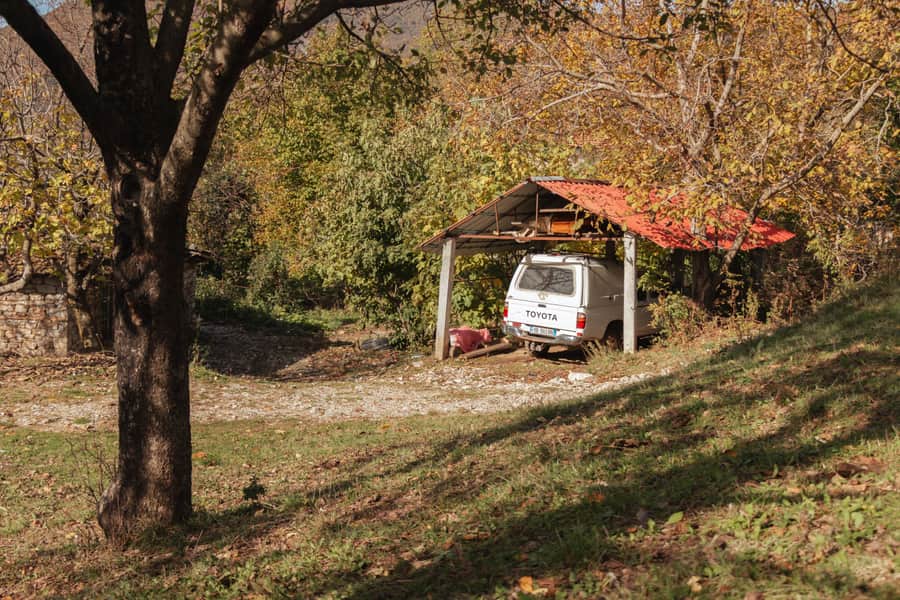 Quictent Heavy Duty 10 x 20 Carport CanopyThe only canopy on this site that publishes both a per-square-foot snow load and a tested wind speed — 9 lb/ft² and 55 mph. | Buy this if what needs covering isn't a patio | 55 (tested) | Check price on Amazon |
| 04 |  Eurmax Pro 10 x 10 Aluminum Pop-Up CanopyAn aluminum-framed commercial pop-up with a fire-certified 500-denier top — a shade structure you put away, not one you leave standing. | Buy this if you need it occasionally | Not published by manufacturer | Check price on Amazon |
The durability table
Every published figure we could source for these structures, in one place, with the manufacturer page each number came from. Where a cell reads "Not published by manufacturer", that figure does not exist in the manufacturer's own material — we do not estimate it and we do not copy one from another site.
| Model | Wind rating (mph) | Snow load | Frame | Roof | Anchoring required | Warranty | Spec source |
|---|---|---|---|---|---|---|---|
| Sojag Messina Hardtop GazeboTop pick | Not published by manufacturer | Not published by manufacturer | Powder-coated aluminum | Galvanized steel panels | Not published by manufacturer | 1 year limited on the gazebo; limited lifetime on the aluminum/steel frame; 15 years on the powder-coated finish | Sojag hardtop gazebo collectionChecked 2026-09-26 |
| Diensweek P100 Manual Retractable Awning | Beaufort 5 (roughly 19-24 mph) — retract above it | Not published by manufacturer | T5-grade aluminum with PVC-coated stainless steel arm cables and galvanized steel roller tube | 280 g/m² polyester with PU coating, water resistant, 50 UV+ | Not published by manufacturer | 1 year | Diensweek official siteChecked 2026-09-26 |
| Quictent Heavy Duty 10 x 20 Carport Canopy | 55 (tested) | 9 lb/ft² | 1.46 in. (38 mm) heavy-duty galvanized steel tubing with 12 cross steel cables | 16 mil / 180 g PE tarp, 100% UV block, triple-stitched seams | Ground nails and bungee cords supplied | 1 year on poles and tarp; lifetime on joints, ground nails and bungee cords | Quictent 10x20 carport product pageChecked 2026-09-26 |
| Eurmax Pro 10 x 10 Aluminum Pop-Up Canopy | Not published by manufacturer | Not published by manufacturer | Aluminum | 500D polyester with PU coating, seam-sealed, CPAI-84 fire retardant certified | Not published by manufacturer | Not published by manufacturer | Eurmax Pro 10x10 product pageChecked 2026-09-26 |
Every pick in full
Buy this if you want the gazebo
Sojag Messina Hardtop Gazebo
The strongest warranty structure in the category — limited lifetime on the frame and 15 years on the finish — paired with wind and snow ratings the manufacturer describes but does not print.
- Wind rating
- Not published by manufacturer
- Snow load
- Not published by manufacturer
- Frame
- Powder-coated aluminum
- Roof
- Galvanized steel panels
- Anchoring
- Not published by manufacturer
- Warranty
- 1 year limited on the gazebo; limited lifetime on the aluminum/steel frame; 15 years on the powder-coated finish
- Sizes
- 10 x 10 ft through 12 x 20 ft
The permanent option, and the best-warranted structure we can document in backyard shade: one year limited on the gazebo, a limited lifetime warranty on the aluminum and steel frame, and fifteen years on the powder-coated finish. A galvanized steel roof on a powder-coated aluminum frame, 10 x 10 through 12 x 20 ft.
What you are buying over a canopy is a roof that does not need replacing and rain cover you can rely on without thinking about it. A fabric canopy sheds a shower; a steel panel roof keeps a dinner table dry through an evening of steady rain, in year one and in year fifteen.
What it commits you to: anchoring into your surface, hours of assembly, a footprint that is permanent, and a structure standing there through winter. If any of those is the wrong answer, a canopy is not a downgrade — it is the right product.
Skip it if: You cannot anchor into your surface, or you want the space clear for part of the year.
#ad Price shown as of September 26, 2026. How this site is funded
Specifications from Sojag hardtop gazebo collection, checked 2026-09-26.
Buy this if you want retractable shade
Diensweek P100 Manual Retractable Awning
Retracts, which is the only wind strategy a fabric awning has. The published rating is a Beaufort number, not a mile-per-hour figure.
- Wind rating
- Beaufort 5 (roughly 19-24 mph) — retract above it
- Snow load
- Not published by manufacturer
- Frame
- T5-grade aluminum with PVC-coated stainless steel arm cables and galvanized steel roller tube
- Roof
- 280 g/m² polyester with PU coating, water resistant, 50 UV+
- Anchoring
- Not published by manufacturer
- Warranty
- 1 year
- Sizes
- 8 x 7 ft to 15 x 10 ft
The canopy option that is genuinely better than a gazebo at something, rather than just cheaper: it retracts. A retractable awning is the only shade structure in this comparison that gives you full sun and full shade over the same space on the same afternoon.
Specification: 280 g/m² polyester with a PU coating, water resistant, 50 UV+, on a T5-grade aluminum frame with PVC-coated stainless steel arm cables and a galvanized steel roller tube. Sizes 8 x 7 ft to 15 x 10 ft, one-year warranty.
The published wind guidance is Beaufort 5 — roughly 19-24 mph — above which you retract. That is a much lower figure than any gazebo, and it is the correct figure for a product whose wind strategy is to get out of the way. An awning retracted is not exposed at all, which is something no gazebo can say.
What you give up: it attaches to a wall, so you need a suitable one and the fixing may trigger permit questions. It gives no shelter over a freestanding area. And the fabric is a consumable — see canopy fabric materials for the acrylic upgrade that extends it.
Skip it if: The space you want shaded is not against a wall, or you want shade without operating anything.
#ad Price shown as of September 26, 2026. How this site is funded
Specifications from Diensweek official site, checked 2026-09-26.
Buy this if what needs covering isn't a patio
Quictent Heavy Duty 10 x 20 Carport Canopy
The only canopy on this site that publishes both a per-square-foot snow load and a tested wind speed — 9 lb/ft² and 55 mph.
- Wind rating
- 55 (tested)
- Snow load
- 9 lb/ft²
- Frame
- 1.46 in. (38 mm) heavy-duty galvanized steel tubing with 12 cross steel cables
- Roof
- 16 mil / 180 g PE tarp, 100% UV block, triple-stitched seams
- Anchoring
- Ground nails and bungee cords supplied
- Warranty
- 1 year on poles and tarp; lifetime on joints, ground nails and bungee cords
- Sizes
- 10 x 20 x 8.7 ft (H)
The canopy that does the job no gazebo does: covering a vehicle, a boat, a mower or a workshop's worth of equipment. And the best-documented product in this comparison, which is worth noting on a site like this one.
It publishes 9 lb/ft² snow load and a tested 55 mph wind speed — a per-square-foot snow figure and a wind figure, which is more than either Sojag model publishes. Frame is 1.46 in. (38 mm) heavy-duty galvanized steel tubing with twelve cross steel cables, under a 16 mil / 180 g PE tarp with triple-stitched seams and 100% UV block. 10 x 20 x 8.7 ft high.
The warranty splits sensibly for what it is: one year on the poles and tarp, lifetime on the joints, ground nails and bungee cords — the connectors being what a steel-frame shelter actually fails at.
What it is not: a place to sit. It is a shelter, not an outdoor room, and it does not look like one.
Skip it if: You want somewhere to eat or sit. This is equipment cover, and it looks like equipment cover.
#ad Price shown as of September 26, 2026. How this site is funded
Specifications from Quictent 10x20 carport product page, checked 2026-09-26.
Buy this if you need it occasionally
Eurmax Pro 10 x 10 Aluminum Pop-Up Canopy
An aluminum-framed commercial pop-up with a fire-certified 500-denier top — a shade structure you put away, not one you leave standing.
- Wind rating
- Not published by manufacturer
- Snow load
- Not published by manufacturer
- Frame
- Aluminum
- Roof
- 500D polyester with PU coating, seam-sealed, CPAI-84 fire retardant certified
- Anchoring
- Not published by manufacturer
- Warranty
- Not published by manufacturer
- Sizes
- 10 x 10 ft, 11.1 ft peak height
The most portable option here, and the right answer if the honest requirement is shade several times a year rather than all summer.
Commercial specification: 500D polyester with a PU coating, seam-sealed, CPAI-84 fire retardant certified, on an aluminum frame, 10 x 10 ft with an 11.1 ft peak. That is event equipment rather than a consumer product, and the fabric spec is better documented than most soft-top gazebo canopies.
No wind rating is published, which is the correct disclosure for a product whose wind strategy is to be folded down and put in a bag. A pop-up left standing in weather is the most common way these get destroyed, and it is entirely avoidable.
The case for it over a gazebo is simple: nothing is anchored, nothing needs a permit, nothing is standing in February, and it costs a fraction. The case against is equally simple: you have to put it up and take it down every time.
Skip it if: You want shade that is simply there. A pop-up you have to deploy is a pop-up that stays in the garage.
#ad Price shown as of September 26, 2026. How this site is funded
Specifications from Eurmax Pro 10x10 product page, checked 2026-09-26.
The decision table
| Hardtop gazebo | Retractable awning | Carport canopy | Pop-up canopy | |
|---|---|---|---|---|
| Permanence | Permanent, anchored | Permanent fixing, retractable cover | Semi-permanent, ground-fixed | None. Folds into a bag |
| Rain cover | Full and reliable | Full while extended; retract in wind-driven rain | Full | Partial. Pools at the seams |
| Published wind figure | 40-50 mph on aluminum frames, 100 mph on heavy cedar, none on several models | Beaufort 5, roughly 19-24 mph — retract above it | 55 mph tested | Rarely published |
| Published snow figure | Some models; Sunjoy's converts to roughly 17.9 lb/ft² | None. Retract for winter | 9 lb/ft² | None. Take it down |
| Roof life | Decades. Sojag covers the frame for a limited lifetime | Fabric is a consumable; acrylic outlasts coated polyester | Tarp is a consumable; 1 year warranty | Fabric is a consumable |
| Needs anchoring? | Yes, into slab, framing or a footing | Into a wall | Ground nails supplied | No |
| Adjustable? | No. Shade is permanent | Yes — full sun or full shade on demand | No | No, but removable |
| Permit relevance | Often at or near the threshold | Attaching to the building often triggers it | Varies; often treated as temporary | No |
| Best for | A permanent outdoor room with reliable rain cover | A wall-adjacent space you want sunny sometimes | Vehicles and equipment | Occasional use and events |
Buy a gazebo if...
- The structure is staying put and you want to stop thinking about it. Anchoring, assembly and a permanent footprint only make sense once — and once they are done, a hardtop needs washing and a seasonal fastener check and nothing else.
- You want rain cover with no operating step. An awning has to be extended; a pop-up has to be put up. A gazebo is simply there, which matters more than it sounds when the rain starts mid-meal.
- You want a frame covered for decades. Sojag's limited lifetime frame term has no equivalent anywhere in the canopy category, where one year on the fabric is standard.
- The space is a seating or dining area, not a driveway and not an occasional event.
- You get snow and want the structure to survive it standing. Only gazebos and carports publish snow figures at all.
Buy a canopy if...
And these are real reasons, not consolations — in each of these situations a gazebo would be the wrong purchase.
- You want the space sunny sometimes. Only a retractable awning offers that, and for a north-facing patio or a cold-spring climate it is genuinely the better product. A permanent roof over a space you want warm in April is a mistake.
- You cannot anchor. Renting, an HOA restriction, a slab you will not drill, a surface you cannot lift. A gazebo held down by stakes on a hard surface is not a gazebo with a wind rating — see how to anchor a gazebo.
- What needs covering is not a patio. A carport does a job no gazebo does, and it publishes better durability figures than most gazebos while doing it.
- You need it occasionally. A pop-up for a handful of events a year is the right tool; a permanent structure for that is not.
- The layout is not settled. People move their seating areas. A canopy during that phase costs a fraction and does not commit you to a position.
- The wall is the obvious mounting point. If the space is a terrace against the house, a wall-mounted awning uses a fixing you already have and leaves the floor completely clear of posts.
Where each one fails
Gazebos fail at the anchors, the finish and the fasteners. The frame is rarely the issue — Sojag's willingness to warrant it for a limited lifetime says so. What goes is the powder coat on the sunward face, which chalks irreversibly, and the plated-steel bolts at the base plate, which sit in standing water and dry last. An unanchored gazebo fails differently and much faster: a solid roof is a sail, and the published rating never applied.
Retractable awnings fail at the fabric and at the arms. Coated polyester fades and then the coating cracks and it stops being waterproof; solution-dyed acrylic holds color far longer because the pigment is in the fiber. The mechanical failures are almost all from being left extended in wind above the Beaufort 5 guidance — arm cables, the roller tube, and the wall fixing all take loads they were not designed for.
Carport canopies fail at the joints and at the tarp. Quictent warranting joints for a lifetime and the tarp for a year is an accurate description of where the risks sit. Tarps abrade at the frame contact points and tear from there; joints are what racks in wind.
Pop-ups fail from being left up. Almost universally. The fabric and frame on a commercial pop-up are genuinely good; the failure is a product designed to be folded down being treated as a structure.
Cost of ownership, not cost
We do not publish prices — they move weekly and a stale number is worse than none — so the useful comparison is structural.
A gazebo is a large one-off cost with effectively no recurring cost. Nothing on it gets replaced on a cycle. Washing, a seasonal fastener check, a stainless bolt upgrade at assembly, snow clearing.
Every canopy option has a fabric replacement cycle. An awning fabric, a carport tarp, a pop-up top — all consumables, all with one-year warranties, all needing replacement on a timescale measured in a few years rather than decades. Price that in before comparing, and note that the fiber choice changes it substantially: acrylic over coated polyester is the upgrade that actually shows on a south-facing wall.
Run it out and the two get closer than the sticker prices suggest. But as with hardtop vs soft top, cost is rarely what should decide this. Permanence and adjustability are. If you want shade that is simply always there, buy the gazebo. If you want to control when the shade exists, or you cannot commit to a permanent structure, buy the canopy — and buy a well-documented one.
Full shortlists: best hardtop gazebos for the permanent option, and best patio canopies, best retractable awnings and best carport canopies for the others.
Questions people ask
Is a gazebo or a canopy better?
What is the difference between a gazebo and a patio cover?
Can a canopy handle wind as well as a gazebo?
Which is cheaper to own over ten years?
Can I leave a canopy up all year?
Do I need a permit for a canopy?
Is a retractable awning better than a gazebo for a patio against the house?
Where these figures came from
- Sojag hardtop gazebo collection — warranty structure, roof and frame materials, size range
- Diensweek — 280 g/m² PU-coated polyester, T5 aluminum frame, Beaufort 5 guidance, sizes, 1 year warranty
- Quictent 10x20 carport — 9 lb/ft² snow load, 55 mph tested wind, 38 mm galvanized frame, warranty split
- Eurmax Pro 10x10 — 500D PU-coated polyester, seam-sealed, CPAI-84 certification, aluminum frame
- Sunjoy Kingston 12x14 — 3,000 lb snow figure and 50 mph rating, cited for the gazebo column
Found an error? Tell us and we will correct it within seven days and note the change on the page with a dated line — see our editorial policy.