Why gazebo roofs leak, and how to fix it
A leaking hardtop is almost never a failed panel. It is a lap installed the wrong way round, a bolt hole with no seal, or a ridge cap that worked loose over a winter.
By Ryder M. · Published · Last updated
We compare published manufacturer specifications, warranty terms and owner-reported failure modes. We have not physically tested these structures. How we judge shade structures
Slat & Shade earns a commission on qualifying purchases made through links on this page. It costs you nothing extra and never changes what we recommend. Full disclosure
Part of Hardtop Gazebos
The short answer
A hardtop gazebo roof leaks at its joints, not through its panels: overlapping panel seams installed in the wrong order, unsealed bolt penetrations, and a ridge or cap section that loosened through thermal cycling. Find the leak from underneath in daylight, re-seat the lap or seal the fixing, and re-check every bolt after the first winter.
Our picks at a glance
| # | Structure | Best for | Wind rating | Price |
|---|---|---|---|---|
| 01 | 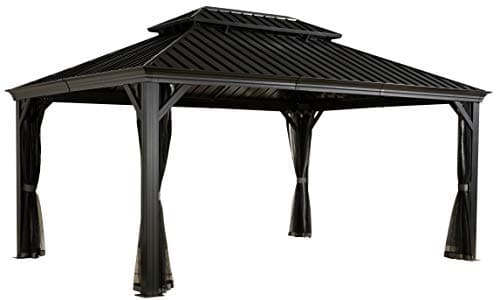 Sojag Messina Hardtop GazeboThe strongest warranty structure in the category — limited lifetime on the frame and 15 years on the finish — paired with wind and snow ratings the manufacturer describes but does not print. | The simplest roof to keep watertight | Not published by manufacturer | $2,749.99 · View on Amazon |
| 02 | 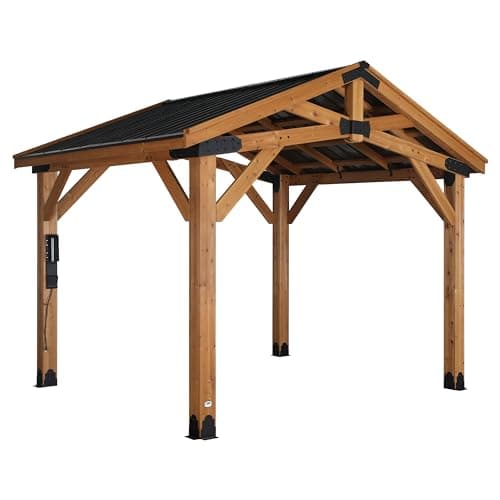 Backyard Discovery Norwood Cedar GazeboThe only gazebo we can find that publishes a 100 mph wind rating and a convertible snow figure — and it converts to roughly 56 lb/ft², several times any other hardtop here. | The roof that publishes its gauge | 100 (Pro-Tect tested; product must be anchored per the manual) | $1,999.00 · View on Amazon |
| 03 | 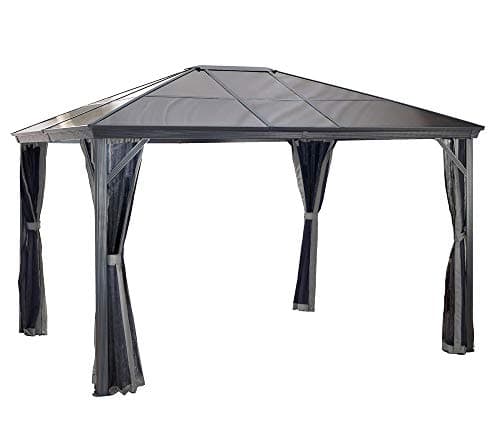 Sojag Verona Hardtop GazeboA polycarbonate-roofed alternative to the Messina that trades snow-shedding confidence for daylight underneath. | The roof type that needs the most care at its seams | Not published by manufacturer | $1,099.99 · View on Amazon |
The durability table
Every published figure we could source for these structures, in one place, with the manufacturer page each number came from. Where a cell reads "Not published by manufacturer", that figure does not exist in the manufacturer's own material — we do not estimate it and we do not copy one from another site.
| Model | Wind rating (mph) | Snow load | Frame | Roof | Anchoring required | Warranty | Spec source |
|---|---|---|---|---|---|---|---|
| Sojag Messina Hardtop GazeboTop pick | Not published by manufacturer | Not published by manufacturer | Powder-coated aluminum | Galvanized steel panels | Not published by manufacturer | 1 year limited on the gazebo; limited lifetime on the aluminum/steel frame; 15 years on the powder-coated finish | Sojag hardtop gazebo collectionChecked 2026-09-26 |
| Backyard Discovery Norwood Cedar Gazebo | 100 (Pro-Tect tested; product must be anchored per the manual) | 6,700 lb across the roof, or up to 30 in. of snow (12 x 10 ft model — roughly 56 lb/ft²) | 100% cedar, 6 in. x 6 in. posts, galvanized steel hardware | 29-gauge galvanized steel peak roof, thermal insulated | Mandatory. Product must be anchored as specified in the instruction manual | 5 years | Backyard Discovery Norwood 12x10 product pageChecked 2026-09-26 |
| Sojag Verona Hardtop Gazebo | Not published by manufacturer | Not published by manufacturer | Powder-coated aluminum | UV-protected tinted polycarbonate panels | Not published by manufacturer | 1 year limited on the gazebo; limited lifetime on the frame; 15 years on the powder-coated finish | Sojag hardtop gazebo collectionChecked 2026-09-26 |
Every pick in full
The simplest roof to keep watertight
Sojag Messina Hardtop Gazebo
The strongest warranty structure in the category — limited lifetime on the frame and 15 years on the finish — paired with wind and snow ratings the manufacturer describes but does not print.
- Wind rating
- Not published by manufacturer
- Snow load
- Not published by manufacturer
- Frame
- Powder-coated aluminum
- Roof
- Galvanized steel panels
- Anchoring
- Not published by manufacturer
- Warranty
- 1 year limited on the gazebo; limited lifetime on the aluminum/steel frame; 15 years on the powder-coated finish
- Sizes
- 10 x 10 ft through 12 x 20 ft
Solid galvanized steel panels with the fewest things going on in them, on the frame with the longest finish warranty here.
Galvanized steel roof panels. No translucent section to craze, no glazing bar to seal around, no gasket to perish. Fewer components in a roof is fewer places for water to find.
15 years on the powder-coated finish, limited lifetime on the aluminum and steel frame. The finish term matters for leaks specifically: a coating that fails lets corrosion start at a lap, and corrosion at a lap opens it.
Powder-coated aluminum frame. The structure under the roof does not rust, so the fixing points stay the shape the panels were aligned to.
No wind rating or anchoring method published. Relevant here because an unanchored structure moves, and movement is what works panel laps apart.
Skip it if: You want daylight through the roof, which a solid steel panel will never give you.
#ad Price shown as of November 11, 2026. How this site is funded
Specifications from Sojag hardtop gazebo collection, checked 2026-09-26.
The roof that publishes its gauge
Backyard Discovery Norwood Cedar Gazebo
The only gazebo we can find that publishes a 100 mph wind rating and a convertible snow figure — and it converts to roughly 56 lb/ft², several times any other hardtop here.
- Wind rating
- 100 (Pro-Tect tested; product must be anchored per the manual)
- Snow load
- 6,700 lb across the roof, or up to 30 in. of snow (12 x 10 ft model — roughly 56 lb/ft²)
- Frame
- 100% cedar, 6 in. x 6 in. posts, galvanized steel hardware
- Roof
- 29-gauge galvanized steel peak roof, thermal insulated
- Anchoring
- Mandatory. Product must be anchored as specified in the instruction manual
- Warranty
- 5 years
- Sizes
- 10 x 10, 12 x 10, 14 x 10, 14 x 12, 16 x 12, 20 x 12 and 24 x 12 ft
The only gazebo here that tells you how thick its roof panel actually is, which is the specification that decides whether a lap stays shut.
29-gauge galvanized steel peak roof, thermal insulated. A published gauge is rare in this category. Thinner panels oil-can and flex under foot and under snow, and flexing is what opens a seam.
Peak roof geometry. Water leaves quickly and does not sit on the laps. Ponding is the slow version of a leak, and a true peak removes the conditions for it.
6,700 lb across the roof or up to 30 in. of snow on the 12 x 10 ft model. A roof built to carry that does not deflect enough at its seams to open them, which is why the snow figure matters even to people who never see snow.
100 mph wind rating, anchoring mandatory. Both halves of the leak equation: a roof that does not lift and a frame that does not move.
Skip it if: Cedar is not something you want to maintain. The roof is excellent; the frame wants attention.
#ad Price shown as of November 11, 2026. How this site is funded
Specifications from Backyard Discovery Norwood 12x10 product page, checked 2026-09-26.
The roof type that needs the most care at its seams
Sojag Verona Hardtop Gazebo
A polycarbonate-roofed alternative to the Messina that trades snow-shedding confidence for daylight underneath.
- Wind rating
- Not published by manufacturer
- Snow load
- Not published by manufacturer
- Frame
- Powder-coated aluminum
- Roof
- UV-protected tinted polycarbonate panels
- Anchoring
- Not published by manufacturer
- Warranty
- 1 year limited on the gazebo; limited lifetime on the frame; 15 years on the powder-coated finish
- Sizes
- Not published by manufacturer
The polycarbonate alternative, included because it is the construction most likely to be behind a leak complaint.
UV-protected tinted polycarbonate panels. Panels expand and contract more than steel does across a day, which puts more cyclic movement through every fixing and every lap. That is where polycarbonate roofs leak.
Same powder-coated aluminum frame, limited lifetime frame warranty and 15 years on the finish as the Messina. The frame is not the issue here; the panel behaviour is.
The fix is in the assembly rather than in the material. Fixings on a polycarbonate panel want to be snug rather than crushed, washers want to be the ones supplied, and holes want to be the size specified. Over-tightened fixings on a panel that moves is the classic cause.
No wind rating, snow load or size published for this model. Check the specific listing before planning around it.
Skip it if: You are already chasing a leak and want the roof with the fewest variables. The steel-panelled Messina is that roof.
#ad Price shown as of November 11, 2026. How this site is funded
Specifications from Sojag hardtop gazebo collection, checked 2026-09-26.
Where hardtop roofs actually leak
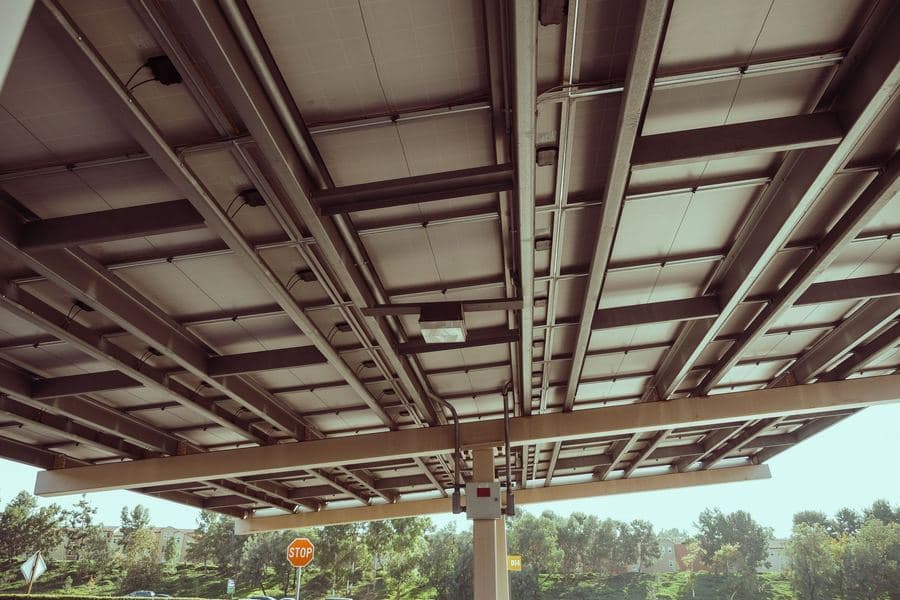
At the panel laps, far more than anywhere else. Hardtop roofs are assembled from overlapping sections, and the overlap has a correct direction: upper panel over lower, with the lap facing away from the prevailing weather. Installed the other way round, it funnels water inwards and does it invisibly from below.
At bolt penetrations. Every fixing is a hole through the roof plane. Most kits supply sealing washers, and most leaks that are not laps are a sealing washer that was left in the bag, fitted upside down, or crushed by over-tightening.
At the ridge or cap section. The top of the roof has the least water pressure on it and the most movement, so a cap that loosens over a winter of thermal cycling announces itself as a drip in the middle of the structure rather than at an edge.
Around any factory penetration — vents, finials, light fittings. On a two-tier vented roof the vent gap is designed to admit air, and in driving rain it will admit water. That is not a fault; it is the trade a vented roof makes, and it is why our rain pick is a solid roof and our grill pick is a vented one.
Almost never through the panel itself. Galvanized steel and polycarbonate both fail at their edges and their fixings long before they fail in the middle. If water is coming through the middle of a panel, look for a hole somebody drilled.
Finding it
- 01Go underneath in daylight and look up. A pinhole at a fixing or an open lap is usually visible as a bright point or a line of light before it is visible as a drip.
- 02Mark every wet point from inside with tape before you go up. Water travels along a rafter and drips somewhere else entirely, so the drip location is a clue rather than an answer.
- 03Check the direction of every panel lap against the instructions. This is the most common cause and the most commonly misdiagnosed one.
- 04Check every roof fixing for its sealing washer and for how hard it is done up. Finger-tight plus a quarter turn is the target on a panel that moves; crushed washers leak.
- 05Check the ridge or cap section for movement by hand. Anything you can rock has worked loose through a winter of expansion and contraction.
- 06Run a hose on the roof from the lowest point upwards, one section at a time, with somebody watching underneath. Starting at the top tells you nothing because the water passes everything at once.
- 07Re-check every fixing on the whole roof once a year regardless. Thermal cycling backs them off, and a loose fixing is the start of the next leak as well as the current one.
Which roof constructions leak least
Published roof constructions for the structures on this site, ordered by how many joints they introduce.
| Roof | Published on | Movement | Usual leak point |
|---|---|---|---|
| Galvanized steel panels, solid | Sojag Messina, PURPLE LEAF | Low | Panel laps |
| 29-gauge insulated steel peak | Backyard Discovery Norwood | Low, gauge published | Panel laps, ridge cap |
| Two-tier vented steel | Sunjoy Kingston, Sunjoy 13 x 15 | Low | The vent gap, by design, in driving rain |
| Tinted polycarbonate | Sojag Verona | Higher — expands and contracts more | Fixings and glazing laps |
| Rust-proof aluminum | Yardistry Meridian | Low | Panel laps |
| Fabric canopy | SUNJOY soft-top, Outsunny patio gazebo | Constant | Seams and the fabric itself, eventually |
The vented row is the one worth reading twice. A two-tier vented roof is not leaking when rain comes through the vent in a gale; it is doing what it was built to do. Choose it for a grill and choose against it for rain.
The fabric row is a different problem entirely. A canopy that leaks is a canopy at the end of its life, and the answer is replacement rather than repair — replacement canopy guide covers sizing a new one.
What we would actually do
Check the laps before buying sealant. Most of the time there is nothing wrong that a correctly ordered overlap does not fix, and sealant over a wrong-way lap buys one season and makes the real repair harder.
Use the manufacturer's sealing washers, not silicone. Silicone on a metal roof traps water against the coating and starts corrosion under itself. A washer that compresses and recovers is doing a different job.
Anchor the structure if it is not anchored. Movement works laps apart, and a frame that racks in wind will keep opening whatever you have just sealed. How to anchor a gazebo covers each surface.
Touch in every drilled edge with cold galvanizing paint. Galvanizing protects what it covers and not a hole put through it afterwards, and corrosion at a fixing is a slow leak in preparation.
And if the roof is fabric, stop repairing it. A perished canopy is a consumable at the end of its service, and the honest options are a replacement canopy or a hardtop — are hardtop gazebos worth it works through that decision with the figures.
Questions people ask
Why is my gazebo roof leaking?
How do I find a leak in a hardtop gazebo roof?
Can you seal a gazebo roof?
Do polycarbonate gazebo roofs leak more?
Should I use silicone on a metal gazebo roof?
Is rain coming through a vented gazebo roof a fault?
How often should I check a hardtop gazebo roof?
Is it worth replacing a leaking gazebo canopy?
Where these figures came from
- Sojag hardtop gazebo collection — Messina galvanized steel roof panels and Verona UV-protected tinted polycarbonate panels, powder-coated aluminum frames, limited lifetime frame warranty and 15 years on the powder-coated finish
- Backyard Discovery Norwood 12 x 10 — 29-gauge thermal-insulated galvanized steel peak roof, 6,700 lb across the roof or up to 30 in. of snow on the 12 x 10 model, 100 mph Pro-Tect tested with anchoring mandatory
- Sunjoy Kingston 12 x 14 — galvanized steel two-tier vented roof, 50 mph wind rating
- Yardistry Meridian 12 x 14 — rust-proof coffee-brown aluminum roof; PURPLE LEAF hardtop gazebo collection — galvanized steel single or double roof
Found an error? Tell us and we will correct it within seven days and note the change on the page with a dated line — see our editorial policy.