Pergola vs gazebo
One decision separates these: whether the roof lets air through. Everything else — rain cover, wind ratings, snow behavior, how dark it feels underneath — follows from it.
By Ryder M. · Published · Last updated
We compare published manufacturer specifications, warranty terms and owner-reported failure modes. We have not physically tested these structures. How we judge shade structures
Slat & Shade earns a commission on qualifying purchases made through links on this page. It costs you nothing extra and never changes what we recommend. Full disclosure
Part of Pergolas
The short answer
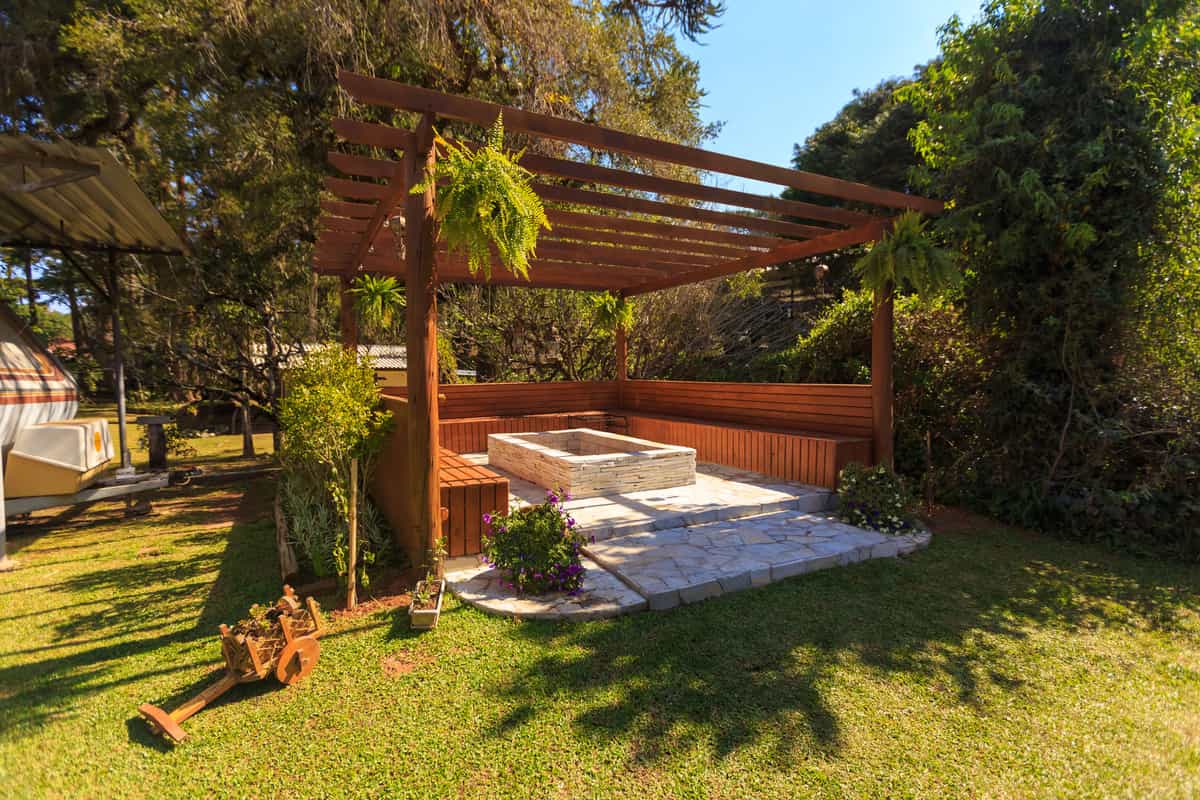
Buy a pergola if you want the best wind behavior and adjustable or dappled shade. Buy a hardtop gazebo if you want reliable rain cover and the option of enclosing the space. Published wind ratings tell the story: pergolas 70-100 mph, aluminum hardtop gazebos 40-50 mph, because an open roof does not load in wind.
Our picks at a glance
| # | Structure | Best for | Wind rating | Price |
|---|---|---|---|---|
| 01 | 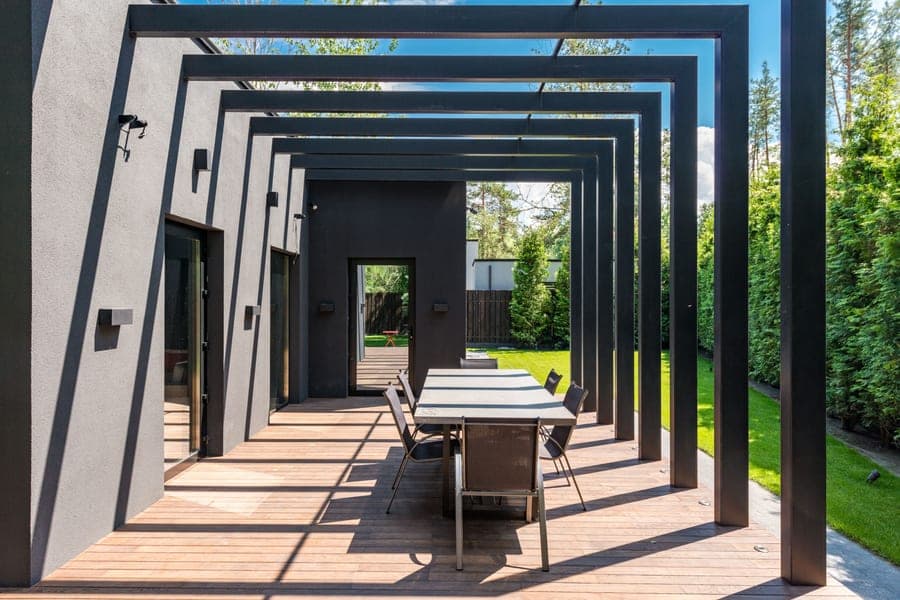 PURPLE LEAF Athena Louvered PergolaThe highest wind figure any louvered pergola in this class publishes, and the only one that ties the number to a specific anchoring condition. | Buy this if the pergola wins | 72 (fully secured with expansion screws on a hardened floor) | Check price on Amazon |
| 02 | 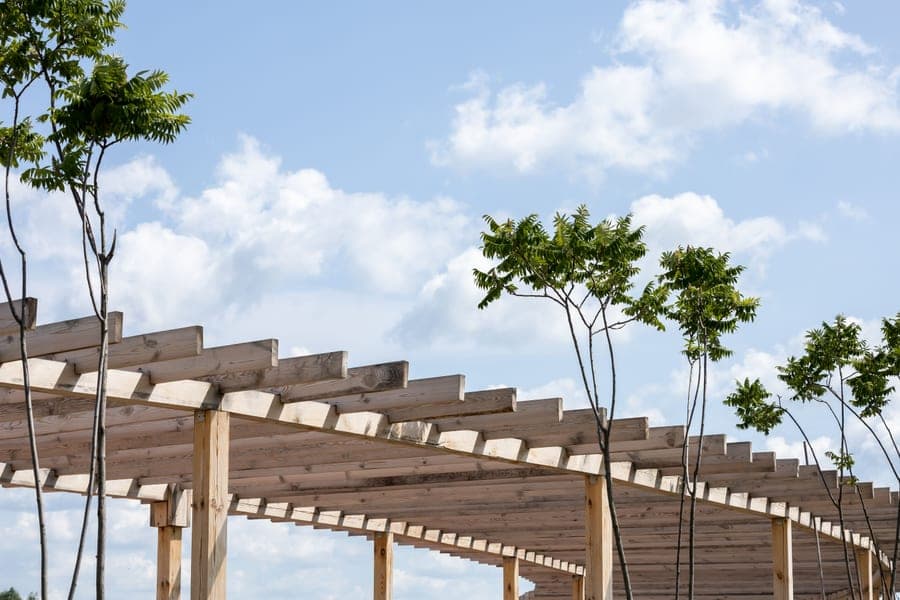 Backyard Discovery Beaumont Cedar PergolaThe highest published wind rating of any pergola on this site, and the only wood kit whose manufacturer makes anchoring a stated condition of the rating. | The pergola with the best figures | 100 (when properly anchored) | Check price on Amazon |
| 03 | 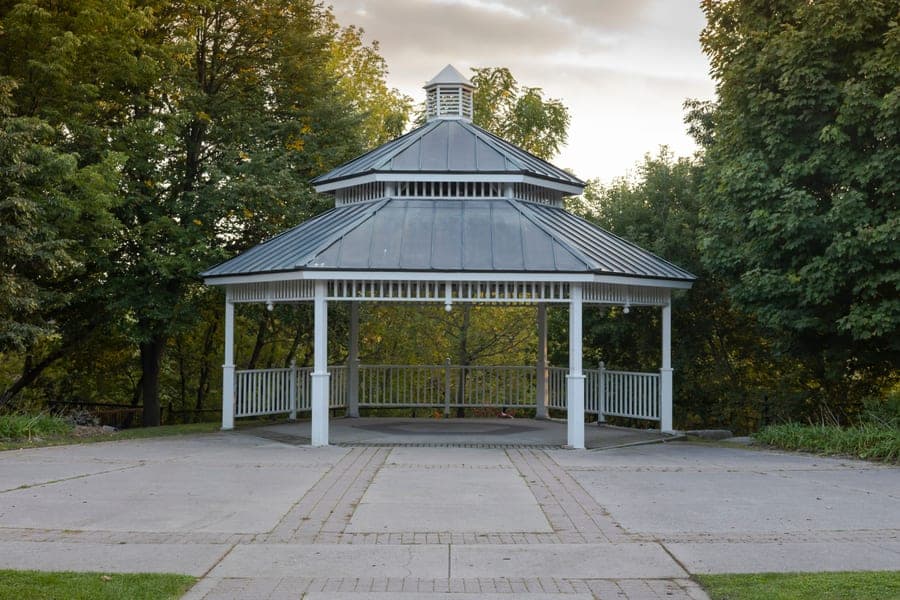 Sojag Messina Hardtop GazeboThe strongest warranty structure in the category — limited lifetime on the frame and 15 years on the finish — paired with wind and snow ratings the manufacturer describes but does not print. | Buy this if the gazebo wins | Not published by manufacturer | Check price on Amazon |
| 04 |  Backyard Discovery Norwood Cedar GazeboThe only gazebo we can find that publishes a 100 mph wind rating and a convertible snow figure — and it converts to roughly 56 lb/ft², several times any other hardtop here. | The gazebo that closes the gap | 100 (Pro-Tect tested; product must be anchored per the manual) | Check price on Amazon |
The durability table
Every published figure we could source for these structures, in one place, with the manufacturer page each number came from. Where a cell reads "Not published by manufacturer", that figure does not exist in the manufacturer's own material — we do not estimate it and we do not copy one from another site.
| Model | Wind rating (mph) | Snow load | Frame | Roof | Anchoring required | Warranty | Spec source |
|---|---|---|---|---|---|---|---|
| PURPLE LEAF Athena Louvered PergolaTop pick | 72 (fully secured with expansion screws on a hardened floor) | Not published by manufacturer | Powder-coated aluminum, 1.5 mm wall, 4.33 in. x 4.33 in. crossbeams | Adjustable aluminum louvers with integrated drainage | Expansion screws into a hardened floor — the published wind figure assumes it | 1 year | PURPLE LEAF louvered pergola collectionChecked 2026-09-26 |
| Backyard Discovery Beaumont Cedar Pergola | 100 (when properly anchored) | Not published by manufacturer | 100% cedar, 5.5 in. x 5.5 in. posts | Multi-level cedar trellis roof with crossing rafters — open, not solid | Mandatory. Concealed concrete anchors, per the instruction manual | 5 years | Backyard Discovery Beaumont product pageChecked 2026-09-26 |
| Sojag Messina Hardtop Gazebo | Not published by manufacturer | Not published by manufacturer | Powder-coated aluminum | Galvanized steel panels | Not published by manufacturer | 1 year limited on the gazebo; limited lifetime on the aluminum/steel frame; 15 years on the powder-coated finish | Sojag hardtop gazebo collectionChecked 2026-09-26 |
| Backyard Discovery Norwood Cedar Gazebo | 100 (Pro-Tect tested; product must be anchored per the manual) | 6,700 lb across the roof, or up to 30 in. of snow (12 x 10 ft model — roughly 56 lb/ft²) | 100% cedar, 6 in. x 6 in. posts, galvanized steel hardware | 29-gauge galvanized steel peak roof, thermal insulated | Mandatory. Product must be anchored as specified in the instruction manual | 5 years | Backyard Discovery Norwood 12x10 product pageChecked 2026-09-26 |
Every pick in full
Buy this if the pergola wins
PURPLE LEAF Athena Louvered Pergola
The highest wind figure any louvered pergola in this class publishes, and the only one that ties the number to a specific anchoring condition.
- Wind rating
- 72 (fully secured with expansion screws on a hardened floor)
- Snow load
- Not published by manufacturer
- Frame
- Powder-coated aluminum, 1.5 mm wall, 4.33 in. x 4.33 in. crossbeams
- Roof
- Adjustable aluminum louvers with integrated drainage
- Anchoring
- Expansion screws into a hardened floor — the published wind figure assumes it
- Warranty
- 1 year
- Sizes
- 10 x 12 ft to 14 x 24 ft
The louvered pergola is the version of this side of the argument that actually competes with a gazebo, because closed louvers with integrated beam drainage give you rain cover — the one thing a fixed-slat pergola cannot do at all.
72 mph published wind rating, fully secured with expansion screws on a hardened floor, plus the best-documented frame in the category: powder-coated aluminum, 1.5 mm wall, 4.33 in. x 4.33 in. crossbeams. That is roughly 30 mph above what aluminum hardtop gazebos publish, on the same base material.
And you keep the thing a gazebo can never have: you can open the roof. Sun in April, shade in August, rain cover in October, and an open frame before a storm. Every louvered manufacturer recommends opening the louvers ahead of high wind, and it is the single most effective free action available on any shade structure.
What you give up against a gazebo: you cannot enclose it — there is no netting or curtain system — and rain cover depends on you having closed the louvers. One-year warranty, and no published snow figure.
Skip it if: You want insect netting or a permanently sheltered space you never have to operate.
#ad Price shown as of September 26, 2026. How this site is funded
Specifications from PURPLE LEAF louvered pergola collection, checked 2026-09-26.
The pergola with the best figures
Backyard Discovery Beaumont Cedar Pergola
The highest published wind rating of any pergola on this site, and the only wood kit whose manufacturer makes anchoring a stated condition of the rating.
- Wind rating
- 100 (when properly anchored)
- Snow load
- Not published by manufacturer
- Frame
- 100% cedar, 5.5 in. x 5.5 in. posts
- Roof
- Multi-level cedar trellis roof with crossing rafters — open, not solid
- Anchoring
- Mandatory. Concealed concrete anchors, per the instruction manual
- Warranty
- 5 years
- Sizes
- 10 x 10 ft, 12 x 10 ft, 14 x 10 ft, 14 x 12 ft, 16 x 12 ft, 20 x 12 ft
If wind is what is driving the decision, this is the strongest argument on the pergola side: 100 mph Pro-Tect tested, the highest published figure in backyard shade, on 100% cedar with 5.5 in. x 5.5 in. posts, with anchoring made mandatory by the manufacturer.
Its multi-level cedar trellis roof is open, not solid, which is exactly why the figure is what it is — air passes between the rafters rather than loading a continuous plane. It is also why the roof provides no rain cover whatsoever, and that is the trade in its starkest form.
This is the pergola that proves the comparison is not really about pergolas versus gazebos at all. Backyard Discovery's own Norwood cedar gazebo publishes the same 100 mph with a solid steel roof, on 6x6 posts — so frame section outranks roof type across materials, and the roof only decides the figure within a given frame.
Five-year warranty, sizes 10 x 10 through 20 x 12 ft. Cedar, so re-seal every two to three years.
Skip it if: You want rain cover. The trellis roof gives dappled shade and nothing else.
#ad Price shown as of September 26, 2026. How this site is funded
Specifications from Backyard Discovery Beaumont product page, checked 2026-09-26.
Buy this if the gazebo wins
Sojag Messina Hardtop Gazebo
The strongest warranty structure in the category — limited lifetime on the frame and 15 years on the finish — paired with wind and snow ratings the manufacturer describes but does not print.
- Wind rating
- Not published by manufacturer
- Snow load
- Not published by manufacturer
- Frame
- Powder-coated aluminum
- Roof
- Galvanized steel panels
- Anchoring
- Not published by manufacturer
- Warranty
- 1 year limited on the gazebo; limited lifetime on the aluminum/steel frame; 15 years on the powder-coated finish
- Sizes
- 10 x 10 ft through 12 x 20 ft
The gazebo side, and the reason to choose one: a rigid galvanized steel roof gives rain cover you never have to think about, plus the track system for adding mosquito netting and curtains that turns a shelter into a semi-enclosed room.
Insect protection is the practical advantage that decides this for a lot of people, and no pergola offers it. If the reason you do not use your yard in July is mosquitoes, that is a gazebo argument and no wind rating changes it.
The warranty is the strongest in backyard shade: one year limited on the gazebo, a limited lifetime warranty on the aluminum and steel frame, and fifteen years on the powder-coated finish. Three terms for three failure modes.
What you give up is wind performance and light. Sojag publishes no wind figure at all, aluminum hardtop gazebos that do publish 40-50 mph, and a steel roof blocks daylight completely. Sidewalls and netting make the wind problem worse, which is why they should come off before weather.
Skip it if: Your site is exposed, or you want daylight and adjustable shade — a pergola does both far better.
#ad Price shown as of September 26, 2026. How this site is funded
Specifications from Sojag hardtop gazebo collection, checked 2026-09-26.
The gazebo that closes the gap
Backyard Discovery Norwood Cedar Gazebo
The only gazebo we can find that publishes a 100 mph wind rating and a convertible snow figure — and it converts to roughly 56 lb/ft², several times any other hardtop here.
- Wind rating
- 100 (Pro-Tect tested; product must be anchored per the manual)
- Snow load
- 6,700 lb across the roof, or up to 30 in. of snow (12 x 10 ft model — roughly 56 lb/ft²)
- Frame
- 100% cedar, 6 in. x 6 in. posts, galvanized steel hardware
- Roof
- 29-gauge galvanized steel peak roof, thermal insulated
- Anchoring
- Mandatory. Product must be anchored as specified in the instruction manual
- Warranty
- 5 years
- Sizes
- 10 x 10, 12 x 10, 14 x 10, 14 x 12, 16 x 12, 20 x 12 and 24 x 12 ft
Here because it undercuts the simple version of this comparison, and a comparison page should say so.
100 mph Pro-Tect tested and 6,700 lb of snow capacity across a 12 x 10 ft roof — roughly 56 lb/ft² — on a solid 29-gauge galvanized steel peak roof over 100% cedar with 6 in. x 6 in. posts. Anchoring mandatory per the manual. Five-year warranty.
So the honest position is not "pergolas handle wind better than gazebos". It is: an open roof beats a solid roof on a given frame, and heavy posts beat both. This gazebo publishes the same wind figure as the best pergola on this page and adds full rain cover and a genuine snow figure on top of it.
What it costs you is the pergola's adjustability and cedar's maintenance. A solid roof is permanent shade whether you want it or not, you cannot open it before a storm, and the cedar needs re-sealing every two to three years — in a structure that also traps moisture under a solid roof, which makes the sealing matter more rather than less.
Skip it if: You want sun sometimes, or a maintenance-free frame. A fixed solid roof and cedar give you neither.
#ad Price shown as of September 26, 2026. How this site is funded
Specifications from Backyard Discovery Norwood 12x10 product page, checked 2026-09-26.
The decision table
| Pergola | Hardtop gazebo | |
|---|---|---|
| Roof | Open slats, or adjustable louvers | Solid galvanized steel or polycarbonate panels |
| Rain cover | None on a fixed-slat roof. Full on a louvered roof with beam drainage, when closed | Full, permanently, with no operating step |
| Published wind rating | 70-72 mph aluminum, 100 mph on heavy cedar — and you can open louvers before a storm | 40-50 mph aluminum, 100 mph on heavy cedar. No way to reduce the sail |
| Snow | An open roof does not accumulate. A closed louvered roof does — only Domi publishes a figure, 15 lb/ft² | Accumulates. Sunjoy converts to roughly 17.9 lb/ft², Norwood to roughly 56. Clear it regardless |
| Shade | Dappled and moving on a fixed roof; fully adjustable on a louvered one | Full, constant, and often quite dark under steel |
| Can it be enclosed? | No. Some offer side screens; none offers insect netting | Yes — netting and curtain tracks. The practical reason to choose one |
| Light underneath | Good. Slats or open louvers pass daylight | None under steel; some under polycarbonate |
| Best warranty available | 5 years on roof and frame (Domi); 5 years on cedar (both wood kits) | Limited lifetime on the frame, 15 years on the finish (Sojag) |
| Adjustable? | Louvered: yes. Fixed-slat: no | No. Ever |
| Best for | Exposed sites, spring sun, daylight, and anyone who wants to control the shade | Reliable rain cover, insect season, and a space that feels like a room |
Buy a pergola if...
- Your site is exposed. This is the clearest case. Published pergola ratings run 70-100 mph against 40-50 for aluminum hardtop gazebos, and a louvered pergola with the louvers opened before a storm is better again. Best pergolas for high winds is the shortlist.
- You want sun in spring and shade in August. A solid gazebo roof is permanent shade whether you want it or not, and over a patio you use in April that is genuinely the wrong answer. Only a louvered pergola gives you both.
- A solid roof would make the space too dark. Common on small footprints, and worse against a house wall. Slats and open louvers pass daylight.
- You get heavy snow and would rather not clear a roof. An open roof does not accumulate at all. Close the louvers and it does — so open them for the winter and the problem disappears.
- You want the structure to read as architecture rather than as an object. A cedar pergola with 5.5-6 in. posts does that; an aluminum gazebo generally does not. Best cedar and wood pergola kits is the wood shortlist.
Buy a gazebo if...
- Insects are why you do not use your yard. Netting is the one thing no pergola offers, and for a lot of people in a lot of climates it is the entire decision. Best hardtop gazebos is the shortlist.
- You want rain cover with no operating step. A louvered pergola keeps you dry when you remembered to close it. A steel roof keeps you dry always, including the time it started raining while you were out.
- You want the space to feel like a room. Curtains and netting change how an outdoor space gets used in a way an open frame does not.
- You want privacy from neighbors. Side curtains do it; an open pergola does not.
- You want the longest frame warranty available. Sojag's limited lifetime term on the frame with fifteen years on the finish has no equivalent on the pergola side, where five years is the best on offer.
Where each one fails
The section neither manufacturer will write, and usually the most useful part of a comparison.
Pergolas fail at expectations first. The single most common disappointment in this category is someone who bought a fixed-slat pergola expecting shelter. An open trellis roof provides dappled shade and water goes straight through it — do pergolas provide shade has the honest numbers on how much sun it actually blocks and when. Structurally, pergolas fail at the base fasteners and, on aluminum, at the powder coat on the sunward face; on cedar, by checking at the through-bolts if the sealing is skipped. Louvered pergolas add a mechanism — moving parts in weather.
Gazebos fail at the anchors and at the roof. A solid roof is a sail, and the published ratings are only as good as the fixings — which are usually not in the box. Sunjoy supplies stakes and tells you to buy expansion bolts for hard surfaces yourself. Then there are the roof-specific clocks: polycarbonate creeps under repeated snow load, gradually and generally uncovered; steel corrodes at any break in its coating. And sidewalls left up in wind turn an already loaded structure into a much larger one.
Both fail if they are not anchored, and neither published rating applies in that condition. How to anchor a pergola and how to anchor a gazebo are organized by surface, because the correct fixing differs between concrete, pavers, a wood deck, a composite deck and soil.
The cost comparison, honestly
We do not publish prices — they move weekly and a stale figure is worse than none — so this has to be structural. Two things are worth knowing.
Neither category has a consumable roof. Unlike a soft-top gazebo or a fabric awning, a pergola and a hardtop gazebo both have roofs that last as long as the structure. So the ten-year cost of ownership is close to the purchase price for both, and the sticker comparison is more meaningful here than almost anywhere else on this site.
Within each category the spread is wider than between them. A budget aluminum louvered pergola and a top-end cedar pergola are further apart than a mid-range pergola and a mid-range gazebo. Which means price is a poor way to choose between the categories and a useful way to choose within one.
What should decide it is the list above: rain cover and insects push you to a gazebo; wind, spring sun and daylight push you to a pergola. And if both matter — reliable rain cover *and* a high wind figure — the honest answer is the cedar-framed gazebo, which publishes 100 mph with a solid roof. That is the option most comparisons in this niche never mention, because it does not fit the tidy version of the argument.
Questions people ask
Which is better, a pergola or a gazebo?
What is the difference between a pergola and a gazebo?
Does a pergola keep rain off?
Which handles wind better?
Which is better in snow?
Can I add sides or netting to a pergola?
Is a pergola cheaper than a gazebo?
What if I want both rain cover and a high wind rating?
Where these figures came from
- PURPLE LEAF louvered pergola collection — 72 mph with stated anchoring condition, 1.5 mm wall, 4.33 in. crossbeams, integrated drainage
- Backyard Discovery Beaumont — 100 mph Pro-Tect tested, open cedar trellis roof, 5.5 in. posts, mandatory anchoring
- Sojag hardtop gazebo collection — warranty structure, steel and polycarbonate roof options, netting and curtain tracks
- Backyard Discovery Norwood 12x10 — 100 mph with a solid steel roof, 6,700 lb snow figure, 6x6 cedar posts
- PURPLE LEAF hardtop gazebo collection — 40 mph figure, cited for the same-brand roof comparison
- Sunjoy Kingston 12x14 — 50 mph rating and 3,000 lb snow figure, cited for the aluminum gazebo column
- Domi Outdoor Living louvered pergola — 15 lb/ft², the only louvered snow figure
Found an error? Tell us and we will correct it within seven days and note the change on the page with a dated line — see our editorial policy.