Shade sail vs canopy
These two get compared because they are both fabric, and they are opposites: a sail is tension with no frame, a canopy is a frame holding fabric up. That decides almost everything else.
By Ryder M. · Published · Last updated
We compare published manufacturer specifications, warranty terms and owner-reported failure modes. We have not physically tested these structures. How we judge shade structures
Slat & Shade earns a commission on qualifying purchases made through links on this page. It costs you nothing extra and never changes what we recommend. Full disclosure
Part of Shade Sails
The short answer
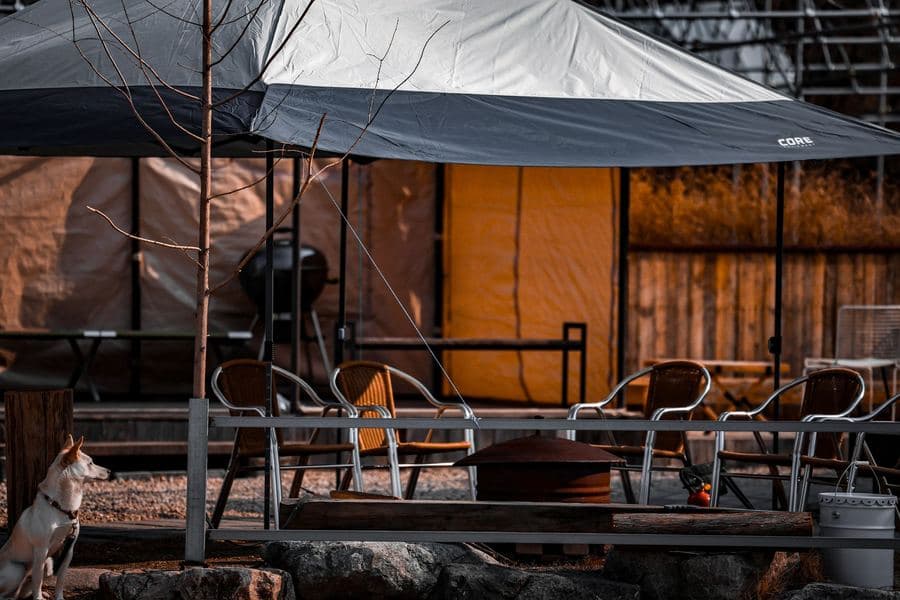
Buy a shade sail for permanent shade over a fixed area, and a canopy when you need the shade to move or to pack away. A sail has no frame and needs posts or walls to tension against; a canopy brings its own legs and is the only one you can take with you.
Our picks at a glance
| # | Structure | Best for | Fabric | Price |
|---|---|---|---|---|
| 01 | 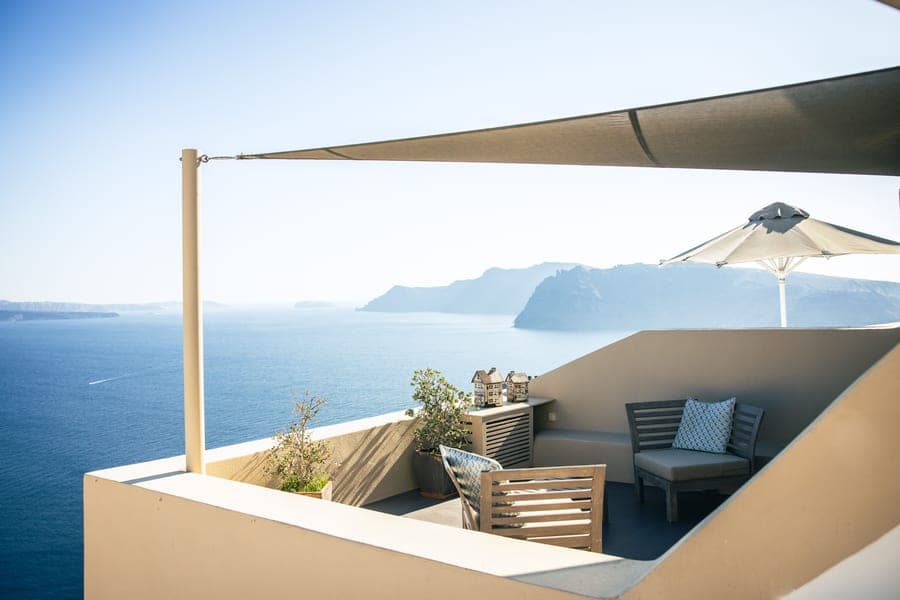 ColourTree Rectangle Sun Shade Sail, 190 GSMThe clearest published fabric spec in the category — 190 GSM virgin HDPE, 95% UV block, three-year warranty — with the hardware sold separately. | Best if it is staying put | 190 GSM HDPE mesh, 95% UV block, breathable | Check price on Amazon |
| 02 | 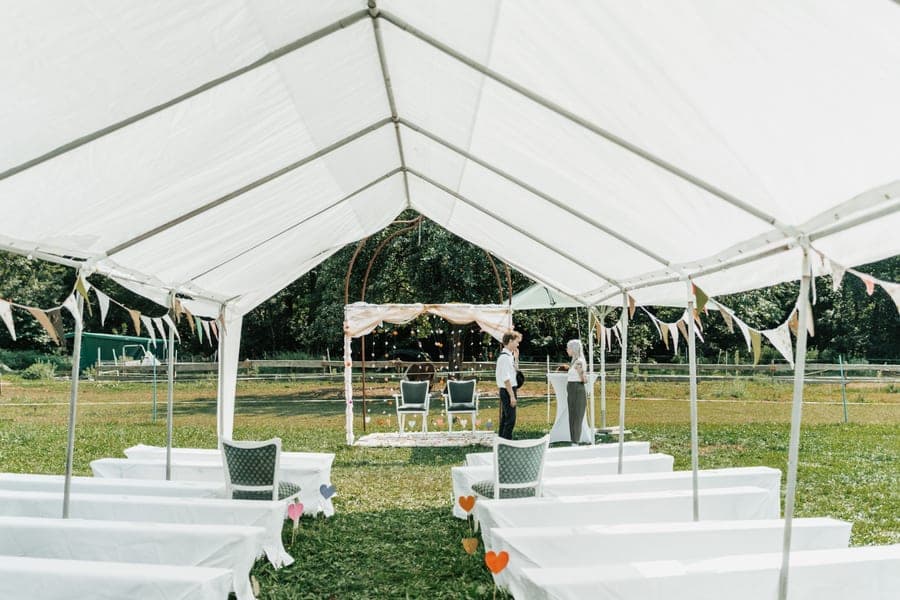 Eurmax Pro 10 x 10 Aluminum Pop-Up CanopyAn aluminum-framed commercial pop-up with a fire-certified 500-denier top — a shade structure you put away, not one you leave standing. | Best if it has to move | 500D polyester with PU coating, seam-sealed, CPAI-84 fire retardant certified | Check price on Amazon |
| 03 | 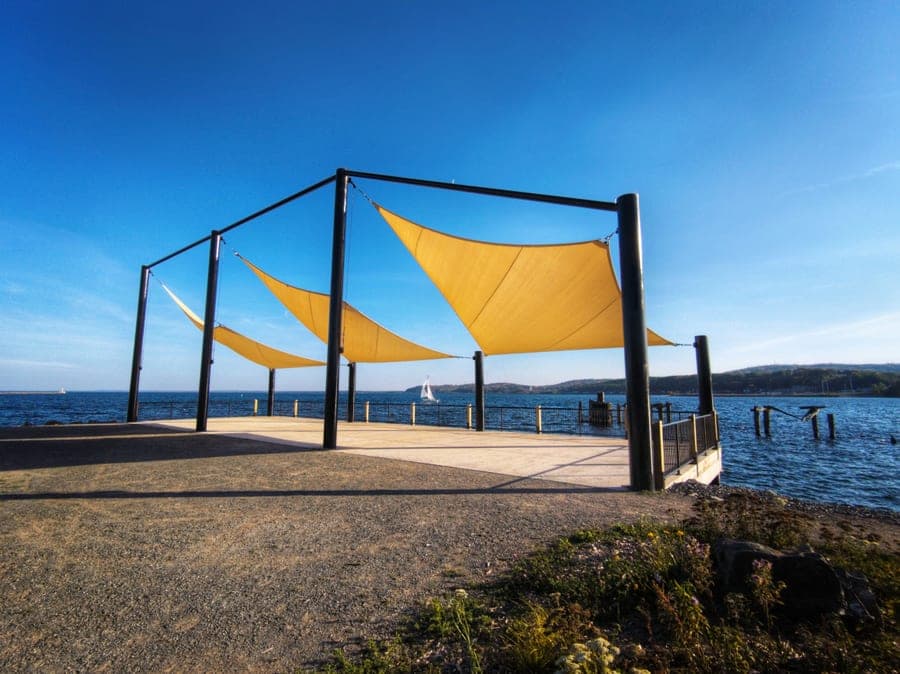 Windscreen4less Cable Shade Sail, 260 GSMThe heaviest fabric and the longest warranty of any sail here — seven years — and the only one with a galvanized cable sewn through the perimeter. | Best permanent fabric | 260 GSM high-density polyethylene, UV 95 | Check price on Amazon |
The durability table
Every published figure we could source for these structures, in one place, with the manufacturer page each number came from. Where a cell reads "Not published by manufacturer", that figure does not exist in the manufacturer's own material — we do not estimate it and we do not copy one from another site.
| Model | Wind rating (mph) | Snow load | Frame | Roof | Anchoring required | Warranty | Spec source |
|---|---|---|---|---|---|---|---|
| ColourTree Rectangle Sun Shade Sail, 190 GSMTop pick | Not published by manufacturer | Not published by manufacturer | No frame — 100% virgin (non-recycled) HDPE fabric, reinforced stitched seams | 190 GSM HDPE mesh, 95% UV block, breathable | Stainless steel D-ring at each corner; cable rope and hardware kits sold separately | 3 years under normal weather and usage | ColourTree rectangle shade sail product pageChecked 2026-09-26 |
| Eurmax Pro 10 x 10 Aluminum Pop-Up Canopy | Not published by manufacturer | Not published by manufacturer | Aluminum | 500D polyester with PU coating, seam-sealed, CPAI-84 fire retardant certified | Not published by manufacturer | Not published by manufacturer | Eurmax Pro 10x10 product pageChecked 2026-09-26 |
| Windscreen4less Cable Shade Sail, 260 GSM | Not published by manufacturer | Not published by manufacturer | Steel-wired perimeter with galvanized cable and A-ring reinforcement | 260 GSM high-density polyethylene, UV 95 | Strengthened A-rings at the corners, steel wire reinforced edges | 7 years under normal weather conditions | Windscreen4less shade sails pageChecked 2026-09-26 |
Every pick in full
Best if it is staying put
ColourTree Rectangle Sun Shade Sail, 190 GSM
The clearest published fabric spec in the category — 190 GSM virgin HDPE, 95% UV block, three-year warranty — with the hardware sold separately.
- Wind rating
- Not published by manufacturer
- Snow load
- Not published by manufacturer
- Frame
- No frame — 100% virgin (non-recycled) HDPE fabric, reinforced stitched seams
- Roof
- 190 GSM HDPE mesh, 95% UV block, breathable
- Anchoring
- Stainless steel D-ring at each corner; cable rope and hardware kits sold separately
- Warranty
- 3 years under normal weather and usage
- Sizes
- 14 sizes, 8 x 10 ft to 16 x 20 ft
If the shade is going in one place and staying there for years, the sail is the better engineering and the better value per square foot covered.
190 GSM virgin HDPE, 95% UV block, breathable, with reinforced stitched seams and stainless D-rings at each corner. Fourteen sizes from 8 x 10 ft to 16 x 20 ft, which at the top end is 320 sq ft of shade from a single piece of fabric. No canopy covers that from one unit.
No frame is the advantage, not the limitation. Nothing stands in your floor area, nothing blocks a sightline, and there is no leg to trip over or to blow over. A sail shades a space without occupying any of it, which is why it works over pools, play areas and dining terraces.
The cost is that it is yours to install. Cable rope and hardware are sold separately, you need two to four solid anchor points, and anything you do not already have — a post, a footing — is a weekend and a bag of concrete. Three years of warranty.
Skip it if: You have nothing to anchor to and do not want to set posts. A sail with no anchor points is not a product, it is a project.
#ad Price shown as of September 26, 2026. How this site is funded
Specifications from ColourTree rectangle shade sail product page, checked 2026-09-26.
Best if it has to move
Eurmax Pro 10 x 10 Aluminum Pop-Up Canopy
An aluminum-framed commercial pop-up with a fire-certified 500-denier top — a shade structure you put away, not one you leave standing.
- Wind rating
- Not published by manufacturer
- Snow load
- Not published by manufacturer
- Frame
- Aluminum
- Roof
- 500D polyester with PU coating, seam-sealed, CPAI-84 fire retardant certified
- Anchoring
- Not published by manufacturer
- Warranty
- Not published by manufacturer
- Sizes
- 10 x 10 ft, 11.1 ft peak height
A canopy does the one thing no sail can do: it goes up in ten minutes, comes down in five, and fits in a car.
A 10 x 10 ft aluminum frame with a fabric top. Aluminum rather than steel is the specification to care about on a pop-up — it is the difference between a frame you can carry one-handed and one that corrodes at the joints after two wet seasons in a garage.
The frame is the product. A sail is cloth you tension; a canopy is a mechanism you erect. That means it has moving parts, and the moving parts are what fail — the truss joints and the leg sliders, in that order. Buy the better frame rather than the better fabric.
It covers 100 sq ft, which is about a third of what a large sail covers. Pop-up canopies do not scale: for more area you buy more canopies, where a sail just gets bigger. That makes the canopy the clear choice for a market stall and the clear loser for a terrace.
Skip it if: The shade is permanent. Leaving a pop-up canopy out all year is the fastest way to destroy one, and no manufacturer intends it.
#ad Price shown as of September 26, 2026. How this site is funded
Specifications from Eurmax Pro 10x10 product page, checked 2026-09-26.
Best permanent fabric
Windscreen4less Cable Shade Sail, 260 GSM
The heaviest fabric and the longest warranty of any sail here — seven years — and the only one with a galvanized cable sewn through the perimeter.
- Wind rating
- Not published by manufacturer
- Snow load
- Not published by manufacturer
- Frame
- Steel-wired perimeter with galvanized cable and A-ring reinforcement
- Roof
- 260 GSM high-density polyethylene, UV 95
- Anchoring
- Strengthened A-rings at the corners, steel wire reinforced edges
- Warranty
- 7 years under normal weather conditions
- Sizes
- Not published by manufacturer
The sail to buy if the comparison has already settled on permanent, because this is the one built to stay up.
260 GSM HDPE at UV 95, with a galvanized cable sewn through the perimeter and strengthened A-rings at the corners. The cable edge spreads tension along the whole perimeter rather than concentrating it at the corners, which is what distinguishes a sail intended to live outdoors from one intended to be taken down.
Seven years of warranty under normal weather conditions — against three years for most sails and nothing comparable in the pop-up canopy class, where the fabric top is an explicit consumable. On a permanent installation that term is the single most relevant number in this comparison.
It is still a sail, so it still needs anchor points. Heavier fabric and a cable edge raise the load your posts and fittings have to carry, not lower it. Shade sail posts and footings covers sizing for exactly this case.
Skip it if: You want to take it down each autumn. The weight and the cable edge make it more work to handle than a lighter stitched sail.
#ad Price shown as of September 26, 2026. How this site is funded
Specifications from Windscreen4less shade sails page, checked 2026-09-26.
The difference in one line each
A shade sail is fabric under tension between fixed points, with no frame of its own. It borrows its structure from your posts, your walls and your hardware. Permanent, large, invisible when you look past it.
A canopy is a frame that holds fabric up. It brings its own legs, stands anywhere, and goes away in a bag. Portable, modest in size, and entirely dependent on weights or stakes because it has nothing holding it down.
Everything else in this comparison follows from that. The sail scales and cannot move; the canopy moves and cannot scale. The sail needs an installation and then needs almost nothing; the canopy needs no installation and then needs setting up every single time.
And the failure modes are opposites. A sail fails at its anchor points because that is where all the load goes. A canopy blows away because it has no anchor points at all — canopy wind ratings and weights covers why weights address the wrong force.
Side by side on what matters
Published specifications where they exist, and an honest comparison where they do not.
| Shade sail | Pop-up canopy | |
|---|---|---|
| Structure | None of its own — tensioned between your posts or walls | Self-supporting aluminum or steel frame |
| Typical coverage | Up to 16 x 20 ft (320 sq ft) from one piece | 10 x 10 ft (100 sq ft) per unit |
| Portability | None in practice once installed | Packs into a bag; up in about ten minutes |
| Installation | Anchor points required; posts and footings if absent | None — stand it anywhere |
| Published warranty | 3 years typical, 7 years on the cable-edged sail | Fabric top treated as a consumable |
| Wind rating published | Not published by manufacturer, in the whole category | Published by some makers; the ABCCANOPY publishes a figure |
| Leaving it out all year | Designed for it, snow excepted | Not intended; the fastest way to destroy one |
The row that surprises people is the wind rating. A pop-up canopy — the flimsier object by any intuition — is the one more likely to carry a published mph figure, because its manufacturer supplies the entire structure. A sail manufacturer supplies cloth, so there is nothing for them to rate. Shade sail wind ratings explains the reasoning.
Which one to buy, by situation
The decision is almost always made by the site rather than by preference.
- A patio or terrace you use all summer: sail. Permanent, larger, nothing standing in the floor area, and no setup ritual before you can sit down.
- A pool: sail, firmly. No legs to trip over near water, no frame to blow into the pool, and the span a sail covers suits a pool deck. Use 316 stainless fittings — chlorine finds 304. Best shade sails for pools covers it.
- A market stall, a tailgate, a sports sideline: canopy. Portability is the whole requirement, and nothing else competes.
- A rental where you cannot drill: canopy. This is the honest answer. A sail needs anchor points, and anchor points mean fixings into walls, posts or decks.
- A garden party next month and nothing after: canopy. Buying a sail and setting posts for one weekend is the wrong order of effort.
- A deck: either, and the sail usually wins. A canopy on a deck has to be weighted rather than staked, which is the weakest configuration available — best shade sails for decks covers doing it with a sail instead.
What we would actually do
If the shade is permanent, buy the sail and spend the saved money on the anchor points. A sail is the cheapest square foot of shade available in this category, and the only expensive part is what you pull it against — which is also the only part that fails.
If the shade has to move, buy the canopy and buy it on the frame. Aluminum over steel, and judge it on the truss joints and leg sliders rather than the fabric top, which is a consumable in every case.
Do not buy a canopy as a cheap permanent sail. Left up all year it will not survive one, and the published warranties say so by treating the top as consumable. This is the most common expensive mistake in the comparison.
And if you want rain cover rather than shade, neither of these is the right answer — that is a hardtop, and gazebo vs canopy is where that comparison lives.
Questions people ask
Is a shade sail or a canopy better?
What is the difference between a shade sail and a canopy?
Can a shade sail be moved like a canopy?
Which gives more shade, a sail or a canopy?
Can you leave a canopy up all year like a shade sail?
Which is better in wind, a shade sail or a canopy?
Is a shade sail cheaper than a canopy?
Do shade sails or canopies keep rain off?
Where these figures came from
- ColourTree rectangle sun shade sail — 190 GSM virgin HDPE, 95% UV block, 14 sizes from 8 x 10 ft to 16 x 20 ft, stainless D-rings, hardware sold separately, 3-year warranty
- Eurmax Pro 10x10 pop-up canopy — aluminum frame, 10 x 10 ft coverage
- Windscreen4less shade sails — 260 GSM HDPE at UV 95, galvanized cable sewn through the perimeter, strengthened A-rings, 7-year warranty
- ABCCANOPY S1 Nova Base heavy duty pop-up canopy — the pop-up canopy in this comparison that does publish a wind figure
Found an error? Tell us and we will correct it within seven days and note the change on the page with a dated line — see our editorial policy.