Shade sail vs pergola
These are not competing products so much as different commitments. One costs a fraction and comes down in twenty minutes; the other publishes a wind rating and is still there in fifteen years.
By Ryder M. · Published · Last updated
We compare published manufacturer specifications, warranty terms and owner-reported failure modes. We have not physically tested these structures. How we judge shade structures
Slat & Shade earns a commission on qualifying purchases made through links on this page. It costs you nothing extra and never changes what we recommend. Full disclosure
Part of Shade Sails
The short answer
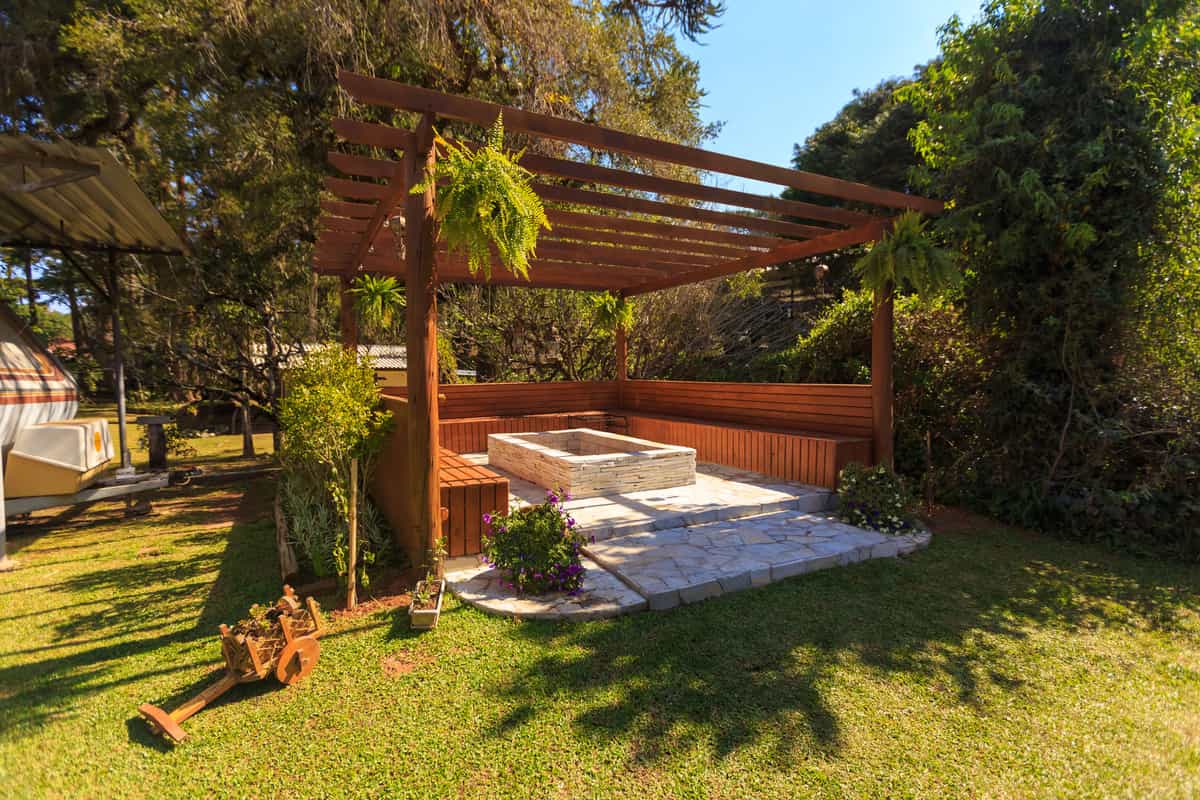
Buy a shade sail if you want cheap shade you can remove, cannot anchor into your surface, or have not settled the layout. Buy a pergola if the structure is permanent — pergolas publish 70-100 mph wind ratings and warranties up to five years, where no shade sail publishes a wind figure at all.
Our picks at a glance
| # | Structure | Best for | Fabric | Price |
|---|---|---|---|---|
| 01 | 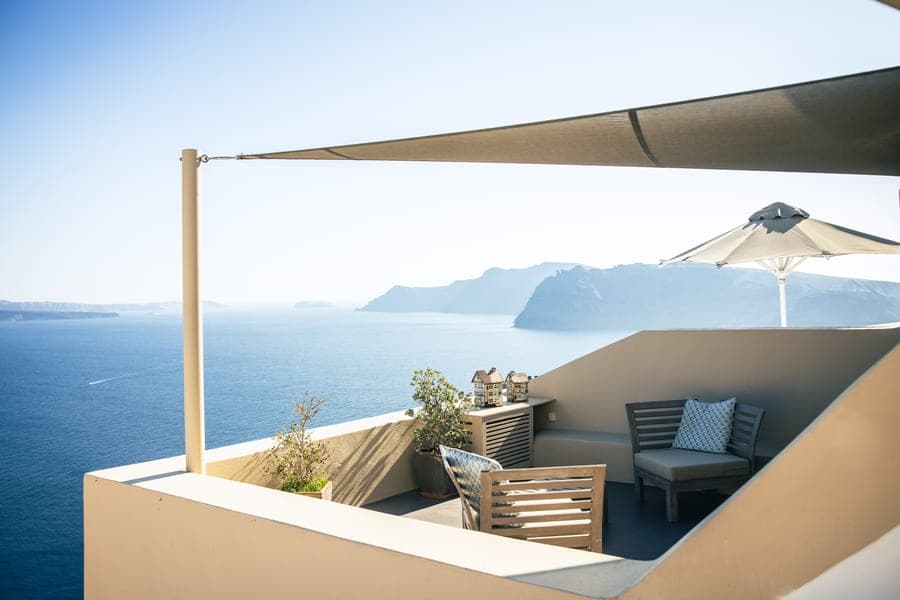 ColourTree Rectangle Sun Shade Sail, 190 GSMThe clearest published fabric spec in the category — 190 GSM virgin HDPE, 95% UV block, three-year warranty — with the hardware sold separately. | Buy this if the sail wins | 190 GSM HDPE mesh, 95% UV block, breathable | Check price on Amazon |
| 02 | 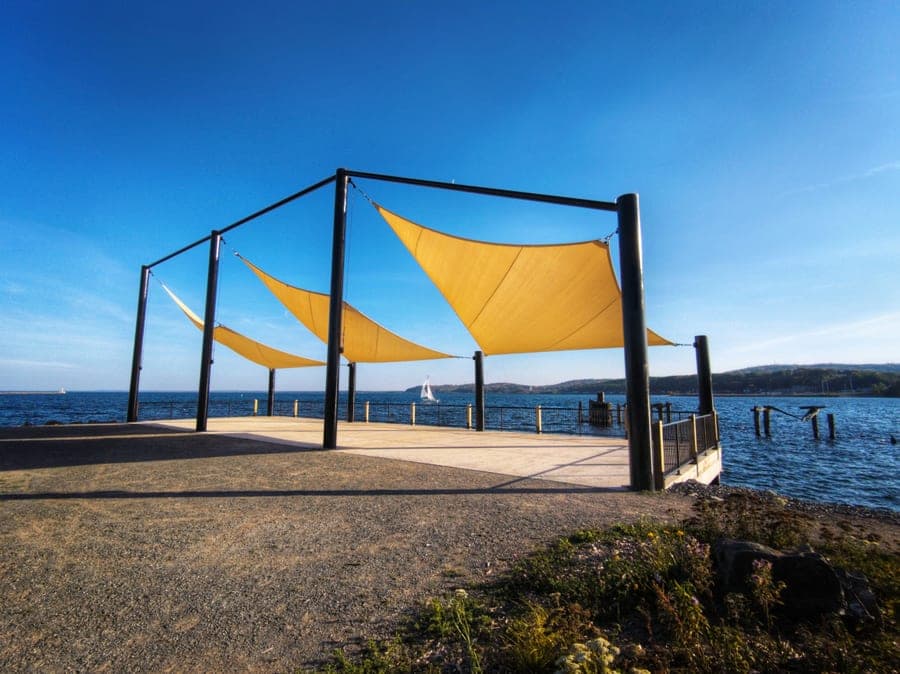 Windscreen4less Cable Shade Sail, 260 GSMThe heaviest fabric and the longest warranty of any sail here — seven years — and the only one with a galvanized cable sewn through the perimeter. | The sail that lasts longest | 260 GSM high-density polyethylene, UV 95 | Check price on Amazon |
| 03 | 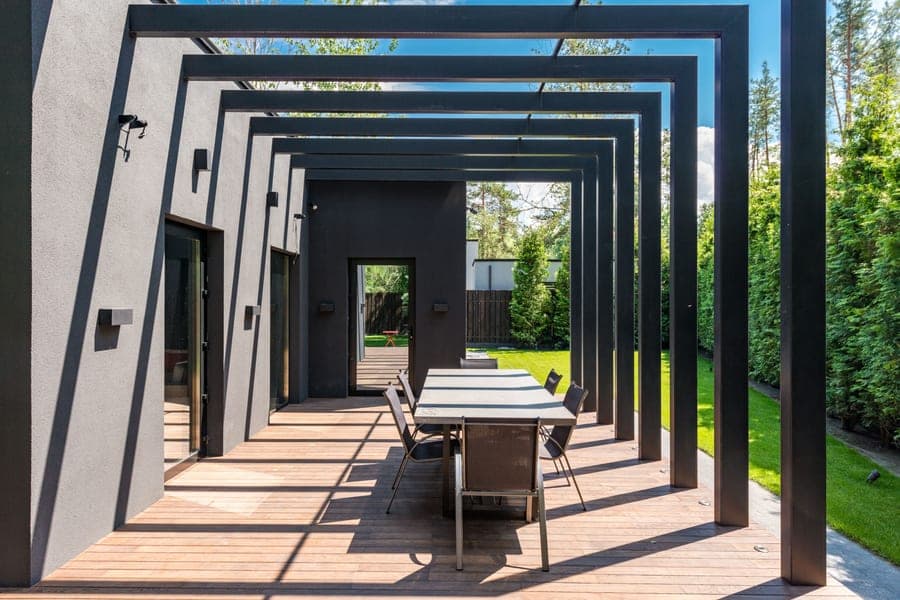 PURPLE LEAF Athena Louvered PergolaThe highest wind figure any louvered pergola in this class publishes, and the only one that ties the number to a specific anchoring condition. | Buy this if the pergola wins | Adjustable aluminum louvers with integrated drainage | Check price on Amazon |
| 04 | 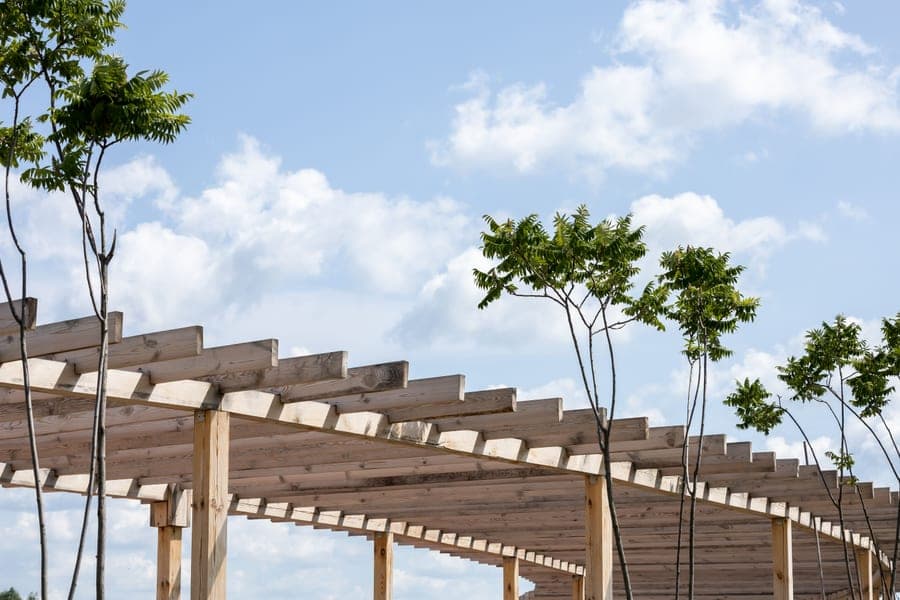 Backyard Discovery Beaumont Cedar PergolaThe highest published wind rating of any pergola on this site, and the only wood kit whose manufacturer makes anchoring a stated condition of the rating. | The pergola with the strongest figures | Multi-level cedar trellis roof with crossing rafters — open, not solid | Check price on Amazon |
The durability table
Every published figure we could source for these structures, in one place, with the manufacturer page each number came from. Where a cell reads "Not published by manufacturer", that figure does not exist in the manufacturer's own material — we do not estimate it and we do not copy one from another site.
| Model | Wind rating (mph) | Snow load | Frame | Roof | Anchoring required | Warranty | Spec source |
|---|---|---|---|---|---|---|---|
| ColourTree Rectangle Sun Shade Sail, 190 GSMTop pick | Not published by manufacturer | Not published by manufacturer | No frame — 100% virgin (non-recycled) HDPE fabric, reinforced stitched seams | 190 GSM HDPE mesh, 95% UV block, breathable | Stainless steel D-ring at each corner; cable rope and hardware kits sold separately | 3 years under normal weather and usage | ColourTree rectangle shade sail product pageChecked 2026-09-26 |
| Windscreen4less Cable Shade Sail, 260 GSM | Not published by manufacturer | Not published by manufacturer | Steel-wired perimeter with galvanized cable and A-ring reinforcement | 260 GSM high-density polyethylene, UV 95 | Strengthened A-rings at the corners, steel wire reinforced edges | 7 years under normal weather conditions | Windscreen4less shade sails pageChecked 2026-09-26 |
| PURPLE LEAF Athena Louvered Pergola | 72 (fully secured with expansion screws on a hardened floor) | Not published by manufacturer | Powder-coated aluminum, 1.5 mm wall, 4.33 in. x 4.33 in. crossbeams | Adjustable aluminum louvers with integrated drainage | Expansion screws into a hardened floor — the published wind figure assumes it | 1 year | PURPLE LEAF louvered pergola collectionChecked 2026-09-26 |
| Backyard Discovery Beaumont Cedar Pergola | 100 (when properly anchored) | Not published by manufacturer | 100% cedar, 5.5 in. x 5.5 in. posts | Multi-level cedar trellis roof with crossing rafters — open, not solid | Mandatory. Concealed concrete anchors, per the instruction manual | 5 years | Backyard Discovery Beaumont product pageChecked 2026-09-26 |
Every pick in full
Buy this if the sail wins
ColourTree Rectangle Sun Shade Sail, 190 GSM
The clearest published fabric spec in the category — 190 GSM virgin HDPE, 95% UV block, three-year warranty — with the hardware sold separately.
- Wind rating
- Not published by manufacturer
- Snow load
- Not published by manufacturer
- Frame
- No frame — 100% virgin (non-recycled) HDPE fabric, reinforced stitched seams
- Roof
- 190 GSM HDPE mesh, 95% UV block, breathable
- Anchoring
- Stainless steel D-ring at each corner; cable rope and hardware kits sold separately
- Warranty
- 3 years under normal weather and usage
- Sizes
- 14 sizes, 8 x 10 ft to 16 x 20 ft
The sail side, in the version we would actually buy: 190 GSM 100% virgin non-recycled HDPE with 95% UV block, reinforced stitched seams, stainless steel D-rings, a three-year warranty, and fourteen sizes from 8 x 10 ft to 16 x 20 ft.
What it gets you over a pergola is everything about reversibility. Nothing is anchored into concrete, nothing is permanent, nothing needs a permit in most cases, and the whole thing comes down in twenty minutes if you move the seating area, move house, or decide you want the sun back.
It also costs a fraction. A sail plus hardware is a different order of spend from any pergola in our registry, and on a per-square-foot-of-shade basis nothing comes close.
What it does not get you is any published durability figure. No wind rating, no snow load — no sail manufacturer publishes either. The honest practice is to take it down before storms and before winter, and hardware is a separate purchase. Shade sail hardware guide covers what you need.
Skip it if: You want a structure that stays up year-round with a published wind figure. No sail offers that.
#ad Price shown as of September 26, 2026. How this site is funded
Specifications from ColourTree rectangle shade sail product page, checked 2026-09-26.
The sail that lasts longest
Windscreen4less Cable Shade Sail, 260 GSM
The heaviest fabric and the longest warranty of any sail here — seven years — and the only one with a galvanized cable sewn through the perimeter.
- Wind rating
- Not published by manufacturer
- Snow load
- Not published by manufacturer
- Frame
- Steel-wired perimeter with galvanized cable and A-ring reinforcement
- Roof
- 260 GSM high-density polyethylene, UV 95
- Anchoring
- Strengthened A-rings at the corners, steel wire reinforced edges
- Warranty
- 7 years under normal weather conditions
- Sizes
- Not published by manufacturer
If the objection to a sail is that it will not last, this is the answer to that objection: 260 GSM high-density polyethylene with a galvanized cable and A-ring reinforcement through the perimeter, UV 95, and a seven-year warranty.
Seven years is the longest fabric warranty in the shade sail category, and it usefully overlaps with the pergola side — Domi covers its louvered pergola's roof and frame for five years, and Backyard Discovery covers its cedar pergola for five. So the best sail is warranted longer than the best-warranted pergola, which is not what most people expect.
The comparison is not as simple as that makes it sound, because a warranty on fabric and a warranty on a structure are different promises — and the pergola's frame outlives its warranty by a long way where a sail's fabric largely does not. But it is a real data point and it belongs in this comparison.
The cable edge is the reason the term can be offered: it keeps the perimeter from distorting under load and spreads corner tension along the edge rather than concentrating it at a ring.
Skip it if: You want a small sail or you are installing alone — 260 GSM with a cable edge is heavy and a two-person job.
#ad Price shown as of September 26, 2026. How this site is funded
Specifications from Windscreen4less shade sails page, checked 2026-09-26.
Buy this if the pergola wins
PURPLE LEAF Athena Louvered Pergola
The highest wind figure any louvered pergola in this class publishes, and the only one that ties the number to a specific anchoring condition.
- Wind rating
- 72 (fully secured with expansion screws on a hardened floor)
- Snow load
- Not published by manufacturer
- Frame
- Powder-coated aluminum, 1.5 mm wall, 4.33 in. x 4.33 in. crossbeams
- Roof
- Adjustable aluminum louvers with integrated drainage
- Anchoring
- Expansion screws into a hardened floor — the published wind figure assumes it
- Warranty
- 1 year
- Sizes
- 10 x 12 ft to 14 x 24 ft
The pergola side at its most competitive, because a louvered roof does the one thing a sail genuinely cannot: give you rain cover on demand and take it away again.
72 mph published wind rating, fully secured with expansion screws on a hardened floor — against no published wind figure from any sail. Plus the best-documented frame in the category: powder-coated aluminum, 1.5 mm wall, 4.33 in. x 4.33 in. crossbeams.
Closed louvers with integrated beam drainage are real rain cover — water runs through the slats into channels in the frame and down the posts. Open louvers give you spring sun and the best available wind configuration. A sail gives you one fixed condition, chosen at purchase.
What it costs you is money, permanence and a permit conversation. It has to be anchored, assembly is a multi-hour two-person job, and at a certain footprint or if attached to the house it is a permitting question. Sizes 10 x 12 to 14 x 24 ft, one-year warranty, no published snow figure.
Skip it if: You are renting, cannot anchor, or have not settled where the seating area goes.
#ad Price shown as of September 26, 2026. How this site is funded
Specifications from PURPLE LEAF louvered pergola collection, checked 2026-09-26.
The pergola with the strongest figures
Backyard Discovery Beaumont Cedar Pergola
The highest published wind rating of any pergola on this site, and the only wood kit whose manufacturer makes anchoring a stated condition of the rating.
- Wind rating
- 100 (when properly anchored)
- Snow load
- Not published by manufacturer
- Frame
- 100% cedar, 5.5 in. x 5.5 in. posts
- Roof
- Multi-level cedar trellis roof with crossing rafters — open, not solid
- Anchoring
- Mandatory. Concealed concrete anchors, per the instruction manual
- Warranty
- 5 years
- Sizes
- 10 x 10 ft, 12 x 10 ft, 14 x 10 ft, 14 x 12 ft, 16 x 12 ft, 20 x 12 ft
If the comparison comes down to which product survives weather, this is the strongest case on either side.
100 mph Pro-Tect tested — the highest published wind figure anywhere in backyard shade — on 100% cedar with 5.5 in. x 5.5 in. posts, dual structural cross beams and corbels, with anchoring made mandatory by the manufacturer and concealed concrete anchors supplied. Five-year warranty.
The open cedar trellis roof is why, and it is also the thing that makes it more like a sail than it first appears: an open roof lets wind through, provides dappled rather than full shade, and gives no rain cover at all. On the shade question specifically, a fixed slatted pergola and a shade sail are closer than a louvered pergola and a shade sail.
Where they part company is permanence and figures. A sail publishes nothing and comes down in twenty minutes; this publishes 100 mph and is bolted into concrete for the next twenty years.
It also needs re-sealing every two to three years, which is a maintenance commitment a sail does not have — a sail you simply replace.
Skip it if: You want rain cover, or you will not maintain cedar. On both counts a louvered pergola or a sail may suit you better.
#ad Price shown as of September 26, 2026. How this site is funded
Specifications from Backyard Discovery Beaumont product page, checked 2026-09-26.
The decision table
| Shade sail | Pergola | |
|---|---|---|
| Published wind rating | None. No manufacturer publishes one | 70-100 mph, with anchoring conditions stated |
| Published snow load | None. Take it down for winter | 15 lb/ft² (Domi); open-roof pergolas do not accumulate |
| Rain cover | Only on a waterproof sail, pitched steeply | None on fixed slats; full on closed louvers with beam drainage |
| Best warranty | 7 years on fabric (Windscreen4less 260 GSM cable) | 5 years roof and frame (Domi); 5 years (both cedar kits) |
| Lifespan in practice | Fabric is the product. Measured in seasons to a decade | Frame outlives its warranty by a long way |
| Installation | Hours. Needs attachment points that can take real tension | Multi-hour, two people, and must be anchored |
| Reversibility | Complete. Down in twenty minutes with snap hooks | None. Anchored into concrete, a deck or footings |
| Permits | Rarely relevant | Often, above a footprint threshold or if attached |
| Maintenance | Re-tension annually, take down for winter | Wash aluminum; re-seal cedar every 2-3 years |
| Cost | A fraction. Cheapest shade per square foot there is | Substantially more, with no consumable roof |
| Best for | Renting, unsettled layouts, tight budgets, seasonal shade | Permanent shade, rain cover, exposed sites |
Buy a shade sail if...
- You cannot anchor into your surface. Renting, an HOA restriction, a slab you will not drill, pavers you cannot lift. A pergola's published wind rating simply does not apply to an unanchored structure, so the honest options are a sail or nothing. How to anchor a pergola explains why no-drill methods do not deliver the rating.
- You have not settled the layout. People move their seating area more than they expect. A sail costs a fraction and does not commit you to a position — and a pergola drilled into the wrong part of the patio is a mistake with anchors in it.
- The budget is the constraint and you want shade this summer. A sail this month beats a pergola in three years, and on a per-square-foot basis nothing else comes close.
- You want the sun back sometimes. A sail comes down for the winter, or for a party, or because it is April. A fixed pergola roof is permanent shade.
- The geometry suits it. If you already have three or four solid attachment points — a house wall, a garage corner, a substantial tree — a sail uses what you have instead of adding four posts to the floor.
Buy a pergola if...
- The structure is staying in one place for years. Anchoring, assembly and permits only make sense once, and once they are done a pergola asks almost nothing of you.
- Your site is exposed. This is the clearest case. Pergolas publish 70-100 mph; no sail publishes anything, and the standing advice for a sail is to take it down. A sail you are constantly taking down is a sail you stop using.
- You want reliable rain cover. A closed louvered pergola with beam drainage is genuine shelter. A waterproof sail gets partway there and needs steep pitching and careful tensioning to stay there.
- You do not want a seasonal chore. A pergola stands through winter. A sail has to come down before snow, because no sail publishes a snow load and fabric pools under wet snow.
- You want the structure to read as architecture. A cedar pergola with 5.5-6 in. posts is a building element. A sail is a fabric panel, and it looks like one — which for some people is the appeal and for others is the objection.
Where each one fails
Sails fail at the corners, and usually because of tension. Fabric stretches, a stretched sail goes slack, a slack sail flogs in wind, and flogging works the corner ring and the stitching beside it until something tears. Almost every sail failure runs that sequence, and the fix is a turnbuckle at every corner, re-tensioned annually.
The other sail failure is the host, not the sail. A properly tensioned sail pulls hard, and a fence panel, a fascia board or a post set shallow in soil is not rated for it. When that goes, the sail comes down with part of the structure attached — and the damage is usually to what it was tied to.
Pergolas fail at the base fasteners and at the finish. Plated steel bolts at the post base corrode while the frame above is perfect; aluminum powder coat chalks on the sunward face, irreversibly; cedar checks at the through-bolts if the sealing is skipped. Louvered pergolas add a mechanism — moving parts in weather.
And an unanchored pergola fails spectacularly, because the published rating never applied to it. That is the one failure mode where a sail is actually safer: a sail that comes down is a fabric panel on the lawn, where an unanchored pergola is a heavy frame on the move.
The comparison nobody makes: what you spend per year of use
We do not publish prices — they move weekly and a stale figure is worse than none — so this has to be structural. But the structure of the comparison is genuinely interesting and it is not the one people assume.
A sail is cheap and its fabric is the product. Published warranties run three years at 180-200 GSM and seven at 260 GSM with a cable edge. Beyond that you are replacing the sail, though the hardware carries over — so the recurring cost is fabric, and the good hardware is a one-time purchase that outlives several sails.
A pergola is expensive and has no consumable roof at all. That is the part people miss. Unlike a soft-top gazebo or a fabric awning, nothing on a pergola gets replaced on a cycle: the frame outlives its warranty by a long way, and the maintenance is washing (aluminum) or sealing every two to three years (cedar).
So over a long enough horizon the gap narrows more than the sticker prices suggest — several sails against one pergola. Over a short horizon it does not narrow at all, and the sail is dramatically cheaper.
Which means the honest deciding factor is not cost. It is permanence. If the structure is staying, the pergola wins on figures, rain cover and cost-per-year. If it is not — renting, unsettled, seasonal — a pergola is money spent on permanence you do not want.
Questions people ask
Is a shade sail or a pergola better?
Is a shade sail cheaper than a pergola?
Which lasts longer, a shade sail or a pergola?
Which is better in wind?
Can a shade sail keep rain off?
Do I need a permit for a shade sail?
Can I put up a shade sail if I am renting?
What if I want both — shade now and a pergola later?
Where these figures came from
- ColourTree rectangle shade sail — 190 GSM virgin HDPE, 95% UV block, 14 sizes, 3-year warranty, hardware sold separately
- Windscreen4less shade sails — 260 GSM cable line with UV 95 and a 7-year warranty, the longest fabric term in the category
- PURPLE LEAF louvered pergola collection — 72 mph with stated anchoring condition, 1.5 mm wall, 4.33 in. crossbeams, integrated drainage
- Backyard Discovery Beaumont — 100 mph Pro-Tect tested, 5.5 in. cedar posts, mandatory anchoring, 5-year warranty
- Domi Outdoor Living louvered pergola — 5 years on roof and frame, 15 lb/ft², cited for the pergola warranty comparison
Found an error? Tell us and we will correct it within seven days and note the change on the page with a dated line — see our editorial policy.