Shade sail vs gazebo
A sail is fabric you tension between posts. A gazebo is a roof on legs that you bolt to the ground. The decision is almost never about shade — it is about whether you need a rating and a dry floor.
By Ryder M. · Published · Last updated
We compare published manufacturer specifications, warranty terms and owner-reported failure modes. We have not physically tested these structures. How we judge shade structures
Slat & Shade earns a commission on qualifying purchases made through links on this page. It costs you nothing extra and never changes what we recommend. Full disclosure
Part of Shade Sails

The short answer
Buy a shade sail if you want the most shade per dollar over an open area and you accept taking it down for storms. Buy a gazebo if you want a published wind rating, rain cover and a structure that stays up year-round. A sail covers several times the area for a fraction of the cost; only a gazebo has a rating at all.
Our picks at a glance
| # | Structure | Best for | Fabric | Price |
|---|---|---|---|---|
| 01 | 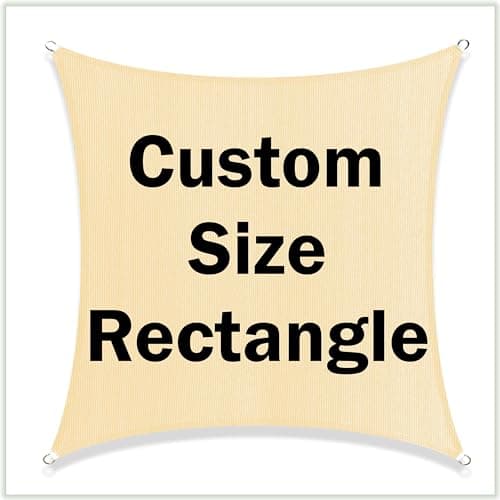 ColourTree Rectangle Sun Shade Sail, 190 GSMThe clearest published fabric spec in the category — 190 GSM virgin HDPE, 95% UV block, three-year warranty — with the hardware sold separately. | The sail case: coverage | 190 GSM HDPE mesh, 95% UV block, breathable | $79.99 · View on Amazon |
| 02 | 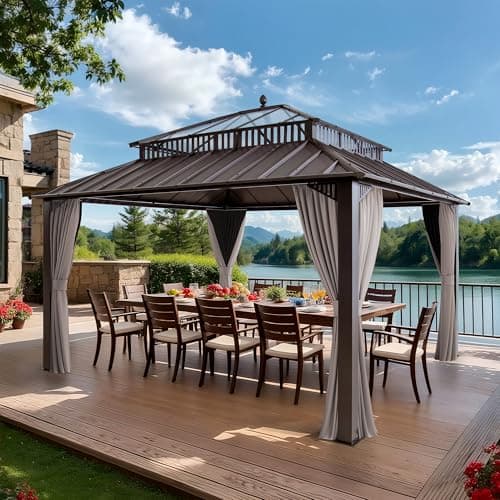 Sunjoy Kingston 12 x 14 Aluminum Gazebo with Steel RoofPublishes both a wind rating and a snow figure — but the snow figure is a whole-roof total, not a per-square-foot load, so it is not directly comparable to anyone else's. | The gazebo case: a published rating | Galvanized steel, two-tier vented | $1,017.00 · View on Amazon |
| 03 | 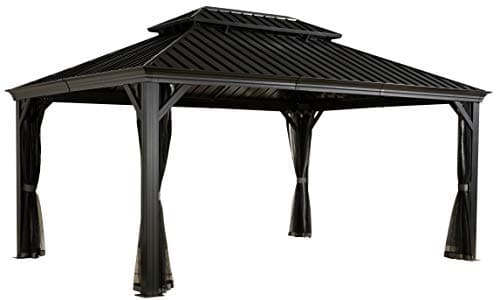 Sojag Messina Hardtop GazeboThe strongest warranty structure in the category — limited lifetime on the frame and 15 years on the finish — paired with wind and snow ratings the manufacturer describes but does not print. | The long-game version of the gazebo case | Galvanized steel panels | $2,749.99 · View on Amazon |
The durability table
Every published figure we could source for these structures, in one place, with the manufacturer page each number came from. Where a cell reads "Not published by manufacturer", that figure does not exist in the manufacturer's own material — we do not estimate it and we do not copy one from another site.
| Model | Wind rating (mph) | Snow load | Frame | Roof | Anchoring required | Warranty | Spec source |
|---|---|---|---|---|---|---|---|
| ColourTree Rectangle Sun Shade Sail, 190 GSMTop pick | Not published by manufacturer | Not published by manufacturer | No frame — 100% virgin (non-recycled) HDPE fabric, reinforced stitched seams | 190 GSM HDPE mesh, 95% UV block, breathable | Stainless steel D-ring at each corner; cable rope and hardware kits sold separately | 3 years under normal weather and usage | ColourTree rectangle shade sail product pageChecked 2026-09-26 |
| Sunjoy Kingston 12 x 14 Aluminum Gazebo with Steel Roof | 50 | 3,000 lb across the entire roof (not a per-square-foot rating) | Aluminum and steel | Galvanized steel, two-tier vented | Pre-drilled ground plates: included stakes for soft ground, expansion bolts for hard surfaces (bolts not included) | Not published by manufacturer | Sunjoy Kingston product pageChecked 2026-09-26 |
| Sojag Messina Hardtop Gazebo | Not published by manufacturer | Not published by manufacturer | Powder-coated aluminum | Galvanized steel panels | Not published by manufacturer | 1 year limited on the gazebo; limited lifetime on the aluminum/steel frame; 15 years on the powder-coated finish | Sojag hardtop gazebo collectionChecked 2026-09-26 |
Every pick in full
The sail case: coverage
ColourTree Rectangle Sun Shade Sail, 190 GSM
The clearest published fabric spec in the category — 190 GSM virgin HDPE, 95% UV block, three-year warranty — with the hardware sold separately.
- Wind rating
- Not published by manufacturer
- Snow load
- Not published by manufacturer
- Frame
- No frame — 100% virgin (non-recycled) HDPE fabric, reinforced stitched seams
- Roof
- 190 GSM HDPE mesh, 95% UV block, breathable
- Anchoring
- Stainless steel D-ring at each corner; cable rope and hardware kits sold separately
- Warranty
- 3 years under normal weather and usage
- Sizes
- 14 sizes, 8 x 10 ft to 16 x 20 ft
The strongest argument for a sail is arithmetic. This is the fabric that makes it.
14 sizes from 8 x 10 ft up to 16 x 20 ft. A 16 x 20 sail is 320 sq ft of shade from one piece of cloth. No gazebo on this site reaches half that footprint, and none of them is close on cost per square foot covered.
190 GSM 100% virgin HDPE at 95% UV block, breathable. Ninety-five percent of the UV stopped, with air passing through the knit so no hot pocket forms underneath. A gazebo roof stops 100% and traps some of the heat under a solid panel.
Reinforced stitched seams with stainless steel D-rings at each corner, hardware sold separately. The hidden cost of the sail case: posts, footings and fittings are a separate project and a real budget line. Shade sail posts and footings covers what that actually involves.
Three years of warranty. Against a limited lifetime frame term on the gazebo side of this page. The sail is a consumable with a long-ish life; the gazebo is a structure.
Skip it if: You want to sit outside in the rain. A breathable knit passes water through by design.
#ad Price shown as of November 11, 2026. How this site is funded
Specifications from ColourTree rectangle shade sail product page, checked 2026-09-26.
The gazebo case: a published rating
Sunjoy Kingston 12 x 14 Aluminum Gazebo with Steel Roof
Publishes both a wind rating and a snow figure — but the snow figure is a whole-roof total, not a per-square-foot load, so it is not directly comparable to anyone else's.
- Wind rating
- 50
- Snow load
- 3,000 lb across the entire roof (not a per-square-foot rating)
- Frame
- Aluminum and steel
- Roof
- Galvanized steel, two-tier vented
- Anchoring
- Pre-drilled ground plates: included stakes for soft ground, expansion bolts for hard surfaces (bolts not included)
- Warranty
- Not published by manufacturer
- Sizes
- Roof 12 x 14 ft; base 11 x 13 ft; height 11.02 ft
The counter-argument in one spec sheet: a number no shade sail of any brand can offer.
50 mph published wind rating. Modest sounding, and it is the only kind of figure that exists in this comparison — not one shade sail manufacturer publishes a wind rating, because the posts and footings that hold a sail up are yours rather than theirs. A gazebo is a complete assembly, so it can be rated.
3,000 lb across the entire roof, which on a 168 sq ft roof is roughly 18 lb/ft². A snow figure. A sail has no snow story at all: it comes down before winter or it tears.
Pre-drilled ground plates with stakes for soft ground and expansion bolts for hard surfaces. Published anchoring provision, which is the other half of a wind rating — a figure without a stated anchoring method is decoration. Wind ratings explained covers why.
Roof 12 x 14 ft on an 11 x 13 ft base, 11.02 ft high, with a galvanized steel two-tier vented roof. 168 sq ft of roof, dry underneath, standing all year. Half the coverage of a big sail, and infinitely more structure.
Skip it if: You want to shade a large open lawn. A 12 x 14 footprint is a room, not an area.
#ad Price shown as of November 11, 2026. How this site is funded
Specifications from Sunjoy Kingston product page, checked 2026-09-26.
The long-game version of the gazebo case
Sojag Messina Hardtop Gazebo
The strongest warranty structure in the category — limited lifetime on the frame and 15 years on the finish — paired with wind and snow ratings the manufacturer describes but does not print.
- Wind rating
- Not published by manufacturer
- Snow load
- Not published by manufacturer
- Frame
- Powder-coated aluminum
- Roof
- Galvanized steel panels
- Anchoring
- Not published by manufacturer
- Warranty
- 1 year limited on the gazebo; limited lifetime on the aluminum/steel frame; 15 years on the powder-coated finish
- Sizes
- 10 x 10 ft through 12 x 20 ft
Included because the real gazebo argument is not this season, it is the next fifteen.
One year limited on the gazebo, limited lifetime on the aluminum and steel frame, and 15 years on the powder-coated finish. Set that against three years on the best sail fabric here. These are not the same class of purchase and the warranties say so plainly.
Powder-coated aluminum with galvanized steel roof panels. No rust path in the frame and a roof that sheds snow. A sail's equivalent of this conversation is a fabric that degrades under UV on a published clock.
Sizes 10 x 10 ft through 12 x 20 ft. The 12 x 20 is 240 sq ft of covered floor, which is the point at which a gazebo starts to compete with a mid-size sail on area — at a very different cost.
No published wind or snow figure, which is the frustration with Sojag. The structural warranty is the best in the category; the numbers are described rather than printed.
Skip it if: The budget is the constraint. A lifetime frame costs what a lifetime frame costs.
#ad Price shown as of November 11, 2026. How this site is funded
Specifications from Sojag hardtop gazebo collection, checked 2026-09-26.
The difference in one line each
A shade sail is tensioned fabric with no structure of its own. You supply the posts, the footings and the hardware; the manufacturer supplies a knitted panel with rings in the corners. It blocks UV, passes air and water, covers a large area cheaply, and has no wind rating because there is no assembly to rate.
A gazebo is a complete roofed structure that bolts to the ground. Frame, roof, anchoring provision and — on several models — a published wind rating and snow figure. It keeps rain off, stands through winter, and covers a fraction of the area for a multiple of the price.
They are not really competing products, which is why the comparison is useful. One creates a shaded zone; the other creates an outdoor room. People search for the comparison because both show up when you search for backyard shade, not because they do the same job.
And the deciding question is almost always rain. If the answer is "I want to sit out when it is drizzling", the sail is eliminated before any other spec is read.
Side by side on published figures
Manufacturer figures from the models above. The blanks are structural rather than accidental.
| Shade sail | Hardtop gazebo | |
|---|---|---|
| Published wind rating | None — no manufacturer publishes one | 50 mph (Sunjoy Kingston) |
| Published snow figure | None — it comes down for winter | 3,000 lb across the roof, about 18 lb/ft² |
| Largest coverage here | 16 x 20 ft — 320 sq ft | 12 x 20 ft — 240 sq ft |
| Rain cover | No — breathable knit by design | Yes — galvanized steel panels |
| Warranty | 3 years on fabric | Limited lifetime frame, 15 years finish |
| What you supply | Posts, footings and all hardware | Anchoring bolts for hard surfaces |
| Winter | Take it down | Leave it up, clear the roof |
| Reversibility | Unclip it and the garden is unchanged | A bolted structure with footings |
The first row is the whole comparison. Not one shade sail manufacturer publishes a wind rating, and the reason is honest rather than evasive: they sell cloth, not a structure, so your posts and footings set the limit. A gazebo is a complete assembly and can therefore carry a number.
The last row is the one people forget. A sail is reversible — unclip it and the only trace is four post stubs. A gazebo is a permanent anchored structure with a permit question attached, and that is a different commitment to the garden.
Which one to buy, by situation
- Shading a large open lawn, patio or play area: the sail. Nothing else covers 320 sq ft for the money, and an open area is exactly where a 12 x 14 footprint does not help.
- Making an outdoor room you use in all weather: the gazebo. Rain cover, a published rating, and somewhere to leave furniture.
- A rental, or anywhere you cannot build: the sail. Posts in the ground are a smaller intervention than a bolted structure, and it comes out cleanly.
- Snow country: the gazebo, and check the figure. A sail is off the posts by November; a gazebo has to carry whatever lands on it. Snow load explained covers how to find your region's number.
- Both, on a larger plot. This is genuinely the best answer where there is room: the gazebo over the dining table, a sail over the lawn or the pool. They do different jobs and read as a designed garden rather than as a compromise.
- Shading a pool specifically: the sail, with 316 stainless hardware. A gazebo cannot span water and a sail can. Best shade sails for pools covers it.
What we would actually do
Start with whether the space needs to be usable in rain. That single question resolves most of these searches. A yes means a hardtop gazebo and the sail is out; a no opens up several times the coverage for a fraction of the outlay.
Then look at what is holding it up. A sail's cost sits in the posts and the footings, not the cloth — and a sail on undersized posts is the most common failure in this entire category. If there is nowhere to set a proper post, the sail option is weaker than its price suggests.
Then check the winter plan. A sail is a seasonal commitment: down in autumn, re-tensioned in spring, cleaned once a season. A gazebo asks for a roof clearance and an annual anchor check instead. Neither is maintenance-free and they are different chores.
And read the warranty terms as lifespans. Three years on fabric against a limited lifetime frame is not a quality comparison, it is a category comparison — the sail is a long-lived consumable and the gazebo is a structure. Buy accordingly, and do not expect the sail to be the last one you own.
Questions people ask
Is a shade sail or a gazebo better?
Is a shade sail cheaper than a gazebo?
Can a shade sail replace a gazebo?
Which one survives wind better?
Do you have to take a shade sail down in winter?
Does a shade sail or a gazebo need a permit?
Which lasts longer, a shade sail or a gazebo?
Can you use a shade sail and a gazebo together?
Where these figures came from
- ColourTree rectangle sun shade sail — 190 GSM 100% virgin HDPE, 95% UV block, breathable, 14 sizes from 8 x 10 ft to 16 x 20 ft, stainless D-rings with hardware sold separately, 3-year warranty
- Sunjoy Kingston 12 x 14 aluminum gazebo — 50 mph wind, 3,000 lb across the entire roof, roof 12 x 14 ft on an 11 x 13 ft base at 11.02 ft high, pre-drilled ground plates with stakes for soft ground and expansion bolts for hard surfaces
- Sojag hardtop gazebo collection — powder-coated aluminum frame with galvanized steel roof panels, 1 year limited on the gazebo, limited lifetime on the frame, 15 years on the powder-coated finish, sizes 10 x 10 ft through 12 x 20 ft
Found an error? Tell us and we will correct it within seven days and note the change on the page with a dated line — see our editorial policy.