Shade sail vs umbrella
An umbrella follows the furniture; a sail covers an area. That is the real difference, and it decides the answer more than any specification does.
By Ryder M. · Published · Last updated
We compare published manufacturer specifications, warranty terms and owner-reported failure modes. We have not physically tested these structures. How we judge shade structures
Slat & Shade earns a commission on qualifying purchases made through links on this page. It costs you nothing extra and never changes what we recommend. Full disclosure
Part of Shade Sails
The short answer
Buy a sail if you are shading a defined area and have solid attachment points — it covers far more square footage per dollar. Buy an umbrella if the shaded spot needs to move, or if you have nothing to attach to. Neither publishes a wind rating, and both should be taken down or closed before a storm.
Our picks at a glance
| # | Structure | Best for | Fabric | Price |
|---|---|---|---|---|
| 01 | 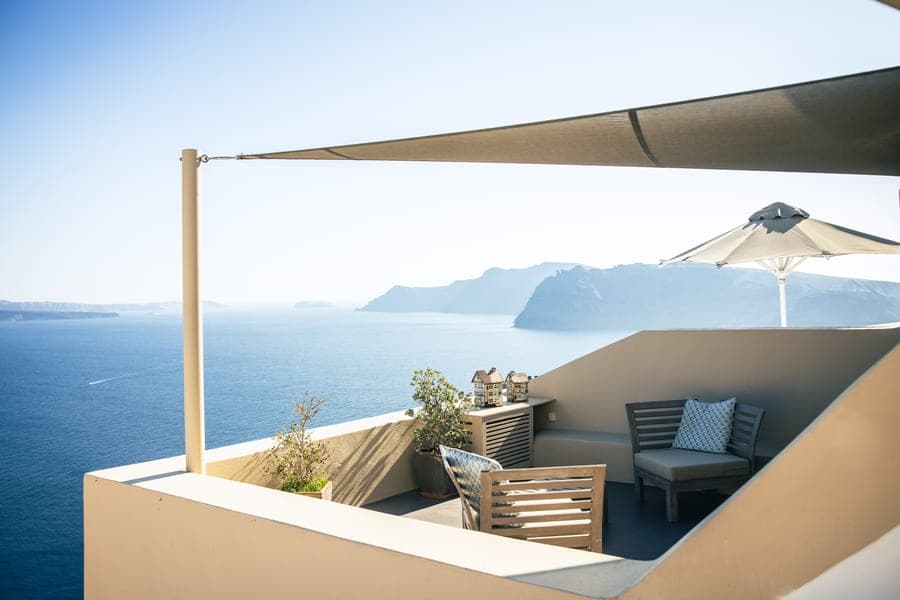 ColourTree Rectangle Sun Shade Sail, 190 GSMThe clearest published fabric spec in the category — 190 GSM virgin HDPE, 95% UV block, three-year warranty — with the hardware sold separately. | Buy this if the sail wins | 190 GSM HDPE mesh, 95% UV block, breathable | Check price on Amazon |
| 02 | 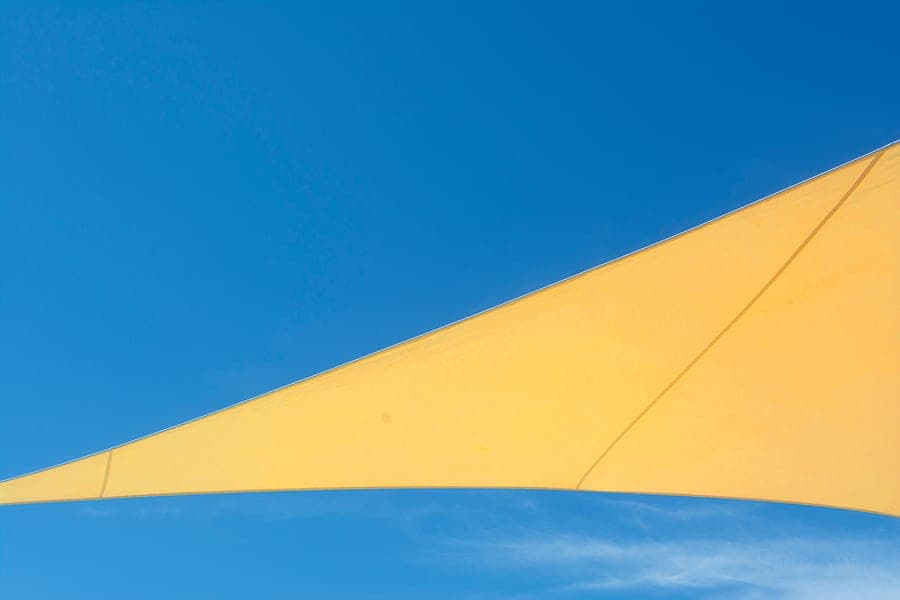 ColourTree Triangle Sun Shade Sail, 200 GSMA heavier 200 GSM fabric in the shape that tensions most predictably — three anchor points cannot fight each other the way four can. | Best sail for a small fixed spot | 200 GSM HDPE, 95% UV block | Check price on Amazon |
| 03 | 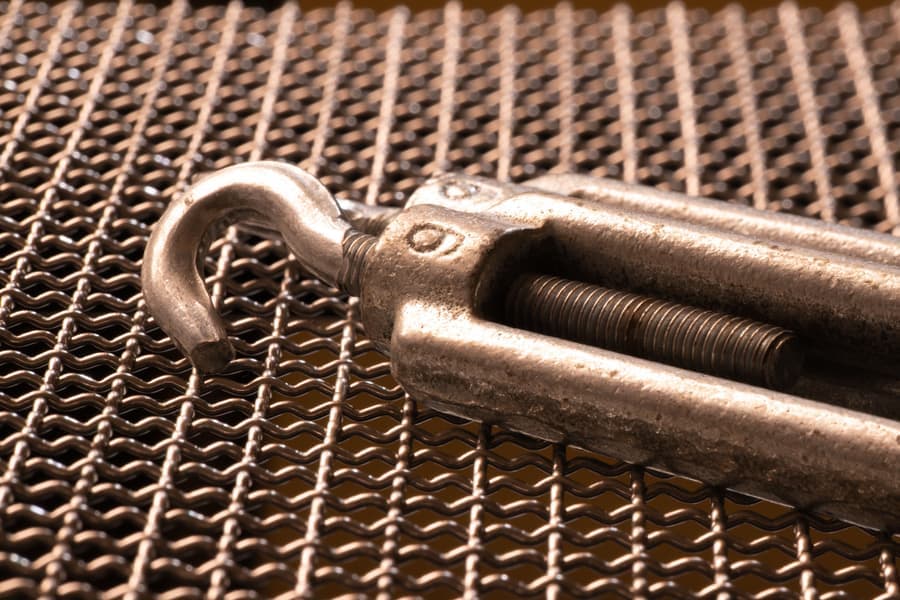 SUNNY GUARD Shade Sail Hardware Kit, 316 Stainless316 marine-grade stainless rather than 304 — the difference that decides whether your fixings survive a coastal or pool-side install. | The cost an umbrella does not have | Not published by manufacturer | Check price on Amazon |
| 04 |  Windscreen4less Cable Shade Sail, 260 GSMThe heaviest fabric and the longest warranty of any sail here — seven years — and the only one with a galvanized cable sewn through the perimeter. | Best sail for a permanent installation | 260 GSM high-density polyethylene, UV 95 | Check price on Amazon |
The durability table
Every published figure we could source for these structures, in one place, with the manufacturer page each number came from. Where a cell reads "Not published by manufacturer", that figure does not exist in the manufacturer's own material — we do not estimate it and we do not copy one from another site.
| Model | Wind rating (mph) | Snow load | Frame | Roof | Anchoring required | Warranty | Spec source |
|---|---|---|---|---|---|---|---|
| ColourTree Rectangle Sun Shade Sail, 190 GSMTop pick | Not published by manufacturer | Not published by manufacturer | No frame — 100% virgin (non-recycled) HDPE fabric, reinforced stitched seams | 190 GSM HDPE mesh, 95% UV block, breathable | Stainless steel D-ring at each corner; cable rope and hardware kits sold separately | 3 years under normal weather and usage | ColourTree rectangle shade sail product pageChecked 2026-09-26 |
| ColourTree Triangle Sun Shade Sail, 200 GSM | Not published by manufacturer | Not published by manufacturer | No frame — breathable HDPE fabric | 200 GSM HDPE, 95% UV block | Stainless steel D-rings at the corners; hardware sold separately | 3 years | ColourTree triangle shade sail product pageChecked 2026-09-26 |
| SUNNY GUARD Shade Sail Hardware Kit, 316 Stainless | Not published by manufacturer | Not published by manufacturer | 316 marine-grade stainless steel | Not published by manufacturer | Turnbuckles, pad eyes, snap hooks, screws and expansion anchors; sized for triangle sails under 161 sq ft | Not published by manufacturer | SUNNY GUARD hardware kit product pageChecked 2026-09-26 |
| Windscreen4less Cable Shade Sail, 260 GSM | Not published by manufacturer | Not published by manufacturer | Steel-wired perimeter with galvanized cable and A-ring reinforcement | 260 GSM high-density polyethylene, UV 95 | Strengthened A-rings at the corners, steel wire reinforced edges | 7 years under normal weather conditions | Windscreen4less shade sails pageChecked 2026-09-26 |
Every pick in full
Buy this if the sail wins
ColourTree Rectangle Sun Shade Sail, 190 GSM
The clearest published fabric spec in the category — 190 GSM virgin HDPE, 95% UV block, three-year warranty — with the hardware sold separately.
- Wind rating
- Not published by manufacturer
- Snow load
- Not published by manufacturer
- Frame
- No frame — 100% virgin (non-recycled) HDPE fabric, reinforced stitched seams
- Roof
- 190 GSM HDPE mesh, 95% UV block, breathable
- Anchoring
- Stainless steel D-ring at each corner; cable rope and hardware kits sold separately
- Warranty
- 3 years under normal weather and usage
- Sizes
- 14 sizes, 8 x 10 ft to 16 x 20 ft
The sail side, and the reason to choose one over an umbrella is coverage: fourteen sizes from 8 x 10 ft to 16 x 20 ft means you can shade an actual area rather than a circle around a pole.
A 16 x 20 sail covers 320 sq ft. No umbrella covers anything like that, and the cost difference per square foot of shade is not close — this is the single strongest argument for a sail over an umbrella and it is purely geometric.
The fabric: 190 GSM 100% virgin non-recycled HDPE with 95% UV block, reinforced stitched seams, stainless steel D-rings, three-year warranty. Virgin rather than recycled HDPE matters for UV life, and ColourTree is the manufacturer that states it.
What you need that an umbrella does not require: attachment points. Three or four solid fixings that can take real tension — a house wall, a garage corner, purpose-set posts. If you do not have them and cannot create them, the umbrella wins by default. And hardware is a separate purchase.
Skip it if: You have no solid attachment points, or the shaded spot needs to move during the day.
#ad Price shown as of September 26, 2026. How this site is funded
Specifications from ColourTree rectangle shade sail product page, checked 2026-09-26.
Best sail for a small fixed spot
ColourTree Triangle Sun Shade Sail, 200 GSM
A heavier 200 GSM fabric in the shape that tensions most predictably — three anchor points cannot fight each other the way four can.
- Wind rating
- Not published by manufacturer
- Snow load
- Not published by manufacturer
- Frame
- No frame — breathable HDPE fabric
- Roof
- 200 GSM HDPE, 95% UV block
- Anchoring
- Stainless steel D-rings at the corners; hardware sold separately
- Warranty
- 3 years
- Sizes
- Not published by manufacturer
The sail most directly comparable to an umbrella, because a single triangle over a table is the same job an umbrella does — from three fixed points rather than a pole in the middle.
The advantage over an umbrella at this scale is that there is no pole. An umbrella's mast goes through the middle of the table or sits in a base you walk around; a triangle sail puts nothing in the space at all. On a small patio that is a real gain in usable area.
200 GSM HDPE with 95% UV block, stainless D-rings, three-year warranty — and the geometry is the easiest to get right, because three points are always a flat plane and tension cleanly.
What you give up is adjustability. An umbrella tilts and follows the sun; a fixed sail covers what it covers. If your table gets low afternoon sun from the west, an umbrella tilted into it does something a sail structurally cannot.
Skip it if: The sun angle you need to block is low. A tilting umbrella handles that and a fixed sail does not.
#ad Price shown as of September 26, 2026. How this site is funded
Specifications from ColourTree triangle shade sail product page, checked 2026-09-26.
The cost an umbrella does not have
SUNNY GUARD Shade Sail Hardware Kit, 316 Stainless
316 marine-grade stainless rather than 304 — the difference that decides whether your fixings survive a coastal or pool-side install.
- Wind rating
- Not published by manufacturer
- Snow load
- Not published by manufacturer
- Frame
- 316 marine-grade stainless steel
- Roof
- Not published by manufacturer
- Anchoring
- Turnbuckles, pad eyes, snap hooks, screws and expansion anchors; sized for triangle sails under 161 sq ft
- Warranty
- Not published by manufacturer
- Sizes
- M6 turnbuckles, 6 in. to 8 in. adjustable range
Included on this page for honesty about the comparison: an umbrella arrives complete and a sail does not.
Every sail we track supplies corner rings and nothing else. ColourTree states plainly that cable rope and hardware kits are sold separately. So when you compare a sail's price against an umbrella's, you have to add this — a turnbuckle and a fixing at every corner, plus cable if you are spanning to existing structures.
316 marine-grade stainless rather than 304, with turnbuckles, pad eyes, snap hooks, screws and expansion anchors; M6 turnbuckles adjustable from 6 to 8 inches, sized for triangles under 161 sq ft.
The turnbuckles are not optional, because fabric stretches and a turnbuckle is the only way to take it back out. An umbrella never needs re-tensioning; a sail does, annually.
Even with hardware added, the sail still wins on coverage per dollar at any meaningful size. The point is that it does not win by as much as the sail's own price suggests.
Skip it if: Your sail is larger than about 161 sq ft — size the hardware up accordingly.
#ad Price shown as of September 26, 2026. How this site is funded
Specifications from SUNNY GUARD hardware kit product page, checked 2026-09-26.
Best sail for a permanent installation
Windscreen4less Cable Shade Sail, 260 GSM
The heaviest fabric and the longest warranty of any sail here — seven years — and the only one with a galvanized cable sewn through the perimeter.
- Wind rating
- Not published by manufacturer
- Snow load
- Not published by manufacturer
- Frame
- Steel-wired perimeter with galvanized cable and A-ring reinforcement
- Roof
- 260 GSM high-density polyethylene, UV 95
- Anchoring
- Strengthened A-rings at the corners, steel wire reinforced edges
- Warranty
- 7 years under normal weather conditions
- Sizes
- Not published by manufacturer
If the reason you are considering an umbrella is that you expect a sail to wear out, this is the counter-argument: 260 GSM HDPE with a galvanized cable and A-ring reinforcement through the perimeter, UV 95, and a seven-year warranty.
Seven years is the longest fabric warranty in the shade sail category. Umbrella canopies are consumables too — fabric in sun, on a frame — and while we do not cover umbrellas and cannot quote their terms, a seven-year fabric warranty is a strong number in any outdoor fabric product.
The cable edge is what makes it a permanent installation rather than a seasonal one. The perimeter holds its shape under load rather than distorting, which is what lets it span further and hold tension longer.
It is heavy, and that is the trade against an umbrella. Putting it up and taking it down is a two-person job where an umbrella opens with a crank — and taking it down before storms is the standing advice for every sail.
Skip it if: You want something one person can deploy and stow easily. This is the opposite of that.
#ad Price shown as of September 26, 2026. How this site is funded
Specifications from Windscreen4less shade sails page, checked 2026-09-26.
A note on what this page does and does not cover
We do not cover patio umbrellas, and we are not going to recommend one.
Slat & Shade compares pergolas, hardtop gazebos, shade sails and canopies on published manufacturer specifications — wind ratings, snow loads, fabric weights, frame gauges and warranty terms. We have not researched umbrellas to that standard: we have not built a registry of currently-sold models, verified their published specifications, or checked their availability. Recommending one anyway would break the rule that makes everything else on this site worth reading.
So this page compares the two approaches — a tensioned area sail against a pole-mounted umbrella — using the sail specifications we can cite and general statements about umbrella geometry that do not require a product claim. The picks above are all sails.
If the comparison points you at an umbrella, that is a legitimate outcome and it is what the sections below are for. Buy one from somewhere that has actually looked at them.
The decision table
| Shade sail | Patio umbrella | |
|---|---|---|
| Coverage | Far more. Up to 320 sq ft on a single 16 x 20 sail | A circle or square around a pole. A fraction of the area |
| Cost per sq ft of shade | Much lower, even after adding hardware | Higher, and it does not improve with size |
| Needs attachment points | Yes — 3 or 4 solid fixings that can take real tension | No. A base or a socket is enough |
| Obstruction in the space | None. Nothing in the middle | A mast through the table, or a base to walk around |
| Adjustable | No. It shades what it shades | Yes — tilts and, on a cantilever, rotates to follow the sun |
| Movable | No, once installed | Yes. Follows the furniture |
| Published wind rating | None from any manufacturer | Not something we have verified; close it in wind regardless |
| Setup | Hours, and it stays up for the season | Minutes, every time |
| Storage | Folds into a bag | Closes in place or stows |
| Best for | A defined area you want shaded all season | A spot that moves, or a site with nothing to attach to |
Buy a sail if...
- You are shading an area rather than a table. This is the decisive case. A sail covers square footage an umbrella cannot approach, at a fraction of the cost per square foot, and the gap widens as the area grows.
- You have solid attachment points. A house wall, a garage corner, a substantial existing post. A sail uses what you already have instead of putting a base in the middle of the floor.
- You want nothing in the middle of the space. No mast through the table, no base to walk round. On a small patio that reclaims real usable area.
- The shade needs to be there all season without being deployed. A sail goes up in spring and stays. An umbrella is opened and closed every time, which sounds trivial and is the reason umbrellas end up unused.
- You want the shade to look architectural. A tensioned sail is a designed element; an umbrella is furniture.
Buy an umbrella if...
And these are genuine — in each of these situations a sail would be the wrong purchase.
- You have nothing to attach to. No walls in reach, no posts, and no way to set any. A sail needs three or four fixings that can take real tension; without them there is no installation, and a base-mounted umbrella needs nothing but the ground.
- The shaded spot moves. If the table migrates round the patio through the season, or you want shade on the lawn one weekend and the deck the next, an umbrella follows and a sail does not.
- You need to block low sun. This is the one an umbrella does structurally better. A tilting umbrella angles into low morning or late-afternoon sun; a fixed sail is a plane overhead and cannot address sun arriving horizontally. It is the same limitation a pergola has — see do pergolas provide shade.
- You want shade some days and not others. An umbrella closes in thirty seconds. A sail is up for the season.
- The area is small and the budget is small. For a single table, the coverage advantage that makes sails so cost-effective largely disappears, and an umbrella is simpler.
Wind: neither of them is the answer
Worth being blunt, because both product categories are sold into the same summer and neither handles weather well.
No shade sail manufacturer we track publishes a wind rating. Not one, across every brand and fabric weight. The correct practice is to take the sail down ahead of a storm, and the products that make that easiest — snap hooks rather than shackles at the corners — are the ones that survive.
An umbrella is a lever with a sail on the end of it, which is a worse mechanical arrangement than a tensioned panel even before you consider that its base is holding it down by weight alone. The standing advice for an umbrella is to close it whenever you are not sitting under it, and that advice exists for a reason.
The sail's advantage is that it can be tensioned and it breathes. A taut HDPE mesh spills wind; a slack one flogs. That is why shade sail sizing and tension matters so much and why turnbuckles are not optional.
If wind is a regular feature of your site, neither is the right product. A louvered pergola publishing 70-72 mph, or an open-roof cedar pergola publishing 100 mph, is a different class of thing. Best pergolas for high winds is the shortlist.
The honest recommendation
Shading an area: sail. The coverage-per-dollar advantage is large, geometric and does not depend on any product claim. Add the hardware cost when you compare prices, and buy turnbuckles.
Shading a spot that moves: umbrella. A sail cannot do this at all, and no amount of fabric weight changes that.
Nothing to attach to: umbrella. Again, not a close call — a sail without solid fixings is not an installation.
Both, honestly, is often the right answer. A sail over the main seating area for the season, and an umbrella for the spot that moves. They are not really competing products.
And if you want shade that is simply always there, publishes a wind figure, and does not come down in October: you want a pergola, and shade sail vs pergola is the comparison that matters more than this one.
Questions people ask
Is a shade sail better than an umbrella?
Does a shade sail give more shade than an umbrella?
Which is better in wind, a sail or an umbrella?
Do you recommend a specific patio umbrella?
Can a shade sail block low afternoon sun?
What do I need to install a shade sail that I don't need for an umbrella?
Is an umbrella easier to live with?
Should I get both?
Where these figures came from
- ColourTree rectangle shade sail — 190 GSM virgin HDPE, 95% UV block, 14 sizes from 8x10 to 16x20 ft, 3-year warranty, hardware sold separately
- ColourTree triangle shade sail — 200 GSM HDPE, 95% UV block, stainless D-rings, 3-year warranty
- SUNNY GUARD shade sail hardware kit — 316 marine-grade stainless, turnbuckles adjustable 6-8 in., kit contents and sizing
- Windscreen4less shade sails — 260 GSM cable line, UV 95, 7-year warranty, galvanized cable and A-ring reinforcement
Found an error? Tell us and we will correct it within seven days and note the change on the page with a dated line — see our editorial policy.