The best waterproof shade sails
A waterproof sail is a solid panel on flexible fixings. It will keep you dry, and it behaves completely differently from a breathable mesh in wind and in rain.
By Ryder M. · Published · Last updated
We compare published manufacturer specifications, warranty terms and owner-reported failure modes. We have not physically tested these structures. How we judge shade structures
Slat & Shade earns a commission on qualifying purchases made through links on this page. It costs you nothing extra and never changes what we recommend. Full disclosure
Part of Shade Sails
The short answer
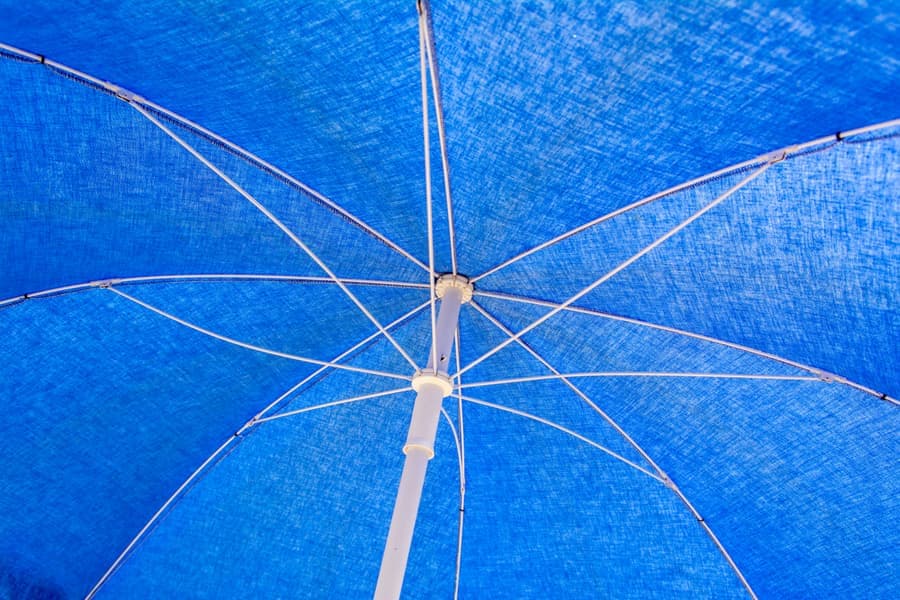
The Windscreen4less waterproof sail is the pick: a Terylene polyester panel with UV 95 and a three-year warranty. Pitch it steeply enough to drain — a flat waterproof sail pools, and a pool of water is a load no corner ring is rated for — and take it down before wind, because it catches everything a mesh would let through.
Our picks at a glance
| # | Structure | Best for | Fabric | Price |
|---|---|---|---|---|
| 01 | Windscreen4less Waterproof Shade SailA genuinely waterproof polyester sail rather than a breathable mesh — which means it sheds rain and catches wind in equal measure. | Top pick | Terylene polyester, waterproof, UV 95 | Check price on Amazon |
| 02 | 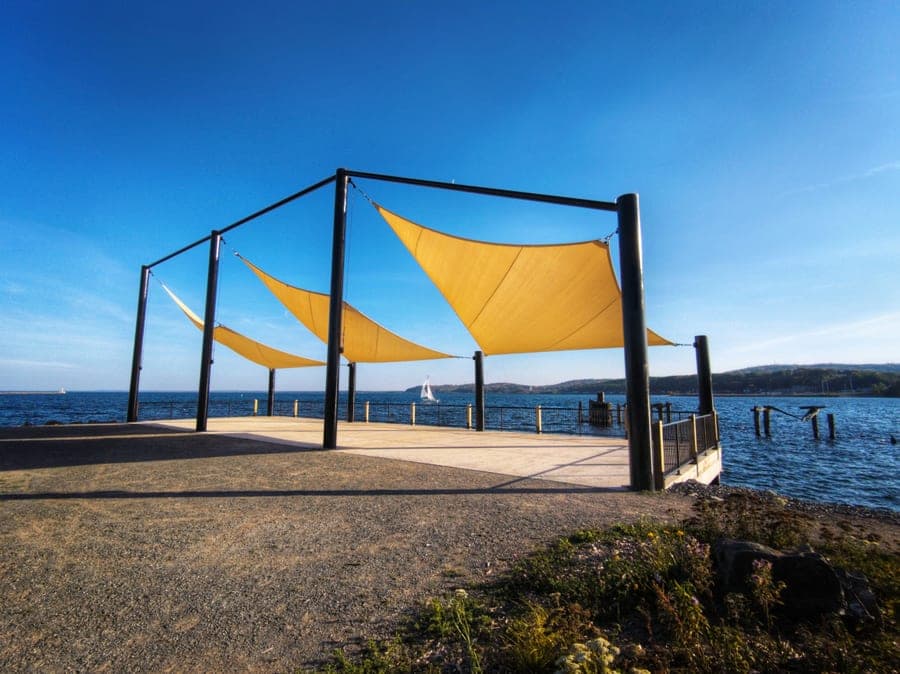 Windscreen4less Cable Shade Sail, 260 GSMThe heaviest fabric and the longest warranty of any sail here — seven years — and the only one with a galvanized cable sewn through the perimeter. | The better sail if you can live without waterproof | 260 GSM high-density polyethylene, UV 95 | Check price on Amazon |
| 03 | 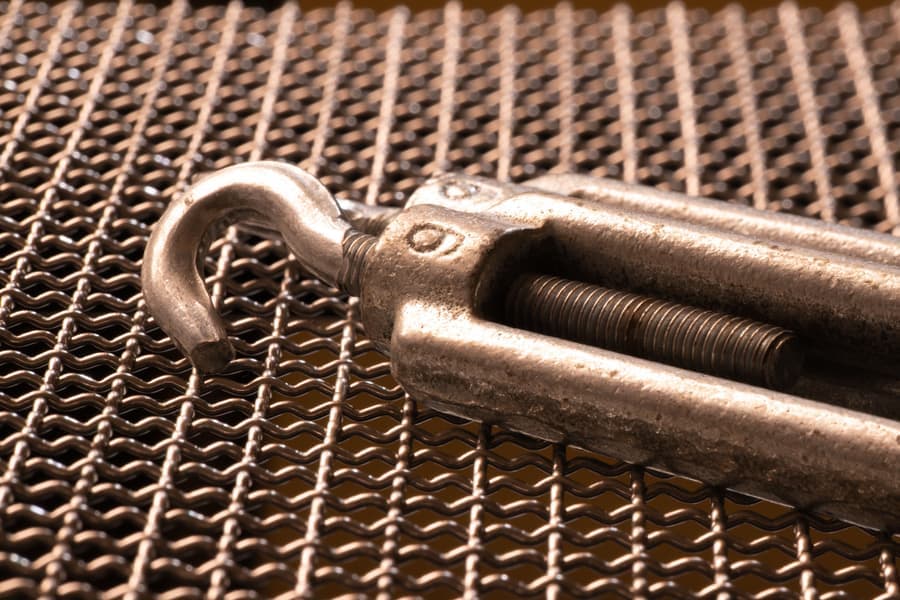 SUNNY GUARD Shade Sail Hardware Kit, 316 Stainless316 marine-grade stainless rather than 304 — the difference that decides whether your fixings survive a coastal or pool-side install. | Required, and more so here | Not published by manufacturer | Check price on Amazon |
| 04 | 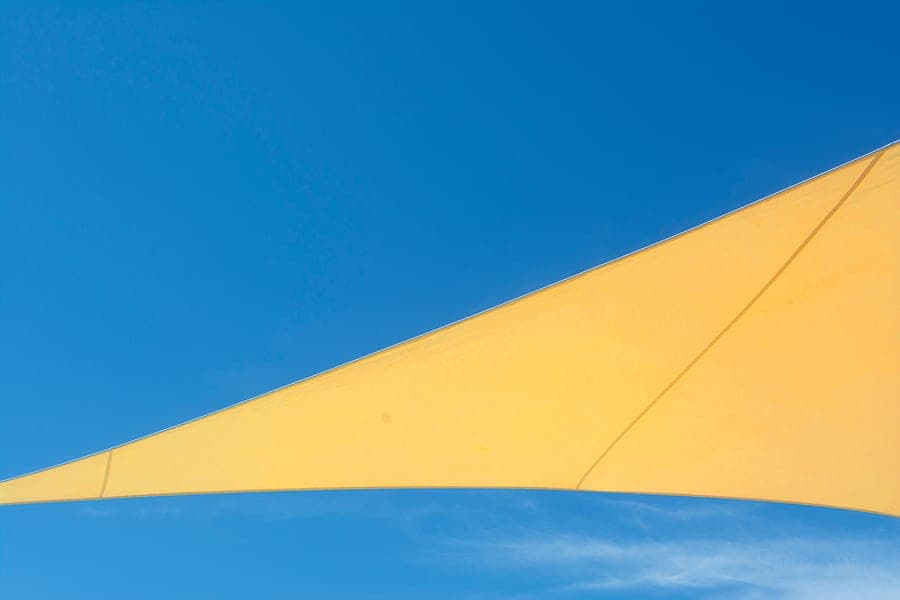 ColourTree Triangle Sun Shade Sail, 200 GSMA heavier 200 GSM fabric in the shape that tensions most predictably — three anchor points cannot fight each other the way four can. | Best shape for shedding water | 200 GSM HDPE, 95% UV block | Check price on Amazon |
The durability table
Every published figure we could source for these structures, in one place, with the manufacturer page each number came from. Where a cell reads "Not published by manufacturer", that figure does not exist in the manufacturer's own material — we do not estimate it and we do not copy one from another site.
| Model | Wind rating (mph) | Snow load | Frame | Roof | Anchoring required | Warranty | Spec source |
|---|---|---|---|---|---|---|---|
| Windscreen4less Waterproof Shade SailTop pick | Not published by manufacturer | Not published by manufacturer | Webbing-reinforced perimeter | Terylene polyester, waterproof, UV 95 | Not published by manufacturer | 3 years | Windscreen4less waterproof shade sails pageChecked 2026-09-26 |
| Windscreen4less Cable Shade Sail, 260 GSM | Not published by manufacturer | Not published by manufacturer | Steel-wired perimeter with galvanized cable and A-ring reinforcement | 260 GSM high-density polyethylene, UV 95 | Strengthened A-rings at the corners, steel wire reinforced edges | 7 years under normal weather conditions | Windscreen4less shade sails pageChecked 2026-09-26 |
| SUNNY GUARD Shade Sail Hardware Kit, 316 Stainless | Not published by manufacturer | Not published by manufacturer | 316 marine-grade stainless steel | Not published by manufacturer | Turnbuckles, pad eyes, snap hooks, screws and expansion anchors; sized for triangle sails under 161 sq ft | Not published by manufacturer | SUNNY GUARD hardware kit product pageChecked 2026-09-26 |
| ColourTree Triangle Sun Shade Sail, 200 GSM | Not published by manufacturer | Not published by manufacturer | No frame — breathable HDPE fabric | 200 GSM HDPE, 95% UV block | Stainless steel D-rings at the corners; hardware sold separately | 3 years | ColourTree triangle shade sail product pageChecked 2026-09-26 |
Every pick in full
Top pick
Windscreen4less Waterproof Shade Sail
A genuinely waterproof polyester sail rather than a breathable mesh — which means it sheds rain and catches wind in equal measure.
- Wind rating
- Not published by manufacturer
- Snow load
- Not published by manufacturer
- Frame
- Webbing-reinforced perimeter
- Roof
- Terylene polyester, waterproof, UV 95
- Anchoring
- Not published by manufacturer
- Warranty
- 3 years
- Sizes
- Not published by manufacturer
The only genuinely waterproof sail we can document from a manufacturer of record, and the specification is straightforward.
Terylene polyester, waterproof, UV 95, on a webbing-reinforced perimeter, under a three-year warranty. Terylene is a polyester — a woven, coated fabric rather than a mesh — which is what makes it waterproof and what makes it behave like a panel.
Windscreen4less does not publish a GSM for this line, which is a real gap: fabric weight is the durability specification in this category and its absence here means you cannot compare this sail to the mesh products on weight. We have recorded it as not published rather than assuming a figure.
UV 95 is the same rating as its 260 GSM cable mesh, which is a reasonable signal about the coating. UV resistance is what determines how fast fabric degrades, and on a coated polyester the coating is also what keeps it waterproof — so UV degradation and loss of waterproofing are the same clock here.
Pitch it properly and take it down before wind. Those two instructions carry more weight on a waterproof sail than on any mesh, and the sections below explain why.
Skip it if: Your site is exposed, or you cannot pitch it steeply. A flat waterproof sail pools, and a pooling sail fails at the corners.
#ad Price shown as of September 26, 2026. How this site is funded
Specifications from Windscreen4less waterproof shade sails page, checked 2026-09-26.
The better sail if you can live without waterproof
Windscreen4less Cable Shade Sail, 260 GSM
The heaviest fabric and the longest warranty of any sail here — seven years — and the only one with a galvanized cable sewn through the perimeter.
- Wind rating
- Not published by manufacturer
- Snow load
- Not published by manufacturer
- Frame
- Steel-wired perimeter with galvanized cable and A-ring reinforcement
- Roof
- 260 GSM high-density polyethylene, UV 95
- Anchoring
- Strengthened A-rings at the corners, steel wire reinforced edges
- Warranty
- 7 years under normal weather conditions
- Sizes
- Not published by manufacturer
Here because for a meaningful share of people wanting a waterproof sail, this is the better purchase — and we would rather say so.
260 GSM HDPE mesh, UV 95, galvanized cable and A-ring reinforcement, seven-year warranty. That is more than double the waterproof sail's warranty term, from the same manufacturer, with a published fabric weight the waterproof line does not have.
It is not waterproof. Rain passes through the mesh. What you get instead is the fabric weight, the cable edge, seven years of coverage, and a sail that spills wind rather than catching it — because air passes through a mesh and does not through a coated panel.
The question to ask yourself: do you need to stay dry, or do you need the rain not to bother you? If you want to eat outside during a shower, you need waterproof — or better, you need a roof. If you mostly want shade and would come inside in the rain anyway, the mesh is a longer-lived product.
And if you genuinely want to be dry reliably, the honest answer may be neither sail: see shade sail vs pergola.
Skip it if: You specifically need to stay dry under it. A mesh will not do that, at any weight.
#ad Price shown as of September 26, 2026. How this site is funded
Specifications from Windscreen4less shade sails page, checked 2026-09-26.
Required, and more so here
SUNNY GUARD Shade Sail Hardware Kit, 316 Stainless
316 marine-grade stainless rather than 304 — the difference that decides whether your fixings survive a coastal or pool-side install.
- Wind rating
- Not published by manufacturer
- Snow load
- Not published by manufacturer
- Frame
- 316 marine-grade stainless steel
- Roof
- Not published by manufacturer
- Anchoring
- Turnbuckles, pad eyes, snap hooks, screws and expansion anchors; sized for triangle sails under 161 sq ft
- Warranty
- Not published by manufacturer
- Sizes
- M6 turnbuckles, 6 in. to 8 in. adjustable range
The hardware matters on any sail and it matters more on a waterproof one, for a specific mechanical reason.
A waterproof sail carries loads a mesh does not. Wind loads it as a panel rather than passing through, and if it pools, the water sits on it as a concentrated weight that a mesh would simply have let through. Both loads end up at the corners, which means the corner hardware on a waterproof installation is working harder than the same hardware on a mesh.
Turnbuckles are what keep it drained. A sail that has stretched has lost its pitch, and a sail that has lost its pitch pools. So on a waterproof sail, re-tensioning is not just about preventing flogging — it is what maintains the geometry that stops water collecting. 316 marine-grade stainless rather than 304, with turnbuckles, pad eyes, snap hooks, screws and expansion anchors; M6 turnbuckles adjustable 6 to 8 inches, sized for triangles under 161 sq ft.
Size the hardware up for a waterproof sail of a given area compared with a mesh one. The kit that is adequate for a breathable sail is working closer to its limit on a panel that catches everything.
Skip it if: Your sail is larger than about 161 sq ft — buy heavier hardware, and err upwards on a waterproof sail.
#ad Price shown as of September 26, 2026. How this site is funded
Specifications from SUNNY GUARD hardware kit product page, checked 2026-09-26.
Best shape for shedding water
ColourTree Triangle Sun Shade Sail, 200 GSM
A heavier 200 GSM fabric in the shape that tensions most predictably — three anchor points cannot fight each other the way four can.
- Wind rating
- Not published by manufacturer
- Snow load
- Not published by manufacturer
- Frame
- No frame — breathable HDPE fabric
- Roof
- 200 GSM HDPE, 95% UV block
- Anchoring
- Stainless steel D-rings at the corners; hardware sold separately
- Warranty
- 3 years
- Sizes
- Not published by manufacturer
Not waterproof, and on this page for a geometric reason that applies to both fabric types.
A three-point sail is always a flat plane, which means it can always be pitched cleanly. Set one corner low and two high and you have a defined slope with a single low point for water to run to — no ambiguity, no saddle, no place for a pool to form.
A four-point sail is where pooling happens. Level all four corners and the middle sags; the sag is where water collects; the water stretches the fabric; the stretch deepens the sag. It is a feedback loop, and it is the classic waterproof-sail failure. Avoiding it requires setting two corners high and two low, and doing that carefully.
So if you are considering a waterproof sail and the shape is still open, a triangle is the geometry least likely to pool — and if you end up with a mesh instead, this is the 200 GSM HDPE version with 95% UV block, stainless D-rings and a three-year warranty.
The practical version of this advice: if you want waterproof over a rectangular table, consider two overlapping triangles rather than one rectangle.
Skip it if: You want waterproof specifically — this is a breathable mesh and rain goes through it.
#ad Price shown as of September 26, 2026. How this site is funded
Specifications from ColourTree triangle shade sail product page, checked 2026-09-26.
What changes when a sail becomes waterproof
It is easy to read waterproof as a straight upgrade. It is not — it is a different product with a different load case, and the differences all run in the same direction.
- It catches wind instead of spilling it. A breathable HDPE mesh lets air through; a coated polyester panel does not. Every bit of wind that a mesh would have passed now loads the fabric and ends up at the corners. This is the single biggest behavioural difference and it is why our high-wind roundup excludes waterproof sails entirely.
- It collects water if it is not pitched. A mesh cannot pool, because water passes through. A waterproof sail with insufficient slope pools, the weight stretches the fabric, the stretch deepens the pool, and the loop ends at a corner ring or a seam. Pitch is not a styling decision on a waterproof sail; it is a structural requirement.
- It is heavier and stiffer to handle. Coated polyester does not fold or flex like a mesh, which makes installation and taking it down harder — and taking it down is what you most need to be easy.
- It is hotter underneath. A breathable mesh lets hot air rise through it. A sealed panel traps it, which is why a waterproof sail over a still, enclosed patio can feel warmer than a mesh giving the same shade percentage.
- Its waterproofing has a clock. The coating is what makes it waterproof and it is also what UV degrades. When the coating goes, the sail stops being waterproof while still looking intact — which is a failure mode a mesh does not have.
Pitch: the thing that decides whether it works
If you buy a waterproof sail, this is the section that matters most. Almost every waterproof sail problem is a pitch problem.
A flat waterproof sail will pool. Not might — will, because fabric under tension still deflects under load, and any deflection in a waterproof surface becomes a collection point. Once water collects, its weight increases the deflection, which collects more water. The loop runs until something gives, and what gives is the corner hardware or the seam beside it.
So install it with a genuine, visible slope. The exact figure depends on your span and your fabric, and we are not going to invent a percentage — what we can tell you is the test: after installation, hose it and watch. Water should run off decisively to a defined low point, not hesitate anywhere. If it hesitates, the pitch is insufficient and you re-tension until it does not.
On a four-point sail, set two diagonally opposite corners high and two low. This builds a twist into the fabric that makes the surface stiffer and gives water an unambiguous path off. A four-point waterproof sail tensioned level is the specific installation that fails.
And re-check the pitch as the fabric stretches. A sail that drained perfectly in year one can pool in year two purely because it has relaxed — which is why turnbuckles at every corner are not optional on a waterproof sail. Shade sail sizing and tension covers the geometry.
When a waterproof sail is the right answer
There are genuine cases, and being clear about them is more useful than a general recommendation.
- Over a small, sheltered area you want to use in rain. A waterproof sail over a doorway, a hot tub, a grill station or a compact seating area, on a site with some wind protection, is exactly what the product is for.
- Where the alternative is nothing. If you cannot build a pergola — renting, no anchoring surface, an HOA restriction — a waterproof sail is the cheapest route to rain cover that exists. That is a real advantage.
- Where rain is the dominant problem and sun is secondary. A mesh is a better sun product; a coated panel is a better rain product. If you are covering something that must not get wet, the choice is obvious.
- As seasonal cover. A sail you put up for a wet season and take down is playing to its strengths — no long-term UV exposure, no wind exposure you did not choose.
- And where it is not the right answer: exposed sites, large spans, flat installations, and anywhere you actually want reliable long-term rain cover. For that last one, look at shade sail vs pergola — a closed louvered pergola publishing a 72 mph wind rating is a different class of product.
The honest alternative
If what you want is to sit outside in the rain, reliably, for years, a waterproof shade sail is the cheapest way to get partway there and not the way to get there.
A louvered pergola with integrated beam drainage gives you rain cover on demand, published wind ratings of 70-72 mph, and a roof you open before a storm. Domi publishes 15 lb/ft² of snow capacity alongside it. That is a structure; a waterproof sail is a fabric panel on flexible fixings with no published wind or snow figure at all.
A solid-roof patio cover gives permanent rain cover with no operating step for considerably less than a louvered pergola — Outsunny publishes a 10 lb/ft² roof capacity on its polycarbonate structure.
The case for the sail over either is cost, reversibility and not needing to anchor anything into concrete. Those are genuine, and for a renter or a temporary layout they are decisive.
We have no reason to steer you either way — every product link on this site pays the same rate. What we would not want is for you to buy a waterproof sail expecting it to be a roof, pitch it flat, leave it up through a storm, and conclude that shade sails are badly made.
What we cut, and why
Every model below was a genuine candidate and did not make the list. The reason is stated in each case, because a shortlist with no visible rejections is not evidence of a selection process.
- Waterproof sails with no published fabric specification
- Most of this sub-category publishes neither a GSM figure nor a UV rating nor a coating type — just the word "waterproof". With no fabric weight, no UV rating and often no warranty term, there is nothing to compare, and the coating is exactly the component that determines how long the sail stays waterproof.
- PVC and vinyl tarpaulin sails
- Genuinely waterproof and a different product: heavier, stiffer, and prone to cracking at fold lines as they age. We could not find one from a manufacturer publishing UV or warranty detail we were willing to cite for a residential shade application.
- Sails sold as "water resistant"
- A meaningfully different claim from waterproof, and almost never defined. A water-resistant mesh sheds a light shower and leaks under sustained rain, which is the worst of both worlds — you get the wind loading of a panel without reliable rain cover. If the listing will not say waterproof, treat it as breathable.
- Very large waterproof sails
- Area is the load twice over on a waterproof sail: more wind caught and more water collected. A large single waterproof span concentrates both on four corners, and the failure is usually at the corner or at whatever the corner was tied to. Two smaller sails is a better structure.
Questions people ask
What is the best waterproof shade sail?
Do waterproof shade sails actually keep rain off?
Are waterproof shade sails worse in wind?
How steep does a waterproof shade sail need to be?
Is a waterproof sail hotter underneath than a mesh?
How long does a waterproof shade sail stay waterproof?
Should I buy a waterproof or breathable shade sail?
Can I leave a waterproof shade sail up all year?
Where these figures came from
- Windscreen4less waterproof shade sails — Terylene polyester, waterproof, UV 95, 3-year warranty, webbing-reinforced perimeter
- Windscreen4less shade sails — 260 GSM cable line with UV 95 and a 7-year warranty, for comparison against the waterproof line
- SUNNY GUARD shade sail hardware kit — 316 marine-grade stainless, turnbuckles adjustable 6-8 in., kit contents and sizing
- ColourTree triangle shade sail — 200 GSM HDPE, 95% UV block, stainless D-rings, 3-year warranty
- Domi Outdoor Living louvered pergola — 72 mph, 15 lb/ft², integrated drainage, cited as the rain-cover alternative
- Outsunny hardtop pergola — solid polycarbonate with drainage, 10 lb/ft² roof capacity, cited as the rain-cover alternative
Found an error? Tell us and we will correct it within seven days and note the change on the page with a dated line — see our editorial policy.