Shade sail vs shade cloth
These are frequently the same material and almost never the same purchase. What separates them is the edge — and the edge is what decides whether you are buying a structure or a covering.
By Ryder M. · Published · Last updated
We compare published manufacturer specifications, warranty terms and owner-reported failure modes. We have not physically tested these structures. How we judge shade structures
Slat & Shade earns a commission on qualifying purchases made through links on this page. It costs you nothing extra and never changes what we recommend. Full disclosure
Part of Shade Sails
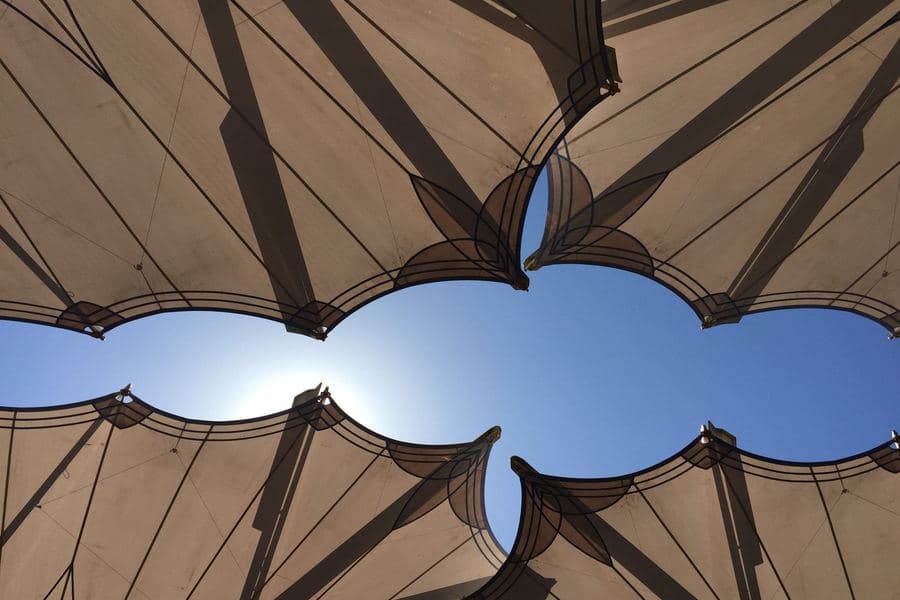
The short answer
Buy a shade sail if the fabric has to span open air between anchor points — it has a reinforced, cabled or webbed edge built to carry that tension. Buy shade cloth if it is going over a frame, hoops, a greenhouse or a fence, where there is no span to bridge and you want the density chosen for the job.
Our picks at a glance
| # | Structure | Best for | Fabric | Price |
|---|---|---|---|---|
| 01 | 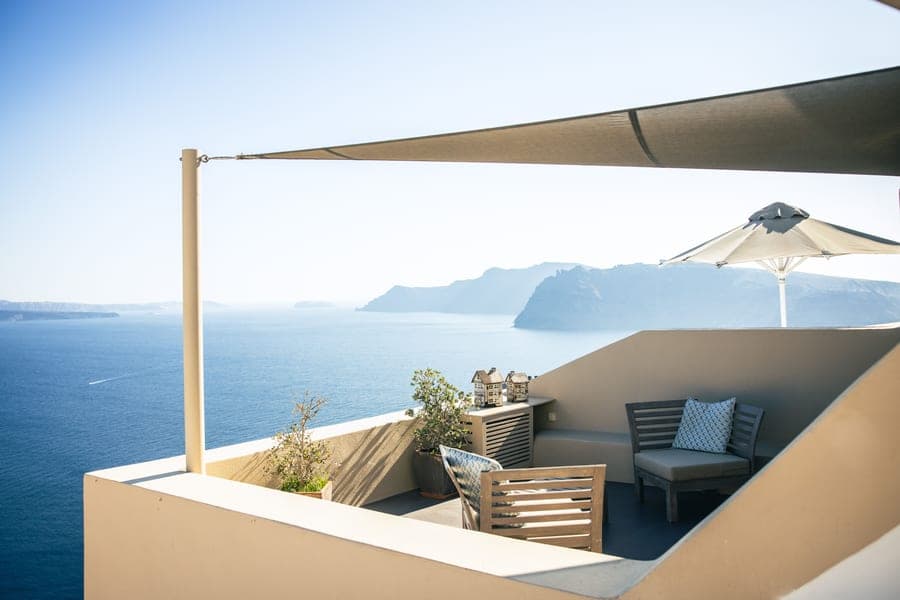 ColourTree Rectangle Sun Shade Sail, 190 GSMThe clearest published fabric spec in the category — 190 GSM virgin HDPE, 95% UV block, three-year warranty — with the hardware sold separately. | Buy this if the sail wins | 190 GSM HDPE mesh, 95% UV block, breathable | Check price on Amazon |
| 02 | 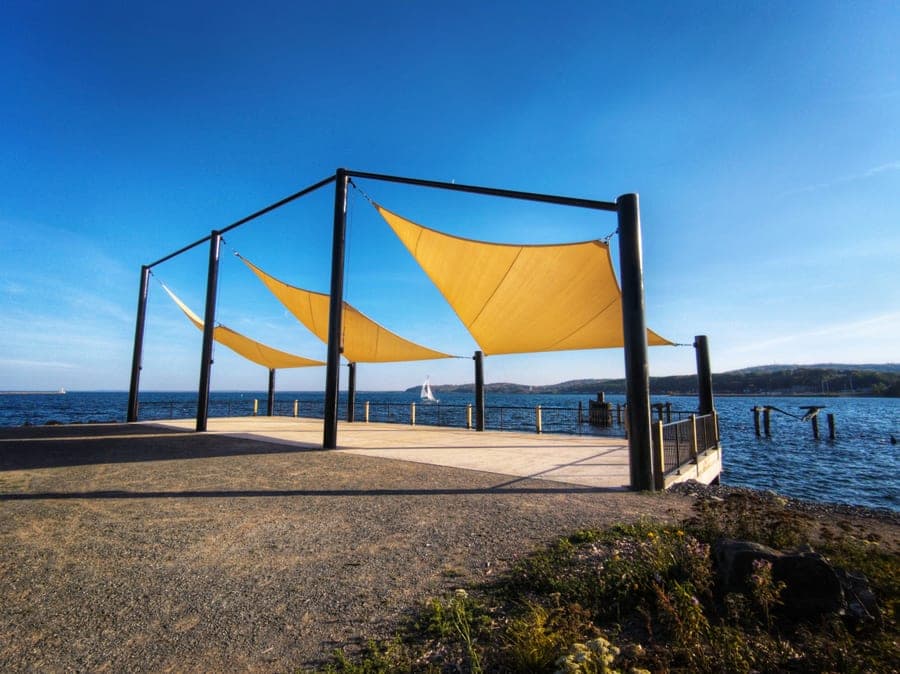 Windscreen4less Cable Shade Sail, 260 GSMThe heaviest fabric and the longest warranty of any sail here — seven years — and the only one with a galvanized cable sewn through the perimeter. | The sail edge taken seriously | 260 GSM high-density polyethylene, UV 95 | Check price on Amazon |
| 03 | 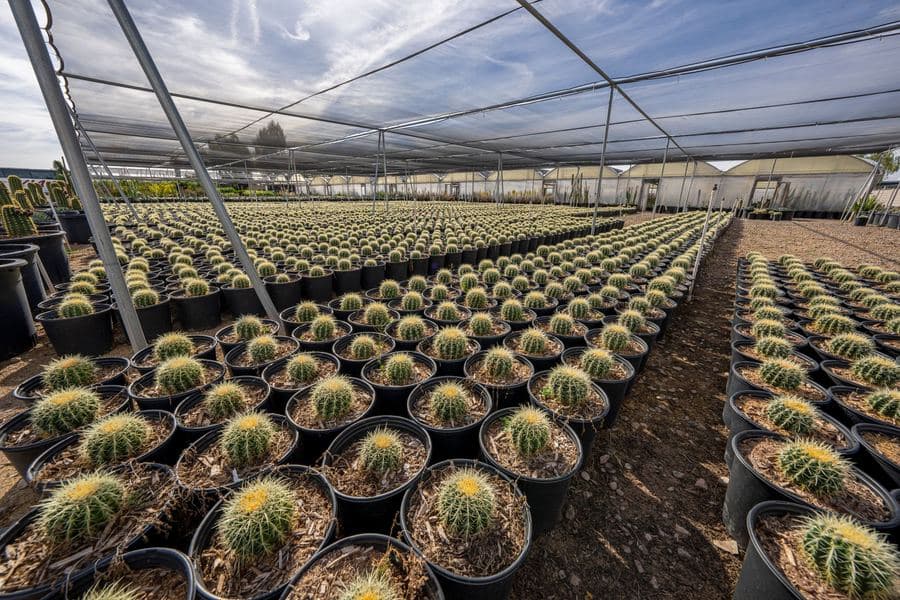 Coolaroo Garden Cover Shade Fabric, 50% UV BlockA fifteen-year fabric warranty against UV degradation on knitted HDPE — the longest published term on any shade fabric we track, at the density most vegetables want. | Buy this if the cloth wins | Knitted HDPE, up to 50% UV block, breathable to air and water | Check price on Amazon |
| 04 | 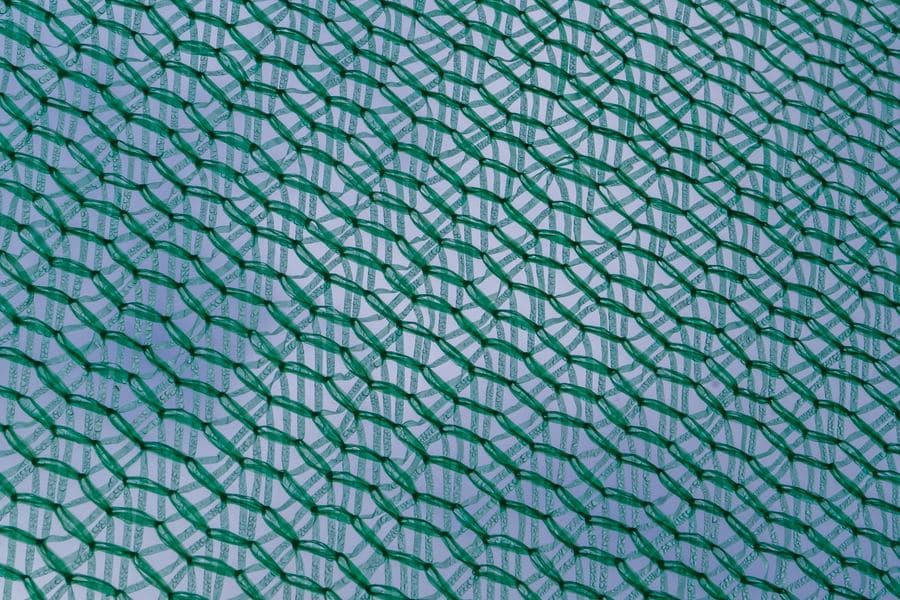 Windscreen4less Shade Fabric Cloth, 180 GSMThe only shade cloth here that publishes a GSM figure, and the only one sold cut to your dimensions — with a cut edge, which is the trade you are making. | Cloth cut to your dimensions | 180 GSM knitted polyethylene, 75% block rate, up to 95% UV stabilized | Check price on Amazon |
The durability table
Every published figure we could source for these structures, in one place, with the manufacturer page each number came from. Where a cell reads "Not published by manufacturer", that figure does not exist in the manufacturer's own material — we do not estimate it and we do not copy one from another site.
| Model | Wind rating (mph) | Snow load | Frame | Roof | Anchoring required | Warranty | Spec source |
|---|---|---|---|---|---|---|---|
| ColourTree Rectangle Sun Shade Sail, 190 GSMTop pick | Not published by manufacturer | Not published by manufacturer | No frame — 100% virgin (non-recycled) HDPE fabric, reinforced stitched seams | 190 GSM HDPE mesh, 95% UV block, breathable | Stainless steel D-ring at each corner; cable rope and hardware kits sold separately | 3 years under normal weather and usage | ColourTree rectangle shade sail product pageChecked 2026-09-26 |
| Windscreen4less Cable Shade Sail, 260 GSM | Not published by manufacturer | Not published by manufacturer | Steel-wired perimeter with galvanized cable and A-ring reinforcement | 260 GSM high-density polyethylene, UV 95 | Strengthened A-rings at the corners, steel wire reinforced edges | 7 years under normal weather conditions | Windscreen4less shade sails pageChecked 2026-09-26 |
| Coolaroo Garden Cover Shade Fabric, 50% UV Block | Not published by manufacturer | Not published by manufacturer | No frame — HDPE fabric in a knitted mono/mono construction | Knitted HDPE, up to 50% UV block, breathable to air and water | Not published by manufacturer | 15-year fabric warranty against cracks, splits and tears due to UV degradation | Coolaroo Garden Cover 50% UV Block product pageChecked 2026-09-29 |
| Windscreen4less Shade Fabric Cloth, 180 GSM | Not published by manufacturer | Not published by manufacturer | No frame — 100% UV stabilized polyethylene in a lock-stitch knitted construction | 180 GSM knitted polyethylene, 75% block rate, up to 95% UV stabilized | Cut edge, no edge taping — grommets, tape and fixings are a separate purchase | 3-year limited warranty | Windscreen4less shade fabric cloth product pageChecked 2026-09-29 |
Every pick in full
Buy this if the sail wins
ColourTree Rectangle Sun Shade Sail, 190 GSM
The clearest published fabric spec in the category — 190 GSM virgin HDPE, 95% UV block, three-year warranty — with the hardware sold separately.
- Wind rating
- Not published by manufacturer
- Snow load
- Not published by manufacturer
- Frame
- No frame — 100% virgin (non-recycled) HDPE fabric, reinforced stitched seams
- Roof
- 190 GSM HDPE mesh, 95% UV block, breathable
- Anchoring
- Stainless steel D-ring at each corner; cable rope and hardware kits sold separately
- Warranty
- 3 years under normal weather and usage
- Sizes
- 14 sizes, 8 x 10 ft to 16 x 20 ft
A shade sail is a finished structural panel, and everything that distinguishes it from a roll of cloth is at the edge.
190 GSM 100% virgin (non-recycled) HDPE mesh at 95% UV block, with reinforced stitched seams and stainless steel D-rings at every corner. The D-rings are the point: they are load-bearing fittings sewn into a reinforced corner, designed to take the whole tension of the panel through a single hardware connection.
That is what lets a sail span open air. Tension it between four anchors and the reinforced edge carries the curve; the fabric in the middle does almost no structural work. A piece of shade cloth with grommets punched into it cannot do this — the load arrives at small holes in unreinforced fabric and tears them out.
Breathable mesh means a gust passes through instead of lifting the panel, which is the second reason a sail survives spans that a solid cover would not.
3 years under normal weather and usage, and fourteen sizes from 8 x 10 ft to 16 x 20 ft. The hardware is sold separately, which is the standard arrangement and a real additional cost.
Skip it if: The fabric is going over a frame or hoops rather than spanning open air. You would be paying for an edge doing no work.
#ad Price shown as of September 26, 2026. How this site is funded
Specifications from ColourTree rectangle shade sail product page, checked 2026-09-26.
The sail edge taken seriously
Windscreen4less Cable Shade Sail, 260 GSM
The heaviest fabric and the longest warranty of any sail here — seven years — and the only one with a galvanized cable sewn through the perimeter.
- Wind rating
- Not published by manufacturer
- Snow load
- Not published by manufacturer
- Frame
- Steel-wired perimeter with galvanized cable and A-ring reinforcement
- Roof
- 260 GSM high-density polyethylene, UV 95
- Anchoring
- Strengthened A-rings at the corners, steel wire reinforced edges
- Warranty
- 7 years under normal weather conditions
- Sizes
- Not published by manufacturer
If the argument for a sail is the edge, this is the strongest version of it: a galvanized cable sewn through the entire perimeter with strengthened A-rings at the corners.
A cable edge carries tension through steel around the whole panel rather than through fabric stitching. The practical difference shows up at the corners, where a stitched-edge sail concentrates load into the last inch of cloth and a cabled one does not. On any span over about twelve feet, or on any exposed site, this is the construction that lasts.
260 GSM high-density polyethylene at UV 95 — the heaviest fabric we track, roughly forty percent more than the ColourTree rectangle — which holds its shape under tension instead of stretching and starting to flog.
Seven years under normal weather conditions, against the three years that the rest of the sail category publishes and the three years Windscreen4less publishes on its own shade cloth. That is the same manufacturer rating its sail at more than twice the term of its cloth, which is a useful way to read the difference between the two products.
No size range is published on the manufacturer's page, which is the gap.
Skip it if: Your span is short and sheltered. A cable-edged 260 GSM sail is more structure than a courtyard needs.
#ad Price shown as of September 26, 2026. How this site is funded
Specifications from Windscreen4less shade sails page, checked 2026-09-26.
Buy this if the cloth wins
Coolaroo Garden Cover Shade Fabric, 50% UV Block
A fifteen-year fabric warranty against UV degradation on knitted HDPE — the longest published term on any shade fabric we track, at the density most vegetables want.
- Wind rating
- Not published by manufacturer
- Snow load
- Not published by manufacturer
- Frame
- No frame — HDPE fabric in a knitted mono/mono construction
- Roof
- Knitted HDPE, up to 50% UV block, breathable to air and water
- Anchoring
- Not published by manufacturer
- Warranty
- 15-year fabric warranty against cracks, splits and tears due to UV degradation
- Sizes
- 6 x 15 ft, 6 x 100 ft and 12 x 50 ft
Shade cloth is fabric by the roll, and everything that distinguishes it from a sail is that it does not have to hold itself up.
Knitted HDPE in a mono/mono construction, up to 50% UV block, breathable to air and water. Over hoops, over a greenhouse, over a frame or along a fence, the structure is already there — the cloth is a covering, and the whole cost of a reinforced edge and load-bearing corner rings buys you nothing.
What you get instead is choice of density, which is the thing sails do not offer. Shade sails come at one shade percentage, effectively "a lot". Shade cloth is sold at 30%, 50%, 70% and 90%, and over anything you are growing that is not a nicety — it is the difference between a harvest and green leaves. Best shade cloth for gardens covers which density for which crop.
Fifteen years of fabric warranty against cracks, splits and tears due to UV degradation — the longest published term on any shade fabric on this site, and five times what the sail category manages.
Sizes 6 x 15 ft, 6 x 100 ft and 12 x 50 ft. Long rolls, because cloth is bought by the run rather than by the panel.
Skip it if: The fabric has to span between posts with nothing underneath it. Cloth has no edge structure and grommets in unreinforced fabric tear out.
#ad Price shown as of September 26, 2026. How this site is funded
Specifications from Coolaroo Garden Cover 50% UV Block product page, checked 2026-09-29.
Cloth cut to your dimensions
Windscreen4less Shade Fabric Cloth, 180 GSM
The only shade cloth here that publishes a GSM figure, and the only one sold cut to your dimensions — with a cut edge, which is the trade you are making.
- Wind rating
- Not published by manufacturer
- Snow load
- Not published by manufacturer
- Frame
- No frame — 100% UV stabilized polyethylene in a lock-stitch knitted construction
- Roof
- 180 GSM knitted polyethylene, 75% block rate, up to 95% UV stabilized
- Anchoring
- Cut edge, no edge taping — grommets, tape and fixings are a separate purchase
- Warranty
- 3-year limited warranty
- Sizes
- Custom cut, 6-24 ft wide by 1-300 ft long
The clearest illustration of what cloth is: custom, 6 to 24 ft wide by 1 to 300 ft long, cut edge, no edge taping.
"No edge taping" is the whole distinction in three words. This is fabric, sold by area, with the finishing left to you. A knitted lock-stitch construction means a cut edge will not unravel — which is what makes selling it this way viable — but there is no reinforcement, no corner ring and nothing to tension from.
180 GSM knitted polyethylene, 75% block rate, up to 95% UV stabilized. That is a lighter fabric than either sail above, which is appropriate: cloth over a frame carries no tension, so fabric weight is about abrasion resistance rather than structural performance.
A 3-year limited warranty, from the same manufacturer that publishes seven years on its cable sail. The difference is not the polyethylene — it is the edge, and what the edge is expected to survive.
Grommets, tape and fixings are all a separate purchase, which is the honest cost of cloth for anyone planning to hang it rather than drape it.
Skip it if: You want something you can put up this afternoon. Finishing the edges on a large cut piece is real work.
#ad Price shown as of September 26, 2026. How this site is funded
Specifications from Windscreen4less shade fabric cloth product page, checked 2026-09-29.
Same fabric, different product
It is worth being clear about how much overlap there actually is, because it explains the confusion.
The material is frequently identical. Knitted high-density polyethylene, UV-stabilised, breathable, in a lock-stitch construction that will not unravel. Windscreen4less sells both from the same catalogue in the same polyethylene. Coolaroo's knitted HDPE goes into garden cloth and into ready-to-hang sails.
What differs is everything at the perimeter. A sail has a reinforced, webbed or cabled edge and load-bearing corner rings, because it is built to be suspended between anchor points with nothing underneath it. Cloth has a cut or simply finished edge, because something else is holding it up.
That single difference cascades into everything else: how it is sold, how long it is warranted, what densities exist, and what it costs. A sail is priced as a finished structure; cloth is priced by area.
And it is why "which is better" is the wrong question. They answer different questions, and buying the wrong one is usually not a compromise — it is a failure. A sail over a greenhouse roof is expensive and the wrong density; cloth tensioned between two posts tears out its fixings.
The comparison in one table
Published specifications only, from the manufacturers' own material.
| Shade sail | Shade cloth | |
|---|---|---|
| Edge | Reinforced, webbed or cabled, with load-bearing corner rings | Cut or simply finished; no reinforcement |
| What holds it up | Its own tension between anchor points | A frame, hoops, glazing or a fence |
| Fabric weight | 190-260 GSM across the sails here | 180 GSM published; Coolaroo publishes construction rather than GSM |
| Density options | Effectively one — 95% UV block | 30%, 50%, 70%, 75%, 90% |
| Warranty | 3 years typical, 7 years on the cable sail | 3 years on cut-edge cloth, 15 years on Coolaroo's 50% and 90% |
| Sold as | Finished panels in set sizes | Rolls and custom cuts by area |
| Hardware | Sold separately; 316 stainless recommended | Grommets, tape and ties all separate |
The density row is the one most people have not thought about. Shade sails come at one shade percentage. Cloth comes at five. Over anything you are growing, that is the whole decision — 90% over a vegetable bed produces healthy green plants and almost nothing to pick.
And the warranty row is not what it looks like. Coolaroo's fifteen years on cloth against Windscreen4less's seven on a cable sail is not cloth being the better product. It is the two manufacturers rating two different failure modes: UV degradation of unstressed fabric, against UV plus continuous tension plus flogging.
Which one for your actual job
Six common jobs and the honest answer for each.
- Shading a patio between the house and two posts — sail. There is open air under the fabric and nothing to carry it but its own edge. This is exactly what a sail is for. Best shade sails for patios covers the shape and span problem.
- Shading a vegetable bed over hoops — cloth. The hoops do the structural work, and you want to choose 30% or 50% rather than accepting 95%. A sail here would be an expensive covering at the wrong density.
- Shading a greenhouse — cloth. It goes over the glazing, which is already a structure, and the density needs to match what is growing. Fitting a sail over a greenhouse roof would cost more and shade it wrong.
- A pergola roof — either, and it depends on span. Over a small pergola, cloth laced to the beams is cheaper and lets you pick the density. Over a large one with beams far apart, the fabric is spanning open air between them and wants a sail's edge.
- A fence or a screen — cloth. There is a structure to fix to along its whole length, and no tension to carry. This is exactly what Coolaroo's 70% screening line exists for.
- A carport or a pen — usually cloth over the existing frame, unless the frame is only at the perimeter, in which case you are spanning and you want a sail.
The verdict
Buy a shade sail when the fabric has to hold itself up. If there is open air under the middle of the panel and nothing but anchor points at the edges, the reinforced, cabled or webbed perimeter is not an upgrade — it is the product, and nothing else does the job. Cloth with grommets in this situation fails, usually in the first season, usually at the corners.
Buy shade cloth when something else is holding it up. Hoops, a greenhouse, a frame, a fence, a pergola with closely spaced beams. In all of those, a sail's edge is doing no work and you are paying for structure you do not need — while giving up the density choice that is the entire reason to shade a plant rather than a person.
If the fabric is going over plants, it is almost always cloth. Density is the specification that matters and sails only come in one. 30% over fruiting crops, 50% over most vegetables, 70% over seedlings — a 95% sail over any of them is the wrong tool used expensively.
If the fabric is going over people, it is almost always a sail. You want 95% block, you want it spanning a seating area, and you want an edge that survives being tensioned for ten summers.
And if you are genuinely between the two, look at what is directly under the middle of the fabric. If the answer is "nothing", buy a sail. If the answer is "a frame", buy cloth. That one question resolves it more reliably than any specification on this page.
What we cut, and why
Every model below was a genuine candidate and did not make the list. The reason is stated in each case, because a shortlist with no visible rejections is not evidence of a selection process.
- Shade cloth with grommets, sold as a sail substitute
- This is the product that causes the problem this page exists to prevent. A rectangle of cloth with metal grommets punched along the edge looks like a cheap sail and is not one — the load arrives at small holes in unreinforced fabric and pulls them out, usually in the first strong gust of the first season.
- Waterproof sails and covers, on either side
- Solid fabric changes the comparison enough that it needs its own page. A waterproof panel transfers every bit of wind load into its anchors instead of letting it through, and over plants it stops rain reaching them. [HDPE vs waterproof shade fabric](/shade-sails/hdpe-vs-waterproof-shade-fabric) is where that argument lives.
- Woven fabric of either kind
- Woven material frays from any cut or tear and the tear runs. Everything on this page is knitted, which locks at the stitch and stops. On a sail it decides whether a snag ends the panel; on cloth it is what makes cut-to-size possible at all.
Questions people ask
What is the difference between a shade sail and shade cloth?
Can you use shade cloth as a shade sail?
Are shade sails and shade cloth the same material?
Which lasts longer, a shade sail or shade cloth?
Is shade cloth cheaper than a shade sail?
What shade percentage do shade sails come in?
Can shade cloth go over a pergola?
Do you need hardware for shade cloth?
Where these figures came from
- ColourTree rectangle sun shade sail — 190 GSM virgin HDPE, 95% UV block, reinforced stitched seams, stainless D-rings, 3-year warranty, 14 sizes
- Windscreen4less shade sails — 260 GSM cable sail with galvanized cable perimeter and A-rings, UV 95, 7-year warranty
- Coolaroo Garden Cover Shade Fabric, 50% UV Block — knitted mono/mono HDPE, 15-year fabric warranty against UV degradation, sizes
- Windscreen4less shade fabric cloth — 180 GSM knitted polyethylene, 75% block rate, cut edge with no edge taping, 3-year limited warranty, custom sizing
- Coolaroo Sun Protection Fabric, 90% UV Block — knitted tape/mono HDPE, 15-year fabric warranty, cited for the density range comparison
Found an error? Tell us and we will correct it within seven days and note the change on the page with a dated line — see our editorial policy.