Shade sail hardware guide
The sail is the cheap half of this purchase. The fixings are what decide whether it lasts three seasons or seven, and almost nobody buys them at the same time.
By Ryder M. · Published · Last updated
We compare published manufacturer specifications, warranty terms and owner-reported failure modes. We have not physically tested these structures. How we judge shade structures
Slat & Shade earns a commission on qualifying purchases made through links on this page. It costs you nothing extra and never changes what we recommend. Full disclosure
Part of Shade Sails
The short answer
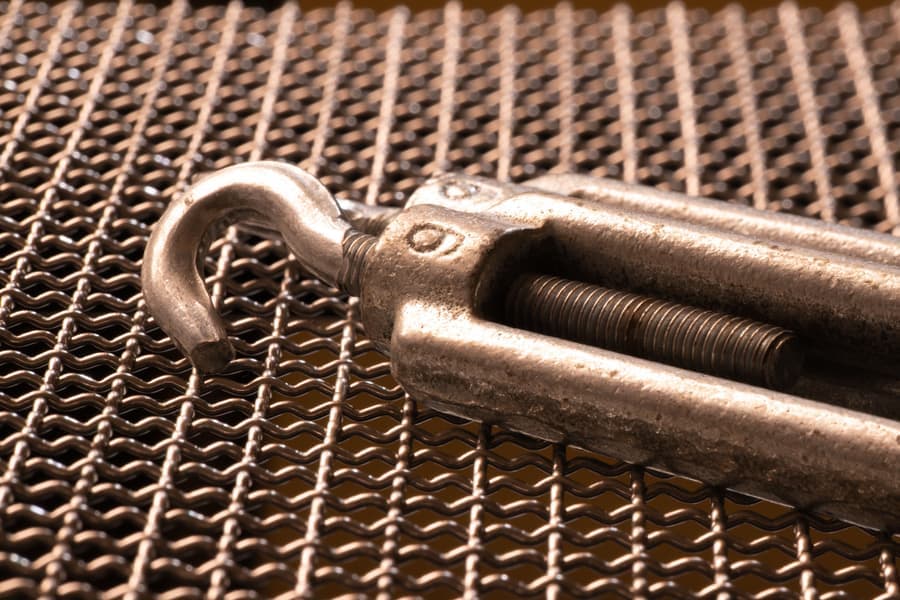
You need a turnbuckle at every corner, because fabric stretches and a turnbuckle is the only way to take that stretch back out. Buy 316 marine-grade stainless rather than 304 if you are near salt air or a pool, and size the hardware to the sail — most kits are specified for triangles under about 161 sq ft.
Our picks at a glance
| # | Structure | Best for | Fabric | Price |
|---|---|---|---|---|
| 01 | SUNNY GUARD Shade Sail Hardware Kit, 316 Stainless316 marine-grade stainless rather than 304 — the difference that decides whether your fixings survive a coastal or pool-side install. | Top pick | Not published by manufacturer | Check price on Amazon |
| 02 | 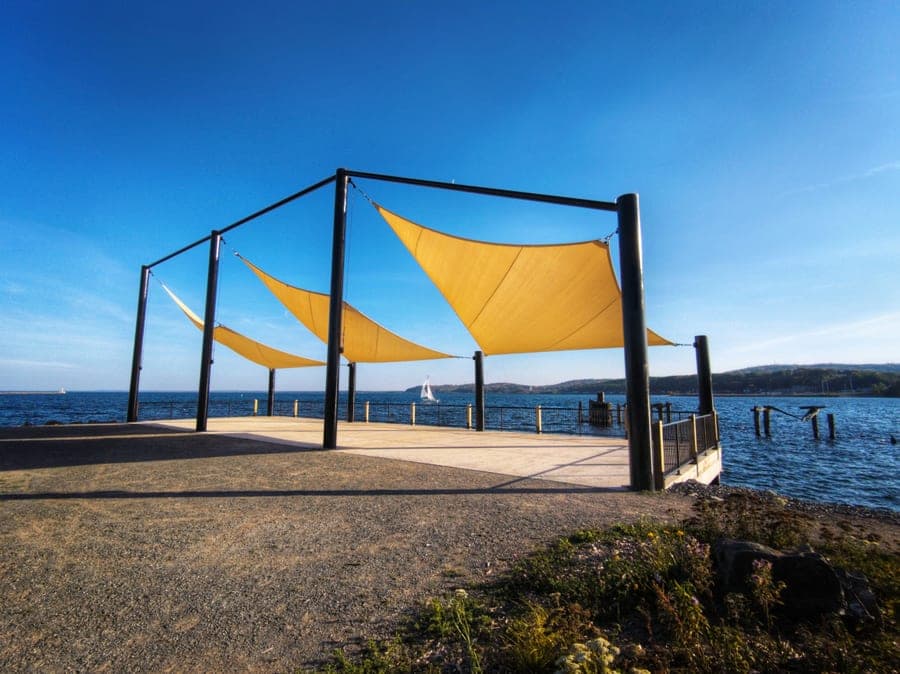 Windscreen4less Cable Shade Sail, 260 GSMThe heaviest fabric and the longest warranty of any sail here — seven years — and the only one with a galvanized cable sewn through the perimeter. | The sail that needs the least extra hardware | 260 GSM high-density polyethylene, UV 95 | Check price on Amazon |
| 03 | 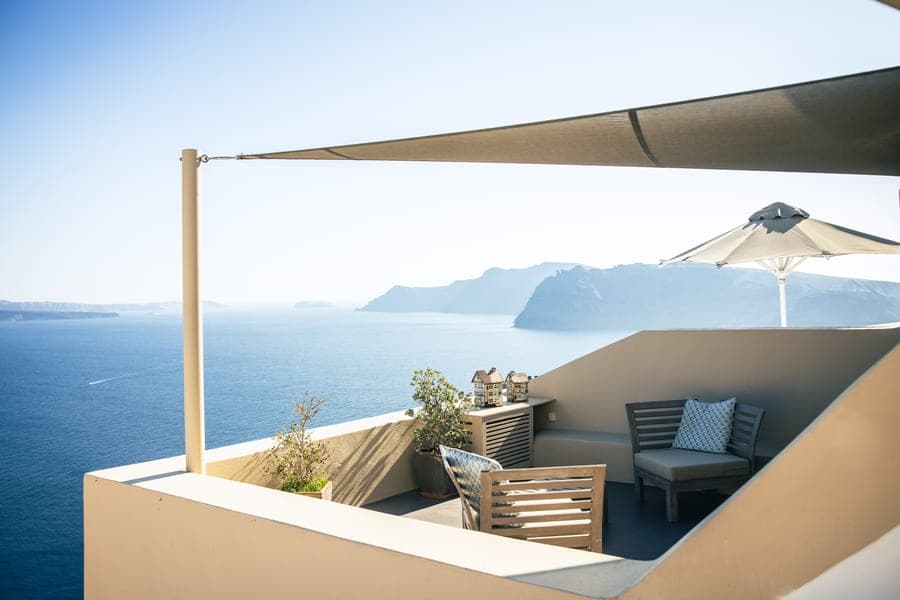 ColourTree Rectangle Sun Shade Sail, 190 GSMThe clearest published fabric spec in the category — 190 GSM virgin HDPE, 95% UV block, three-year warranty — with the hardware sold separately. | What most sails give you, and what they don't | 190 GSM HDPE mesh, 95% UV block, breathable | Check price on Amazon |
| 04 | 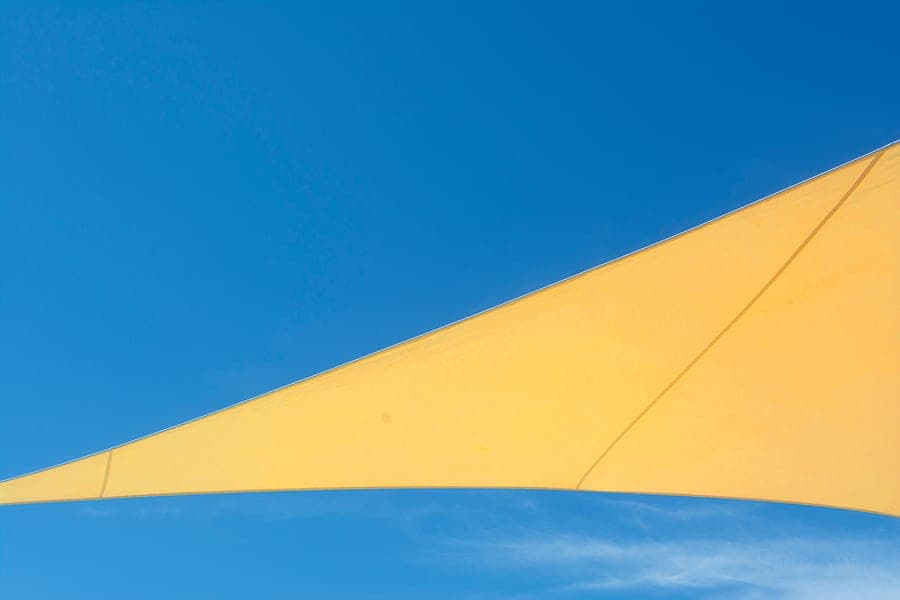 ColourTree Triangle Sun Shade Sail, 200 GSMA heavier 200 GSM fabric in the shape that tensions most predictably — three anchor points cannot fight each other the way four can. | Fewest fixings to get right | 200 GSM HDPE, 95% UV block | Check price on Amazon |
The durability table
Every published figure we could source for these structures, in one place, with the manufacturer page each number came from. Where a cell reads "Not published by manufacturer", that figure does not exist in the manufacturer's own material — we do not estimate it and we do not copy one from another site.
| Model | Wind rating (mph) | Snow load | Frame | Roof | Anchoring required | Warranty | Spec source |
|---|---|---|---|---|---|---|---|
| SUNNY GUARD Shade Sail Hardware Kit, 316 StainlessTop pick | Not published by manufacturer | Not published by manufacturer | 316 marine-grade stainless steel | Not published by manufacturer | Turnbuckles, pad eyes, snap hooks, screws and expansion anchors; sized for triangle sails under 161 sq ft | Not published by manufacturer | SUNNY GUARD hardware kit product pageChecked 2026-09-26 |
| Windscreen4less Cable Shade Sail, 260 GSM | Not published by manufacturer | Not published by manufacturer | Steel-wired perimeter with galvanized cable and A-ring reinforcement | 260 GSM high-density polyethylene, UV 95 | Strengthened A-rings at the corners, steel wire reinforced edges | 7 years under normal weather conditions | Windscreen4less shade sails pageChecked 2026-09-26 |
| ColourTree Rectangle Sun Shade Sail, 190 GSM | Not published by manufacturer | Not published by manufacturer | No frame — 100% virgin (non-recycled) HDPE fabric, reinforced stitched seams | 190 GSM HDPE mesh, 95% UV block, breathable | Stainless steel D-ring at each corner; cable rope and hardware kits sold separately | 3 years under normal weather and usage | ColourTree rectangle shade sail product pageChecked 2026-09-26 |
| ColourTree Triangle Sun Shade Sail, 200 GSM | Not published by manufacturer | Not published by manufacturer | No frame — breathable HDPE fabric | 200 GSM HDPE, 95% UV block | Stainless steel D-rings at the corners; hardware sold separately | 3 years | ColourTree triangle shade sail product pageChecked 2026-09-26 |
Every pick in full
Top pick
SUNNY GUARD Shade Sail Hardware Kit, 316 Stainless
316 marine-grade stainless rather than 304 — the difference that decides whether your fixings survive a coastal or pool-side install.
- Wind rating
- Not published by manufacturer
- Snow load
- Not published by manufacturer
- Frame
- 316 marine-grade stainless steel
- Roof
- Not published by manufacturer
- Anchoring
- Turnbuckles, pad eyes, snap hooks, screws and expansion anchors; sized for triangle sails under 161 sq ft
- Warranty
- Not published by manufacturer
- Sizes
- M6 turnbuckles, 6 in. to 8 in. adjustable range
The kit we would buy, and the specification that matters is the steel grade.
316 marine-grade stainless steel, not 304. The difference shows up wherever there is salt air or pool chemistry: 316 contains molybdenum and resists chloride pitting that will mark 304 within a couple of seasons. Corrosion at the corner is the most common failure point in a shade sail installation, so this is the one component where the grade decides the outcome.
The kit covers everything you need at the corners: turnbuckles, pad eyes, snap hooks, screws and plastic expansion anchors, with M6 turnbuckles adjustable from 6 to 8 inches — that adjustment range being the whole point, because it is what lets you take up the stretch.
It is specified for triangle sails under 161 sq ft, which is a real limit and worth respecting. Hardware rated for a small triangle on a large sail is the weakest link in the installation, and the weakest link is where it fails.
What it does not include is cable rope, which most sails also need and which ColourTree in particular sells separately. Check what you are buying before you start the job rather than halfway through it.
Skip it if: Your sail is larger than about 161 sq ft — buy proportionally heavier hardware rather than using this and hoping.
#ad Price shown as of September 26, 2026. How this site is funded
Specifications from SUNNY GUARD hardware kit product page, checked 2026-09-26.
The sail that needs the least extra hardware
Windscreen4less Cable Shade Sail, 260 GSM
The heaviest fabric and the longest warranty of any sail here — seven years — and the only one with a galvanized cable sewn through the perimeter.
- Wind rating
- Not published by manufacturer
- Snow load
- Not published by manufacturer
- Frame
- Steel-wired perimeter with galvanized cable and A-ring reinforcement
- Roof
- 260 GSM high-density polyethylene, UV 95
- Anchoring
- Strengthened A-rings at the corners, steel wire reinforced edges
- Warranty
- 7 years under normal weather conditions
- Sizes
- Not published by manufacturer
Worth considering as a hardware decision rather than a fabric one: this sail arrives with a substantial part of the load path already built in.
A galvanized cable runs through the perimeter hem, terminated into strengthened A-rings at the corners. That means the edge tension is carried by the cable rather than by stitched webbing, and the corner load is spread along the edge rather than concentrated at a stitched ring.
In hardware terms, the A-ring is the upgrade. A D-ring stitched to a webbing corner concentrates all the tension at that stitching — and the stitching beside a corner ring is where sails most often tear. An A-ring with a cable terminated into it distributes that load into the perimeter.
So on this sail your hardware is doing less work: you still need a turnbuckle at each corner and a fixing at each attachment point, but the sail itself is not relying on your fixings to hold its shape.
260 GSM HDPE, UV 95, seven-year warranty — the longest in the category, from a manufacturer that covers its webbing-edged line for three.
Skip it if: You want the cheapest route to shade. A cable-edged sail costs more and is heavier to handle.
#ad Price shown as of September 26, 2026. How this site is funded
Specifications from Windscreen4less shade sails page, checked 2026-09-26.
What most sails give you, and what they don't
ColourTree Rectangle Sun Shade Sail, 190 GSM
The clearest published fabric spec in the category — 190 GSM virgin HDPE, 95% UV block, three-year warranty — with the hardware sold separately.
- Wind rating
- Not published by manufacturer
- Snow load
- Not published by manufacturer
- Frame
- No frame — 100% virgin (non-recycled) HDPE fabric, reinforced stitched seams
- Roof
- 190 GSM HDPE mesh, 95% UV block, breathable
- Anchoring
- Stainless steel D-ring at each corner; cable rope and hardware kits sold separately
- Warranty
- 3 years under normal weather and usage
- Sizes
- 14 sizes, 8 x 10 ft to 16 x 20 ft
Included because it is representative of what you actually get in the box, and because ColourTree is unusually clear about it.
You get a stainless steel D-ring at each corner and reinforced stitched seams. That is the sail's contribution to the load path — and it is genuinely useful that the rings are stainless rather than plated, because a plated ring in a corner is a corrosion point inside the hem.
Cable rope and hardware kits are sold separately, which ColourTree states plainly. A lot of first-time buyers discover this mid-installation, and it is the single most common surprise in this category.
So plan the purchase as two things: the sail, and then a turnbuckle plus a fixing for every corner, in a grade suited to your environment. On a rectangle that is four of each, and if you are spanning to existing structures you may need cable for the edges too.
190 GSM 100% virgin non-recycled HDPE, 95% UV block, three-year warranty, fourteen sizes from 8 x 10 ft to 16 x 20 ft.
Skip it if: You want a complete out-of-the-box installation — this needs a separate hardware purchase, like almost every sail.
#ad Price shown as of September 26, 2026. How this site is funded
Specifications from ColourTree rectangle shade sail product page, checked 2026-09-26.
Fewest fixings to get right
ColourTree Triangle Sun Shade Sail, 200 GSM
A heavier 200 GSM fabric in the shape that tensions most predictably — three anchor points cannot fight each other the way four can.
- Wind rating
- Not published by manufacturer
- Snow load
- Not published by manufacturer
- Frame
- No frame — breathable HDPE fabric
- Roof
- 200 GSM HDPE, 95% UV block
- Anchoring
- Stainless steel D-rings at the corners; hardware sold separately
- Warranty
- 3 years
- Sizes
- Not published by manufacturer
On a hardware page, three corners rather than four is a real advantage: 25% fewer fixings, and no geometric fight between them.
A three-point sail is always a flat plane, so all three corners can be tensioned hard and the fabric sits taut. That means your hardware is working with the geometry rather than against it. On a four-point sail, level tension produces slack in the middle, and correcting it means setting two corners high and two low — which your fixings then have to hold at different heights and angles.
Fewer, better fixings beats more, cheaper ones. If you are buying 316 stainless turnbuckles, three of them on a triangle is a materially smaller purchase than four on a rectangle, which makes stepping up in grade easier to justify.
200 GSM HDPE with 95% UV block, stainless steel D-rings at the corners, three-year warranty. Hardware sold separately.
The practical recommendation for a first installation: one triangle, three 316 stainless turnbuckles, and attachment points you are confident in.
Skip it if: You need to cover a rectangle efficiently — two triangles means six fixings, not three.
#ad Price shown as of September 26, 2026. How this site is funded
Specifications from ColourTree triangle shade sail product page, checked 2026-09-26.
Why the hardware is the product
This is the section that should change how you budget for a shade sail.
Every sail we track supplies corner rings and nothing else. ColourTree states plainly that cable rope and hardware kits are sold separately. So the sail arrives, and then you find you need a means of attaching it and a means of tensioning it — and those turn out to matter more than which fabric you chose.
The reason is that sails fail at the corners. Fabric stretches under load and in heat, a stretched sail goes slack, a slack sail flogs in wind, and flogging works the corner ring and the stitching beside it until something tears. Almost every shade sail failure runs that sequence, and every step of it is a tension problem.
A turnbuckle is the only thing that interrupts it. It is the one component that lets you take up stretch, and without one the sail's tension is whatever it was on installation day, declining. That is why the recommendation on every sail page on this site is a turnbuckle at every corner, and why we put the hardware kit in the best shade sails roundup itself.
Every component, and what it does
- Turnbuckle. A threaded tensioner that shortens as you turn it. The essential component, because it is the only way to take up the stretch that fabric develops. Look for a stated adjustment range — the SUNNY GUARD kit specifies M6 turnbuckles adjustable from 6 to 8 inches — and for drop-forged rather than cast construction, which resists brittle failure under load.
- Pad eye. A plate with a ring, screwed or bolted to a wall, post or beam, that gives you something to attach to. The load path runs through it into whatever it is fixed to, so the fixing matters as much as the pad eye.
- Snap hook / carabiner. A quick-release connection at the sail corner. Genuinely worth having: it turns taking the sail down from a two-hour job into a twenty-minute one, and a sail you can drop easily is a sail that comes down when the forecast turns. That is the highest-value thing on this list for survival.
- Shackle. A more secure, slower connection than a snap hook. Better for permanent installations, worse for anything you want to remove seasonally.
- D-ring. The ring sewn into the sail's corner, supplied with the sail. Stainless is what you want — ColourTree supplies stainless D-rings — because a plated ring inside a hem is a corrosion point you cannot inspect.
- A-ring. A reinforced corner ring with the perimeter cable terminated into it, as on the Windscreen4less cable line. Structurally better than a D-ring because it distributes load into the edge rather than concentrating it at stitching.
- Cable / wire rope. Used to span between attachment points, or sewn through the perimeter hem on cable-edged sails. Stainless or galvanized; galvanized is cheaper and will eventually rust at any cut or crimp.
- Thimble and swage. The fittings that terminate a cable loop without crushing it. Unglamorous and the reason a cable termination holds its rating.
304 or 316 stainless — the grade decision
The one specification on this page where the answer is genuinely conditional on where you live.
316 contains molybdenum and 304 does not, and that is what gives 316 its resistance to chloride pitting. Chlorides mean salt air and pool chemistry — so the honest rule is: coastal, or within reach of salt spray, or beside a pool, buy 316. Inland and away from a pool, 304 is genuinely adequate and cheaper.
What 304 failure looks like is not dramatic. It is small brown pits appearing on the surface, then localized pitting that eats into the section at a point, then a component that is weaker than its rating at that point. Because it is localized rather than general, a 304 fixing can look mostly fine and be substantially compromised.
The cost difference is small in absolute terms — a handful of fixings — which is why the SUNNY GUARD kit specifying 316 throughout is a reasonable default even inland. It is cheap insurance on the component holding the whole load at each corner.
And avoid mixing metals at a connection. Galvanized steel in contact with stainless in a wet environment sets up galvanic corrosion, and the galvanized component goes first. If you are upgrading a corner, upgrade the whole corner.
Sizing hardware to the sail
Under-sized hardware is the most common way a well-chosen sail ends up failing, and the kits make it easy to get wrong because they are sold by shape rather than by load.
- 01Check the kit's stated sail limit. The SUNNY GUARD kit specifies triangles under 161 sq ft. That is a real limit and it is there because the components have a working load.
- 02Scale up with area, not with span. Sail area is what determines the load in wind, and a sail twice the area puts substantially more into the same number of corners.
- 03Scale up again for a waterproof sail. A coated panel catches all the wind a mesh would have passed and can collect water on top of it. The hardware that suits a breathable sail of a given area is working closer to its limit on a waterproof one.
- 04Match the turnbuckle's adjustment range to your slack allowance. You need roughly 8-10% of the span in hardware, and the turnbuckle has to be able to take up the stretch that develops after that. A turnbuckle at the end of its travel is no longer a tensioner.
- 05Check the attachment point, not just the hardware. A 316 stainless pad eye screwed into a fascia board is a good fixing into a bad host. How to install a shade sail covers what a post or wall actually has to take.
- 06And buy the same grade throughout one corner, to avoid galvanic corrosion at the connection.
Maintaining it
Short list, and the first item is the one that matters.
- Re-tension every corner at least annually, and after the first few weeks of a new installation — fabric does most of its initial stretching early. On a waterproof sail, re-tensioning is also what maintains the pitch that stops it pooling.
- Check the turnbuckles have travel left. A turnbuckle wound out to its limit cannot take up any more stretch, which means the sail's tension is now fixed and declining. That is the point to re-rig rather than keep tightening.
- Look at the stitching beside each corner ring, because that is where sails tear. Fraying there is an early warning and it is visible if you look.
- Rinse the fixings if you are coastal or poolside. Salt and chlorine sitting on stainless is what starts pitting, and a hose is free.
- Take the sail down before storms and before winter. No sail publishes a wind rating or a snow load. Snap hooks are what make this realistic.
- Store it dry. Folding a damp sail away for the winter is how you find mildew in spring, and mildew degrades the fabric and any coating on it.
What we cut, and why
Every model below was a genuine candidate and did not make the list. The reason is stated in each case, because a shortlist with no visible rejections is not evidence of a selection process.
- Bundled sail-and-hardware kits at the budget end
- The economics look good and the hardware is the part that fails. Bundles routinely include 304 stainless or plated fixings and — critically — no turnbuckles, which leaves you no way to re-tension a sail that has stretched. That is the failure sequence this whole page exists to prevent.
- Plated steel and zinc fixings
- A corner fixing lives outdoors, wet, under constant tension, for years. Plating is a sacrificial coating and once it is through, the fixing corrodes from that point. On the component holding the whole load at each corner, this is the wrong place to save money.
- Rope and knots instead of hardware
- Rope stretches and knots slip, which means you cannot maintain tension — and tension is the entire game. Synthetic rope also degrades in UV. It works for a season and it is not an installation.
- Eye bolts through a fascia board or a fence panel
- Not a hardware failure, a host failure — and the most common structural failure in shade sail installations. A properly tensioned sail pulls hard, and a fascia board, a fence panel or a post set shallow in soil is not rated for it. The sail comes down with part of the structure attached.
Questions people ask
What hardware do I need for a shade sail?
Does shade sail hardware come with the sail?
Do I really need turnbuckles?
Is 316 stainless worth it over 304?
What size hardware kit do I need?
Can I use rope instead of hardware?
Can I attach a shade sail to my fence or fascia board?
How often should I re-tension a shade sail?
Where these figures came from
- SUNNY GUARD shade sail hardware kit — 316 marine-grade stainless, turnbuckles, pad eyes, snap hooks, screws and expansion anchors, M6 6-8 in. adjustment, sized for triangles under 161 sq ft
- ColourTree rectangle shade sail — stainless steel D-rings at each corner, reinforced stitched seams, cable rope and hardware kits sold separately
- Windscreen4less shade sails — galvanized cable perimeter with strengthened A-ring reinforcement on the 260 GSM line, steel D-rings on the webbing line
- ColourTree triangle shade sail — 200 GSM HDPE, stainless D-rings, hardware sold separately
Found an error? Tell us and we will correct it within seven days and note the change on the page with a dated line — see our editorial policy.