Shade sail wind ratings
Every other category on this site has at least one manufacturer willing to print a wind figure. Shade sails have none — and once you understand where a sail fails, that silence makes sense.
By Ryder M. · Published · Last updated
We compare published manufacturer specifications, warranty terms and owner-reported failure modes. We have not physically tested these structures. How we judge shade structures
Slat & Shade earns a commission on qualifying purchases made through links on this page. It costs you nothing extra and never changes what we recommend. Full disclosure
Part of Shade Sails
The short answer
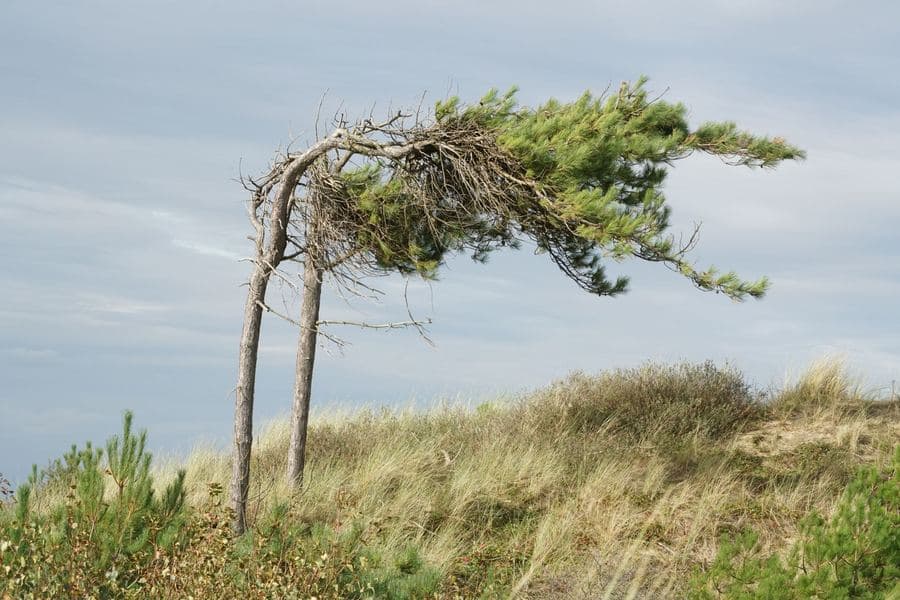
No shade sail manufacturer we track publishes an mph wind rating — zero of the five. What they publish instead is fabric weight in GSM, edge construction, UV block and warranty term. The wind limit of a sail is set by your posts and hardware, not by the cloth.
Our picks at a glance
| # | Structure | Best for | Fabric | Price |
|---|---|---|---|---|
| 01 | 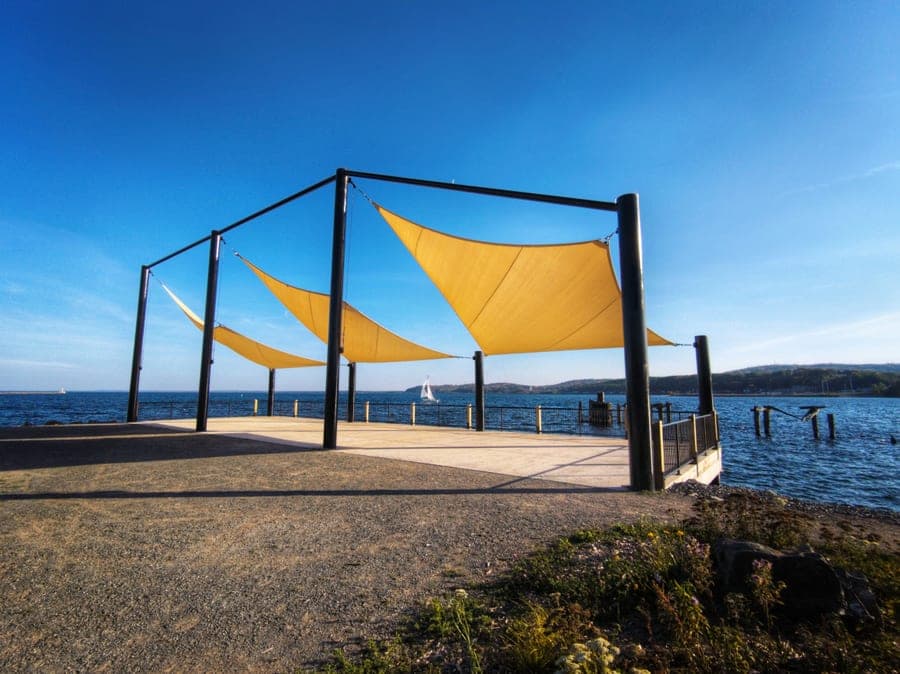 Windscreen4less Cable Shade Sail, 260 GSMThe heaviest fabric and the longest warranty of any sail here — seven years — and the only one with a galvanized cable sewn through the perimeter. | Best construction for wind | 260 GSM high-density polyethylene, UV 95 | Check price on Amazon |
| 02 | 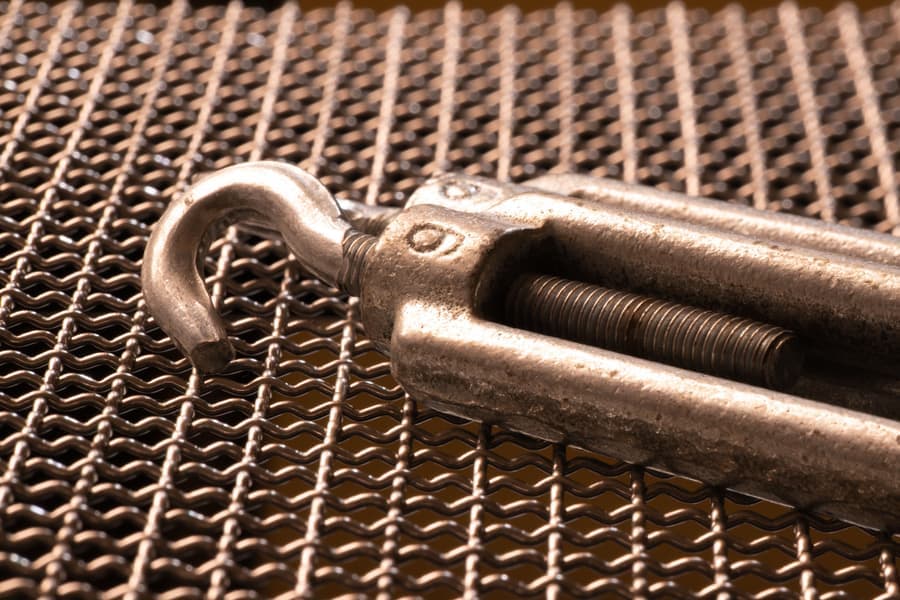 SUNNY GUARD Shade Sail Hardware Kit, 316 Stainless316 marine-grade stainless rather than 304 — the difference that decides whether your fixings survive a coastal or pool-side install. | Where the real limit lives | Not published by manufacturer | Check price on Amazon |
| 03 | 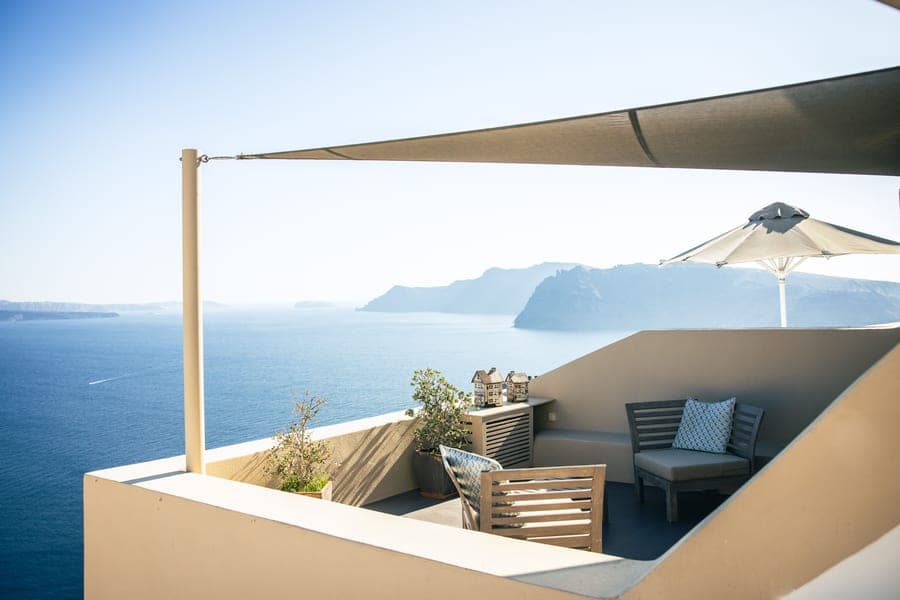 ColourTree Rectangle Sun Shade Sail, 190 GSMThe clearest published fabric spec in the category — 190 GSM virgin HDPE, 95% UV block, three-year warranty — with the hardware sold separately. | Best published fabric spec | 190 GSM HDPE mesh, 95% UV block, breathable | Check price on Amazon |
The durability table
Every published figure we could source for these structures, in one place, with the manufacturer page each number came from. Where a cell reads "Not published by manufacturer", that figure does not exist in the manufacturer's own material — we do not estimate it and we do not copy one from another site.
| Model | Wind rating (mph) | Snow load | Frame | Roof | Anchoring required | Warranty | Spec source |
|---|---|---|---|---|---|---|---|
| Windscreen4less Cable Shade Sail, 260 GSMTop pick | Not published by manufacturer | Not published by manufacturer | Steel-wired perimeter with galvanized cable and A-ring reinforcement | 260 GSM high-density polyethylene, UV 95 | Strengthened A-rings at the corners, steel wire reinforced edges | 7 years under normal weather conditions | Windscreen4less shade sails pageChecked 2026-09-26 |
| SUNNY GUARD Shade Sail Hardware Kit, 316 Stainless | Not published by manufacturer | Not published by manufacturer | 316 marine-grade stainless steel | Not published by manufacturer | Turnbuckles, pad eyes, snap hooks, screws and expansion anchors; sized for triangle sails under 161 sq ft | Not published by manufacturer | SUNNY GUARD hardware kit product pageChecked 2026-09-26 |
| ColourTree Rectangle Sun Shade Sail, 190 GSM | Not published by manufacturer | Not published by manufacturer | No frame — 100% virgin (non-recycled) HDPE fabric, reinforced stitched seams | 190 GSM HDPE mesh, 95% UV block, breathable | Stainless steel D-ring at each corner; cable rope and hardware kits sold separately | 3 years under normal weather and usage | ColourTree rectangle shade sail product pageChecked 2026-09-26 |
Every pick in full
Best construction for wind
Windscreen4less Cable Shade Sail, 260 GSM
The heaviest fabric and the longest warranty of any sail here — seven years — and the only one with a galvanized cable sewn through the perimeter.
- Wind rating
- Not published by manufacturer
- Snow load
- Not published by manufacturer
- Frame
- Steel-wired perimeter with galvanized cable and A-ring reinforcement
- Roof
- 260 GSM high-density polyethylene, UV 95
- Anchoring
- Strengthened A-rings at the corners, steel wire reinforced edges
- Warranty
- 7 years under normal weather conditions
- Sizes
- Not published by manufacturer
If you cannot buy a wind rating, buy the construction that handles wind — and on a shade sail that means the edge, not the fabric.
260 GSM HDPE with a galvanized cable sewn right through the perimeter, and strengthened A-rings at the corners. A cable edge turns the whole perimeter into the load path: tension spreads along it rather than concentrating at four stitched corners. That is the single most useful anti-wind feature available on a sail, and it is the reason this is the pick despite publishing no mph figure.
Seven years of warranty under normal weather conditions, against three years for everything else on this site. A warranty term is the closest thing to a durability statement a sail manufacturer offers, so a term more than twice the category norm is worth reading as one.
UV 95 on the fabric. Useful, and not a wind specification — which is rather the point of this page. The cloth spec tells you how long the sail lasts in sun; the edge and the corners tell you how it behaves in a gust.
Skip it if: You need an exact size confirmed before ordering. Windscreen4less does not publish a size range for this line the way ColourTree does.
#ad Price shown as of September 26, 2026. How this site is funded
Specifications from Windscreen4less shade sails page, checked 2026-09-26.
Where the real limit lives
SUNNY GUARD Shade Sail Hardware Kit, 316 Stainless
316 marine-grade stainless rather than 304 — the difference that decides whether your fixings survive a coastal or pool-side install.
- Wind rating
- Not published by manufacturer
- Snow load
- Not published by manufacturer
- Frame
- 316 marine-grade stainless steel
- Roof
- Not published by manufacturer
- Anchoring
- Turnbuckles, pad eyes, snap hooks, screws and expansion anchors; sized for triangle sails under 161 sq ft
- Warranty
- Not published by manufacturer
- Sizes
- M6 turnbuckles, 6 in. to 8 in. adjustable range
This is the component that sets your actual wind limit, and it is the one nearly everybody under-specifies.
316 marine-grade stainless rather than 304. In wind, fittings fail by fatigue and corrosion together: a fitting that has been quietly pitting inside the swage for two seasons breaks at a gust that last year's fitting would have shrugged off. 316 holds where there is salt or chlorine; 304 pits.
Turnbuckles, pad eyes, snap hooks, screws and expansion anchors, M6 turnbuckles with a 6 in. to 8 in. adjustable range. The adjustment range matters for wind specifically: a slack sail flaps, flapping is fatigue, and fatigue is what breaks things. Being able to re-tension in ten minutes is a wind feature.
Rated for triangle sails under 161 sq ft. Respect that. An oversized sail on undersized fittings is the most common failure we see, and it fails at the fitting every time — which is exactly why no manufacturer will put an mph number on the fabric.
Skip it if: Your sail is over 161 sq ft. Size the hardware up with the sail; the kit is explicitly specified for smaller triangles.
#ad Price shown as of September 26, 2026. How this site is funded
Specifications from SUNNY GUARD hardware kit product page, checked 2026-09-26.
Best published fabric spec
ColourTree Rectangle Sun Shade Sail, 190 GSM
The clearest published fabric spec in the category — 190 GSM virgin HDPE, 95% UV block, three-year warranty — with the hardware sold separately.
- Wind rating
- Not published by manufacturer
- Snow load
- Not published by manufacturer
- Frame
- No frame — 100% virgin (non-recycled) HDPE fabric, reinforced stitched seams
- Roof
- 190 GSM HDPE mesh, 95% UV block, breathable
- Anchoring
- Stainless steel D-ring at each corner; cable rope and hardware kits sold separately
- Warranty
- 3 years under normal weather and usage
- Sizes
- 14 sizes, 8 x 10 ft to 16 x 20 ft
The clearest set of published fabric numbers in the category, which is what you are left comparing once you accept there are no wind ratings.
190 GSM virgin (non-recycled) HDPE, 95% UV block, breathable, with reinforced stitched seams and stainless D-rings. Virgin polymer is a meaningful published distinction: recycled HDPE is where unexplained early UV failures come from, and a sail that has gone brittle in year three is a sail that tears in a gust.
Breathable is a wind specification, even though nobody labels it as one. A knitted mesh lets air pass through it. A waterproof sheet does not, so it takes the full pressure of the gust as load into the corners. Mesh is the correct choice anywhere exposed, and that is the single most important wind decision on this page.
Three years of warranty, and fourteen sizes from 8 x 10 ft to 16 x 20 ft. Sizing down is itself a wind strategy — a smaller sail with the same hardware carries a smaller load, and over-spanning is how people end up pulling pad eyes out of walls.
Skip it if: You want the longest-lived option on an exposed site. The cable-edged sail above is heavier, warranted for seven years and better detailed for wind.
#ad Price shown as of September 26, 2026. How this site is funded
Specifications from ColourTree rectangle shade sail product page, checked 2026-09-26.
Why no sail has a published wind rating
This is worth stating plainly, because the absence looks like evasion and is not. We checked all five shade sail products on this site against their manufacturers' own pages: ColourTree, Windscreen4less and SUNNY GUARD publish no wind figure of any kind.
Compare that with the rest of the site. Pergolas publish 72 mph. Gazebos publish 40, 50 and 100 mph. Even a pop-up canopy publishes a figure. A shade sail is the only category here where the number simply does not exist anywhere.
The reason is that the manufacturer does not supply the structure. When Backyard Discovery publishes 100 mph, it is selling you the posts, the roof and the anchoring hardware, and it can state a condition — properly anchored — that covers the whole assembly. A shade sail company sells you a piece of cloth with rings on the corners. The posts are yours, the footings are yours, the turnbuckles are probably someone else's. There is no assembly for them to rate.
So a published mph figure on a sail would be meaningless, and its absence is honest. What you need instead is a way to judge the parts that do exist, which is the rest of this page.
What the published specs actually tell you
Here is every published specification across the sails on this site, so you can see exactly what is and is not available to compare.
| Product | Fabric | Edge | UV | Warranty | Wind rating |
|---|---|---|---|---|---|
| Windscreen4less cable sail | 260 GSM HDPE | Galvanized cable through perimeter, A-rings | 95 | 7 yr | Not published by manufacturer |
| ColourTree triangle | 200 GSM HDPE | Stitched, stainless D-rings | 95% | 3 yr | Not published by manufacturer |
| ColourTree rectangle | 190 GSM virgin HDPE | Reinforced stitched seams, stainless D-rings | 95% | 3 yr | Not published by manufacturer |
| Windscreen4less webbing sail | 180 GSM polyethylene | Webbing-reinforced, no cable | 90 | 3 yr | Not published by manufacturer |
| Windscreen4less waterproof sail | Terylene polyester, waterproof | Webbing-reinforced | 95 | 3 yr | Not published by manufacturer |
The right-hand column is the finding. Five products, five manufacturers' own pages, no wind figure anywhere. The two columns that do vary usefully are the edge construction and the warranty term — and those two track each other, which is a reasonable signal that the manufacturers know where the durability sits too.
Where a shade sail actually fails in wind
In rough order of how often we would expect each one, here is the failure sequence. Note that the fabric is near the bottom.
- 01The post moves or leans. An undersized post in an undersized footing is the most common failure and the most expensive to fix, because the concrete is already poured. Shade sail posts and footings covers sizing both.
- 02A fixing pulls out of what it is screwed to. A pad eye into decking boards, into mortar joints rather than brick, or into a joist near its end. The sail is fine; the thing it was pulling against is not.
- 03A fitting breaks. Usually a 304 turnbuckle or snap hook that has been corroding inside the swage where nobody can see it. It fails suddenly, in a gust, after looking fine for two years.
- 04The corner ring tears out of the fabric. This is where a stitched corner loses to a cable edge: all the load arrived at four points instead of being spread along a perimeter.
- 05The fabric tears across the body. Last, and nearly always on a sail that was already brittle from UV or was left slack enough to flap for a season.
- 06Which means the order to spend money in is: footings, fixings, fittings, edge construction, then fabric. That is the reverse of how most people shop.
What to do before and during a storm
There is one correct answer and it is not a popular one: take the sail down.
A shade sail is the only structure on this site that is genuinely designed to be removable, and that is its advantage over a pergola or a gazebo rather than a weakness. Snap hooks exist so that a sail can come off in ten minutes. Use them when a named storm is forecast, and the question of what it would have withstood never arises.
If you are leaving it up, the thing that saves it is tension. A taut sail transmits load cleanly to the anchors. A slack sail flaps, and flapping fatigues fabric, stitching and fittings simultaneously. Re-tension at the start of every season and again mid-summer.
Give it a real fall, and never a flat plane. Wind and water both need somewhere to go. The standard guidance of alternating high and low corners is not aesthetic; it stops the sail becoming a flat surface for a gust to lift and a pond to form on.
And size down if the site is exposed. Two smaller sails on separate anchor points carry less load each than one big one, and if something does let go you lose half the shade rather than all of it. Best shade sails for high winds ranks the category on exactly this.
Questions people ask
What is the wind rating of a shade sail?
How much wind can a shade sail withstand?
Should I take my shade sail down in a storm?
Do shade sails rip in the wind?
Is a cable edge or a webbing edge better for wind?
Are waterproof shade sails worse in wind?
Does a tighter shade sail handle wind better?
What wind rating do shade sail posts need?
Where these figures came from
- Windscreen4less shade sails — 260 GSM HDPE at UV 95, galvanized cable sewn through the perimeter, strengthened A-rings, 7-year warranty; no wind rating published
- ColourTree rectangle sun shade sail — 190 GSM virgin HDPE, 95% UV block, reinforced stitched seams, stainless D-rings, 3-year warranty; no wind rating published
- ColourTree triangle sun shade sail — 200 GSM HDPE, 95% UV block, stainless D-rings, 3-year warranty; no wind rating published
- SUNNY GUARD shade sail hardware kit — 316 marine-grade stainless, M6 turnbuckles with 6 in. to 8 in. adjustable range, rated for triangle sails under 161 sq ft
- Windscreen4less waterproof shade sails — Terylene polyester, waterproof, UV 95, 3-year warranty; no wind rating published
Found an error? Tell us and we will correct it within seven days and note the change on the page with a dated line — see our editorial policy.