The best shade sails for high winds
Nobody in this category publishes a wind figure, so this page is about the things that actually matter in an exposed spot: edge construction, breathability, hardware and a plan for taking it down.
By Ryder M. · Published · Last updated
We compare published manufacturer specifications, warranty terms and owner-reported failure modes. We have not physically tested these structures. How we judge shade structures
Slat & Shade earns a commission on qualifying purchases made through links on this page. It costs you nothing extra and never changes what we recommend. Full disclosure
Part of Shade Sails
The short answer
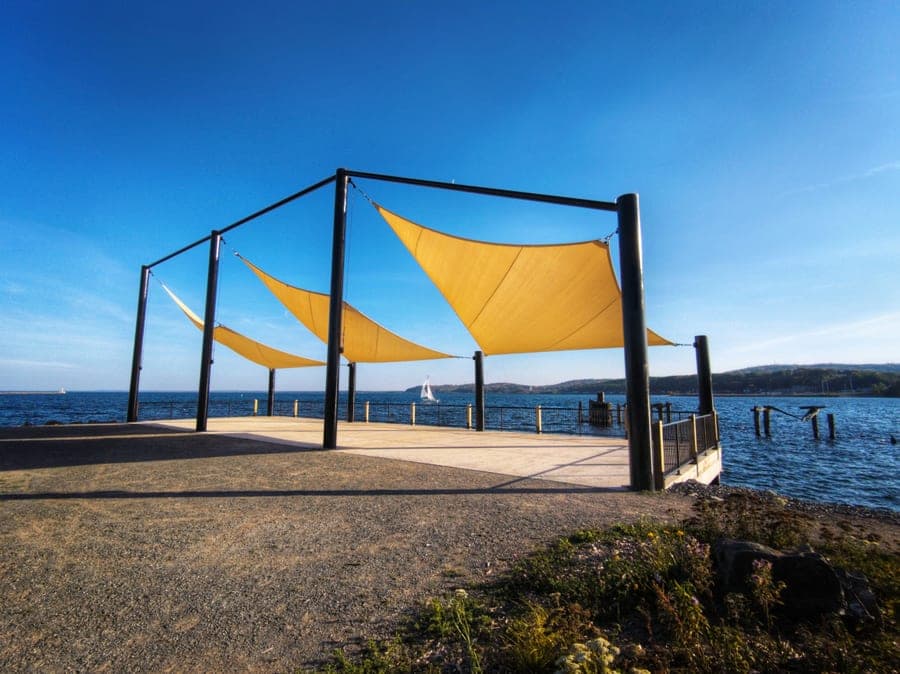
The Windscreen4less 260 GSM cable sail is the pick: a galvanized cable through the perimeter and A-ring reinforcement keep the edge from distorting under load, and heavier fabric holds tension longer. No shade sail publishes a wind rating, so in a genuinely exposed spot the honest advice is to take it down before a storm.
Our picks at a glance
| # | Structure | Best for | Fabric | Price |
|---|---|---|---|---|
| 01 | Windscreen4less Cable Shade Sail, 260 GSMThe heaviest fabric and the longest warranty of any sail here — seven years — and the only one with a galvanized cable sewn through the perimeter. | Top pick for exposed sites | 260 GSM high-density polyethylene, UV 95 | Check price on Amazon |
| 02 | 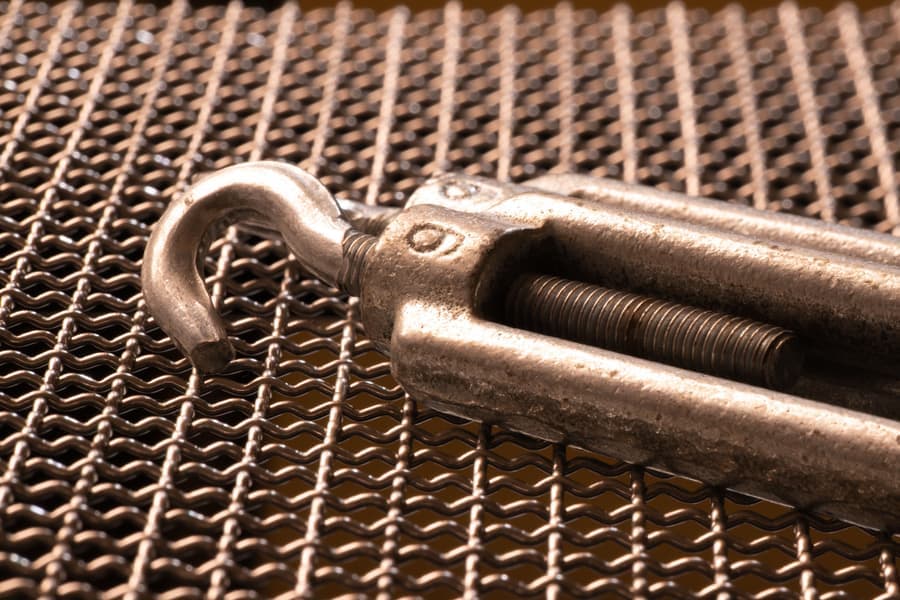 SUNNY GUARD Shade Sail Hardware Kit, 316 Stainless316 marine-grade stainless rather than 304 — the difference that decides whether your fixings survive a coastal or pool-side install. | The part that actually decides it | Not published by manufacturer | Check price on Amazon |
| 03 | 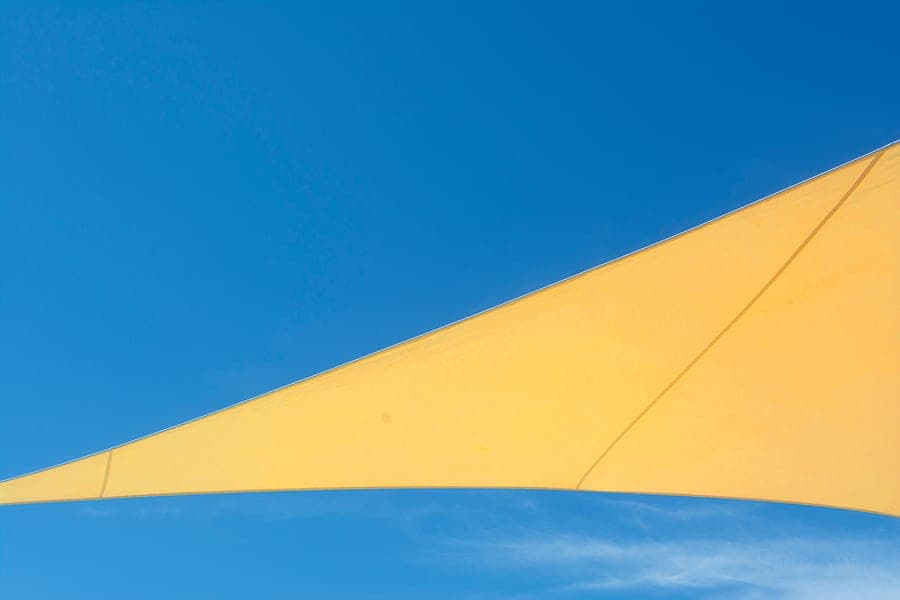 ColourTree Triangle Sun Shade Sail, 200 GSMA heavier 200 GSM fabric in the shape that tensions most predictably — three anchor points cannot fight each other the way four can. | Best shape for wind | 200 GSM HDPE, 95% UV block | Check price on Amazon |
| 04 | 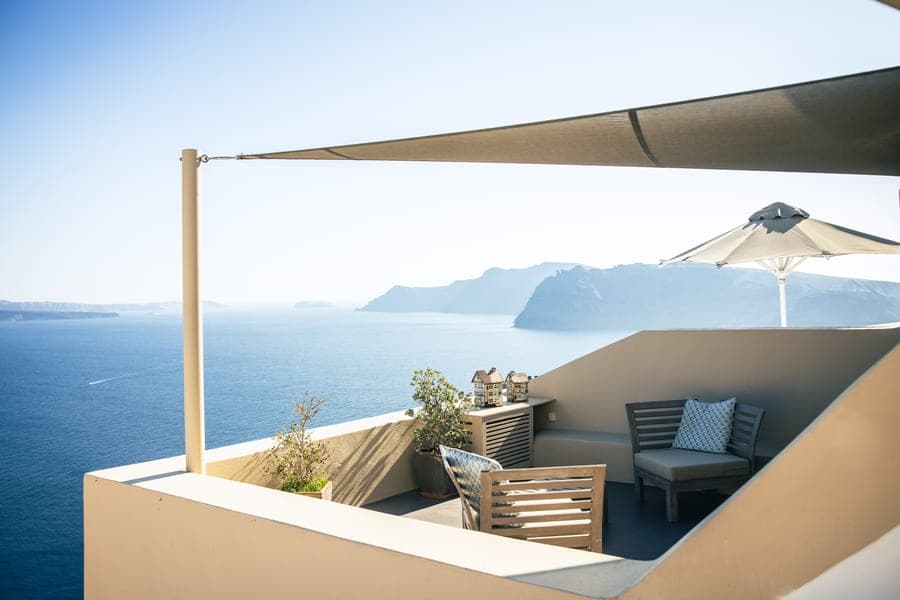 ColourTree Rectangle Sun Shade Sail, 190 GSMThe clearest published fabric spec in the category — 190 GSM virgin HDPE, 95% UV block, three-year warranty — with the hardware sold separately. | Best sizing flexibility | 190 GSM HDPE mesh, 95% UV block, breathable | Check price on Amazon |
| 05 | 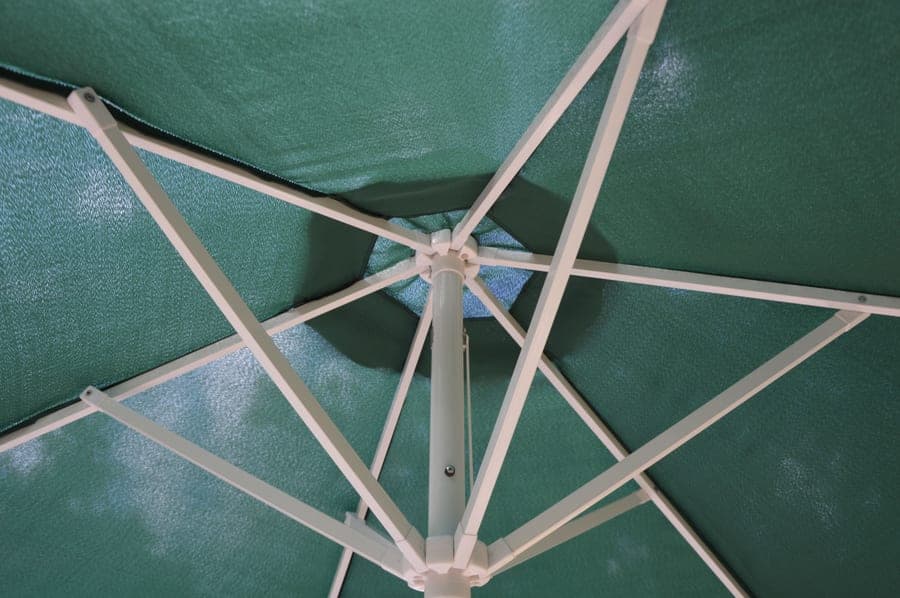 Windscreen4less Webbing Shade Sail, 180 GSMThe budget option that still publishes its numbers: 180 GSM, UV 90, three years — enough for a small span, not enough for a windy one. | The one to be cautious about here | 180 GSM polyethylene, UV 90 | Check price on Amazon |
The durability table
Every published figure we could source for these structures, in one place, with the manufacturer page each number came from. Where a cell reads "Not published by manufacturer", that figure does not exist in the manufacturer's own material — we do not estimate it and we do not copy one from another site.
| Model | Wind rating (mph) | Snow load | Frame | Roof | Anchoring required | Warranty | Spec source |
|---|---|---|---|---|---|---|---|
| Windscreen4less Cable Shade Sail, 260 GSMTop pick | Not published by manufacturer | Not published by manufacturer | Steel-wired perimeter with galvanized cable and A-ring reinforcement | 260 GSM high-density polyethylene, UV 95 | Strengthened A-rings at the corners, steel wire reinforced edges | 7 years under normal weather conditions | Windscreen4less shade sails pageChecked 2026-09-26 |
| SUNNY GUARD Shade Sail Hardware Kit, 316 Stainless | Not published by manufacturer | Not published by manufacturer | 316 marine-grade stainless steel | Not published by manufacturer | Turnbuckles, pad eyes, snap hooks, screws and expansion anchors; sized for triangle sails under 161 sq ft | Not published by manufacturer | SUNNY GUARD hardware kit product pageChecked 2026-09-26 |
| ColourTree Triangle Sun Shade Sail, 200 GSM | Not published by manufacturer | Not published by manufacturer | No frame — breathable HDPE fabric | 200 GSM HDPE, 95% UV block | Stainless steel D-rings at the corners; hardware sold separately | 3 years | ColourTree triangle shade sail product pageChecked 2026-09-26 |
| ColourTree Rectangle Sun Shade Sail, 190 GSM | Not published by manufacturer | Not published by manufacturer | No frame — 100% virgin (non-recycled) HDPE fabric, reinforced stitched seams | 190 GSM HDPE mesh, 95% UV block, breathable | Stainless steel D-ring at each corner; cable rope and hardware kits sold separately | 3 years under normal weather and usage | ColourTree rectangle shade sail product pageChecked 2026-09-26 |
| Windscreen4less Webbing Shade Sail, 180 GSM | Not published by manufacturer | Not published by manufacturer | Webbing-reinforced perimeter, no cable | 180 GSM polyethylene, UV 90 | Steel D-rings | 3 years | Windscreen4less shade sails pageChecked 2026-09-26 |
Every pick in full
Top pick for exposed sites
Windscreen4less Cable Shade Sail, 260 GSM
The heaviest fabric and the longest warranty of any sail here — seven years — and the only one with a galvanized cable sewn through the perimeter.
- Wind rating
- Not published by manufacturer
- Snow load
- Not published by manufacturer
- Frame
- Steel-wired perimeter with galvanized cable and A-ring reinforcement
- Roof
- 260 GSM high-density polyethylene, UV 95
- Anchoring
- Strengthened A-rings at the corners, steel wire reinforced edges
- Warranty
- 7 years under normal weather conditions
- Sizes
- Not published by manufacturer
It wins because it is built the way commercial sails are built, and the reason matters specifically in wind.
A galvanized cable runs through the perimeter hem, terminated into strengthened A-rings at the corners. In wind, a sail's edge is what takes the load — the fabric billows and the perimeter has to hold the shape. A webbing edge distorts, which puts a wave in the sail; once a sail has a wave in it, the wind gets hold of it and starts working the corners. A cable edge stays straight and spreads corner tension along the edge instead of concentrating it at a ring.
260 GSM high-density polyethylene is the heaviest fabric in the category, and heavier fabric holds tension longer before it stretches. That matters because tension is the whole wind story: a taut sail spills wind, and a slack sail flogs — and flogging is what destroys sails and their fixings, usually within one season.
Breathable mesh, not waterproof. Air passes through HDPE mesh rather than loading it, which is the closest thing to a wind advantage any sail has. A waterproof sail is a solid panel and catches every bit of wind a mesh would have let through.
Seven-year warranty under normal weather conditions — the longest in the category, from a manufacturer that covers its own 180 GSM line for three. "Normal weather" is doing work in that sentence, and it is the closest anyone comes to a wind statement: take the sail down before a storm and you are within it.
Skip it if: You want to leave a sail up permanently in an exposed spot. No sail is the answer to that — consider a [louvered pergola](/pergolas/best-louvered-pergolas) instead.
#ad Price shown as of September 26, 2026. How this site is funded
Specifications from Windscreen4less shade sails page, checked 2026-09-26.
The part that actually decides it
SUNNY GUARD Shade Sail Hardware Kit, 316 Stainless
316 marine-grade stainless rather than 304 — the difference that decides whether your fixings survive a coastal or pool-side install.
- Wind rating
- Not published by manufacturer
- Snow load
- Not published by manufacturer
- Frame
- 316 marine-grade stainless steel
- Roof
- Not published by manufacturer
- Anchoring
- Turnbuckles, pad eyes, snap hooks, screws and expansion anchors; sized for triangle sails under 161 sq ft
- Warranty
- Not published by manufacturer
- Sizes
- M6 turnbuckles, 6 in. to 8 in. adjustable range
Second on a wind page because in this category the hardware is more consequential than the sail, and we would rather say so than bury it.
Turnbuckles are the point. Fabric stretches — under load, in heat, over a season — and a turnbuckle is the only way to take that stretch back out. A sail hung on fixed hooks is slack by the end of its first summer, and a slack sail in wind flogs and destroys its own corner rings. On an exposed site, re-tensioning is not maintenance; it is the difference between a sail that lasts and one that does not.
316 marine-grade stainless rather than 304. Corrosion at the corner is the most common failure point on a shade sail installation, and 304 pits in salt air and pool chemistry within a couple of seasons. On a coastal or poolside site — which is frequently also the exposed site — this is not a marginal upgrade.
The kit includes turnbuckles, pad eyes, snap hooks, screws and expansion anchors, with M6 turnbuckles adjustable from 6 to 8 inches, sized for triangle sails under 161 sq ft.
Size up for a bigger sail. Hardware rated for a small triangle on a large exposed sail is the weakest link, and the weakest link is where it fails.
Skip it if: Your sail is larger than about 161 sq ft — buy proportionally heavier hardware rather than using this.
#ad Price shown as of September 26, 2026. How this site is funded
Specifications from SUNNY GUARD hardware kit product page, checked 2026-09-26.
Best shape for wind
ColourTree Triangle Sun Shade Sail, 200 GSM
A heavier 200 GSM fabric in the shape that tensions most predictably — three anchor points cannot fight each other the way four can.
- Wind rating
- Not published by manufacturer
- Snow load
- Not published by manufacturer
- Frame
- No frame — breathable HDPE fabric
- Roof
- 200 GSM HDPE, 95% UV block
- Anchoring
- Stainless steel D-rings at the corners; hardware sold separately
- Warranty
- 3 years
- Sizes
- Not published by manufacturer
The shape is a genuine wind advantage and it gets almost no attention.
A three-point sail is always a flat plane, so all three corners can be tensioned hard and the fabric sits taut. A four-point sail is not necessarily planar: tension all four corners level and the middle goes slack, and slack in the middle of a sail is exactly what wind gets hold of. Getting a four-point sail taut requires setting two corners high and two low to build a twist into the fabric — which is doable and is the step people skip.
On an exposed site, tension is everything, so the shape least likely to have slack in it is the shape least likely to flog. Two triangles over a patio will outperform one badly-tensioned rectangle, and cost more.
Fabric is 200 GSM HDPE with 95% UV block, breathable, with stainless D-rings at the corners and a three-year warranty. Heavier than the 190 GSM rectangle, lighter than the 260 GSM cable sail.
Three points also means three anchor points to get right, which is one fewer thing to get wrong — and a smaller sail is a smaller sail area, which in wind is the load.
Skip it if: You need to cover a rectangular area efficiently — you will need two, and the cost and the visual clutter both go up.
#ad Price shown as of September 26, 2026. How this site is funded
Specifications from ColourTree triangle shade sail product page, checked 2026-09-26.
Best sizing flexibility
ColourTree Rectangle Sun Shade Sail, 190 GSM
The clearest published fabric spec in the category — 190 GSM virgin HDPE, 95% UV block, three-year warranty — with the hardware sold separately.
- Wind rating
- Not published by manufacturer
- Snow load
- Not published by manufacturer
- Frame
- No frame — 100% virgin (non-recycled) HDPE fabric, reinforced stitched seams
- Roof
- 190 GSM HDPE mesh, 95% UV block, breathable
- Anchoring
- Stainless steel D-ring at each corner; cable rope and hardware kits sold separately
- Warranty
- 3 years under normal weather and usage
- Sizes
- 14 sizes, 8 x 10 ft to 16 x 20 ft
On a wind page, being able to choose a smaller sail is a real advantage, and fourteen sizes from 8 x 10 ft to 16 x 20 ft is the widest range here.
Sail area is the load. A smaller sail over the part of the patio you actually use collects far less wind than a large one spanning the whole thing, and on an exposed site that is a more effective decision than any fabric upgrade. Nobody selling sails leads with this because it means selling a smaller sail.
The fabric is 190 GSM 100% virgin non-recycled HDPE with 95% UV block, reinforced stitched seams, stainless D-rings, three-year warranty. Virgin rather than recycled HDPE matters for UV life, which matters in exposure generally.
The edge is stitched reinforcement rather than a cable, which is the limitation on an exposed site — the edge can distort under load where a cable edge stays straight. For a short span that is fine; for a long exposed span the cable sail is the better structure.
Hardware sold separately, as always.
Skip it if: The span is long and exposed. A reinforced stitched edge distorts where a cable edge does not.
#ad Price shown as of September 26, 2026. How this site is funded
Specifications from ColourTree rectangle shade sail product page, checked 2026-09-26.
The one to be cautious about here
Windscreen4less Webbing Shade Sail, 180 GSM
The budget option that still publishes its numbers: 180 GSM, UV 90, three years — enough for a small span, not enough for a windy one.
- Wind rating
- Not published by manufacturer
- Snow load
- Not published by manufacturer
- Frame
- Webbing-reinforced perimeter, no cable
- Roof
- 180 GSM polyethylene, UV 90
- Anchoring
- Steel D-rings
- Warranty
- 3 years
- Sizes
- Not published by manufacturer
Included so the trade is explicit rather than implied: this is the lightest sail we track, and on a wind page that has to count against it.
180 GSM polyethylene, UV 90, webbing-reinforced perimeter with no cable, steel D-rings, three-year warranty. All published, all comparable, and all at the bottom of the range.
Lighter fabric stretches sooner, and a stretched sail goes slack, and a slack sail in wind flogs. That is the failure sequence, and lighter fabric starts it earlier. The webbing edge compounds it, because there is no cable holding the perimeter straight once the fabric has moved.
The manufacturer's own warranty tiering says it plainly: three years here, seven on its 260 GSM cable line. Same company, same claim data, more than double the term for the heavier construction.
Where it is still the right answer: a small sail, in a sheltered corner, that you take down readily. Not every site is exposed, and on a protected patio 180 GSM does the job for less money.
Skip it if: Your site is genuinely windy. This is the lightest fabric and the least reinforced edge in the comparison.
#ad Price shown as of September 26, 2026. How this site is funded
Specifications from Windscreen4less shade sails page, checked 2026-09-26.
There are no wind figures, and that is the honest starting point
No shade sail manufacturer we can find publishes a wind rating. Not a low one — none at all, across every brand and every fabric weight we have looked at.
That is worth sitting with rather than treating as a gap. Compare it to pergolas, where four of seven models publish a figure, or hardtop gazebos, where three of six do. The complete absence here tells you something: a tensioned fabric panel held by corner rings is not a structure anyone is willing to put a number on.
So the correct guidance in this category is the one nobody selling sails wants to lead with: take it down before a storm. A sail that comes off in twenty minutes will outlive one that stays up, by a wide margin, and the products below are ranked on what helps in the wind you do not take it down for — not on surviving the wind you should have.
It also means this page cannot rank on measured performance. What it ranks on is edge construction, fabric weight, breathability, shape and hardware — all published, all mechanically relevant, and all proxies. We are labeling them as proxies rather than dressing them up.
What actually helps, in order
Ranked by how much difference each makes. The first item outweighs everything below it.
- 01Being able to take it down, and actually doing it. Snap hooks rather than shackles at the corners turn a two-hour job into a twenty-minute one, and a sail you can drop easily is a sail that comes down when the forecast turns. This is the single most effective thing on this list and it costs nothing.
- 02Keeping it taut. Turnbuckles at every corner, re-tensioned at least annually. Fabric stretches; a slack sail flogs; flogging works the corner rings and the seams beside them until something tears. Almost every sail failure starts here.
- 03A cable edge rather than webbing. The perimeter is what holds the shape under load. A cable stays straight and spreads corner tension along the edge; webbing distorts and concentrates it at the ring.
- 04Breathable mesh rather than waterproof fabric. Air passes through HDPE mesh instead of loading it. A waterproof sail is a solid panel and behaves like one.
- 05Less sail area. The load scales with area. A smaller sail over the part of the patio you use collects far less than a big one spanning all of it — and nobody selling sails suggests this.
- 06Heavier fabric. 260 GSM stretches later than 180. It matters, and it matters less than the four items above it.
- 07Attachment points that can genuinely take the tension. A sail properly tensioned pulls hard, and a fence post set in soil or a fascia board are not rated for it. This is where installations fail structurally rather than in the fabric. How to install a shade sail covers it.
Pitch and twist: the geometry that spills wind
Two installation decisions do more for wind performance than any product choice, and both are free.
Pitch the sail. A flat sail presents its full area to wind from any direction and pools water when it rains. A sail installed with a genuine slope — one edge appreciably higher than the other — sheds both: wind is deflected rather than caught square, and water runs off instead of collecting. Flat sails are the single most common installation mistake.
Build in a twist on four-point sails. Set two diagonally-opposite corners high and the other two low. This is not decorative: it is what makes a four-point sail into a genuinely taut surface rather than a flat plane with slack in the middle. A twisted sail is stiffer, spills wind from more directions, and holds its tension far better.
And on a three-point sail you get the tension for free — a triangle is always planar, so hard tension at all three corners produces a taut surface with no geometric fight. It is why triangles are the recommendation for a first install and why they behave better in wind.
Shade sail sizing and tension works through the drop, the angles and the slack allowance properly.
If your site is genuinely exposed
Some honest advice that costs us a sale. If you are on an open plot, a coastal site, or anywhere that regularly sees sustained wind, a shade sail may be the wrong product.
It is not that sails are badly made. It is that no manufacturer will rate one for wind, the correct practice is to take it down, and a sail you are constantly taking down and putting back up is a sail you stop using. That is a real outcome and worth predicting.
The alternatives, in rough order of how well they handle exposure: a louvered pergola, which publishes 70-72 mph and lets you open the roof before a storm; a cedar pergola with an open trellis roof, which publishes 100 mph and has nothing to take down; or a genuinely small sail over a genuinely small area, accepted as seasonal.
What does not work is a large sail, tensioned hard, left up, on an exposed site. That is the installation that takes a fence panel or a fascia board with it when it goes — and the damage is usually to what it was tied to rather than to the sail.
What we cut, and why
Every model below was a genuine candidate and did not make the list. The reason is stated in each case, because a shortlist with no visible rejections is not evidence of a selection process.
- Every waterproof shade sail, on this page
- A waterproof sail is a solid panel: it catches every bit of wind that a breathable mesh would have let through, and it also pools water unless pitched steeply — and a pool of water is a load no corner ring is rated for. They have a real purpose, covered in [best waterproof shade sails](/shade-sails/best-waterproof-shade-sails), and an exposed site is not it.
- Sails marketed with a wind rating
- We found none from a manufacturer of record. Where a retail listing implies a wind figure for a fabric panel held by corner rings, we could not find a published test condition behind it — and on a page specifically about wind, an unverifiable wind claim is disqualifying rather than helpful.
- Bundled sail-and-hardware kits at the budget end
- The hardware is what fails in wind, and bundles routinely include 304 stainless or plated fixings and no turnbuckles. No turnbuckle means no way to re-tension a stretched sail, which on an exposed site is the single most important maintenance action available.
- Very large single-span sails
- Sail area is the load, and a large single span concentrates it on four points. On an exposed site two smaller sails, each properly tensioned, is a better structure than one big one — even though it costs more and no manufacturer will suggest it.
Questions people ask
What is the best shade sail for high winds?
Will a shade sail survive high winds?
Are shade sails good for windy areas?
Why does my shade sail flap in the wind?
Should a shade sail be flat or pitched?
Is a breathable or waterproof sail better in wind?
Does a bigger shade sail handle wind worse?
How do I take a shade sail down quickly?
Where these figures came from
- Windscreen4less shade sails — 260 GSM cable line with galvanized cable, A-ring reinforcement, UV 95 and a 7-year warranty; 180 GSM webbing line at 3 years
- SUNNY GUARD shade sail hardware kit — 316 marine-grade stainless, turnbuckles adjustable 6-8 in., kit contents and sizing
- ColourTree triangle shade sail — 200 GSM HDPE, 95% UV block, stainless D-rings, 3-year warranty
- ColourTree rectangle shade sail — 190 GSM virgin HDPE, 14 sizes from 8x10 to 16x20 ft, reinforced seams, hardware sold separately
- PURPLE LEAF louvered pergola collection — 72 mph published figure, cited as the exposed-site alternative
- Backyard Discovery Beaumont — 100 mph Pro-Tect tested, cited as the exposed-site alternative
Found an error? Tell us and we will correct it within seven days and note the change on the page with a dated line — see our editorial policy.