GSM and shade percentage explained
Two numbers do most of the work in this category, they measure different things, and the one that matters for durability is not the one most listings lead with.
By Ryder M. · Published · Last updated
We compare published manufacturer specifications, warranty terms and owner-reported failure modes. We have not physically tested these structures. How we judge shade structures
Slat & Shade earns a commission on qualifying purchases made through links on this page. It costs you nothing extra and never changes what we recommend. Full disclosure
Part of Shade Sails
The short answer
GSM is the fabric's weight in grams per square meter and it predicts durability — heavier fabric holds tension longer before stretching. Shade or UV block percentage measures how much sun the weave stops. The sails we track run 180 to 260 GSM with 90% to 95% UV block, and warranty length tracks GSM rather than shade percentage.
Our picks at a glance
| # | Structure | Best for | Fabric | Price |
|---|---|---|---|---|
| 01 | 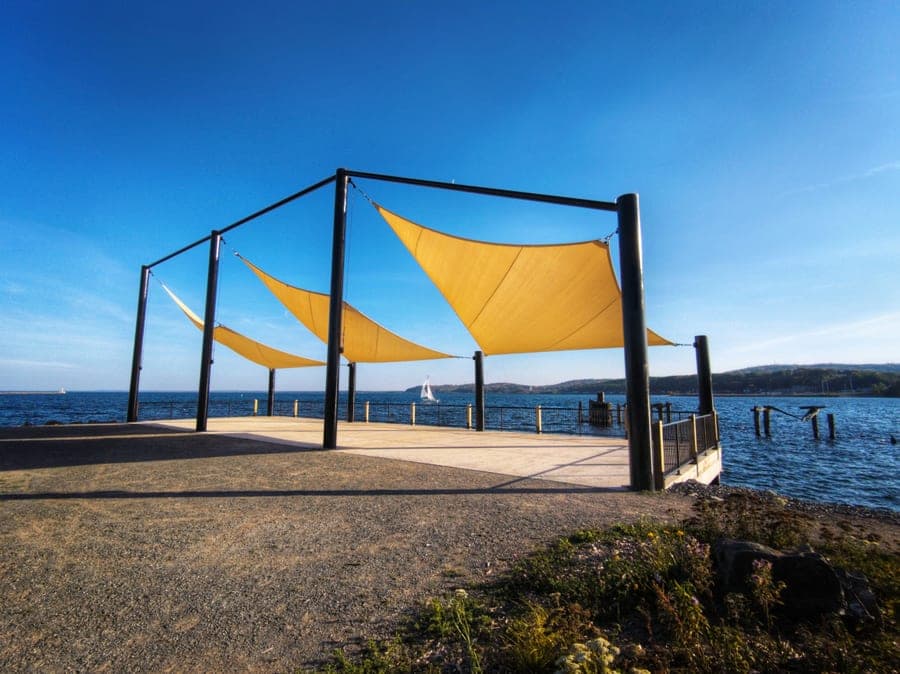 Windscreen4less Cable Shade Sail, 260 GSMThe heaviest fabric and the longest warranty of any sail here — seven years — and the only one with a galvanized cable sewn through the perimeter. | Heaviest fabric available | 260 GSM high-density polyethylene, UV 95 | Check price on Amazon |
| 02 | 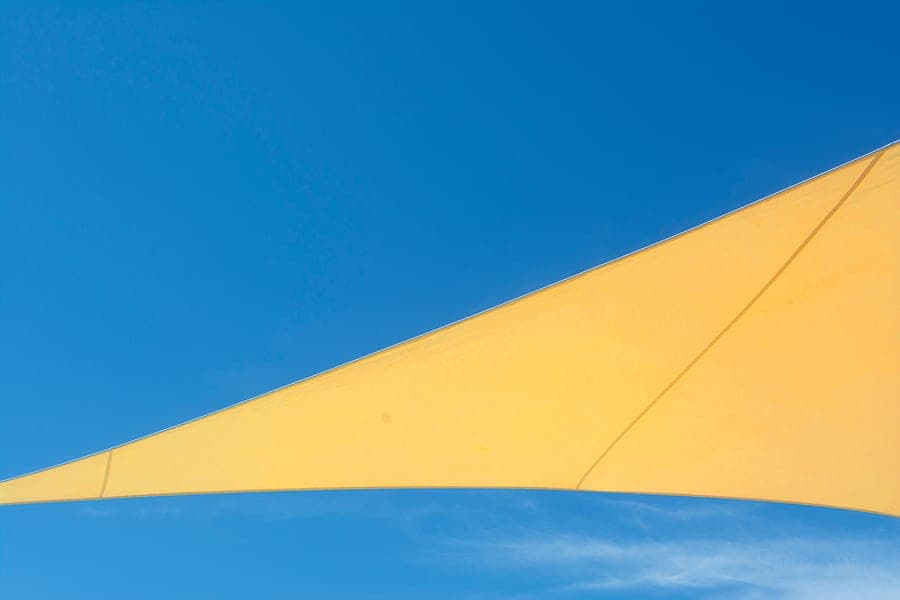 ColourTree Triangle Sun Shade Sail, 200 GSMA heavier 200 GSM fabric in the shape that tensions most predictably — three anchor points cannot fight each other the way four can. | Best mid-weight fabric | 200 GSM HDPE, 95% UV block | Check price on Amazon |
| 03 | 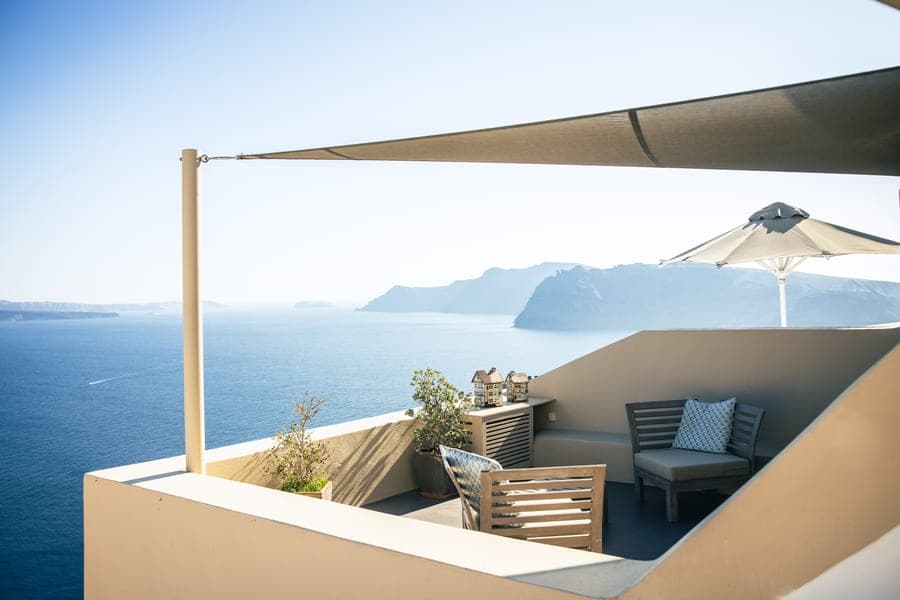 ColourTree Rectangle Sun Shade Sail, 190 GSMThe clearest published fabric spec in the category — 190 GSM virgin HDPE, 95% UV block, three-year warranty — with the hardware sold separately. | Best-specified fabric | 190 GSM HDPE mesh, 95% UV block, breathable | Check price on Amazon |
| 04 |  Windscreen4less Webbing Shade Sail, 180 GSMThe budget option that still publishes its numbers: 180 GSM, UV 90, three years — enough for a small span, not enough for a windy one. | The lightest band | 180 GSM polyethylene, UV 90 | Check price on Amazon |
The durability table
Every published figure we could source for these structures, in one place, with the manufacturer page each number came from. Where a cell reads "Not published by manufacturer", that figure does not exist in the manufacturer's own material — we do not estimate it and we do not copy one from another site.
| Model | Wind rating (mph) | Snow load | Frame | Roof | Anchoring required | Warranty | Spec source |
|---|---|---|---|---|---|---|---|
| Windscreen4less Cable Shade Sail, 260 GSMTop pick | Not published by manufacturer | Not published by manufacturer | Steel-wired perimeter with galvanized cable and A-ring reinforcement | 260 GSM high-density polyethylene, UV 95 | Strengthened A-rings at the corners, steel wire reinforced edges | 7 years under normal weather conditions | Windscreen4less shade sails pageChecked 2026-09-26 |
| ColourTree Triangle Sun Shade Sail, 200 GSM | Not published by manufacturer | Not published by manufacturer | No frame — breathable HDPE fabric | 200 GSM HDPE, 95% UV block | Stainless steel D-rings at the corners; hardware sold separately | 3 years | ColourTree triangle shade sail product pageChecked 2026-09-26 |
| ColourTree Rectangle Sun Shade Sail, 190 GSM | Not published by manufacturer | Not published by manufacturer | No frame — 100% virgin (non-recycled) HDPE fabric, reinforced stitched seams | 190 GSM HDPE mesh, 95% UV block, breathable | Stainless steel D-ring at each corner; cable rope and hardware kits sold separately | 3 years under normal weather and usage | ColourTree rectangle shade sail product pageChecked 2026-09-26 |
| Windscreen4less Webbing Shade Sail, 180 GSM | Not published by manufacturer | Not published by manufacturer | Webbing-reinforced perimeter, no cable | 180 GSM polyethylene, UV 90 | Steel D-rings | 3 years | Windscreen4less shade sails pageChecked 2026-09-26 |
Every pick in full
Heaviest fabric available
Windscreen4less Cable Shade Sail, 260 GSM
The heaviest fabric and the longest warranty of any sail here — seven years — and the only one with a galvanized cable sewn through the perimeter.
- Wind rating
- Not published by manufacturer
- Snow load
- Not published by manufacturer
- Frame
- Steel-wired perimeter with galvanized cable and A-ring reinforcement
- Roof
- 260 GSM high-density polyethylene, UV 95
- Anchoring
- Strengthened A-rings at the corners, steel wire reinforced edges
- Warranty
- 7 years under normal weather conditions
- Sizes
- Not published by manufacturer
260 GSM high-density polyethylene, UV 95 — the heaviest shade fabric we can document, with a galvanized cable and A-ring reinforcement through the perimeter and a seven-year warranty.
This is the product that demonstrates why GSM matters. Windscreen4less covers this at seven years and its 180 GSM webbing line at three, and the only substantive differences are fabric weight and edge construction. That is a manufacturer's own claim data saying heavier fabric lasts longer, and it is the most direct evidence available in this category.
Note that the UV rating barely moves: UV 95 here, UV 90 on the 180 GSM line. A 44% increase in fabric weight buys five percentage points of UV block and more than double the warranty. That asymmetry is the whole point of this page — GSM predicts durability far more than it predicts shade.
Heavier fabric also stretches less, which directly reduces the re-tensioning burden and the sag that leads to flogging. See shade sail sizing and tension.
Skip it if: The span is short and sheltered, or you are installing alone — 260 GSM is heavy to handle.
#ad Price shown as of September 26, 2026. How this site is funded
Specifications from Windscreen4less shade sails page, checked 2026-09-26.
Best mid-weight fabric
ColourTree Triangle Sun Shade Sail, 200 GSM
A heavier 200 GSM fabric in the shape that tensions most predictably — three anchor points cannot fight each other the way four can.
- Wind rating
- Not published by manufacturer
- Snow load
- Not published by manufacturer
- Frame
- No frame — breathable HDPE fabric
- Roof
- 200 GSM HDPE, 95% UV block
- Anchoring
- Stainless steel D-rings at the corners; hardware sold separately
- Warranty
- 3 years
- Sizes
- Not published by manufacturer
200 GSM HDPE with 95% UV block, stainless D-rings, three-year warranty — and a useful data point on this page, because it shows where the UV curve flattens.
200 GSM gets you the same 95% UV block as the 260 GSM fabric. Above roughly 190-200 GSM, additional weight is buying tear strength, stretch resistance and lifespan rather than shade — the weave is already stopping as much sun as it usefully can.
So if your requirement is shade rather than longevity, the mid-weight band is the efficient place to be. You get essentially the full UV benefit without the handling weight or the cost of the heaviest fabric.
The triangular shape is the other efficiency here: three points are always a flat plane, so the sail tensions cleanly and holds its shape without the twist a four-point sail needs.
Skip it if: You want the longest warranty or the best stretch resistance — the 260 GSM cable line has both.
#ad Price shown as of September 26, 2026. How this site is funded
Specifications from ColourTree triangle shade sail product page, checked 2026-09-26.
Best-specified fabric
ColourTree Rectangle Sun Shade Sail, 190 GSM
The clearest published fabric spec in the category — 190 GSM virgin HDPE, 95% UV block, three-year warranty — with the hardware sold separately.
- Wind rating
- Not published by manufacturer
- Snow load
- Not published by manufacturer
- Frame
- No frame — 100% virgin (non-recycled) HDPE fabric, reinforced stitched seams
- Roof
- 190 GSM HDPE mesh, 95% UV block, breathable
- Anchoring
- Stainless steel D-ring at each corner; cable rope and hardware kits sold separately
- Warranty
- 3 years under normal weather and usage
- Sizes
- 14 sizes, 8 x 10 ft to 16 x 20 ft
190 GSM 100% virgin, non-recycled HDPE with 95% UV block, reinforced stitched seams, stainless D-rings, three-year warranty, fourteen sizes.
The virgin-versus-recycled distinction is a fabric specification most manufacturers skip, and on a page about fabric it deserves attention. Recycled HDPE has already been through a heat cycle and carries a less predictable additive package — including the UV stabilizers that determine how fast the fabric degrades. Virgin stock does not.
So two sails at the same GSM are not necessarily equivalent, which is the main caveat to treating GSM as a single quality number. A 190 GSM virgin fabric and a 190 GSM recycled fabric weigh the same and will not age the same.
95% UV block at 190 GSM also confirms the pattern above: the shade percentage is essentially maxed out in the middle of the weight range, and everything above that is buying durability.
Skip it if: You need the heaviest fabric for a long or exposed span.
#ad Price shown as of September 26, 2026. How this site is funded
Specifications from ColourTree rectangle shade sail product page, checked 2026-09-26.
The lightest band
Windscreen4less Webbing Shade Sail, 180 GSM
The budget option that still publishes its numbers: 180 GSM, UV 90, three years — enough for a small span, not enough for a windy one.
- Wind rating
- Not published by manufacturer
- Snow load
- Not published by manufacturer
- Frame
- Webbing-reinforced perimeter, no cable
- Roof
- 180 GSM polyethylene, UV 90
- Anchoring
- Steel D-rings
- Warranty
- 3 years
- Sizes
- Not published by manufacturer
180 GSM polyethylene, UV 90, webbing-reinforced perimeter with steel D-rings, three-year warranty.
This is the bottom of the published range and the reference point for everything above it. UV 90 rather than 95, three years rather than seven, and a webbing edge rather than a cable — from the same manufacturer as the 260 GSM line, which is what makes the comparison clean.
The five-percentage-point UV difference is small in practice. Above roughly 90% block the difference in how the shade feels is marginal; what you notice over years is the difference in how fast the fabric degrades, and UV resistance is precisely what determines that.
Where 180 GSM is genuinely correct: a short span, a sheltered position, or a sail you expect to replace rather than keep. The lighter fabric is easier to handle and tension, and on a small patio corner it does the job.
Where it is not: a long span or an exposed site. Lighter fabric stretches sooner, and a stretched sail goes slack and flogs.
Skip it if: The span is long, the site is exposed, or you want the sail to last as long as possible.
#ad Price shown as of September 26, 2026. How this site is funded
Specifications from Windscreen4less shade sails page, checked 2026-09-26.
What GSM actually measures
Grams per square meter — the weight of the fabric. That is all it directly measures, and it is useful because of what weight correlates with rather than what it is.
Heavier shade fabric generally means a denser weave, thicker monofilaments, or both. In practice that produces three things you care about: more tear strength, more resistance to stretch, and a longer service life.
The stretch resistance is the one that matters most, and it is the least obvious. Shade sails fail through tension loss: fabric stretches, the sail goes slack, a slack sail flogs in wind, and flogging works the corner rings and the stitching beside them until something tears. Heavier fabric stretches less and later, which means fewer re-tensions, less time spent slack, and a longer life.
It does not directly measure shade, which is the confusion this page exists to clear up. A denser weave does block more light — so the two are correlated — but the relationship flattens out quickly, and above roughly 190-200 GSM extra weight is buying durability rather than shade.
Every published figure, and what the pattern shows
| Sail | GSM | UV block | Edge | Warranty |
|---|---|---|---|---|
| Windscreen4less cable | 260 | UV 95 | Galvanized cable + A-ring | 7 years |
| ColourTree triangle | 200 | 95% | Stainless D-rings | 3 years |
| ColourTree rectangle | 190 | 95% | Reinforced seams + stainless D-rings | 3 years |
| Windscreen4less webbing | 180 | UV 90 | Webbing, no cable | 3 years |
| Windscreen4less waterproof | Not published by manufacturer | UV 95 | Webbing-reinforced | 3 years |
Two patterns, and both are useful. UV block moves from 90% to 95% across the entire published range — a five-point spread, essentially flat above 190 GSM. Warranty moves from three years to seven, and it tracks fabric weight and edge construction. So if you are choosing on shade, almost anything here will do; if you are choosing on lifespan, the weight and the edge decide it.
Shade percentage, UV block and what you actually feel
These get used interchangeably in listings and they are not quite the same thing, which is worth untangling.
UV block percentage is how much ultraviolet radiation the fabric stops. It is the figure that matters for skin protection and for how fast anything underneath fades, and it is what the sails we track publish: 90% to 95%.
Shade percentage is how much visible light the weave stops — closer to how dark it feels underneath. It is usually similar to the UV figure and not identical, because the fabric's UV stabilizers and pigments affect the two differently.
What you actually feel is a third thing, and it is worth setting expectations about. A breathable mesh at 95% UV block does not feel like standing in building shade: some light comes through, the shade is bright rather than dim, and the fabric color tints it. That brightness is the point of a mesh — it is also why a sealed waterproof panel can feel cooler in terms of light and warmer in terms of trapped air.
Above roughly 90%, the practical difference is small. Below it, you notice. So the useful rule is to treat 90% as a floor rather than treating 95% as meaningfully better than 93%.
Color matters too and no manufacturer quantifies it. Darker fabric generally blocks more light and absorbs more heat; lighter fabric passes more light and stays cooler to the touch. We have not measured this and will not publish a figure for it.
Which weight for which job
Based on the published range rather than an invented threshold.
- 180 GSM — short spans, sheltered positions, and sails you expect to replace. Three-year warranty, UV 90. Easiest to handle and tension, and the cheapest to buy. Genuinely adequate on a small protected patio corner.
- 190-200 GSM — the efficient band for most backyards. Full 95% UV block, three-year warranty, still manageable to install, and noticeably more stretch-resistant than 180. This is where we would buy for a typical patio.
- 260 GSM with a cable edge — long spans, exposed sites, and installations you intend to keep. Seven-year warranty, UV 95, and the perimeter cable stops the edge distorting under load. Heavy to handle and a two-person job.
- Above 260 — heavier fabrics exist in commercial and agricultural shade cloth. We found none from a residential shade sail manufacturer publishing a warranty and a UV figure we were willing to cite, so we are not going to recommend a weight band we cannot document.
- And regardless of weight: the hardware decides the outcome. A 260 GSM sail on fixed hooks with no turnbuckles will go slack and flog just like a 180 GSM one — later, but it will get there. Shade sail hardware guide covers what you need.
Two things GSM does not tell you
Worth knowing, because treating GSM as a single quality score will mislead you in two specific ways.
It does not tell you whether the fabric is virgin or recycled. ColourTree specifies 100% virgin non-recycled HDPE; most manufacturers say nothing. Recycled stock has been through a heat cycle and carries a less predictable additive package, including the UV stabilizers that determine degradation rate. Two 190 GSM sails, one virgin and one recycled, weigh the same and will not age the same.
It does not tell you about the edge. A 260 GSM sail with a webbing edge and a 260 GSM sail with a galvanized cable through the perimeter behave differently under load: the webbing edge distorts and puts a wave into the fabric, and the cable edge stays straight and spreads corner tension along the perimeter. Edge construction is a separate specification and it matters as much as weight on a long span.
And it tells you nothing about wind, because no shade sail manufacturer publishes a wind rating at all. Heavier fabric helps indirectly — it holds tension longer, and a taut sail spills wind where a slack one flogs — but there is no figure, for any weight, from anyone. Best shade sails for high winds covers what actually helps.
Questions people ask
What does GSM mean on a shade sail?
What GSM should a shade sail be?
What shade percentage do I need?
Is shade percentage the same as UV block?
Does higher GSM mean more shade?
What is the difference between virgin and recycled HDPE?
Does fabric color affect shade?
Does heavier fabric handle wind better?
Where these figures came from
- Windscreen4less shade sails — 180 GSM / UV 90 / 3 years and 260 GSM cable / UV 95 / 7 years, the same-manufacturer weight-to-warranty comparison this page turns on
- ColourTree rectangle shade sail — 190 GSM 100% virgin non-recycled HDPE, 95% UV block, reinforced stitched seams, 3-year warranty
- ColourTree triangle shade sail — 200 GSM HDPE, 95% UV block, stainless D-rings, 3-year warranty
- Windscreen4less waterproof shade sails — UV 95 and a 3-year warranty with no GSM published
Found an error? Tell us and we will correct it within seven days and note the change on the page with a dated line — see our editorial policy.