The best shade sail color
Everybody picks the color first and asks about the fabric second. The published specs say that is backwards — but color is not nothing, and it changes three things that matter.
By Ryder M. · Published · Last updated
We compare published manufacturer specifications, warranty terms and owner-reported failure modes. We have not physically tested these structures. How we judge shade structures
Slat & Shade earns a commission on qualifying purchases made through links on this page. It costs you nothing extra and never changes what we recommend. Full disclosure
Part of Shade Sails

The short answer
Darker shade sail colors give deeper shade, less glare and hide fading better; lighter colors stay cooler to the touch and keep the space underneath brighter. Color does not change UV block — that is set by the fabric's weight and knit, which is why manufacturers publish a block rate per fabric and not per color.
Our picks at a glance
| # | Structure | Best for | Fabric | Price |
|---|---|---|---|---|
| 01 | 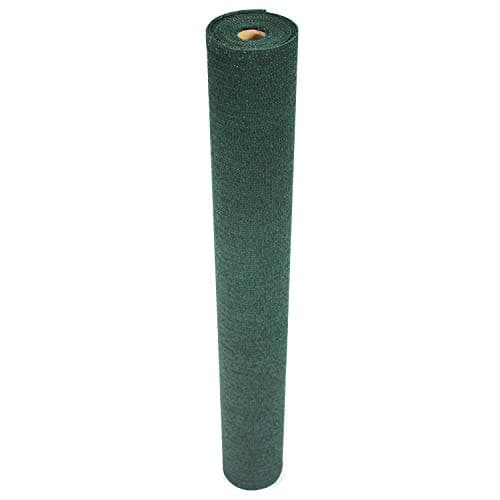 Coolaroo Sun Protection Shade Fabric, 90% UV BlockThe densest fabric Coolaroo publishes, on the same fifteen-year UV warranty — the one to buy when the thing you are shading is people rather than plants. | The densest published fabric, for the deepest shade | Knitted HDPE, up to 90% UV block, air flows through the knit | $57.98 · View on Amazon |
| 02 |  ColourTree Rectangle Sun Shade Sail, 190 GSMThe clearest published fabric spec in the category — 190 GSM virgin HDPE, 95% UV block, three-year warranty — with the hardware sold separately. | The balance point most people actually want | 190 GSM HDPE mesh, 95% UV block, breathable | $79.99 · View on Amazon |
| 03 | 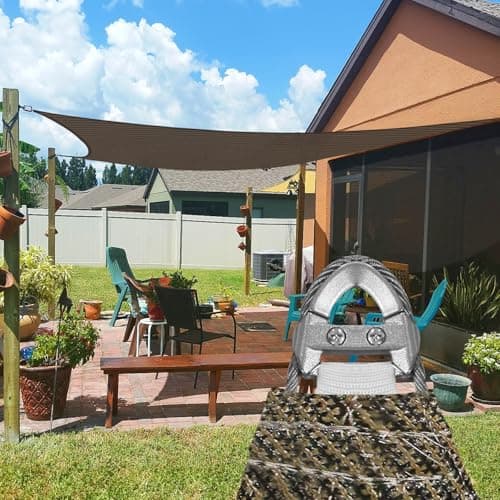 Windscreen4less Cable Shade Sail, 260 GSMThe heaviest fabric and the longest warranty of any sail here — seven years — and the only one with a galvanized cable sewn through the perimeter. | Where fade matters most: the longest warranty | 260 GSM high-density polyethylene, UV 95 | $142.48 · View on Amazon |
| 04 | 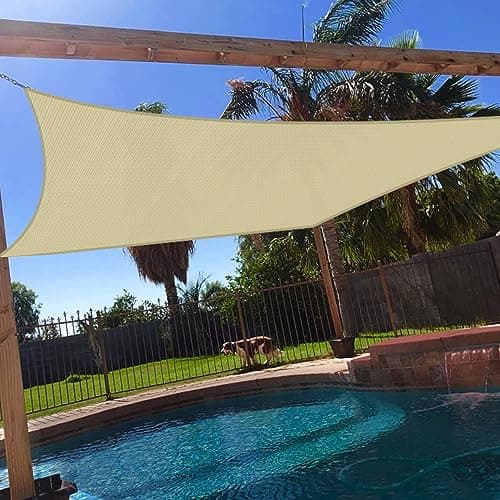 Windscreen4less Webbing Shade Sail, 180 GSMThe budget option that still publishes its numbers: 180 GSM, UV 90, three years — enough for a small span, not enough for a windy one. | What a lighter fabric actually costs you | 180 GSM polyethylene, UV 90 | $53.98 · View on Amazon |
The durability table
Every published figure we could source for these structures, in one place, with the manufacturer page each number came from. Where a cell reads "Not published by manufacturer", that figure does not exist in the manufacturer's own material — we do not estimate it and we do not copy one from another site.
| Model | Wind rating (mph) | Snow load | Frame | Roof | Anchoring required | Warranty | Spec source |
|---|---|---|---|---|---|---|---|
| Coolaroo Sun Protection Shade Fabric, 90% UV BlockTop pick | Not published by manufacturer | Not published by manufacturer | No frame — HDPE fabric in a knitted tape/mono construction | Knitted HDPE, up to 90% UV block, air flows through the knit | Not published by manufacturer | 15-year fabric warranty against cracks, splits and tears due to UV degradation | Coolaroo Sun Protection Fabric 90% UV Block product pageChecked 2026-09-29 |
| ColourTree Rectangle Sun Shade Sail, 190 GSM | Not published by manufacturer | Not published by manufacturer | No frame — 100% virgin (non-recycled) HDPE fabric, reinforced stitched seams | 190 GSM HDPE mesh, 95% UV block, breathable | Stainless steel D-ring at each corner; cable rope and hardware kits sold separately | 3 years under normal weather and usage | ColourTree rectangle shade sail product pageChecked 2026-09-26 |
| Windscreen4less Cable Shade Sail, 260 GSM | Not published by manufacturer | Not published by manufacturer | Steel-wired perimeter with galvanized cable and A-ring reinforcement | 260 GSM high-density polyethylene, UV 95 | Strengthened A-rings at the corners, steel wire reinforced edges | 7 years under normal weather conditions | Windscreen4less shade sails pageChecked 2026-09-26 |
| Windscreen4less Webbing Shade Sail, 180 GSM | Not published by manufacturer | Not published by manufacturer | Webbing-reinforced perimeter, no cable | 180 GSM polyethylene, UV 90 | Steel D-rings | 3 years | Windscreen4less shade sails pageChecked 2026-09-26 |
Every pick in full
The densest published fabric, for the deepest shade
Coolaroo Sun Protection Shade Fabric, 90% UV Block
The densest fabric Coolaroo publishes, on the same fifteen-year UV warranty — the one to buy when the thing you are shading is people rather than plants.
- Wind rating
- Not published by manufacturer
- Snow load
- Not published by manufacturer
- Frame
- No frame — HDPE fabric in a knitted tape/mono construction
- Roof
- Knitted HDPE, up to 90% UV block, air flows through the knit
- Anchoring
- Not published by manufacturer
- Warranty
- 15-year fabric warranty against cracks, splits and tears due to UV degradation
- Sizes
- 6 x 15 ft, 6 x 50 ft, 6 x 100 ft and 12 x 50 ft
If the reason you are drawn to a dark sail is that you want genuinely deep shade, this is the fabric that delivers it — and it delivers it through density rather than color.
Knitted HDPE at up to 90% UV block, with air flowing through the knit. Ninety percent is the figure to want when the thing being shaded is people. It is a property of the tape-and-mono knit, and it is what produces the dim, cool quality of light people associate with a dark sail.
A 15-year fabric warranty against cracks, splits and tears due to UV degradation. The longest published fabric term we track anywhere on this site. Note what it covers: cracking, splitting and tearing — the structural end of UV damage. No fabric warranty in this category covers color fade, which is worth knowing before you choose a shade you need to stay exact.
Sizes 6 x 15 ft, 6 x 50 ft, 6 x 100 ft and 12 x 50 ft. Sold by the roll, which means you are cutting and finishing the edges yourself. The reward is the density and the warranty.
Skip it if: You want the space underneath to stay bright. At 90% block it is genuinely dim, and that is the point.
#ad Price shown as of November 11, 2026. How this site is funded
Specifications from Coolaroo Sun Protection Fabric 90% UV Block product page, checked 2026-09-29.
The balance point most people actually want
ColourTree Rectangle Sun Shade Sail, 190 GSM
The clearest published fabric spec in the category — 190 GSM virgin HDPE, 95% UV block, three-year warranty — with the hardware sold separately.
- Wind rating
- Not published by manufacturer
- Snow load
- Not published by manufacturer
- Frame
- No frame — 100% virgin (non-recycled) HDPE fabric, reinforced stitched seams
- Roof
- 190 GSM HDPE mesh, 95% UV block, breathable
- Anchoring
- Stainless steel D-ring at each corner; cable rope and hardware kits sold separately
- Warranty
- 3 years under normal weather and usage
- Sizes
- 14 sizes, 8 x 10 ft to 16 x 20 ft
The fabric to look at if you want real UV protection without making the space underneath feel like a cave.
190 GSM 100% virgin HDPE at 95% UV block, breathable. Ninety-five percent UV block with air passing through the knit — the combination that gives you cool shade rather than a hot pocket. Virgin rather than recycled HDPE is published here, and it matters for fade: recycled stock carries whatever pigment and UV-stabiliser history came with it.
Reinforced stitched seams and stainless steel D-rings at each corner. Hardware sold separately, as it is across the category.
14 sizes, 8 x 10 ft to 16 x 20 ft, three-year warranty. The widest size spread of any sail here, so the color choice is not constrained by only one dimension being available in the shade you want.
The useful point for this page: 95% block at 190 GSM. Compare that with the 90% block at 180 GSM further down. Ten grams of fabric weight, five percentage points of UV block, and nothing to do with color.
Skip it if: You are shading plants rather than people. 95% block is far more than most vegetables want — [best shade cloth for a garden](/shade-sails/best-shade-cloth-for-garden) covers the lighter densities.
#ad Price shown as of November 11, 2026. How this site is funded
Specifications from ColourTree rectangle shade sail product page, checked 2026-09-26.
Where fade matters most: the longest warranty
Windscreen4less Cable Shade Sail, 260 GSM
The heaviest fabric and the longest warranty of any sail here — seven years — and the only one with a galvanized cable sewn through the perimeter.
- Wind rating
- Not published by manufacturer
- Snow load
- Not published by manufacturer
- Frame
- Steel-wired perimeter with galvanized cable and A-ring reinforcement
- Roof
- 260 GSM high-density polyethylene, UV 95
- Anchoring
- Strengthened A-rings at the corners, steel wire reinforced edges
- Warranty
- 7 years under normal weather conditions
- Sizes
- Not published by manufacturer
Fade is a UV problem, and the fabric with the longest published UV term is the one most likely to still look like the color you chose in year five.
260 GSM HDPE at UV 95, with a seven-year warranty under normal weather conditions. Seven years against a category norm of three. The term does not promise color retention — none of them do — but a manufacturer willing to stand behind the fabric for seven years is making a statement about its UV stabilisation, and UV stabilisation is exactly what slows fading.
A galvanized cable perimeter with A-ring reinforcement. Relevant to this page because a sail that stays taut fades evenly. A sail that sags develops a wear pattern along the fold and a bleached line where water pools and dries repeatedly — fading that reads as damage rather than as age.
The heaviest fabric on this site at 260 GSM. More mass of polymer per square foot means more UV stabiliser per square foot, which is the mechanism behind both the long warranty and slower visible fade.
Skip it if: The span is small and sheltered. This is more sail than a 10 ft patio triangle needs.
#ad Price shown as of November 11, 2026. How this site is funded
Specifications from Windscreen4less shade sails page, checked 2026-09-26.
What a lighter fabric actually costs you
Windscreen4less Webbing Shade Sail, 180 GSM
The budget option that still publishes its numbers: 180 GSM, UV 90, three years — enough for a small span, not enough for a windy one.
- Wind rating
- Not published by manufacturer
- Snow load
- Not published by manufacturer
- Frame
- Webbing-reinforced perimeter, no cable
- Roof
- 180 GSM polyethylene, UV 90
- Anchoring
- Steel D-rings
- Warranty
- 3 years
- Sizes
- Not published by manufacturer
On the page as the comparison that makes the point: the lightest published fabric here, and the lowest published block rate.
180 GSM polyethylene at UV 90. Against the ColourTree's 190 GSM at 95%, this is the clearest evidence available that block rate tracks fabric weight and knit. Both are available in multiple colors. The block figures differ anyway.
A webbing-reinforced perimeter with no cable, and steel D-rings. Steel rather than stainless at the corners, so expect rust streaks near a pool or in salt air — which on a light-colored sail shows up far more than on a dark one. That is a genuine color consideration, and it is about staining rather than physics.
Three years of warranty. Standard, and the right expectation for a fabric at this weight.
Skip it if: You are shading a seating area. Five percentage points of extra transmitted UV is noticeable on skin across an afternoon.
#ad Price shown as of November 11, 2026. How this site is funded
Specifications from Windscreen4less shade sails page, checked 2026-09-26.
What color does not change: UV block
Every manufacturer on this site publishes a UV block rate per fabric, and none publishes one per color. ColourTree's rectangle is 95% at 190 GSM. Windscreen4less's webbing sail is UV 90 at 180 GSM, and its cable sail is UV 95 at 260 GSM. Coolaroo's densest is up to 90%. Those figures attach to the cloth, and the same cloth is sold in a range of shades.
Which is the single most useful thing to know before you shop. If protection is the goal, you are choosing a fabric weight and a knit, and then choosing a color from whatever that fabric comes in. Doing it the other way round means letting the shade of the cloth decide your UV protection, and the specs say it does not get a vote.
The related spec is shade percentage, and it is not the same as UV block. Shade sail GSM and shade percentage explained covers the difference in full — in short, one describes how much ultraviolet is stopped and the other how much visible light is, and a listing will happily quote whichever number is higher.
And breathability is a knit property too. Every HDPE sail here is breathable by construction, which is what stops hot air collecting underneath. A waterproof polyester sail blocks everything including airflow, and will feel hotter under it than any knitted sail of any color.
What color genuinely does change
Three things, and they are worth real consideration — just not before the fabric.
- Glare, and this is the big one. A light sail transmits more visible light, so the space underneath stays bright and the sky through the knit stays dazzling. A dark sail transmits less, so you get a dimmer, more restful space and you can look up without squinting. People who describe a sail as "not shady enough" are usually describing glare rather than UV.
- Surface heat, in the other direction. A dark fabric absorbs more of the energy it stops and gets hotter to the touch; a light one reflects more of it away. On a breathable knit with air moving through it this matters less than it sounds, because the heat is carried off the cloth rather than radiated down — but on a still day a dark sail is a warm ceiling.
- How fading reads. All of these fabrics fade; UV is what ends them. A mid-tone or darker color fades toward something that still looks intentional. A strong saturated color fades toward a washed-out version of itself, which reads as tired within a few seasons. No fabric warranty in this category covers color fade, so the sensible hedge is a color you would still accept 20% lighter.
- And visible staining, which nobody mentions. Light sails show everything: pollen, tree sap, the rust streak from a steel D-ring, the mold shadow on the underside. If the sail sits under trees or near a steel fixing, a mid-tone is a far more forgiving choice.
The published figures, side by side
Four fabrics, all available in a range of colors, all with different block rates. The pattern is the argument.
| Fabric | Weight | Published block | Warranty | Edge |
|---|---|---|---|---|
| Coolaroo Sun Protection | Knitted HDPE, tape/mono | Up to 90% UV block | 15 years vs UV cracking | Roll — edges are yours |
| ColourTree rectangle | 190 GSM virgin HDPE | 95% UV block | 3 years | Stitched, stainless D-rings |
| Windscreen4less cable | 260 GSM HDPE | UV 95 | 7 years | Galvanized cable, A-rings |
| Windscreen4less webbing | 180 GSM polyethylene | UV 90 | 3 years | Webbing, steel D-rings |
Four fabrics, four block rates, and not one of them varies by color. 180 GSM gives 90%; 190 GSM gives 95%; 260 GSM gives 95% with a seven-year term behind it. The number that changes is the weight of the cloth.
Which makes the shopping order simple. Pick the block rate your use needs, pick the fabric weight that publishes it, check the edge construction against your span — then pick the color you like from what is left.
Choosing a color, once the fabric is settled
- Over a seating or dining area: mid-tone to dark. Glare is the complaint people actually have, and a darker cloth is the fix.
- Over a pool: mid-tone, and stainless hardware. Light fabric plus any steel fitting equals rust streaks, and chlorinated splashback marks a pale sail quickly.
- Under trees: mid-tone or darker. Sap, pollen and leaf stain are permanent on a pale knit and invisible on a mid one.
- Where you want the house behind it to stay bright: light. A dark sail outside a window makes the room behind it noticeably gloomier.
- If you want it to disappear: match the house, not the garden. Planting changes color three times a year; the wall behind it does not.
- Whatever you choose, assume it lightens. Pick a shade you would still be happy with after a few summers, because fade is the one thing no warranty here covers.
Questions people ask
What is the best color for a shade sail?
Do dark shade sails block more UV than light ones?
Do dark shade sails get hotter?
Which shade sail color fades least?
Does shade sail color affect glare?
What color shade sail is best over a pool?
Should I choose the fabric or the color first?
Where these figures came from
- Coolaroo Sun Protection shade fabric 90% UV block — knitted HDPE in a tape/mono construction, up to 90% UV block, air flows through the knit, 15-year fabric warranty against cracks, splits and tears from UV degradation
- ColourTree rectangle sun shade sail — 190 GSM 100% virgin HDPE, 95% UV block, breathable, reinforced stitched seams, stainless D-rings, 14 sizes, 3-year warranty
- Windscreen4less shade sails — cable sail 260 GSM HDPE at UV 95 with a 7-year warranty; webbing sail 180 GSM polyethylene at UV 90 with steel D-rings and a 3-year warranty
Found an error? Tell us and we will correct it within seven days and note the change on the page with a dated line — see our editorial policy.