Hardtop vs soft top gazebos
This is not a quality comparison. It is a question about whether you want a permanent structure or a seasonal one, and the honest answer is different for different people.
By Ryder M. · Published · Last updated
We compare published manufacturer specifications, warranty terms and owner-reported failure modes. We have not physically tested these structures. How we judge shade structures
Slat & Shade earns a commission on qualifying purchases made through links on this page. It costs you nothing extra and never changes what we recommend. Full disclosure
Part of Hardtop Gazebos
The short answer
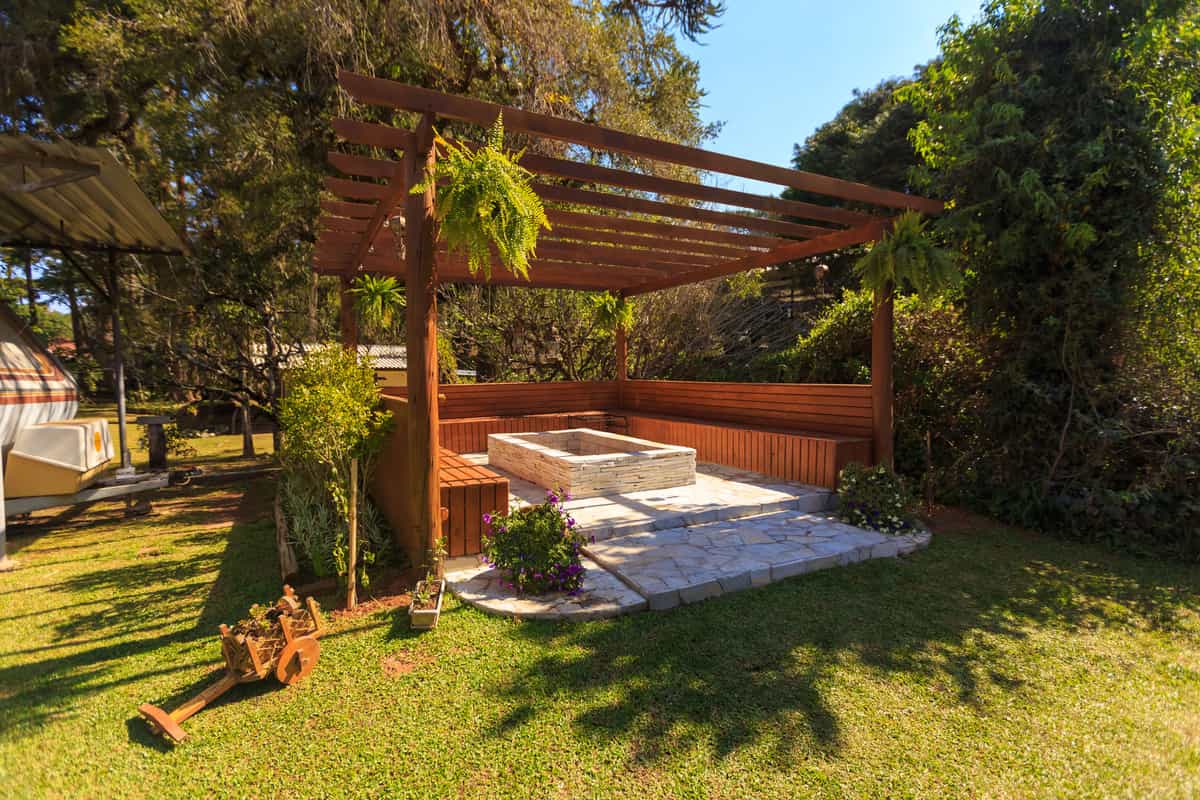
Buy a hardtop if the structure stays up year-round and you want rain cover you can rely on. Buy a soft top if you will take it down each winter, or if you want shade this summer for a fraction of the cost. A fabric canopy is a consumable measured in seasons; a hardtop is a structure measured in decades.
Our picks at a glance
| # | Structure | Best for | Wind rating | Price |
|---|---|---|---|---|
| 01 | 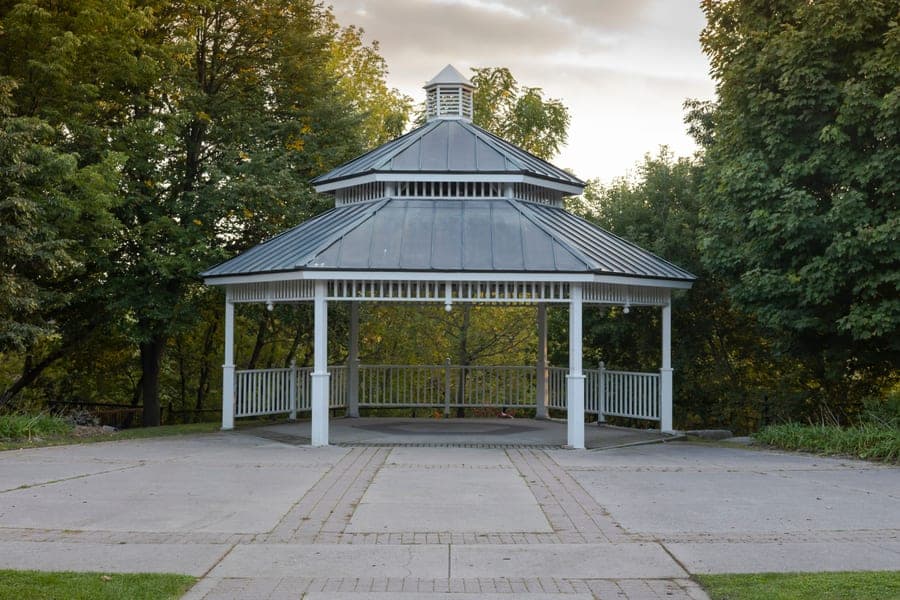 Sojag Messina Hardtop GazeboThe strongest warranty structure in the category — limited lifetime on the frame and 15 years on the finish — paired with wind and snow ratings the manufacturer describes but does not print. | Buy this if you want the hardtop | Not published by manufacturer | Check price on Amazon |
| 02 | 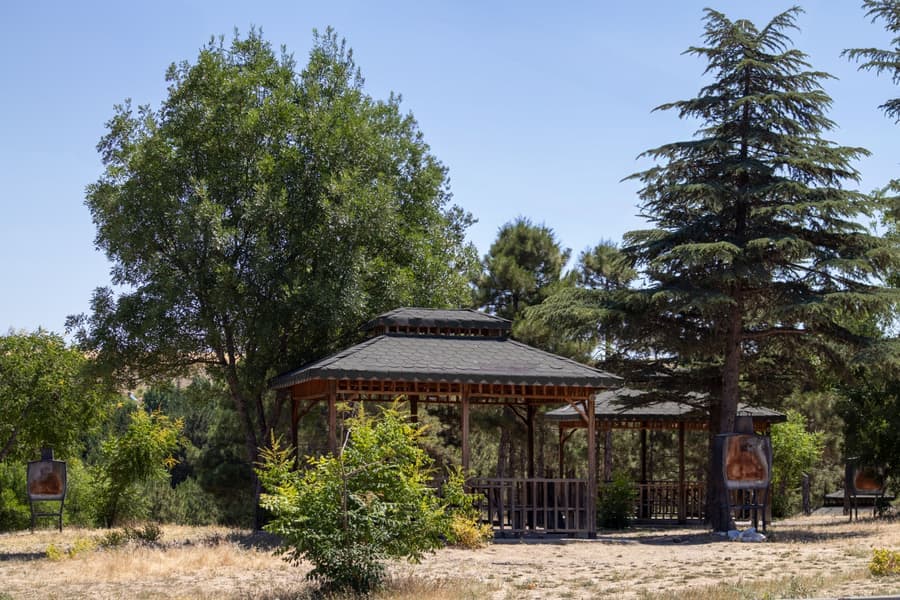 Yardistry Meridian 12 x 14 Cedar GazeboThe only structure here with 6x6 cedar posts and a five-year rot warranty — and it publishes no wind or snow figure at all. | The hardtop upgrade | Not published by manufacturer | Check price on Amazon |
| 03 | 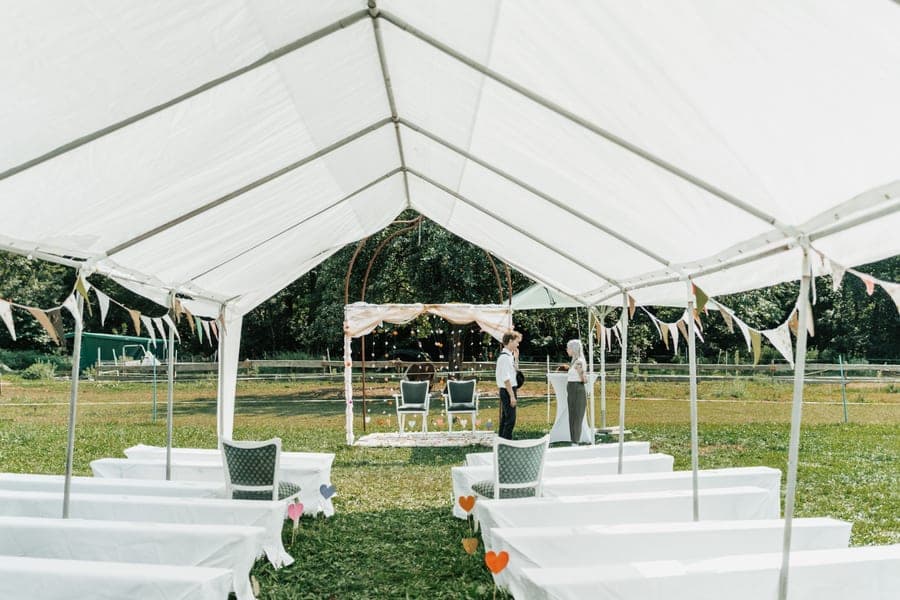 Eurmax Pro 10 x 10 Aluminum Pop-Up CanopyAn aluminum-framed commercial pop-up with a fire-certified 500-denier top — a shade structure you put away, not one you leave standing. | Buy this if you want the seasonal option | Not published by manufacturer | Check price on Amazon |
The durability table
Every published figure we could source for these structures, in one place, with the manufacturer page each number came from. Where a cell reads "Not published by manufacturer", that figure does not exist in the manufacturer's own material — we do not estimate it and we do not copy one from another site.
| Model | Wind rating (mph) | Snow load | Frame | Roof | Anchoring required | Warranty | Spec source |
|---|---|---|---|---|---|---|---|
| Sojag Messina Hardtop GazeboTop pick | Not published by manufacturer | Not published by manufacturer | Powder-coated aluminum | Galvanized steel panels | Not published by manufacturer | 1 year limited on the gazebo; limited lifetime on the aluminum/steel frame; 15 years on the powder-coated finish | Sojag hardtop gazebo collectionChecked 2026-09-26 |
| Yardistry Meridian 12 x 14 Cedar Gazebo | Not published by manufacturer | Not published by manufacturer | 100% premium cedar, 6 in. x 6 in. posts with heavy corner gussets | Rust-proof coffee-brown aluminum | Post mounting brackets supplied; anchoring hardware is not, because mounting surfaces vary | 1 year on materials and workmanship; 5 years on lumber against rot and decay | Yardistry Meridian 12x14 product pageChecked 2026-09-26 |
| Eurmax Pro 10 x 10 Aluminum Pop-Up Canopy | Not published by manufacturer | Not published by manufacturer | Aluminum | 500D polyester with PU coating, seam-sealed, CPAI-84 fire retardant certified | Not published by manufacturer | Not published by manufacturer | Eurmax Pro 10x10 product pageChecked 2026-09-26 |
Every pick in full
Buy this if you want the hardtop
Sojag Messina Hardtop Gazebo
The strongest warranty structure in the category — limited lifetime on the frame and 15 years on the finish — paired with wind and snow ratings the manufacturer describes but does not print.
- Wind rating
- Not published by manufacturer
- Snow load
- Not published by manufacturer
- Frame
- Powder-coated aluminum
- Roof
- Galvanized steel panels
- Anchoring
- Not published by manufacturer
- Warranty
- 1 year limited on the gazebo; limited lifetime on the aluminum/steel frame; 15 years on the powder-coated finish
- Sizes
- 10 x 10 ft through 12 x 20 ft
The hardtop case, made by its warranty: one year limited on the gazebo, a limited lifetime warranty on the aluminum and steel frame, and fifteen years on the powder-coated finish. That is a manufacturer talking in decades, and it is a conversation no soft-top manufacturer can have — because the canopy will not be there in decades.
Galvanized steel panels on a powder-coated aluminum frame, in sizes from 10 x 10 through 12 x 20. The steel roof is what buys you the two things a soft top cannot deliver: reliable rain cover, and a roof that does not need replacing on a cycle.
What you give up by choosing it: a substantially higher price, an assembly that takes hours rather than minutes, a permanent footprint that has to be anchored, and a structure that will be standing there in February whether you want it to be or not. If any of those is the wrong answer for you, the soft top is not a compromise — it is the correct product.
Skip it if: You want to take the structure down each winter, or you are not ready to anchor something permanently to your patio.
#ad Price shown as of September 26, 2026. How this site is funded
Specifications from Sojag hardtop gazebo collection, checked 2026-09-26.
The hardtop upgrade
Yardistry Meridian 12 x 14 Cedar Gazebo
The only structure here with 6x6 cedar posts and a five-year rot warranty — and it publishes no wind or snow figure at all.
- Wind rating
- Not published by manufacturer
- Snow load
- Not published by manufacturer
- Frame
- 100% premium cedar, 6 in. x 6 in. posts with heavy corner gussets
- Roof
- Rust-proof coffee-brown aluminum
- Anchoring
- Post mounting brackets supplied; anchoring hardware is not, because mounting surfaces vary
- Warranty
- 1 year on materials and workmanship; 5 years on lumber against rot and decay
- Sizes
- Roof 12 x 14 ft; base 10 ft 10⅜ in. x 12 ft 10⅜ in.
If the reason you are considering a hardtop is permanence, this is the most permanent version of it: 100% premium cedar with 6 in. x 6 in. posts and heavy corner gussets under a rust-proof aluminum roof, with a five-year warranty on the lumber against rot and decay.
It is here because it sharpens the comparison. The distance between a soft-top gazebo and this is not one step — it is the difference between garden furniture and a piece of structure. A cedar gazebo with 6x6 posts reads as architecture, and it is repairable board by board for as long as you keep sealing it.
The condition: re-seal every two to three years. Neglected cedar grays, checks at the through-bolts and rots at the end grain, and at that point you would have been better off with aluminum — or, frankly, with a soft top you replaced twice.
Skip it if: You will not maintain it, or your budget is anywhere near soft-top territory. This is the top of the hardtop range, not a middle option.
#ad Price shown as of September 26, 2026. How this site is funded
Specifications from Yardistry Meridian 12x14 product page, checked 2026-09-26.
Buy this if you want the seasonal option
Eurmax Pro 10 x 10 Aluminum Pop-Up Canopy
An aluminum-framed commercial pop-up with a fire-certified 500-denier top — a shade structure you put away, not one you leave standing.
- Wind rating
- Not published by manufacturer
- Snow load
- Not published by manufacturer
- Frame
- Aluminum
- Roof
- 500D polyester with PU coating, seam-sealed, CPAI-84 fire retardant certified
- Anchoring
- Not published by manufacturer
- Warranty
- Not published by manufacturer
- Sizes
- 10 x 10 ft, 11.1 ft peak height
We do not have a soft-top gazebo in our registry, for a reason we should state plainly: they are fabric-roofed structures whose durability specifications are largely unpublished, and this site exists to compare published figures. What we do have is the well-documented version of the same idea — a commercial pop-up.
The specification is genuinely good: 500D polyester with a PU coating, seam-sealed, CPAI-84 fire retardant certified, on an aluminum frame, 10 x 10 ft with an 11.1 ft peak height. That is commercial event equipment rather than a consumer product, and the fabric spec is better documented than most soft-top gazebo canopies.
What it is honestly for: shade you put up and take down. It gives you the soft-top advantages — a fraction of the cost, minutes to deploy, nothing anchored, nothing standing in February — without pretending to be a structure. No wind rating is published, which is the correct answer for a product whose wind strategy is to be folded down.
If you want the fabric-gazebo look specifically, read replacement canopy guide first — the replacement cycle is the cost nobody prices in.
Skip it if: You want rain cover you can leave up, or you want the structure to be there permanently. This is deliberately temporary.
#ad Price shown as of September 26, 2026. How this site is funded
Specifications from Eurmax Pro 10x10 product page, checked 2026-09-26.
The decision table
Everything that actually separates them, before any of the detail below.
| Hardtop gazebo | Soft top / fabric gazebo | |
|---|---|---|
| Roof | Rigid galvanized steel or polycarbonate panels on a metal or cedar frame | Fabric canopy, usually polyester, tensioned over a frame |
| Rain cover | Reliable. This is the main reason to buy one | Partial. Sheds light rain; pools, leaks at seams and sags under sustained rain |
| Wind behavior | Poor for its weight — a solid roof loads rather than letting wind through. Published ratings 40-50 mph on aluminum frames, 100 mph on the cedar-framed Norwood, and only when anchored | Worse. Fabric flogs, tears at the grommets, and the frame follows. No manufacturer publishes a meaningful figure |
| Snow | Some models publish a figure — Sunjoy's converts to roughly 17.9 lb/ft². Clear it regardless | None. Take it down before the first snow; fabric pools under wet snow and concentrates the load on the grommets |
| Lifespan | Decades for the frame. Sojag covers the frame for a limited lifetime and the finish for 15 years | The frame may last years; the canopy is a consumable measured in seasons |
| Ongoing cost | Effectively none beyond washing and seasonal fastener checks | A replacement canopy every few seasons, and the right one can be hard to source |
| Assembly | Hours, two people, and it has to be anchored | Minutes to an hour. Often one person |
| Commitment | Permanent. Anchored, and often at the threshold where a permit becomes relevant | None. It comes down whenever you like and goes in a bag |
| Cost | Substantially higher up front | A fraction of it |
| Best for | A structure you leave standing, over a space you use in rain as well as sun | Shade this summer, a rental, an uncertain layout, or a yard you want empty in winter |
Buy a hardtop if...
- The structure is staying in one place for years. Anchoring, permits and a real assembly only make sense once. If you are still deciding where the seating area goes, decide first.
- You want to use the space in rain. This is the single clearest reason and it is worth paying for. A fabric canopy sheds a shower; it does not keep a dinner table dry through an evening of steady rain.
- You do not want a replacement cycle. A canopy every few seasons is a real ongoing cost and a real annoyance, and sourcing the right one for an older model is harder than it sounds — see replacement canopy guide.
- You get snow and want the structure to survive winter. Only hardtops publish snow figures at all, and even those come with instructions to clear the roof.
- You want the space to read as part of the house. A cedar or powder-coated aluminum structure with a rigid roof looks like architecture. A fabric gazebo looks like garden furniture, which is fine if that is what you want.
Buy a soft top if...
And this is a genuine recommendation, not a consolation. There are situations where a soft top is straightforwardly the better purchase and a hardtop would be a mistake.
- You want the yard clear in winter. A hardtop is there in February. If the space is a lawn you use in summer and want back the rest of the year, a structure you fold away is the right answer.
- You are renting, or you cannot drill. Anchoring a hardtop properly means going into a slab, a deck's framing or a poured footing. If none of that is available to you, a soft top is not a compromise — it is the only sane option. How to anchor a gazebo explains why no-drill methods do not deliver a published rating.
- You have not settled the layout. People move their seating area more than they expect. A structure you can pick up is worth a lot during that phase.
- The budget is the constraint and you want shade now. A soft top this month beats a hardtop in three years. A cheap hardtop with no published specifications is the purchase we would avoid — see the roundups for what that looks like.
- You need it occasionally, for events. Then you do not want a gazebo at all — you want a commercial pop-up, which is a better product for that job than either of these.
Where each one fails
The section manufacturers cannot write, which is usually the most useful part of a comparison.
Hardtops fail at the anchors and at the finish. The frame is rarely the problem: Sojag's willingness to cover it for a limited lifetime says as much. What goes is the powder coat on the sunward face, which chalks irreversibly, and the plated-steel fasteners at the base plate, which sit in standing water and dry last. Polycarbonate roofs add a third: creep under repeated snow loading, gradual and generally uncovered. And an unanchored hardtop fails spectacularly — a solid roof is a sail, and the published rating never applied to it.
Soft tops fail at the fabric, and then at the frame because of the fabric. The canopy loses tension, and a loose canopy flogs in wind. Flogging works the grommets and the seams next to them until something tears, and then a flapping half-attached canopy starts working the frame joints. That is the sequence, and it is why re-tensioning a fabric roof matters far more than it sounds. Water pooling accelerates all of it — a sagging panel collects water, which stretches the panel, which collects more water.
The failure they share is being left up in weather they are not rated for. Neither product is rated for snow on the canopy or roof, and one of them publishes figures. That tells you something about which to leave standing.
Cost over ten years, honestly
We do not publish prices — they move weekly and a stale figure is worse than none — so this has to be framed structurally rather than numerically. The structure of the comparison is what people get wrong.
A hardtop is a large one-off cost with effectively no ongoing cost. Washing, a seasonal fastener check, a stainless bolt upgrade at assembly, and clearing snow. Nothing gets replaced.
A soft top is a small one-off cost with a recurring canopy cost. That is the number to work out before comparing: how many canopies over ten years, at what price each, plus the chance that the right one for your model is discontinued and you end up replacing the whole gazebo anyway. Replacement canopies are model-specific and often year-specific, and that is a real risk rather than a theoretical one.
Run that arithmetic and the two get closer than the sticker prices suggest — sometimes close enough that the hardtop wins on cost alone, sometimes not. The honest conclusion is that cost is rarely the thing that should decide this. Permanence is. If the structure is staying, buy the hardtop; if it is not, buy the soft top and do not feel bad about it.
For the hardtop shortlist, best hardtop gazebos is the full comparison with the durability table. For the other direction, gazebo vs canopy covers the step down the price tier, and canopies covers the removable options properly.
Questions people ask
Is a hardtop gazebo better than a soft top?
How long does a soft top gazebo canopy last?
Can I leave a soft top gazebo up all year?
Is a hardtop gazebo worth the extra cost?
Which handles wind better?
Can I convert a soft top gazebo to a hardtop?
Do hardtop gazebos need more maintenance?
Where these figures came from
- Sojag hardtop gazebo collection — warranty structure, roof and frame materials, size range
- Yardistry Meridian 12x14 — 6x6 cedar posts, aluminum roof, lumber warranty against rot
- Eurmax Pro 10x10 — 500D PU-coated polyester, seam-sealed, CPAI-84 certification, aluminum frame, peak height
- Sunjoy Kingston 12x14 — 3,000 lb snow figure and 50 mph rating, cited for the hardtop column
Found an error? Tell us and we will correct it within seven days and note the change on the page with a dated line — see our editorial policy.