Patio umbrella alternatives
A patio umbrella is the default answer to shade and the weakest structure in the category: everything it does goes through one pole into one base. These are the alternatives, ranked on coverage, cost and what their makers publish.
By Ryder M. · Published · Last updated
We compare published manufacturer specifications, warranty terms and owner-reported failure modes. We have not physically tested these structures. How we judge shade structures
Slat & Shade earns a commission on qualifying purchases made through links on this page. It costs you nothing extra and never changes what we recommend. Full disclosure
Part of Shade Sails
The short answer
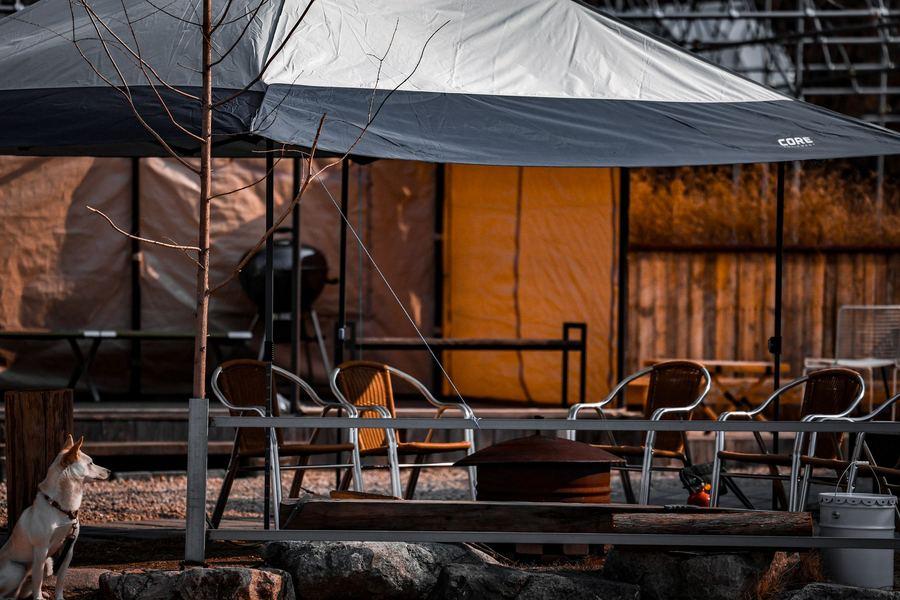
A ColourTree rectangle shade sail is the best umbrella alternative: 190 GSM HDPE at 95% UV block, in sizes to 16 x 20 ft — roughly five times an umbrella's coverage for less money. The budget pick is the ColourTree triangle at 200 GSM. For shade you can still fold away, a retractable awning is the closer substitute.
Our picks at a glance
| # | Structure | Best for | Fabric | Price |
|---|---|---|---|---|
| 01 |  ColourTree Rectangle Sun Shade Sail, 190 GSMThe clearest published fabric spec in the category — 190 GSM virgin HDPE, 95% UV block, three-year warranty — with the hardware sold separately. | The best alternative — far more shade, for less money | 190 GSM HDPE mesh, 95% UV block, breathable | $79.99 · View on Amazon |
| 02 | 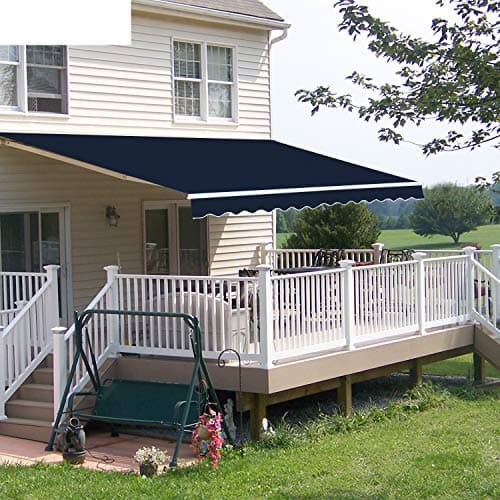 Diensweek P100 Manual Retractable AwningRetracts, which is the only wind strategy a fabric awning has. The published rating is a Beaufort number, not a mile-per-hour figure. | The closest substitute — shade you can still put away | 280 g/m² polyester with PU coating, water resistant, 50 UV+ | $859.99 · View on Amazon |
| 03 | 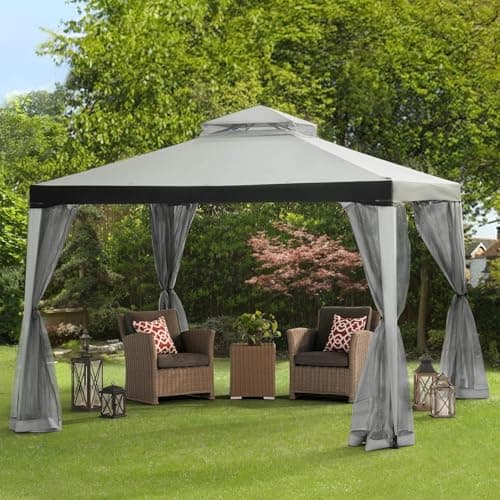 SUNJOY 10 x 10 Soft Top Gazebo with Mosquito NettingNetting and curtains ride on a built-in dual rail rather than clipping to the frame, which is the difference between netting you use and netting that stays in the box. | The freestanding alternative, and the only one with walls | Ventilated two-tier weather-resistant fabric canopy; removable polyester mesh netting on a built-in dual rail system | $103.28 · View on Amazon |
| 04 | 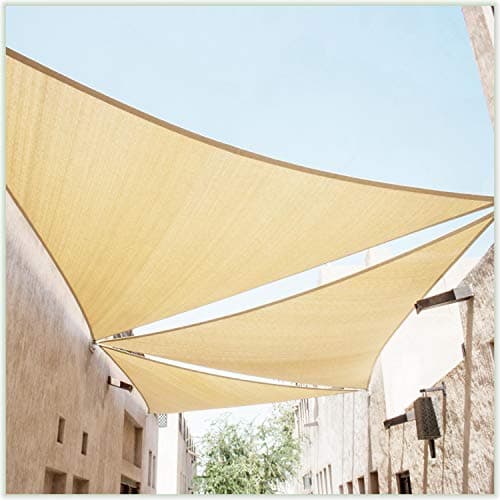 ColourTree Triangle Sun Shade Sail, 200 GSMA heavier 200 GSM fabric in the shape that tensions most predictably — three anchor points cannot fight each other the way four can. | Budget pick — the cheapest real shade on this page | 200 GSM HDPE, 95% UV block | $42.99 · View on Amazon |
| 05 | 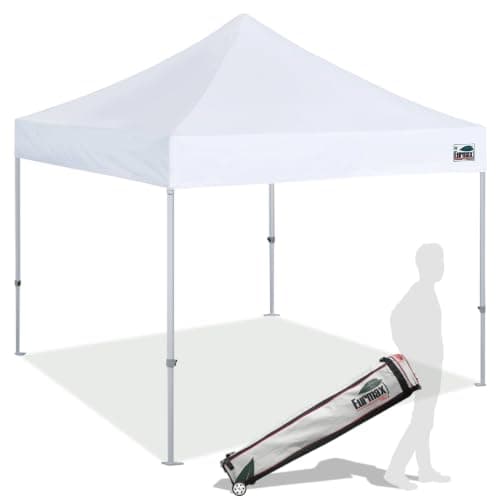 Eurmax Pro 10 x 10 Aluminum Pop-Up CanopyAn aluminum-framed commercial pop-up with a fire-certified 500-denier top — a shade structure you put away, not one you leave standing. | For shade that has to move, like an umbrella does | 500D polyester with PU coating, seam-sealed, CPAI-84 fire retardant certified | $499.91 · View on Amazon |
The durability table
Every published figure we could source for these structures, in one place, with the manufacturer page each number came from. Where a cell reads "Not published by manufacturer", that figure does not exist in the manufacturer's own material — we do not estimate it and we do not copy one from another site.
| Model | Wind rating (mph) | Snow load | Frame | Roof | Anchoring required | Warranty | Spec source |
|---|---|---|---|---|---|---|---|
| ColourTree Rectangle Sun Shade Sail, 190 GSMTop pick | Not published by manufacturer | Not published by manufacturer | No frame — 100% virgin (non-recycled) HDPE fabric, reinforced stitched seams | 190 GSM HDPE mesh, 95% UV block, breathable | Stainless steel D-ring at each corner; cable rope and hardware kits sold separately | 3 years under normal weather and usage | ColourTree rectangle shade sail product pageChecked 2026-09-26 |
| Diensweek P100 Manual Retractable Awning | Beaufort 5 (roughly 19-24 mph) — retract above it | Not published by manufacturer | T5-grade aluminum with PVC-coated stainless steel arm cables and galvanized steel roller tube | 280 g/m² polyester with PU coating, water resistant, 50 UV+ | Not published by manufacturer | 1 year | Diensweek official siteChecked 2026-09-26 |
| SUNJOY 10 x 10 Soft Top Gazebo with Mosquito Netting | Not published by manufacturer | Not published by manufacturer | Powder-coated steel in grey, 0.98 in. x 0.98 in. posts, 26.45 lb | Ventilated two-tier weather-resistant fabric canopy; removable polyester mesh netting on a built-in dual rail system | Anchoring kit included | Not published by manufacturer | Sunjoy 10x10 soft top gazebo product pageChecked 2026-09-29 |
| ColourTree Triangle Sun Shade Sail, 200 GSM | Not published by manufacturer | Not published by manufacturer | No frame — breathable HDPE fabric | 200 GSM HDPE, 95% UV block | Stainless steel D-rings at the corners; hardware sold separately | 3 years | ColourTree triangle shade sail product pageChecked 2026-09-26 |
| Eurmax Pro 10 x 10 Aluminum Pop-Up Canopy | Not published by manufacturer | Not published by manufacturer | Aluminum | 500D polyester with PU coating, seam-sealed, CPAI-84 fire retardant certified | Not published by manufacturer | Not published by manufacturer | Eurmax Pro 10x10 product pageChecked 2026-09-26 |
Every pick in full
The best alternative — far more shade, for less money
ColourTree Rectangle Sun Shade Sail, 190 GSM
The clearest published fabric spec in the category — 190 GSM virgin HDPE, 95% UV block, three-year warranty — with the hardware sold separately.
- Wind rating
- Not published by manufacturer
- Snow load
- Not published by manufacturer
- Frame
- No frame — 100% virgin (non-recycled) HDPE fabric, reinforced stitched seams
- Roof
- 190 GSM HDPE mesh, 95% UV block, breathable
- Anchoring
- Stainless steel D-ring at each corner; cable rope and hardware kits sold separately
- Warranty
- 3 years under normal weather and usage
- Sizes
- 14 sizes, 8 x 10 ft to 16 x 20 ft
The straightforward replacement for an umbrella over a seating area, and it wins on the two things people actually want: area and cost.
Fourteen sizes from 8 x 10 ft to 16 x 20 ft. A 9 ft market umbrella covers roughly 60 sq ft of ground at best, and a good deal less than that once the sun moves off vertical. A 16 x 20 ft sail is 320 sq ft. That is the whole argument, and it is usually available for less than a decent cantilever parasol.
190 GSM 100% virgin (non-recycled) HDPE at 95% UV block, breathable, with reinforced stitched seams and a stainless steel D-ring at each corner. Virgin rather than recycled polymer is what decides how the fourth summer goes, and stainless rings will not streak rust down light fabric.
Breathable is the quiet advantage over an umbrella canopy. Air passes through the knit rather than pushing against it, which is why a sail many times an umbrella's area survives on fixings an umbrella base could never provide.
Three years under normal weather and usage.
And the honest trade, which is the reason umbrellas still sell: it is fixed. An umbrella moves with the sun and folds away in October. A sail is up until you take it down, and it needs three or four anchor points that genuinely take load — the posts and footings can cost more than the sail. Shade sail vs umbrella works through the comparison in detail.
Skip it if: You need the shade to move, or there is nothing solid around the patio to tension from. An umbrella's real advantage is that it needs nothing but its base.
#ad Price shown as of November 11, 2026. How this site is funded
Specifications from ColourTree rectangle shade sail product page, checked 2026-09-26.
The closest substitute — shade you can still put away
Diensweek P100 Manual Retractable Awning
Retracts, which is the only wind strategy a fabric awning has. The published rating is a Beaufort number, not a mile-per-hour figure.
- Wind rating
- Beaufort 5 (roughly 19-24 mph) — retract above it
- Snow load
- Not published by manufacturer
- Frame
- T5-grade aluminum with PVC-coated stainless steel arm cables and galvanized steel roller tube
- Roof
- 280 g/m² polyester with PU coating, water resistant, 50 UV+
- Anchoring
- Not published by manufacturer
- Warranty
- 1 year
- Sizes
- 8 x 7 ft to 15 x 10 ft
If what you value about an umbrella is that the patio is open when you want it open, this is the alternative that keeps that property.
It retracts, which is the same proposition as folding an umbrella — and it does it without a pole standing in the middle of the table. That pole is the other half of why people replace umbrellas: it occupies the one spot everyone wants to sit.
Beaufort 5 published, roughly 19 to 24 mph, with the instruction to retract above it. This is the key comparison on the page: no patio umbrella or cantilever parasol we have found publishes a wind figure at all. An awning tells you its limit and tells you what to do about it.
T5-grade aluminum with PVC-coated stainless steel arm cables and a galvanized steel roller tube, under 280 g/m² PU-coated polyester at 50 UV+, water resistant, 8 x 7 ft to 15 x 10 ft.
Water resistant is a real gain over a sail. A 15 x 10 ft awning covers more than an umbrella and keeps a shower off, which no knitted HDPE sail will do at any weight.
The cons: one year, it needs a house wall that can carry a cantilevered load, and it is far more expensive than any sail here. Siding and fascia are not fixing points — how to attach a pergola to a house sets out what the fixing has to reach.
Skip it if: The seating area is away from the house. An awning needs a wall, and that is a harder constraint than an umbrella's base.
#ad Price shown as of November 11, 2026. How this site is funded
Specifications from Diensweek official site, checked 2026-09-26.
The freestanding alternative, and the only one with walls
SUNJOY 10 x 10 Soft Top Gazebo with Mosquito Netting
Netting and curtains ride on a built-in dual rail rather than clipping to the frame, which is the difference between netting you use and netting that stays in the box.
- Wind rating
- Not published by manufacturer
- Snow load
- Not published by manufacturer
- Frame
- Powder-coated steel in grey, 0.98 in. x 0.98 in. posts, 26.45 lb
- Roof
- Ventilated two-tier weather-resistant fabric canopy; removable polyester mesh netting on a built-in dual rail system
- Anchoring
- Anchoring kit included
- Warranty
- Not published by manufacturer
- Sizes
- 9.84 x 9.84 ft, 9.02 ft high; 9.67 x 9.67 ft between posts, 6.64 ft entry height
Where there is no wall to use and nothing to tension from, this is the practical umbrella replacement — and it solves a problem the umbrella never addresses.
It is freestanding and self-supporting, with an anchoring kit included. Four posts on a 9.84 x 9.84 ft footprint, which is a bigger shaded area than any umbrella in the same price range and considerably more stable than one mast in a base.
Removable polyester mesh netting and curtains on a built-in dual rail. This is the genuine upgrade over an umbrella: an August evening on a patio has a sun problem until eight o'clock and a mosquito problem afterwards, and an umbrella does nothing at all about the second. Each panel slides in one motion.
A ventilated two-tier weather-resistant fabric canopy, where the gap between tiers lets a gust spill rather than lifting the whole panel.
The honest cons: a powder-coated steel frame on 0.98 in. x 0.98 in. posts, 26.45 lb all in, no published wind rating, no published warranty. It has to be staked and taken down when weather is forecast — but then so does an umbrella, and an umbrella cannot be staked at all. 9.02 ft high with a 6.64 ft entry height.
Skip it if: You want the patio visually open. Four posts and hanging fabric is a much bigger presence than a parasol.
#ad Price shown as of November 11, 2026. How this site is funded
Specifications from Sunjoy 10x10 soft top gazebo product page, checked 2026-09-29.
Budget pick — the cheapest real shade on this page
ColourTree Triangle Sun Shade Sail, 200 GSM
A heavier 200 GSM fabric in the shape that tensions most predictably — three anchor points cannot fight each other the way four can.
- Wind rating
- Not published by manufacturer
- Snow load
- Not published by manufacturer
- Frame
- No frame — breathable HDPE fabric
- Roof
- 200 GSM HDPE, 95% UV block
- Anchoring
- Stainless steel D-rings at the corners; hardware sold separately
- Warranty
- 3 years
- Sizes
- Not published by manufacturer
Less than the cost of a basic market umbrella, and on fabric weight it is the best cloth in this comparison.
200 GSM HDPE at 95% UV block — heavier cloth than the rectangle above it and heavier than anything else here. Fabric weight is what keeps a sail stiff enough to hold its shape, and a sail that holds its shape does not flog itself apart.
Three anchor points, which is the easiest install in the category. Three points define a plane, so a triangle pulls flat whatever you do. For a first attempt at replacing an umbrella, with a house wall and one post, that is the shape to start with.
Stainless steel D-rings at the corners, three years under normal weather and usage.
The cons: no published size range, hardware sold separately, and a triangle covers a rectangular table inefficiently. Two overlapping triangles is the standard fix and it is also two sets of fittings — best triangle shade sails covers the layout.
Skip it if: You are shading a rectangular dining table. One triangle leaves two corners in the sun.
#ad Price shown as of November 11, 2026. How this site is funded
Specifications from ColourTree triangle shade sail product page, checked 2026-09-26.
For shade that has to move, like an umbrella does
Eurmax Pro 10 x 10 Aluminum Pop-Up Canopy
An aluminum-framed commercial pop-up with a fire-certified 500-denier top — a shade structure you put away, not one you leave standing.
- Wind rating
- Not published by manufacturer
- Snow load
- Not published by manufacturer
- Frame
- Aluminum
- Roof
- 500D polyester with PU coating, seam-sealed, CPAI-84 fire retardant certified
- Anchoring
- Not published by manufacturer
- Warranty
- Not published by manufacturer
- Sizes
- 10 x 10 ft, 11.1 ft peak height
Last because it is the least permanent, and here because it is the only alternative that can genuinely be relocated the way an umbrella can.
An aluminum frame rather than steel, which on something folded repeatedly is the right material — it does not rust at the hinge points where folding has worn the coating away.
A 500D polyester top with PU coating, seam-sealed, CPAI-84 fire retardant certified. The fire certification is the only published certification on this page, and it matters if there is a grill or a fire pit nearby. An umbrella canopy rarely publishes one.
10 x 10 ft at an 11.1 ft peak — 100 sq ft, clear headroom, and the whole area usable because there is no pole in the middle of it.
The cons, and they are the reason for the ranking: no published wind rating, no warranty term, and it must be ballasted. That last point is also the fair comparison — an umbrella needs a heavy base and a canopy needs weights on each leg, and in both cases it is the part people skip. Best canopy weights covers it.
Skip it if: You want shade standing on the patio permanently without setting it up. A pop-up is something you put out, like an umbrella — it is just better shaped.
#ad Price shown as of November 11, 2026. How this site is funded
Specifications from Eurmax Pro 10x10 product page, checked 2026-09-26.
What an umbrella is good at, and what it is not
Being fair about the original matters, because an umbrella has two real advantages and nothing on this page fully replaces them.
It needs nothing from the property. No wall, no anchor points, no footings, no drilling. Put the base down and you have shade. Every alternative here needs either a wall, three or four fixing points, ground to stake into, or ballast.
And the shade moves with the sun. Tilt it at five o'clock and you are still in shade — a fixed sail sized for noon leaves you in sun by late afternoon.
Against that: one mast carries everything. Sixty-odd square feet of canopy, all of its wind load, resolved through a single pole into a single base — and the base supplied with most umbrellas is sized to stop it falling over on a still day, not to resist a gust.
Nothing in the class publishes a wind rating. Not centre-pole, not cantilever, not market umbrellas. On a site that ranks structures on published figures, that absence is the single strongest argument for looking elsewhere, and it is why an awning's honest Beaufort 5 reads as an advantage rather than a weakness.
And the pole is in the middle of the table. Trivial until you have seated six people around it.
The alternatives side by side
Published manufacturer figures only. Coverage is each product's own published size — an umbrella row is not included, because no umbrella in our registry means no published figure to compare, and we will not estimate one.
| Option | Published size | Fabric | Wind guidance | What it needs |
|---|---|---|---|---|
| ColourTree rectangle sail | 8 x 10 ft to 16 x 20 ft | 190 GSM virgin HDPE, 95% UV block | Not published by manufacturer | 3-4 load-bearing anchor points |
| Diensweek P100 awning | 8 x 7 ft to 15 x 10 ft | 280 g/m² PU-coated polyester, 50 UV+ | Beaufort 5 (~19-24 mph), retract above | A house wall that can carry it |
| Sunjoy 10 x 10 soft top | 9.84 x 9.84 ft, 9.02 ft high | Two-tier vented fabric, dual-rail netting | Not published by manufacturer | Ground to stake into — kit included |
| ColourTree triangle sail | Not published by manufacturer | 200 GSM HDPE, 95% UV block | Not published by manufacturer | 3 load-bearing anchor points |
| Eurmax Pro pop-up | 10 x 10 ft, 11.1 ft peak | 500D PU polyester, seam-sealed, CPAI-84 | Not published by manufacturer | Ballast on every leg |
The last column is the one that decides which of these you can actually buy, and it is also the column where an umbrella wins outright: it needs nothing but its own base. Everything else on this page asks something of the property.
Which one replaces which umbrella
- Replacing a centre-pole market umbrella over a table: a rectangle sail sized to overhang the western side. Several times the coverage, no pole in the seating, and usually cheaper.
- Replacing a cantilever parasol: a retractable awning if there is a wall, because you keep the "shade only when I want it" property that made the cantilever attractive — and gain a published wind limit.
- Replacing an umbrella on a patio with nothing to fix to: the freestanding soft-top gazebo. It stakes down, it includes the anchoring kit, and it adds insect screening an umbrella cannot.
- Replacing an umbrella you move around the garden: a pop-up canopy, ballasted. It is the only genuinely portable option here, and the ballast is non-negotiable in exactly the way an umbrella's base weight is.
- And if the honest answer is that you want a better umbrella — buy a far heavier base than the one in the box. Under-weighting is the single failure mode of the whole category.
One siting note that applies to every option: work out where the sun actually is at the hour you use the space. A sail, an awning and a gazebo are all fixed once installed, and the commonest mistake is sizing for midday when the problem is five o'clock. Shade sail sizing and tension covers getting the overhang right.
What we cut, and why
Every model below was a genuine candidate and did not make the list. The reason is stated in each case, because a shortlist with no visible rejections is not evidence of a selection process.
- Cantilever and offset umbrellas
- A real improvement on a centre-pole umbrella — the pole moves out of the seating area — and structurally the worst case in the category: the whole sail area is on a lever arm, so the base has to be far heavier than the one supplied usually is. No published wind rating anywhere in the class.
- Half-wall and balcony umbrellas
- Useful in exactly the niche they are made for and no broader. On a balcony where nothing else fits they are the answer, and they cover a very small area with no published specification.
- Louvered pergolas and hardtop gazebos
- Genuinely better structures, and in a different budget: the cheapest of either in our registry is a four-figure product. If the money has moved that far the comparison is no longer with an umbrella — [best patio shade options](/canopies/best-patio-shade-options) covers the full range.
Questions people ask
What can I use instead of a patio umbrella?
Is a shade sail better than a patio umbrella?
What is the most wind-resistant alternative to an umbrella?
How do I shade a patio with no wall and nothing to attach to?
Where these figures came from
- ColourTree rectangle sun shade sail product page
- ColourTree triangle sun shade sail product page
- Diensweek official site (P100 manual retractable awning)
- Sunjoy 10 x 10 soft top gazebo with mosquito netting product page
- Eurmax Pro 10 x 10 pop-up canopy product page
Found an error? Tell us and we will correct it within seven days and note the change on the page with a dated line — see our editorial policy.