The best triangle shade sails
Three anchor points cannot pull against each other. That one geometric fact is why a triangle stays taut while a four-point sail sags, and it is the reason to start here.
By Ryder M. · Published · Last updated
We compare published manufacturer specifications, warranty terms and owner-reported failure modes. We have not physically tested these structures. How we judge shade structures
Slat & Shade earns a commission on qualifying purchases made through links on this page. It costs you nothing extra and never changes what we recommend. Full disclosure
Part of Shade Sails
The short answer
The ColourTree triangle sail is the best triangle shade sail, at 200 GSM HDPE with 95% UV block, stainless D-rings and a three-year warranty. Choose the Windscreen4less cable sail for a large or exposed triangle — 260 GSM with a galvanized cable sewn through the perimeter and a seven-year warranty.
Our picks at a glance
| # | Structure | Best for | Fabric | Price |
|---|---|---|---|---|
| 01 | 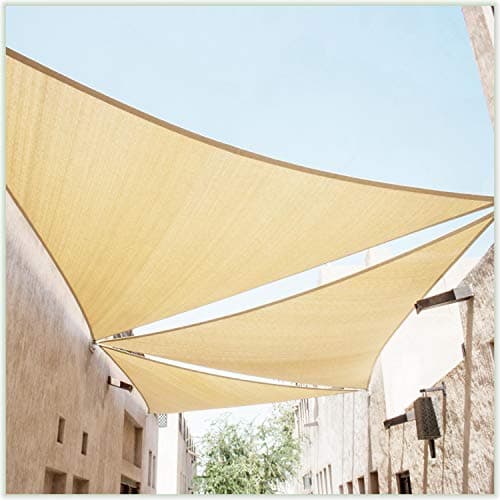 ColourTree Triangle Sun Shade Sail, 200 GSMA heavier 200 GSM fabric in the shape that tensions most predictably — three anchor points cannot fight each other the way four can. | Best triangle overall | 200 GSM HDPE, 95% UV block | $42.99 · View on Amazon |
| 02 | 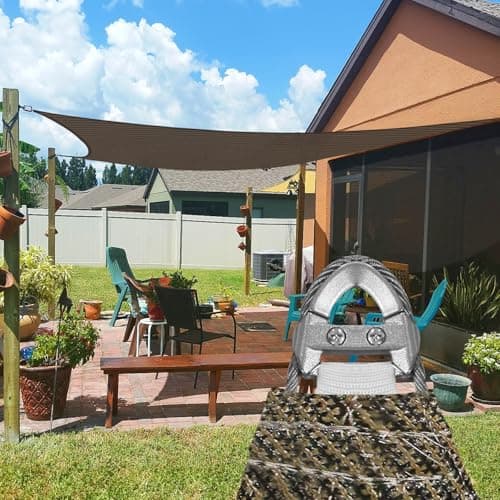 Windscreen4less Cable Shade Sail, 260 GSMThe heaviest fabric and the longest warranty of any sail here — seven years — and the only one with a galvanized cable sewn through the perimeter. | Best for a large or exposed triangle | 260 GSM high-density polyethylene, UV 95 | $142.48 · View on Amazon |
| 03 | 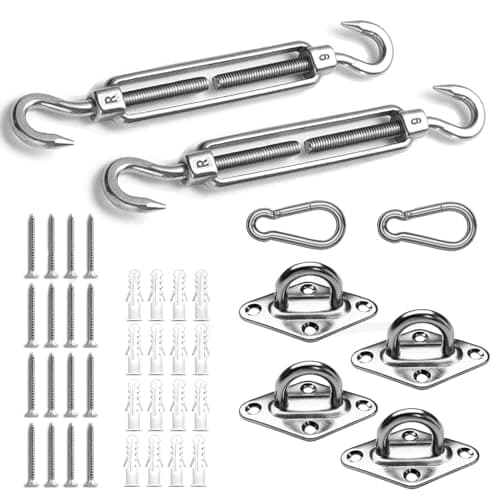 SUNNY GUARD Shade Sail Hardware Kit, 316 Stainless316 marine-grade stainless rather than 304 — the difference that decides whether your fixings survive a coastal or pool-side install. | The hardware actually sized for a triangle | Not published by manufacturer | $19.99 · View on Amazon |
| 04 | 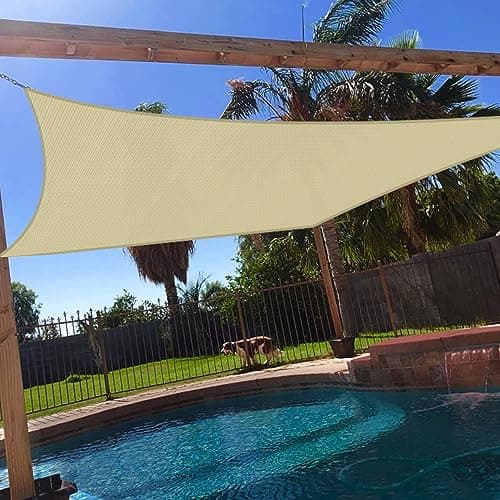 Windscreen4less Webbing Shade Sail, 180 GSMThe budget option that still publishes its numbers: 180 GSM, UV 90, three years — enough for a small span, not enough for a windy one. | The small-triangle budget pick | 180 GSM polyethylene, UV 90 | $53.98 · View on Amazon |
The durability table
Every published figure we could source for these structures, in one place, with the manufacturer page each number came from. Where a cell reads "Not published by manufacturer", that figure does not exist in the manufacturer's own material — we do not estimate it and we do not copy one from another site.
| Model | Wind rating (mph) | Snow load | Frame | Roof | Anchoring required | Warranty | Spec source |
|---|---|---|---|---|---|---|---|
| ColourTree Triangle Sun Shade Sail, 200 GSMTop pick | Not published by manufacturer | Not published by manufacturer | No frame — breathable HDPE fabric | 200 GSM HDPE, 95% UV block | Stainless steel D-rings at the corners; hardware sold separately | 3 years | ColourTree triangle shade sail product pageChecked 2026-09-26 |
| Windscreen4less Cable Shade Sail, 260 GSM | Not published by manufacturer | Not published by manufacturer | Steel-wired perimeter with galvanized cable and A-ring reinforcement | 260 GSM high-density polyethylene, UV 95 | Strengthened A-rings at the corners, steel wire reinforced edges | 7 years under normal weather conditions | Windscreen4less shade sails pageChecked 2026-09-26 |
| SUNNY GUARD Shade Sail Hardware Kit, 316 Stainless | Not published by manufacturer | Not published by manufacturer | 316 marine-grade stainless steel | Not published by manufacturer | Turnbuckles, pad eyes, snap hooks, screws and expansion anchors, sold as a kit per sail shape | Not published by manufacturer | SUNNY GUARD hardware kit product pageChecked 2026-09-26 |
| Windscreen4less Webbing Shade Sail, 180 GSM | Not published by manufacturer | Not published by manufacturer | Webbing-reinforced perimeter, no cable | 180 GSM polyethylene, UV 90 | Steel D-rings | 3 years | Windscreen4less shade sails pageChecked 2026-09-26 |
Every pick in full
Best triangle overall
ColourTree Triangle Sun Shade Sail, 200 GSM
A heavier 200 GSM fabric in the shape that tensions most predictably — three anchor points cannot fight each other the way four can.
- Wind rating
- Not published by manufacturer
- Snow load
- Not published by manufacturer
- Frame
- No frame — breathable HDPE fabric
- Roof
- 200 GSM HDPE, 95% UV block
- Anchoring
- Stainless steel D-rings at the corners; hardware sold separately
- Warranty
- 3 years
- Sizes
- Not published by manufacturer
The heaviest of ColourTree's two published fabrics, in the shape that makes tensioning straightforward, with the clearest spec sheet in the category.
200 GSM HDPE at 95% UV block. Ten grams heavier than the same brand's rectangle, which is the right way round: a triangle concentrates all its tension into three corners rather than spreading it over four, so the cloth between them is working harder.
Breathable HDPE rather than a solid membrane. Air passes through the knit, which is why a triangle sail does not behave like a sail in the nautical sense. A waterproof panel at the same size is a far more frightening object in wind.
Stainless steel D-rings at the corners, with hardware sold separately. Three corners means three fittings rather than four, so the hardware bill on a triangle is genuinely lower — and the SUNNY GUARD kit below is explicitly sized for this shape.
Three years of warranty. The category standard, and worth reading as a statement about UV rather than about construction: these fabrics are killed by sunlight, not by rain.
Size is not published for the triangle range, so confirm the dimension on the listing before ordering. Order the sail smaller than the span — shade sail sizing and tension covers how much smaller.
Skip it if: Your span is large or exposed. At 200 GSM with a stitched edge rather than a cabled one, this is a domestic-scale sail.
#ad Price shown as of November 11, 2026. How this site is funded
Specifications from ColourTree triangle shade sail product page, checked 2026-09-26.
Best for a large or exposed triangle
Windscreen4less Cable Shade Sail, 260 GSM
The heaviest fabric and the longest warranty of any sail here — seven years — and the only one with a galvanized cable sewn through the perimeter.
- Wind rating
- Not published by manufacturer
- Snow load
- Not published by manufacturer
- Frame
- Steel-wired perimeter with galvanized cable and A-ring reinforcement
- Roof
- 260 GSM high-density polyethylene, UV 95
- Anchoring
- Strengthened A-rings at the corners, steel wire reinforced edges
- Warranty
- 7 years under normal weather conditions
- Sizes
- Not published by manufacturer
The heaviest fabric and the longest warranty of any sail we track, and the only one with a galvanized cable sewn through the perimeter — which on a triangle is where the whole load goes.
260 GSM high-density polyethylene at UV 95. Thirty percent heavier cloth than the ColourTree triangle. On a big triangle the fabric has to carry tension across long unsupported edges, and GSM is the only published proxy for how it handles that.
A steel-wired perimeter with galvanized cable and A-ring reinforcement. This is the specification that separates sail classes. A stitched or webbed edge stretches and then scallops inward; a cable edge holds a straight line between corners, which is what keeps a triangle flat instead of dished.
Strengthened A-rings at the corners. An A-ring spreads the pull across a wider arc of fabric than a D-ring does, and on three-point geometry — where each corner takes a third of everything — that is where failures start.
Seven years under normal weather conditions. More than twice the category norm, and the single strongest signal on this page that you are buying a different tier of product.
Size is not published, so the listing is the source for your dimension.
Skip it if: The span is small and sheltered. A 260 GSM cabled sail is more fabric, more weight and more hardware than a 10 ft triangle over a patio table needs.
#ad Price shown as of November 11, 2026. How this site is funded
Specifications from Windscreen4less shade sails page, checked 2026-09-26.
The hardware actually sized for a triangle
SUNNY GUARD Shade Sail Hardware Kit, 316 Stainless
316 marine-grade stainless rather than 304 — the difference that decides whether your fixings survive a coastal or pool-side install.
- Wind rating
- Not published by manufacturer
- Snow load
- Not published by manufacturer
- Frame
- 316 marine-grade stainless steel
- Roof
- Not published by manufacturer
- Anchoring
- Turnbuckles, pad eyes, snap hooks, screws and expansion anchors, sold as a kit per sail shape
- Warranty
- Not published by manufacturer
- Sizes
- M6 turnbuckles, 6 in. to 8 in. adjustable range
On the page because every triangle sail here ships without fittings, and this is the only kit we can find whose manufacturer states the sail size it is designed for.
Sized for triangle sails under 161 sq ft. A published limit, which almost no hardware seller offers. If your triangle is larger than that, this kit is the wrong kit — and knowing that in advance is worth more than any amount of "heavy duty" copy.
316 marine-grade stainless steel, not 304. The difference is molybdenum, and it is what decides whether the fittings pit in a coastal or pool-side install. On a sail over chlorinated water, 304 stainless weeps rust streaks down a wall within a couple of seasons.
Turnbuckles, pad eyes, snap hooks, screws and expansion anchors, with M6 turnbuckles offering a 6 in. to 8 in. adjustable range. The adjustable range is the spec to check against your span: it is also your re-tensioning allowance for the next five years, as the fabric relaxes.
No published warranty. Unusual in this category to publish an alloy grade and not a term, and it is the one gap here.
Skip it if: Your triangle is over 161 sq ft. The manufacturer's own stated limit rules it out and you need a heavier kit.
#ad Price shown as of November 11, 2026. How this site is funded
Specifications from SUNNY GUARD hardware kit product page, checked 2026-09-26.
The small-triangle budget pick
Windscreen4less Webbing Shade Sail, 180 GSM
The budget option that still publishes its numbers: 180 GSM, UV 90, three years — enough for a small span, not enough for a windy one.
- Wind rating
- Not published by manufacturer
- Snow load
- Not published by manufacturer
- Frame
- Webbing-reinforced perimeter, no cable
- Roof
- 180 GSM polyethylene, UV 90
- Anchoring
- Steel D-rings
- Warranty
- 3 years
- Sizes
- Not published by manufacturer
The entry fabric from the same manufacturer as the cable sail, and it publishes its numbers rather than hiding behind adjectives.
180 GSM polyethylene at UV 90. The lightest published fabric here and openly stated as such. For a small triangle over a sandpit, a doorway or a seating nook, 180 GSM is genuinely adequate — it is a large exposed span where it becomes the wrong choice.
A webbing-reinforced perimeter with no cable. This is the honest version of a budget edge: webbing resists stretch better than plain stitching and nothing like as well as cable. Expect to re-tension it more often, and expect the edges to curve slightly between corners.
Steel D-rings at the corners, three years of warranty. Steel rather than stainless, so keep it away from pools and salt air — and pair it with stainless fittings rather than matching the ring material.
UV 90 rather than 95. A real difference under a seating area: five percent more transmitted UV is noticeable on skin over an afternoon, and it is why the denser fabrics are worth the step up when the thing being shaded is people.
Skip it if: The triangle is large, exposed, or over a pool. Light fabric, no cable edge and plain steel rings is the wrong combination for any of those.
#ad Price shown as of November 11, 2026. How this site is funded
Specifications from Windscreen4less shade sails page, checked 2026-09-26.
Why a triangle tensions and a rectangle sags
Three points define a plane. Four do not. A triangle has exactly one shape it can take between its anchors, so once you pull it tight it is tight. A four-point sail has to reconcile four fixings that are almost never in the same plane, and the slack shows up in the middle as a dish.
Which means a triangle is the forgiving shape for a first install. You can get the geometry slightly wrong and still finish with a flat, drum-tight sail. The same tolerance on a rectangle gives you a sag you cannot pull out, no matter how hard you crank the turnbuckles.
And it is why sag is a four-point problem. Shade sail sizing and tension covers the mechanics in full, but the short version is that a dished sail holds water, the water adds weight, the weight deepens the dish, and the fabric fatigues at the low point.
The trade is coverage per sail. A triangle covers roughly half the area of a rectangle on the same two dimensions, which is why larger installs usually end up as two or three overlapping triangles rather than one big rectangle — more hardware, more posts, and a far better result.
The four compared on published figures
Manufacturer figures only. Several of these sails do not publish a size for the triangle range; where that is the case we say so rather than guessing.
| Product | Fabric | UV block | Edge | Warranty |
|---|---|---|---|---|
| ColourTree triangle | 200 GSM HDPE | 95% | Stitched, stainless D-rings | 3 years |
| Windscreen4less cable sail | 260 GSM HDPE | UV 95 | Galvanized cable, A-ring reinforced | 7 years |
| Windscreen4less webbing sail | 180 GSM polyethylene | UV 90 | Webbing, steel D-rings | 3 years |
| SUNNY GUARD hardware kit | 316 marine stainless | Not applicable | For triangles under 161 sq ft | Not published by manufacturer |
The edge column is the one that decides a triangle. Three corners means every pound of tension arrives at one of three points through one of three edges, and a cable edge is the only construction here that holds a straight line under that load.
Seven years against three is not a small difference. On a product whose failure mode is UV degradation, the warranty term is the manufacturer's own estimate of how long its fabric survives sunlight — and the 260 GSM cabled sail is the only one claiming more than three years of it.
Sizing and installing a triangle
- 01Mark your three anchor points and measure each side of the triangle between them, corner fitting to corner fitting.
- 02Deduct the hardware: roughly 8 to 12 in. per corner for a turnbuckle and snap hook, so a 12 ft side wants an 11 ft sail edge or less.
- 03Check the total area against your hardware kit's published limit — the SUNNY GUARD kit stops at 161 sq ft.
- 04Set the three anchors at different heights so the sail has a fall. A flat triangle holds water in the middle of its longest edge.
- 05Fit all three corners loosely first, with the turnbuckles wound almost fully open.
- 06Tension in rotation, a few turns per corner, rather than finishing one corner at a time.
- 07Stop when the fabric drums under a flick and the edges are straight lines between corners.
- 08Re-check and re-tension after two weeks, then every spring — HDPE relaxes, and the turnbuckle range is your allowance for it.
The height difference between anchors is the step most people skip. A triangle set dead level looks correct and then holds a puddle. Aim for a clear fall across the sail so water has somewhere to go, and point the low corner away from the seating. How to install a shade sail covers the full install including post work.
What a triangle still cannot do
- Cover a rectangular patio in one piece. It will shade a diagonal band across it. Two overlapping triangles is the standard answer and it looks better than one undersized rectangle.
- Keep rain off. These are breathable knits at 180 to 260 GSM — water goes through them. The waterproof option is a different product with different wind behavior.
- Survive a storm untended. No shade sail of any shape has a published wind rating, because the posts and footings are yours. Shade sail wind ratings sets out what to read instead and when to take one down.
- Work on three fence posts. A sail pulls sideways with real force and a fence is built to resist wind, not tension. Shade sail posts and footings covers what each attachment point can take.
- Be re-tensioned forever. The turnbuckle range runs out. Plan for a sail that relaxes over five years and a hardware set with adjustment left at the end of it.
What we cut, and why
Every model below was a genuine candidate and did not make the list. The reason is stated in each case, because a shortlist with no visible rejections is not evidence of a selection process.
- ColourTree Rectangle Shade Sail
- A four-point sail, which is a different tensioning problem — covered in [best shade sails](/shade-sails/best-shade-sails).
- Windscreen4less Waterproof Shade Sail
- A solid Terylene polyester membrane rather than a breathable knit, so it catches wind in a way no triangle buyer should want.
Questions people ask
Is a triangle shade sail better than a rectangle?
What is the best triangle shade sail?
What size triangle shade sail should I buy?
How many anchor points does a triangle shade sail need?
Does a triangle shade sail need a cable edge?
What hardware do I need for a triangle shade sail?
Can you overlap two triangle shade sails?
Should I use a rectangle instead?
Where these figures came from
- ColourTree triangle sun shade sail — 200 GSM HDPE, 95% UV block, breathable, stainless steel D-rings with hardware sold separately, 3-year warranty
- Windscreen4less shade sails — cable sail 260 GSM HDPE at UV 95 with galvanized cable perimeter and A-ring reinforcement and a 7-year warranty; webbing sail 180 GSM at UV 90 with steel D-rings and a 3-year warranty
- SUNNY GUARD shade sail hardware kit — 316 marine-grade stainless steel, turnbuckles, pad eyes, snap hooks, screws and expansion anchors, sized for triangle sails under 161 sq ft, M6 turnbuckles with a 6 in. to 8 in. adjustable range
Found an error? Tell us and we will correct it within seven days and note the change on the page with a dated line — see our editorial policy.