Pergola vs pavilion
One word separates these: roof. Everything else people argue about online follows from it, including the two things that actually cost you money.
By Ryder M. · Published · Last updated
We compare published manufacturer specifications, warranty terms and owner-reported failure modes. We have not physically tested these structures. How we judge shade structures
Slat & Shade earns a commission on qualifying purchases made through links on this page. It costs you nothing extra and never changes what we recommend. Full disclosure
Part of Pergolas
The short answer
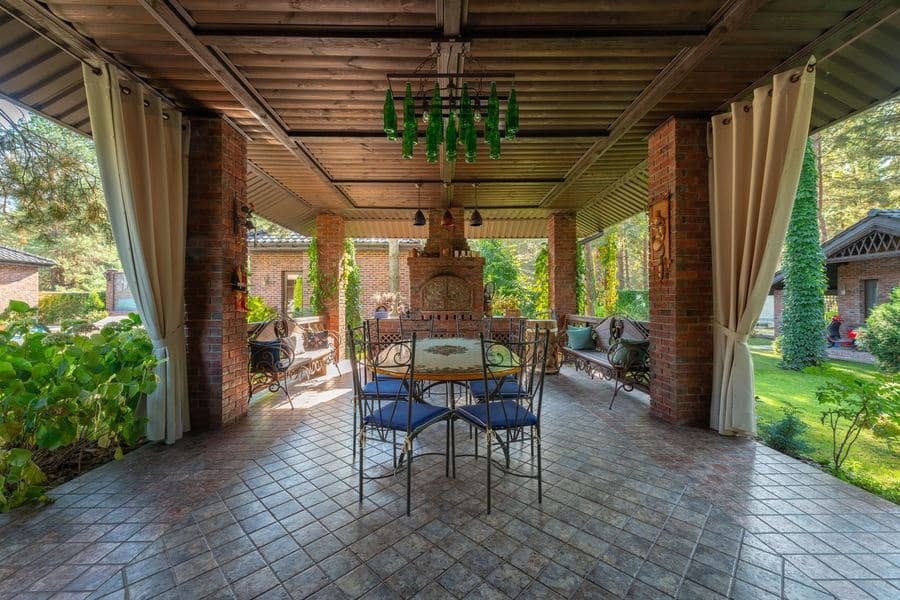
A pergola has an open roof — slats, louvers or nothing — and a pavilion has a solid one. The solid roof is why a pavilion keeps rain off and a pergola usually does not, and also why a pavilion collects far more wind and snow load, is more likely to need a permit, and costs more. Buy the pavilion for shelter, the pergola for shade and airflow.
Our picks at a glance
| # | Structure | Best for | Wind rating | Price |
|---|---|---|---|---|
| 01 | 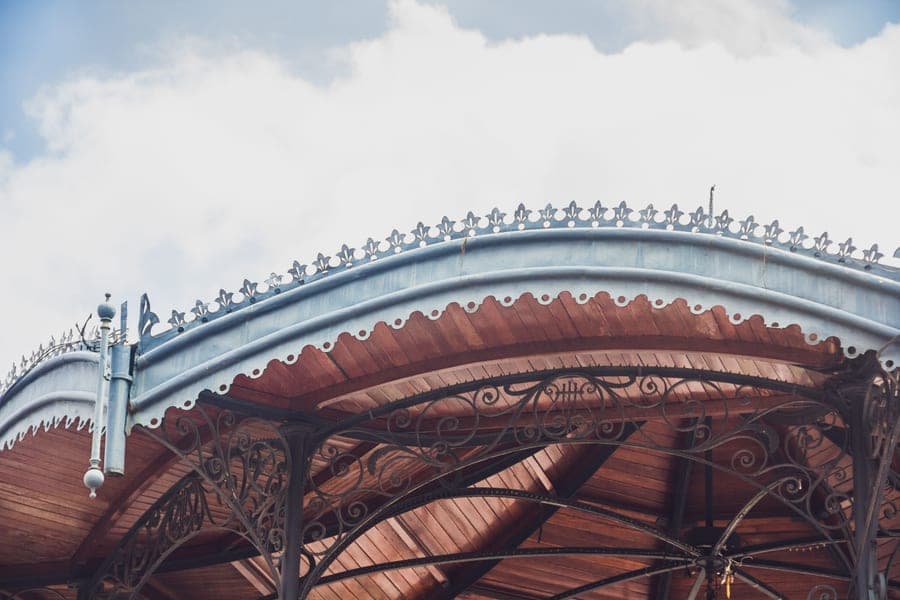 Backyard Discovery Norwood Cedar GazeboThe only gazebo we can find that publishes a 100 mph wind rating and a convertible snow figure — and it converts to roughly 56 lb/ft², several times any other hardtop here. | The pavilion case, in published figures | 100 (Pro-Tect tested; product must be anchored per the manual) | Check price on Amazon |
| 02 | 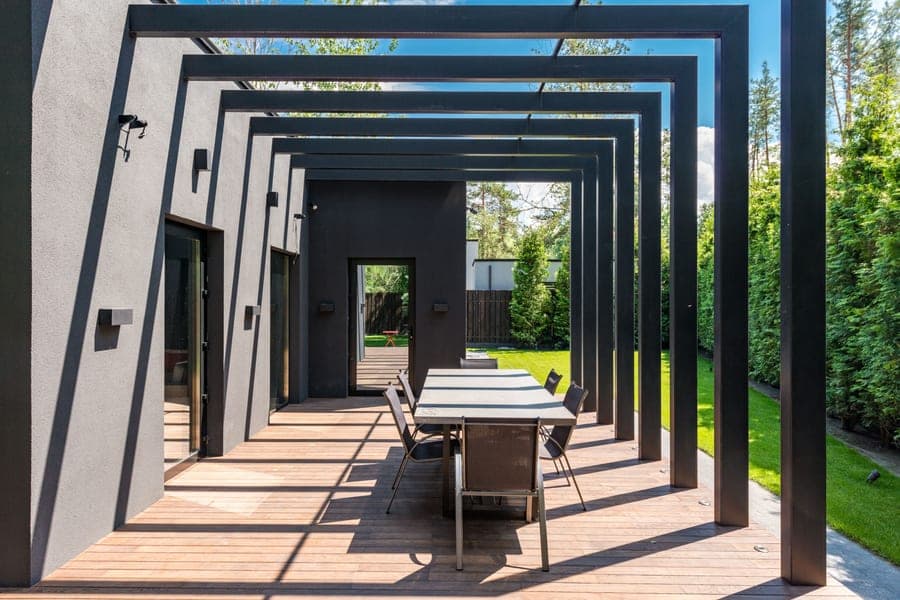 PURPLE LEAF Athena Louvered PergolaThe highest wind figure any louvered pergola in this class publishes, and the only one that ties the number to a specific anchoring condition. | The answer most people actually want | 72 (fully secured with expansion screws on a hardened floor) | Check price on Amazon |
| 03 | 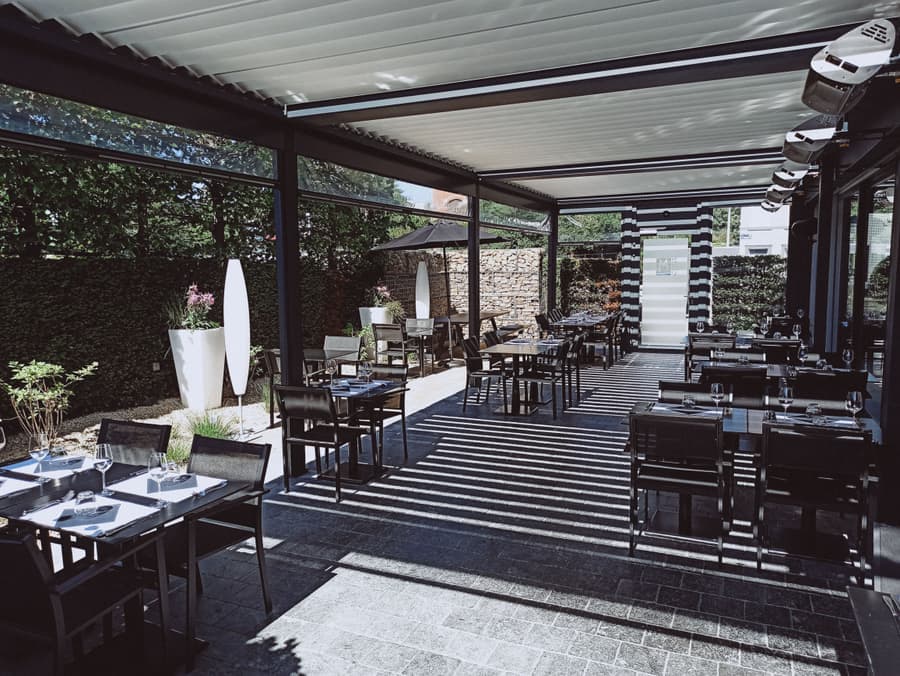 Outsunny Hardtop Polycarbonate PergolaA solid-roof aluminum pergola that publishes a roof load figure instead of a wind rating — useful for rain, unproven for wind. | The cheapest solid roof | Not published by manufacturer | Check price on Amazon |
| 04 | 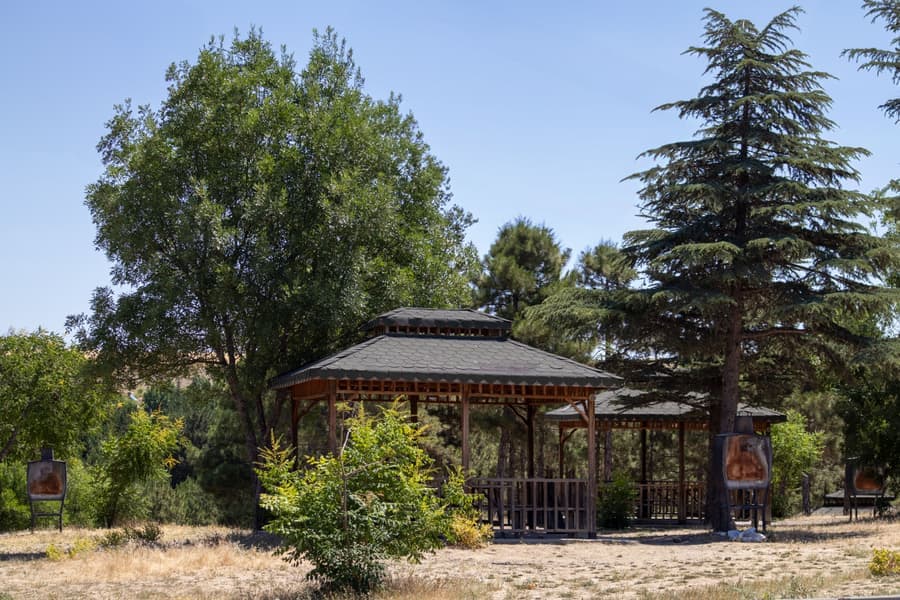 Yardistry Meridian 12 x 14 Cedar GazeboThe only structure here with 6x6 cedar posts and a five-year rot warranty — and it publishes no wind or snow figure at all. | Pavilion look, timber build | Not published by manufacturer | Check price on Amazon |
The durability table
Every published figure we could source for these structures, in one place, with the manufacturer page each number came from. Where a cell reads "Not published by manufacturer", that figure does not exist in the manufacturer's own material — we do not estimate it and we do not copy one from another site.
| Model | Wind rating (mph) | Snow load | Frame | Roof | Anchoring required | Warranty | Spec source |
|---|---|---|---|---|---|---|---|
| Backyard Discovery Norwood Cedar GazeboTop pick | 100 (Pro-Tect tested; product must be anchored per the manual) | 6,700 lb across the roof, or up to 30 in. of snow (12 x 10 ft model — roughly 56 lb/ft²) | 100% cedar, 6 in. x 6 in. posts, galvanized steel hardware | 29-gauge galvanized steel peak roof, thermal insulated | Mandatory. Product must be anchored as specified in the instruction manual | 5 years | Backyard Discovery Norwood 12x10 product pageChecked 2026-09-26 |
| PURPLE LEAF Athena Louvered Pergola | 72 (fully secured with expansion screws on a hardened floor) | Not published by manufacturer | Powder-coated aluminum, 1.5 mm wall, 4.33 in. x 4.33 in. crossbeams | Adjustable aluminum louvers with integrated drainage | Expansion screws into a hardened floor — the published wind figure assumes it | 1 year | PURPLE LEAF louvered pergola collectionChecked 2026-09-26 |
| Outsunny Hardtop Polycarbonate Pergola | Not published by manufacturer | Roof weight capacity 10 lb/ft² (50 kg/m²) | Aluminum | Solid polycarbonate with drainage holes | Not published by manufacturer | 1 year | Outsunny hardtop pergola product pageChecked 2026-09-26 |
| Yardistry Meridian 12 x 14 Cedar Gazebo | Not published by manufacturer | Not published by manufacturer | 100% premium cedar, 6 in. x 6 in. posts with heavy corner gussets | Rust-proof coffee-brown aluminum | Post mounting brackets supplied; anchoring hardware is not, because mounting surfaces vary | 1 year on materials and workmanship; 5 years on lumber against rot and decay | Yardistry Meridian 12x14 product pageChecked 2026-09-26 |
Every pick in full
The pavilion case, in published figures
Backyard Discovery Norwood Cedar Gazebo
The only gazebo we can find that publishes a 100 mph wind rating and a convertible snow figure — and it converts to roughly 56 lb/ft², several times any other hardtop here.
- Wind rating
- 100 (Pro-Tect tested; product must be anchored per the manual)
- Snow load
- 6,700 lb across the roof, or up to 30 in. of snow (12 x 10 ft model — roughly 56 lb/ft²)
- Frame
- 100% cedar, 6 in. x 6 in. posts, galvanized steel hardware
- Roof
- 29-gauge galvanized steel peak roof, thermal insulated
- Anchoring
- Mandatory. Product must be anchored as specified in the instruction manual
- Warranty
- 5 years
- Sizes
- 10 x 10, 12 x 10, 14 x 10, 14 x 12, 16 x 12, 20 x 12 and 24 x 12 ft
If you want to know what a solid roof on heavy posts is worth, this is the product that puts a number on it.
100 mph Pro-Tect tested wind rating, 6,700 lb of snow capacity over a 12 x 10 ft roof — roughly 56 lb/ft² — or up to 30 inches of snow, with a manufacturer statement that the structure must be anchored as specified. Nothing else in the solid-roof category publishes that set.
The structure behind it is 100% cedar with 6 in. x 6 in. posts under a 29-gauge galvanized steel peak roof. A 6x6 timber post set into proper anchors is a far larger structural section than the aluminum tube under most backyard roofs, which is why the figures are four digits ahead of the field.
The cost is maintenance. Re-seal every two to three years and this is the structure still standing and still repairable in twenty. Skip it and cedar grays, checks at the through-bolts and rots at the end grain. Pergola maintenance is honest about the schedule.
Skip it if: You want sun on the space some of the time. A solid peak roof is a permanent decision about light.
#ad Price shown as of September 26, 2026. How this site is funded
Specifications from Backyard Discovery Norwood 12x10 product page, checked 2026-09-26.
The answer most people actually want
PURPLE LEAF Athena Louvered Pergola
The highest wind figure any louvered pergola in this class publishes, and the only one that ties the number to a specific anchoring condition.
- Wind rating
- 72 (fully secured with expansion screws on a hardened floor)
- Snow load
- Not published by manufacturer
- Frame
- Powder-coated aluminum, 1.5 mm wall, 4.33 in. x 4.33 in. crossbeams
- Roof
- Adjustable aluminum louvers with integrated drainage
- Anchoring
- Expansion screws into a hardened floor — the published wind figure assumes it
- Warranty
- 1 year
- Sizes
- 10 x 12 ft to 14 x 24 ft
The louvered pergola exists because the pergola-versus-pavilion question has a third answer, and for a lot of yards it is the right one: a roof that is open when you want light and closed when you want shelter.
72 mph fully secured with expansion screws on a hardened floor — the highest published wind figure in the louvered class, and the only one that names the condition it was measured under.
Powder-coated aluminum with a 1.5 mm wall and 4.33 in. x 4.33 in. crossbeams, under adjustable louvers with integrated drainage. The drainage is the part that makes it a shelter rather than a slatted roof: closed, rain runs out through the beam instead of through the middle of the space.
One year of warranty, which is the class norm and the weakest part of the proposition. Is a louvered pergola worth it works through the premium properly.
Skip it if: You are in heavy snow country. PURPLE LEAF publishes no snow figure at all for these, and a closed louvered roof collects load like any other solid plane.
#ad Price shown as of September 26, 2026. How this site is funded
Specifications from PURPLE LEAF louvered pergola collection, checked 2026-09-26.
The cheapest solid roof
Outsunny Hardtop Polycarbonate Pergola
A solid-roof aluminum pergola that publishes a roof load figure instead of a wind rating — useful for rain, unproven for wind.
- Wind rating
- Not published by manufacturer
- Snow load
- Roof weight capacity 10 lb/ft² (50 kg/m²)
- Frame
- Aluminum
- Roof
- Solid polycarbonate with drainage holes
- Anchoring
- Not published by manufacturer
- Warranty
- 1 year
- Sizes
- 12 x 10 ft, 14.5 x 10 ft, 16.5 x 10 ft
A pergola frame with a pavilion roof on it, which is exactly what a lot of buyers are looking for when they type this comparison into Google.
Aluminum frame under solid polycarbonate with drainage holes, and a published roof weight capacity of 10 lb/ft² (50 kg/m²). A roof capacity is not a snow rating and we will not read it as one, but it is a published figure in a class where most listings carry none.
Light still comes through, which is the real argument for polycarbonate over steel in a small yard. A solid steel roof over a 12 ft patio makes the room behind it noticeably darker; a translucent panel does not.
Sizes are 12 x 10 ft, 14.5 x 10 ft and 16.5 x 10 ft, and no wind figure is published. Compare that against the 100 mph on the cedar structure above and you have the honest summary of what a light aluminum frame with a solid roof is and is not.
Skip it if: You are comparing on wind. Outsunny publishes no wind rating for this, and a solid roof on a light frame is exactly where you would want one.
#ad Price shown as of September 26, 2026. How this site is funded
Specifications from Outsunny hardtop pergola product page, checked 2026-09-26.
Pavilion look, timber build
Yardistry Meridian 12 x 14 Cedar Gazebo
The only structure here with 6x6 cedar posts and a five-year rot warranty — and it publishes no wind or snow figure at all.
- Wind rating
- Not published by manufacturer
- Snow load
- Not published by manufacturer
- Frame
- 100% premium cedar, 6 in. x 6 in. posts with heavy corner gussets
- Roof
- Rust-proof coffee-brown aluminum
- Anchoring
- Post mounting brackets supplied; anchoring hardware is not, because mounting surfaces vary
- Warranty
- 1 year on materials and workmanship; 5 years on lumber against rot and decay
- Sizes
- Roof 12 x 14 ft; base 10 ft 10⅜ in. x 12 ft 10⅜ in.
The structure people usually have in mind when they say pavilion: heavy timber posts, a solid roof, and the proportions of a building rather than a frame.
100% premium cedar with 6 in. x 6 in. posts and heavy corner gussets, under a rust-proof coffee-brown aluminum roof. An aluminum roof deck over timber is a lighter dead load than steel and does not rust, which on a twelve-by-fourteen span is a real engineering choice rather than a finish.
One year on materials and workmanship, five years on the lumber against rot and decay. A rot warranty is the term that matters on timber, and five years is the longest anyone here offers.
It publishes no wind or snow figure at all — and it does publish something more useful than most: post mounting brackets are supplied, anchoring hardware is not, because mounting surfaces vary. That is a manufacturer saying out loud that the foundation is your problem, which is more honest than most listings manage. Gazebo foundation options covers it.
Skip it if: You need a published rating for a permit or a committee. Yardistry prints neither a wind nor a snow figure.
#ad Price shown as of September 26, 2026. How this site is funded
Specifications from Yardistry Meridian 12x14 product page, checked 2026-09-26.
The definition, and why the search results disagree
Search this and you will find four different answers, because the words are used loosely in the trade and very loosely in marketing copy.
The distinction that actually holds up is the roof. A pergola has an open roof — cross-rafters, slats, louvers, or a retractable fabric panel. A pavilion has a solid, fixed, pitched roof over an open-sided frame. A gazebo is the same solid roof on a smaller, usually symmetrical footprint, often octagonal and often with a raised floor; that comparison is covered on gazebo vs pavilion.
What muddies it is that manufacturers sell solid-roof pergolas. The Outsunny above is listed as a pergola and has a polycarbonate roof; several brands list hardtop structures under both words. That is not dishonesty so much as the category moving faster than the vocabulary — but it does mean you should buy on the roof description, not on the noun in the product title.
A useful test: if rain reaches the floor, it is a pergola.
What changes when the roof goes solid
Four things, and only the first one is the reason anyone thinks they are choosing.
- Rain cover. The obvious one. An open pergola roof keeps almost no rain off; a solid roof keeps all of it off and gives you a space that is usable on a wet evening. A louvered roof sits in between and is the only one that lets you choose.
- Wind load, and it goes the wrong way. A solid roof is a surface for wind to push on; an open one lets it through. That is why PURPLE LEAF publishes 70-72 mph for its louvered pergolas and 40 mph for its hardtop gazebos — same brand, same aluminum, different roof. Pergola wind ratings has the full comparison.
- Snow load becomes a real number. An open pergola roof barely holds snow. A solid one holds all of it, which is why the solid-roof products here publish snow figures and the open ones mostly do not. Snow load explained covers converting a whole-roof pound figure into something you can compare.
- Permit likelihood rises. A solid roof reads as a roof to a building department, which changes how the structure is classified, how it is assessed for snow and wind, and sometimes whether it counts against lot coverage. Pergola permits and HOA rules sets out the questions to ask.
Side by side
The comparison as published figures rather than adjectives.
| Structure | Roof | Rain cover | Published wind | Published snow | Warranty |
|---|---|---|---|---|---|
| Open cedar pergola (Yardistry 12 x 12) | Multilevel open trellis | None | Not published by manufacturer | Not published by manufacturer | 5 yr lumber against rot |
| Louvered pergola (PURPLE LEAF Athena) | Adjustable aluminum louvers with drainage | On demand, louvers closed | 72 mph (secured on a hardened floor) | Not published by manufacturer | 1 yr |
| Solid-roof pergola (Outsunny polycarbonate) | Solid polycarbonate with drainage holes | Full | Not published by manufacturer | Roof capacity 10 lb/ft² | 1 yr |
| Timber pavilion (Yardistry Meridian) | Rust-proof aluminum over 6x6 cedar | Full | Not published by manufacturer | Not published by manufacturer | 1 yr + 5 yr rot |
| Rated pavilion (Backyard Discovery Norwood) | 29-gauge galvanized steel peak roof | Full | 100 mph (anchored per manual) | 6,700 lb / ~56 lb/ft² on 12 x 10 ft | 5 yr |
Read the pattern, not the rows. The structures that publish real figures are the ones with heavy timber posts and a tested roof; the aluminum ones publish wind and go quiet on snow. That is not a conspiracy — it is what each manufacturer has actually tested, and it tells you which questions each one expects to be asked.
Where each one wins
Cutting through it, there are four clean cases.
- Buy a pergola if the problem is sun. Dappled shade, airflow through the space, a lighter structure, lower wind and snow exposure, less likely to need a permit, and it keeps the yard feeling open rather than built on.
- Buy a pavilion if the problem is rain. A space you can use in weather, furniture you can leave out, lighting and a fan you can mount, and a structure that reads as an outdoor room rather than a frame.
- Buy a louvered pergola if the problem is both, and you would rather spend money than compromise. It is the only roof that changes its mind, and it is the reason this comparison is less decisive than it used to be.
- Buy neither if the span is the point. If what you actually want is a big area of shade over a pool or a lawn, a tensioned fabric sail covers more square footage per dollar than any framed structure — shade sail vs pergola makes that case properly.
What we would actually do
In a mild climate, over a patio you want to feel open: a louvered pergola, anchored into a slab with stainless fixings. The PURPLE LEAF Athena's 72 mph figure is the highest published in its class and it is the only one tied to a stated anchoring condition.
Where it rains or snows seriously, and the space has to be usable in weather: the pavilion, and specifically a timber one with published figures. The Backyard Discovery Norwood's 100 mph and roughly 56 lb/ft² are several times what any aluminum structure here claims, and the reason is 6x6 posts rather than tube.
Where the budget is the constraint and rain cover is the goal: the Outsunny polycarbonate. Accept that no wind figure is published, keep it out of an exposed corner, and check the 10 lb/ft² roof capacity against your local ground snow load before you buy.
And in every case, anchor it properly and budget the fixings separately. Every published rating on this page assumes anchoring, and on half of these products the anchoring hardware is explicitly not in the box.
Questions people ask
What is the difference between a pergola and a pavilion?
Is a pavilion better than a pergola?
Does a pergola keep rain off?
Which handles wind better, a pergola or a pavilion?
Do you need a permit for a pavilion?
Is a pavilion the same as a gazebo?
Which costs more, a pergola or a pavilion?
Can a pergola be converted into a pavilion?
Where these figures came from
- Backyard Discovery Norwood 12 x 10 — 100 mph Pro-Tect tested wind rating, 6,700 lb / 30 in. snow figure, 6x6 cedar posts, 29-gauge steel roof, mandatory anchoring
- PURPLE LEAF louvered pergola collection — 72 mph secured on a hardened floor, 1.5 mm wall, 4.33 in. crossbeams, louvers with integrated drainage
- PURPLE LEAF hardtop gazebo collection — 40 mph rating, cited here as the same brand's solid-roof figure for comparison
- Outsunny polycarbonate hardtop pergola — 10 lb/ft² roof weight capacity, solid polycarbonate with drainage holes, published size range
- Yardistry Meridian 12 x 14 — 6x6 cedar posts, aluminum roof, 5-year lumber warranty against rot, post brackets supplied and anchoring hardware not
- Yardistry 12 x 12 pergola — multilevel open trellis roof, published roof and base dimensions, 5-year rot warranty
Found an error? Tell us and we will correct it within seven days and note the change on the page with a dated line — see our editorial policy.