Pergola wind ratings
Pergolas publish the highest wind figures in backyard shade. Every one of them describes a structure bolted to something solid — and that condition is the whole story.
By Ryder M. · Published · Last updated
We compare published manufacturer specifications, warranty terms and owner-reported failure modes. We have not physically tested these structures. How we judge shade structures
Slat & Shade earns a commission on qualifying purchases made through links on this page. It costs you nothing extra and never changes what we recommend. Full disclosure
Part of Pergolas

The short answer
Published pergola wind ratings run from 70 mph to 100 mph, higher than any other backyard structure, because an open or louvered roof lets air pass instead of loading a continuous plane. Every figure assumes correct assembly and correct anchoring: unanchored, a pergola has no rating at all.
Our picks at a glance
| # | Structure | Best for | Wind rating | Price |
|---|---|---|---|---|
| 01 | 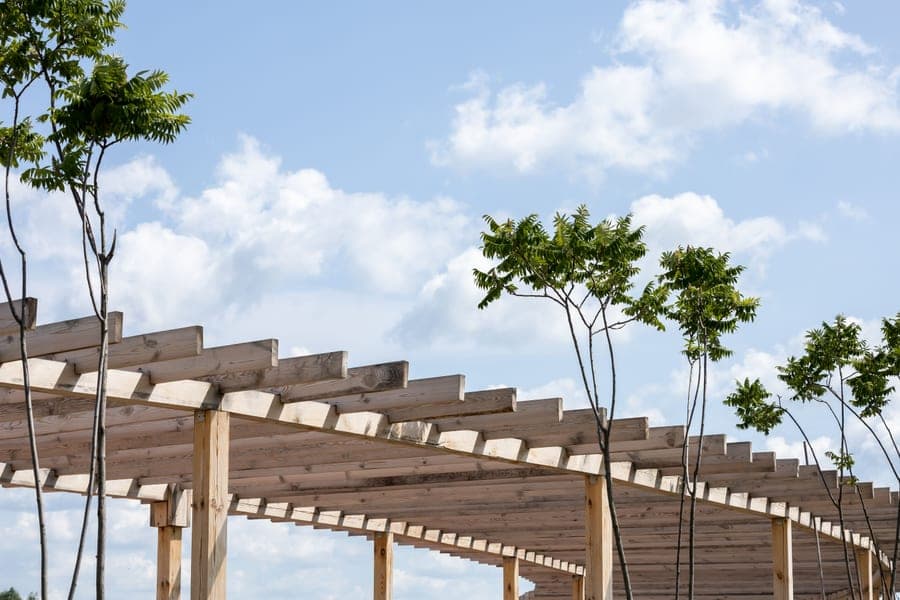 Backyard Discovery Beaumont Cedar PergolaThe highest published wind rating of any pergola on this site, and the only wood kit whose manufacturer makes anchoring a stated condition of the rating. | Highest published figure | 100 (when properly anchored) | Check price on Amazon |
| 02 | 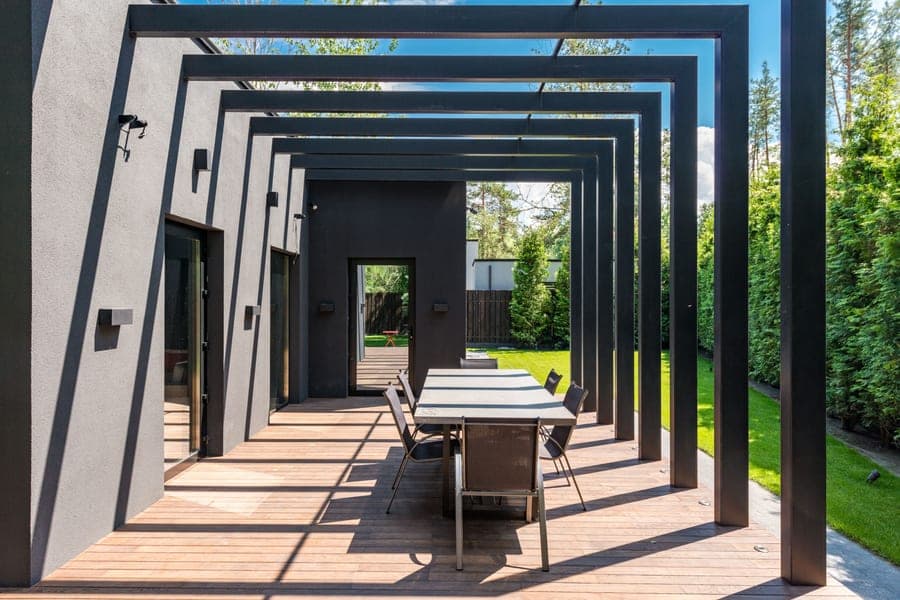 PURPLE LEAF Athena Louvered PergolaThe highest wind figure any louvered pergola in this class publishes, and the only one that ties the number to a specific anchoring condition. | Best-conditioned aluminum figure | 72 (fully secured with expansion screws on a hardened floor) | Check price on Amazon |
| 03 |  Domi Outdoor Living Aluminum Louvered PergolaThe only louvered pergola here that publishes a snow load in pounds per square foot and backs the roof and frame for five years rather than one. | Only pergola with both figures | 72 | Check price on Amazon |
| 04 | 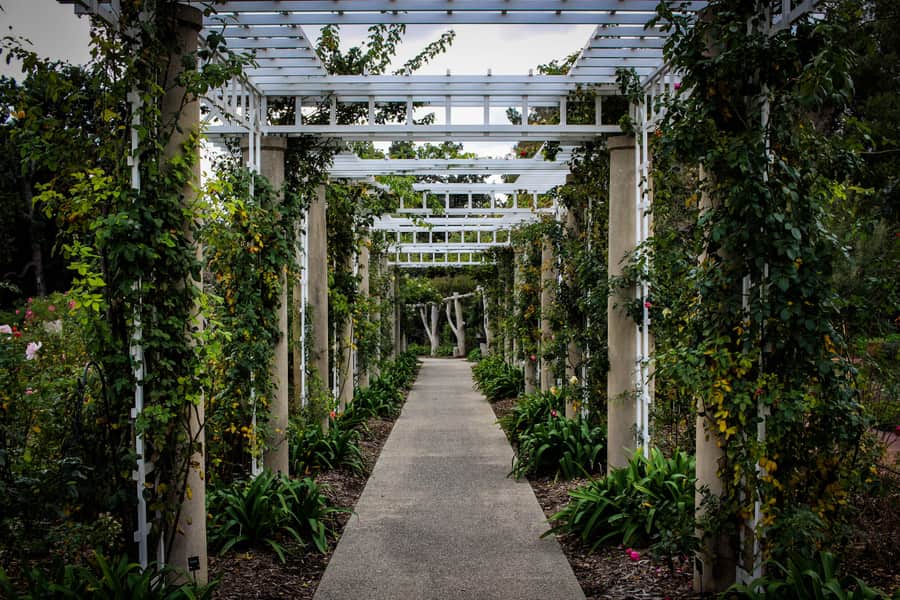 Yardistry 12 x 12 Pergola6x6 posts and a five-year rot warranty on a traditional multilevel trellis pergola — and the only pergola here that publishes its base dimensions as well as its roof. | Heaviest section, no published figure | Not published by manufacturer | Check price on Amazon |
The durability table
Every published figure we could source for these structures, in one place, with the manufacturer page each number came from. Where a cell reads "Not published by manufacturer", that figure does not exist in the manufacturer's own material — we do not estimate it and we do not copy one from another site.
| Model | Wind rating (mph) | Snow load | Frame | Roof | Anchoring required | Warranty | Spec source |
|---|---|---|---|---|---|---|---|
| Backyard Discovery Beaumont Cedar PergolaTop pick | 100 (when properly anchored) | Not published by manufacturer | 100% cedar, 5.5 in. x 5.5 in. posts | Multi-level cedar trellis roof with crossing rafters — open, not solid | Mandatory. Concealed concrete anchors, per the instruction manual | 5 years | Backyard Discovery Beaumont product pageChecked 2026-09-26 |
| PURPLE LEAF Athena Louvered Pergola | 72 (fully secured with expansion screws on a hardened floor) | Not published by manufacturer | Powder-coated aluminum, 1.5 mm wall, 4.33 in. x 4.33 in. crossbeams | Adjustable aluminum louvers with integrated drainage | Expansion screws into a hardened floor — the published wind figure assumes it | 1 year | PURPLE LEAF louvered pergola collectionChecked 2026-09-26 |
| Domi Outdoor Living Aluminum Louvered Pergola | 72 | 15 lb/ft² | Aluminum | Aluminum louvers, adjustable | M6 expansion bolts into a wooden deck or concrete floor, immediately after assembly | 5 years on hardtop roof and frame; 1 year on curtains and netting | Domi Outdoor Living product pageChecked 2026-09-26 |
| Yardistry 12 x 12 Pergola | Not published by manufacturer | Not published by manufacturer | 6 in. x 6 in. posts with classic plinths (species not stated on the product page) | Multilevel open pergola roof with profiled beam and trellis ends — open, not solid | Not published by manufacturer | 5 years limited on lumber against rot and decay; 1 year on materials and workmanship | Yardistry 12x12 pergola product pageChecked 2026-09-26 |
Every pick in full
Highest published figure
Backyard Discovery Beaumont Cedar Pergola
The highest published wind rating of any pergola on this site, and the only wood kit whose manufacturer makes anchoring a stated condition of the rating.
- Wind rating
- 100 (when properly anchored)
- Snow load
- Not published by manufacturer
- Frame
- 100% cedar, 5.5 in. x 5.5 in. posts
- Roof
- Multi-level cedar trellis roof with crossing rafters — open, not solid
- Anchoring
- Mandatory. Concealed concrete anchors, per the instruction manual
- Warranty
- 5 years
- Sizes
- 10 x 10 ft, 12 x 10 ft, 14 x 10 ft, 14 x 12 ft, 16 x 12 ft, 20 x 12 ft
100 mph, Pro-Tect tested — the highest published wind rating anywhere in backyard shade, and stated with the condition in its strongest available form: the product must be anchored as specified in the instruction manual, with concealed concrete anchors supplied.
The construction is where the figure comes from. 100% cedar with 5.5 in. x 5.5 in. posts, dual structural cross beams and corbels. Wind failure in a post-and-beam frame is a racking failure — the structure parallelograms before anything actually breaks — and post section plus connection stiffness is the direct answer to it.
The roof is the other half: a multi-level cedar trellis with crossing rafters, open rather than solid, so air passes through instead of loading a continuous plane. That is the best wind configuration available and it is also why the pergola provides no rain cover at all.
Five-year warranty, sizes 10 x 10 through 20 x 12 ft. On an exposed site choose the small end — roof area is the load and it scales with area while the post count does not. Re-seal the cedar every two to three years.
Skip it if: You want rain cover, or you will not maintain cedar. The trellis roof provides neither.
#ad Price shown as of September 26, 2026. How this site is funded
Specifications from Backyard Discovery Beaumont product page, checked 2026-09-26.
Best-conditioned aluminum figure
PURPLE LEAF Athena Louvered Pergola
The highest wind figure any louvered pergola in this class publishes, and the only one that ties the number to a specific anchoring condition.
- Wind rating
- 72 (fully secured with expansion screws on a hardened floor)
- Snow load
- Not published by manufacturer
- Frame
- Powder-coated aluminum, 1.5 mm wall, 4.33 in. x 4.33 in. crossbeams
- Roof
- Adjustable aluminum louvers with integrated drainage
- Anchoring
- Expansion screws into a hardened floor — the published wind figure assumes it
- Warranty
- 1 year
- Sizes
- 10 x 12 ft to 14 x 24 ft
72 mph, fully secured with expansion screws on a hardened floor. Joint-highest among aluminum pergolas, and the most precisely conditioned figure in the whole category — which on this page matters more than the number.
Almost nobody states the test condition alongside the rating. "72 mph" on its own is a ceiling. "72 mph when fully secured with expansion screws on a hardened floor" is a specification, because it tells you the figure describes a pergola bolted into concrete rather than one standing on pavers or a deck without blocking underneath.
The frame is the only one in the category publishing its gauge: powder-coated aluminum, 1.5 mm wall, 4.33 in. x 4.33 in. crossbeams. Wall thickness is what resists twisting, and it is the specification most often missing.
And it is louvered, which changes the rating in practice. Open the louvers before a storm and the roof plane disappears — PURPLE LEAF recommends exactly that, plus raising or removing shade screens. So the published figure describes a closed roof, and the structure you actually leave standing in a gale can be better than it.
Skip it if: You want the highest raw number — the Beaumont publishes 100 mph and no aluminum pergola approaches it.
#ad Price shown as of September 26, 2026. How this site is funded
Specifications from PURPLE LEAF louvered pergola collection, checked 2026-09-26.
Only pergola with both figures
Domi Outdoor Living Aluminum Louvered Pergola
The only louvered pergola here that publishes a snow load in pounds per square foot and backs the roof and frame for five years rather than one.
- Wind rating
- 72
- Snow load
- 15 lb/ft²
- Frame
- Aluminum
- Roof
- Aluminum louvers, adjustable
- Anchoring
- M6 expansion bolts into a wooden deck or concrete floor, immediately after assembly
- Warranty
- 5 years on hardtop roof and frame; 1 year on curtains and netting
- Sizes
- 10 x 10 ft, 10 x 12 ft, 10 x 13 ft, 12 x 16 ft, 12 x 20 ft
72 mph wind and 15 lb/ft² snow — the only pergola we track publishing figures for both loading directions, which on an exposed site is the combination that matters.
Wind and snow arrive together, and a snow-loaded roof in wind is a worse case than either load alone. Having both numbers from one manufacturer, in usable units, is better documentation than any competitor offers.
The anchoring instruction is the most pointed in the category: M6 expansion bolts into a wooden deck or concrete floor, immediately after assembly. The word "immediately" is doing real work — the window between finishing a build and getting round to anchoring it is precisely when these structures blow over, and Domi is the only manufacturer we found that addresses it directly.
Five years on the hardtop roof and frame, one year on curtains and netting — the longest structural term in the louvered category by a factor of five. Aluminum frame with adjustable louvers, 10 x 10 through 12 x 20 ft.
Skip it if: You want the frame gauge published — Domi states the material and not the wall thickness.
#ad Price shown as of September 26, 2026. How this site is funded
Specifications from Domi Outdoor Living product page, checked 2026-09-26.
Heaviest section, no published figure
Yardistry 12 x 12 Pergola
6x6 posts and a five-year rot warranty on a traditional multilevel trellis pergola — and the only pergola here that publishes its base dimensions as well as its roof.
- Wind rating
- Not published by manufacturer
- Snow load
- Not published by manufacturer
- Frame
- 6 in. x 6 in. posts with classic plinths (species not stated on the product page)
- Roof
- Multilevel open pergola roof with profiled beam and trellis ends — open, not solid
- Anchoring
- Not published by manufacturer
- Warranty
- 5 years limited on lumber against rot and decay; 1 year on materials and workmanship
- Sizes
- Roof 12 x 12 ft, 8 ft 6 in. high; base 10 x 10 ft outside-to-outside of posts
6 in. x 6 in. posts with classic plinths — the largest post section in our pergola registry — under a multilevel open trellis roof. And no published wind rating at all.
It is on this page because when a figure is missing, the structural evidence is what you have, and this is the strongest structural evidence available. Post section and connection stiffness resist racking; 6x6 is a step up from the Beaumont's 5.5-inch posts and a long way from a 4.33-inch aluminum crossbeam. The open trellis roof is the best wind configuration there is.
That is evidence, not a rating, and we are labeling it as such rather than presenting it as one. Substantial construction makes a structure likely to perform well; only a test produces a number.
It also publishes something almost nobody does and which matters for wind: a 12 x 12 ft roof over a 10 x 10 ft base, outside-to-outside of the posts. The base dimension is what determines where you can get an anchor in, and an anchor set too close to a slab edge will crack the concrete out rather than hold.
Five years limited on lumber against rot and decay; anchoring is not addressed on the product page, though it is offered as a paid service.
Skip it if: You need a published figure to check against a local requirement. There is none here.
#ad Price shown as of September 26, 2026. How this site is funded
Specifications from Yardistry 12x12 pergola product page, checked 2026-09-26.
Every published pergola figure
| Pergola | Published rating | Roof | Frame | Stated condition |
|---|---|---|---|---|
| Backyard Discovery Beaumont | 100 mph (Pro-Tect tested) | Open cedar trellis | Cedar, 5.5 in. posts | Mandatory; concealed concrete anchors per the manual |
| PURPLE LEAF Athena | 72 mph | Adjustable aluminum louvers | Aluminum, 1.5 mm wall, 4.33 in. crossbeams | Fully secured with expansion screws on a hardened floor |
| Domi Outdoor Living | 72 mph | Adjustable aluminum louvers | Aluminum | M6 expansion bolts into deck or concrete, immediately after assembly |
| PURPLE LEAF Caesar | 70 mph | Adjustable aluminum louvers | Aluminum | Under normal installation |
| Yardistry 12 x 12 | Not published by manufacturer | Open multilevel trellis | 6 in. x 6 in. posts with plinths | Not published; anchoring offered as a paid service |
| Outsunny polycarbonate | Not published by manufacturer | Solid polycarbonate | Aluminum | Not published |
| Outsunny louvered | Not published by manufacturer | Adjustable aluminum louvers | Aluminum | Not published |
Four of seven publish a figure, which makes pergolas the best-documented category in backyard shade — and still leaves three rows reading "not published by manufacturer". Those are not gaps in our research; they are what the manufacturers publish.
Why pergolas out-rate everything else
The figures here are the highest in backyard shade, and the reason is geometry rather than build quality.
An open roof does not load in wind. Air passes between slats or open louvers instead of pushing against a continuous surface, so the wind never gets the leverage to move the structure. A solid gazebo roof is functionally a sail on four legs; an open pergola roof is a frame with gaps in it.
The cleanest proof is one brand's own catalog: PURPLE LEAF publishes 70-72 mph for its louvered pergolas and 40 mph for its hardtop gazebos. One company, one powder-coated aluminum, one factory. A 30 mph spread, and the only variable is the roof.
Then frame section outranks the roof across materials. Backyard Discovery publishes 100 mph for both its open-roof Beaumont pergola and its solid-roof Norwood gazebo, on 5.5 and 6 inch cedar posts respectively. Once the posts are that substantial the roof stops being the limiting factor. So the ordering is: heavy posts first, open roof second, and both outweigh any brand-level difference between similar products. The cross-category set is in wind ratings explained.
The condition that outweighs the whole table
An unanchored pergola has no wind rating. Not a reduced one — none, because the figure was never measured in that condition. This is the most important sentence on this page, and it means the gap between the products above matters far less than the gap between anchoring properly and not.
Every manufacturer publishing a figure says so in some form. Backyard Discovery: the product must be anchored as specified in the manual. PURPLE LEAF: fully secured with expansion screws on a hardened floor. Domi: M6 expansion bolts into deck or concrete, immediately after assembly.
And the fixings are usually your purchase. Backyard Discovery includes concealed concrete anchors, which is unusual. Most manufacturers include nothing suitable for a hard surface. Budget for the right anchor for the surface you actually have — and know that the surface changes the answer completely: concrete takes expansion anchors set back from the edge, a deck needs a joist or added blocking rather than the boards, pavers have to be lifted, and soil needs a poured footing below your region's frost depth.
Use stainless or hot-dip galvanized fixings at the base plates, fitted at assembly. A corroded anchor is not holding the rating you paid for, and the foot of a post is the wettest place on the structure and dries last. How to anchor a pergola covers each surface, including the no-drill options and what they honestly deliver.
Reading a rating critically
Four questions, applicable to any figure you find — on our pages or anyone else's.
- 01Who published it? The manufacturer's own site or spec sheet is citable. A retailer's listing is weaker and usable when the manufacturer publishes nothing. A review site is a lead to verify, not a fact — and in this category we found the same brand quoted in contradictory ranges by different retailers.
- 02What condition is attached? A figure with a stated anchoring condition is a specification. A bare number is a ceiling. PURPLE LEAF's phrasing is the model to compare others against.
- 03What unit is it in? A figure in km/h reads bigger than the same speed in mph — 85 km/h is roughly 53 mph, which is mid-table rather than impressive.
- 04What configuration was tested? On a louvered pergola, open and closed are different structures. The published figure almost certainly describes the closed roof, which means opening the louvers before a storm puts you in a better condition than the rating — and leaving screens down puts you in a worse one.
What to do when no figure is published
This is three of the seven rows above, so it is not an edge case. Absence is not automatically a red flag — plenty of solid products simply do not test for it — but you need proxies.
- Post section and frame gauge. On the evidence in the table above, this is the single best predictor of a published figure: 100 mph on 5.5-6 in. cedar posts, 70-72 mph on a 1.5 mm aluminum wall with 4.33 in. crossbeams. A manufacturer that publishes a section is telling you about the section.
- Roof type. Open beats louvered beats solid, all else equal — and a louvered roof you can open beats a solid one you cannot, which is a genuine advantage a specification sheet will not show you.
- Anchoring provision. Whether the manufacturer expects the structure to be fixed down, has thought about how, and supplies anything. A kit that does not mention anchoring has left the decisive detail entirely to you.
- Warranty structure. Domi's five years on roof and frame is a commercial commitment priced by someone who has seen the return rates — harder to inflate than a marketing figure.
- Base dimensions. Yardistry publishing a 10 x 10 base under a 12 x 12 roof tells you where the anchors can go, which is a wind question as much as a sizing one.
And if you are in a high-wind or coastal code zone, the figure that actually governs is the design wind speed your building department applies to your address — not anything a manufacturer prints. Nothing on this site is engineering advice. The shortlist for exposed sites is best pergolas for high winds.
Questions people ask
How much wind can a pergola withstand?
What is a good wind rating for a pergola?
What is the aluminum pergola wind rating?
Are pergolas wind resistant?
Can a pergola withstand a hurricane?
Should I open the louvers in high wind?
Does pergola size affect the wind rating?
Why do some pergolas publish no wind rating?
Where these figures came from
- Backyard Discovery Beaumont — 100 mph Pro-Tect tested, 5.5 in. cedar posts, dual cross beams and corbels, mandatory anchoring with concealed concrete anchors
- PURPLE LEAF louvered pergola collection — 72 mph and 70 mph with stated conditions, 1.5 mm wall, 4.33 in. crossbeams, screen guidance
- Domi Outdoor Living louvered pergola — 72 mph, 15 lb/ft², M6 expansion bolts immediately after assembly, 5-year roof and frame warranty
- Yardistry 12x12 pergola — 6x6 posts with plinths, published roof and base dimensions, no wind figure published
- PURPLE LEAF hardtop gazebo collection — 40 mph figure, cited for the same-brand roof comparison
- Backyard Discovery Norwood 12x10 — 100 mph on a solid-roof cedar structure, cited for the frame-section finding
- ABCCANOPY S1 Nova Base — 85 km/h figure, cited as the unit-conversion example
Found an error? Tell us and we will correct it within seven days and note the change on the page with a dated line — see our editorial policy.