Pergola maintenance
Nothing here is difficult. The reason pergolas fail early is that the five jobs are small, invisible and nobody tells you when they are due.
By Ryder M. · Published · Last updated
We compare published manufacturer specifications, warranty terms and owner-reported failure modes. We have not physically tested these structures. How we judge shade structures
Slat & Shade earns a commission on qualifying purchases made through links on this page. It costs you nothing extra and never changes what we recommend. Full disclosure
Part of Pergolas
The short answer
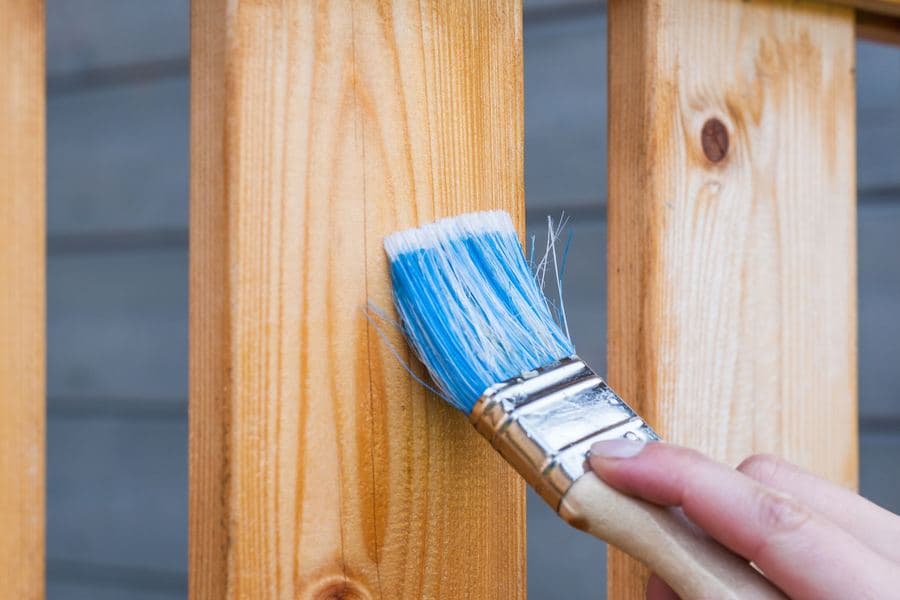
Cedar needs re-sealing every two to three years and that is non-negotiable. Aluminum needs no refinishing but does need its fixings checked and its drainage cleared twice a year. Fabric is a consumable on any pergola that has it. The part that actually fails first, on every material, is the base-plate fastener.
Our picks at a glance
| # | Structure | Best for | Wind rating | Price |
|---|---|---|---|---|
| 01 | 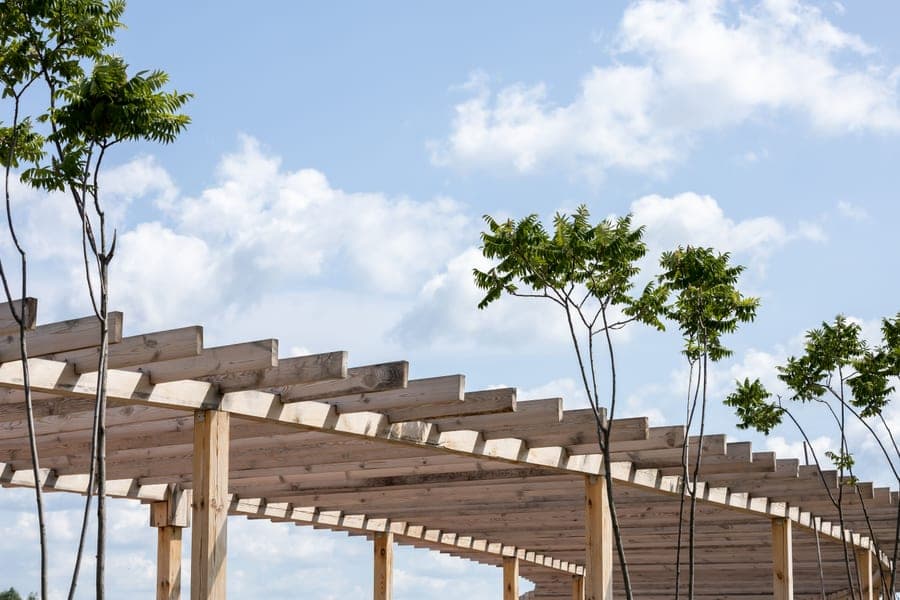 Backyard Discovery Beaumont Cedar PergolaThe highest published wind rating of any pergola on this site, and the only wood kit whose manufacturer makes anchoring a stated condition of the rating. | The most maintenance, and the most repairable | 100 (when properly anchored) | Check price on Amazon |
| 02 | 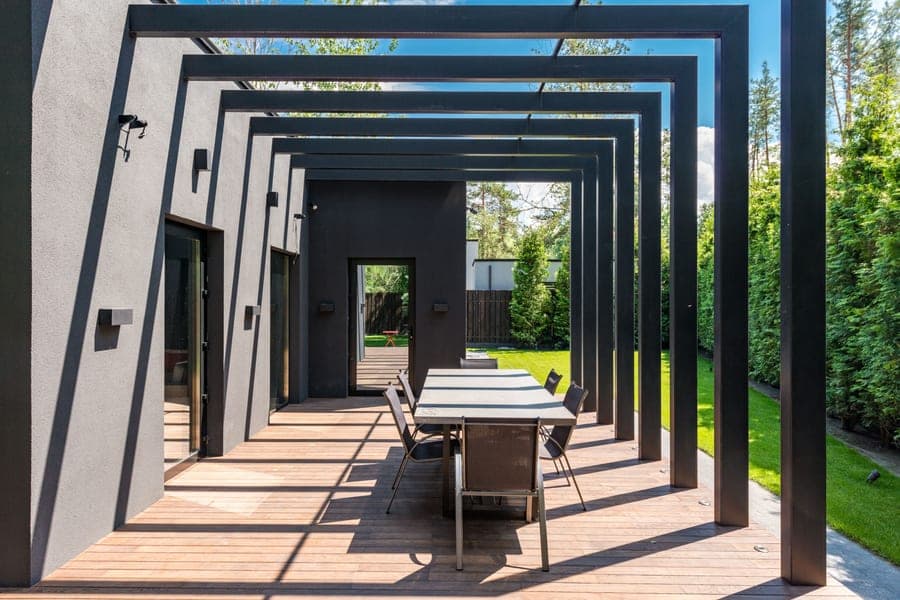 PURPLE LEAF Athena Louvered PergolaThe highest wind figure any louvered pergola in this class publishes, and the only one that ties the number to a specific anchoring condition. | The least maintenance — but not none | 72 (fully secured with expansion screws on a hardened floor) | Check price on Amazon |
| 03 | 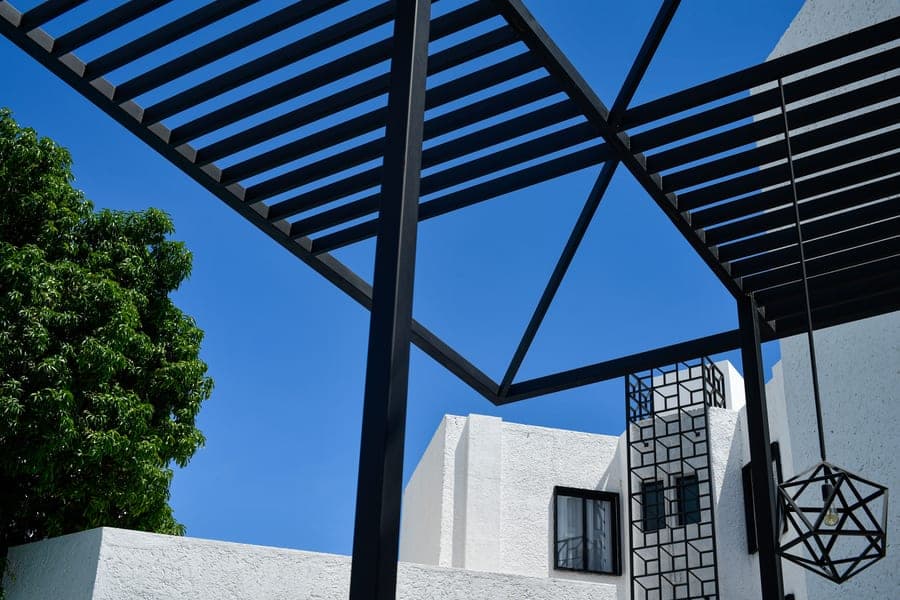 Domi Outdoor Living Aluminum Louvered PergolaThe only louvered pergola here that publishes a snow load in pounds per square foot and backs the roof and frame for five years rather than one. | Read the warranty split as a maintenance schedule | 72 | Check price on Amazon |
| 04 |  Outsunny 10 x 13 Retractable Pergola Canopy, Wood Grain AluminumThe only retractable pergola we found that publishes a wind figure at all — and it publishes it on the Beaufort scale, with a different number for stakes and for bolts. | Where fabric becomes the whole job | Windproof Level 5-6 with support stakes, 6-7 with anchor bolts (Beaufort scale, not mph) | Check price on Amazon |
The durability table
Every published figure we could source for these structures, in one place, with the manufacturer page each number came from. Where a cell reads "Not published by manufacturer", that figure does not exist in the manufacturer's own material — we do not estimate it and we do not copy one from another site.
| Model | Wind rating (mph) | Snow load | Frame | Roof | Anchoring required | Warranty | Spec source |
|---|---|---|---|---|---|---|---|
| Backyard Discovery Beaumont Cedar PergolaTop pick | 100 (when properly anchored) | Not published by manufacturer | 100% cedar, 5.5 in. x 5.5 in. posts | Multi-level cedar trellis roof with crossing rafters — open, not solid | Mandatory. Concealed concrete anchors, per the instruction manual | 5 years | Backyard Discovery Beaumont product pageChecked 2026-09-26 |
| PURPLE LEAF Athena Louvered Pergola | 72 (fully secured with expansion screws on a hardened floor) | Not published by manufacturer | Powder-coated aluminum, 1.5 mm wall, 4.33 in. x 4.33 in. crossbeams | Adjustable aluminum louvers with integrated drainage | Expansion screws into a hardened floor — the published wind figure assumes it | 1 year | PURPLE LEAF louvered pergola collectionChecked 2026-09-26 |
| Domi Outdoor Living Aluminum Louvered Pergola | 72 | 15 lb/ft² | Aluminum | Aluminum louvers, adjustable | M6 expansion bolts into a wooden deck or concrete floor, immediately after assembly | 5 years on hardtop roof and frame; 1 year on curtains and netting | Domi Outdoor Living product pageChecked 2026-09-26 |
| Outsunny 10 x 13 Retractable Pergola Canopy, Wood Grain Aluminum | Windproof Level 5-6 with support stakes, 6-7 with anchor bolts (Beaufort scale, not mph) | Not published by manufacturer | Wood-grain finish aluminum, 3.25 in. x 3.25 in. columns | Retractable polyester canopy with a PA coating; magnetic locking side panel | Eight stakes for soft ground and eight expansion screws for hard surfaces, both supplied | 1 year against material and manufacturing defects | Outsunny 10x13 wood-grain retractable pergola product pageChecked 2026-09-29 |
Every pick in full
The most maintenance, and the most repairable
Backyard Discovery Beaumont Cedar Pergola
The highest published wind rating of any pergola on this site, and the only wood kit whose manufacturer makes anchoring a stated condition of the rating.
- Wind rating
- 100 (when properly anchored)
- Snow load
- Not published by manufacturer
- Frame
- 100% cedar, 5.5 in. x 5.5 in. posts
- Roof
- Multi-level cedar trellis roof with crossing rafters — open, not solid
- Anchoring
- Mandatory. Concealed concrete anchors, per the instruction manual
- Warranty
- 5 years
- Sizes
- 10 x 10 ft, 12 x 10 ft, 14 x 10 ft, 14 x 12 ft, 16 x 12 ft, 20 x 12 ft
The highest published wind rating of any pergola on this site, and the one that asks the most of you in return.
100 mph when properly anchored, on 100% cedar with 5.5 in. x 5.5 in. posts under a multi-level cedar trellis roof, with a five-year warranty and concealed concrete anchors the manufacturer makes mandatory.
Cedar's maintenance is sealing, and the interval is every two to three years. Skip it and the timber grays — which is cosmetic — then checks at the through-bolts and rots at the end grain, which is not. End grain at the foot of a post is the single wettest, slowest-drying part of any timber structure.
The payoff is repairability, and it is the real buy-it-for-life argument. A cedar pergola can be repaired board by board, in year eighteen, with lumber from any yard. An aluminum extrusion is repairable only while the manufacturer stocks the profile, which nobody publishes a date for. How long shade structures last is honest about both.
Skip it if: You will not do the sealing. Unmaintained cedar is the most expensive structure in this category, because it is the only one that can rot.
#ad Price shown as of September 26, 2026. How this site is funded
Specifications from Backyard Discovery Beaumont product page, checked 2026-09-26.
The least maintenance — but not none
PURPLE LEAF Athena Louvered Pergola
The highest wind figure any louvered pergola in this class publishes, and the only one that ties the number to a specific anchoring condition.
- Wind rating
- 72 (fully secured with expansion screws on a hardened floor)
- Snow load
- Not published by manufacturer
- Frame
- Powder-coated aluminum, 1.5 mm wall, 4.33 in. x 4.33 in. crossbeams
- Roof
- Adjustable aluminum louvers with integrated drainage
- Anchoring
- Expansion screws into a hardened floor — the published wind figure assumes it
- Warranty
- 1 year
- Sizes
- 10 x 12 ft to 14 x 24 ft
Included to be precise about what "maintenance-free" actually means on a powder-coated aluminum pergola, because it does not mean nothing.
Powder-coated aluminum with a 1.5 mm wall and 4.33 in. x 4.33 in. crossbeams, adjustable louvers with integrated drainage, rated 72 mph fully secured with expansion screws on a hardened floor.
No refinishing, ever. That is the real saving and it is a big one against cedar. The aluminum does not rot, does not check and does not need a coat of anything.
What it does need is two jobs a year. Clear the louver drainage channels, which collect pine needles, blossom and grit and then quietly stop draining. And check the fixings, because the published rating is conditional on them and because the base plates sit where water does.
The coating still has a service life. Sojag publishes fifteen years on its powder-coated finish in the gazebo category, which is a manufacturer putting a number on exactly this. "Maintenance-free" means you cannot renew the finish, not that it will never need renewing.
Skip it if: Nothing, really — but do not read the absence of a sealing schedule as the absence of a schedule.
#ad Price shown as of September 26, 2026. How this site is funded
Specifications from PURPLE LEAF louvered pergola collection, checked 2026-09-26.
Read the warranty split as a maintenance schedule
Domi Outdoor Living Aluminum Louvered Pergola
The only louvered pergola here that publishes a snow load in pounds per square foot and backs the roof and frame for five years rather than one.
- Wind rating
- 72
- Snow load
- 15 lb/ft²
- Frame
- Aluminum
- Roof
- Aluminum louvers, adjustable
- Anchoring
- M6 expansion bolts into a wooden deck or concrete floor, immediately after assembly
- Warranty
- 5 years on hardtop roof and frame; 1 year on curtains and netting
- Sizes
- 10 x 10 ft, 10 x 12 ft, 10 x 13 ft, 12 x 16 ft, 12 x 20 ft
The most informative warranty in this category, and it is informative precisely because it is split.
Five years on the hardtop roof and frame; one year on curtains and netting. A manufacturer separating a product into a five-year half and a one-year half is telling you which parts it expects to wear, and it is worth more as a maintenance signal than any care guide.
The soft goods are consumables. Curtains and netting on any pergola are fabric exposed to UV, and they are the first thing to come down before a storm and the first thing to replace. Treat them as seasonal equipment rather than as part of the structure.
The frame half is where the published figures live: 72 mph of wind and 15 lb/ft² of snow, with M6 expansion bolts into a wooden deck or concrete floor, immediately after assembly. That word "immediately" is a maintenance instruction in disguise — an unanchored structure is not rated, even for the week before you get round to it.
Skip it if: You want one term covering everything. The split is more honest, but it does mean reading two numbers.
#ad Price shown as of September 26, 2026. How this site is funded
Specifications from Domi Outdoor Living product page, checked 2026-09-26.
Where fabric becomes the whole job
Outsunny 10 x 13 Retractable Pergola Canopy, Wood Grain Aluminum
The only retractable pergola we found that publishes a wind figure at all — and it publishes it on the Beaufort scale, with a different number for stakes and for bolts.
- Wind rating
- Windproof Level 5-6 with support stakes, 6-7 with anchor bolts (Beaufort scale, not mph)
- Snow load
- Not published by manufacturer
- Frame
- Wood-grain finish aluminum, 3.25 in. x 3.25 in. columns
- Roof
- Retractable polyester canopy with a PA coating; magnetic locking side panel
- Anchoring
- Eight stakes for soft ground and eight expansion screws for hard surfaces, both supplied
- Warranty
- 1 year against material and manufacturing defects
- Sizes
- 117 in. x 156.25 in. x 88.25 in. high; 97.75 x 137 in. column spacing
On a retractable pergola the canopy is not a feature of the structure; it is the structure's consumable, and the maintenance schedule revolves around it.
Wood-grain finish aluminum with 3.25 in. x 3.25 in. columns, a retractable polyester canopy with a PA coating and a magnetic locking side panel, one year against material and manufacturing defects.
It publishes its wind figure on the Beaufort scale, with two different numbers depending on how it is fixed: level 5-6 with support stakes, 6-7 with anchor bolts. That is the clearest statement anywhere on this site that anchoring is not a detail — the same structure gets a better rating purely for being fixed down properly. Eight stakes and eight expansion screws are both supplied, so there is no excuse.
The maintenance is the fabric and the rails. Retract it wet as rarely as you can manage, keep the rails clear of grit, and take the canopy off before winter. A fabric roof left out through a snow season is the most predictable failure in this category.
Skip it if: You want to install it and forget it. A retractable canopy is equipment you operate, and equipment you operate needs looking at.
#ad Price shown as of September 26, 2026. How this site is funded
Specifications from Outsunny 10x13 wood-grain retractable pergola product page, checked 2026-09-29.
The annual job list
Five jobs. None takes long, and the order matters because the first one tells you whether the rest are urgent.
- 01Walk it in spring and put a hand on every post. Movement at the base is the one symptom that matters. A post that rocks has either a loose fixing or a failing anchor, and everything else on this list is cosmetic by comparison.
- 02Check and re-torque every base-plate fastener. This is the job that prevents the failure the rest of the list only delays. The foot of a post sits in standing water and dries last, so it is where plated steel gives up first — swap to stainless as they come out.
- 03Clear the drainage. Louver channels on an adjustable roof, drainage holes on a polycarbonate one, and the gutters formed into the beams on anything that claims to shed rain. Twice a year, spring and autumn, and more often under pines.
- 04Wash the finish, and inspect it while you do. Powder coat on aluminum, and the sunward face first — that is where a coating goes chalky years before the shaded faces do. On timber, this is the moment to decide whether this is a sealing year.
- 05Seal timber every two to three years, end grain first. The tops of posts, the cut ends of rafters and the underside of any bolt hole are where water gets in and where sealer gets missed. Everything else on a cedar pergola is forgiving; end grain is not.
By material: what degrades, and how fast
The job list above is universal. What changes between materials is which line on it is urgent.
| Material | What degrades | Interval | What skipping it costs |
|---|---|---|---|
| Cedar / timber | UV graying, then checking at bolt holes, then rot at end grain | Re-seal every 2-3 years | A maintenance cost becomes a replacement cost — rot is not repairable in place |
| Powder-coated aluminum | The coating chalks on sunward faces; the extrusion itself does not corrode | Wash annually, inspect the finish | Cosmetic for years, then a finish you cannot renew |
| Steel (powder-coated or galvanized) | Coating damage at edges and fixings, then corrosion from that point | Inspect annually, touch up chips promptly | Rust starts at a chip and travels under the coating |
| Fabric canopies and curtains | UV degradation, stretching, seam and stitch failure | Seasonal — down before winter | A consumable left out becomes a torn consumable plus a damaged rail |
| Polycarbonate panels | Drainage holes block; fixing washers perish before the panel does | Clear drainage twice a year | Water finds the next path, usually a fixing hole |
| Fixings and base plates | Plated steel corrodes where water stands and dries last | Check and re-torque annually | The most common first failure on an otherwise sound frame |
The highlighted row is the point of this page. On every material, in every climate, the part that fails first is the fastener at the foot of the post — and it is the cheapest thing on the list to get right.
What "maintenance-free" actually means
It is the main selling point of the aluminum half of this category, and it is true in a narrower sense than the phrase implies.
What is genuinely true: powder-coated aluminum does not rot, does not check, does not need sanding and never needs a coat of anything. Against a cedar structure that wants re-sealing every two to three years for its whole life, that is a real and permanent saving of time and money, and it is the single best argument for aluminum.
What is not true is that nothing has a service life. The coating does. Sojag publishes a fifteen-year warranty on its powder-coated finish in the gazebo category — a manufacturer stating plainly that a finish is a wearing part with a horizon on it. And unlike timber, you cannot renew it: re-coating an assembled aluminum pergola well is not a backyard job.
So read "maintenance-free" as "no refinishing", and keep the other two jobs. Clear the drainage, check the fixings. Both take minutes, and between them they prevent the two failures that actually end aluminum pergolas.
Before and after winter
Two short routines, and they prevent most of what goes wrong in this category.
- Take the soft goods down. Curtains, netting and retractable canopies all come off before the first storm. They are the consumable half of the product — Domi warrants them for one year against five on the roof and frame — and a curtain left up turns an open pergola into a sail.
- Decide about the louvers, and decide early. A closed louvered roof is a solid plane for snow-load purposes, and only one louvered pergola on this site publishes a snow figure at all. Snow load explained covers what to do when the number is missing.
- Clear the roof rather than trusting it. Manufacturers who publish snow figures also publish instructions to clear accumulation, and both apply.
- Then re-walk it in spring, starting with a hand on each post. The first warm weekend is when a winter's worth of movement is easiest to find, and the cheapest to fix.
What we would actually do
One afternoon in spring and one in autumn, and a bag of stainless fasteners in the shed. That is the entire program, on any material, and it is far less than the category's reputation suggests.
On cedar, put the sealing in the calendar rather than in your intentions. Every two to three years, end grain first. It is the only job on this page where skipping it converts a repairable structure into a disposable one.
On aluminum, the drainage channels are the job nobody does. They are the feature you paid extra for on a louvered roof, they block silently, and clearing them is ten minutes twice a year.
And on everything, replace the base-plate fasteners with stainless at the first opportunity. Four plates' worth of bolts costs very little and removes the most predictable failure in backyard shade. How to anchor a pergola covers what each surface needs.
Questions people ask
How much maintenance does a pergola need?
How often should you seal a cedar pergola?
Do aluminum pergolas need maintenance?
What is the lowest maintenance pergola material?
What fails first on a pergola?
Should I take my pergola canopy down for winter?
How do I clean a pergola?
Does a pergola need re-anchoring over time?
Where these figures came from
- Backyard Discovery Beaumont cedar pergola — 100 mph when properly anchored, 100% cedar with 5.5 in. posts, mandatory concealed concrete anchors, 5-year warranty
- PURPLE LEAF louvered pergola collection — 1.5 mm wall, 4.33 in. crossbeams, louvers with integrated drainage, 72 mph when secured with expansion screws on a hardened floor
- Domi Outdoor Living louvered pergola — 5-year warranty on hardtop roof and frame against 1 year on curtains and netting, M6 expansion bolt anchoring immediately after assembly
- Outsunny 10 x 13 retractable pergola — Beaufort level 5-6 with support stakes and 6-7 with anchor bolts, eight stakes and eight expansion screws supplied, 3.25 in. columns
- Sojag hardtop gazebo collection — 15-year warranty on the powder-coated finish, cited as a published service life for a powder coat
Found an error? Tell us and we will correct it within seven days and note the change on the page with a dated line — see our editorial policy.