Gazebo permits and HOA rules
Three published numbers usually decide whether your gazebo needs a permit: its footprint, its height and whether it is anchored down. Only some manufacturers print all three.
By Ryder M. · Published · Last updated
We compare published manufacturer specifications, warranty terms and owner-reported failure modes. We have not physically tested these structures. How we judge shade structures
Slat & Shade earns a commission on qualifying purchases made through links on this page. It costs you nothing extra and never changes what we recommend. Full disclosure
Part of Hardtop Gazebos
The short answer
It depends on your jurisdiction, and the three figures that usually decide it are footprint area, height to the peak and whether the structure is permanently anchored. Call your building department with those numbers before you order — and check your HOA separately, because the two answers are independent.
Our picks at a glance
| # | Structure | Best for | Wind rating | Price |
|---|---|---|---|---|
| 01 | 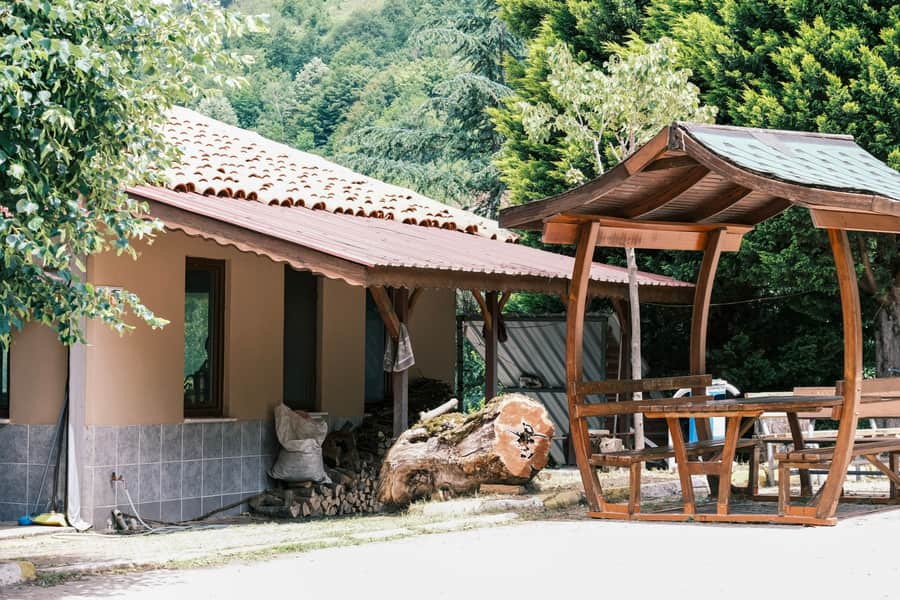 PURPLE LEAF Hardtop GazeboThe widest size range in the category and the lowest published wind rating on this site — 40 mph, from the same brand that rates its pergolas at 70. | Best if you need a smaller footprint | 40 | Check price on Amazon |
| 02 | 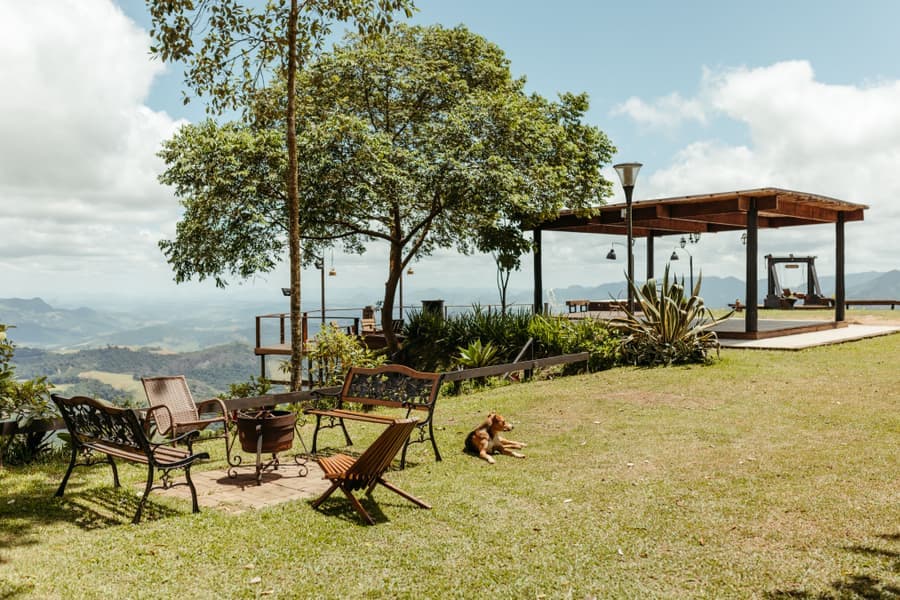 Sunjoy Kingston 12 x 14 Aluminum Gazebo with Steel RoofPublishes both a wind rating and a snow figure — but the snow figure is a whole-roof total, not a per-square-foot load, so it is not directly comparable to anyone else's. | Publishes the figures you will be asked for | 50 | Check price on Amazon |
| 03 |  Backyard Discovery Norwood Cedar GazeboThe only gazebo we can find that publishes a 100 mph wind rating and a convertible snow figure — and it converts to roughly 56 lb/ft², several times any other hardtop here. | Where anchoring makes it permanent | 100 (Pro-Tect tested; product must be anchored per the manual) | Check price on Amazon |
The durability table
Every published figure we could source for these structures, in one place, with the manufacturer page each number came from. Where a cell reads "Not published by manufacturer", that figure does not exist in the manufacturer's own material — we do not estimate it and we do not copy one from another site.
| Model | Wind rating (mph) | Snow load | Frame | Roof | Anchoring required | Warranty | Spec source |
|---|---|---|---|---|---|---|---|
| PURPLE LEAF Hardtop GazeboTop pick | 40 | 2,500 lb (published as a total, without a stated roof area) | Powder-coated aluminum alloy | Galvanized steel, single or double roof | Not published by manufacturer | Not published by manufacturer | PURPLE LEAF hardtop gazebo collectionChecked 2026-09-26 |
| Sunjoy Kingston 12 x 14 Aluminum Gazebo with Steel Roof | 50 | 3,000 lb across the entire roof (not a per-square-foot rating) | Aluminum and steel | Galvanized steel, two-tier vented | Pre-drilled ground plates: included stakes for soft ground, expansion bolts for hard surfaces (bolts not included) | Not published by manufacturer | Sunjoy Kingston product pageChecked 2026-09-26 |
| Backyard Discovery Norwood Cedar Gazebo | 100 (Pro-Tect tested; product must be anchored per the manual) | 6,700 lb across the roof, or up to 30 in. of snow (12 x 10 ft model — roughly 56 lb/ft²) | 100% cedar, 6 in. x 6 in. posts, galvanized steel hardware | 29-gauge galvanized steel peak roof, thermal insulated | Mandatory. Product must be anchored as specified in the instruction manual | 5 years | Backyard Discovery Norwood 12x10 product pageChecked 2026-09-26 |
Every pick in full
Best if you need a smaller footprint
PURPLE LEAF Hardtop Gazebo
The widest size range in the category and the lowest published wind rating on this site — 40 mph, from the same brand that rates its pergolas at 70.
- Wind rating
- 40
- Snow load
- 2,500 lb (published as a total, without a stated roof area)
- Frame
- Powder-coated aluminum alloy
- Roof
- Galvanized steel, single or double roof
- Anchoring
- Not published by manufacturer
- Warranty
- Not published by manufacturer
- Sizes
- 6 x 8 ft through 14 x 28 ft
If the answer from your building department is that a permit is required above a certain area, the useful response is often a smaller gazebo rather than a permit application.
Published sizes run from 6 x 8 ft right through to 14 x 28 ft — the widest range on this site by a long way. A 6 x 8 ft gazebo is 48 sq ft, which sits below the exempt-structure threshold used in many jurisdictions, where a 12 x 14 at 168 sq ft frequently does not.
We are not telling you 48 sq ft is exempt where you live, because we cannot know that. Thresholds vary by state, county and city, and some jurisdictions use height or anchoring rather than area. What the range gives you is options: ask what your threshold is, then pick a size under it if that is the outcome you want.
Galvanized steel roof on a powder-coated aluminum alloy frame, with 40 mph published wind. No anchoring method is stated, which cuts both ways on a permit question — see the section below on why anchoring is often the deciding factor.
Skip it if: You want the biggest structure your lot allows. Going small to avoid paperwork is a trade, and it is not always the right one.
#ad Price shown as of September 26, 2026. How this site is funded
Specifications from PURPLE LEAF hardtop gazebo collection, checked 2026-09-26.
Publishes the figures you will be asked for
Sunjoy Kingston 12 x 14 Aluminum Gazebo with Steel Roof
Publishes both a wind rating and a snow figure — but the snow figure is a whole-roof total, not a per-square-foot load, so it is not directly comparable to anyone else's.
- Wind rating
- 50
- Snow load
- 3,000 lb across the entire roof (not a per-square-foot rating)
- Frame
- Aluminum and steel
- Roof
- Galvanized steel, two-tier vented
- Anchoring
- Pre-drilled ground plates: included stakes for soft ground, expansion bolts for hard surfaces (bolts not included)
- Warranty
- Not published by manufacturer
- Sizes
- Roof 12 x 14 ft; base 11 x 13 ft; height 11.02 ft
The gazebo here that gives you every number a permit conversation needs, which makes the conversation ten minutes instead of three phone calls.
Roof 12 x 14 ft, base 11 x 13 ft, height 11.02 ft. Those are the three figures a plans examiner asks for, and almost no listing in this category publishes all of them. Note that the roof dimension and the base dimension are different, and which one your jurisdiction measures is a question worth asking explicitly.
The height figure matters more than people expect. Many jurisdictions set a maximum height for an exempt accessory structure, and at 11.02 ft this gazebo is tall. A structure can be comfortably under an area threshold and over a height one.
Pre-drilled ground plates, with stakes for soft ground and expansion bolts for hard surfaces not included. That choice — stakes or bolts — can itself change the classification, because a structure bolted to a slab reads as permanent in a way a staked one does not.
Skip it if: Your jurisdiction sets a low height limit for exempt structures. At 11.02 ft this is at the tall end of the category.
#ad Price shown as of September 26, 2026. How this site is funded
Specifications from Sunjoy Kingston product page, checked 2026-09-26.
Where anchoring makes it permanent
Backyard Discovery Norwood Cedar Gazebo
The only gazebo we can find that publishes a 100 mph wind rating and a convertible snow figure — and it converts to roughly 56 lb/ft², several times any other hardtop here.
- Wind rating
- 100 (Pro-Tect tested; product must be anchored per the manual)
- Snow load
- 6,700 lb across the roof, or up to 30 in. of snow (12 x 10 ft model — roughly 56 lb/ft²)
- Frame
- 100% cedar, 6 in. x 6 in. posts, galvanized steel hardware
- Roof
- 29-gauge galvanized steel peak roof, thermal insulated
- Anchoring
- Mandatory. Product must be anchored as specified in the instruction manual
- Warranty
- 5 years
- Sizes
- 10 x 10, 12 x 10, 14 x 10, 14 x 12, 16 x 12, 20 x 12 and 24 x 12 ft
Included because it is the clearest example of the anchoring question, which is the one most people do not see coming.
Anchoring is mandatory: the product must be anchored as specified in the instruction manual. That is not a suggestion and it is the condition behind the published 100 mph wind figure. You cannot install this gazebo correctly and also install it temporarily.
Which means it is a permanently anchored structure, and in many jurisdictions that is the test — not the footprint. A structure fixed to a foundation is frequently treated differently from one sitting on the ground, regardless of size.
Sizes 10 x 10 through 24 x 12 ft, with a 29-gauge galvanized steel roof on 6 in. x 6 in. cedar posts. The larger options are well past any exempt threshold we are aware of in any jurisdiction, so at the big end of this range, plan on a permit rather than hoping.
Skip it if: You need a structure you can describe as temporary. This one cannot be installed correctly without permanent anchors.
#ad Price shown as of September 26, 2026. How this site is funded
Specifications from Backyard Discovery Norwood 12x10 product page, checked 2026-09-26.
Why we cannot tell you the answer
Building codes are local, and there is no national rule for gazebos. Permit thresholds are set by your state, your county and often your city, and they are revised. A figure we published today would be wrong somewhere and out of date somewhere else, and acting on a wrong threshold is expensive in a way that a phone call is not.
So this page does the useful thing instead: it tells you which numbers decide it, and what to ask. In our reading of this category, three product facts come up again and again — footprint area, height to the peak, and whether the structure is permanently anchored. Have all three ready before you call.
And there are two separate approvals, not one. Your building department enforces code. Your HOA enforces a private agreement, and it can say no to something code permits — including on appearance, colour and position. Clearing one tells you nothing about the other.
Do this before you order, not after it arrives. A gazebo in flat-pack boxes in your garage is a weak negotiating position, and most retailers will not take back a part-assembled structure.
The three figures that usually decide it
Here is what each pick publishes against the three questions you are most likely to be asked. Where a cell says the figure is not published, that is a gap you will have to measure yourself after delivery — which is the wrong order.
| Model | Footprint published | Height published | Anchoring |
|---|---|---|---|
| Sunjoy Kingston 12 x 14 | Roof 12 x 14 ft; base 11 x 13 ft | 11.02 ft | Ground plates; stakes or expansion bolts (bolts not included) |
| PURPLE LEAF hardtop | 6 x 8 ft through 14 x 28 ft | Not published by manufacturer | Not published by manufacturer |
| Backyard Discovery Norwood | 10 x 10 through 24 x 12 ft | Not published by manufacturer | Mandatory, as specified in the manual |
| Yardistry Meridian 12 x 14 | Roof 12 x 14 ft; base 10 ft 10⅜ x 12 ft 10⅜ in. | Not published by manufacturer | Post brackets supplied; hardware not, because surfaces vary |
One row out of four publishes a height. If your jurisdiction's exemption turns on height — and many do — then for three of these four you are measuring the assembled structure to find out whether you needed a permit for it. That is a genuine argument for buying the model that publishes the number.
The questions to ask your building department
Ten minutes on the phone, with the product page open in front of you. Ask these in this order.
- 01"What is the size threshold for an accessory structure that does not need a permit?" Get the number, and get whether it is measured as footprint or as roof area — for a gazebo those differ by a foot on each axis.
- 02"Is there a height limit as well?" This is the one people miss. A gazebo can be well under an area threshold and over a height one, and 11 ft to the peak is normal in this category.
- 03"Does it change if the structure is bolted down?" Often yes. Permanent anchoring is frequently the test rather than size — and if the model's wind rating requires anchoring, you cannot opt out of it.
- 04"What are the setbacks from the property line, and from the house?" Setbacks catch more gazebos than permits do, and a setback problem means moving the structure rather than filing paperwork.
- 05"Does it count toward lot coverage or impervious area?" A solid roof sheds water somewhere, and in some jurisdictions a hardtop counts where an open structure does not.
- 06"Do I need anything for electrical?" Lights, a fan or a heater in a gazebo is usually a separate question with its own inspection.
- 07Then write down who you spoke to and when. If it comes up later, a name and a date is worth a great deal more than a recollection.
The HOA conversation is different
An HOA is a private agreement rather than a code, and it cares about things a plans examiner does not.
Read the covenants before you ask anyone anything. Most of the answer is already written down, usually under accessory structures, and arriving informed changes the conversation. Look for size limits, position restrictions, and whether approval is needed at all.
Expect appearance to matter. Colour, roof material and visibility from the street come up constantly in HOA decisions and essentially never in code. A galvanized steel roof reads differently from a cedar structure with a brown aluminum roof, and some associations have opinions about exactly that.
Submit the manufacturer's own page, not a sketch. A published product page with real dimensions, a photograph and a material list is the most persuasive document you can send, and it is free. The models here that publish a base dimension as well as a roof dimension make a notably stronger submission.
Allow for the timeline. Architectural review committees meet on a schedule, and delivery dates do not care about that schedule. Ask when the next meeting is before you order, not after.
And ask about anchoring specifically, because an HOA that permits a gazebo may still restrict drilling into a shared slab or a boundary wall. How to anchor a gazebo covers what each surface needs, which is useful to have in hand for that conversation.
Questions people ask
Do you need a permit for a gazebo?
What size gazebo requires a permit?
Does anchoring a gazebo make it a permanent structure?
Can my HOA stop me putting up a gazebo?
What height can a gazebo be without a permit?
Do I measure the roof or the base for a permit?
What about setbacks from the property line?
Is a pergola permit different from a gazebo permit?
Where these figures came from
- Sunjoy Kingston 12x14 aluminum gazebo with steel roof — roof 12 x 14 ft, base 11 x 13 ft, height 11.02 ft, ground plates with expansion bolts not included
- PURPLE LEAF hardtop gazebo collection — published sizes 6 x 8 ft through 14 x 28 ft, 40 mph wind rating
- Backyard Discovery Norwood 12x10 gazebo — mandatory anchoring as specified in the instruction manual, 100 mph Pro-Tect tested, sizes 10 x 10 through 24 x 12 ft
- Yardistry Meridian 12x14 cedar gazebo — roof 12 x 14 ft, base 10 ft 10⅜ in. x 12 ft 10⅜ in., post mounting brackets supplied without anchoring hardware
Found an error? Tell us and we will correct it within seven days and note the change on the page with a dated line — see our editorial policy.