Pergola vs arbor
An arbor frames a way through. A pergola covers somewhere you sit. They look related because they are built the same way, and almost nothing else about them is comparable.
By Ryder M. · Published · Last updated
We compare published manufacturer specifications, warranty terms and owner-reported failure modes. We have not physically tested these structures. How we judge shade structures
Slat & Shade earns a commission on qualifying purchases made through links on this page. It costs you nothing extra and never changes what we recommend. Full disclosure
Part of Pergolas
The short answer
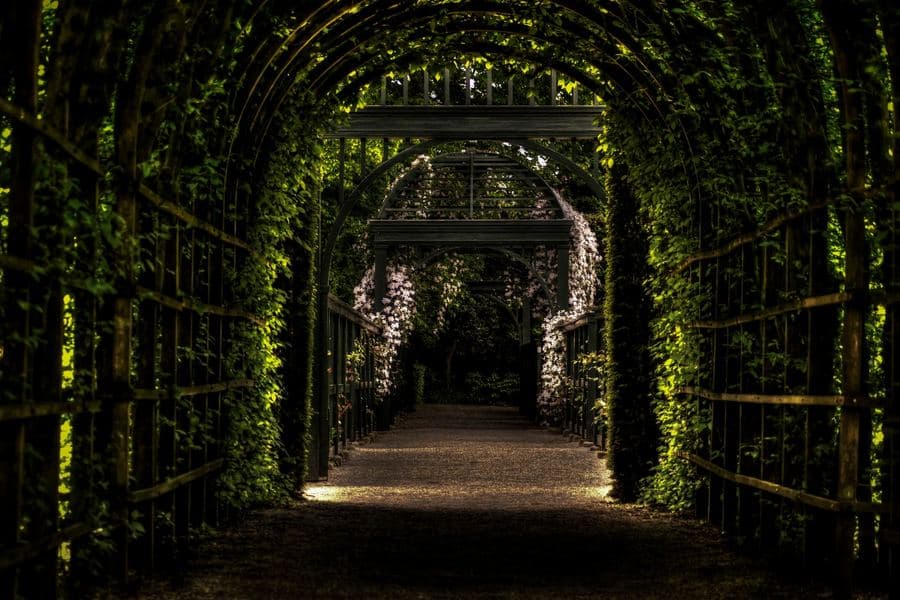
A pergola is a shade structure with four or more posts covering an area you use. An arbor is a narrow two-post feature spanning a path or a gateway, usually for climbing plants. Buy a pergola for shade over a patio; buy an arbor to mark an entrance.
Our picks at a glance
| # | Structure | Best for | Wind rating | Price |
|---|---|---|---|---|
| 01 | 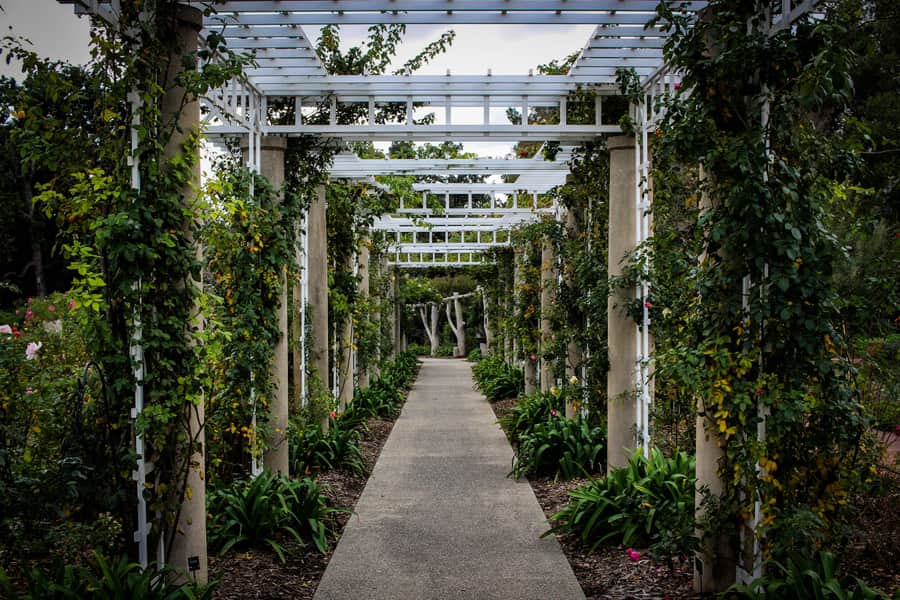 Yardistry 12 x 12 Pergola6x6 posts and a five-year rot warranty on a traditional multilevel trellis pergola — and the only pergola here that publishes its base dimensions as well as its roof. | Best if you actually want a pergola | Not published by manufacturer | Check price on Amazon |
| 02 | 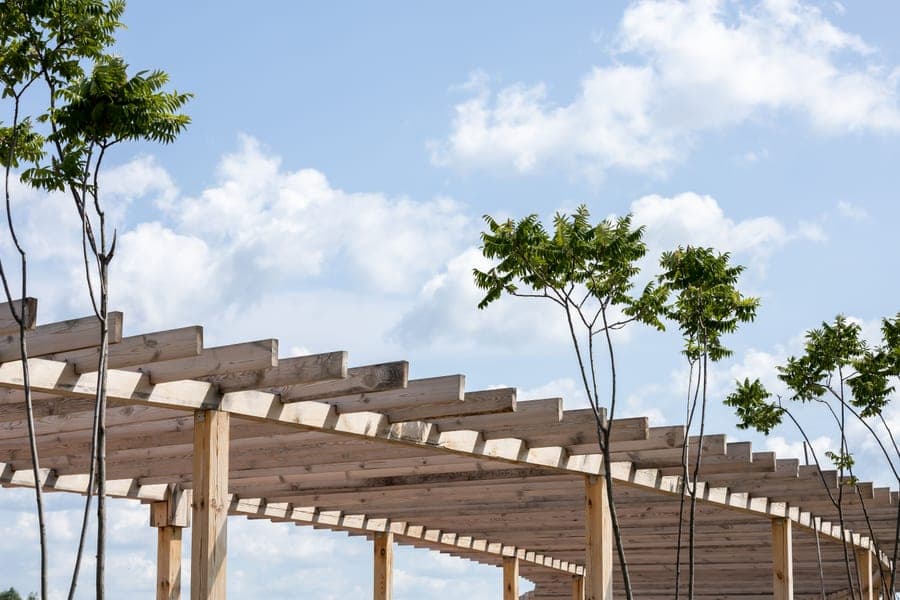 Backyard Discovery Beaumont Cedar PergolaThe highest published wind rating of any pergola on this site, and the only wood kit whose manufacturer makes anchoring a stated condition of the rating. | The one built like a building | 100 (when properly anchored) | Check price on Amazon |
| 03 | 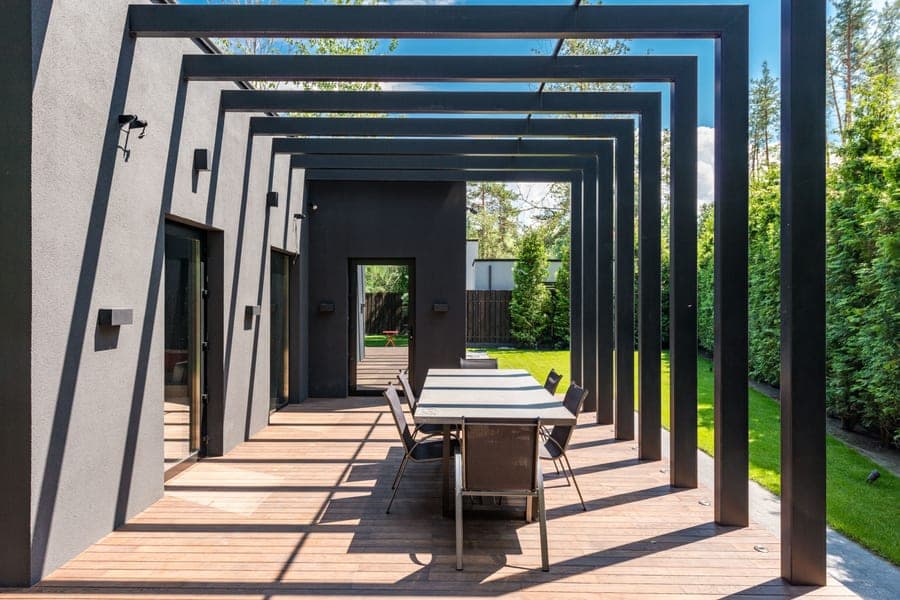 PURPLE LEAF Athena Louvered PergolaThe highest wind figure any louvered pergola in this class publishes, and the only one that ties the number to a specific anchoring condition. | Where the categories stop overlapping entirely | 72 (fully secured with expansion screws on a hardened floor) | Check price on Amazon |
The durability table
Every published figure we could source for these structures, in one place, with the manufacturer page each number came from. Where a cell reads "Not published by manufacturer", that figure does not exist in the manufacturer's own material — we do not estimate it and we do not copy one from another site.
| Model | Wind rating (mph) | Snow load | Frame | Roof | Anchoring required | Warranty | Spec source |
|---|---|---|---|---|---|---|---|
| Yardistry 12 x 12 PergolaTop pick | Not published by manufacturer | Not published by manufacturer | 6 in. x 6 in. posts with classic plinths (species not stated on the product page) | Multilevel open pergola roof with profiled beam and trellis ends — open, not solid | Not published by manufacturer | 5 years limited on lumber against rot and decay; 1 year on materials and workmanship | Yardistry 12x12 pergola product pageChecked 2026-09-26 |
| Backyard Discovery Beaumont Cedar Pergola | 100 (when properly anchored) | Not published by manufacturer | 100% cedar, 5.5 in. x 5.5 in. posts | Multi-level cedar trellis roof with crossing rafters — open, not solid | Mandatory. Concealed concrete anchors, per the instruction manual | 5 years | Backyard Discovery Beaumont product pageChecked 2026-09-26 |
| PURPLE LEAF Athena Louvered Pergola | 72 (fully secured with expansion screws on a hardened floor) | Not published by manufacturer | Powder-coated aluminum, 1.5 mm wall, 4.33 in. x 4.33 in. crossbeams | Adjustable aluminum louvers with integrated drainage | Expansion screws into a hardened floor — the published wind figure assumes it | 1 year | PURPLE LEAF louvered pergola collectionChecked 2026-09-26 |
Every pick in full
Best if you actually want a pergola
Yardistry 12 x 12 Pergola
6x6 posts and a five-year rot warranty on a traditional multilevel trellis pergola — and the only pergola here that publishes its base dimensions as well as its roof.
- Wind rating
- Not published by manufacturer
- Snow load
- Not published by manufacturer
- Frame
- 6 in. x 6 in. posts with classic plinths (species not stated on the product page)
- Roof
- Multilevel open pergola roof with profiled beam and trellis ends — open, not solid
- Anchoring
- Not published by manufacturer
- Warranty
- 5 years limited on lumber against rot and decay; 1 year on materials and workmanship
- Sizes
- Roof 12 x 12 ft, 8 ft 6 in. high; base 10 x 10 ft outside-to-outside of posts
If the reason you are comparing these two is that you want a traditional timber structure, this is the pergola end of that wish — and it publishes the dimension that matters for a space you intend to use.
Roof 12 x 12 ft, 8 ft 6 in. high; base 10 x 10 ft outside-to-outside of the posts. That base figure is the usable room. It is the only pergola on this site that publishes both roof and base dimensions, and the two-foot difference between them is exactly the detail an arbor never has to worry about.
6 in. x 6 in. posts with classic plinths, under a multilevel open pergola roof with profiled beams and trellis ends. The trellis ends are worth noting in this comparison: the detail people associate with an arbor appears here as an ornament on a structure doing a completely different job.
Five years limited on the lumber against rot and decay, one year on materials and workmanship. That split is the thing to read on any timber structure: the manufacturer is telling you rot is the expected failure mode and giving it a horizon.
Skip it if: You want to mark a path rather than cover a patio. A 10 x 10 base is vastly more structure than a walkway needs.
#ad Price shown as of September 26, 2026. How this site is funded
Specifications from Yardistry 12x12 pergola product page, checked 2026-09-26.
The one built like a building
Backyard Discovery Beaumont Cedar Pergola
The highest published wind rating of any pergola on this site, and the only wood kit whose manufacturer makes anchoring a stated condition of the rating.
- Wind rating
- 100 (when properly anchored)
- Snow load
- Not published by manufacturer
- Frame
- 100% cedar, 5.5 in. x 5.5 in. posts
- Roof
- Multi-level cedar trellis roof with crossing rafters — open, not solid
- Anchoring
- Mandatory. Concealed concrete anchors, per the instruction manual
- Warranty
- 5 years
- Sizes
- 10 x 10 ft, 12 x 10 ft, 14 x 10 ft, 14 x 12 ft, 16 x 12 ft, 20 x 12 ft
The strongest argument that a pergola and an arbor are different classes of object rather than different sizes of the same one.
100 mph published wind rating when properly anchored, on 100% cedar with 5.5 in. x 5.5 in. posts. No arbor on the market publishes a wind rating, because nobody engineers one for wind — and this is a kit structure with a tested figure attached to a stated anchoring condition.
Anchoring is mandatory, using concealed concrete anchors per the instruction manual. That requirement is the dividing line in practice. A pergola at this size is a permanent anchored structure; an arbor is usually two posts in the ground that you could lift out with a helper.
Sizes 10 x 10 through 20 x 12 ft, with a multi-level cedar trellis roof of crossing rafters — open, not solid. Five years of warranty. The open roof is why it rates so highly in wind: air passes through crossing rafters instead of pushing on a panel.
Skip it if: You want rain cover. A crossing-rafter roof is dappled shade and no rain protection — [best pergolas with a roof](/pergolas/best-pergolas-with-a-roof) covers the alternatives.
#ad Price shown as of September 26, 2026. How this site is funded
Specifications from Backyard Discovery Beaumont product page, checked 2026-09-26.
Where the categories stop overlapping entirely
PURPLE LEAF Athena Louvered Pergola
The highest wind figure any louvered pergola in this class publishes, and the only one that ties the number to a specific anchoring condition.
- Wind rating
- 72 (fully secured with expansion screws on a hardened floor)
- Snow load
- Not published by manufacturer
- Frame
- Powder-coated aluminum, 1.5 mm wall, 4.33 in. x 4.33 in. crossbeams
- Roof
- Adjustable aluminum louvers with integrated drainage
- Anchoring
- Expansion screws into a hardened floor — the published wind figure assumes it
- Warranty
- 1 year
- Sizes
- 10 x 12 ft to 14 x 24 ft
Included to make the point that the modern pergola has moved so far from the arbor that the comparison barely holds any more.
Powder-coated aluminum with a 1.5 mm wall and 4.33 in. x 4.33 in. crossbeams, under adjustable louvers with integrated drainage. There is no arbor equivalent of any part of that sentence. This is a mechanical roof system on an engineered frame, and the only thing it shares with an arbor is having posts.
72 mph when fully secured with expansion screws on a hardened floor. A published figure tied to a stated installation condition — the single clearest signal that you are buying a structure rather than a garden ornament.
Sizes 10 x 12 ft to 14 x 24 ft, one year of warranty. If you came to this comparison wondering whether an arbor could do a pergola's job, a louvered roof is the answer to why not: it closes against rain and opens for air, and no two-post feature over a path does anything of the kind.
Skip it if: You want a timber garden feature. An aluminum louvered structure is the opposite aesthetic to an arbor, and nobody buys it for the romance.
#ad Price shown as of September 26, 2026. How this site is funded
Specifications from PURPLE LEAF louvered pergola collection, checked 2026-09-26.
The difference in one line each
An arbor is a narrow, usually arched structure of two posts and a top, spanning a path or a gateway. It is a frame for climbing plants and a way of marking a transition from one part of a garden to another. You walk through an arbor; you do not sit under one.
A pergola is a shade structure on four or more posts covering an area you occupy. It has a footprint rather than a span, and the point is the space underneath — furniture, a table, a hot tub.
And a trellis is neither: it is a flat panel of lattice for plants to climb, fixed to a wall or a fence, or used as an infill between pergola posts. It has no span and no footprint. People bring it into this comparison because arbors often have trellis sides, which is a detail rather than a category.
The practical test is what it covers. If the structure covers a route, it is an arbor. If it covers a room, it is a pergola. If it covers nothing and only supports plants, it is a trellis.
Side by side
On the terms that decide which one you need. Pergola figures are from the published specifications of the models on this site.
| Pergola | Arbor | Trellis | |
|---|---|---|---|
| Posts | Four or more | Two, usually | None — a fixed panel |
| Typical footprint | 10 x 10 ft up to 14 x 24 ft | A path width — 3 to 5 ft | No footprint |
| Primary purpose | Shade over a space you use | Marking a route or an entrance | Supporting climbing plants |
| Roof | Open rafters, louvers, solid panel or retractable fabric | Open top, often arched | None |
| Published wind rating | Up to 100 mph when properly anchored | Not published — not engineered for it | Not applicable |
| Anchoring | Mandatory on several models; condition of the rating | Posts in the ground, often unanchored | Fixed to a wall or fence |
| Permit relevance | Often — footprint and height both count | Rarely, given the footprint | Essentially never |
The wind-rating row is the one that settles it. Pergola manufacturers publish figures up to 100 mph and tie them to a stated anchoring method, because a pergola is a structure carrying real load. Nobody publishes a wind rating for an arbor, and nobody needs to — which tells you exactly how differently the two are engineered.
Which one you actually want
Most people arriving at this comparison already know, and are checking the vocabulary. In case you do not:
- Shade over a seating area or a dining table: pergola. An arbor cannot cover it and will look absurd trying.
- Marking the entrance to a vegetable garden, or the start of a path: arbor. A pergola over a walkway is a lot of structure to walk through and the posts land where you want to walk.
- Roses, clematis or wisteria as the actual point: arbor, or a trellis. Climbing plants want something narrow to wrap, and an arbor over a path shows them off at eye level in a way a 10 ft pergola roof does not.
- Both, in a long garden. This is the sensible answer and it is genuinely common: an arbor marking the transition, a pergola over the seating at the end of it. They are complementary rather than competing.
- Shade for a small patio where a pergola feels too big: still a pergola, just a smaller one. Best pergolas for small patios covers the sizes that work, and an arbor is not a substitute.
- Screening rather than shade: trellis. If the problem is being overlooked rather than being in the sun, a trellis panel on the boundary solves it for a fraction of the money.
What ownership actually looks like
This is where the two diverge most and where the published figures earn their keep.
A pergola is an anchored structure you maintain on a schedule. Several models on this site make anchoring a stated condition of their wind rating, which means the installation is permanent and the inspection is annual. Cedar wants sealing; aluminum wants its coating kept intact. Pergola maintenance covers the schedule.
An arbor is a garden feature that eventually rots at ground level and gets replaced. That is not a criticism — it is a fence-post lifespan on a fence-post budget, and the plant growing over it is doing most of the visual work anyway.
The permit question only applies to one of them. A pergola's footprint and height both commonly matter; an arbor over a path is small enough that it rarely registers. Pergola permits and HOA rules sets out what to ask.
And the warranty structures reflect all of this. The timber pergolas here publish five years against rot and decay, with one year on materials and workmanship. Nobody publishes a rot warranty on an arbor, because the category is not sold on longevity. If you want to buy once, you are looking at the pergola side of this page.
Questions people ask
What is the difference between a pergola and an arbor?
Is an arbor cheaper than a pergola?
What is the difference between an arbor and a trellis?
Can an arbor provide shade?
Does an arbor need to be anchored?
Do you need a permit for an arbor?
Which lasts longer, a pergola or an arbor?
Can you have both an arbor and a pergola?
Where these figures came from
- Yardistry 12x12 pergola — roof 12 x 12 ft, 8 ft 6 in. high, base 10 x 10 ft outside-to-outside of posts, 6 x 6 in. posts, 5-year lumber warranty against rot and decay
- Backyard Discovery Beaumont cedar pergola — 100 mph when properly anchored, 5.5 in. x 5.5 in. cedar posts, mandatory concealed concrete anchors, multi-level cedar trellis roof, 5-year warranty
- PURPLE LEAF louvered pergola collection — 72 mph fully secured with expansion screws on a hardened floor, 1.5 mm wall, 4.33 in. crossbeams, sizes 10 x 12 ft to 14 x 24 ft
Found an error? Tell us and we will correct it within seven days and note the change on the page with a dated line — see our editorial policy.