Pergola sizes guide
The most common regret in this category is a pergola that covers the table but not a chair pushed back. That is an arithmetic problem, and it takes five minutes to avoid.
By Ryder M. · Published · Last updated
We compare published manufacturer specifications, warranty terms and owner-reported failure modes. We have not physically tested these structures. How we judge shade structures
Slat & Shade earns a commission on qualifying purchases made through links on this page. It costs you nothing extra and never changes what we recommend. Full disclosure
Part of Pergolas

The short answer
Work outward from the furniture, allowing about 3 ft behind every chair someone will push back. A six-seat rectangular table needs roughly 12 x 9 ft of clear area — and the base dimension between the posts is smaller than the roof dimension on the box, often by more than a foot each way.
Our picks at a glance
| # | Structure | Best for | Wind rating | Price |
|---|---|---|---|---|
| 01 | 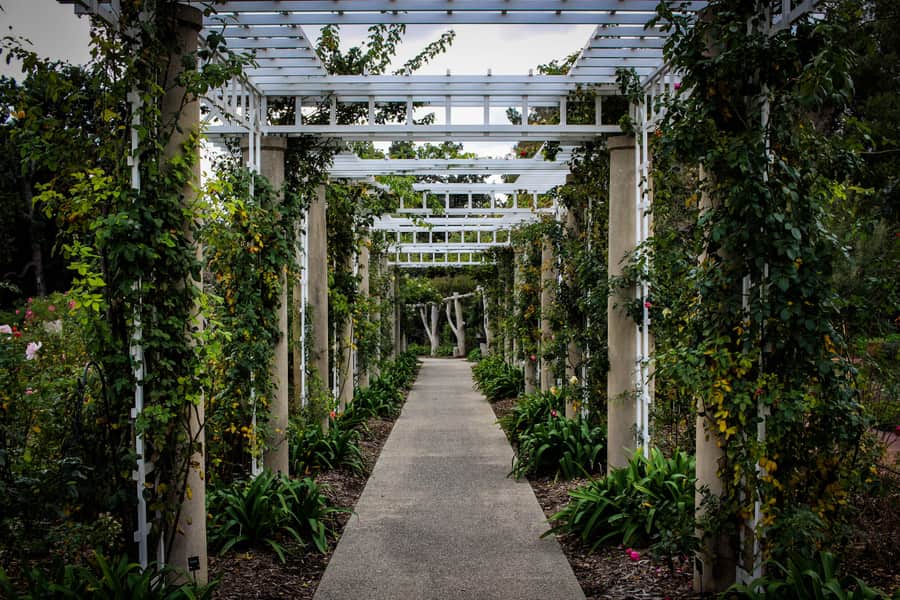 Yardistry 12 x 12 Pergola6x6 posts and a five-year rot warranty on a traditional multilevel trellis pergola — and the only pergola here that publishes its base dimensions as well as its roof. | The one that publishes both dimensions | Not published by manufacturer | Check price on Amazon |
| 02 | 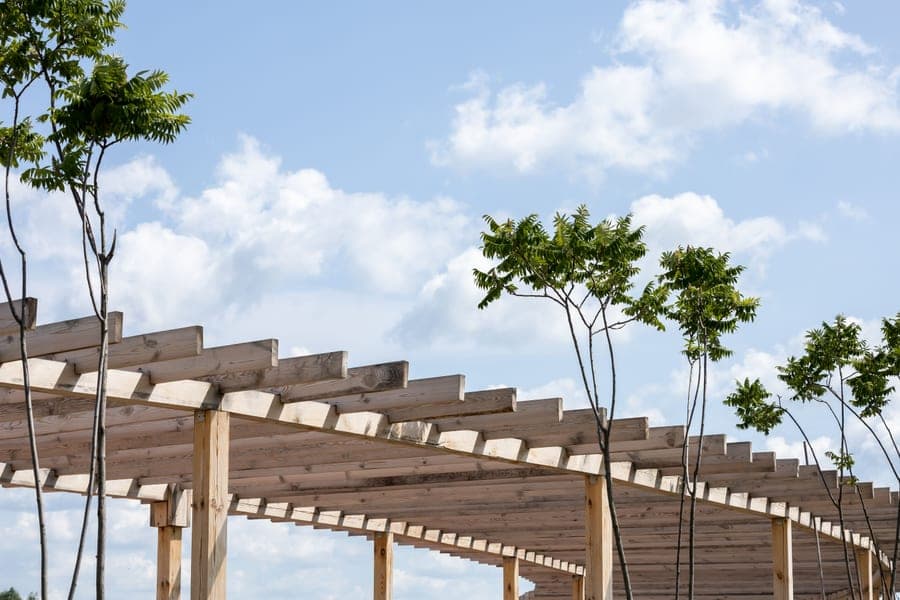 Backyard Discovery Beaumont Cedar PergolaThe highest published wind rating of any pergola on this site, and the only wood kit whose manufacturer makes anchoring a stated condition of the rating. | Widest range of sizes | 100 (when properly anchored) | Check price on Amazon |
| 03 | 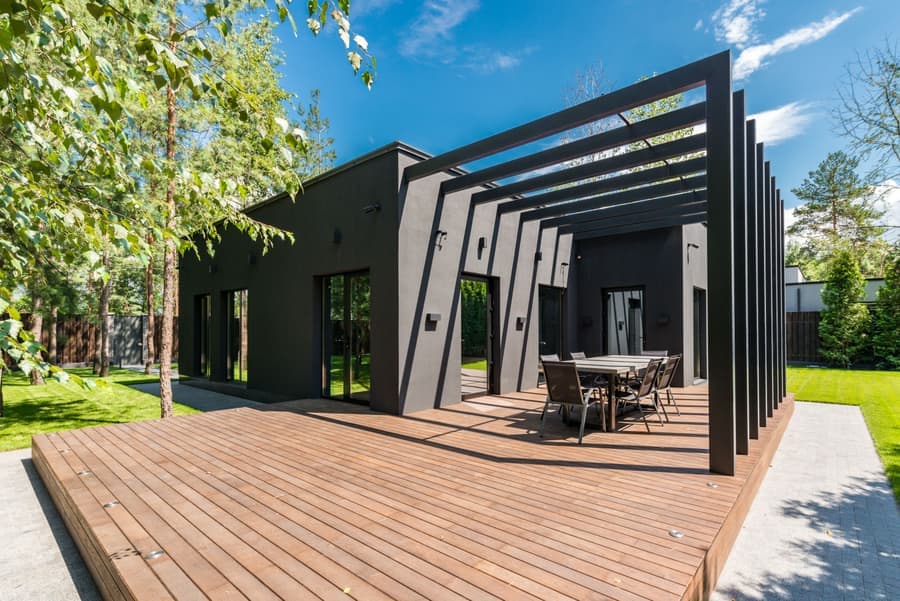 PURPLE LEAF Caesar Louvered PergolaThe same frame system as the Athena in more sizes and configurations, with a slightly lower published wind figure and the same one-year warranty. | Best for awkward spaces | 70 (under normal installation) | Check price on Amazon |
| 04 |  Domi Outdoor Living Aluminum Louvered PergolaThe only louvered pergola here that publishes a snow load in pounds per square foot and backs the roof and frame for five years rather than one. | Best sizes for a full outdoor room | 72 | Check price on Amazon |
The durability table
Every published figure we could source for these structures, in one place, with the manufacturer page each number came from. Where a cell reads "Not published by manufacturer", that figure does not exist in the manufacturer's own material — we do not estimate it and we do not copy one from another site.
| Model | Wind rating (mph) | Snow load | Frame | Roof | Anchoring required | Warranty | Spec source |
|---|---|---|---|---|---|---|---|
| Yardistry 12 x 12 PergolaTop pick | Not published by manufacturer | Not published by manufacturer | 6 in. x 6 in. posts with classic plinths (species not stated on the product page) | Multilevel open pergola roof with profiled beam and trellis ends — open, not solid | Not published by manufacturer | 5 years limited on lumber against rot and decay; 1 year on materials and workmanship | Yardistry 12x12 pergola product pageChecked 2026-09-26 |
| Backyard Discovery Beaumont Cedar Pergola | 100 (when properly anchored) | Not published by manufacturer | 100% cedar, 5.5 in. x 5.5 in. posts | Multi-level cedar trellis roof with crossing rafters — open, not solid | Mandatory. Concealed concrete anchors, per the instruction manual | 5 years | Backyard Discovery Beaumont product pageChecked 2026-09-26 |
| PURPLE LEAF Caesar Louvered Pergola | 70 (under normal installation) | Not published by manufacturer | Powder-coated aluminum | Adjustable aluminum louvers | Not published by manufacturer | 1 year | PURPLE LEAF louvered pergola collectionChecked 2026-09-26 |
| Domi Outdoor Living Aluminum Louvered Pergola | 72 | 15 lb/ft² | Aluminum | Aluminum louvers, adjustable | M6 expansion bolts into a wooden deck or concrete floor, immediately after assembly | 5 years on hardtop roof and frame; 1 year on curtains and netting | Domi Outdoor Living product pageChecked 2026-09-26 |
Every pick in full
The one that publishes both dimensions
Yardistry 12 x 12 Pergola
6x6 posts and a five-year rot warranty on a traditional multilevel trellis pergola — and the only pergola here that publishes its base dimensions as well as its roof.
- Wind rating
- Not published by manufacturer
- Snow load
- Not published by manufacturer
- Frame
- 6 in. x 6 in. posts with classic plinths (species not stated on the product page)
- Roof
- Multilevel open pergola roof with profiled beam and trellis ends — open, not solid
- Anchoring
- Not published by manufacturer
- Warranty
- 5 years limited on lumber against rot and decay; 1 year on materials and workmanship
- Sizes
- Roof 12 x 12 ft, 8 ft 6 in. high; base 10 x 10 ft outside-to-outside of posts
On a sizing page this earns first place for a documentation reason rather than a performance one: it publishes the base dimension as well as the roof dimension, which almost nothing else in backyard shade does.
The figures are the clearest illustration of the whole problem: a 12 x 12 ft roof at 8 ft 6 in. high over a 10 x 10 ft base, outside-to-outside of the posts. Two feet lost in each direction between the number on the box and the space between the posts — and the posts are where your chairs hit.
Everything in this category works the same way, because the roof overhangs the frame to keep rain off the posts. Most listings publish only the roof figure, which means you are measuring the wrong number unless you go looking for the other one.
It is also the structure with the heaviest section here: 6 in. x 6 in. posts with classic plinths, five years limited on lumber against rot and decay, one year on materials and workmanship. No wind rating or snow figure is published.
Skip it if: You need published loading figures, or you will not re-seal timber every two to three years.
#ad Price shown as of September 26, 2026. How this site is funded
Specifications from Yardistry 12x12 pergola product page, checked 2026-09-26.
Widest range of sizes
Backyard Discovery Beaumont Cedar Pergola
The highest published wind rating of any pergola on this site, and the only wood kit whose manufacturer makes anchoring a stated condition of the rating.
- Wind rating
- 100 (when properly anchored)
- Snow load
- Not published by manufacturer
- Frame
- 100% cedar, 5.5 in. x 5.5 in. posts
- Roof
- Multi-level cedar trellis roof with crossing rafters — open, not solid
- Anchoring
- Mandatory. Concealed concrete anchors, per the instruction manual
- Warranty
- 5 years
- Sizes
- 10 x 10 ft, 12 x 10 ft, 14 x 10 ft, 14 x 12 ft, 16 x 12 ft, 20 x 12 ft
10 x 10, 12 x 10, 14 x 10, 14 x 12, 16 x 12 and 20 x 12 ft — the broadest set of footprints in our pergola registry, which makes it the easiest to match to whatever the arithmetic below tells you.
That range spans the two decisions most people make. The 12 x 10 and 14 x 10 cover a six-seat table with real clearance and stay proportionate in an average yard. The 16 x 12 and 20 x 12 are the sizes at which a pergola stops being a dining cover and becomes an outdoor room with separate seating.
And the size decision has a structural consequence the listings do not mention. This publishes 100 mph Pro-Tect tested across the range, on 100% cedar with 5.5 in. x 5.5 in. posts — but roof area is the load, and it scales with area while the post count does not. A 20 x 12 collects roughly twice what a 10 x 10 does on the same frame design. On an exposed site the smaller size is the better structural choice as well as the cheaper one.
Five-year warranty, anchoring mandatory per the manual with concealed concrete anchors supplied. Open cedar trellis roof, so dappled shade and no rain cover.
Skip it if: You want rain cover, or you will not maintain cedar.
#ad Price shown as of September 26, 2026. How this site is funded
Specifications from Backyard Discovery Beaumont product page, checked 2026-09-26.
Best for awkward spaces
PURPLE LEAF Caesar Louvered Pergola
The same frame system as the Athena in more sizes and configurations, with a slightly lower published wind figure and the same one-year warranty.
- Wind rating
- 70 (under normal installation)
- Snow load
- Not published by manufacturer
- Frame
- Powder-coated aluminum
- Roof
- Adjustable aluminum louvers
- Anchoring
- Not published by manufacturer
- Warranty
- 1 year
- Sizes
- 9 x 12 ft to 14 x 24 ft, plus wall-mounted and slanted-roof variants
9 x 12 ft through 14 x 24 ft, plus wall-mounted lean-to and slanted-roof variants — the range to look at when the answer to "what size" is not a standard one.
The lean-to is the configuration that solves the hardest sizing problems. Fixing one side to the house removes two posts from the floor entirely, which on a narrow terrace is often the difference between a structure that fits and one that does not. It also gives you more covered area per square foot of yard than a freestanding frame.
The catch is permits. Fixing a structure to the building is a structural alteration in many jurisdictions and a different permitting category from a freestanding accessory structure — so check before you plan around it. Pergola permits and HOA covers what the question usually turns on.
70 mph published wind resistance under normal installation, powder-coated aluminum frame with adjustable louvers, one-year warranty, no published snow figure.
Skip it if: You cannot fix into the house, or you would rather avoid the permit question — go freestanding.
#ad Price shown as of September 26, 2026. How this site is funded
Specifications from PURPLE LEAF louvered pergola collection, checked 2026-09-26.
Best sizes for a full outdoor room
Domi Outdoor Living Aluminum Louvered Pergola
The only louvered pergola here that publishes a snow load in pounds per square foot and backs the roof and frame for five years rather than one.
- Wind rating
- 72
- Snow load
- 15 lb/ft²
- Frame
- Aluminum
- Roof
- Aluminum louvers, adjustable
- Anchoring
- M6 expansion bolts into a wooden deck or concrete floor, immediately after assembly
- Warranty
- 5 years on hardtop roof and frame; 1 year on curtains and netting
- Sizes
- 10 x 10 ft, 10 x 12 ft, 10 x 13 ft, 12 x 16 ft, 12 x 20 ft
10 x 10, 10 x 12, 10 x 13, 12 x 16 and 12 x 20 ft, and the larger end of that range is where a louvered pergola makes most sense — because the bigger the structure, the more the shade being wrong all day actually costs you.
A 12 x 20 with a fixed roof is a large permanently shaded area. With louvers it is a large area you can make sunny in April and shaded in August, which is a materially different proposition at that footprint.
It is also the size range where the published figures start to matter most, and this is the pergola that has them: 72 mph wind and 15 lb/ft² snow, the only pergola we track publishing both, plus five years on the hardtop roof and frame. A bigger roof collects more of both loads.
A practical note on large footprints: leave working clearance on at least two sides. You have to assemble it, and you will want to reach the louvers and the drainage channels. A 12 x 20 tight against a fence on two sides is a structure you cannot maintain.
Skip it if: Your space is small — at 10 x 10 the louvered premium buys you less, and a fixed roof may be the better value.
#ad Price shown as of September 26, 2026. How this site is funded
Specifications from Domi Outdoor Living product page, checked 2026-09-26.
Work outward from the furniture
Catalog sizes in this category are 10 x 10, 10 x 12, 12 x 14, 12 x 16 and so on, and picking one by eye is how people end up with a pergola that covers the table and nothing else.
The number that matters is clearance, not table size. A person needs roughly 3 ft behind a chair to push back and stand up. If a post is inside that 3 ft, they will hit it — every time, for the life of the structure. So the required clear area is the furniture footprint plus about 3 ft on every side you actually use.
| What you're covering | Furniture footprint | Clear area needed | Roof size to look for |
|---|---|---|---|
| Four-seat square table | About 3 x 3 ft | About 9 x 9 ft | 10 x 10 is marginal; 10 x 12 is comfortable |
| Six-seat rectangular table | About 6 x 3 ft | About 12 x 9 ft | 12 x 10 minimum; 14 x 12 comfortable |
| Eight-seat rectangular table | About 8 x 3.5 ft | About 14 x 9.5 ft | 16 x 12 or larger |
| Four-piece lounge set | About 8 x 8 ft | About 12 x 12 ft | 14 x 12 or larger |
| Six-seat table plus loungers | Varies | About 16 x 12 ft | 12 x 20 or 20 x 12 |
| A grill and prep area only | About 4 x 2 ft | About 7 x 6 ft | Smallest available, or a lean-to |
| A walkway or entry feature | Path width plus clearance | About 4 ft wider than the path | Narrow pergola or arbor — a different product |
These are clear-area figures, which is why the last column is a size up from where the arithmetic lands: the base between the posts is smaller than the roof, and the posts are what your chairs hit.
Roof size is not usable size
This deserves its own section because it is the reason people order the size the arithmetic said and find it too small.
Every pergola is sold by its roof dimension, and the base is always smaller. The roof overhangs the frame, which is what keeps rain off the posts — so the overhang is a feature rather than a discrepancy. But the number on the box is not the number that has to fit your furniture.
The published example: Yardistry's 12 x 12 pergola has a 12 x 12 ft roof over a 10 x 10 ft base, outside-to-outside of the posts. Two feet lost in each direction. In gazebos the same pattern runs about a foot each way — Sunjoy publishes a 12 x 14 ft roof over an 11 x 13 ft base.
So a pergola advertised as 12 x 12 gives you roughly 10 x 10 of space between the posts. Find the base dimension before you buy. If a listing does not publish it, ask — and treat a seller who cannot answer as a signal.
Measuring your site, in order
- 01Measure your clear area, including where you can actually get an anchor in. An expansion anchor set too close to a slab edge cracks the concrete out rather than holding, so the anchorable area is smaller than the slab. How to anchor a pergola covers the edge-distance issue.
- 02Lay out the base dimensions with tape or string — not the roof dimensions — then put the actual furniture inside it and push a chair back. This one step finds more problems than any amount of arithmetic, and it costs nothing.
- 03Check the height. Pergolas run roughly 7 to 9 ft at the beam; Yardistry publishes 8 ft 6 in. for its 12 x 12. Look up: house eaves, first-floor windows, overhanging branches, gutters and any power line crossing the yard.
- 04Check the roof overhang against boundaries and eaves. The overhang is the widest part of the structure and it is what will hit the fence or the wall — not the posts. Setbacks are often measured to the roof edge too.
- 05Leave working clearance on at least two sides. You have to assemble it, and on a louvered pergola you will want to reach the drainage channels. A structure tight against a fence on two sides is one you cannot maintain.
- 06Think about where water goes. A closed louvered or solid roof concentrates runoff at its edges. Site it so runoff does not land on a path, a doorway or against the house foundation.
- 07Then check the permit position for that footprint before ordering, especially if it is attached.
Size, wind and snow — the trade nobody mentions
There is a structural argument for stopping short of the largest size you can afford, and no product page has an incentive to make it.
Roof area is the load. Wind load and snow load both scale with the area of the roof plane, while the number of posts carrying that load does not change. A 20 x 12 roof is 240 ft²; a 10 x 12 is 120. Same frame design, same anchors, twice the collected load.
And manufacturers generally publish one figure across a whole size range. Backyard Discovery publishes 100 mph from 10 x 10 to 20 x 12; PURPLE LEAF publishes 72 mph from 10 x 12 to 14 x 24. That is not necessarily wrong — frames are often uprated with size — but it does mean the published figure gives you no way to see the difference, so the margin at the small end is real and invisible.
Practically: on an exposed or snowy site, choosing a smaller footprint does more for survival than choosing between two products two mph apart. On a louvered pergola, a larger closed roof also accumulates proportionally more snow — another reason to open the louvers for winter.
The counter-argument, stated fairly: an undersized pergola is a structure you do not use. If the arithmetic says you need 12 x 9 of clear area, buying 10 x 10 to be structurally conservative is solving the wrong problem. Size for the furniture first; prefer the smaller option only when you are genuinely between sizes.
Attached, freestanding, or somewhere in between
Size interacts with configuration, and the configuration decision often solves a sizing problem better than a bigger footprint does.
A wall-mounted lean-to removes two posts. On a narrow terrace that is frequently the difference between fitting and not — you get the covered area without needing clearance for posts on the house side. PURPLE LEAF's Caesar line includes lean-to and slanted-roof variants. The trade is the permit position: attaching to the building is a structural alteration in many jurisdictions.
A freestanding structure close to the wall gets you most of the floor benefit with none of the permit or wind-load-into-the-house complexity. You lose the neat rain junction and gain a gap that needs sweeping.
Height-adjustable posts matter more than they sound on constrained sites — they are what lets a structure tuck under an existing eave or sit level on a sloping surface. Outsunny's polycarbonate line publishes them as a feature.
And if the space is a deck rather than a slab, the sizing question is also a structural one: the deck framing has to carry the pergola plus the wind uplift. Deck shade solutions covers that, and pergola vs patio cover covers the attached-versus-freestanding decision properly.
Questions people ask
What size pergola do I need?
Is a 10x10 pergola big enough?
What size pergola for a 6-seat table?
Why is the base smaller than the roof on a pergola?
What is the most common pergola size?
How tall is a pergola?
Does a bigger pergola handle weather worse?
Should I size up if I am unsure?
Where these figures came from
- Yardistry 12x12 pergola — published roof AND base dimensions, height, 6x6 posts with plinths, 5-year lumber warranty
- Backyard Discovery Beaumont — size range 10x10 to 20x12, 100 mph across the range, 5.5 in. cedar posts, mandatory anchoring
- PURPLE LEAF louvered pergola collection — 9x12 to 14x24 range, wall-mounted lean-to and slanted-roof variants, 70-72 mph figures
- Domi Outdoor Living louvered pergola — size range 10x10 to 12x20, 72 mph, 15 lb/ft², 5-year roof and frame warranty
- Sunjoy Kingston 12x14 — published roof and base dimensions, cited as the cross-category roof-versus-base example
- Outsunny hardtop pergola — height-adjustable posts, sizes, cited for constrained-site configurations
Found an error? Tell us and we will correct it within seven days and note the change on the page with a dated line — see our editorial policy.