The most durable gazebos
Durability in this category is not decided by the frame. It is decided by the coating, the fasteners at the base and whether the manufacturer will stand behind either.
By Ryder M. · Published · Last updated
We compare published manufacturer specifications, warranty terms and owner-reported failure modes. We have not physically tested these structures. How we judge shade structures
Slat & Shade earns a commission on qualifying purchases made through links on this page. It costs you nothing extra and never changes what we recommend. Full disclosure
Part of Hardtop Gazebos
The short answer
The Sojag Messina is the most durable gazebo we can document: a limited lifetime warranty on the aluminum and steel frame and fifteen years on the powder-coated finish, which is the only manufacturer commitment in this category that separates structural life from finish life. For repairable life rather than maintenance-free life, the Yardistry cedar structure is the answer.
Our picks at a glance
| # | Structure | Best for | Warranty | Price |
|---|---|---|---|---|
| 01 | 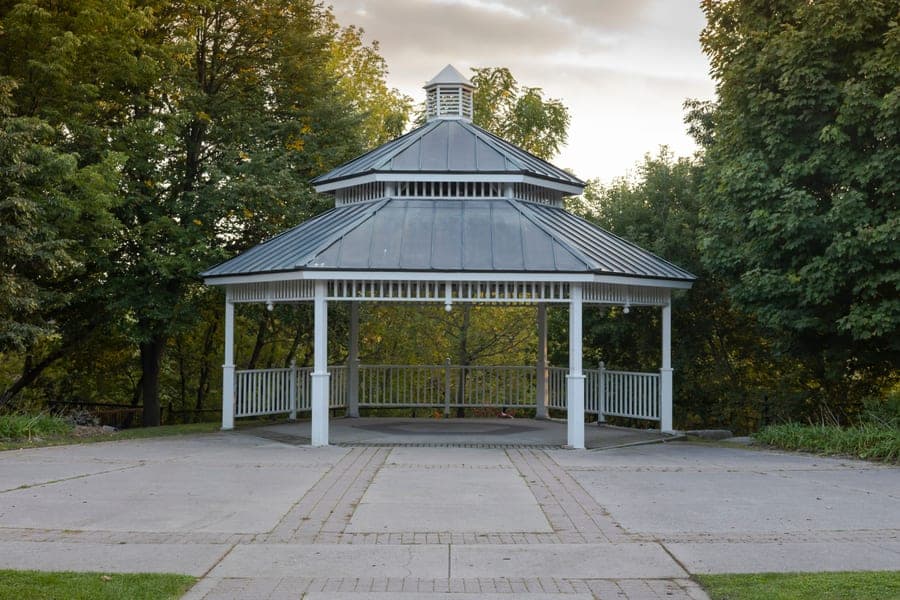 Sojag Messina Hardtop GazeboThe strongest warranty structure in the category — limited lifetime on the frame and 15 years on the finish — paired with wind and snow ratings the manufacturer describes but does not print. | Top pick for durability | 1 year limited on the gazebo; limited lifetime on the aluminum/steel frame; 15 years on the powder-coated finish | Check price on Amazon |
| 02 | 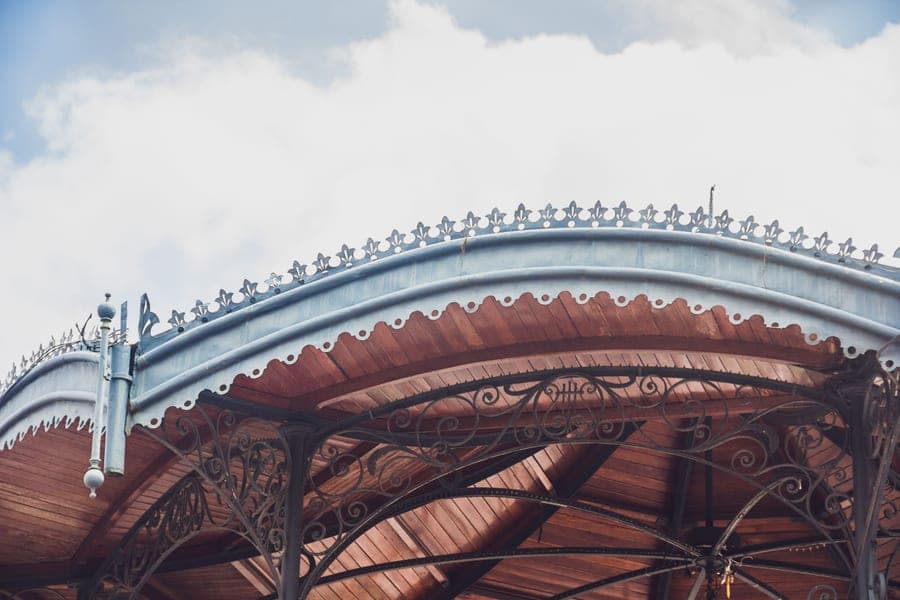 Backyard Discovery Norwood Cedar GazeboThe only gazebo we can find that publishes a 100 mph wind rating and a convertible snow figure — and it converts to roughly 56 lb/ft², several times any other hardtop here. | Best documented durability | 5 years | Check price on Amazon |
| 03 | 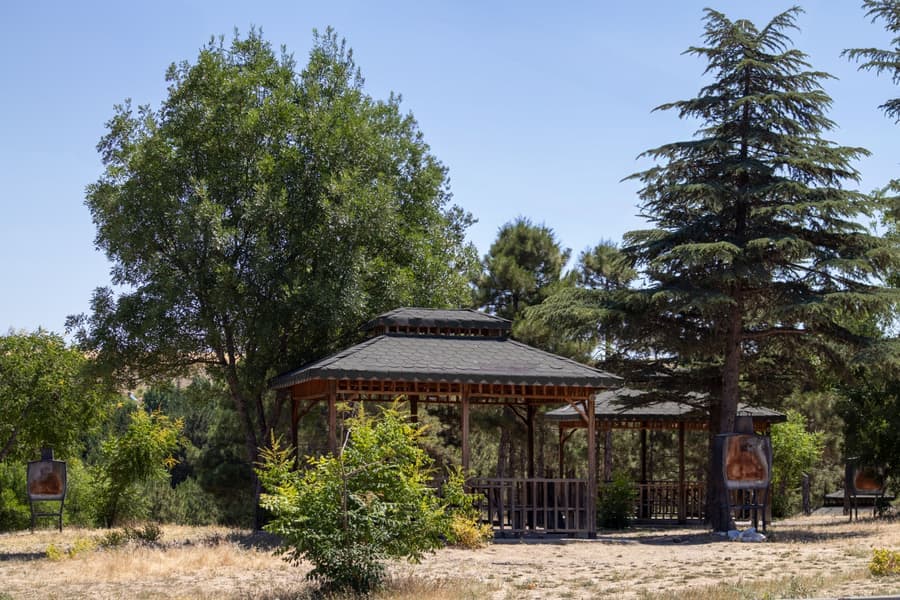 Yardistry Meridian 12 x 14 Cedar GazeboThe only structure here with 6x6 cedar posts and a five-year rot warranty — and it publishes no wind or snow figure at all. | Longest repairable life | 1 year on materials and workmanship; 5 years on lumber against rot and decay | Check price on Amazon |
| 04 |  Sunjoy Kingston 12 x 14 Aluminum Gazebo with Steel RoofPublishes both a wind rating and a snow figure — but the snow figure is a whole-roof total, not a per-square-foot load, so it is not directly comparable to anyone else's. | Best documented durability | Not published by manufacturer | Check price on Amazon |
| 05 |  Sojag Verona Hardtop GazeboA polycarbonate-roofed alternative to the Messina that trades snow-shedding confidence for daylight underneath. | Same frame, shorter-lived roof | 1 year limited on the gazebo; limited lifetime on the frame; 15 years on the powder-coated finish | Check price on Amazon |
| 06 |  Sunjoy 13 x 15 Hardtop Gazebo with Two-Tier Steel RoofThe largest footprint in Sunjoy's published-rating range, carrying the same 50 mph wind figure as its smaller siblings. | Best documented at a larger size | Not published by manufacturer | Check price on Amazon |
| 07 |  PURPLE LEAF Hardtop GazeboThe widest size range in the category and the lowest published wind rating on this site — 40 mph, from the same brand that rates its pergolas at 70. | Widest range, thinnest documentation | Not published by manufacturer | Check price on Amazon |
The durability table
Every published figure we could source for these structures, in one place, with the manufacturer page each number came from. Where a cell reads "Not published by manufacturer", that figure does not exist in the manufacturer's own material — we do not estimate it and we do not copy one from another site.
| Model | Wind rating (mph) | Snow load | Frame | Roof | Anchoring required | Warranty | Spec source |
|---|---|---|---|---|---|---|---|
| Sojag Messina Hardtop GazeboTop pick | Not published by manufacturer | Not published by manufacturer | Powder-coated aluminum | Galvanized steel panels | Not published by manufacturer | 1 year limited on the gazebo; limited lifetime on the aluminum/steel frame; 15 years on the powder-coated finish | Sojag hardtop gazebo collectionChecked 2026-09-26 |
| Backyard Discovery Norwood Cedar Gazebo | 100 (Pro-Tect tested; product must be anchored per the manual) | 6,700 lb across the roof, or up to 30 in. of snow (12 x 10 ft model — roughly 56 lb/ft²) | 100% cedar, 6 in. x 6 in. posts, galvanized steel hardware | 29-gauge galvanized steel peak roof, thermal insulated | Mandatory. Product must be anchored as specified in the instruction manual | 5 years | Backyard Discovery Norwood 12x10 product pageChecked 2026-09-26 |
| Yardistry Meridian 12 x 14 Cedar Gazebo | Not published by manufacturer | Not published by manufacturer | 100% premium cedar, 6 in. x 6 in. posts with heavy corner gussets | Rust-proof coffee-brown aluminum | Post mounting brackets supplied; anchoring hardware is not, because mounting surfaces vary | 1 year on materials and workmanship; 5 years on lumber against rot and decay | Yardistry Meridian 12x14 product pageChecked 2026-09-26 |
| Sunjoy Kingston 12 x 14 Aluminum Gazebo with Steel Roof | 50 | 3,000 lb across the entire roof (not a per-square-foot rating) | Aluminum and steel | Galvanized steel, two-tier vented | Pre-drilled ground plates: included stakes for soft ground, expansion bolts for hard surfaces (bolts not included) | Not published by manufacturer | Sunjoy Kingston product pageChecked 2026-09-26 |
| Sojag Verona Hardtop Gazebo | Not published by manufacturer | Not published by manufacturer | Powder-coated aluminum | UV-protected tinted polycarbonate panels | Not published by manufacturer | 1 year limited on the gazebo; limited lifetime on the frame; 15 years on the powder-coated finish | Sojag hardtop gazebo collectionChecked 2026-09-26 |
| Sunjoy 13 x 15 Hardtop Gazebo with Two-Tier Steel Roof | 50 | 3,400 lb across the entire roof (not a per-square-foot rating) | Steel or aluminum depending on configuration | Two-tier vented steel with woodgrain finish | Not published by manufacturer | Not published by manufacturer | Sunjoy hardtop gazebo collectionChecked 2026-09-26 |
| PURPLE LEAF Hardtop Gazebo | 40 | 2,500 lb (published as a total, without a stated roof area) | Powder-coated aluminum alloy | Galvanized steel, single or double roof | Not published by manufacturer | Not published by manufacturer | PURPLE LEAF hardtop gazebo collectionChecked 2026-09-26 |
Every pick in full
Top pick for durability
Sojag Messina Hardtop Gazebo
The strongest warranty structure in the category — limited lifetime on the frame and 15 years on the finish — paired with wind and snow ratings the manufacturer describes but does not print.
- Wind rating
- Not published by manufacturer
- Snow load
- Not published by manufacturer
- Frame
- Powder-coated aluminum
- Roof
- Galvanized steel panels
- Anchoring
- Not published by manufacturer
- Warranty
- 1 year limited on the gazebo; limited lifetime on the aluminum/steel frame; 15 years on the powder-coated finish
- Sizes
- 10 x 10 ft through 12 x 20 ft
This roundup is where Sojag's warranty structure stops being a footnote and becomes the whole argument. One year limited on the gazebo, a limited lifetime warranty on the aluminum and steel frame, and fifteen years on the powder-coated finish.
Three terms for three failure modes is the most informative warranty in backyard shade, and the reason is what it implies rather than what it covers. A warranty is a commitment to spend money, priced by a company that has seen its own return rates. Sojag separating the frame from the finish, and putting a lifetime on one and fifteen years on the other, is a manufacturer saying: the extrusion will not be what ends this structure; the coating will.
That happens to match exactly what powder-coated aluminum does in the field. The metal does not rust. The coating chalks, first and worst on the sunward face, and there is no sanding it back — you live with it or replace the member. A manufacturer that has priced fifteen years onto that specific surface has thought about the right thing.
The build supports it: galvanized steel panels on a powder-coated aluminum frame, sizes from 10 x 10 to 12 x 20. Steel is the durable roof choice because it holds its shape indefinitely, where polycarbonate creeps under repeated snow loading and yellows as its UV layer degrades. Touch up any break in a steel panel's coating — a scratch, a cut edge, a drilled fastener hole — and the roof keeps going.
What it does not publish: no wind rating, no snow figure. On a durability page we weight the warranty more heavily than those, because a manufacturer's financial commitment is harder to inflate than a marketing number. But it is a gap and we are not going to pretend otherwise.
Skip it if: You need a published wind or snow figure to check against a local requirement — there is none, and the warranty does not substitute for one.
#ad Price shown as of September 26, 2026. How this site is funded
Specifications from Sojag hardtop gazebo collection, checked 2026-09-26.
Best documented durability
Backyard Discovery Norwood Cedar Gazebo
The only gazebo we can find that publishes a 100 mph wind rating and a convertible snow figure — and it converts to roughly 56 lb/ft², several times any other hardtop here.
- Wind rating
- 100 (Pro-Tect tested; product must be anchored per the manual)
- Snow load
- 6,700 lb across the roof, or up to 30 in. of snow (12 x 10 ft model — roughly 56 lb/ft²)
- Frame
- 100% cedar, 6 in. x 6 in. posts, galvanized steel hardware
- Roof
- 29-gauge galvanized steel peak roof, thermal insulated
- Anchoring
- Mandatory. Product must be anchored as specified in the instruction manual
- Warranty
- 5 years
- Sizes
- 10 x 10, 12 x 10, 14 x 10, 14 x 12, 16 x 12, 20 x 12 and 24 x 12 ft
The strongest set of published durability figures in this category, and the reason it is second rather than first is a single missing disclosure.
What it publishes: a 100 mph Pro-Tect tested wind rating, 6,700 lb of snow capacity across a 12 x 10 ft roof (roughly 56 lb/ft²) or up to 30 inches of snow, 100% cedar with 6 in. x 6 in. posts, a 29-gauge thermal-insulated galvanized steel peak roof, and a manufacturer statement that the product must be anchored as specified in the manual. That is more verifiable durability information than any other gazebo here provides.
It is also the product that shows frame section outranks roof type in this category. Every aluminum-framed hardtop we track publishes 40-50 mph; this publishes 100 with a solid steel roof, on cedar posts three times the section of an aluminum tube. Snow load is resisted the same way — by post section, beam depth and connection stiffness — which is why its snow figure is three times the best aluminum one.
Why it is not first: the warranty is five years flat, with no separate term for the frame, the finish or the roof. Sojag's limited lifetime on the frame and fifteen years on the finish is a longer and more differentiated commitment, and on a page about durability that distinction decides the order. Five years on a cedar structure is still a real term — it is simply not a lifetime one.
And it is cedar. Re-seal every two to three years, keep end grain out of standing water, and it stays repairable board by board for decades. Neglect it and it grays, checks and rots.
Skip it if: You want the longest manufacturer commitment rather than the best figures, or you will not maintain cedar — the Messina is the answer to both.
#ad Price shown as of September 26, 2026. How this site is funded
Specifications from Backyard Discovery Norwood 12x10 product page, checked 2026-09-26.
Longest repairable life
Yardistry Meridian 12 x 14 Cedar Gazebo
The only structure here with 6x6 cedar posts and a five-year rot warranty — and it publishes no wind or snow figure at all.
- Wind rating
- Not published by manufacturer
- Snow load
- Not published by manufacturer
- Frame
- 100% premium cedar, 6 in. x 6 in. posts with heavy corner gussets
- Roof
- Rust-proof coffee-brown aluminum
- Anchoring
- Post mounting brackets supplied; anchoring hardware is not, because mounting surfaces vary
- Warranty
- 1 year on materials and workmanship; 5 years on lumber against rot and decay
- Sizes
- Roof 12 x 14 ft; base 10 ft 10⅜ in. x 12 ft 10⅜ in.
The most durable structure here on a completely different definition of the word, and the distinction is the most useful thing on this page. Aluminum has the longest maintenance-free life. Cedar has the longest repairable life. They are not the same property and most buyers only weigh the first.
When an aluminum frame's powder coat chalks, there is nothing to do. When a cedar beam checks at a through-bolt, you replace one board with lumber from any yard. 100% premium cedar with 6 in. x 6 in. posts and heavy corner gussets is a structure you can still be maintaining in twenty years, component by component, which is the actual buy-it-for-life proposition — nothing else in this comparison offers it.
Yardistry's warranty says it knows where the risk is: one year on materials and workmanship, five years on the lumber against rot and decay. Putting the extended term specifically on rot is a manufacturer covering cedar's real failure mode rather than making a general claim. Checking starts at the fixings and rot follows at end grain that sits wet.
The condition is absolute and it is the reason this is second rather than first: re-seal it every two to three years. Sealed and kept out of standing water, this outlasts budget aluminum comfortably. Neglected, it grays, checks and rots within a handful of years, and at that point aluminum would have been the better purchase. How long shade structures last has the honest version of that trade.
No wind rating, no snow figure, and anchoring hardware is not supplied — post mounting brackets are, because mounting surfaces vary.
Skip it if: You will not do the sealing. Be honest about it — the entire case for cedar collapses without it, and there is no partial credit.
#ad Price shown as of September 26, 2026. How this site is funded
Specifications from Yardistry Meridian 12x14 product page, checked 2026-09-26.
Best documented durability
Sunjoy Kingston 12 x 14 Aluminum Gazebo with Steel Roof
Publishes both a wind rating and a snow figure — but the snow figure is a whole-roof total, not a per-square-foot load, so it is not directly comparable to anyone else's.
- Wind rating
- 50
- Snow load
- 3,000 lb across the entire roof (not a per-square-foot rating)
- Frame
- Aluminum and steel
- Roof
- Galvanized steel, two-tier vented
- Anchoring
- Pre-drilled ground plates: included stakes for soft ground, expansion bolts for hard surfaces (bolts not included)
- Warranty
- Not published by manufacturer
- Sizes
- Roof 12 x 14 ft; base 11 x 13 ft; height 11.02 ft
It publishes the figures nobody else does, and on a durability page that counts for something specific: it lets you check the structure against your own conditions rather than trusting a general claim.
50 mph wind rating and 3,000 lb across a 12 x 14 ft roof — roughly 17.9 lb/ft² once converted, the highest comparable snow figure we can source. Plus the only published anchoring provision in the category: ground plates with three holes each, stakes for soft ground, expansion bolts for hard surfaces not included. Durability is not just material life; it is whether the structure survives the loads your site actually applies, and this is the only gazebo that lets you do that arithmetic.
The materials are sound. Aluminum and steel frame; two-tier vented galvanized steel roof, where the venting is a genuine durability feature as well as a wind one — it lets heat and moisture out from under the roof plane instead of trapping them against the frame.
Where it loses: no warranty term is published at all. On a page about durability that is the specification we would most want, and Sunjoy publishes a wind rating, a snow figure and dimensions while omitting it. That is an odd set of priorities, and it is why this sits third rather than first.
Skip it if: You want a manufacturer commitment to fall back on — there is no published warranty term for this model.
#ad Price shown as of September 26, 2026. How this site is funded
Specifications from Sunjoy Kingston product page, checked 2026-09-26.
Same frame, shorter-lived roof
Sojag Verona Hardtop Gazebo
A polycarbonate-roofed alternative to the Messina that trades snow-shedding confidence for daylight underneath.
- Wind rating
- Not published by manufacturer
- Snow load
- Not published by manufacturer
- Frame
- Powder-coated aluminum
- Roof
- UV-protected tinted polycarbonate panels
- Anchoring
- Not published by manufacturer
- Warranty
- 1 year limited on the gazebo; limited lifetime on the frame; 15 years on the powder-coated finish
- Sizes
- Not published by manufacturer
Included specifically to make the roof-material point concrete. The Verona has the Messina's frame and the Messina's warranty — one year limited, limited lifetime on the frame, fifteen years on the powder-coated finish — with UV-protected tinted polycarbonate panels instead of galvanized steel.
So the frame durability is identical and the roof durability is not, which isolates the variable neatly. Polycarbonate has two clocks that steel does not. The first is creep: under repeated snow loading a panel deflects, recovers, and recovers slightly less each winter, accumulating into permanent sag. It is gradual, it does not present as a failure event, and it is generally not covered — the fifteen-year term is on the powder-coated finish, not the panels. The second is UV: the protective layer degrades and yellowing and brittleness follow.
Steel's failure mode is better behaved. It dents under hail, which is cosmetic unless the coating is actually broken, and it holds its shape indefinitely. Break the coating — a scratch, a cut edge, a fastener hole — and corrosion starts from that point outward, which is why touch-up matters.
So the honest recommendation is conditional. In a mild climate where you want daylight underneath, the Verona is a reasonable durability choice with a shorter horizon on the roof than the frame. Anywhere with real snow, the Messina is the same structure with the panel that lasts.
Skip it if: You get meaningful snow, or you want the longest-lived roof — the steel-roofed Messina is the same frame at the same warranty.
#ad Price shown as of September 26, 2026. How this site is funded
Specifications from Sojag hardtop gazebo collection, checked 2026-09-26.
Best documented at a larger size
Sunjoy 13 x 15 Hardtop Gazebo with Two-Tier Steel Roof
The largest footprint in Sunjoy's published-rating range, carrying the same 50 mph wind figure as its smaller siblings.
- Wind rating
- 50
- Snow load
- 3,400 lb across the entire roof (not a per-square-foot rating)
- Frame
- Steel or aluminum depending on configuration
- Roof
- Two-tier vented steel with woodgrain finish
- Anchoring
- Not published by manufacturer
- Warranty
- Not published by manufacturer
- Sizes
- 13 x 15 ft
The same specification philosophy as the Kingston on a larger footprint: 50 mph published wind rating and 3,400 lb across the entire roof, which over 195 ft² converts to roughly 17.4 lb/ft².
The consistency between the two Sunjoy models is itself a small durability signal. When published snow figures scale roughly in proportion to roof area across a range, it suggests the frames were engineered per size rather than a headline figure being reused. A manufacturer quoting the same total for a 12 x 14 and a 12 x 20 would be telling you the opposite.
Two-tier vented steel roof with a woodgrain finish, and removable mesh netting sidewalls. Take the netting off before weather — it converts an open-sided gazebo into a much larger sail, and on a structure this size that is a substantial change in load.
Frame material varies by configuration between steel and aluminum, which is worth pinning down before you buy: a steel frame and an aluminum frame have different corrosion behavior and different long-term maintenance. No warranty term and no anchoring provision is published.
Skip it if: You want documented anchoring or a warranty term — neither is published for this model, and both are for the Kingston and the Messina respectively.
#ad Price shown as of September 26, 2026. How this site is funded
Specifications from Sunjoy hardtop gazebo collection, checked 2026-09-26.
Widest range, thinnest documentation
PURPLE LEAF Hardtop Gazebo
The widest size range in the category and the lowest published wind rating on this site — 40 mph, from the same brand that rates its pergolas at 70.
- Wind rating
- 40
- Snow load
- 2,500 lb (published as a total, without a stated roof area)
- Frame
- Powder-coated aluminum alloy
- Roof
- Galvanized steel, single or double roof
- Anchoring
- Not published by manufacturer
- Warranty
- Not published by manufacturer
- Sizes
- 6 x 8 ft through 14 x 28 ft
It is on this page because the range is genuinely useful and because leaving it off would misrepresent the category. It ranks last because on the criteria that matter for durability, it publishes the least.
What it publishes: a 40 mph wind rating, the lowest in this comparison. A 2,500 lb snow figure with no roof area stated, across a range spanning 6 x 8 to 14 x 28 ft — which describes capacities anywhere from roughly 52 lb/ft² to under 7 depending on which gazebo you bought, and is therefore not a specification. No warranty term.
What it has: the widest size and configuration range here, in the same materials as everyone else — powder-coated aluminum alloy frame, galvanized steel roof, single or double. The material combination is not the problem. The documentation is.
And the 40 mph figure is genuinely informative in one way, which is why we keep citing it: PURPLE LEAF publishes 70-72 mph for its louvered pergolas and 40 for its hardtop gazebos. Same brand, same aluminum, same factory. That 30 mph spread is a solid roof versus an open one, and understanding it is worth more than the figure itself.
Skip it if: Durability is genuinely your priority. There is no warranty term, no usable snow figure, and the lowest published wind rating on this page.
#ad Price shown as of September 26, 2026. How this site is funded
Specifications from PURPLE LEAF hardtop gazebo collection, checked 2026-09-26.
What actually ends a gazebo
Almost nobody's gazebo fails structurally. They degrade in specific places in a predictable order, and knowing that order is what lets you read a product page critically — and what makes the warranty structure the informative specification rather than the boring one.
- Fasteners at the base plate. The foot of a leg sits in standing water after every rain and dries last. Plated steel there corrodes; stainless and hot-dip galvanized do not. This is the most common first failure on an otherwise sound frame, it is almost never in a specification, and fixing it costs the price of sixteen bolts at assembly.
- Powder coat on the sunward face. Aluminum frames do not rust; their coating chalks, loses sheen and goes patchy, worst on the side that takes the most sun. It is irreversible. Sojag's fifteen-year finish warranty exists precisely because this is the clock that runs.
- Polycarbonate creep under repeated snow load. Deflect, recover, recover slightly less, winter after winter, until the sag is permanent. Slow, uncovered, and the strongest argument for a steel roof anywhere with real winters.
- Corrosion at breaks in a steel roof's coating. A scratch, a cut edge, a drilled fastener hole. Intact coating does not corrode and broken coating does, from that point outward — so touch-up is genuine maintenance rather than cosmetic.
- Cedar checking at the through-bolt, then rot at end grain. Wood moves and a bolt does not, so splits start at fixings and open with each wet-dry cycle. Rot follows wherever end grain sits wet. Both are addressed by sealing and by keeping the base off the ground.
- Roof fasteners backing out. A panel that lifts and reseats in wind works its fixings loose, and on a gazebo the roof is the load-collecting surface — so the roof starts coming apart before the frame does. This is what the seasonal fastener check is for.
Reading warranty structure, not warranty length
The length of a warranty is the least informative part of it. The structure tells you what the manufacturer expects to fail, and that is the closest thing to a reliability disclosure anyone in this category publishes.
Separate terms mean the manufacturer has claim data. Sojag publishing a lifetime on the frame and fifteen years on the finish has differentiated between two components with genuinely different lives. Yardistry publishing one year on materials and five on lumber against rot has done the same thing for timber. Domi, over in pergolas, publishes five years on roof and frame and one on curtains and netting — structure long, fabric short, which is the correct shape.
A single flat term means it has not differentiated. One year on everything — the category norm — is not evidence of a bad product; PURPLE LEAF pairs a one-year term with the best-documented wind ratings in louvered pergolas. It just carries less information.
And no published term at all is the one genuinely bad signal. Two products on this page publish a wind rating, a snow figure and full dimensions while publishing no warranty term anywhere we could find. That is a choice about what to disclose. Materials and warranties reads the fine print in full, including the anchoring clause that voids most of it.
The three things that extend any of these
Ranked by difference made per hour spent, rather than by how often they appear on a care sheet.
- 01Fit stainless or hot-dip galvanized fasteners at the base plates, at assembly. Before the structure is standing, while the plates are accessible. Cheapest meaningful upgrade available on any of these kits, and it removes the most predictable first failure.
- 02Anchor it properly, into structure rather than surface. Durability and wind survival are the same question at the base: a corroded or pulled anchor is not holding anything. Concrete takes expansion bolts; a deck needs a joist or blocking; pavers have to be lifted; soil needs a footing. How to anchor a gazebo covers each, including composite decks.
- 03Clear snow instead of trusting a rating. Sojag — the manufacturer with the best credentials here — tells you to remove accumulation from a roof it describes as four-season. A published capacity is a survival ceiling for one event, not an allowance for a season of freeze-thaw.
- 04Touch up any break in a coating, on steel roof panels and on the frame. Corrosion starts at breaks and nowhere else.
- 05Re-seal cedar every two to three years, with attention to end grain and through-bolts. This is the item that decides whether cedar was the right choice.
- 06Check every fastener at the start of each season, base plates and roof panels first. Freeze-thaw and thermal cycling back fixings out, and a loose base turns a rigid frame into a hinged one.
What we would actually buy
On a concrete patio, in a region with real winters, from someone who wants to stop thinking about it: the Sojag Messina, steel roof, stainless bolts at the base plates, roof cleared through the season. The warranty structure is the strongest commitment available and steel is the right panel.
If the local snow or wind load is the binding constraint and you need to check a number against it: the Sunjoy Kingston. Roughly 17.9 lb/ft² and 50 mph, and it is the only gazebo here that lets you do the arithmetic at all. Accept that no warranty term is published.
If you will maintain it and want the structure you can still be repairing in twenty years: the Yardistry Meridian. 6x6 cedar posts, five years against rot, board-by-board repairability. And re-seal it — the whole case rests on that.
If you want daylight underneath and do not get snow: the Sojag Verona, with the shorter roof horizon understood and accepted.
The pergola alternative is worth a look before you commit to any of them, because an open roof changes the durability question entirely — no snow accumulation, far better wind figures, no panels to creep. Pergola vs gazebo is the comparison, and most durable pergolas is the other shortlist.
What we cut, and why
Every model below was a genuine candidate and did not make the list. The reason is stated in each case, because a shortlist with no visible rejections is not evidence of a selection process.
- Every soft-top and fabric-canopy gazebo
- A fabric canopy is a consumable with a life measured in seasons, and this page is about structures with a life measured in decades. Not a criticism of the product — [hardtop vs soft top](/gazebos/hardtop-vs-soft-top-gazebos) makes the case for them — just a different question.
- Steel-framed gazebos with no published coating specification
- A steel frame is only as durable as its coating, because the failure mode is corrosion starting at any break in it. Where a manufacturer publishes neither a coating type nor a finish warranty on a steel frame, there is nothing to assess and the most likely outcome is rust at the fasteners.
- Anything whose warranty we could not find on the manufacturer's own site
- On a durability page the warranty is the primary evidence, and a retailer's paraphrase is not citable. Where we could not find a manufacturer-published term we recorded it as not published — which is why two products here have that in their row rather than being quietly omitted.
- Gazebos sold with plated-steel structural fasteners and no stainless option
- Not a disqualification we could apply consistently, because almost nobody publishes fastener specifications — so treat this as advice rather than a rejection. Corrosion at the base plate is the most predictable first failure on an otherwise sound frame, and swapping to stainless at assembly is the cheapest meaningful upgrade available on any of these kits.
Questions people ask
What is the most durable gazebo?
What is a heavy-duty gazebo, in specification terms?
Which lasts longer, an aluminum or a cedar gazebo?
What fails first on a gazebo?
Does a longer warranty mean a more durable gazebo?
Is a polycarbonate roof less durable than steel?
How long should a hardtop gazebo last?
Should I upgrade the fasteners on a new gazebo?
Where these figures came from
- Backyard Discovery Norwood 12x10 — 100 mph Pro-Tect tested wind rating, 6,700 lb / 30 in. snow figure, 6x6 cedar posts, 29-gauge steel roof, mandatory anchoring
- Sojag hardtop gazebo collection — 1 year limited, limited lifetime frame, 15 years powder-coated finish, materials, size range
- Yardistry Meridian 12x14 — 6x6 cedar posts, corner gussets, 1 year materials and 5 years lumber against rot, anchoring note
- Sunjoy Kingston 12x14 — 50 mph rating, 3,000 lb snow figure, vented two-tier steel roof, anchoring provision
- Sunjoy hardtop gazebo collection — 3,400 lb figure and 50 mph rating for the 13 x 15
- PURPLE LEAF hardtop gazebo collection — 40 mph rating, 2,500 lb figure without a roof area, size range
- PURPLE LEAF louvered pergola collection — 70-72 mph figures, the same-brand roof comparison
- Domi Outdoor Living louvered pergola — 5 years roof and frame, 1 year fabric, cited as warranty-structure reference
Found an error? Tell us and we will correct it within seven days and note the change on the page with a dated line — see our editorial policy.