Polycarbonate vs steel gazebo roofs
The cleanest comparison in backyard shade, because you can buy the same frame with either roof. Everything that differs is the panel.
By Ryder M. · Published · Last updated
We compare published manufacturer specifications, warranty terms and owner-reported failure modes. We have not physically tested these structures. How we judge shade structures
Slat & Shade earns a commission on qualifying purchases made through links on this page. It costs you nothing extra and never changes what we recommend. Full disclosure
Part of Hardtop Gazebos
The short answer
Choose steel if you get snow: it sheds, and it holds its shape indefinitely provided coating breaks get touched up. Choose polycarbonate if you want daylight underneath and do not get real winters — it creeps under repeated snow loading, gradually and generally uncovered, and eventually yellows as its UV layer degrades.
Our picks at a glance
| # | Structure | Best for | Wind rating | Price |
|---|---|---|---|---|
| 01 | 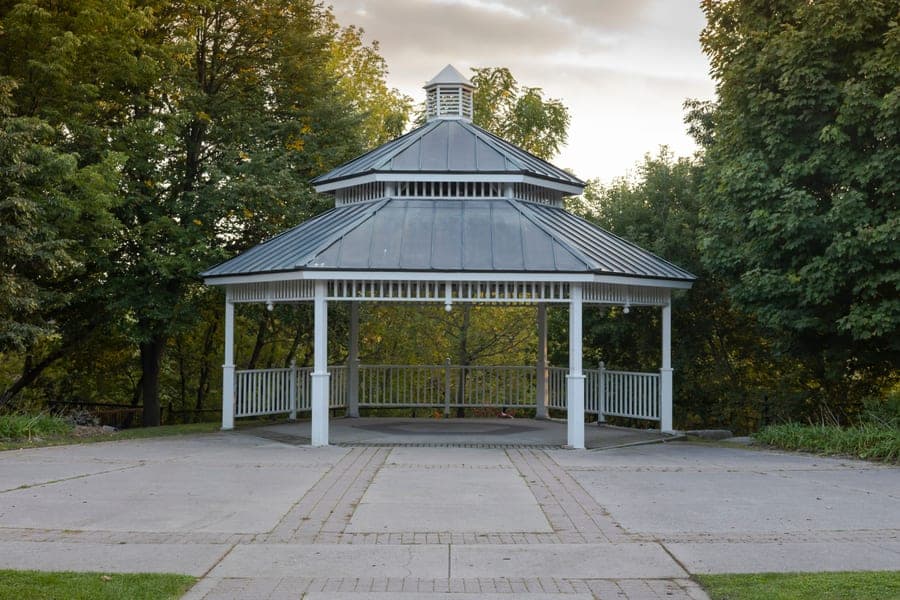 Sojag Messina Hardtop GazeboThe strongest warranty structure in the category — limited lifetime on the frame and 15 years on the finish — paired with wind and snow ratings the manufacturer describes but does not print. | Buy this for the steel roof | Not published by manufacturer | Check price on Amazon |
| 02 | Sojag Verona Hardtop GazeboA polycarbonate-roofed alternative to the Messina that trades snow-shedding confidence for daylight underneath. | Buy this for the polycarbonate roof | Not published by manufacturer | Check price on Amazon |
| 03 |  Sunjoy Kingston 12 x 14 Aluminum Gazebo with Steel RoofPublishes both a wind rating and a snow figure — but the snow figure is a whole-roof total, not a per-square-foot load, so it is not directly comparable to anyone else's. | Best steel roof with published figures | 50 | Check price on Amazon |
| 04 | 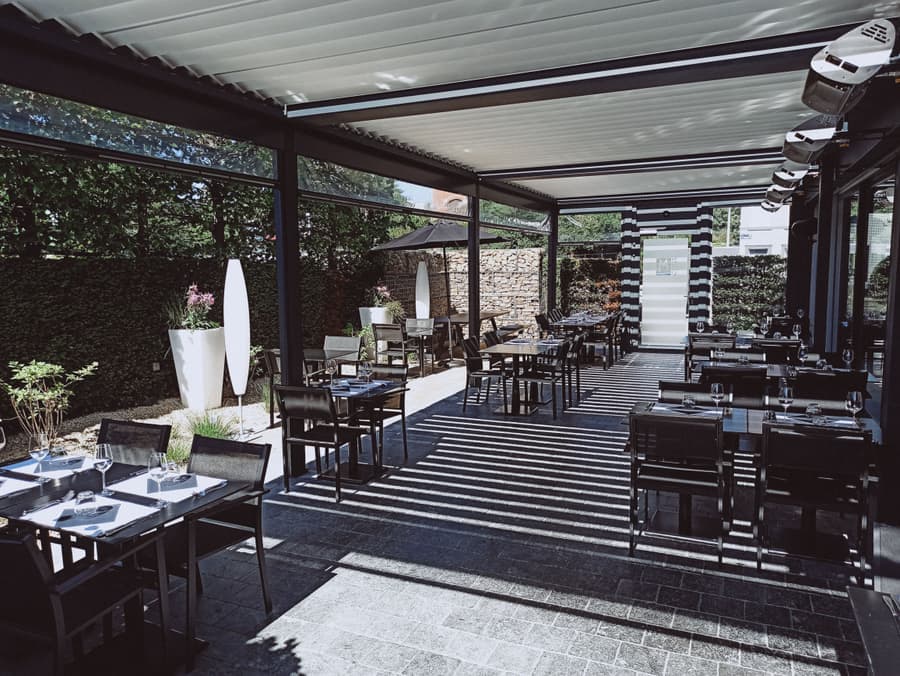 Outsunny Hardtop Polycarbonate PergolaA solid-roof aluminum pergola that publishes a roof load figure instead of a wind rating — useful for rain, unproven for wind. | The polycarbonate option with a published load figure | Not published by manufacturer | Check price on Amazon |
The durability table
Every published figure we could source for these structures, in one place, with the manufacturer page each number came from. Where a cell reads "Not published by manufacturer", that figure does not exist in the manufacturer's own material — we do not estimate it and we do not copy one from another site.
| Model | Wind rating (mph) | Snow load | Frame | Roof | Anchoring required | Warranty | Spec source |
|---|---|---|---|---|---|---|---|
| Sojag Messina Hardtop GazeboTop pick | Not published by manufacturer | Not published by manufacturer | Powder-coated aluminum | Galvanized steel panels | Not published by manufacturer | 1 year limited on the gazebo; limited lifetime on the aluminum/steel frame; 15 years on the powder-coated finish | Sojag hardtop gazebo collectionChecked 2026-09-26 |
| Sojag Verona Hardtop Gazebo | Not published by manufacturer | Not published by manufacturer | Powder-coated aluminum | UV-protected tinted polycarbonate panels | Not published by manufacturer | 1 year limited on the gazebo; limited lifetime on the frame; 15 years on the powder-coated finish | Sojag hardtop gazebo collectionChecked 2026-09-26 |
| Sunjoy Kingston 12 x 14 Aluminum Gazebo with Steel Roof | 50 | 3,000 lb across the entire roof (not a per-square-foot rating) | Aluminum and steel | Galvanized steel, two-tier vented | Pre-drilled ground plates: included stakes for soft ground, expansion bolts for hard surfaces (bolts not included) | Not published by manufacturer | Sunjoy Kingston product pageChecked 2026-09-26 |
| Outsunny Hardtop Polycarbonate Pergola | Not published by manufacturer | Roof weight capacity 10 lb/ft² (50 kg/m²) | Aluminum | Solid polycarbonate with drainage holes | Not published by manufacturer | 1 year | Outsunny hardtop pergola product pageChecked 2026-09-26 |
Every pick in full
Buy this for the steel roof
Sojag Messina Hardtop Gazebo
The strongest warranty structure in the category — limited lifetime on the frame and 15 years on the finish — paired with wind and snow ratings the manufacturer describes but does not print.
- Wind rating
- Not published by manufacturer
- Snow load
- Not published by manufacturer
- Frame
- Powder-coated aluminum
- Roof
- Galvanized steel panels
- Anchoring
- Not published by manufacturer
- Warranty
- 1 year limited on the gazebo; limited lifetime on the aluminum/steel frame; 15 years on the powder-coated finish
- Sizes
- 10 x 10 ft through 12 x 20 ft
The steel side of the comparison, and the reason it is the cleanest comparison available: this is the same frame, the same brand and the same warranty as the polycarbonate option below. Galvanized steel panels on a powder-coated aluminum frame, with one year limited on the gazebo, a limited lifetime warranty on the frame and fifteen years on the powder-coated finish.
Steel's argument is that its failure mode is well behaved. It dents under hail, which is cosmetic unless the coating is actually broken. It does not creep, does not yellow and does not go brittle. Break the coating — a scratch, a cut edge, a drilled fastener hole — and corrosion starts from that point and nowhere else, which makes touch-up genuine maintenance with a genuine effect.
What you give up is light. A steel roof blocks it completely, and the space underneath is noticeably darker than under polycarbonate. On a small footprint against a house wall, that difference is the difference between a shaded patio and a shaded box.
Skip it if: You want daylight under the structure, or you have plants underneath that need it — steel blocks everything.
#ad Price shown as of September 26, 2026. How this site is funded
Specifications from Sojag hardtop gazebo collection, checked 2026-09-26.
Buy this for the polycarbonate roof
Sojag Verona Hardtop Gazebo
A polycarbonate-roofed alternative to the Messina that trades snow-shedding confidence for daylight underneath.
- Wind rating
- Not published by manufacturer
- Snow load
- Not published by manufacturer
- Frame
- Powder-coated aluminum
- Roof
- UV-protected tinted polycarbonate panels
- Anchoring
- Not published by manufacturer
- Warranty
- 1 year limited on the gazebo; limited lifetime on the frame; 15 years on the powder-coated finish
- Sizes
- Not published by manufacturer
The same frame, the same warranty structure, UV-protected tinted polycarbonate panels instead of steel — plus the double-track system for adding mosquito netting and curtains.
Polycarbonate's argument is entirely about how the space feels. Daylight comes through, the structure reads as outdoors rather than enclosed, and anything planted underneath has a chance. In a mild climate that is a real quality-of-life difference and it is what most people actually notice about a gazebo day to day.
Its failure modes are the trade, and both are gradual rather than dramatic. Creep: under repeated snow loading a panel deflects, recovers, and recovers slightly less each winter, accumulating into permanent sag over several seasons. UV degradation: the protective layer breaks down, and yellowing and brittleness follow. Neither presents as a warranty event, and the fifteen-year term here is on the powder-coated finish, not the panels.
Warranty is the Messina's. Snow figure: not published, same as the Messina.
Skip it if: You get meaningful snow. The Messina is the same structure with the panel that handles repeated loading.
#ad Price shown as of September 26, 2026. How this site is funded
Specifications from Sojag hardtop gazebo collection, checked 2026-09-26.
Best steel roof with published figures
Sunjoy Kingston 12 x 14 Aluminum Gazebo with Steel Roof
Publishes both a wind rating and a snow figure — but the snow figure is a whole-roof total, not a per-square-foot load, so it is not directly comparable to anyone else's.
- Wind rating
- 50
- Snow load
- 3,000 lb across the entire roof (not a per-square-foot rating)
- Frame
- Aluminum and steel
- Roof
- Galvanized steel, two-tier vented
- Anchoring
- Pre-drilled ground plates: included stakes for soft ground, expansion bolts for hard surfaces (bolts not included)
- Warranty
- Not published by manufacturer
- Sizes
- Roof 12 x 14 ft; base 11 x 13 ft; height 11.02 ft
If the roof-material decision is really a snow decision, this is the steel option that lets you check it against a number rather than a principle.
It publishes 3,000 lb across a 12 x 14 ft roof — roughly 17.9 lb/ft² once converted — and a 50 mph wind rating. Neither Sojag model publishes either figure, so if your local ground snow load is the binding constraint, this is the gazebo that lets you do the arithmetic. Snow load explained covers the conversion.
The roof is a two-tier vented galvanized steel panel, and the venting matters for both of this comparison's concerns: it lets heat out from under the roof plane, which is part of why a steel roof is not as oppressive underneath as a single-skin one would be, and it gives rising air somewhere to go in wind.
No warranty term is published, which is where it trails the two Sojag models.
Skip it if: You want the warranty commitment — none is published here, while Sojag publishes three separate terms.
#ad Price shown as of September 26, 2026. How this site is funded
Specifications from Sunjoy Kingston product page, checked 2026-09-26.
The polycarbonate option with a published load figure
Outsunny Hardtop Polycarbonate Pergola
A solid-roof aluminum pergola that publishes a roof load figure instead of a wind rating — useful for rain, unproven for wind.
- Wind rating
- Not published by manufacturer
- Snow load
- Roof weight capacity 10 lb/ft² (50 kg/m²)
- Frame
- Aluminum
- Roof
- Solid polycarbonate with drainage holes
- Anchoring
- Not published by manufacturer
- Warranty
- 1 year
- Sizes
- 12 x 10 ft, 14.5 x 10 ft, 16.5 x 10 ft
A pergola rather than a gazebo, and it earns a place here because it is the only polycarbonate structure we track that publishes a load figure at all: a 10 lb/ft² roof weight capacity (50 kg/m²).
That number is useful precisely because polycarbonate's weakness is loading. Having a figure to compare against a local ground snow load — even a modest one — is better than the "not published by manufacturer" that the polycarbonate gazebos give you. And 10 lb/ft² is a real constraint worth knowing about rather than a strong figure: it is below the roughly 17.9 lb/ft² that Sunjoy's steel roof converts to.
Solid polycarbonate with drainage holes on an aluminum frame, in 12 x 10, 14.5 x 10 and 16.5 x 10 ft. No wind rating is published, which is the gap. One-year warranty covering material and manufacturing defects.
Worth considering if you want a bright, rain-shedding structure and a number you can check — and worth avoiding if snow is your binding constraint.
Skip it if: You need a published wind rating, or your local snow load exceeds 10 lb/ft². It is also a pergola form rather than a gazebo, which is a different structure.
#ad Price shown as of September 26, 2026. How this site is funded
Specifications from Outsunny hardtop pergola product page, checked 2026-09-26.
The decision table
| Galvanized steel | Polycarbonate | |
|---|---|---|
| Light underneath | None. Fully opaque, noticeably darker space | Passes daylight. The main reason to choose it |
| Snow | Sheds well. Holds its shape indefinitely | Creeps under repeated loading — deflects, recovers less each winter, accumulates permanent sag |
| Hail and impact | Dents. Cosmetic unless the coating is broken through | Resists denting. Becomes brittle and crack-prone once UV-degraded |
| UV ageing | The coating is the wearing surface; Sojag covers it for 15 years | The protective layer degrades, then yellowing and brittleness follow |
| Failure behavior | Localized. Corrosion starts at breaks in the coating and nowhere else | Gradual and whole-panel. Rarely presents as a claimable event |
| Repairability | Panel by panel. Touch up coating breaks and it keeps going | Panel by panel, and creep is usually too gradual to trigger a replacement |
| Heat underneath | Blocks solar gain entirely; vented two-tier designs help further | Passes light and therefore some heat, even when tinted |
| Rain noise | Louder. A steel panel drums | Quieter |
| Published figures | Sunjoy publishes 3,000 lb over 168 ft², roughly 17.9 lb/ft² | Rarely published on gazebos. Outsunny publishes 10 lb/ft² on its pergola |
| Best for | Snow country, and anywhere you want the roof to be the last thing you think about | Mild climates, small footprints where light matters, and planting underneath |
Buy steel if...
- You get snow. This is the decisive factor and it is not close. Creep is cumulative, gradual and generally uncovered, and it is the one failure mode you cannot maintain your way out of.
- You want the roof to be the component you never think about. Steel's only maintenance is touching up breaks in the coating, and its only cosmetic risk is dents.
- The space is large enough that darkness is not a problem. Over a big patio with open sides, an opaque roof reads as shade rather than as enclosure.
- You want a published snow figure to check against your local load. The steel-roofed Sunjoy publishes one; the polycarbonate gazebos do not.
- Hail is common where you are. A dented steel panel is a cosmetic problem. A brittle, UV-aged polycarbonate panel taking hail is a cracked panel.
Buy polycarbonate if...
- You do not get meaningful snow. Remove the creep problem and polycarbonate's case gets much stronger.
- The footprint is small, or the structure is against a wall. This is where light matters most — a 10 x 12 under steel with the house on one side genuinely can feel like a box. Best 10x12 hardtop gazebos covers that size specifically.
- You want to grow something underneath. Nothing survives under an opaque roof.
- Rain noise bothers you. A steel panel drums; polycarbonate is quieter. A small thing that turns out to matter to some people more than any specification.
- You want the space to feel outdoors. This is the honest reason most people choose it, and it is a legitimate one. A structure you actually sit under beats a better-specified one you do not.
Where each one fails, in detail
Both failure modes are gradual, and one of them is much harder to notice — which is the real argument for understanding this before you buy rather than after.
Steel fails at breaks in its coating. Galvanized and powder-coated steel does not corrode while the coating is intact. It corrodes from any point where the coating has been broken through: a scratch from a snow shovel, a cut edge on a trimmed panel, a drilled fastener hole. Corrosion then spreads from that point under the coating. The maintenance answer is direct and effective — touch up breaks as they happen — and the failure gives you clear warning. Dents, meanwhile, are almost always cosmetic; a dented panel with intact coating is doing its job.
Polycarbonate fails by creep and then by embrittlement, and neither announces itself. Creep is viscoelastic: under sustained load the panel deflects, and when the load is removed it does not fully recover. Repeat that over several winters and the recovery deficit accumulates into a permanent sag, which reduces the roof's pitch, which makes it shed less well, which increases the next winter's load. It is a slow feedback loop and it is generally not covered by any warranty — the fifteen-year term on the Sojag models is on the powder-coated finish, not the panels.
The second polycarbonate clock is UV. Panels carry a protective co-extruded layer, and as it degrades the base material yellows and becomes brittle. A brittle panel is a different object from a new one: it cracks where it used to flex, which matters under hail and matters when someone leans a ladder against the roof edge.
This is why the honest recommendation is conditional rather than universal. In a mild climate, polycarbonate's clocks run slowly enough that its daylight advantage wins. In snow country they do not.
What we would actually do
With real winters: steel, and clear the roof anyway. Every manufacturer with good snow credentials tells you to, including Sojag on a roof it describes as four-season. Clearing snow protects a steel roof from very little and protects a polycarbonate one from its main failure mode — which is another way of saying polycarbonate demands more of you in exactly the conditions where you are least likely to go outside and do it.
In a mild climate, on a small footprint: polycarbonate. The light advantage is real, the creep risk is small, and the space will be nicer to be in. Accept that the panels have a shorter horizon than the frame and that they are replaceable.
If you need a number: the steel-roofed Sunjoy, because it is the only gazebo in this comparison that publishes a snow figure at all. Convert its 3,000 lb over 168 ft² to roughly 17.9 lb/ft² and check it against the ground snow load your building department holds for your address.
And either way, touch up coating breaks and keep the panels clean. On steel that prevents corrosion. On polycarbonate, keeping the surface clean avoids abrading the UV layer, which is the thing standing between the panel and the yellowing.
The full shortlists are in best hardtop gazebos and most durable gazebos; the loading arithmetic is in snow load explained and best gazebos for snow load.
Questions people ask
Is a polycarbonate or steel gazebo roof better?
Does a polycarbonate gazebo roof hold snow?
Do polycarbonate roof panels go yellow?
Is a steel gazebo roof noisy in rain?
Will hail damage a gazebo roof?
Is a polycarbonate gazebo cooler underneath?
Can I replace a polycarbonate panel with steel later?
Which roof lasts longer?
Where these figures came from
- Sojag hardtop gazebo collection — galvanized steel and tinted polycarbonate roof options on the same frame, warranty structure
- Sunjoy Kingston 12x14 — vented two-tier galvanized steel roof, 3,000 lb snow figure, 50 mph rating
- Outsunny hardtop pergola — solid polycarbonate with drainage, published 10 lb/ft² roof weight capacity, 1 year warranty
- PURPLE LEAF hardtop gazebo collection — galvanized steel single and double roof options
Found an error? Tell us and we will correct it within seven days and note the change on the page with a dated line — see our editorial policy.