The best shade cloth under $50
Shade cloth is the cheapest square footage of shade you can buy, and the brand that dominates this band publishes something nobody else does: a fifteen-year warranty written against the exact way shade cloth fails.
By Ryder M. · Published · Last updated
We compare published manufacturer specifications, warranty terms and owner-reported failure modes. We have not physically tested these structures. How we judge shade structures
Slat & Shade earns a commission on qualifying purchases made through links on this page. It costs you nothing extra and never changes what we recommend. Full disclosure
Part of Shade Sails
The short answer
Coolaroo's 50% UV Block Garden Cover is the pick under $50: knitted HDPE in a mono/mono construction, breathable to air and water, with a fifteen-year fabric warranty against UV cracking and splitting. The budget pick is Coolaroo's 70% Screening fabric, the cheapest here and the denser cloth of the two.
Our picks at a glance
| # | Structure | Best for | Fabric | Price |
|---|---|---|---|---|
| 01 | 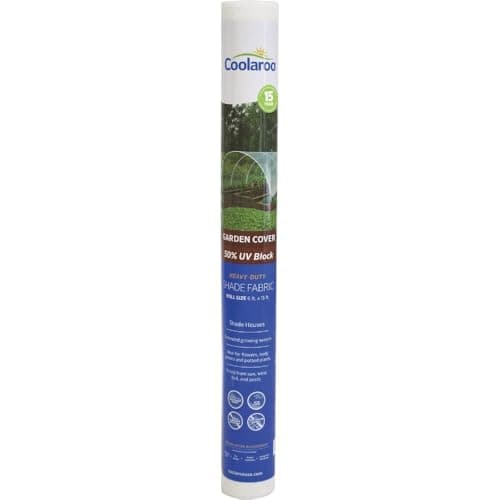 Coolaroo Garden Cover Shade Fabric, 50% UV BlockA fifteen-year fabric warranty against UV degradation on knitted HDPE — the longest published term on any shade fabric we track, at the density most vegetables want. | The pick under $50 — the only one here with a warranty document | Knitted HDPE, up to 50% UV block, breathable to air and water | $45.98 · View on Amazon |
| 02 | 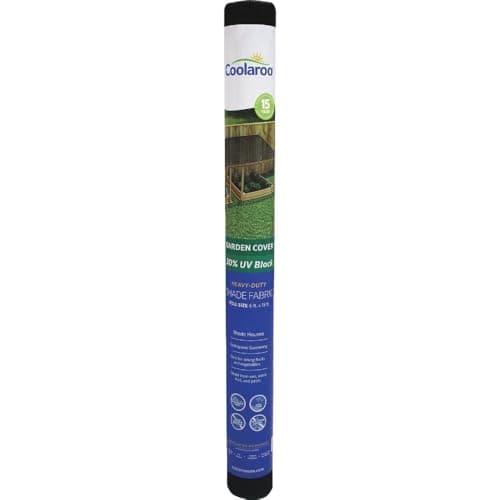 Coolaroo Garden Cover Shade Fabric, 30% UV BlockThe lightest density Coolaroo publishes, and the one to buy if your problem is scorch on a few hot afternoons rather than sun all season. | For scorch on a few hot afternoons, not sun all season | Knitted HDPE, 30% UV block | $46.43 · View on Amazon |
| 03 | 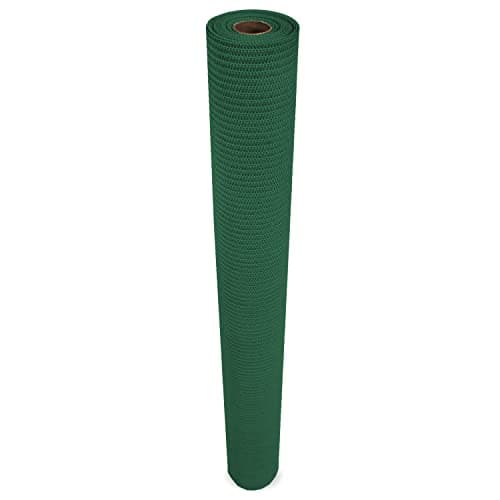 Coolaroo Screening Shade Fabric, 70% UV BlockThe density that matches what most greenhouse guidance actually asks for, from the one brand in this category publishing its fabric construction. | Budget pick — the cheapest here, and the denser cloth | Knitted HDPE, up to 70% UV block, breathable | $33.59 · View on Amazon |
The durability table
Every published figure we could source for these structures, in one place, with the manufacturer page each number came from. Where a cell reads "Not published by manufacturer", that figure does not exist in the manufacturer's own material — we do not estimate it and we do not copy one from another site.
| Model | Wind rating (mph) | Snow load | Frame | Roof | Anchoring required | Warranty | Spec source |
|---|---|---|---|---|---|---|---|
| Coolaroo Garden Cover Shade Fabric, 50% UV BlockTop pick | Not published by manufacturer | Not published by manufacturer | No frame — HDPE fabric in a knitted mono/mono construction | Knitted HDPE, up to 50% UV block, breathable to air and water | Not published by manufacturer | 15-year fabric warranty against cracks, splits and tears due to UV degradation | Coolaroo Garden Cover 50% UV Block product pageChecked 2026-09-29 |
| Coolaroo Garden Cover Shade Fabric, 30% UV Block | Not published by manufacturer | Not published by manufacturer | No frame — knitted HDPE shade fabric | Knitted HDPE, 30% UV block | Not published by manufacturer | Not published by manufacturer | Coolaroo Garden Cover collectionChecked 2026-09-29 |
| Coolaroo Screening Shade Fabric, 70% UV Block | Not published by manufacturer | Not published by manufacturer | No frame — knitted HDPE shade fabric | Knitted HDPE, up to 70% UV block, breathable | Not published by manufacturer | Not published by manufacturer | Coolaroo Screening Shade Fabric collectionChecked 2026-09-29 |
Every pick in full
The pick under $50 — the only one here with a warranty document
Coolaroo Garden Cover Shade Fabric, 50% UV Block
A fifteen-year fabric warranty against UV degradation on knitted HDPE — the longest published term on any shade fabric we track, at the density most vegetables want.
- Wind rating
- Not published by manufacturer
- Snow load
- Not published by manufacturer
- Frame
- No frame — HDPE fabric in a knitted mono/mono construction
- Roof
- Knitted HDPE, up to 50% UV block, breathable to air and water
- Anchoring
- Not published by manufacturer
- Warranty
- 15-year fabric warranty against cracks, splits and tears due to UV degradation
- Sizes
- 6 x 15 ft, 6 x 100 ft and 12 x 50 ft
The best-documented shade fabric at any price on this site, and it sits comfortably inside this band.
A fifteen-year fabric warranty against cracks, splits and tears due to UV degradation. Read what that is written against: not a general "15-year product", but the specific failure mode that ends a shade cloth's life. Knitted polyethylene does not wear out mechanically — it goes brittle under ultraviolet light and then splits at a fold or a fixing. A warranty naming that is a manufacturer betting on its own polymer, and nothing else in this band has one.
Knitted HDPE in a mono/mono construction, up to 50% UV block, breathable to air and water. Mono/mono means monofilament in both directions, which is the knit that resists running when a thread is cut — the thing that turns a small nick into a ladder across the cloth.
6 x 15 ft, 6 x 100 ft and 12 x 50 ft. The 12 ft width is the one worth knowing about: it spans a 10 to 12 ft bay in a single piece, and a cloth seamed down the middle fails at the seam.
50% is the density most vegetables want, which is why this is sold as a garden cover — enough to stop scorch without starving the plants of light. For shading people rather than plants the 70% below is the better density, and Coolaroo's 90% fabric is better still.
The cons: breathable means it blocks no rain at all, and it arrives as cloth. No grommets, no hem, no fixings. Edge tape or a batten is a separate purchase and it is not optional — a knitted edge loaded at one point will run.
Skip it if: You are shading a seating area rather than a garden bed. 50% is a filter, not deep shade.
#ad Price shown as of November 11, 2026. How this site is funded
Specifications from Coolaroo Garden Cover 50% UV Block product page, checked 2026-09-29.
For scorch on a few hot afternoons, not sun all season
Coolaroo Garden Cover Shade Fabric, 30% UV Block
The lightest density Coolaroo publishes, and the one to buy if your problem is scorch on a few hot afternoons rather than sun all season.
- Wind rating
- Not published by manufacturer
- Snow load
- Not published by manufacturer
- Frame
- No frame — knitted HDPE shade fabric
- Roof
- Knitted HDPE, 30% UV block
- Anchoring
- Not published by manufacturer
- Warranty
- Not published by manufacturer
- Sizes
- 6 x 15 ft
The lightest density Coolaroo publishes, and the right answer to a narrower problem than most people think they have.
Knitted HDPE at 30% UV block. Thirty per cent barely reads as shade standing under it — and that is the point. It takes the edge off peak afternoon sun on crops that want full light the rest of the day, which is a real horticultural requirement rather than a compromise.
Where it earns its place: leafy salads and seedlings that bolt or scorch in a heatwave but stop producing under heavy shade. Over a seating area it will do essentially nothing you can feel.
6 x 15 ft only, which is the narrowest size offering in the band — worth checking against the bed or frame you are covering before you order.
And the gap worth naming: no warranty term is published for this density. Same brand, same knitted HDPE, and the fifteen-year UV warranty that comes with the 50% and the 90% fabric is not published here. If the warranty is part of why you are buying Coolaroo, this is not the density to buy.
Skip it if: You want shade you can feel, or you want the fifteen-year term. Neither applies to the 30% cloth.
#ad Price shown as of November 11, 2026. How this site is funded
Specifications from Coolaroo Garden Cover collection, checked 2026-09-29.
Budget pick — the cheapest here, and the denser cloth
Coolaroo Screening Shade Fabric, 70% UV Block
The density that matches what most greenhouse guidance actually asks for, from the one brand in this category publishing its fabric construction.
- Wind rating
- Not published by manufacturer
- Snow load
- Not published by manufacturer
- Frame
- No frame — knitted HDPE shade fabric
- Roof
- Knitted HDPE, up to 70% UV block, breathable
- Anchoring
- Not published by manufacturer
- Warranty
- Not published by manufacturer
- Sizes
- 6 x 15 ft, 6 x 50 ft, 6 x 100 ft and 12 x 50 ft
The least expensive fabric in the band and simultaneously the densest, which makes it the straightforward recommendation for most uses.
Knitted HDPE at up to 70% UV block, breathable. Seventy per cent is the density that matches what most greenhouse and screening guidance actually asks for, and it is enough to make a patio or a pergola genuinely comfortable rather than merely patterned.
6 x 15 ft, 6 x 50 ft, 6 x 100 ft and 12 x 50 ft — the full set of Coolaroo widths, including the 12 ft roll that covers a bay in one piece.
It is sold as screening rather than as a garden cover, and that is a useful hint about the second job it does. At 70% it works vertically as well as overhead: a fence panel or a privacy screen on a boundary, where the breathable knit lets wind through instead of turning the fence into a sail.
The published gap, and it is the same one as the 30% cloth: no warranty term. Coolaroo publishes its fifteen-year UV warranty on the 50% Garden Cover and the 90% Sun Protection fabric and not on the Screening range. Cheapest in the band, denser cloth, no document — that is the trade, stated plainly.
Skip it if: The warranty is the reason you are buying Coolaroo. The 50% Garden Cover above carries the fifteen-year term; this does not.
#ad Price shown as of November 11, 2026. How this site is funded
Specifications from Coolaroo Screening Shade Fabric collection, checked 2026-09-29.
Picking a density before picking a price
Density is the whole decision in shade cloth, and it is the one thing you cannot change after it is up. The percentages are not a quality scale — they are different products.
- 30% — heat relief for plants that still want light. Salads and seedlings in a heatwave. Standing under it you will not notice it.
- 50% — the general garden density. Most vegetables, most of the time. This is the one with the fifteen-year warranty.
- 70% — the first density that works for people, and the one that doubles as screening. Greenhouses, patios, boundary screens. The cheapest cloth in this band.
- 90% — deep shade, for seating areas. Above this band, and the right answer over a dining table. Best shade cloth for patio covers it.
- And one distinction that catches people out: block percentage is not the same as UV stabilisation. One is how much light the cloth stops; the other is how well the fibre survives the light it absorbs. A fabric can publish a high block rate and a low stabilisation figure — GSM and shade percentage explained separates them.
The three under $50, side by side
Published manufacturer figures only. Live prices and the date they were read sit in the band note at the top of this page, not in this table.
| Cloth | Published block | Construction | Sizes | Warranty |
|---|---|---|---|---|
| Coolaroo 50% Garden Cover | Up to 50% UV block | Knitted HDPE, mono/mono, breathable | 6 x 15, 6 x 100, 12 x 50 ft | 15 yr vs UV cracks, splits and tears |
| Coolaroo 30% Garden Cover | 30% UV block | Knitted HDPE | 6 x 15 ft | Not published by manufacturer |
| Coolaroo 70% Screening | Up to 70% UV block | Knitted HDPE, breathable | 6 x 15, 6 x 50, 6 x 100, 12 x 50 ft | Not published by manufacturer |
One brand holds this entire band, which is worth saying out loud: Coolaroo is the only maker in the category publishing a knit construction, a block percentage and — on two of its densities — a warranty written against UV degradation. That is why all three picks here carry the same name.
Fixing cloth so it does not run
Shade cloth arrives as fabric, not as a product, and every failure in this category starts at an edge or a fixing.
- 01Treat the edge before it carries any load. A doubled hem, an edge tape, or a timber batten the full length. A knitted cloth pulled at a single point will run a ladder across itself, and nothing stops it once it starts.
- 02Spread the load, never point it. Grommets at 12 to 18 in. centres, or a batten screwed through the hem. One eyelet in the corner of an untaped cloth is a tear waiting for a gust.
- 03Tension it, do not drape it. Slack cloth flaps, and flapping abrades the fabric against whatever it is lying on at a few cycles a second. This is what kills shade cloth long before UV does.
- 04Give water a direction. Breathable cloth passes most rain and holds some in any sag. Pitch it along one axis so there is nowhere for a pocket to form.
- 05Take it down for winter where it will see snow. A horizontal mesh will hold wet snow it cannot shed, and the load goes straight into your fixings.
If all of that sounds like a project, it is — and the alternative is a finished sail. A hemmed sail with stainless D-rings costs more per square foot and arrives ready to tension: best shade sails under $50 covers that trade, and shade sail vs shade cloth works through which one your job actually wants.
What we cut, and why
Every model below was a genuine candidate and did not make the list. The reason is stated in each case, because a shortlist with no visible rejections is not evidence of a selection process.
- Coolaroo's 90% Sun Protection fabric
- Above this band at the last price check, and the right cloth when what you are shading is people rather than plants — the densest fabric Coolaroo publishes, on the same fifteen-year UV warranty. [Best pergola shade covers](/pergolas/best-pergola-shade-covers) and [best shade cloth for patio](/shade-sails/best-shade-cloth-for-patio) both rank it first.
- Windscreen4less cut-to-size fabric rolls
- Above the band at the last price check and the answer when your span is not a standard width — 6 to 24 ft wide by 1 to 300 ft long, at 180 GSM with a 75% block rate. It also arrives with a cut edge and no taping, so budget for an edge treatment.
- Woven polypropylene ground-cover fabric
- Sold alongside shade cloth and built for a different job: it is a weed barrier, it is not UV stabilised for overhead exposure, and it has no published block percentage. Overhead it embrittles in a single season.
Questions people ask
What percentage shade cloth should I buy?
Does shade cloth block rain?
How long does shade cloth last?
Is shade cloth cheaper than a shade sail?
Where these figures came from
- Coolaroo Garden Cover 50% UV Block product page
- Coolaroo Garden Cover collection
- Coolaroo Screening Shade Fabric collection
Found an error? Tell us and we will correct it within seven days and note the change on the page with a dated line — see our editorial policy.