Pergola footings and post bases
Every published pergola wind rating on this site is conditional on anchoring. What that anchoring sits in is the part the kits leave to you.
By Ryder M. · Published · Last updated
We compare published manufacturer specifications, warranty terms and owner-reported failure modes. We have not physically tested these structures. How we judge shade structures
Slat & Shade earns a commission on qualifying purchases made through links on this page. It costs you nothing extra and never changes what we recommend. Full disclosure
Part of Wind, Snow & Anchoring
The short answer
A pergola on an existing concrete slab needs surface post bases fixed with code-listed concrete screw anchors, not footings. A pergola on soil needs either poured footings below the local frost line or driven ground anchors with published pull-out figures. The one thing no pergola can do is stand on soil with nothing under the posts.
Our picks at a glance
| # | Structure | Best for | Wind rating | Price |
|---|---|---|---|---|
| 01 | 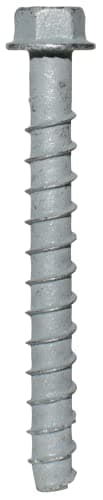 Simpson Strong-Tie Titen HD Mechanically Galvanized Screw AnchorThe only concrete fixing here that publishes a galvanizing standard and a code listing — and it still comes back out, which matters when a post base has to move. | For post bases on an existing slab | Not published by manufacturer | $110.56 · View on Amazon |
| 02 | 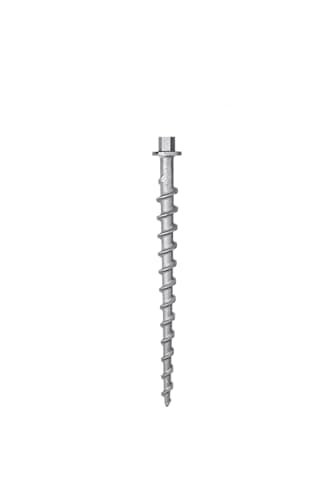 American Earth Anchors PE36 PenetratorThe 36 in. Penetrator, and the one the manufacturer says can be used as a footing rather than only as a tie-down. | The driven anchor the maker says can act as a footing | Not published by manufacturer | $143.10 · View on Amazon |
| 03 |  American Earth Anchors PE18 PenetratorAn 18 in. driven aluminum anchor from the only maker in this roundup that publishes pull-out capacity by soil type at all. | The shorter anchor, for compact soil and lighter frames | Not published by manufacturer | $31.49 · View on Amazon |
The durability table
Every published figure we could source for these structures, in one place, with the manufacturer page each number came from. Where a cell reads "Not published by manufacturer", that figure does not exist in the manufacturer's own material — we do not estimate it and we do not copy one from another site.
| Model | Wind rating (mph) | Snow load | Frame | Roof | Anchoring required | Warranty | Spec source |
|---|---|---|---|---|---|---|---|
| Simpson Strong-Tie Titen HD Mechanically Galvanized Screw AnchorTop pick | Not published by manufacturer | Not published by manufacturer | Carbon steel, proprietary heat treatment, ASTM B695 Class 65 mechanically galvanized coating | Not published by manufacturer | Cracked and uncracked concrete and uncracked masonry; code listed; hex washer head needs no separate washer; easily removable | Not published by manufacturer | Simpson Strong-Tie Titen HD MG announcementChecked 2026-10-14 |
| American Earth Anchors PE36 Penetrator | Not published by manufacturer | Not published by manufacturer | 356 aluminum alloy, heat treated to T6 specifications, made in the USA | Not published by manufacturer | Large Penetrators (36 in. and 46 in.) can be used as footings; guy head, hex and flat head options | Not published by manufacturer | American Earth Anchors Penetrators range pageChecked 2026-10-14 |
| American Earth Anchors PE18 Penetrator | Not published by manufacturer | Not published by manufacturer | 356 aluminum alloy, heat treated to T6 specifications, made in the USA | Not published by manufacturer | Screw-type anchor for compact soils, driven by hex head or square drive; manufacturer publishes pull-out charts by soil type | Not published by manufacturer | American Earth Anchors Penetrators range pageChecked 2026-10-14 |
Every pick in full
For post bases on an existing slab
Simpson Strong-Tie Titen HD Mechanically Galvanized Screw Anchor
The only concrete fixing here that publishes a galvanizing standard and a code listing — and it still comes back out, which matters when a post base has to move.
- Wind rating
- Not published by manufacturer
- Snow load
- Not published by manufacturer
- Frame
- Carbon steel, proprietary heat treatment, ASTM B695 Class 65 mechanically galvanized coating
- Roof
- Not published by manufacturer
- Anchoring
- Cracked and uncracked concrete and uncracked masonry; code listed; hex washer head needs no separate washer; easily removable
- Warranty
- Not published by manufacturer
- Sizes
- Standard fractional sizes
If the pergola is going on concrete you already have, you do not need footings — you need the right fixing into the slab you have.
Code listed for cracked and uncracked concrete and uncracked masonry. The important half of that is "cracked". Real slabs crack, and an anchor only listed for uncracked concrete is being asked to do something it was not tested for.
ASTM B695 Class 65 mechanically galvanized coating on heat-treated carbon steel. A published coating standard on a fixing that lives at the ground line, where water sits. This is the detail that separates a structural anchor from a masonry screw.
Hex washer head needs no separate washer; easily removable. Removability is more useful than it sounds on a pergola — post bases get adjusted during setting out, and an anchor you can back out and reinstate saves drilling a second hole in the slab.
Standard fractional sizes. Diameter, embedment and edge distance come from the pergola manufacturer's instructions and from the anchor's own published values, never from an estimate.
And the slab itself is a specification. A thin, unreinforced patio topping is not a foundation. If you cannot establish its thickness, treat it as paving rather than as structure.
Skip it if: There is no concrete. This is a fixing for slabs, not a substitute for a footing.
#ad Price shown as of November 11, 2026. How this site is funded
Specifications from Simpson Strong-Tie Titen HD MG announcement, checked 2026-10-14.
The driven anchor the maker says can act as a footing
American Earth Anchors PE36 Penetrator
The 36 in. Penetrator, and the one the manufacturer says can be used as a footing rather than only as a tie-down.
- Wind rating
- Not published by manufacturer
- Snow load
- Not published by manufacturer
- Frame
- 356 aluminum alloy, heat treated to T6 specifications, made in the USA
- Roof
- Not published by manufacturer
- Anchoring
- Large Penetrators (36 in. and 46 in.) can be used as footings; guy head, hex and flat head options
- Warranty
- Not published by manufacturer
- Sizes
- 36 in. long
The only product in this registry whose manufacturer states outright that it can be used as a footing rather than only as a tie-down.
Large Penetrators — 36 in. and 46 in. — can be used as footings, per the manufacturer. That is an unusual and specific claim, and it is what makes this the no-dig answer for soil rather than a compromise.
356 aluminum alloy heat treated to T6 specifications, made in the USA. Aluminum underground does not corrode the way plain steel does, which matters for something you are never going to see again.
36 in. long, with guy head, hex and flat head options. The head option decides what bolts to it, so choose it against the pergola's post base rather than buying the anchor first.
The manufacturer publishes pull-out charts by soil type. Almost nothing else in this field does. A holding figure that varies by soil is an honest holding figure; a single number for all ground is not.
The limit: it is driven, so it wants ground that will take it. Dense fill and rubble defeat screw-type anchors, and that is the case for the arrowhead style instead.
Skip it if: Your frost line is deep and the pergola is a permanent structure. A poured footing below frost depth is still the gold standard.
#ad Price shown as of November 11, 2026. How this site is funded
Specifications from American Earth Anchors Penetrators range page, checked 2026-10-14.
The shorter anchor, for compact soil and lighter frames
American Earth Anchors PE18 Penetrator
An 18 in. driven aluminum anchor from the only maker in this roundup that publishes pull-out capacity by soil type at all.
- Wind rating
- Not published by manufacturer
- Snow load
- Not published by manufacturer
- Frame
- 356 aluminum alloy, heat treated to T6 specifications, made in the USA
- Roof
- Not published by manufacturer
- Anchoring
- Screw-type anchor for compact soils, driven by hex head or square drive; manufacturer publishes pull-out charts by soil type
- Warranty
- Not published by manufacturer
- Sizes
- 18 in. long
Half the length, same alloy and same published approach to load — the sensible option where a full footing is overkill.
18 in. long, 356 aluminum alloy heat treated to T6, made in the USA. Short enough to drive by hand in good ground and long enough to matter.
Screw-type anchor for compact soils, driven by hex head or square drive. The drive detail matters: this goes in with a tool you may already own rather than with plant.
Pull-out charts published by soil type. Same manufacturer, same honest approach. Read your soil off the chart rather than reading the biggest number on the page.
Best suited to lighter frames and to tying down rather than carrying. An 18 in. anchor is a tie-down and a stabiliser. For a heavy structure in exposed ground, the 36 in. version or a poured footing is the right call.
Skip it if: The ground is rocky or full of rubble. A screw-type anchor will not turn in it — an arrowhead-style driven anchor is the one for that.
#ad Price shown as of November 11, 2026. How this site is funded
Specifications from American Earth Anchors Penetrators range page, checked 2026-10-14.
The three answers, and which ground each is for
A poured concrete footing, below the local frost line. The permanent answer, and the only one that is indifferent to frost heave. The post base bolts to the top of the cured footing; the post never touches soil. Depth comes from your local frost depth, which varies enormously across the country and is a question for your building department rather than for a website.
A surface post base on an existing slab. Much the simplest, and much the most common once people realise their patio is already there. The work is in the fixing rather than in the ground, and it is where a code-listed, mechanically galvanized concrete screw anchor belongs.
A driven ground anchor. The no-dig route, and a real one — the 36 in. Penetrator's maker states it can be used as a footing, and publishes pull-out capacity by soil type rather than a single marketing number. Right for soil you can drive into, wrong for rubble.
And what is not an answer: posts set loose in soil, or a post base screwed into paving slabs. Paving is bedded on sand. A post base anchored into a paver is anchored to a 40 lb stone, which is not the same as being anchored to the ground.
One rule that cuts across all three: the post must not sit in the ground. Timber in contact with soil wicks water and rots from the base up, which is why every kit here uses a post base or a bracket rather than burying the post.
What each option involves
| Option | Ground it suits | Frost resistant | Published figures available |
|---|---|---|---|
| Poured footing below frost line | Soil, any, where digging is possible | Yes, by definition | From local code, not from a product |
| Surface post base on existing slab | Concrete you already have | As good as the slab under it | Yes — anchor load values from the code listing |
| Driven screw anchor, 36 in. | Compact soil you can drive into | Partial — depth helps, frost still acts | Yes — pull-out charts by soil type |
| Driven screw anchor, 18 in. | Compact soil, lighter frames | Limited | Yes — pull-out charts by soil type |
| Cabled arrowhead anchor | Hard, compact and rocky soil | Limited | Yes — manufacturer load capacity data |
| Post base fixed into a paver | Nothing | No | None, and it should not be done |
The second row is where most readers of this page will end up. A patio already exists, and the job becomes a fixing specification rather than an excavation.
The last row is included because it keeps happening. How to anchor a pergola covers lifting pavers to reach what is underneath, which is the correct version of that idea.
Setting out, whichever you choose
- 01Take the post spacing from the pergola's own published base dimension, not from its roof dimension. Several kits here publish a base a foot smaller than the roof in each direction.
- 02Set the footings or bases out square by measuring both diagonals and adjusting until they match. A frame that is out of square will not take its last roof member.
- 03Check level across every base before anything is bolted down. Shimming a post base later is a bodge; adjusting a footing before the concrete goes off is a job.
- 04Keep every post base clear of the finished ground by the height the base provides, so the post end can dry between rainfalls.
- 05Fix with the fastener type the surface demands and at the embedment and edge distance the anchor's own published values specify.
- 06Anchor fully before loading the frame, not after. Every published wind rating in this category assumes the anchoring is already done.
- 07Re-check the fixings at the end of the first winter and annually after that — frost, thermal movement and settlement all back fasteners off.
What we would actually do
Use the slab if you have one. It is cheaper, faster and better documented than anything you can dig, provided the slab is real concrete and you can establish its thickness.
Pour footings if the pergola is permanent and the ground freezes. Nothing else is indifferent to frost heave, and a pergola pushed out of square over three winters cannot be pushed back.
Use driven anchors where digging is genuinely impractical, and read the soil chart. The 36 in. Penetrator is the one whose manufacturer says it can serve as a footing; the 18 in. version is a tie-down.
Never fix a post base into a paver. Lift the paver, reach what is underneath, and reinstate it around the base.
And remember what the footing is actually for. How to anchor a pergola covers the fixing itself, and gazebo foundation options compares the five bases for the heavier structures where the same logic applies.
What we cut, and why
Every model below was a genuine candidate and did not make the list. The reason is stated in each case, because a shortlist with no visible rejections is not evidence of a selection process.
- American Earth Anchors 3 in. steel arrowhead cabled anchor
- Superior holding in hard, compact and rocky soil, which is genuinely the right product where a screw anchor will not turn. It is left off this list because it terminates in a cable rather than a bolt-down head, which suits guying a structure rather than seating a post base.
Questions people ask
How deep should pergola footings be?
Do pergola posts need concrete footings?
Can you put a pergola on pavers?
What size footing does a pergola post need?
Can you install a pergola without digging?
Should a pergola post be set in the ground?
What anchors should I use into a concrete patio?
Do ground anchors work in rocky soil?
Where these figures came from
- Simpson Strong-Tie Titen HD mechanically galvanized screw anchor — heat-treated carbon steel with an ASTM B695 Class 65 mechanically galvanized coating, code listed for cracked and uncracked concrete and uncracked masonry, hex washer head requiring no separate washer, easily removable, standard fractional sizes
- American Earth Anchors Penetrators range — 356 aluminum alloy heat treated to T6 specifications, made in the USA; large Penetrators (36 in. and 46 in.) can be used as footings; guy head, hex and flat head options; PE18 is an 18 in. screw-type anchor for compact soils driven by hex head or square drive
- American Earth Anchors load capacity data — pull-out charts published by soil type
- American Earth Anchors Arrowheads range — 3 in. steel head on galvanized steel aircraft cable, superior holding in hard, compact and rocky soil, installed with a drive rod
Found an error? Tell us and we will correct it within seven days and note the change on the page with a dated line — see our editorial policy.