Best gazebo anchor kits
Every gazebo wind rating on this site is conditional on anchoring, and the manufacturers say so in writing. This is what to actually buy, chosen by what your gazebo is standing on.
By Ryder M. · Published · Last updated
We compare published manufacturer specifications, warranty terms and owner-reported failure modes. We have not physically tested these structures. How we judge shade structures
Slat & Shade earns a commission on qualifying purchases made through links on this page. It costs you nothing extra and never changes what we recommend. Full disclosure
Part of Wind, Snow & Anchoring

The short answer
Buy the anchor for the substrate, not for the gazebo. Into a concrete slab, a mechanically galvanized concrete screw anchor; into soil, a driven or screwed earth anchor from a maker that publishes pull-out capacity; into hard or rocky ground, a cabled arrowhead anchor driven with a rod.
Our picks at a glance
| # | Structure | Best for | Wind rating | Price |
|---|---|---|---|---|
| 01 | 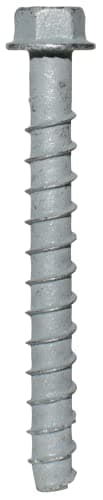 Simpson Strong-Tie Titen HD Mechanically Galvanized Screw AnchorThe only concrete fixing here that publishes a galvanizing standard and a code listing — and it still comes back out, which matters when a post base has to move. | Into a concrete slab or footing | Not published by manufacturer | $110.56 · View on Amazon |
| 02 |  American Earth Anchors PE18 PenetratorAn 18 in. driven aluminum anchor from the only maker in this roundup that publishes pull-out capacity by soil type at all. | Into soil, where you want it removable | Not published by manufacturer | $31.49 · View on Amazon |
| 03 | 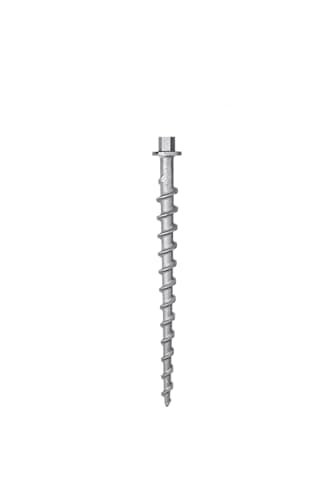 American Earth Anchors PE36 PenetratorThe 36 in. Penetrator, and the one the manufacturer says can be used as a footing rather than only as a tie-down. | Into soil, where there is no slab to build on | Not published by manufacturer | $143.10 · View on Amazon |
| 04 | 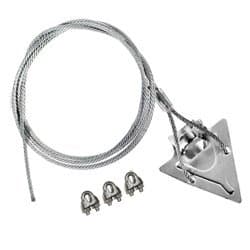 American Earth Anchors 3 in. Steel Arrowhead Cabled AnchorA driven, cabled anchor for the ground a screw anchor will not turn in — hard, compact and rocky soil. | Into hard, compact or rocky ground | Not published by manufacturer | $15.17 · View on Amazon |
The durability table
Every published figure we could source for these structures, in one place, with the manufacturer page each number came from. Where a cell reads "Not published by manufacturer", that figure does not exist in the manufacturer's own material — we do not estimate it and we do not copy one from another site.
| Model | Wind rating (mph) | Snow load | Frame | Roof | Anchoring required | Warranty | Spec source |
|---|---|---|---|---|---|---|---|
| Simpson Strong-Tie Titen HD Mechanically Galvanized Screw AnchorTop pick | Not published by manufacturer | Not published by manufacturer | Carbon steel, proprietary heat treatment, ASTM B695 Class 65 mechanically galvanized coating | Not published by manufacturer | Cracked and uncracked concrete and uncracked masonry; code listed; hex washer head needs no separate washer; easily removable | Not published by manufacturer | Simpson Strong-Tie Titen HD MG announcementChecked 2026-10-14 |
| American Earth Anchors PE18 Penetrator | Not published by manufacturer | Not published by manufacturer | 356 aluminum alloy, heat treated to T6 specifications, made in the USA | Not published by manufacturer | Screw-type anchor for compact soils, driven by hex head or square drive; manufacturer publishes pull-out charts by soil type | Not published by manufacturer | American Earth Anchors Penetrators range pageChecked 2026-10-14 |
| American Earth Anchors PE36 Penetrator | Not published by manufacturer | Not published by manufacturer | 356 aluminum alloy, heat treated to T6 specifications, made in the USA | Not published by manufacturer | Large Penetrators (36 in. and 46 in.) can be used as footings; guy head, hex and flat head options | Not published by manufacturer | American Earth Anchors Penetrators range pageChecked 2026-10-14 |
| American Earth Anchors 3 in. Steel Arrowhead Cabled Anchor | Not published by manufacturer | Not published by manufacturer | 3 in. steel head on a 1/8 in. galvanized steel aircraft cable; 3 in. to 10 in. heads offered in steel and aluminum | Not published by manufacturer | Install with a drive rod; superior holding in hard, compact and rocky soil; cable clamp, thimble loop and Quickvise terminations | Not published by manufacturer | American Earth Anchors Arrowheads range pageChecked 2026-10-14 |
Every pick in full
Into a concrete slab or footing
Simpson Strong-Tie Titen HD Mechanically Galvanized Screw Anchor
The only concrete fixing here that publishes a galvanizing standard and a code listing — and it still comes back out, which matters when a post base has to move.
- Wind rating
- Not published by manufacturer
- Snow load
- Not published by manufacturer
- Frame
- Carbon steel, proprietary heat treatment, ASTM B695 Class 65 mechanically galvanized coating
- Roof
- Not published by manufacturer
- Anchoring
- Cracked and uncracked concrete and uncracked masonry; code listed; hex washer head needs no separate washer; easily removable
- Warranty
- Not published by manufacturer
- Sizes
- Standard fractional sizes
If the gazebo stands on concrete, this is the fixing, and the reason is the one specification almost nothing else in the aisle publishes: a named galvanizing standard.
ASTM B695 Class 65 mechanically galvanized coating, over a proprietary heat treatment. That is a stated corrosion specification rather than the word "galvanized" on a bag, and it is what makes this the exterior version of the anchor rather than the indoor one. A post base bolted to a slab sits in standing water every time it rains; the coating is the whole lifespan.
Listed for cracked and uncracked concrete, and for uncracked masonry. Cracked concrete matters more than it sounds. Slabs crack — that is normal, not a defect — and an anchor only listed for uncracked concrete has no published performance once the crack reaches it.
Code listed, and it is a screw anchor rather than an expansion anchor. It cuts its own thread into the hole instead of wedging against the sides, which means it generates far less bursting force near a slab edge. Gazebo post bases usually land near an edge, because that is where the patio ends.
It comes back out. The manufacturer calls it easily removable and suits it to fixtures that may need to be relocated. A wedge anchor does not come out; it gets cut off and ground flush. For a structure you may reposition, or sell, or have to lift to repair the slab, removability is a real feature.
Hex washer head, no separate washer needed unless code requires one. One fewer loose part at the top of a ladder.
Skip it if: Your gazebo is not standing on concrete. Into soil this anchor has nothing to bite, and the right answer is further down this page.
#ad Price shown as of November 11, 2026. How this site is funded
Specifications from Simpson Strong-Tie Titen HD MG announcement, checked 2026-10-14.
Into soil, where you want it removable
American Earth Anchors PE18 Penetrator
An 18 in. driven aluminum anchor from the only maker in this roundup that publishes pull-out capacity by soil type at all.
- Wind rating
- Not published by manufacturer
- Snow load
- Not published by manufacturer
- Frame
- 356 aluminum alloy, heat treated to T6 specifications, made in the USA
- Roof
- Not published by manufacturer
- Anchoring
- Screw-type anchor for compact soils, driven by hex head or square drive; manufacturer publishes pull-out charts by soil type
- Warranty
- Not published by manufacturer
- Sizes
- 18 in. long
The grass-and-soil answer, from the only manufacturer on this page that publishes pull-out capacity at all.
The maker publishes load capacity charts by soil type. That is the reason this product is here. Hold a typical anchor-kit listing up to the light and there is no number anywhere — no capacity, no soil condition, nothing. American Earth Anchors publishes field-tested charts and labels them as an informed guideline rather than a guarantee, which is the honest framing and more than anyone else offers.
356 aluminum alloy, heat treated to T6, made in the USA. Aluminum in permanent ground contact is a deliberate choice: it does not rust the way a painted steel spike does, and a painted steel spike is what most gazebo anchor kits contain. The kits that come in the box with a hardtop are usually the thing to replace first.
18 in. long, driven or screwed in with a hex head or square drive. An impact wrench sets it in a minute. It also unscrews, so a gazebo that gets repositioned does not leave four buried anchors behind.
Pair it with a strap or cable that ties to the frame, not to the ground beside it. An anchor is only as good as the connection above it, which is the failure almost everyone makes — see how to secure a gazebo for the connection detail.
The honest con: 18 in. in loose or sandy soil is not much anchor. The published charts drop sharply as the soil gets looser, and in genuinely loose ground the longer model below is the one to buy.
Skip it if: The ground is hard, compact or stony. A screw-type anchor needs soil it can turn in; rocky ground wants the cabled arrowhead further down.
#ad Price shown as of November 11, 2026. How this site is funded
Specifications from American Earth Anchors Penetrators range page, checked 2026-10-14.
Into soil, where there is no slab to build on
American Earth Anchors PE36 Penetrator
The 36 in. Penetrator, and the one the manufacturer says can be used as a footing rather than only as a tie-down.
- Wind rating
- Not published by manufacturer
- Snow load
- Not published by manufacturer
- Frame
- 356 aluminum alloy, heat treated to T6 specifications, made in the USA
- Roof
- Not published by manufacturer
- Anchoring
- Large Penetrators (36 in. and 46 in.) can be used as footings; guy head, hex and flat head options
- Warranty
- Not published by manufacturer
- Sizes
- 36 in. long
The 36 in. version, and the one worth understanding properly, because the manufacturer puts it in a different category.
Large Penetrators — the 36 in. and 46 in. — can be used as footings, per the maker. That is a load-bearing claim rather than a tie-down claim, and it is the difference between holding a gazebo down and holding part of it up. On a site where digging and pouring concrete footings is impractical, this is the alternative worth pricing.
Same 356 aluminum, same T6 heat treatment, same published soil charts. Nothing changes except the length, and the length is what buys capacity in ground that is not dense.
Guy head, hex and flat head options. The flat head is the one that matters for footing use; the guy head is for a cable or strap under tension.
It is slower to set than the 18 in. Three feet of anchor into clay is real work, and you want a proper drive socket and a strong impact wrench rather than a cordless drill and optimism.
The honest con: it is overkill for a light pop-up gazebo, and it is permanent in practice. You can reverse it out, but you will not be moving the structure casually. Buy it where the gazebo is staying.
Skip it if: You want a reversible, seasonal fixing, or the gazebo sits on a slab — in both cases something shorter or something bolted is the better buy.
#ad Price shown as of November 11, 2026. How this site is funded
Specifications from American Earth Anchors Penetrators range page, checked 2026-10-14.
Into hard, compact or rocky ground
American Earth Anchors 3 in. Steel Arrowhead Cabled Anchor
A driven, cabled anchor for the ground a screw anchor will not turn in — hard, compact and rocky soil.
- Wind rating
- Not published by manufacturer
- Snow load
- Not published by manufacturer
- Frame
- 3 in. steel head on a 1/8 in. galvanized steel aircraft cable; 3 in. to 10 in. heads offered in steel and aluminum
- Roof
- Not published by manufacturer
- Anchoring
- Install with a drive rod; superior holding in hard, compact and rocky soil; cable clamp, thimble loop and Quickvise terminations
- Warranty
- Not published by manufacturer
- Sizes
- 3 in. head on a 36 in. or 60 in. cable
The anchor for the ground that defeats the other two: hardpan, stony fill, compacted builder's subsoil under a thin lawn.
The manufacturer states superior holding in hard, compact and rocky soil. A screw-type anchor has to turn, and ground with stones in it stops it turning. An arrowhead is driven straight down with a drive rod and then toggles sideways when the cable is pulled, which is a mechanism that does not care about rocks.
3 in. steel head on a 36 in. or 60 in. galvanized aircraft cable, holding up to 2,000 lb, with 3 in. through 10 in. heads offered in steel and aluminum across the range. The head size is the capacity decision; the cable length is the depth decision.
Cable clamp, thimble loop and Quickvise terminations. The thimble loop is the one to pick if you are hooking a turnbuckle to it, which is how you get a tie-down you can re-tension after the ground settles.
Install with a drive rod. You need the rod, and it is worth saying plainly: this is not a hammer-it-in-with-whatever product, and improvising the drive will bend the cable.
The honest con: it is effectively permanent, and it is a tie-down rather than a footing. The head stays in the ground. It holds the gazebo down; it does nothing to hold it up, and it does not replace a level base.
Skip it if: The ground is soft and workable, or you want the anchor back. A screw-type Penetrator is faster to set and reversible.
#ad Price shown as of November 11, 2026. How this site is funded
Specifications from American Earth Anchors Arrowheads range page, checked 2026-10-14.
The criteria, in the order they decide the buy
First, the substrate. Not the gazebo, not the wind rating on the box, not the brand — what is physically under the posts. Concrete, soil and rock are three different anchoring problems with three different products, and a kit that is right for one is useless on another. Everything else on this page is secondary to that.
Second, is there a published holding figure? Almost no anchor sold for garden structures publishes one. When a manufacturer does publish capacity, it is a signal the product was tested rather than styled, and it lets you compare two anchors on something other than the photograph.
Third, the corrosion specification. An anchor lives in wet ground or under a post base that traps water, and it is invisible after installation. A named standard — a galvanizing class, an alloy, a heat treatment — is worth more than any amount of "heavy duty" in the title.
Fourth, the connection above the anchor. An anchor holds the ground; a strap, cable or bolt holds the frame. Most failures happen in the connection, not in the anchor, and a kit that supplies the anchor and nothing else leaves you to source the half that fails.
Fifth, whether you can get it back out. Reversibility is worth real money on a structure that may be repositioned, resold, or lifted so a slab can be repaired. It is worth nothing on a gazebo that will stand in the same place for twenty years, so be honest about which you have.
Why the anchor is not optional on a rated gazebo
Every published wind rating on this site is conditional, and anchoring is the condition. Backyard Discovery states that the product must be anchored as specified in the instruction manual; the figure is quoted as winds up to 100 mph when anchored as directed. A rated gazebo that is not anchored is an unrated gazebo.
Wind does not push a gazebo over so much as lift it. A roof is a wing in a gust, and the structure is pulled upward at the posts. The weight of a hardtop gazebo feels decisive when you are assembling it and is not decisive at all in a storm, which is why every manufacturer that publishes a figure also publishes an anchoring requirement.
That makes the anchor kit the cheapest part of the structure and the one that decides whether the rest of it survives. Wind ratings explained covers what the published numbers do and do not promise, and gazebo wind ratings collects every figure we can source.
It is also the part people improvise. The spikes in the box get used because they are in the box. They are the component with the least published behind it, and they are the one holding everything else down.
Picking by substrate
Work from what the posts are standing on, then read across.
| Substrate | Anchor type | Why | Reversible |
|---|---|---|---|
| Concrete slab or poured footing | Mechanically galvanized concrete screw anchor | Cuts its own thread, listed for cracked concrete, low edge stress | Yes |
| Workable soil, lawn, garden | Screw-type earth anchor, 18 in. | Sets fast with an impact driver, published soil charts, unscrews | Yes |
| Soft or deep soil with no slab | Screw-type earth anchor, 36 in. | Length buys capacity; the maker rates the long ones as footings | In theory |
| Hardpan, stony fill, compacted subsoil | Cabled arrowhead driven with a rod | Nothing has to rotate, so stones do not stop it | No |
| Pavers over sand | Lift pavers, anchor to what is below | A paver is not a foundation; it moves with the bedding sand | Depends |
| Timber or composite deck | Through-bolt into framing, not into deck boards | Boards are a walking surface; the load has to reach joists | Yes |
The two rows people get wrong are pavers and decks. A paver sitting on bedding sand is not a foundation, and an anchor into a paver anchors the paver. Gazebo foundation options covers what each base can actually hold.
On a deck, the fixing has to reach framing. Deck boards are sized for feet, not for four points of uplift. Best gazebos for decks covers which structures are light enough to make that a sensible conversation.
What a complete anchoring job needs beyond the anchor
- A connection rated for the load. A strap, cable or bolt that ties the anchor to the frame. The anchor is half the system and the half nobody photographs.
- A way to re-tension it. Ground settles, cables stretch, timber shrinks. A turnbuckle or a bolt you can retighten turns a one-time install into something you can maintain.
- Corrosion matching. Mixed metals in wet ground corrode faster than either metal alone. Keep the anchor, the fitting and the fastener in compatible materials, the same way you would on shade sail hardware.
- The right hole, in the right place. A concrete screw anchor needs a clean hole of the specified diameter and depth, blown out, with adequate edge distance. Most on-site failures are hole problems, not anchor problems.
- All four posts, equally. Uplift is not evenly distributed, and a structure anchored at three points pivots about the fourth.
- A level base under the whole thing. An anchor cannot correct a structure that is out of square. How to level ground for a gazebo covers the tolerance that actually matters.
Published numbers, and the silence everywhere else
This is the part of the market that disclosure has not reached. Structures publish wind ratings, snow loads and warranties. Walk one aisle over to the anchors that those ratings depend on and the published data mostly disappears: a length, a pack quantity, a photograph of the product in grass.
That is why this page is short on brands. We found two manufacturers publishing anything useful — a named galvanizing standard and code listing on the concrete side, and field-tested pull-out charts by soil type on the earth-anchor side. Everyone else is asking you to trust the word "heavy duty".
Where a figure does not exist, we have not invented one. You will not find a pounds-of-holding-power number attributed to a kit that does not publish it, here or anywhere else on this site. The manufacturer's own caveat on the published charts — an informed guideline, not a guarantee — is the right level of confidence, and it is still better than nothing.
Treat an unpublished anchor as unknown rather than as weak. Some of them are probably fine. The point is that you cannot tell, and the component you cannot inspect after installation is a poor place to find out.
Installing into concrete without wrecking the slab
- 01Position the structure, square it, and mark through the post base holes before you drill anything.
- 02Check edge distance. An anchor set too close to the edge of a slab can break out a cone of concrete; the published minimum for the anchor you bought is the number to use, not a guess.
- 03Drill the specified diameter to the specified depth, holding the drill square. A sloped hole loads the anchor sideways from the first turn.
- 04Blow the hole out properly. Dust in the hole is the single most common reason a concrete fixing underperforms.
- 05Drive the anchor to the stated embedment with a wrench or impact driver, and stop when it is seated — overdriving a screw anchor strips the thread it just cut.
- 06Re-check the structure for square and level before you set the remaining posts, because the first anchor fixes everything that follows.
- 07Put the removal tool and the spare anchors somewhere you will find them in five years.
And if the slab is thin, cracked through, or you cannot establish its thickness, stop. A 2 in. decorative topping over sand is not a structural slab, and no anchor rescues that.
Installing into soil without kidding yourself
- 01Find out what the soil actually is. Dig a test hole. Dense clay, sandy loam and stony fill behave completely differently and the published charts are organized by exactly that.
- 02Pick the anchor type the ground allows: screw-type where it can turn, cabled arrowhead where it cannot.
- 03Set the anchor to full depth. A partly driven anchor has a fraction of its rated capacity, and it is the easiest corner to cut.
- 04Angle tie-down anchors away from the structure so the cable pulls against the anchor's strongest axis, not sideways across it.
- 05Tension evenly on all sides, then walk away and re-tension after the first week and again after the first real storm.
- 06Re-check every spring. Ground heaves over a freeze-thaw cycle and an anchor that was tight in October is often loose in April.
What we would actually buy
On a slab: mechanically galvanized concrete screw anchors, in the largest diameter the post base will take. The coating standard is the reason, the removability is the bonus, and the cost difference against a bag of unspecified sleeve anchors is trivial next to the structure they are holding.
On a lawn: 18 in. screw-type earth anchors, four of them, with proper straps and turnbuckles. Then re-tension them twice in the first month. The anchor is rarely the thing that loosens; the connection is.
On ground with stones in it: cabled arrowheads and a drive rod. Accept that they are permanent, and site the gazebo somewhere you are happy to leave it.
On pavers: lift them. Anchor to what is underneath, bed the pavers back, and accept the afternoon it costs. An anchor into a paver is a decoration.
And on anything with a published wind rating: read the manual's anchoring section before you buy the kit. Some manufacturers specify a fixing type, and using a different one is a warranty conversation you do not want to have after a storm.
What we cut, and why
Every model below was a genuine candidate and did not make the list. The reason is stated in each case, because a shortlist with no visible rejections is not evidence of a selection process.
- Spiral spike kits supplied in the gazebo box
- Painted or zinc-plated steel with no published holding capacity, no soil conditions and usually no corrosion specification. They are the part to replace, not the part to rely on.
- Generic 12 in. corkscrew dog-tie anchors
- Sold for tethering animals, not structures. No published pull-out figure against uplift, and the eye is sized for a lead rather than for a strap under load.
- Sandbags and water weights on a gazebo
- Ballast resists sliding and does very little against uplift, which is the force that takes shade structures apart. Fine as a supplement on a surface you genuinely cannot drill; never the plan for a permanent gazebo.
- Masonry expansion anchors near a slab edge
- They work by wedging outward, which is exactly the force a slab edge cannot take. Screw anchors cut a thread instead and are the safer choice where post bases land near the perimeter.
Questions people ask
Do I really need to anchor a heavy hardtop gazebo?
What anchors do I use for a gazebo on a concrete patio?
Can I anchor a gazebo into pavers?
Are the spikes supplied with a gazebo good enough?
How deep should a ground anchor go for a gazebo?
Will sandbags hold a gazebo down?
How many anchors does a gazebo need?
Can ground anchors be removed later?
Do I need to re-tension anchors after installation?
Is a pergola anchored the same way as a gazebo?
Where these figures came from
- Simpson Strong-Tie Titen HD mechanically galvanized screw anchor — ASTM B695 Class 65 mechanically galvanized coating over a proprietary heat treatment, listed for cracked and uncracked concrete and uncracked masonry, code listed, hex washer head, easily removable, standard fractional sizes
- American Earth Anchors Penetrators — PE9 through PE46, 9 in. to 46 in., 356 aluminum alloy heat treated to T6, hex head and square drive options, large Penetrators (36 in. and 46 in.) usable as footings
- American Earth Anchors Arrowheads — 3 in. to 10 in. steel and aluminum heads on 36 in. to 120 in. cables, cable clamp, thimble loop and Quickvise terminations, install with a drive rod, superior holding in hard, compact and rocky soil
- American Earth Anchors load capacity — published load capacity charts in US lbs, tested in field conditions and offered as an informed guideline rather than a guarantee
- Backyard Discovery 12 x 10 Norwood gazebo — product must be anchored as specified in the instruction manual; winds up to 100 mph when anchored as directed
Found an error? Tell us and we will correct it within seven days and note the change on the page with a dated line — see our editorial policy.