How to anchor a pergola without drilling
Every published wind rating in this category assumes a fixing into something solid. This page is about what you can do when that fixing is not available to you — and about being honest that you are now outside the tested condition.
By Ryder M. · Published · Last updated
We compare published manufacturer specifications, warranty terms and owner-reported failure modes. We have not physically tested these structures. How we judge shade structures
Slat & Shade earns a commission on qualifying purchases made through links on this page. It costs you nothing extra and never changes what we recommend. Full disclosure
Part of Wind, Snow & Anchoring

The short answer
Four methods work without drilling: driven ground anchors, posts set in filled planters, ballast at the base, and tension guys to anchors outside the footprint. Driven anchors and guys resist uplift; ballast only resists sliding. None reproduces the condition a published wind rating was tested in.
Our picks at a glance
| # | Structure | Best for | Wind rating | Price |
|---|---|---|---|---|
| 01 | 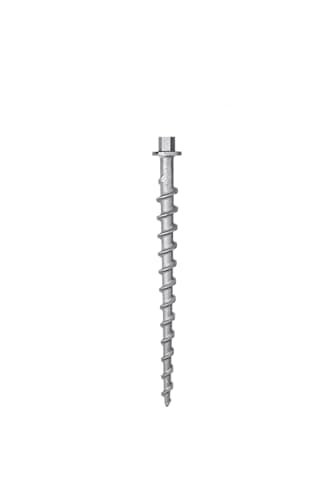 American Earth Anchors PE36 PenetratorThe 36 in. Penetrator, and the one the manufacturer says can be used as a footing rather than only as a tie-down. | The no-drill anchor the maker says can stand in for a footing | Not published by manufacturer | $143.10 · View on Amazon |
| 02 | 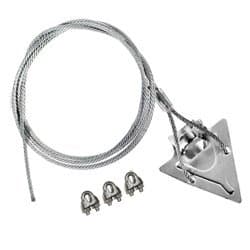 American Earth Anchors 3 in. Steel Arrowhead Cabled AnchorA driven, cabled anchor for the ground a screw anchor will not turn in — hard, compact and rocky soil. | For ground a screw anchor will not turn in | Not published by manufacturer | $15.17 · View on Amazon |
| 03 | 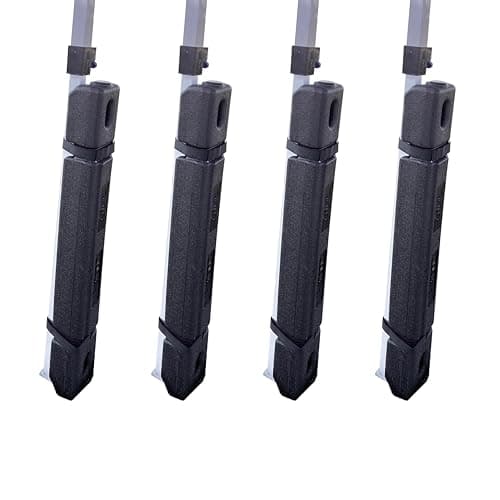 US Weight Ingot Canopy Weights, 4-PackSixty pounds of ferro concrete in an HDPE shell. Nothing to fill, nothing to leak, and the only ballast here that straps to a 2.5 in. leg. | Solid ballast, for sliding rather than lifting | Not published by manufacturer | $79.54 · View on Amazon |
| 04 | 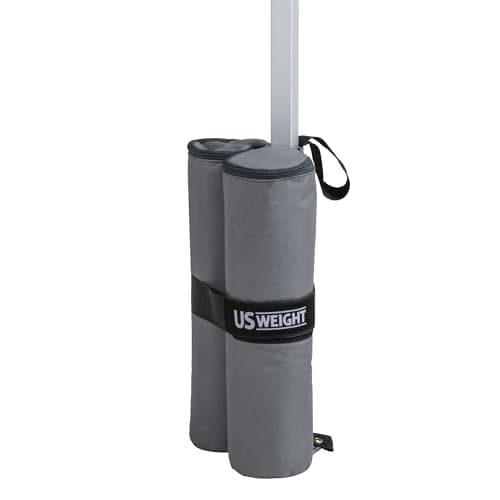 US Weight Premium Fillable Canopy Weight Bags, 4-PackThe fill-on-site answer, and the only bag here that publishes a sealed inner bladder rather than trusting the outer fabric to hold sand. | Fill-on-site ballast where you cannot carry the weight in | Not published by manufacturer | $29.24 · View on Amazon |
The durability table
Every published figure we could source for these structures, in one place, with the manufacturer page each number came from. Where a cell reads "Not published by manufacturer", that figure does not exist in the manufacturer's own material — we do not estimate it and we do not copy one from another site.
| Model | Wind rating (mph) | Snow load | Frame | Roof | Anchoring required | Warranty | Spec source |
|---|---|---|---|---|---|---|---|
| American Earth Anchors PE36 PenetratorTop pick | Not published by manufacturer | Not published by manufacturer | 356 aluminum alloy, heat treated to T6 specifications, made in the USA | Not published by manufacturer | Large Penetrators (36 in. and 46 in.) can be used as footings; guy head, hex and flat head options | Not published by manufacturer | American Earth Anchors Penetrators range pageChecked 2026-10-14 |
| American Earth Anchors 3 in. Steel Arrowhead Cabled Anchor | Not published by manufacturer | Not published by manufacturer | 3 in. steel head on a 1/8 in. galvanized steel aircraft cable; 3 in. to 10 in. heads offered in steel and aluminum | Not published by manufacturer | Install with a drive rod; superior holding in hard, compact and rocky soil; cable clamp, thimble loop and Quickvise terminations | Not published by manufacturer | American Earth Anchors Arrowheads range pageChecked 2026-10-14 |
| US Weight Ingot Canopy Weights, 4-Pack | Not published by manufacturer | Not published by manufacturer | High-density polyethylene (HDPE) outer shell filled with ferro concrete, manufactured in the United States | Not published by manufacturer | High-tack Velcro securing straps; adjustable straps fit square and round canopy legs up to 2.5 in. in diameter | Not published by manufacturer | US Weight Ingot canopy weights product pageChecked 2026-10-14 |
| US Weight Premium Fillable Canopy Weight Bags, 4-Pack | Not published by manufacturer | Not published by manufacturer | 600D Oxford fabric outer shell with a double-sealed polyethylene safety bladder inside, crafted in Olney, Illinois | Not published by manufacturer | Not published by manufacturer | Not published by manufacturer | US Weight Premium Fillable Canopy Weight Bags product pageChecked 2026-10-14 |
Every pick in full
The no-drill anchor the maker says can stand in for a footing
American Earth Anchors PE36 Penetrator
The 36 in. Penetrator, and the one the manufacturer says can be used as a footing rather than only as a tie-down.
- Wind rating
- Not published by manufacturer
- Snow load
- Not published by manufacturer
- Frame
- 356 aluminum alloy, heat treated to T6 specifications, made in the USA
- Roof
- Not published by manufacturer
- Anchoring
- Large Penetrators (36 in. and 46 in.) can be used as footings; guy head, hex and flat head options
- Warranty
- Not published by manufacturer
- Sizes
- 36 in. long
If there is soil anywhere near your post positions, this is the strongest thing you can do without a drill.
36 in. driven screw anchor in 356 aluminum alloy, heat treated to T6, made in the USA. Length is the whole argument. A short stake relies on friction in the top few inches of soil — the layer that softens first when it rains, which is also when the wind arrives.
The manufacturer states that the large Penetrators, 36 in. and 46 in., can be used as footings rather than only as tie-downs. That is an unusual claim in this category and it is the reason this anchor appears on a no-drill page at all: it is the one product here that is positioned as a substitute for the thing you cannot pour.
American Earth Anchors publishes pull-out charts by soil type — almost nobody else in this category publishes holding capacity at all. Read the charts rather than the headline: the figure for compact clay and the figure for loose sand are different products as far as your pergola is concerned.
Guy head, hex and flat head options. The guy head is what you want if the anchor is taking a cable rather than bolting under a post base.
It needs soil that a screw anchor will actually turn in. In rock, rubble fill or hardpan it will not, and the Arrowhead below is the answer instead.
Skip it if: Your pergola sits in the middle of a slab or a roof deck with no reachable soil anywhere near a post. Nothing driven works there.
#ad Price shown as of November 11, 2026. How this site is funded
Specifications from American Earth Anchors Penetrators range page, checked 2026-10-14.
For ground a screw anchor will not turn in
American Earth Anchors 3 in. Steel Arrowhead Cabled Anchor
A driven, cabled anchor for the ground a screw anchor will not turn in — hard, compact and rocky soil.
- Wind rating
- Not published by manufacturer
- Snow load
- Not published by manufacturer
- Frame
- 3 in. steel head on a 1/8 in. galvanized steel aircraft cable; 3 in. to 10 in. heads offered in steel and aluminum
- Roof
- Not published by manufacturer
- Anchoring
- Install with a drive rod; superior holding in hard, compact and rocky soil; cable clamp, thimble loop and Quickvise terminations
- Warranty
- Not published by manufacturer
- Sizes
- 3 in. head on a 36 in. or 60 in. cable
The second driven option, for hard, stony or compacted ground, and the natural partner for a guy line.
A 3 in. steel head on a 1/8 in. galvanized steel aircraft cable, driven with a drive rod. It goes in as a spike and then rotates to sit crosswise in the soil when the cable is pulled — it is the cable that holds, not the shaft.
The manufacturer claims superior holding in hard, compact and rocky soil, which is exactly the ground that defeats a screw anchor. If you tried to turn a Penetrator in and it stopped at 6 in., this is the product that follows.
Cable clamp, thimble loop and Quickvise terminations — in plain terms, a choice of how you tie the cable off at the top, which matters when the top end is a pergola rafter rather than a tent corner.
Offered on a 36 in. or a 60 in. cable, with 3 in. to 10 in. heads in steel and aluminum. Bigger heads hold more; they also need more force to drive and are harder to retrieve.
It is a tie-down, not a footing. It stops the structure lifting. It does nothing about a post sliding sideways across a slab, so on a hard surface it belongs with ballast rather than instead of it.
Skip it if: You want the anchor to disappear. A cabled anchor leaves a visible guy line running out from the structure — the honest trade for the only no-drill method that genuinely opposes uplift.
#ad Price shown as of November 11, 2026. How this site is funded
Specifications from American Earth Anchors Arrowheads range page, checked 2026-10-14.
Solid ballast, for sliding rather than lifting
US Weight Ingot Canopy Weights, 4-Pack
Sixty pounds of ferro concrete in an HDPE shell. Nothing to fill, nothing to leak, and the only ballast here that straps to a 2.5 in. leg.
- Wind rating
- Not published by manufacturer
- Snow load
- Not published by manufacturer
- Frame
- High-density polyethylene (HDPE) outer shell filled with ferro concrete, manufactured in the United States
- Roof
- Not published by manufacturer
- Anchoring
- High-tack Velcro securing straps; adjustable straps fit square and round canopy legs up to 2.5 in. in diameter
- Warranty
- Not published by manufacturer
- Sizes
- Four 15 lb weights, 60 lb total
Included because ballast is what most people reach for first, and because it is worth being exact about what you are buying.
Four 15 lb weights, 60 lb total, high-density polyethylene shell filled with ferro concrete, made in the United States. Sixty pounds is a meaningful amount of friction at the base of a light frame and a trivial amount of resistance to uplift on a 12 ft pergola. Both of those statements are true at once.
High-tack Velcro straps that fit square and round legs up to 2.5 in. in diameter. Measure your post before ordering. Pergola posts are frequently wider than canopy legs, and a strap that does not close is a weight resting against a post rather than attached to one.
Nothing to fill and nothing to leak. Against a sand bag, the stated weight is the weight you actually have, every time, which is the quiet reason solid ballast beats fillable ballast for a structure that stays up all season.
Designed for canopy legs, used here on a pergola post. That is an honest mismatch: these are a canopy product, and on a pergola they are a supplement to a real anchor rather than the anchoring plan.
Weight does not scale the way people expect. Resisting uplift by mass alone takes hundreds of pounds per post, not tens — see the arithmetic in the section below before you decide ballast is enough.
Skip it if: You are trying to replace an anchor rather than add stability. For uplift, a driven anchor at a fraction of the weight does more.
#ad Price shown as of November 11, 2026. How this site is funded
Specifications from US Weight Ingot canopy weights product page, checked 2026-10-14.
Fill-on-site ballast where you cannot carry the weight in
US Weight Premium Fillable Canopy Weight Bags, 4-Pack
The fill-on-site answer, and the only bag here that publishes a sealed inner bladder rather than trusting the outer fabric to hold sand.
- Wind rating
- Not published by manufacturer
- Snow load
- Not published by manufacturer
- Frame
- 600D Oxford fabric outer shell with a double-sealed polyethylene safety bladder inside, crafted in Olney, Illinois
- Roof
- Not published by manufacturer
- Anchoring
- Not published by manufacturer
- Warranty
- Not published by manufacturer
- Sizes
- Four bags, each holding up to 30 lb of sand or gravel
The option for a roof deck, a balcony or any position where getting mass to the spot is the hard part.
Four bags, each holding up to 30 lb of sand or gravel — 120 lb if you fill all four. Twice the mass of the solid set above, and it arrives empty, which is the entire point.
600D Oxford outer shell with a double-sealed polyethylene bladder inside. The bladder is what stops a wet bag weeping sand down a deck for a season. Cheaper bags trust the outer fabric alone and they do not stay full.
Fill them with gravel rather than sand if you have the choice. Sand holds water, and a saturated bag is heavier to move and slower to dry — on a deck that is a staining problem as much as a weight one.
Check the structure below before adding 120 lb per post to a balcony or roof deck. Point loads on a deck are a real engineering question and ballast creates them exactly where a post already concentrates load.
Same physical limit as every other weight. It resists sliding well. It resists lifting only in proportion to its mass, which is why nothing on this page recommends ballast on its own in an exposed position.
Skip it if: You have ground to drive an anchor into. Then you are choosing the weaker method for convenience.
#ad Price shown as of November 11, 2026. How this site is funded
Specifications from US Weight Premium Fillable Canopy Weight Bags product page, checked 2026-10-14.
Why drilling is the default, and what skipping it costs
Manufacturers publish their wind numbers against a fixing. PURPLE LEAF publishes 72 mph for the Athena when the structure is fully secured with expansion screws on a hardened floor. Backyard Discovery publishes 100 mph for the Beaumont and states that it must be anchored as specified in its manual. Domi tells you to anchor with M6 expansion bolts immediately after assembly. ShelterLogic, which now carries the Sojag range, publishes an anchor guide whose first instruction is to identify the soil condition or substrate, and which recommends one anchor per leg for optimal performance.
Read those together and the pattern is not marketing. The anchor is part of the specification, not an accessory to it. A pergola that is not fixed the way the manufacturer specified has no published wind rating, because the number was never measured in your condition — wind ratings explained covers how those figures are arrived at and what they do and do not promise.
There is a second cost that people discover later. Inadequate anchoring is the most common warranty exclusion in this category, so a structure that was never anchored and then fails in wind is usually also a structure with no claim. None of that makes no-drill anchoring pointless. It does mean the honest framing is risk reduction, not rating preservation.
The four methods, and what each one physically resists
Wind does two things to a pergola: it pushes it sideways and it tries to lift it. Those are different forces and the methods below are not interchangeable, because each one answers only one of them.
- Driven ground anchors — resists uplift and sliding. A screw or cabled anchor driven into soil and connected to the post base or to a guy line. The strongest no-drill option by a wide margin, and the only one whose makers publish holding figures. Needs reachable soil.
- Posts set into filled planters — resists sliding well, uplift poorly. A large planter filled with concrete, around or beside each post. Physically this is ballast with better looks. The fill matters enormously: concrete is roughly three times the weight of the same volume of damp potting mix.
- Ballast at the base — resists sliding, barely touches uplift. Weights strapped to the post or sat on the base plate. Useful, cheap, reversible and routinely over-credited.
- Tension guys — resists uplift directly. Cables from high on the frame out to driven anchors beyond the footprint. Structurally the most effective thing on this list and the least popular, because guy lines across a patio are ugly and are a trip hazard.
- And one that is not a method: friction. A heavy pergola standing on a slab feels immovable when you shove it. Dead weight resists sliding in proportion to its mass and resists uplift not at all, and uplift is what takes structures apart.
If you can combine two, combine a driven anchor with ballast. The anchor handles lifting, the weight handles sliding, and the pair covers both forces at a cost well under a poured footing.
Doing it properly, step by step
The order matters. Most no-drill installations go wrong because the method was chosen before the ground was understood.
- 01Find out what is actually under each post position. Soil, sand-bedded pavers, a slab, a deck over joists or a membrane roof are five different problems. ShelterLogic's own anchor guide starts here too: identify the soil condition or substrate first, then choose the anchor.
- 02Confirm what you are not allowed to do, in writing. A rental agreement, an HOA rule and a roof warranty are three separate restrictions and they forbid different things. Some ban penetrations of the surface only, which leaves soil beside the patio available to you.
- 03Count your posts and plan one anchor per post. One anchor per leg is the manufacturer guidance for shelters generally, and there is no reason a pergola gets to be the exception.
- 04Test whether a screw anchor turns. Drive one Penetrator at the least conspicuous post position. If it goes in and resists a hard pull, driven anchors are your method. If it stops short, the ground is hard or stony and a cabled arrowhead anchor is the one that works there.
- 05Position and square the frame before anything is fixed. Measure both diagonals and make them match. A frame guyed or ballasted out of square stays out of square, and the loads land unevenly on whatever is holding it.
- 06Connect anchor to structure, not anchor to ground and hope. A driven anchor that is not tied to a post base or a guy line is a piece of metal in your lawn. Use the correct head or termination for the connection you are actually making.
- 07Add ballast last, at the base of each post, with straps that close properly around the post section. It is the supplement, not the plan.
- 08Write down a take-down threshold and keep it. This is the step that substitutes for the rating you gave up: decide now what forecast wind speed means the canopy comes off or the structure comes down, and it will be a lower number than the one printed on the box.
- 09Re-check everything after the first storm and then every season. Driven anchors work loose as soil moves, straps slacken, and freeze-thaw backs fasteners out.
The ballast arithmetic nobody does
This is the section that changes most people's plan, and it only needs rough numbers to make its point.
Wind uplift on a pergola roof scales with area. A 12 x 14 ft louvered roof is 168 sq ft. Published uplift pressures used in residential design run into the tens of pounds per square foot at ordinary design wind speeds, which puts the total lifting force on a roof that size into the thousands of pounds, shared between four posts. Set that against a 60 lb ballast set and the mismatch is not marginal — it is an order of magnitude.
That is why driven anchors beat weight. An anchor does not oppose uplift with mass; it transfers the load into a large volume of soil. It is the difference between holding a kite down with a brick and holding it down with a tent peg, and the peg wins.
It is also why open-roof pergolas are a different risk from closed ones. Slats with air gaps let wind through. A solid roof, a closed louver or a stretched canopy turns the same frame into a sail — do pergolas provide shade covers that trade from the shade side, and the structural consequence is that the no-drill methods here are far more defensible under an open roof than under a closed one.
The useful rule of thumb: if your pergola has a solid roof, a retractable canopy or louvers you intend to close, and your site is exposed, no arrangement of weights is the answer. Either you find a way to anchor properly, or you choose a structure that is designed to come down.
Working around the restriction instead of against it
Often the ban is narrower than it first appears, and the cheapest fix is a different position rather than a different method.
- Move the structure off the slab. If there is lawn or border within a few feet, a pergola sited there can take driven anchors or even a poured footing, and the patio stays untouched. This is the single most effective workaround and it is almost never considered.
- Use the planting you already have. Large, genuinely heavy planters at the post positions are more acceptable to most HOAs than hardware, and if they are filled with concrete rather than soil they are doing real work.
- Go smaller. A 10 x 10 ft frame generates roughly half the uplift of a 12 x 16 ft one, which makes a no-drill arrangement far more credible. Best pergolas for small patios covers the sizes where this is realistic.
- Choose a structure designed to be taken down. A shade sail comes down in ten minutes when weather is forecast, which is a better answer to an exposed, un-drillable site than a fixed frame held by hope. Start at shade sails.
- And check whether attaching to the house is actually easier. It is a different fixing into a different material, and in many places it is also what triggers a permit — see pergola permits and HOA and attached vs detached pergola before assuming it is the soft option.
What to buy, by surface
Pulling the methods and the products together against the ground you actually have.
| Your surface | Best no-drill method | Product class | Resists |
|---|---|---|---|
| Lawn or soil | Driven screw anchor at each post | 36 in. aluminum Penetrator | Uplift and sliding |
| Hard, stony or compacted ground | Driven cabled anchor, guyed | Steel arrowhead on cable | Uplift |
| Sand-bedded pavers | Anchors driven in the border beside the patio, guyed | Penetrator or arrowhead | Uplift |
| Concrete slab you may not drill | Ballast at every post, open roof only | Solid ingot weights | Sliding only |
| Roof deck or balcony | Fillable ballast, after checking the structure | Fillable weight bags | Sliding only |
The two rows that say "sliding only" are the honest warning on this page. On a slab you may not drill, under an open-slat roof, in a sheltered yard, ballast is a reasonable decision. Under a closed roof on an exposed site it is not, whatever the weight.
If you can drill after all, everything changes and the proper method is set out in how to anchor a pergola. For what goes under the posts when you are building from scratch, pergola footings and post bases covers the options by ground type.
How to tell whether it is working
- Push the frame hard at head height, from each side. Movement at the base means the ballast is sliding; movement at the top with a planted base means the frame joints are loose, which is a different fix.
- Look for daylight under a post base after wind. That is uplift happening, and it is the signal that ballast alone is not enough on your site.
- Check guy line tension by hand every few weeks. Soil settles around a driven anchor for the first season and a slack guy does nothing.
- Watch where the water goes. Ground that saturates at the post positions loses holding capacity exactly when the wind is strongest — American Earth Anchors is explicit that the only accurate way to predict pull-out at a specific site is an on-site proof test under local conditions.
- Re-torque the structural bolts annually. A loose frame turns into a hinge, and the anchoring is then holding a moving object.
- And if you move out, take them with you. Every method on this page is reversible, which is the one genuine advantage no-drill anchoring has over the real thing.
Questions people ask
Can you anchor a pergola without drilling?
How much weight do you need to hold down a pergola?
Will a pergola blow away if it is not anchored?
Can I anchor a pergola on pavers without lifting them?
Do ground anchors work for a pergola?
Can I put pergola posts in planters?
Is no-drill anchoring enough for a louvered pergola?
Does anchoring a pergola affect the warranty?
What is the best no-drill anchor for hard or rocky ground?
Can I use canopy weights on a pergola?
What should I do if I cannot anchor at all?
Where these figures came from
- American Earth Anchors load capacity — published figures are field-tested vertical pull-out strength, and the only accurate method of predicting pull-out at a specific site is an on-site proof test under local conditions
- American Earth Anchors Penetrators — 356 aluminum alloy heat treated to T6, made in the USA; the large 36 in. and 46 in. Penetrators can be used as footings; guy head, hex and flat head options
- American Earth Anchors Arrowheads — 3 in. steel head on 1/8 in. galvanized steel aircraft cable, installed with a drive rod, superior holding in hard, compact and rocky soil, cable clamp, thimble loop and Quickvise terminations
- ShelterLogic anchor guide — identify the soil condition or substrate first, confirm the shelter type and number of legs, then select the anchor; one anchor per leg recommended for optimal performance
- PURPLE LEAF louvered pergola collection — 72 mph for the Athena when fully secured with expansion screws on a hardened floor; 70 mph for the Caesar under normal installation
- Backyard Discovery Beaumont cedar pergola — must be anchored as specified in the instruction manual; 100 mph rating published as applying when properly anchored
- US Weight Ingot canopy weights — four 15 lb weights, 60 lb total, HDPE shell filled with ferro concrete, high-tack Velcro straps fitting square and round legs up to 2.5 in. in diameter
- US Weight Premium Fillable Canopy Weight Bags — 600D Oxford outer shell with a double-sealed polyethylene bladder, four bags each holding up to 30 lb of sand or gravel
Found an error? Tell us and we will correct it within seven days and note the change on the page with a dated line — see our editorial policy.