Best pergolas for climbing plants
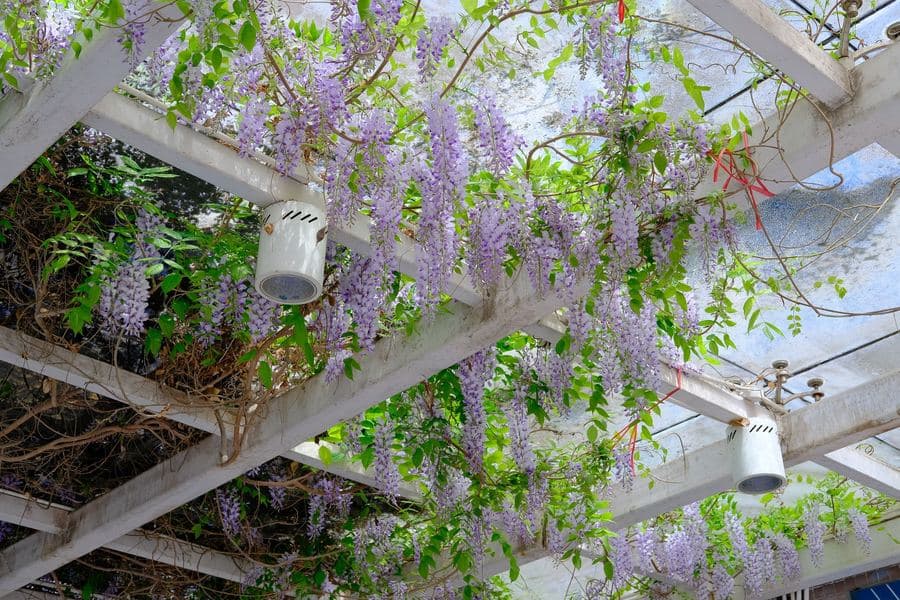
Wisteria is a load, not a look. A roof that a vine can be tied to, on posts heavy enough to carry it in twenty years, is a short list.
By Ryder M. · Published · Last updated
We compare published manufacturer specifications, warranty terms and owner-reported failure modes. We have not physically tested these structures. How we judge shade structures
Slat & Shade earns a commission on qualifying purchases made through links on this page. It costs you nothing extra and never changes what we recommend. Full disclosure
Part of Pergolas
The short answer
The Backyard Discovery Beaumont is the best pergola for climbing plants here: a multi-level cedar trellis roof of crossing rafters that a vine can be tied to directly, on 5.5 in. x 5.5 in. posts with a 100 mph anchored wind rating. The Yardistry 12 x 12 is the alternative, with 6 in. x 6 in. posts and trellis ends built for exactly this.
Our picks at a glance
| # | Structure | Best for | Wind rating | Price |
|---|---|---|---|---|
| 01 | 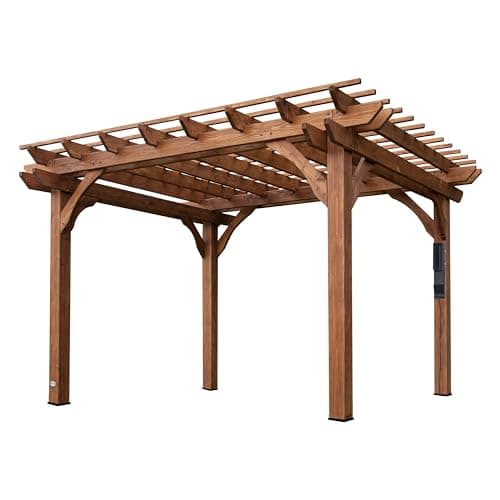 Backyard Discovery Beaumont Cedar PergolaThe highest published wind rating of any pergola on this site, and the only wood kit whose manufacturer makes anchoring a stated condition of the rating. | The roof a vine can actually be tied to | 100 (when properly anchored) | $1,199.00 · View on Amazon |
| 02 | 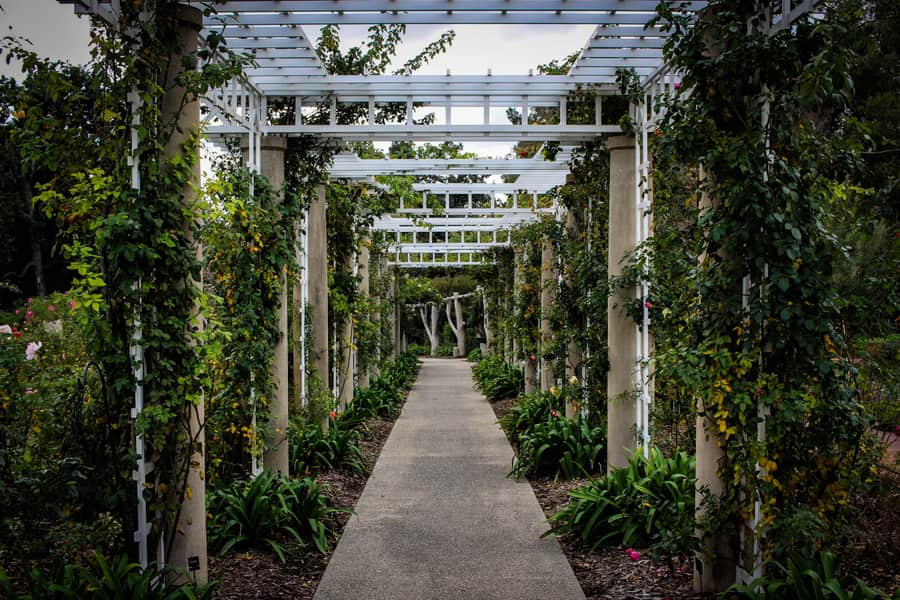 Yardistry 12 x 12 Pergola6x6 posts and a five-year rot warranty on a traditional multilevel trellis pergola — and the only pergola here that publishes its base dimensions as well as its roof. | The heaviest posts, and trellis built into the ends | Not published by manufacturer | Check price on Amazon |
| 03 | 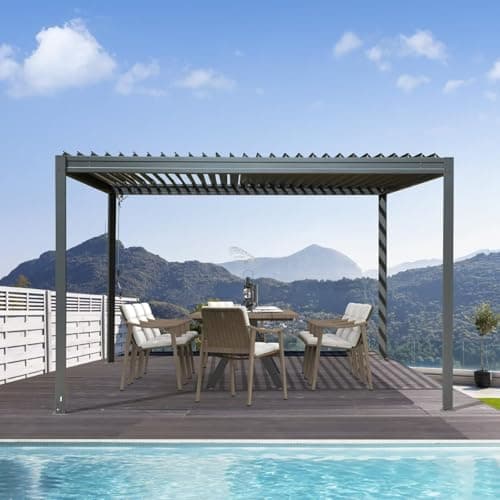 Domi Outdoor Living Aluminum Louvered PergolaThe only louvered pergola here that publishes a snow load in pounds per square foot and backs the roof and frame for five years rather than one. | If the plants go up the posts and not over the roof | 72 | $1,399.99 · View on Amazon |
The durability table
Every published figure we could source for these structures, in one place, with the manufacturer page each number came from. Where a cell reads "Not published by manufacturer", that figure does not exist in the manufacturer's own material — we do not estimate it and we do not copy one from another site.
| Model | Wind rating (mph) | Snow load | Frame | Roof | Anchoring required | Warranty | Spec source |
|---|---|---|---|---|---|---|---|
| Backyard Discovery Beaumont Cedar PergolaTop pick | 100 (when properly anchored) | Not published by manufacturer | 100% cedar, 5.5 in. x 5.5 in. posts | Multi-level cedar trellis roof with crossing rafters — open, not solid | Mandatory. Concealed concrete anchors, per the instruction manual | 5 years | Backyard Discovery Beaumont product pageChecked 2026-09-26 |
| Yardistry 12 x 12 Pergola | Not published by manufacturer | Not published by manufacturer | 6 in. x 6 in. posts with classic plinths (species not stated on the product page) | Multilevel open pergola roof with profiled beam and trellis ends — open, not solid | Not published by manufacturer | 5 years limited on lumber against rot and decay; 1 year on materials and workmanship | Yardistry 12x12 pergola product pageChecked 2026-09-26 |
| Domi Outdoor Living Aluminum Louvered Pergola | 72 | 15 lb/ft² | Aluminum | Adjustable louvers with integrated drainage | M6 expansion bolts into a wooden deck or concrete floor, immediately after assembly | 5 years on hardtop roof and frame; 1 year on curtains and netting | Domi Outdoor Living product pageChecked 2026-09-26 |
Every pick in full
The roof a vine can actually be tied to
Backyard Discovery Beaumont Cedar Pergola
The highest published wind rating of any pergola on this site, and the only wood kit whose manufacturer makes anchoring a stated condition of the rating.
- Wind rating
- 100 (when properly anchored)
- Snow load
- Not published by manufacturer
- Frame
- 100% cedar, 5.5 in. x 5.5 in. posts
- Roof
- Multi-level cedar trellis roof with crossing rafters — open, not solid
- Anchoring
- Mandatory. Concealed concrete anchors, per the instruction manual
- Warranty
- 5 years
- Sizes
- 10 x 10 ft, 12 x 10 ft, 14 x 10 ft, 14 x 12 ft, 16 x 12 ft, 20 x 12 ft
An open cedar trellis of crossing rafters is the structure climbing plants were invented for, and this is the one on the heaviest published sections.
Multi-level cedar trellis roof with crossing rafters — open, not solid. Two directions of timber is what a twining plant needs: something to cross, something to grip, and gaps for light to reach the leaves on top. A single run of rafters gives a vine one axis; a crossed trellis gives it a grid.
100% cedar, 5.5 in. x 5.5 in. posts. Cedar is the traditional vine host for a reason beyond looks — it takes a screw eye or a vine tie anywhere, which an extruded aluminum post does not.
100 mph wind rating when properly anchored. The highest published pergola figure on this site, and it matters more here than on most pages: a mature vine is a sail as well as a weight, and a planted pergola carries far more wind load than a bare one.
Anchoring mandatory — concealed concrete anchors per the manual. Non-negotiable under a vine. The plant will eventually weigh more than the pergola.
5 year warranty, sizes 10 x 10 ft through 20 x 12 ft. The long sizes are the ones to look at: a vine walk reads better than a vine box.
The maintenance trade is real. Cedar under a dense vine stays damp, so plan for the timber as well as the plant — pergola maintenance covers the schedule.
Skip it if: You want zero timber maintenance. A planted wooden pergola is a garden feature with a maintenance calendar attached.
#ad Price shown as of November 11, 2026. How this site is funded
Specifications from Backyard Discovery Beaumont product page, checked 2026-09-26.
The heaviest posts, and trellis built into the ends
Yardistry 12 x 12 Pergola
6x6 posts and a five-year rot warranty on a traditional multilevel trellis pergola — and the only pergola here that publishes its base dimensions as well as its roof.
- Wind rating
- Not published by manufacturer
- Snow load
- Not published by manufacturer
- Frame
- 6 in. x 6 in. posts with classic plinths (species not stated on the product page)
- Roof
- Multilevel open pergola roof with profiled beam and trellis ends — open, not solid
- Anchoring
- Not published by manufacturer
- Warranty
- 5 years limited on lumber against rot and decay; 1 year on materials and workmanship
- Sizes
- Roof 12 x 12 ft, 8 ft 6 in. high; base 10 x 10 ft outside-to-outside of posts
6 in. x 6 in. posts and trellis panels in the end bays — a structure that arrives already set up for something to climb it.
6 in. x 6 in. posts with classic plinths. The largest post section of any pergola on this site. Under a wisteria that is doing twenty years of unseen work, and it is the spec we would pay for first.
Multilevel open pergola roof with profiled beam and trellis ends. The trellis ends are the detail: a climbing plant needs a route up before it needs somewhere to spread, and a ready-made trellis at the post is exactly that route.
Roof 12 x 12 ft, 8 ft 6 in. high; base 10 x 10 ft outside-to-outside of posts. One of the few pergolas here that publishes both figures. The 8 ft 6 in. height matters under a vine, because a wisteria hanging in flower takes a foot of that back.
5 years limited on the lumber against rot and decay, 1 year on materials and workmanship. The rot term is the relevant one under planting.
No wind rating, no snow load and no anchoring method published. The gap that keeps it second. Under a mature vine we would want a published anchored figure, and the Beaumont has one.
Skip it if: The plot is exposed. Nothing is published about what this structure holds, and a planted pergola in wind is a serious load.
#ad Price shown as of November 11, 2026. How this site is funded
Specifications from Yardistry 12x12 pergola product page, checked 2026-09-26.
If the plants go up the posts and not over the roof
Domi Outdoor Living Aluminum Louvered Pergola
The only louvered pergola here that publishes a snow load in pounds per square foot and backs the roof and frame for five years rather than one.
- Wind rating
- 72
- Snow load
- 15 lb/ft²
- Frame
- Aluminum
- Roof
- Adjustable louvers with integrated drainage
- Anchoring
- M6 expansion bolts into a wooden deck or concrete floor, immediately after assembly
- Warranty
- 5 years on hardtop roof and frame; 1 year on curtains and netting
- Sizes
- 10 x 10 ft, 10 x 12 ft, 10 x 13 ft, 12 x 16 ft, 12 x 20 ft
The aluminum counterpoint, and the only pergola on this site that publishes what its roof can carry — which is the number this page is really about.
15 lb/ft² published roof load. No other pergola in the louvered class prints one. If you want an actual figure to set a plan against, this is the only one available, and a dense mature vine canopy is well within the kind of load worth asking about.
Adjustable louvers with integrated drainage, aluminum frame. Here is the honest limitation: louvers move, and a vine that has grown through a moving mechanism stops it moving. Train plants up the posts and along the perimeter beams, not across the roof.
5 years on the hardtop roof and frame. Twice to five times the term of the other aluminum pergolas here, and relevant because a planted structure is a structure you will not want to dismantle.
72 mph wind rating, M6 expansion bolts into deck or concrete immediately after assembly. A documented anchoring method, which under planting is the specification that matters most.
10 x 10 ft through 12 x 20 ft. Plenty of post runs to plant against.
Skip it if: You want a wisteria over the top of it. That is a timber pergola's job, and growing a vine through louvers ends with neither working.
#ad Price shown as of November 11, 2026. How this site is funded
Specifications from Domi Outdoor Living product page, checked 2026-09-26.
What a climbing plant needs from a structure
Something to grip, in two directions. Twining climbers wrap around a member; tendril climbers need something thin enough to catch. A crossed trellis roof gives both; a single run of wide beams gives neither, and the plant ends up tied on rather than climbing.
Light through the roof. The leaves on the top surface of a vine are the productive ones. A solid or louvered roof puts the plant's own canopy in shade, which is why timber trellis pergolas and climbing plants have gone together for centuries.
Post sections that will still be adequate in twenty years. This is the specification people skip. A mature wisteria is a substantial woody structure, wet after rain, catching wind like a hedge — and it never gets lighter. 5.5 in. and 6 in. posts are what this page is ranked on.
Anchoring, because the wind load changes completely. A bare pergola is mostly transparent to wind. A pergola under a dense vine is a solid object, and the anchoring that was adequate on day one is carrying a different structure by year ten. The Beaumont's 100 mph figure is explicitly conditional on anchoring per the manual.
And a material you can fix to. A screw eye, a vine tie or a wire run goes into cedar anywhere. Into an extruded aluminum post it goes nowhere useful, which is the practical reason the timber kits win this page.
The structures compared
Published post sections, roof types and figures across the pergola range.
| Model | Posts | Roof | Published figures |
|---|---|---|---|
| Backyard Discovery Beaumont | 5.5 x 5.5 in. cedar | Multi-level cedar trellis, crossing rafters | 100 mph anchored; 5 yr |
| Yardistry 12 x 12 | 6 x 6 in. with plinths | Multilevel open roof, profiled beam, trellis ends | 5 yr on lumber vs rot; none for wind or snow |
| Domi louvered pergola | Aluminum | Adjustable louvers with drainage | 15 lb/ft²; 72 mph; 5 yr roof and frame |
| PURPLE LEAF Athena | Aluminum, 1.5 mm wall, 4.33 in. crossbeams | Adjustable aluminum louvers | 72 mph fully secured; 1 yr |
| Outsunny polycarbonate pergola | Aluminum | Solid polycarbonate with drainage holes | 10 lb/ft² roof capacity; 1 yr |
The two timber rows are the ones with something to tie to, and they are also the two with the largest post sections. That is not a coincidence — a timber pergola is sized by section and an aluminum one by extrusion, and under a vine section is what you are buying.
The Domi row is the only one with a roof load figure anywhere in this table. Worth knowing even if you plant the posts rather than the roof, because it is the only published number in the category that speaks to carrying anything at all.
Planting it so the structure survives
- 01Anchor the pergola fully before planting anything. Retro-fitting anchors under an established vine is close to impossible.
- 02Plant at least 18 in. out from the post base so the root system is not fighting the footing and the post stays dry at the ground line.
- 03Train the leader up one post on a wire or a batten rather than letting it wrap the post directly — a stem that girdles a timber post traps water against it for decades.
- 04Tie, do not twist, onto the roof members for the first few seasons, and check the ties annually. A tie left in place becomes a constriction as the stem thickens.
- 05Thin the canopy every year once it reaches the roof. An unthinned vine is a sail, and the wind rating you bought assumed an open structure.
- 06Keep the timber clear at the post bases and re-treat the finish on the schedule the manufacturer gives. Under planting, cedar stays damp far longer than it does in the open.
- 07Re-check the anchors every few years. The load has grown since the last time you looked.
What we would actually do
Buy a timber pergola for a vine, and buy the one with a published anchored wind rating. The Beaumont is both: a crossing-rafter trellis roof on 5.5 in. cedar posts, rated 100 mph anchored. Nothing else here is both.
Size up before you plant. A wisteria over a 10 x 10 ft pergola is a wisteria wearing a pergola. The long sizes — 16 x 12 and 20 x 12 ft on the Beaumont — are what makes a planted structure a place rather than an obstacle.
Decide the plant before the structure if you can. A clematis on a 12 x 12 ft trellis-ended Yardistry and a mature wisteria on a 20 x 12 ft cedar frame are different engineering problems wearing the same word.
If it has to be aluminum, plant the posts and leave the roof alone. The Domi's 15 lb/ft² and five-year roof-and-frame warranty make it the most sensible aluminum host, provided you keep growth out of the louver mechanism.
And read the pergola as a structure first. Most durable pergolas ranks the whole field on published figures, and pergola vs arbor covers the smaller structure that is often the right answer for one plant.
What we cut, and why
Every model below was a genuine candidate and did not make the list. The reason is stated in each case, because a shortlist with no visible rejections is not evidence of a selection process.
- PURPLE LEAF Athena and Caesar louvered pergolas
- Powder-coated aluminum with adjustable louvers and a 1 year warranty. Good structures, wrong host: nothing to tie to, a moving roof, and a one-year term under a plant that will outlive several of them.
- Outsunny hardtop polycarbonate pergola
- A solid roof blocks light from above, which is the one thing a climbing plant cannot work around. The leaves on top of a vine are the ones doing the work.
- Retractable-canopy pergolas
- The canopy has to retract, and a vine will not let it. Any structure whose roof is a moving cloth is incompatible with something growing on it.
Questions people ask
What is the best pergola for climbing plants?
What is the best pergola for wisteria?
Can you grow plants on an aluminum pergola?
How much weight can a pergola hold for a vine?
Does a planted pergola need stronger anchoring?
Will a climbing plant damage a wooden pergola?
How far from the pergola should I plant a climber?
Is a trellis better than a pergola for climbing plants?
Where these figures came from
- Backyard Discovery Beaumont cedar pergola — 100 mph wind rating when properly anchored, multi-level cedar trellis roof with crossing rafters (open, not solid), 100% cedar with 5.5 in. x 5.5 in. posts, concealed concrete anchors mandatory per the manual, 5 year warranty, sizes 10 x 10 to 20 x 12 ft
- Yardistry 12 x 12 pergola — 6 in. x 6 in. posts with classic plinths, multilevel open pergola roof with profiled beam and trellis ends, roof 12 x 12 ft at 8 ft 6 in. high over a 10 x 10 ft base outside-to-outside of posts, 5 years limited on lumber against rot and decay and 1 year on materials and workmanship, no wind or snow figure published
- Domi Outdoor Living louvered pergola — 15 lb/ft² snow load, 72 mph wind rating, aluminum frame with adjustable louvers and integrated drainage, M6 expansion bolts into deck or concrete immediately after assembly, 5 years on hardtop roof and frame
- PURPLE LEAF louvered pergola collection — Athena 72 mph fully secured, powder-coated aluminum with 1.5 mm wall and 4.33 in. x 4.33 in. crossbeams, 1 year warranty
- Outsunny hardtop polycarbonate pergola — roof weight capacity 10 lb/ft² (50 kg/m²), solid polycarbonate with drainage holes, 1 year warranty
Found an error? Tell us and we will correct it within seven days and note the change on the page with a dated line — see our editorial policy.