Aluminum vs wood pergola
The usual answer is aluminum, because it does not rot. That is true and it is not the whole picture — the deciding variable is not the material, it is whether you will maintain it.
By Ryder M. · Published · Last updated
We compare published manufacturer specifications, warranty terms and owner-reported failure modes. We have not physically tested these structures. How we judge shade structures
Slat & Shade earns a commission on qualifying purchases made through links on this page. It costs you nothing extra and never changes what we recommend. Full disclosure
Part of Pergolas
The short answer
Aluminum has the longer maintenance-free life: a powder-coated frame survives a decade of neglect, structurally sound and cosmetically tired. Cedar has the longer repairable life: re-sealed every two to three years it outlasts aluminum and can be repaired one board at a time. Unsealed, it rots within a handful of years.
Our picks at a glance
| # | Structure | Best for | Wind rating | Price |
|---|---|---|---|---|
| 01 |  Domi Outdoor Living Aluminum Louvered PergolaThe only louvered pergola here that publishes a snow load in pounds per square foot and backs the roof and frame for five years rather than one. | Buy this if aluminum wins | 72 | Check price on Amazon |
| 02 | 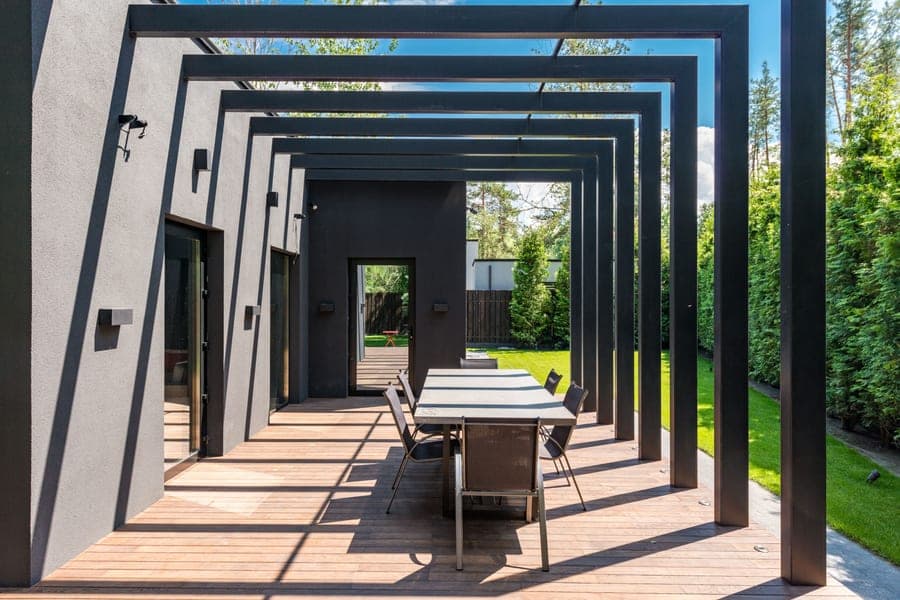 PURPLE LEAF Athena Louvered PergolaThe highest wind figure any louvered pergola in this class publishes, and the only one that ties the number to a specific anchoring condition. | The best-specified aluminum frame | 72 (fully secured with expansion screws on a hardened floor) | Check price on Amazon |
| 03 | 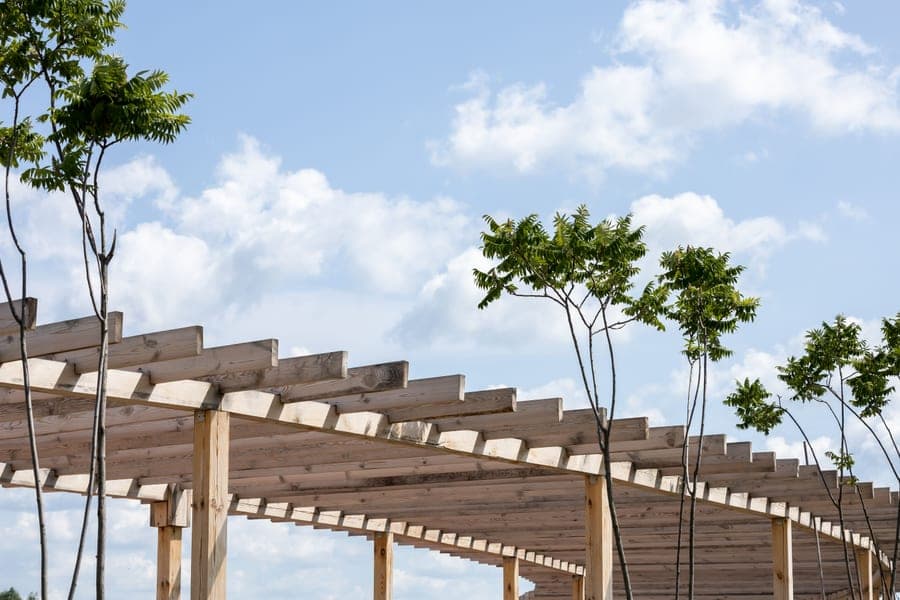 Backyard Discovery Beaumont Cedar PergolaThe highest published wind rating of any pergola on this site, and the only wood kit whose manufacturer makes anchoring a stated condition of the rating. | Buy this if wood wins | 100 (when properly anchored) | Check price on Amazon |
| 04 | 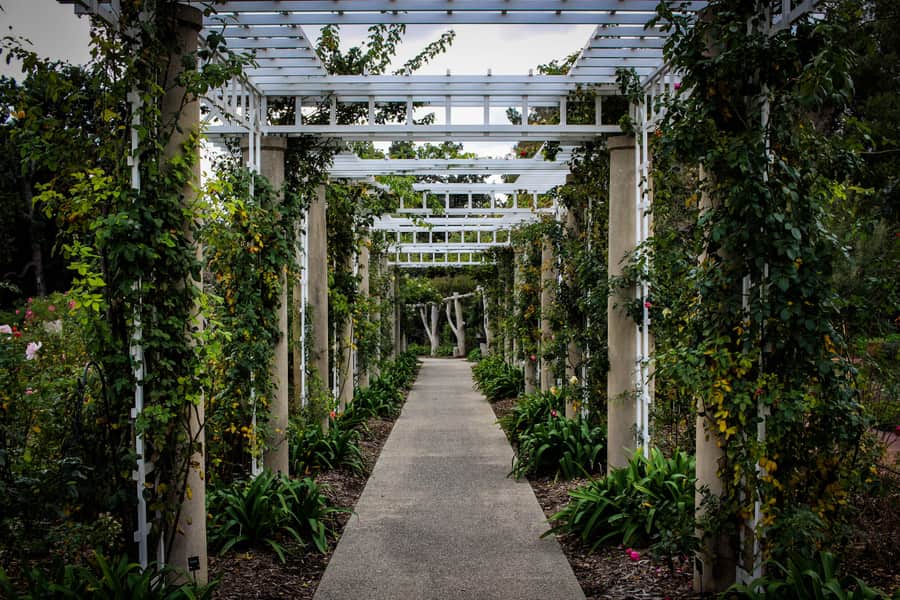 Yardistry 12 x 12 Pergola6x6 posts and a five-year rot warranty on a traditional multilevel trellis pergola — and the only pergola here that publishes its base dimensions as well as its roof. | The heaviest wood section | Not published by manufacturer | Check price on Amazon |
| 05 |  PURPLE LEAF Caesar Louvered PergolaThe same frame system as the Athena in more sizes and configurations, with a slightly lower published wind figure and the same one-year warranty. | The wood-look compromise | 70 (under normal installation) | Check price on Amazon |
The durability table
Every published figure we could source for these structures, in one place, with the manufacturer page each number came from. Where a cell reads "Not published by manufacturer", that figure does not exist in the manufacturer's own material — we do not estimate it and we do not copy one from another site.
| Model | Wind rating (mph) | Snow load | Frame | Roof | Anchoring required | Warranty | Spec source |
|---|---|---|---|---|---|---|---|
| Domi Outdoor Living Aluminum Louvered PergolaTop pick | 72 | 15 lb/ft² | Aluminum | Aluminum louvers, adjustable | M6 expansion bolts into a wooden deck or concrete floor, immediately after assembly | 5 years on hardtop roof and frame; 1 year on curtains and netting | Domi Outdoor Living product pageChecked 2026-09-26 |
| PURPLE LEAF Athena Louvered Pergola | 72 (fully secured with expansion screws on a hardened floor) | Not published by manufacturer | Powder-coated aluminum, 1.5 mm wall, 4.33 in. x 4.33 in. crossbeams | Adjustable aluminum louvers with integrated drainage | Expansion screws into a hardened floor — the published wind figure assumes it | 1 year | PURPLE LEAF louvered pergola collectionChecked 2026-09-26 |
| Backyard Discovery Beaumont Cedar Pergola | 100 (when properly anchored) | Not published by manufacturer | 100% cedar, 5.5 in. x 5.5 in. posts | Multi-level cedar trellis roof with crossing rafters — open, not solid | Mandatory. Concealed concrete anchors, per the instruction manual | 5 years | Backyard Discovery Beaumont product pageChecked 2026-09-26 |
| Yardistry 12 x 12 Pergola | Not published by manufacturer | Not published by manufacturer | 6 in. x 6 in. posts with classic plinths (species not stated on the product page) | Multilevel open pergola roof with profiled beam and trellis ends — open, not solid | Not published by manufacturer | 5 years limited on lumber against rot and decay; 1 year on materials and workmanship | Yardistry 12x12 pergola product pageChecked 2026-09-26 |
| PURPLE LEAF Caesar Louvered Pergola | 70 (under normal installation) | Not published by manufacturer | Powder-coated aluminum | Adjustable aluminum louvers | Not published by manufacturer | 1 year | PURPLE LEAF louvered pergola collectionChecked 2026-09-26 |
Every pick in full
Buy this if aluminum wins
Domi Outdoor Living Aluminum Louvered Pergola
The only louvered pergola here that publishes a snow load in pounds per square foot and backs the roof and frame for five years rather than one.
- Wind rating
- 72
- Snow load
- 15 lb/ft²
- Frame
- Aluminum
- Roof
- Aluminum louvers, adjustable
- Anchoring
- M6 expansion bolts into a wooden deck or concrete floor, immediately after assembly
- Warranty
- 5 years on hardtop roof and frame; 1 year on curtains and netting
- Sizes
- 10 x 10 ft, 10 x 12 ft, 10 x 13 ft, 12 x 16 ft, 12 x 20 ft
The best-documented aluminum pergola in the category, and the right answer for anyone whose honest maintenance plan is washing it occasionally.
72 mph wind and 15 lb/ft² snow, both published — the only pergola we track with figures for both loading directions. Five years on the hardtop roof and frame, one year on curtains and netting, which is five times the structural term of the category norm and the correct shape besides.
The aluminum proposition in full: it does not rust, it needs washing and a seasonal fastener check, and that is the list. No sealing, no checking, no rot, no annual decision about whether this is the year you get round to it.
What it does instead is degrade cosmetically and irreversibly. Powder coat chalks and goes patchy on the sunward face, and nothing restores it. You are trading repairability for freedom from obligation, and for a lot of people that is the correct trade.
Adjustable louvers, aluminum frame, 10 x 10 through 12 x 20 ft, M6 expansion bolts into deck or concrete immediately after assembly.
Skip it if: You want a structure you can still be repairing component by component in twenty years. Aluminum does not offer that.
#ad Price shown as of September 26, 2026. How this site is funded
Specifications from Domi Outdoor Living product page, checked 2026-09-26.
The best-specified aluminum frame
PURPLE LEAF Athena Louvered Pergola
The highest wind figure any louvered pergola in this class publishes, and the only one that ties the number to a specific anchoring condition.
- Wind rating
- 72 (fully secured with expansion screws on a hardened floor)
- Snow load
- Not published by manufacturer
- Frame
- Powder-coated aluminum, 1.5 mm wall, 4.33 in. x 4.33 in. crossbeams
- Roof
- Adjustable aluminum louvers with integrated drainage
- Anchoring
- Expansion screws into a hardened floor — the published wind figure assumes it
- Warranty
- 1 year
- Sizes
- 10 x 12 ft to 14 x 24 ft
If the aluminum argument is about engineering rather than convenience, this is the one that publishes enough to have the argument with.
Powder-coated aluminum, 1.5 mm wall, 4.33 in. x 4.33 in. crossbeams — the only published wall thickness in the category. Wall thickness is what resists twisting under load, and it is exactly the specification that separates a serious extrusion from a light tube. Both get sold as "heavy duty aluminum".
72 mph, fully secured with expansion screws on a hardened floor. The stated condition is as useful as the figure.
Integrated drainage in the beams is a durability feature on an aluminum structure as well as a comfort one: water channeled through the frame and down the posts does not sit on coated surfaces, and standing water on a coating is where degradation starts.
One-year warranty and no snow figure, which is where it loses to the Domi on a durability comparison.
Skip it if: You want a longer structural warranty or a snow figure — Domi has both.
#ad Price shown as of September 26, 2026. How this site is funded
Specifications from PURPLE LEAF louvered pergola collection, checked 2026-09-26.
Buy this if wood wins
Backyard Discovery Beaumont Cedar Pergola
The highest published wind rating of any pergola on this site, and the only wood kit whose manufacturer makes anchoring a stated condition of the rating.
- Wind rating
- 100 (when properly anchored)
- Snow load
- Not published by manufacturer
- Frame
- 100% cedar, 5.5 in. x 5.5 in. posts
- Roof
- Multi-level cedar trellis roof with crossing rafters — open, not solid
- Anchoring
- Mandatory. Concealed concrete anchors, per the instruction manual
- Warranty
- 5 years
- Sizes
- 10 x 10 ft, 12 x 10 ft, 14 x 10 ft, 14 x 12 ft, 16 x 12 ft, 20 x 12 ft
The wood option with real published figures, which is rare: 100 mph Pro-Tect tested — the highest in backyard shade — on 100% cedar with 5.5 in. x 5.5 in. posts, dual structural cross beams and corbels, with anchoring made mandatory by the manufacturer.
That wind figure is the part of the wood case people underrate. Post section resists the racking that pulls post-and-beam frames apart, and a 5.5-inch cedar post is a substantially different structural member from a 4.33-inch aluminum crossbeam with a 1.5 mm wall. Heavy timber is genuinely stronger here, not just heavier.
And the repairability is the real argument. When an aluminum frame's coating chalks, there is no remedy. When a cedar beam checks at a through-bolt, you replace one board with lumber from any yard. On a twenty-year horizon that is the difference between maintainable and merely standing.
Five-year warranty. Re-seal every two to three years, with attention to end grain and through-bolts — and that condition is not negotiable. Sizes 10 x 10 through 20 x 12 ft.
Skip it if: You will not do the sealing. Unsealed cedar is the worst outcome in this comparison, worse than either material chosen honestly.
#ad Price shown as of September 26, 2026. How this site is funded
Specifications from Backyard Discovery Beaumont product page, checked 2026-09-26.
The heaviest wood section
Yardistry 12 x 12 Pergola
6x6 posts and a five-year rot warranty on a traditional multilevel trellis pergola — and the only pergola here that publishes its base dimensions as well as its roof.
- Wind rating
- Not published by manufacturer
- Snow load
- Not published by manufacturer
- Frame
- 6 in. x 6 in. posts with classic plinths (species not stated on the product page)
- Roof
- Multilevel open pergola roof with profiled beam and trellis ends — open, not solid
- Anchoring
- Not published by manufacturer
- Warranty
- 5 years limited on lumber against rot and decay; 1 year on materials and workmanship
- Sizes
- Roof 12 x 12 ft, 8 ft 6 in. high; base 10 x 10 ft outside-to-outside of posts
6 in. x 6 in. posts with classic plinths — the largest post section in this comparison, and the plinths matter more than they look.
A plinth lifts the post base off the surface, and end grain sitting in standing water is the single most predictable failure point on any timber structure: water wicks up end grain far faster than it penetrates a face, and rot starts there. A detail that keeps the base out of the puddle is doing more for the structure's life than most published specifications — and it is exactly the kind of thing aluminum never has to think about.
Five years limited on lumber against rot and decay, one year on materials and workmanship. Confidence placed precisely where cedar's risk lies.
It also publishes a 12 x 12 ft roof at 8 ft 6 in. high over a 10 x 10 ft base, outside-to-outside of posts — over a foot lost each way, and almost nobody else in backyard shade publishes both.
No wind rating, no snow figure, and the product page does not name the species — so we cite the post dimensions and construction rather than claiming a material the page does not state.
Skip it if: You need published loading figures — this publishes none — or you will not maintain it.
#ad Price shown as of September 26, 2026. How this site is funded
Specifications from Yardistry 12x12 pergola product page, checked 2026-09-26.
The wood-look compromise
PURPLE LEAF Caesar Louvered Pergola
The same frame system as the Athena in more sizes and configurations, with a slightly lower published wind figure and the same one-year warranty.
- Wind rating
- 70 (under normal installation)
- Snow load
- Not published by manufacturer
- Frame
- Powder-coated aluminum
- Roof
- Adjustable aluminum louvers
- Anchoring
- Not published by manufacturer
- Warranty
- 1 year
- Sizes
- 9 x 12 ft to 14 x 24 ft, plus wall-mounted and slanted-roof variants
Worth knowing exists, and worth being clear about what it is: PURPLE LEAF offers its Caesar line in a wood-grain finish on a powder-coated aluminum frame.
It answers the aesthetic objection to aluminum without answering the structural one. You get the appearance of timber with aluminum's maintenance profile — no sealing, no checking, no rot — and you do not get cedar's repairability. A wood-grain powder coat is still a powder coat: it chalks on the sunward face and cannot be restored.
70 mph under normal installation, powder-coated aluminum, adjustable louvers, 9 x 12 through 14 x 24 ft plus wall-mounted and slanted-roof variants. One-year warranty, no snow figure, no published wall thickness for this line.
We have not handled one and we are not going to tell you how convincing the finish looks — that is exactly the kind of claim this site does not make without evidence. What we can tell you is that structurally it is an aluminum pergola.
Skip it if: The reason you want wood is the material rather than the look. A coating does not repair like a board.
#ad Price shown as of September 26, 2026. How this site is funded
Specifications from PURPLE LEAF louvered pergola collection, checked 2026-09-26.
The decision table
| Powder-coated aluminum | Cedar | |
|---|---|---|
| Maintenance-free life | Wins. Structurally sound after a decade untouched | Poor. Grays within a season, checks and rots within a few years unsealed |
| Repairable life | Poor. A chalked coating cannot be restored; a member has to be replaced | Wins. One board at a time, with lumber from any yard, indefinitely |
| Maintenance required | Wash it. Seasonal fastener check. That is the list | Re-seal every 2-3 years, attention to end grain and through-bolts |
| What fails first | Powder coat on the sunward face, then base-plate fasteners | Checking at the through-bolt, then rot at end grain |
| Best published wind rating | 72 mph (PURPLE LEAF Athena, Domi) | 100 mph (Backyard Discovery Beaumont) |
| Published snow figure | 15 lb/ft² (Domi) — the only pergola snow figure anyone publishes | Not published by manufacturer on either wood kit |
| Post / frame section | 4.33 in. crossbeams, 1.5 mm wall (PURPLE LEAF) | 5.5 in. and 6 in. posts — substantially larger |
| Best warranty | 5 years roof and frame (Domi) | 5 years (Beaumont); 5 years on lumber against rot (Yardistry) |
| Appearance over time | Chalks and flattens, evenly and irreversibly | Grays attractively if you let it; checks and splits if you neglect it |
| Best for | Anyone who will not maintain anything, honestly | Anyone who will, and wants a structure that stays repairable |
The question that actually decides it
Everything above reduces to one honest self-assessment, and it is worth making before you shop rather than after.
Will you re-seal a wood structure every two to three years, indefinitely?
If yes: buy cedar. Sealed and kept out of standing water, a cedar pergola with 5.5-6 inch posts outlasts budget aluminum, publishes the highest wind rating in backyard shade, and stays repairable board by board for as long as you keep going. Nothing else in this category offers that.
If no — and for most people the honest answer is no — buy aluminum, and do it deliberately rather than as a compromise. A powder-coated frame asks nothing of you, will still be standing and sound in a decade, and will look progressively tired in a way you cannot fix. That is a clean trade and there is nothing second-rate about taking it.
The worst outcome in this comparison is unsealed cedar, and it is also the most common one. It starts as the aspirational choice and ends as graying, checked timber with rot at the end grain — worse than either material chosen honestly. If you are not sure, that uncertainty is itself the answer.
What actually fails on each
Both materials degrade in specific, predictable places, and the sequences are completely different.
- Aluminum: the powder coat, on the sunward face. The metal does not rust and the frame is rarely what ends it. The coating chalks, loses sheen and goes patchy — worst where the sun hits hardest — and there is no sanding it back. The clearest manufacturer acknowledgement of this anywhere in backyard shade is Sojag's separate fifteen-year warranty on its powder-coated finish, alongside a limited lifetime term on the frame: a company telling you plainly which component has the clock.
- Aluminum: fasteners at the base plate. The foot of a post sits in standing water after every rain and dries last. Plated steel there corrodes while the frame above is perfect. This is the most common first failure on any aluminum kit and it is entirely preventable — stainless or hot-dip galvanized bolts fitted at assembly, while the plates are still accessible.
- Cedar: checking at the through-bolt. Wood moves and a bolt does not, so splits start at every point where a fastener passes through and open a little more with each wet-dry cycle. Sealing slows it; nothing stops it entirely.
- Cedar: rot at end grain. Water wicks up cut ends far faster than it penetrates a face, so the post base and the rafter tails are where rot begins. This is why a plinth or raised post base — as on the Yardistry — is worth more than most published figures, and why keeping the base out of standing water is the single most useful habit.
- Both: anchors pulling out of thin or old concrete, from insufficient embedment, a dust-filled hole, or a fixing set too close to a slab edge. It presents as a wind failure and it is a durability failure. How to anchor a pergola covers each surface.
Where wood is genuinely stronger
This part gets lost, because the aluminum-does-not-rot argument is so easy to make.
Heavy timber publishes better wind figures than aluminum, and the reason is section. Backyard Discovery's Beaumont publishes 100 mph on 5.5 in. cedar posts; the best-documented aluminum pergolas publish 72 on 4.33-inch crossbeams with a 1.5 mm wall. Wind failure in a post-and-beam structure is a racking failure — the frame parallelograms before anything breaks — and resisting that is about post section, beam depth and connection stiffness.
The same pattern shows up across categories: Backyard Discovery's cedar Norwood gazebo publishes 100 mph with a solid steel roof, where every aluminum-framed hardtop gazebo we track publishes 40-50. Frame section is the first-order variable and roof type is the second-order one. That is the most useful structural finding on this site and it favors timber.
Where aluminum is genuinely stronger is on vertical loading disclosure, oddly enough — Domi is the only pergola manufacturer of any material publishing a snow figure, and neither wood kit publishes one. Cedar's open trellis roofs largely dodge the question by not accumulating snow at all, which is a real answer but not a documented one.
Cost, and what it does not tell you
We do not publish prices — they move weekly and a stale number is worse than none. Two structural points are worth making anyway.
The spread within each material is wider than the gap between them. A budget aluminum louvered pergola and a top-end louvered pergola are further apart than a mid-range aluminum and a mid-range cedar kit. So price is a poor way to choose the material and a useful way to choose within it.
Cedar has an ongoing cost that aluminum does not, and it is not just money: sealant every two to three years, plus the afternoon it takes. Price that in over ten years before concluding cedar is the cheaper route to a substantial-looking structure.
And aluminum has a hidden cost that shows up as a replacement, not a repair. A chalked frame is not restorable, so the end of its cosmetic life is the end of the structure for anyone who minds how it looks. Cedar's equivalent moment is a board you swap for twenty dollars.
The shortlists: best aluminum pergolas and best cedar and wood pergola kits. The failure-mode detail is in how long shade structures last.
Questions people ask
Is an aluminum or wood pergola better?
What is the most durable pergola material?
How long do aluminum pergolas last?
How long do cedar pergolas last?
Does wood really handle wind better than aluminum?
Do aluminum pergolas fade?
Is a wood-grain aluminum pergola a good compromise?
What maintenance does a cedar pergola actually need?
Where these figures came from
- Domi Outdoor Living louvered pergola — 72 mph, 15 lb/ft², 5 years on roof and frame, M6 anchoring instruction
- PURPLE LEAF louvered pergola collection — 1.5 mm wall, 4.33 in. crossbeams, 72 mph with stated condition, wood-grain finish option, integrated drainage
- Backyard Discovery Beaumont — 100 mph Pro-Tect tested, 5.5 in. cedar posts, dual cross beams and corbels, 5-year warranty, mandatory anchoring
- Yardistry 12x12 pergola — 6x6 posts with plinths, published roof and base dimensions, 5-year lumber warranty against rot and decay
- Sojag hardtop gazebo collection — limited lifetime frame term with a separate 15-year powder-coated finish warranty, cited as the clearest coating-life disclosure in backyard shade
- Backyard Discovery Norwood 12x10 — 100 mph on cedar with a solid steel roof, cited for the frame-section finding
Found an error? Tell us and we will correct it within seven days and note the change on the page with a dated line — see our editorial policy.